REVIEW · PHNOM PENH
13 Days Private Tour to Cambodia, Angkor Wat and Vietnam
Book on Viator →Operated by Global Travel & Tours Asia · Bookable on Viator
Angkor Wat plus Vietnam is a big move. This private, guided route strings together UNESCO sights, boat days, and real history without you needing to figure it out.
I like that it stays private with a licensed English-speaking guide and a safe-driver setup, so you’re not stuck with slow group logistics. I also like the smart mix of architecture and lived-in places: Angkor temples, Hanoi Old Quarter by cyclo, and the Mekong by sampan.
The one consideration is time and transitions: you’ll take several domestic flights, so you’ll want to travel with carry-on-friendly habits and keep your patience for airport check-in days.
In This Review
- Key things that make this tour work
- Phnom Penh to Siem Reap to Hanoi: how the route keeps you moving
- Royal Palace, National Museum, Wat Phnom, and the hard stops in Phnom Penh
- Angkor Thom at human scale: South Gate, Bayon faces, and the terraces
- Banteay Srei plus Preah Khan and Kampong Phluk: carvings and village life
- Hanoi’s old quarter on foot plus museums that sharpen context
- Halong Bay overnight cruise: why one night matters
- Hoi An by bridge, riverboat, and family houses
- Hue Imperial City, tombs, and a Perfume River cruise on a private cyclo day
- Saigon history in layers: Cu Chi, French landmarks, and war museums
- Mekong Delta on Cai Be Princess Sampan and a colonial-style lunch
- Price and hotels: what $4,360 buys you in real terms
- Who should book this Cambodia-and-Vietnam private route
- Should you book this 13-day Cambodia and Angkor Wat plus Vietnam private tour?
- FAQ
- What transport and guide style do I get?
- Are domestic flights included between cities?
- Do I need to handle Cambodia visa on arrival?
- Which boat experiences are included?
- What Angkor sites are covered?
- What meals are included?
- Is there any free time during the trip?
- If plans change, can I cancel for a refund?
Key things that make this tour work
- Mr. Ann-style coordination: airport meet-ups and hands-on help with moving through logistics while guides and drivers handle the rest.
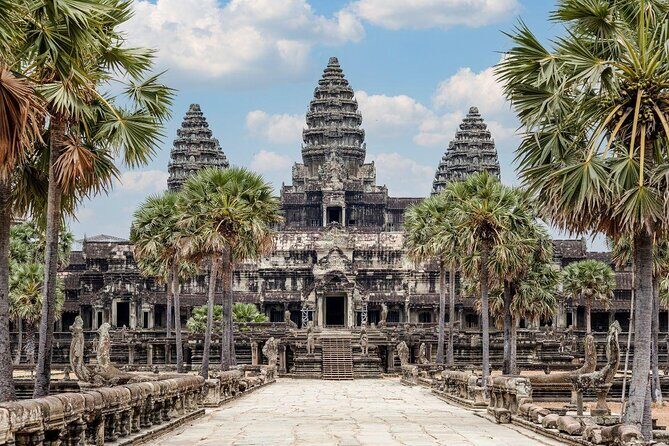
- Two ways to see Angkor: big-ticket icons like Bayon and Angkor Wat, plus smaller, sculpture-heavy temples like Banteay Srei.
- Meaningful Phnom Penh stops: Royal Palace and National Museum on one side, then Tuol Sleng and Choeung Ek on the other.
- Overnight Halong Bay cruise: a full night on the water, not just a day boat ride.
- Hue at a slower pace: pedal-powered cyclo in the Citadel area and a Perfume River cruise day.
Phnom Penh to Siem Reap to Hanoi: how the route keeps you moving

This is a high-efficiency plan across two countries, with private transport and guided stops built into each day. You fly when it saves real travel time, including Phnom Penh to Siem Reap, then Siem Reap to Hanoi, later Hanoi to Da Nang, and Hue to Ho Chi Minh City. That pacing is the point: you spend more daylight on sights and less daylight in transit limbo.
On arrival in Phnom Penh, you handle Cambodia visa and immigration/customs right at the airport, then your ground team takes over for the guided city day. The tour includes daily breakfast, multiple guided museums/temples, and entrance fees for the listed sites—so you’re not constantly pulling out cards for tickets mid-day.
The trade-off is mental load. With frequent schedule changes across Phnom Penh, Siem Reap, Hanoi, and beyond, you’ll enjoy the trip more if you keep your day simple: pack what you need, wear comfortable walking shoes, and stay on time for pickups.
Other Angkor Wat temple tours we've reviewed in Phnom Penh
Royal Palace, National Museum, Wat Phnom, and the hard stops in Phnom Penh
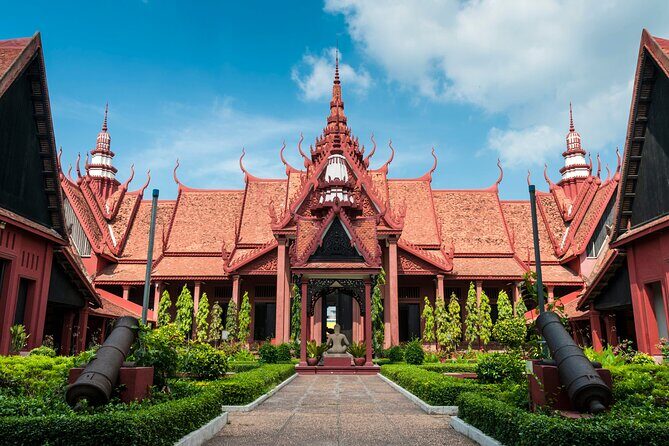
Your Phnom Penh day starts with the Royal Palace, built in 1866 by King Norodom. You’ll move through the pagoda-style compound and its gardens, which makes a good first landing rhythm—Cambodia’s grandeur in a format that feels easy to take in after a flight.
Next is the National Museum, a focused place for Khmer art and sculpture. It matters because it gives you a framework before you hit Angkor’s stone world. Seeing Khmer art here helps you notice details later—styles, themes, and the way temples and sculptures connect.
Then you’ll visit Wat Phnom, founded in 1373, tied to Buddhist relics washed ashore by the river. It’s a smaller, calmer stop that helps you reset before the emotionally heavy part of the day.
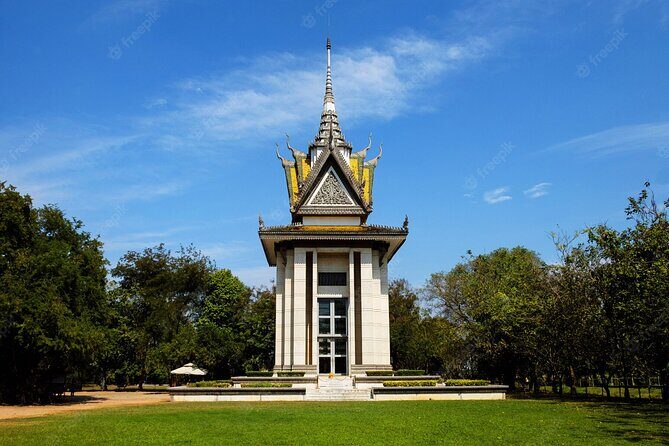
After lunch, you go to Tuol Sleng Genocide Museum and then Choeung Ek Killing Fields. These aren’t “quick look and move on” sites. The program puts them on the same day as the palace and museum, which can feel intense, but it also creates honest context for modern Cambodia. I’d treat these as a slow, reflective block. Bring water, take breaks when you need them, and don’t rush your own attention.
Angkor Thom at human scale: South Gate, Bayon faces, and the terraces
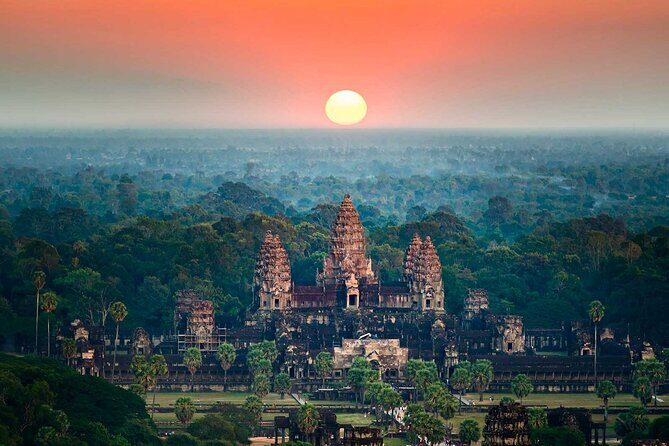
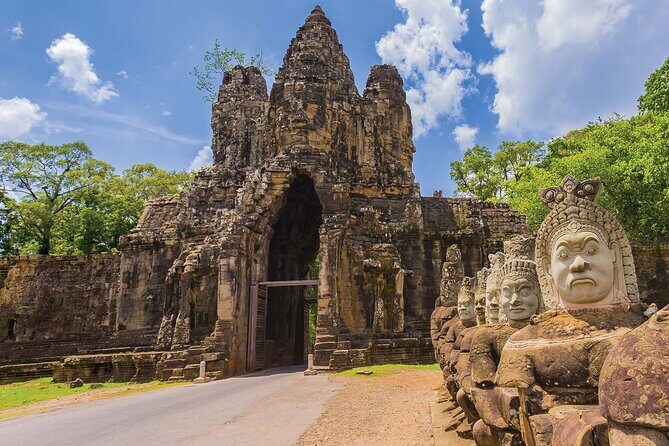
Angkor starts early with Angkor Thom, the walled capital city. You go in through the South Gate, then work through a classic set of highlights that show different layers of the Angkor story—from the city’s scale to the symbolism in temple design.
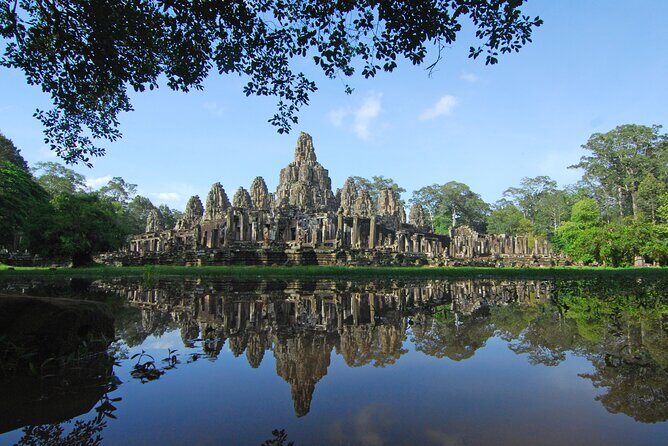
Bayon is the centerpiece here. It’s famous for the faces on multiple sides, and seeing it as part of Angkor Thom makes it feel like the city is watching you back. You’ll also visit Baphuon, plus the Terrace of the Elephants and the Terrace of the Leper King—spaces that help you connect temple architecture to royal ceremonies and the way leaders used public stone stages.
Phimeanakas follows, then the itinerary shifts into atmosphere with Ta Prohm. Ta Prohm is one of those places where nature and stone share the scene. If you’re the kind of person who cares about how ruins look in real light, this stop is a great one to slow down for photos and for reading the carvings as best you can.
Then comes Angkor Wat in the afternoon: a long, rewarding session with bas-reliefs and devatas (guardian spirits) described as part of the experience. You get a proper chunk of time here, not just a stop-and-snap.
The drawback? Angkor days can feel like a stone marathon. I’d plan to hydrate steadily and pace yourself, especially after lunch. Temples look different in shade and sun, so take small breaks and give your eyes time to adjust.
Banteay Srei plus Preah Khan and Kampong Phluk: carvings and village life
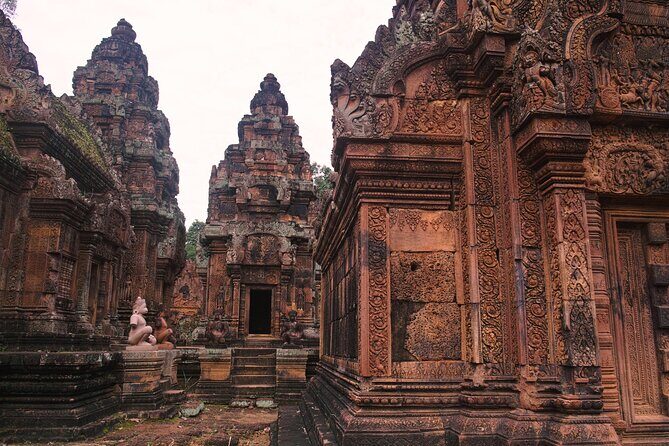
On the next Angkor-focused day, you start with Banteay Srei. This is the “pink sandstone jewel” temple stop, built in the 10th century and dedicated to Shiva. The key value here is quality over scale—Banteay Srei is more about intricate sculpture than about huge-city monument vibes.
You’ll then visit Preah Khan, built in a similar style to Ta Prohm, and noted as being in better preservation. The sacred sword meaning is part of how the site is framed, which helps you understand why this temple isn’t just decorative—it’s tied to names, belief, and royal building programs.
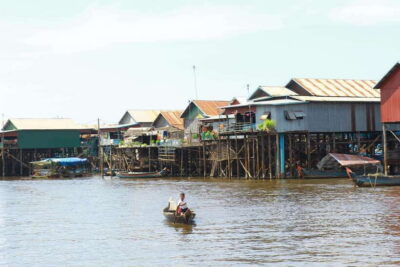
After lunch, you shift away from stone into daily life with Kampong Phluk Floating Village. You’ll do an ox-cart ride through villages and rice fields, stop for a fresh coconut drink with the family, and spend time in the floating village setting. This is where the tour connects temple history to modern geography: the water-world of rural Cambodia.
This day also sets you up for the next country jump. After that, you fly to Hanoi, so your final Angkor day includes both carved-stone wonders and the texture of ordinary life.
Hanoi’s old quarter on foot plus museums that sharpen context
Hanoi is a strong day because it mixes learning stops with street-level walking. You start at the Ho Chi Minh Complex and Ba Dinh Square, a major pilgrimage site. Even if you don’t focus on politics, this is useful for understanding Vietnam’s national story and how public spaces are used.
Then you visit the Temple of Literature and National University, originally built in 1070 and dedicated to Confucius. It’s a good contrast to temple-culture you saw in Cambodia: different tradition, similar idea—learning, status, and sacred space.
Next is the Vietnam Museum of Ethnology. The tour frames it as a window into Vietnam’s long history through photos and objects, which can be a useful angle before you step into the Old Quarter.
After lunch, you drive past the Hanoi Opera House, then go to Hoa Lo Prison, described as infamous and associated with the term Hanoi Hilton. After that you’ll visit Tran Quoc Pagoda by West Lake.
The day doesn’t stay locked in museum rooms. You take a cyclo ride through Hanoi Old Quarter, the 36 Streets area, with time to see shop-house alleys and browse items like fabrics and crafts. Later you catch a Thang Long Water Puppet performance, a North Vietnamese art form celebrating rural life and folklore.
My quick take: Hanoi can feel busy, but this itinerary gives you a rhythm. You get formal sites, then you end in performance and alleyways—so you leave with both facts and feel.
Other private tours in Phnom Penh
Halong Bay overnight cruise: why one night matters
From Hanoi you head to Halong Bay, a UNESCO natural world heritage site. The highlight is an overnight cruise on a traditional ship, listed as the Dragon Legend Cruise with a Deluce Cabin.
This is the big value difference versus day-trip boats. The itinerary includes a morning view on the water with tea or coffee, breakfast in the fresh air, and then a visit to Vung Vieng fishing village by rustic rowboat. You get to see the bay in multiple light conditions and you get real interaction with a working coastal village setting.
You’ll also spend meaningful time on the boat itself, which helps if you like travel that feels like a break instead of another sightseeing sprint. Yes, it’s still schedule-driven. But the water time gives your brain a rest.
Hoi An by bridge, riverboat, and family houses
After Halong Bay, you fly to Da Nang and connect to Hoi An. Hoi An’s old town is the focus, with UNESCO tied into the program for the Thu Bon River trading-port setting.
You start with the Japanese Covered Bridge, then visit historic houses and meeting halls: Phung Hung old house, Fukian Assembly Hall (Phuc Kien), and Tan Ky House. These stops are a smart way to understand how Hoi An mixed cultures. You’re not only looking at pretty facades; you’re learning how merchant communities shaped the city.
Next is a riverboat along the Thu Bon River, plus a visit to a boat-building village. After lunch, you get free time to explore on your own, which is important in Hoi An because wandering is half the fun.
That evening includes the Hoi An Memories show, described as a cultural and historical performance designed for visitors. Even if you don’t love stage productions, it can work as a structured wrap-up to a day spent with architecture and old lanes.
Hue Imperial City, tombs, and a Perfume River cruise on a private cyclo day
Hue is where the tour slows down in the best way. You start with scenic driving along the Vietnamese coast and arrive for the tomb visits: Tu Duc and Khai Dinh. Both are part of the UNESCO framing of the region, and they offer a different kind of temple experience—monuments for rulers rather than trade or city life.
Later you explore Hue Imperial City, riding on a private pedal-powered cyclo. That detail matters. It keeps you in motion but reduces the walking grind, and it turns the Citadel into something you feel instead of just scan.
The next morning you visit Thien Mu Pagoda, described as the Heavenly Lady Pagoda, a seven-story octagonal tower built in 1844. Then the day includes a cruise along the Perfume River, with viewing of boats continuing through the river scene.
You finish with the Mausoleum of Emperor Minh Mang, set amid pine hills by the river. Each ruler built his own tomb during his reign, which helps you see this as a whole system of royal landscape and symbolism.
Saigon history in layers: Cu Chi, French landmarks, and war museums
Flying from Hue to Ho Chi Minh City brings you into a very different tempo. You get a Saigon day that’s a mix of underground history, French colonial architecture, and modern war remembrance.
You start at Cu Chi Tunnels, a battlefield memorial site with tunnels and chambers three stories deep described as part of the experience. It’s one of those visits that is hard to make light. The good news in this itinerary is that it keeps it focused: you’re not expected to do ten things right after the tunnel segment.
After lunch you visit Saigon Notre Dame Cathedral and then the Central Post Office, described as a Gothic, Renaissance, and French-influenced architectural marvel. You continue to the Independence Palace, also known as Reunification Palace, tied to the end of April 1975.
Then comes the War Remnants Museum, framed as a call for peace and a way to make sure the horrors aren’t repeated. You can also stop at Ben Thanh Market for shopping, plus walk through Ho Chi Minh Square bordered by City Hall and the Rex Hotel area with French and Vietnamese restaurants.
This is a lot for one day. I’d treat museums as breaks, not chores. If you find yourself tired, slow down at least one stop and let the details land.
Mekong Delta on Cai Be Princess Sampan and a colonial-style lunch
Your last full travel block is the Mekong Delta. You visit My Tho, then transfer to the Cai Be jetty to board the Cai Be Princess Sampan for a leisurely cruise.
The itinerary builds a nice “boat-day flow”: cold towels and a refreshing drink at boarding, then time on the water and a transfer ending at Le Longanier Restaurant. Lunch is served in a colonial-style villa set in a lush tropical garden by the river, with fruit trees around.
For me, this ending works because it’s different from temple stone and museum halls. You end where the region lives—waterways, boats, and daily rhythm.
Price and hotels: what $4,360 buys you in real terms
At $4,360 per person for 13 days, this isn’t a budget trip. But it’s also not only paying for sightseeing. You’re paying for the heavy lift: domestic flights, private transfers, guided visits, entrance fees, multiple hotel categories, and boat nights.
The hotel lineup is part of that value story. You’re booked in places like iRoHa Garden Hotel for one night in Phnom Penh, then Golden Temple Hotel for two nights in Siem Reap, La Siesta Hotel for two nights, an overnight on Dragon Legend Cruise in a Deluce cabin, La Siesta Hoi An Resort & Spa for two nights, Azerai La Residence Hue for one night, and then Mai House Saigon Hotel for three nights. Many of these are listed as Deluxe or Superior room categories, with similar-sounding alternatives.
Meals are also handled daily with daily breakfast included (12 breakfasts), plus lunches (6) and dinner being included. You also get three bottles of mineral water per person per day. Add entrance fees, VAT, and taxes, and you can see why the total cost rises—it’s a “known cost” style trip instead of a tip-toe around extra fees.
What you should watch: this price is designed for a smooth run. If you want to control every detail yourself, this is less of a fit. If you want reliable handholding across borders, you’re paying for that.
Who should book this Cambodia-and-Vietnam private route
This tour fits best if you want a structured route but still prefer not to travel in a big group. It’s ideal for couples, friends, or anyone who values private guides and drivers, especially across Cambodia to Vietnam where logistics can be the hard part.
It also works well if you like a balance of big UNESCO icons and smaller, more human-scale stops. You get Angkor giants like Bayon and Angkor Wat, plus Banteay Srei’s detailed stone feel, and then you move into modern Vietnam with Hanoi’s museums and water puppets, Hue’s Citadel and tombs, and Saigon’s war remembrance.
If you hate airport days and can’t stand schedule changes, you may find the number of flights challenging. But if you’re okay with flying to save time, this route is one of the more practical ways to cover a lot without cutting the sightseeing short.
Should you book this 13-day Cambodia and Angkor Wat plus Vietnam private tour?
I’d book it if you want the trip to feel handled from arrival to departure. The combination of private guides, included entrance fees, domestic flights, and overnight cruise time removes most of the stressful planning. You also end with a Mekong day that doesn’t feel like another temple marathon.
I’d hesitate if you’re trying to keep costs low or you dislike moving through countries on a tight schedule. This is built as a full route, so your best strategy is to travel with energy, not with doubt.
If your goal is a confident, guided sweep through Cambodia and Vietnam—Angkor to Saigon, with boats and UNESCO stops included—this private plan is a strong match.
FAQ
What transport and guide style do I get?
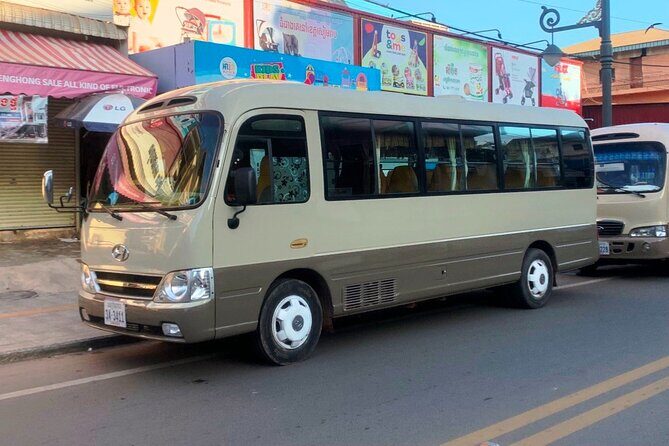
You get private transportation in modern air-conditioned vehicles with a safe driver, plus a professional licensed English-speaking guide for the guided experiences.
Are domestic flights included between cities?
Yes. Domestic flights are included for Phnom Penh to Siem Reap, Siem Reap to Hanoi, Hanoi to Danang, and Hue to Ho Chi Minh City (all listed as economy class).
Do I need to handle Cambodia visa on arrival?
Yes. On arrival in Phnom Penh, the plan includes obtaining your Cambodia visa and then clearing immigration and customs.
Which boat experiences are included?
You get an overnight Halong Bay cruise on the Dragon Legend Cruise, and you also cruise in the Mekong Delta on the Cai Be Princess Sampan.
What Angkor sites are covered?
The covered stops include Angkor Thom (South Gate and Bayon), Ta Prohm, Angkor Wat, plus Banteay Srei, Preah Khan, and a visit to Kampong Phluk Floating Village.
What meals are included?
Daily breakfast is included, plus lunches are included for six days and dinner is included as well. Three bottles of mineral water per person per day are also included.
Is there any free time during the trip?
Yes. In Hoi An, after lunch you get some free time to explore on your own.
If plans change, can I cancel for a refund?
You can cancel up to 6 days in advance for a full refund. For a 50% refund, cancel 2–6 full days before the start time. Less than 2 days before the start time is not refunded.