REVIEW · PHNOM PENH
Full Day Tour Phnom Penh to Siem Reap Taxi, Angkor Visit & Return
Book on Viator →Operated by Private Taxi Cambodia E C T · Bookable on Viator
One long day, three unforgettable temples. This Phnom Penh to Siem Reap private taxi setup turns the Angkor highlights into a same-day plan—so you don’t need an overnight stay to see the big names. I like how it’s built around an efficient route plus an English-speaking guide once you reach the temple area.
I love the comfort-and-control angle: pickup and drop-off in Phnom Penh, transportation covered (gas, tolls, and parking), and even cold water on the way. A driver such as Mr John is often praised for safe driving and practical stops for restrooms, which matters when you’re doing a 14- to 16-hour stretch.
One consideration: it’s a long day, and the temples entrance fee ($37 per person) plus meals aren’t included. If you want slow, unhurried wandering at each site, the time boxes at the temples may feel a bit tight.
In This Review
- Key things to know before you go
- The Phnom Penh to Siem Reap drive sets the tone for the day
- Angkor Wat first: the world-famous start that shapes your photos and your understanding
- Bayon and Angkor Thom: faces, terraces, and a tighter hour of meaning
- Ta Prohm, the Tomb Raider Temple: why the tree roots change everything
- Driver comfort and the English-speaking guide: small wins that add up
- What you’re paying for: $125 plus $37 entrance, and why it can still be good value
- How the schedule works on the ground (and where it can feel rushed)
- Who should book this one-day Angkor plan?
- Should you book the Phnom Penh to Siem Reap taxi with Angkor visit?
- FAQ
- How long is the Phnom Penh to Siem Reap taxi and Angkor tour?
- What temples are included in the Angkor visit?
- Is the Angkor temples entrance fee included in the price?
- Does the tour include pickup and drop-off in Phnom Penh?
- Is there an English-speaking guide?
- Is transportation fully covered during the day?
- Are meals included?
- Is this a private tour?
- Is free cancellation available?
Key things to know before you go
- Private round-trip transport: you’re not sharing a cramped ride with strangers.
- Guided temple time: you get an English-speaking guide while you’re in the Angkor temples park area.
- Must-see lineup in one itinerary: Angkor Wat, Bayon (Angkor Thom), and Ta Prohm.
- Rest stops built into the drive: the driver is known for choosing decent restroom breaks.
- Budget for the entrance fee and your own meals: $37 per person for temples; food isn’t included.
The Phnom Penh to Siem Reap drive sets the tone for the day

This is a full-day plan designed for people who want Angkor on the calendar without adding another night in Siem Reap. You’ll depart from Phnom Penh early in the morning and spend about 6 hours on the road to Siem Reap. Then, after temple time, you’ll head back—again about 6 hours—for an overall day that clocks in at 14 to 16 hours.
That long transit window is the trade-off. On the plus side, private transport means you can relax, keep your day organized, and avoid the hassle of coordinating multiple pieces on your own. On the other hand, you’ll want to plan like a road trip: comfy clothes, good walking shoes, and a mindset that this is a marathon, not a relaxed sightseeing stroll.
One detail I really appreciate: the ride isn’t just a taxi—it’s set up with the basics handled. Gasoline, tolls, and parking are covered, and you get cold bottled water. It sounds small, but when you’re hours in transit, those “tiny” conveniences stop you from burning time or money looking for them.
And because it’s private, the day can feel less chaotic. You’re moving as a group with a driver who’s responsible for the route and timing, while the guide focuses on the temples and what you’re seeing.
Other Phnom Penh transfer tours we've reviewed in Phnom Penh


Angkor Wat first: the world-famous start that shapes your photos and your understanding

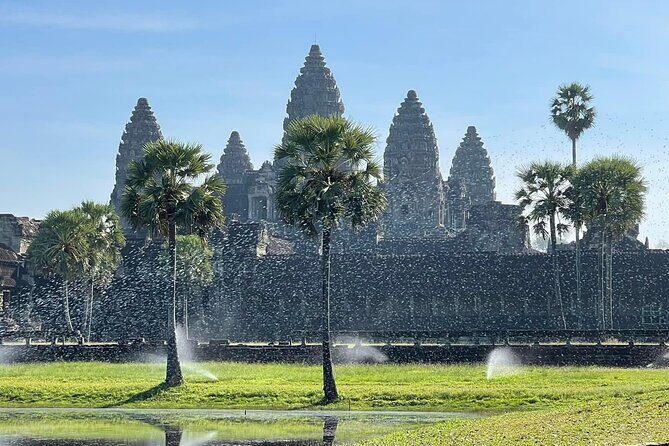
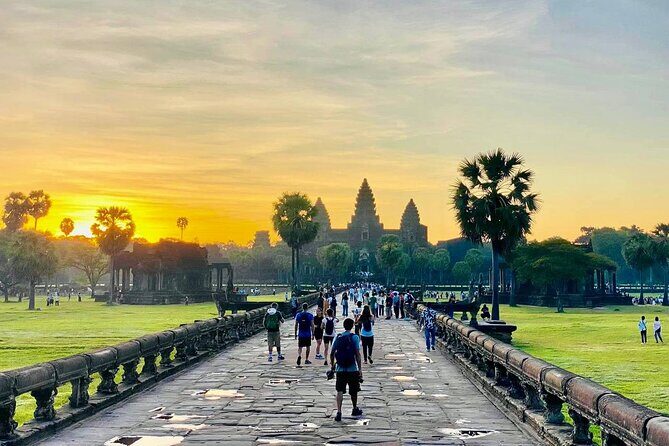
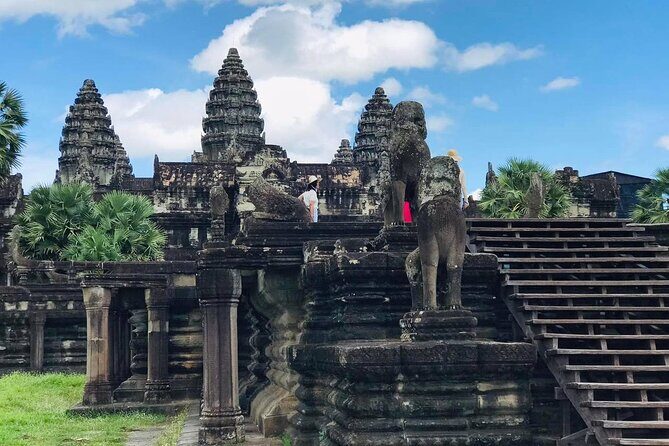
Angkor Wat is the opener, and it’s a smart choice. You arrive mid-morning and head right into the Angkor Archaeological Park. Angkor Wat itself gets about 2 hours here, which is enough time to take in the main sightlines, read the significance from your guide, and get your bearings.
Angkor Wat is described as the world’s largest religious monument, and you’ll feel why the moment you’re there. The best way to use your time is to start with wide views first, then zoom in on details. With only about two hours, the goal is not to “see everything,” but to understand what you’re looking at and then photograph the angles that make sense to you.
A guided stop helps. Even if you’ve read about Angkor before, an English-speaking guide can turn architecture into stories—why certain structures look the way they do, what the layout means, and how the temple’s identity fits into the larger Angkor complex.
One practical note: Angkor Wat tickets are not included in the tour price. You’ll need to budget $37 per person for temple entrance fees. That means you should arrive mentally ready to handle entry steps smoothly so you don’t lose precious time right at the start.
Bayon and Angkor Thom: faces, terraces, and a tighter hour of meaning
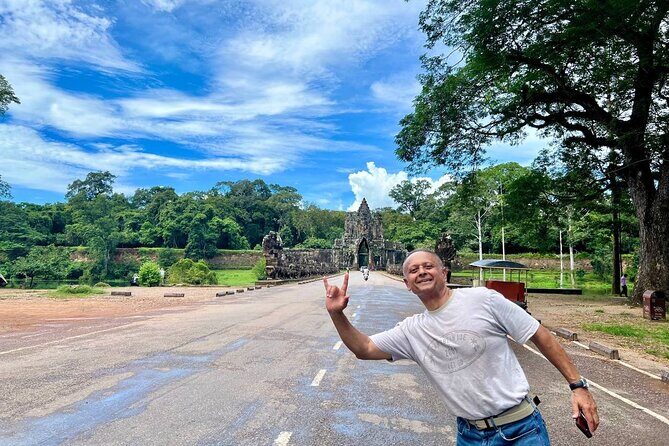
After Angkor Wat, you move to Bayon Temple, famous for its enigmatic stone faces. Bayon is paired with an exploration of the ancient city of Angkor Thom, including the Terrace of the Elephants and the Terrace of the Leper King. Your time here is about 1 hour.
This is where the tour’s “one-day efficiency” becomes very real. You get the essential highlights, but it’s not a slow tour of every corner. If you’re the type who loves standing back, comparing views, and lingering until the light shifts, you may feel a bit time-pressured. Still, a focused hour can be a gift if you’re trying to hit the big emotional and visual moments without turning the day into a blur.
The guide matters most at this stop. A lot of people get good photos at Bayon, but understanding the symbolism and context makes the experience stick. With a guide’s explanations, the stone faces stop being just a cool visual and start being a key to how Angkor’s designers thought about power, worship, and storytelling through stone.
I also like that the itinerary doesn’t treat Bayon as a standalone stop. By mentioning Angkor Thom’s terraces, you get a sense of the broader city layout and not just one isolated temple structure.
Ta Prohm, the Tomb Raider Temple: why the tree roots change everything
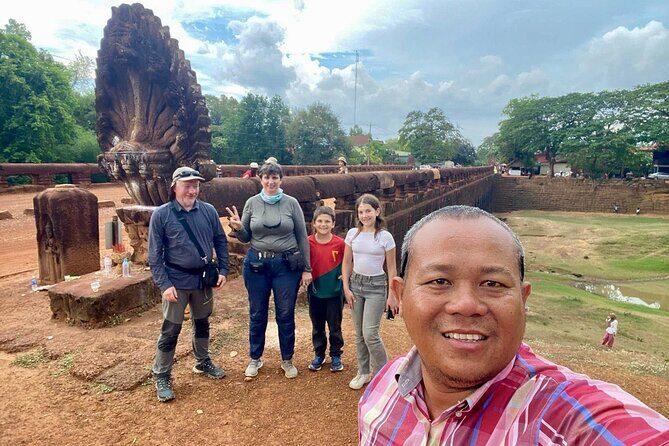
Then comes Ta Prohm, often called the Tomb Raider Temple because of how it shows up in popular culture. It’s the most “surreal” stop of the day, where giant tree roots intertwine with ancient ruins. Your time here is about 1 hour.
This is the kind of place where photos can easily become the entire experience—because it’s so easy to snap pictures everywhere. The trick is to use your hour to watch the relationship between nature and architecture. The roots aren’t just decoration. They create framing, tunnels, and visual contrast that makes the ruins feel alive.
If you’re sensitive to crowds, Ta Prohm can feel intense simply because it’s famous and photogenic. A guide can help you manage your route and angle choices so you don’t spend your time walking in the wrong direction when you could be capturing the views you came for.
One more reality check: with only 1 hour, you’ll likely want to decide what matters to you before you arrive. Do you want one “money shot” from a specific angle, or do you want more time wandering for textures and close-up root-and-stone scenes? Either way, plan to move efficiently within your time box.
Driver comfort and the English-speaking guide: small wins that add up
Transport is a major part of value on this trip, because you’re covering Phnom Penh to Siem Reap and back in a single day. The tour includes pickup and drop-off and uses an English-speaking driver for the round trip. You’re also told you’ll have an English speaking tour guide at the Angkor temples park area.
In the reviews connected to this experience, the driver name Mr John comes up with praise for being super safe and for taking people to “nice rest stops” for restroom breaks. That kind of practical competence matters more than you’d think. A comfortable drive and a calm, safety-first approach can make the day feel doable instead of stressful.
Cold water is also included, and that’s a simple but real help in the heat. Add in parking and tolls being handled, and you get fewer interruptions. You’re not spending your day solving logistics while you’re trying to enjoy the temples.
Also, because it’s private, you’re usually not stuck waiting behind other groups in the same way. Your pace can be more coherent, and the guide can focus on your questions rather than juggling a big crowd.

What you’re paying for: $125 plus $37 entrance, and why it can still be good value
The price is $125 per person for the full-day private taxi experience. That includes pickup and drop-off in Phnom Penh, round-trip transport costs (gas, tolls, and parking), an English-speaking guide in the temple area, and cold bottled water. The temples entrance fee is not included, listed as $37 per person.
So your basic budgeting picture is:
- $125 tour cost
- $37 temple entrance fee (per person)
- Meals are not included
That can still be good value if you care about time. Going Phnom Penh to Siem Reap and back the same day is only practical when the travel is organized for you. Private transport reduces the number of moving pieces you have to handle, and the guide helps you turn ticket time into understanding time.
On the other hand, it’s not the cheapest way to do Angkor. If you’re comfortable handling your own transport and you don’t need an English-speaking guide, you might find lower-cost options. Still, this one hits a clear sweet spot: it’s built for people with limited time who want the main sights in one day.
One more cost reality: since meals aren’t included, you should plan where you’ll eat and carry a little backup if your schedule runs tight. Your day will likely be packed enough that “we’ll find something easily” may not work out in the way you hope.
How the schedule works on the ground (and where it can feel rushed)

Your day flows like this:
- Early departure from Phnom Penh, about 6 hours on the road
- Angkor Wat for about 2 hours
- Bayon plus Angkor Thom highlights for about 1 hour
- Ta Prohm for about 1 hour
- Return to Phnom Penh, about 6 hours in the evening
The pacing is efficient. That’s the whole point. You’ll see Angkor Wat, Bayon, and Ta Prohm, plus key stops inside Angkor Thom’s story space (including the Terrace of the Elephants and the Terrace of the Leper King).
Where it can feel “rushed” is the temple switching. You’re not spending half a day on just one site; you’re moving through a curated hit list. If your dream version of Angkor is slow, reflective, and unhurried, you might prefer a multi-day plan. But if your dream is to check off the big three with a guide and private transport, this format fits.
My advice: set realistic goals for each stop. Treat Angkor Wat as your foundation (understand the monument), Bayon as your visual + symbolic hit, and Ta Prohm as your atmospheric photo-and-ruins stop. If you do that, the day will feel rewarding instead of hurried.
Who should book this one-day Angkor plan?
This tour makes the most sense for you if:
- You have limited time in Cambodia and want Angkor without an overnight stay.
- You prefer the convenience of a private taxi with pickup and drop-off in Phnom Penh.
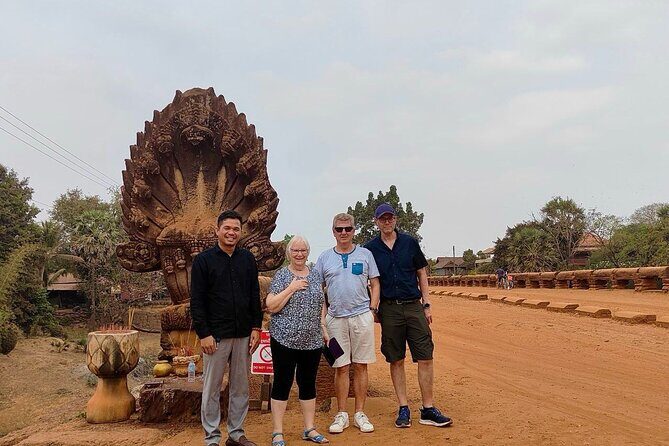
- You want an English-speaking guide at the temples so you’re not just looking at stone with no context.
- You’re okay with a long day and short temple time windows.
It also suits solo travelers and couples, plus small groups, since it’s a private tour/activity where your group participates together.
One note for pacing expectations: because the temples each have a set time window, it’s better if you can be flexible and move with the flow. Bring good shoes and expect to walk.
Should you book the Phnom Penh to Siem Reap taxi with Angkor visit?
I’d book this if you’re time-limited and want a well-structured Angkor day with transport and guidance handled for you. The combination of private round-trip logistics, an English-speaking guide at the park, cold water, and a focused temple lineup makes it a practical way to see the headlines of Angkor without turning your trip into a transport scavenger hunt.
Skip it (or at least compare options) if you’re the type who wants hours of roaming at each temple, or if you’re trying to keep costs ultra-low after adding the $37 entrance fee and your own meals. This plan is efficient, not leisurely.
If you decide to go, do yourself a favor: plan your day around the reality of a 14- to 16-hour schedule, budget for entrance and food, and use the guide time to get meaning—not just photos.
FAQ
How long is the Phnom Penh to Siem Reap taxi and Angkor tour?
The total duration is about 14 to 16 hours.
What temples are included in the Angkor visit?
You visit Angkor Wat, Bayon Temple (including Angkor Thom highlights like the Terrace of the Elephants and the Terrace of the Leper King), and Ta Prohm.
Is the Angkor temples entrance fee included in the price?
No. The temples entrance fee is listed as $37.00 per person.
Does the tour include pickup and drop-off in Phnom Penh?
Yes. Pickup and drop-off in Phnom Penh are included.
Is there an English-speaking guide?
Yes. There is an English speaking tour guide at the Angkor temples park.
Is transportation fully covered during the day?
Yes. Gasoline, tolls, and parking fees are included, along with a return by English speaking driver.
Are meals included?
No. Meals are not included.
Is this a private tour?
Yes. It’s described as a private tour/activity, and only your group will participate.
Is free cancellation available?
Yes. You can cancel up to 24 hours in advance for a full refund.