REVIEW · PHNOM PENH
2-Day Phnom Penh to Siem Reap and Angkor Wat Temples
Book on Viator →Operated by Cambodia Taxi Services · Bookable on Viator
Early starts, big ruins, real life.
What makes this 2-day Cambodia trip worth your time is that you don’t only chase temple photos. You also stop for Cambodian food and daily life on the Tonle Sap Lake before you hit Angkor Wat at sunrise. It’s a smart mix of modern Cambodia and UNESCO world-class sights.
I especially like how the trip is run with a private air-conditioned car and an English-speaking driver who keeps things moving. I also like the way the schedule gives you a full Angkor morning and then a compact but varied afternoon: jungle temple, ancient city, and Bayon’s face towers.
One thing to consider: the temple entrance fees and Tonle Sap village boat ride are not included, and Day 2 starts very early (hotel lobby meeting at 4:45am). If you’re allergic to early mornings, plan on feeling it.
In This Review
- Key Highlights You’ll Actually Care About
- Private Phnom Penh–Siem Reap Transport With a Real English-Speaking Driver
- Day 1: Skun Spiderville Food, Kampong Kdei’s Dragon Bridge, and Tonle Sap Village Life
- Stop 1: Skun Spider Sanctuary (Spiderville Cambodia)
- Stop 2: Kampong Kdei and Spean Praptos (Dragon Bridge)
- Stop 3: Tonle Sap Lake at Kompong Khleang Village
- Day 2: Sunrise Angkor Wat at 4:45am
- Ta Prohm Jungle Roots, Angkor Thom’s Walls, and Bayon’s Four Faces
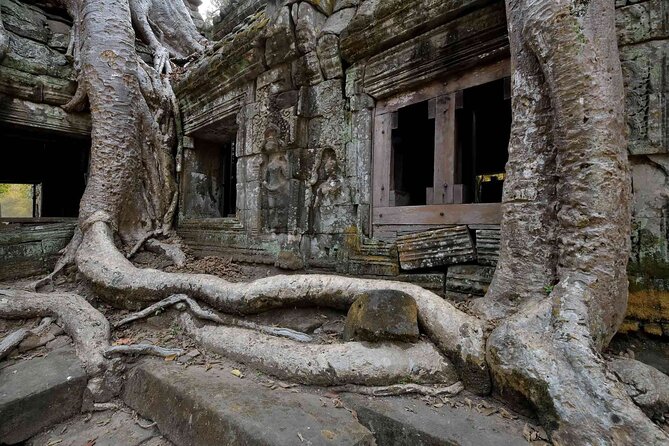
- Ta Prohm: the Jungle Temple That Refuses to Behave
- Angkor Thom: the Ancient City With a Square-Walled Core
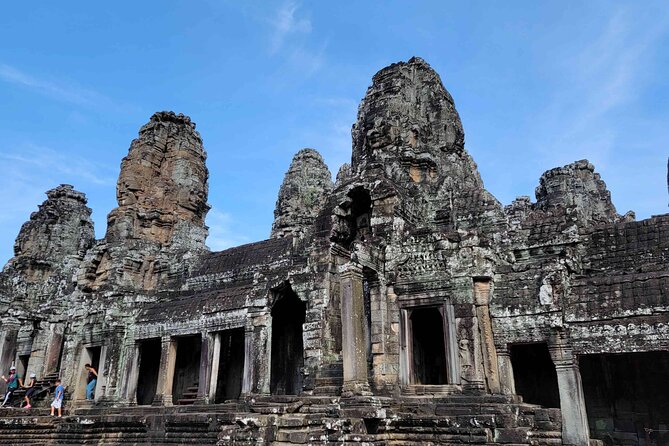
- Bayon: 54 Towers and the Four Faces of Avalokiteshvara
- Price and Value: What $125 Really Buys (and What Adds Up)
- Who This Tour Suits Best (and Who Might Want Something Different)
- A Word About the Driver: Sithy’s Style of Helping
- Should You Book This Phnom Penh to Siem Reap and Angkor Wat Tour?
- FAQ
- What’s included in the tour price?
- Are temple entrance fees included?
- Do you go to Angkor Wat at sunrise?
- What happens on Day 1?
- How much time do you spend at each main temple on Day 2?
- Is cancellation free if I change my mind?
Key Highlights You’ll Actually Care About
- Angkor Wat sunrise timing: meet at 4:45am, with a dedicated 2-hour window
- Day 1 village life by boat: Kompong Khleang on the Great Tonle Sap Lake
- Skun stop for fried insects: tarantula and other fried treats are the point
- 12th-century Kampong Kdei bridge: Spean Praptos / Dragon Bridge with 20+ arches
- Bayon’s 54 towers: four-faced Avalokiteshvara at the heart of Angkor Thom
Private Phnom Penh–Siem Reap Transport With a Real English-Speaking Driver
For $125 over two days, the value here is mostly about reducing stress. You get a private air-conditioned car, a professional English-speaking driver, and a setup that includes pickup and drop-off (including airport and ferry port pickup/drop-off). You’re not sorting buses, seats, or transfers with a pile of tickets.
The car is a big deal in Cambodia. Even if you don’t mind heat, you’ll appreciate being able to cool down between stops and save your energy for walking around Angkor. The trip also includes pure drinking water, plus the driver’s expenses for meals and accommodation—so you’re not doing the awkward job of keeping someone fed and afloat.
There’s a practical side to doing this with a private group, too. The program is only for your group, so the schedule is yours to follow. And if weather or crowd levels shift, the plan is described as flexible based on conditions and requests—which matters a lot around Angkor where things can get crowded fast.
One more detail I like: you’ll have a mobile ticket, which makes the day-of smoother. It’s not the kind of thing you notice until something goes wrong on a travel day, but it’s still a nice safety net.
If you're still narrowing it down, here are other tours in Phnom Penh we've reviewed.
Day 1: Skun Spiderville Food, Kampong Kdei’s Dragon Bridge, and Tonle Sap Village Life
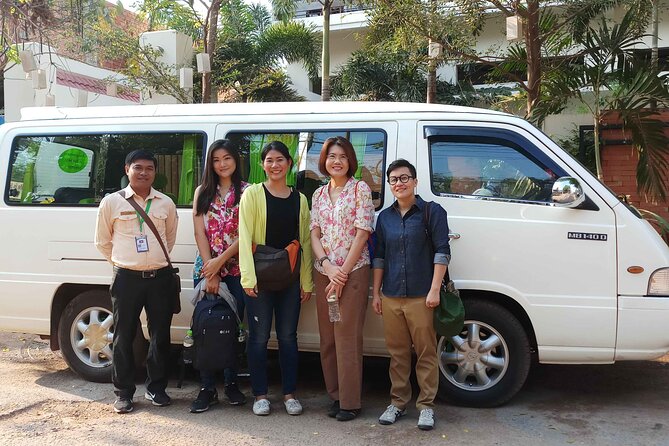
Day 1 is a travel-and-discovery day. You’ll move from Phnom Penh toward Siem Reap’s region while hitting three stops that each show a different side of Cambodia.
Stop 1: Skun Spider Sanctuary (Spiderville Cambodia)
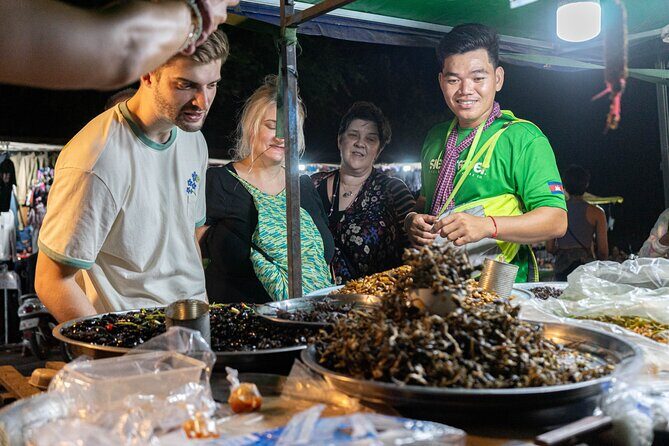
This is the quick-hit stop where the experience is mostly about the food. Skun is nicknamed Spiderville Cambodia, and the signature option is fried tarantula plus other fried insects.
If you like food challenges, this is the kind of place where you can’t just watch—you’re meant to taste. If you’re squeamish, you still get value from the stop because it’s a window into how local businesses turn a strange idea into something travelers will come for.
Time is short here (about 15 minutes), so you won’t lose half a day. The admission ticket is free, which also keeps the overall cost predictable.
Practical note for your stomach: if you’re not used to fried insects, choose slowly and bring water. The taste is more about novelty than comfort food, so pace yourself.
Stop 2: Kampong Kdei and Spean Praptos (Dragon Bridge)
After Skun, you stop at Kampong Kdei—an ancient Angkor route—with a highlight called Spean Praptos, or Dragon Bridge. You’ll see a bridge built in the 12th century with over 20 arches.
This is one of those stops that feels almost too short. It’s 15 minutes, and you’ll likely wish you had more time just to stare at the repeating arch shapes and imagine the trade route it once served. But that short duration can actually be a plus if you want the bridge as a visual break rather than a long museum-style pause.
Because it’s an outdoor heritage structure, it also works well even if the weather changes slightly. Wear footwear you’re comfortable walking in, and don’t treat it as a “major temple day” stop—this one is about the bridge and the sense of Angkor-era infrastructure.
Stop 3: Tonle Sap Lake at Kompong Khleang Village
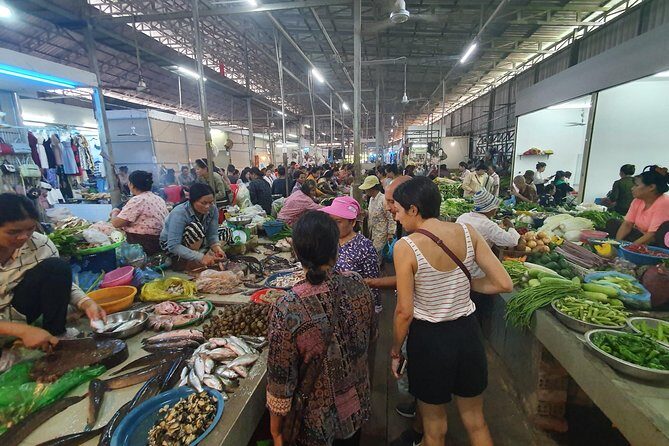
The Tonle Sap Lake stop is where Day 1 turns from history structures to everyday life. You’ll travel to Kompong Khleang, described as one of the larger and less visited villages on the Great Tonle Sap Lake.
Here’s the core experience: you take a wooden boat to the village, about a 1-hour window. The point is to see daily life connected to the lake—fishing culture and how families live with water as their highway.
Important for planning: the lake village admission/boat cost is not included, so you’ll pay this separately. Still, for many people, this is the most memorable part of the trip because it’s not staged in the same way as the most famous temple zones. You’re seeing a living community, not just stone monuments.
Two practical things I’d keep in mind:
- Bring a mindset that this is a village visit. It’s not a theme park.
- Expect basic conditions. You’ll be on a wooden boat, so stable footwear and patience help.
Day 2: Sunrise Angkor Wat at 4:45am
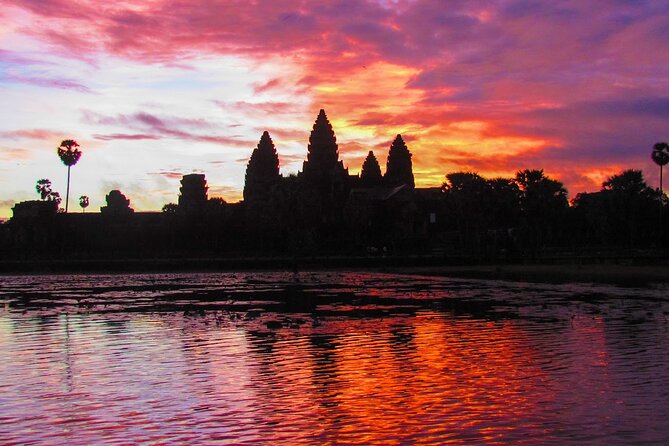
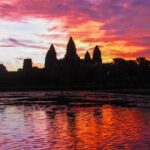
Day 2 is built around the early morning. You meet in the hotel lobby at 4:45am, then travel to see Angkor Wat at sunrise. The program gives you about 2 hours at Angkor Wat.
This isn’t just a schedule detail—it changes what the ruins feel like. Morning light on stone is the difference between a photo you toss into a folder and a photo that actually feels like the place. Plus, sunrise timing is the easiest way to get more breathing room before the midday crowds fully settle in.
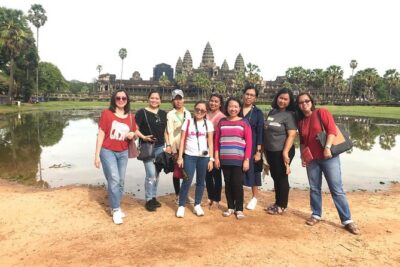
Angkor Wat is described as the largest religious building in the world, and it really does set the tone for the whole Angkor region. Even if you’ve seen pictures, the scale hits when you’re standing in the space. You’ll get time to take it in slowly rather than sprinting.
Not included: the Angkor Wat entrance ticket. So budget for that separately. The same is true for the other temple sites later in the day.
Also, plan to be awake. That 4:45am meet time means you should treat Day 2 as a “go to bed early” night. If you’re traveling from Phnom Penh, you’ll likely be tired already; this day is about making the most of the morning.
Ta Prohm Jungle Roots, Angkor Thom’s Walls, and Bayon’s Four Faces
After sunrise, you return to the hotel for breakfast and a rest window. Then the afternoon temples start.
Ta Prohm: the Jungle Temple That Refuses to Behave
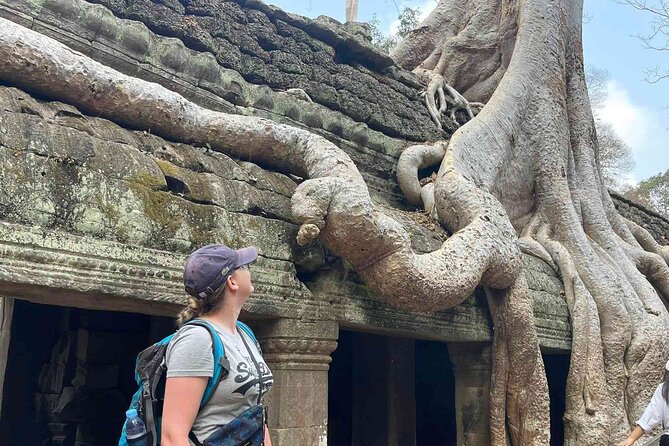
You head to Ta Prohm, often called the jungle temple. The key description is that it’s overgrown by jungle trees and vines, with many parts crumbling.
This is the temple stop that tends to feel cinematic. The roots and greenery aren’t just decoration—they change how you read the architecture. You don’t look at it the way you’d look at a temple fully restored. You look at it as a structure being reclaimed by nature.
You’ll have about 1 hour here, which is enough to walk the main areas without turning it into a chore.
Because the ground can be uneven and there are roots and stone edges, sturdy shoes help. Also, give your eyes time. Early on you’ll feel like you’re just seeing ruins; after a few minutes you start noticing patterns in how the vines wrap and how the angles frame the carvings.
Angkor Thom: the Ancient City With a Square-Walled Core
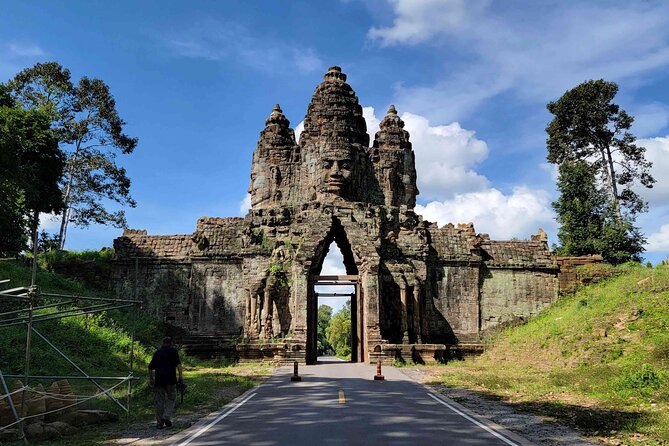
Next is Angkor Thom, the ancient city and former capital under Jayavarman VII. The program notes that Angkor Thom is surrounded by an 8 m high wall forming a perfect square.
Even with only about 15 minutes at this stop, the wall concept gives you context. It’s not random temple hopping. This is about understanding how the Khmer rulers organized space at city scale—defense, governance, and religious power all built into a planned geometry.
A short stop can feel rushed if you like reading each stone detail. But if you’re the type who wants the big picture and then extra time at the main highlights, this works.
Bayon: 54 Towers and the Four Faces of Avalokiteshvara
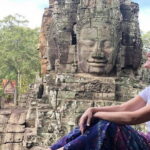
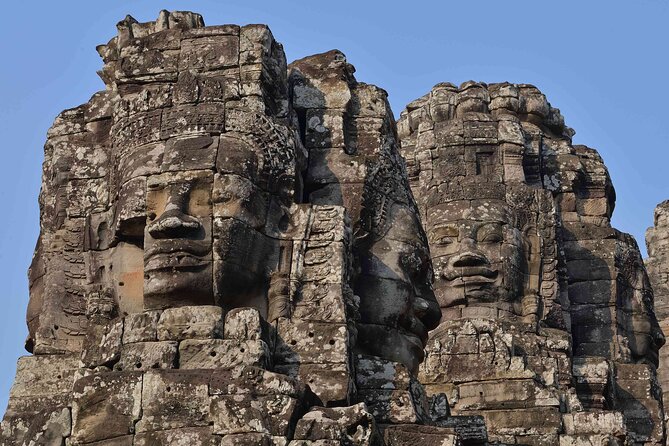
Finally, your highlight is Bayon Temple. The key image is the 54 towers each crowned with the four faces of Avalokiteshvara—the Buddha of Compassion. The description also notes the faces resemble the king.
Bayon is often where people stop and start speaking more quietly, because the faces make the space feel personal. It’s not one angle. You keep noticing new expressions as you move around.
You’ll have about 45 minutes here, which is a good match. You need that time to circle and not just glance.
Bayon is also one of the best “story temples” on the list. With the right mindset, you can see how compassion, kingship, and symbolism all get expressed through repeating faces across towers.
Price and Value: What $125 Really Buys (and What Adds Up)
At $125 for two days, the smart way to judge value is to look at what’s included versus what you’ll pay separately.
Included in the price:
- Private air-conditioned car
- Professional English-speaking driver
- Gasoline, tolls, parking
- Airport/ferry port pickup & drop-off
- Driver’s expenses (meals and accommodation)
- Pure drinking water
Not included:
- Entrance fees for temples and listed stops
- Accommodation
- Food and beverages
- Personal travel insurance
- Optional professional temple tour guide
This matters because Angkor costs can be made up of several parts. Even if you know the main ticket exists, you should still treat “temple day” expenses as separate from your transport package. The same is true for the Tonle Sap village stop, where admission/boat cost is not included.
So is it worth it? For me, the value case is strongest if you want:
- Transport handled end-to-end
- An English-speaking driver who keeps you on schedule
- A compact Angkor experience that hits the big names without turning into a long, independent planning project
If you already plan to hire your own guide inside Angkor and you’re comfortable with DIY transfers and ticketing, you might compare costs. But if you’d rather let someone else manage the moving parts, this pricing structure is a solid trade.
Who This Tour Suits Best (and Who Might Want Something Different)
This program fits best if you want a balanced Cambodia snapshot with minimal friction.
You’ll like it if:
- You want two days with both Tonle Sap village life and Angkor highlights
- You like morning starts for the big sights (sunrise Angkor Wat)
- You prefer a private car over juggling public transport
- You want a schedule that covers several key temples without feeling like you’re gone all day in each spot
You might rethink it if:
- You hate very early mornings (Day 2 starts at 4:45am)
- You’re on a tight budget and don’t want to add entrance fees and the Tonle Sap village boat admission
- You want a long, slow temple day with lots of downtime between monuments
A small but real personal detail: the best-feeling trips I’ve had usually combine one “wow” moment with one “life” moment. Here, that’s sunrise Angkor Wat plus Tonle Sap village life.
Also, if you’re curious about insects as a food experience, Skun is part of the deal. If that’s not your thing, plan to treat Skun as a cultural stop rather than a must-taste moment.
A Word About the Driver: Sithy’s Style of Helping
One of the standout notes from the experience is the driver. In this program, the driver Sithy is called out as lovely and very good at explaining things in a way that makes the day easy to handle.
Even if you don’t think much about drivers, in Cambodia the difference between a smooth day and a chaotic day can be basic timing and clear communication. Having someone attentive helps you get to the right places, at the right time, without stress.
So if you’re the type who likes to relax and not micromanage, pick this kind of tour with a driver you can trust.
Should You Book This Phnom Penh to Siem Reap and Angkor Wat Tour?
If your goal is a two-day highlight loop that combines Angkor’s top temples with an honest look at life around Tonle Sap, I’d book it.
The strongest reasons:
- Sunrise Angkor Wat is a big deal and this tour is built around it
- Day 1 includes real daily-life context at Kompong Khleang, not only stone monuments
- Private transport plus an English-speaking driver removes the hardest logistics
My caution:
- Factor in additional costs for temple entrance fees and the Tonle Sap village stop.
- Commit to the early wake-up for Day 2. This isn’t a “sleep in and go whenever” plan.
FAQ
What’s included in the tour price?
The price includes a private air-conditioned car, a professional English-speaking driver, gasoline/tolls/parking, airport and ferry port pickup and drop-off, the driver’s expenses, and pure drinking water.
Are temple entrance fees included?
No. Entrance fees are not included, and you’ll need to pay them as detailed for the stops in the program.
Do you go to Angkor Wat at sunrise?
Yes. You meet at 4:45am and visit Angkor Wat at sunrise, with about 2 hours at the site.
What happens on Day 1?
Day 1 includes stops at Skun Spider Sanctuary (about 15 minutes), Kampong Kdei / Dragon Bridge (about 15 minutes), and Tonle Sap Lake at Kompong Khleang where you take a wooden boat (about 1 hour). Admission for Skun and Kampong Kdei is free, while Tonle Sap village admission is not included.
How much time do you spend at each main temple on Day 2?
On Day 2: Angkor Wat about 2 hours, Ta Prohm about 1 hour, Angkor Thom about 15 minutes, and Bayon about 45 minutes.
Is cancellation free if I change my mind?
Yes. You can cancel up to 24 hours in advance for a full refund. If you cancel less than 24 hours before the start time, the amount paid is not refunded.