Siem Reap has a city life side too. This private 3 to 4 hour walk-and-tuk-tuk tour is built around local rhythm: an English-speaking guide and stops like the APOPO rat center that you will not find in a typical temple-only day. I like how it mixes culture with practical orientation in a short time, but the tradeoff is simple: if you want a full-on Angkor temple marathon, this is more city-and-community than stone-and-sunset.
You start with a quick meet-and-greet at Café Amazon Psa Chas, then head to Psar Chaa (the Old Market) for daily-life watching and street-food-style snacking. After that you move through monasteries and a royal-residence area, finishing with handicraft workshops and (optional, based on your start time) lunch at Neary Khmer Restaurant.
In the best case, you’ll walk away with a clearer sense of how Siem Reap works day to day: markets, worship, craft, and that fascinating landmine-detection rat program. One more consideration: APOPO costs extra on the spot, so budget that before you go.
In This Review
- Key stops that make this tour worth your time
- Getting oriented fast: how this tour sets you up
- Cafe Amazon Psa Chas: your meet-and-greet on local ground
- Psar Chaa Old Market: daily life, not a photo-op hunt
- Wat Preah Prom Rath: a monastery you can understand
- Royal Residence area: shrines, bats, and quiet streets
- Wat Preah Enkosey: a 10th-century riverside temple stop
- APOPO Visitor Center: landmine-detection rats (ticket extra)
- Cambodian Handicraft Center (Satcha): see how craft is made
- Lunch at Neary Khmer Restaurant: only if you start early
- Price and logistics: why $39 can work well
- Who this tour is best for (and who should skip it)
- Should you book this Siem Reap city tour?
- FAQ
- How much does the private guided tour cost?
- How long is the tour?
- Is pickup available?
- What does the tour include?
- Are there any admission fees I should expect to pay?
- Is lunch included?
- Is this a private tour?
- Can I cancel and get a refund?
Key stops that make this tour worth your time
- Tuk tuk ride plus short walks for a gentle pace in Siem Reap heat
- Psar Chaa Old Market to see daily trading and local snack culture
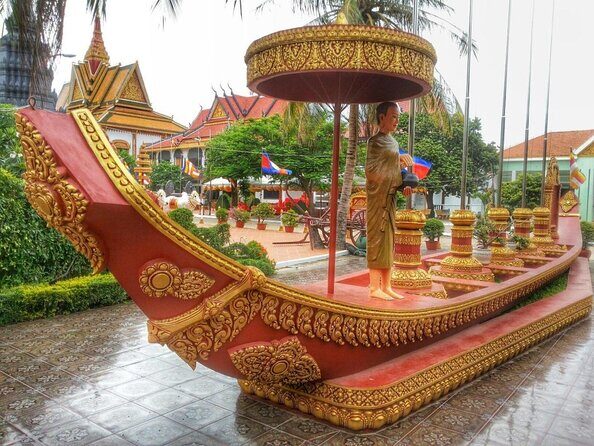
- Wat Preah Prom Rath (14th century) for a calmer look at monastery life
- Royal Residence area with local shrines, a bat park, and quieter residential streets
- Wat Preah Enkosey as a 10th-century riverside temple stop off the usual route
- APOPO landmine-detection rats plus Cambodian handicraft workshops
Getting oriented fast: how this tour sets you up
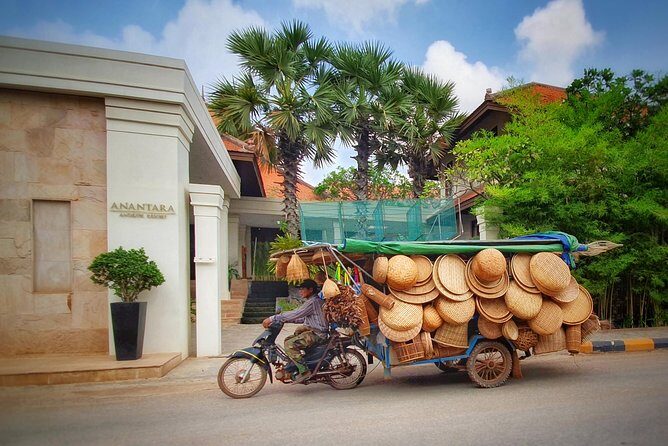
This is the kind of tour I recommend when you have limited time in Siem Reap or you already know you want Angkor days, but you still want the city to make sense.
You get a private setup (your group only), which matters because Siem Reap moves fast: traffic, heat, and crowds can turn a good idea into a stressful scramble. Here, you have a tuk tuk driver working the route and an English-speaking local guide keeping the story clear. Bottled water is included, too, which is not glamorous but it helps you keep moving.
The schedule is built for “short visits, big meaning.” Many stops are around 25 to 40 minutes. That pacing keeps the tour from turning into a long slog, and it also means you can get a feel for different parts of town without exhausting yourself.
If you’re the type who likes asking questions, you’ll likely enjoy the style of guides associated with this tour. Names that have been mentioned include Nak, Lux, Raj, Ran, and Sok Win, and the common thread is strong English and lots of back-and-forth conversation.
Other Siem Reap city and countryside tours we've reviewed in Siem Reap

Cafe Amazon Psa Chas: your meet-and-greet on local ground
Most city tours start with a bland handoff. This one starts with something more normal: Café Amazon Psa Chas. You spend about 10 minutes there for the meet-and-greet and a city intro.
Why this matters: a short “orientation mini-lesson” helps you read what you’re about to see. You’ll be better at spotting what’s local versus what’s set up for tourists, and you’ll understand why the next stops are chosen.
Also, it’s a simple place to gather. You’re in the middle of town, not trekking across it first just to begin.
Psar Chaa Old Market: daily life, not a photo-op hunt
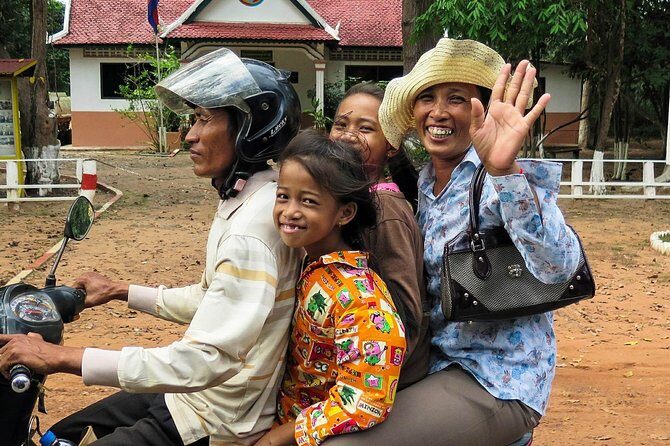
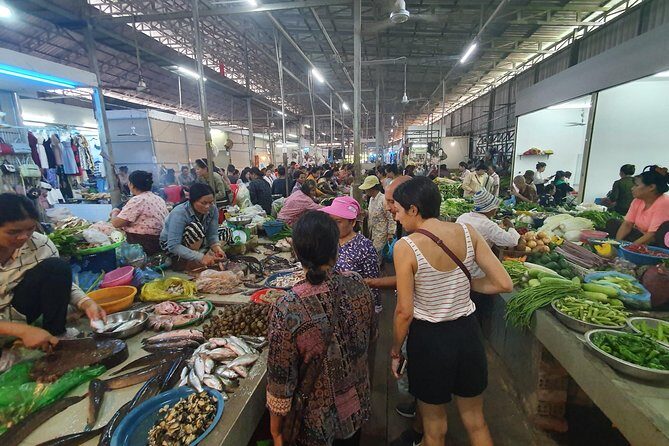
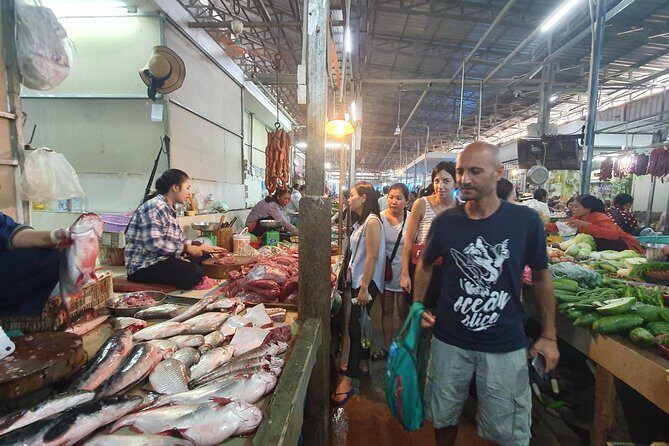
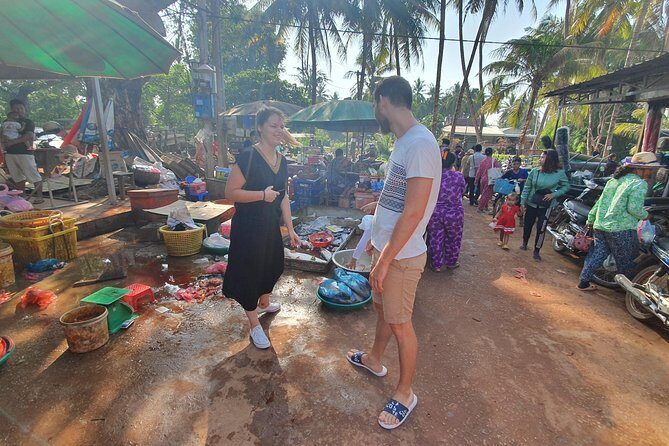
Your next stop is Psar Chaa (Old Market) for about 30 minutes. This is where you slow down and watch how people actually make a living—inside stalls, around counters, and in the flow between vendors.
A big part of the point here is comparison. The tour is designed to help you notice what’s different from your home market setup: goods, packaging, the mix of everyday items, and how the market functions as a community meeting place.
This stop also pairs well with the tour’s snack focus. The overview specifically calls out sampling traditional street food, so expect that the market visit is not just visual. If you have a sensitive stomach, go easy and start with small tastes. If you love street snacks, this is usually the moment that turns a “city tour” into a “memory tour.”
One practical note: markets can be busy and a bit warm. Light clothing and comfy shoes are smart.
Wat Preah Prom Rath: a monastery you can understand
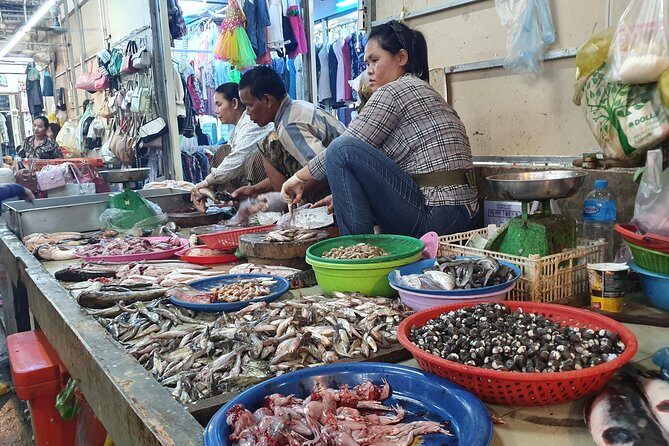
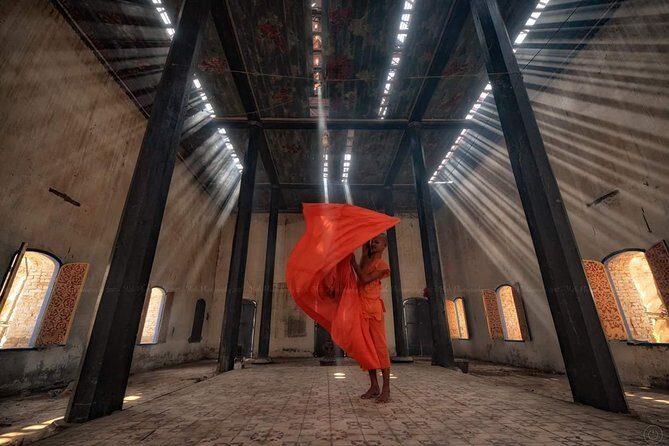
Next up is Wat Preah Prom Rath for about 30 minutes. This monastery dates back to the 14th century, and the guide will talk about the monk’s daily life and how religion and ritual shape Cambodian culture.
What I like about this stop is that it’s not just “look at a building.” Monastery visits can become random tourism if there’s no context. Here, the framing is the daily rhythm of monastic life, which gives the place a human scale.
If you’re used to temple visits that feel like history lessons, this helps balance it. You’ll get a clearer sense of what worship and daily practice mean in the present, not only in the past.
Royal Residence area: shrines, bats, and quiet streets
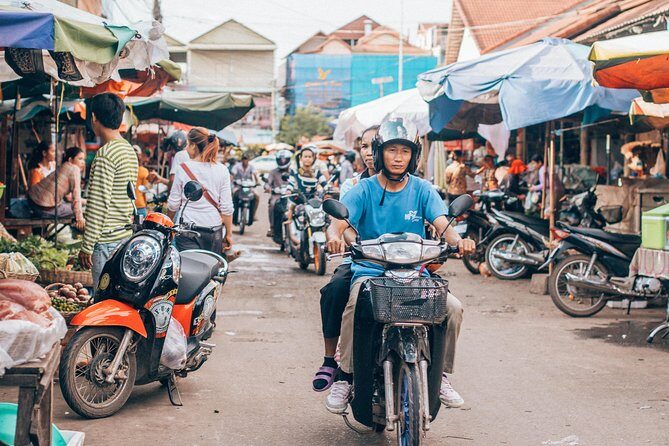
After the monastery, the tour heads to the Royal Residence area for around 25 minutes. This stop is structured around three things:
- a local shrine visit
- a park area where big bats live
- a look at quieter residential streets linked to the area
The bat park detail might sound like a random side show, but it’s actually a good illustration of how “heritage sites” can also be living environments. You’re not just watching architecture; you’re seeing how nature and daily life overlap in a city space.
The residential area piece is also a useful antidote to the “temple bubble.” Siem Reap has neighborhoods and routines that don’t revolve around crowds. Even a short look helps you understand why the city feels different when you step away from the main strips.
Other guided tours in Siem Reap



Wat Preah Enkosey: a 10th-century riverside temple stop
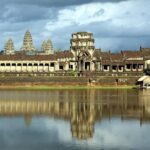
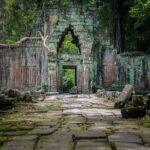
Then you move to Wat Preah Enkosey Monastery for about 25 minutes. This one is described as a 10th-century building temple, located along the riverside area.
This is the part of the tour that often feels like the most distinctive break from the usual city circuit. When temple stops are spaced across different eras and settings, your brain starts to connect the dots: style changes, location choices, and what mattered to people building places of worship.
The riverside location can also make the atmosphere feel different from inland sites. Even without a long stay, you’ll sense that this is a temple you could easily miss on your own.
Practical tip: if you’re sensitive to heat, keep water nearby and move slowly during transitions. Short stops still add up.
APOPO Visitor Center: landmine-detection rats (ticket extra)
Now for the headliner: the APOPO Visitor Center for about 40 minutes. This is where trained rats detect landmines, and it’s intentionally included as a meaningful stop rather than just a “cute animal moment.”
Important money note: APOPO admission is not included. The provided pricing notes show an extra cost of $10 per person in one place, and $8 per person in another place describing the stop. So plan on paying at the center and double-check the current ticket price when you book or on the day of travel.
Is it worth paying extra? If you’re the kind of traveler who likes learning how good work happens behind the scenes, this stop has a lot going for it. It’s also one of those experiences that helps you understand Cambodia beyond the postcard layer: landmines are a serious legacy, and the training program is part of how communities reduce risk.
Balance check: if you’re expecting more temples in this time window, you’ll still spend a chunk of time at a non-temple site. That’s not wrong—just know what you’re buying.
Cambodian Handicraft Center (Satcha): see how craft is made
Next you’ll visit Satcha – Cambodian Handicraft Center for around 30 minutes. This is a workshop-style stop where you can see how crafts are made and how local makers keep traditional skills alive.
The tour notes highlight workshops in:
- stone carving
- wood carving
- natural fiber weaving
- painting
- silk weaving
I like this stop because it answers a common travel question: where do souvenirs actually come from? You’re not just buying an item at the end. You’re seeing the process and learning what materials and techniques matter.
This is also a more ethical shopping moment when you approach it with intention. Instead of grabbing the first pretty thing, you can watch how it’s made and then decide what you want to support.
Lunch at Neary Khmer Restaurant: only if you start early
If your tour start time is in the morning (around 8 or 9am), you’ll get lunch at Neary Khmer Restaurant for about 45 minutes. Lunch is included under that timing option.
If you’re starting later, you may have to arrange your own meal. The tour is written to give you flexibility, but the key detail is that lunch depends on morning timing.
For your planning: if you want lunch included, build your day around an early start. If you don’t, you can treat lunch as a separate exploration of what locals actually eat nearby.
Price and logistics: why $39 can work well
At $39 per person, this is priced as a mid-range city experience. It becomes good value if you care about two things:
1) You want guided context without spending a full day on a single theme.
2) You don’t want the transportation stress of setting up your own route.
What you get for that price is practical: an English-speaking local guide, bottled water, and a tuk tuk driver. Many of the tour stops are listed as free for admission in the tour notes, and the main extra cost is the APOPO ticket.
So your real budget usually ends up being:
- the $39 tour
- plus APOPO admission at the Visitor Center
That trade-off can be worth it, because APOPO is a serious learning stop, not a quick photo stop.
Time-wise, the tour is designed for the “short window traveler.” With 3 to 4 hours total, you can still fit an Angkor day (or another plan) without feeling like you lost your whole schedule.
Who this tour is best for (and who should skip it)
This tour fits you if:
- you’re first-time in Siem Reap and want a clear sense of how the city functions
- you want a break from temple-only days
- you like markets, monasteries, and craft workshops
- you prefer private pacing with a guide who can answer questions
You might not love it as much if:
- you want maximum temple time inside the same few hours
- you hate paying an extra fee at one major stop (APOPO)
- you’re only in town for very short windows and need Angkor right away
It’s also a strong pick for cruise extensions or “one city day” itineraries, because the route gives a well-rounded sampling of Siem Reap life.
Should you book this Siem Reap city tour?
If your goal is to understand Siem Reap as more than a temple delivery system, I’d book this. The mix is smart: market life, monastery context, royal-area sights, a riverside 10th-century temple stop, plus the APOPO rats and a handicraft workshop where you can actually see making happen.
Book it with one small checklist:
- Bring comfortable shoes for short walks and market aisles
- Keep cash or a payment plan for snacks and the APOPO ticket
- Decide early morning vs later if lunch is important to you
Do that, and this becomes one of the most practical ways to get your bearings fast.
FAQ
How much does the private guided tour cost?
It costs $39.00 per person.
How long is the tour?
The tour runs about 3 to 4 hours.
Is pickup available?
Pickup is offered.
What does the tour include?
It includes an English-speaking local guide, bottled water, and a tuk tuk driver.
Are there any admission fees I should expect to pay?
APOPO Visitor Center admission is not included. The tour notes list the separate ticket cost as $8 per person in one section and $10 per person in another, so confirm the current price on the day. The other stops are listed with free admission in the tour details.
Is lunch included?
Lunch at Neary Khmer Restaurant is included only if you start around 8 or 9am. Otherwise, you can arrange lunch on your own.
Is this a private tour?
Yes. It’s a private tour/activity, and only your group participates.
Can I cancel and get a refund?
Yes. Free cancellation is allowed up to 24 hours in advance for a full refund.