Angkor can feel like a test of stamina, not sightseeing. This tour keeps it human with door-to-door transfers and a private guide that shapes the day around key temples, plus sunrise and sunset moments.
I especially liked the tight, efficient route that hits the big names without turning every stop into a rush-job. Second, the day-by-day flow gives you contrast: stone giants at Angkor, then river views and a waterfall at Phnom Kulen, then the calmer rhythm of Tonlé Sap.
One thing to plan for: you’ll need to budget for temple tickets and entrance fees (not included), and they can add up over multiple days.
In This Review
- Key things that make this 3-day plan work
- How the day timings change everything
- Day 1: Angkor Thom + Angkor Wat (then Pre Rup or Phnom Bakheng)
- Bayon Temple and the story on the walls
- Royal-area stops: Baphoun and Pimeanakas
- Lunch break, then Angkor Wat in the late day light
- Day 2: Phnom Kulen waterfall + Banteay Srei + Tonlé Sap floating life
- Phnom Kulen: the first shrine, plus water and a reclining Buddha
- Lunch, then Banteay Srei: the pink sandstone stop
- Tonlé Sap floating village and floating market
- Day 3: Angkor Wat sunrise + Ta Prohm before the crowds
- Breakfast after sunrise
- Ta Prohm: the Tomb Raider temple timing
- Preah Khan, Neak Poan, Ta Som, then Pre Rup
- The guides and drivers: why it feels personal
- Price and value: what you’re paying for (and what you must add)
- What to wear and pack for Khmer heat
- Who this tour is best for
- Should you book this Siem Reap Temple and Waterfall 3-day tour?
- FAQ
- What’s included in the Siem Reap Temple and Waterfall 3-Day Tour?
- Are temple entry fees included?
- What time does the sunrise day start?
- What’s the dressing requirement for temples?
- Is this tour private?
- Can I cancel and get a full refund?
Key things that make this 3-day plan work
- Angkor Wat sunrise on Day 3 with an early start from Siem Reap
- Angkor Thom core circuit: South Gate, Bayon Temple, plus Royal-area stops
- Phnom Kulen waterfall and local life before you climb into the sacred sites
- Banteay Srei pink sandstone often described as more detailed and delicate than the big-city temples
- Tonlé Sap floating village and floating market at the end of Day 2
- Cool water and cool towels plus A/C transport so you can keep moving in heat
How the day timings change everything
Siem Reap is hot, crowded around the main sights, and full of “start early” promises. What I like here is that the schedule actually matches the temples. Day 1 begins at 8:00 am, Day 3 starts at 5:00 am for Angkor Wat sunrise. That early push matters: you see the same monuments, but with better light and less gridlock.
The tour also builds in recovery time. Lunch is included as a break in the Day 1 flow, and Day 3 includes a stop at a local restaurant for breakfast after the sunrise. You don’t spend every minute sprinting between sites, which makes the whole Angkor experience feel less like a checklist.
Other multi-temple archeological tours we've reviewed in Siem Reap
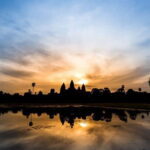
Day 1: Angkor Thom + Angkor Wat (then Pre Rup or Phnom Bakheng)
Day 1 is where you get grounded in the Angkor city layout. You start at the South Gate of Angkor Thom, the kind of entry point that immediately tells you this was a planned capital, not a random pile of ruins. From there, the focus is on the main interior temples.
Bayon Temple and the story on the walls
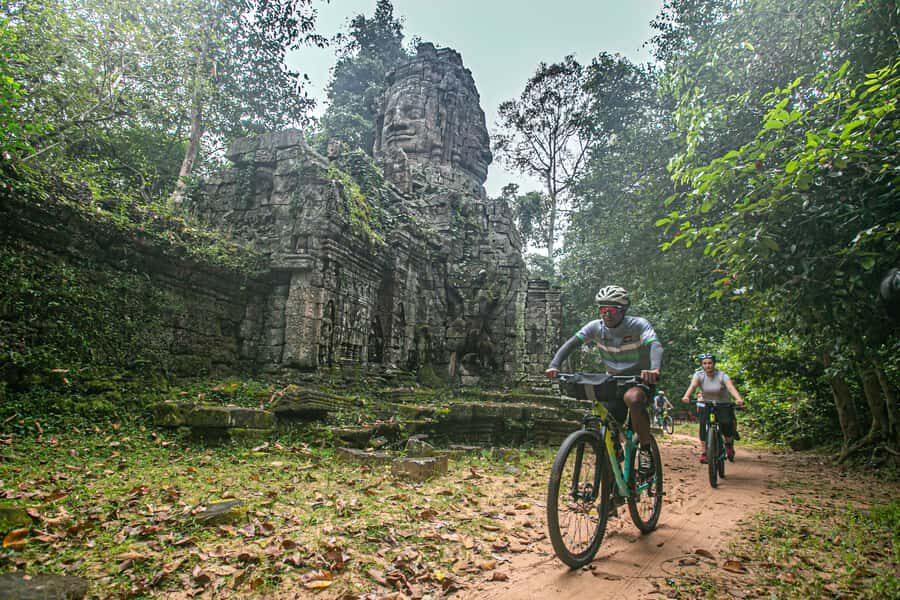
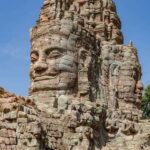
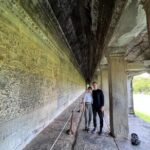
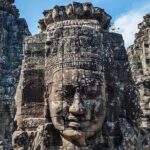
The tour visits Prasat Bayon, the Buddhist state temple associated with the late 12th century. The big draw is the famous faces and the reliefs. What I appreciate is that the stop isn’t just for photos; it’s framed around meaning—depictions of everyday life and war history are part of the experience. After a city-gate start, Bayon hits like a mood shift: calmer stone carvings, but with history packed into every panel.
Royal-area stops: Baphoun and Pimeanakas
You then move toward other Angkor Thom highlights:
- Prasat Baphoun, approached via the rainbow bridge at the Pyramid-shaped temple
- Prasat Pimeanakas, next to the Royal swimming pool area
These are smaller than Angkor Wat, but they help you understand the city’s design and the way water and ritual spaces were connected.
Lunch break, then Angkor Wat in the late day light
After the morning circuit, you break for lunch and a rest in the Angkor Park area. That pause helps, because the afternoon is when your eyes need to be sharp again.
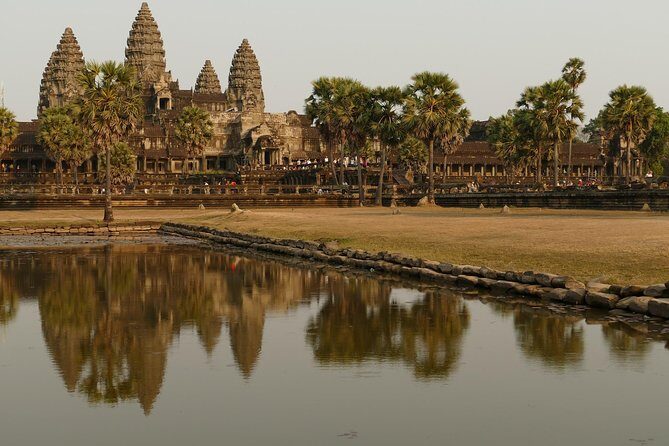
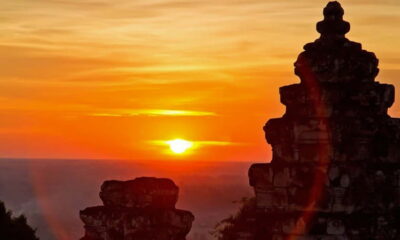
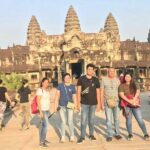
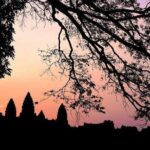
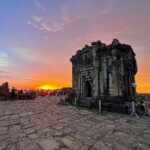
Then comes Angkor Wat—the monument most people picture before they arrive. The afternoon plan ends with a sunset viewpoint at Phnom Bakheng or Pre Rup (your guide chooses based on timing and what’s workable that day). Sunset here is one of those “yes, it’s touristy” moments, but it’s also legitimately beautiful. You’re watching light travel across carved stone in real time.
Tip I’d give you: if you care about sunrise/sunset photos, bring a small towel or rain layer. Cambodian humidity doesn’t just sit in the air—it shows up on lenses.
A few more Angkor & Siem Reap tours and experiences worth a look
Day 2: Phnom Kulen waterfall + Banteay Srei + Tonlé Sap floating life
Day 2 is a relief after the big Angkor circuits. Instead of staying inside the same urban temple zones, you head toward Phnom Kulen, then return to temple detail with Banteay Srei, and finish with the living landscape of Tonlé Sap.
Phnom Kulen: the first shrine, plus water and a reclining Buddha
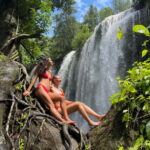
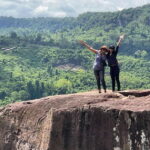
You start at 8:00 am and head to Kulen Waterfall. The approach is part of the experience: you pass Khmer people going about daily life, with views along the way. That’s the difference between seeing temples and understanding the region around them.
On-site, you get several distinct elements:
- the waterfall setting
- the River of 1000 Lingas
- a large reclining Buddha image
You’re not just looking at one view—you’re moving between different kinds of sacred space, from river ritual to hilltop icon.
Lunch, then Banteay Srei: the pink sandstone stop
After lunch and some downtime, you visit Prasat Banteay Srei. This temple is famous for its pink sandstone and for the feel of delicate Khmer art. It’s also described as a “jewelry” style of architecture—smaller scale, lots of carved detail, and the kind of place where you slow down because there’s so much to notice.
One practical note: smaller temples can mean more climbing stairs. If you’re not used to warm-weather walking, bring water and plan for short breaks.
Tonlé Sap floating village and floating market
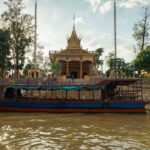
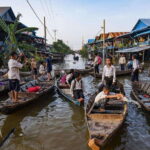
To close the day, you head to Tonlé Sap, with time for a floating village and a floating market. This is where the day changes pace again. Angkor is built stone and empire-scale geometry; Tonlé Sap is living community and daily movement. Even if you’ve seen photos, being on the water makes it feel more real.
Day 3: Angkor Wat sunrise + Ta Prohm before the crowds
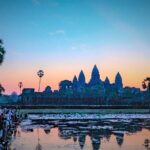
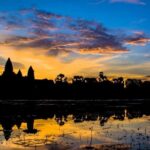
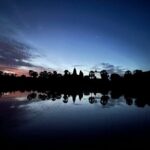
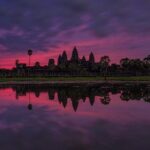
Day 3 is the biggest “wow” morning, because you leave your hotel at about 5:00 am for the Angkor Wat sunrise. Yes, it’s early. But sunrise is one of the few times you get that gentle, cinematic light on the temple’s facade instead of harsh mid-day glare.
Breakfast after sunrise
After you view sunrise, the tour takes you to a local restaurant for breakfast. That matters. If you skip breakfast or try to buy food on the fly, you end up paying in both energy and time.
Ta Prohm: the Tomb Raider temple timing
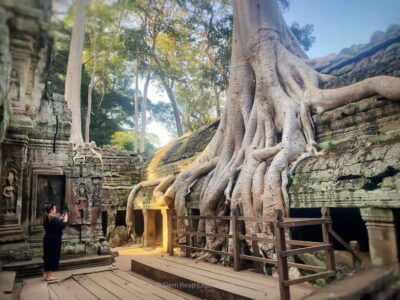
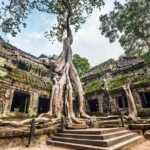
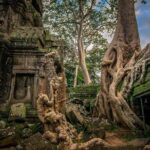
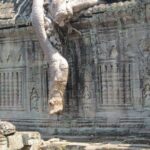
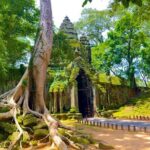
Next is Ta Prohm, the temple people associate with the Tomb Raider movie setting. The key here is timing: the tour is structured so you visit before the big crowds arrive. When you reach the roots and the stone corridors without the crush, the place feels eerie in the best way, like the jungle is still negotiating with the architecture.
Preah Khan, Neak Poan, Ta Som, then Pre Rup
The afternoon continues with a strong sequence of temples that each add a different flavor:
- Prasat Preah Khan, described as the biggest ancestor temple built to honor a king’s father
- Prasat Neak Poan, centered around a holy pool in the middle of the reservoir
- Prasat Ta Som, on the bank of the water reservoir
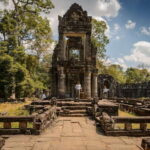
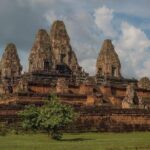
- Prasat Pre Rup, a royal state temple built in the 10th century, noted as a large brick sanctuary still standing after centuries
This last run is a good way to end, because Pre Rup gives you a classic late-afternoon temple feel, and the sequence keeps you moving through different water-and-ritual layouts.
The guides and drivers: why it feels personal
This is a private tour, so the experience depends heavily on the person behind the wheel and the person explaining what you’re seeing. The reviews point to a few standout names and strengths.
- Boy is praised for being professional and for helping make the trip feel smooth and well-timed, along with driver Chantha.
- Young gets mentioned for being not just knowledgeable about sites, but also fun, with a playful style. One review highlights the trip felt personal even with a small group and a child included.
- Makara is called out as professional and kind, and also as a helpful photographer who made it easier to get good pictures without breaking your flow.
Even if you don’t get the exact same guide, the consistent theme is clear: you should expect a competent guide who can manage pacing and translate temple details into something you can actually notice.
Price and value: what you’re paying for (and what you must add)
The tour price is $171.50 per person for the 3 days. What makes that feel fair is the private structure: you’re not sharing a ride or a guide with strangers, and you get A/C transport, cool water, and cool towels included.
But here’s the math you shouldn’t ignore:
- Temple ticket and entrance fees are not included
- The temple ticket required is listed as $37 per person for a single day
- Lunch is not included
- Personal expenses are on you
So the final cost is the base tour price plus the days you purchase temple entry for, plus whatever lunch style you prefer. If you’re traveling as a small group and you want sunrise/sunset timing plus door-to-door transfers, the value is in the time saved and the “right order” of stops.
What to wear and pack for Khmer heat
This tour is temple-focused, and the rules are clear:
- Dress properly: no shorts or T-shirts that don’t cover down to knee length and shoulders
- No tank tops
- No scarf or shawl
- Lightweight cotton is recommended because it’s hot and humid (with nicer weather in November, December, and January)
Pack practical extras:
- A hat or cap (even if you dress up for temples)
- A small bottle of water, even though cool water is provided during the tour
- Light layers you can adjust for sun and humidity
Also, wear shoes you can walk in for stairs and uneven ground. Angkor is famous, but it’s not always level.
Who this tour is best for
This plan is ideal if you:
- want a private experience rather than joining a big group
- care about sunrise and sunset timing
- prefer a guide-driven route that makes sense across three days
- want both “iconic Angkor” and “a change of scenery” with Phnom Kulen and Tonlé Sap
It may be less ideal if you plan to do everything slowly on your own. With a scheduled itinerary, you’ll have less flexibility to linger at one carving for an extra hour.
Should you book this Siem Reap Temple and Waterfall 3-day tour?
I’d book it if your main goal is: see the major temples with the best light, get smart pacing, and avoid the headache of figuring out transport and ordering yourself. The mix is also well thought out—Angkor Thom and Angkor Wat first, then Phnom Kulen’s water and river ritual energy, then Banteay Srei’s detail, and finally Tonlé Sap for the living side of Cambodia.
If you hate early starts, the 5:00 am sunrise day could be a dealbreaker. If you’re budget-tight, pay attention to the fact that temple tickets and lunch aren’t included, so the real total depends on how many days you’re buying entry for.
If that all sounds workable, this is the kind of 3-day plan that gives you a lot of Angkor without turning the trip into constant sprinting.
FAQ
What’s included in the Siem Reap Temple and Waterfall 3-Day Tour?
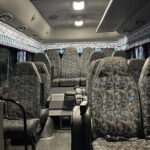
It includes pick-up and drop-off in Siem Reap, air-conditioned transportation (car/van/minibus), and cool water and cool towels.
Are temple entry fees included?
No. Entry fees and tickets are not included, and you’ll need to buy the temple ticket (listed as $37 per person for a single day).
What time does the sunrise day start?
On Day 3, the tour starts at 5:00 am from your hotel to view Angkor Wat sunrise.
What’s the dressing requirement for temples?
You should dress properly with clothing that covers knees and shoulders. No tank tops are allowed, and shorts and T-shirts that don’t meet the length/coverage are not suitable. The guidance also says no scarf or shawl.
Is this tour private?
Yes. It is described as a private tour/activity, and only your group participates.
Can I cancel and get a full refund?
Yes, it includes free cancellation. You can cancel up to 24 hours in advance for a full refund, based on the experience’s local time.