REVIEW · SIEM REAP
Siem Reap: Angkor Sunrise 1- or 2-Day Guided Temples Tour
Book on GetYourGuide →Operated by Journey Cambodia · Bookable on GetYourGuide
Two days around Angkor Wat start before your alarm. I love the pre-dawn sunrise setup and the way the English guide names stories you’d miss on your own, especially with places like Ta Prohm and Angkor Thom. One thing to think about: you’ll cover uneven ground, steps, and heat, so this isn’t a slow, casual stroll.
The value here comes from pacing plus context. The tour mixes big-ticket icons with contrast stops (Banteay Srei, Neak Pean, Preah Khan), and the air-conditioned vehicle plus cold water and towels makes a real difference when the sun hits. If you’re only in Siem Reap briefly, this is one of the more efficient ways to see a lot without feeling lost.
In This Review
- Key highlights worth planning around
- How this 2-day Angkor plan actually feels
- Your guide and driver make or break Angkor
- Day 1: Banteay Srei and the outer-temple circuit with sunset payoff
- Pre Rup: a Hindu temple built like a time marker
- Banteay Srei: where detail is the main show
- Neak Pean: calm, Buddhist, and a break from the crowds
- Preah Khan: ruin with real atmosphere
- Sunset on Day 1: why it’s not just an add-on
- Day 2: Angkor Wat sunrise first, then Angkor Thom’s faces and terraces
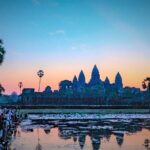
- Catching sunrise: why timing changes everything
- Inside Angkor Wat: slow walking beats rushing
- Breakfast at the temple zone
- Angkor Thom’s Southern Gate: gods and demons
- Bayon and the Central City: 200+ face towers
- Leper King Terrace and Terrace of Elephants
- Ta Prohm: the jungle temple moment that ends the trip right
- What you really pay for: $19 vs the temple pass reality
- Logistics that matter: timing, walking, heat, and dress rules
- Pickup times
- Dress code (don’t wing it)
- What to bring
- Not included meals
- Who this tour fits best (and who should skip)
- Quick “should you book it” verdict
- FAQ
- Is the temple pass included in the price?
- What about meals during the tour?
- What time do pickups happen for Day 2 sunrise?
- Do I need to dress a certain way at the temples?
- How big is the group?
- Is the tour suitable for wheelchair users or young children?
Key highlights worth planning around
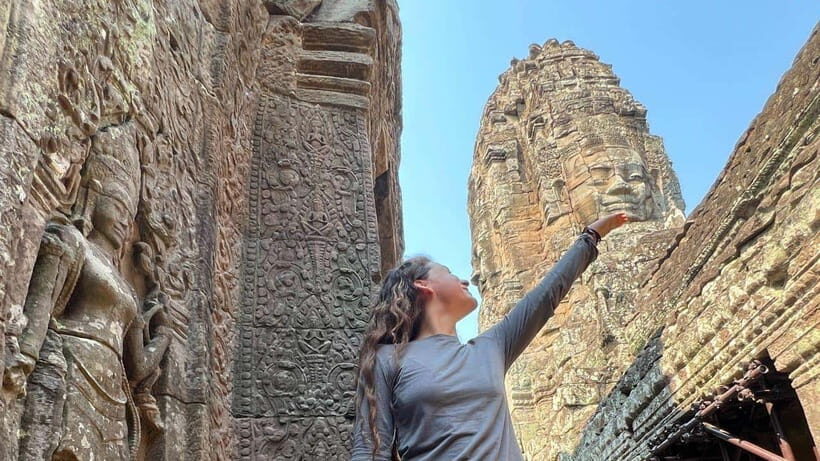
- Angkor Wat sunrise with early entry tactics so you’re in position before the crowd surge.
- Small-group limits (up to 15), which helps the guide keep track of the group on steep, uneven paths.
- Day 1 focuses on the outer circuit vibe: carved details at Banteay Srei and atmospheric ruins at Preah Khan.
- Day 2 is the full Angkor Thom moment with gates, terraces, and Bayon’s face towers.
- Cooling support all day: bottled water, cool towels, and frequent comfort breaks.
- Photo help is part of the job with guide-led angles at several stops, not just temple talk.
How this 2-day Angkor plan actually feels
Angkor can overwhelm you fast. You see towers, then trees, then more towers, and suddenly the whole place feels like one big blur of stone.
This tour keeps it human. You get two distinct moods:
- Day 1 leans toward craftsmanship and atmosphere beyond Angkor Thom—smaller temples, jungle settings, and a sunset finish.
- Day 2 is the big Angkor hit—Angkor Wat at sunrise, then the classic Angkor Thom walk, and finally Ta Prohm.
That structure matters. It keeps your eyes fresh. It also makes the guide’s explanations land better, because you aren’t trying to learn everything in one exhausting day.
Other Angkor Wat sunrise tours we've reviewed in Siem Reap
Your guide and driver make or break Angkor
This is not a free-for-all. The most consistent praise in the experience centers on the guide and driver combo.
Many people highlight guides such as Sak, Saruon Pal, Sokpee, Pi, and Bun for a few common strengths:
- They explain Khmer temple design and religious symbolism in everyday language.
- They point out details that don’t scream for attention from a distance (reliefs, doorways, and layout clues).
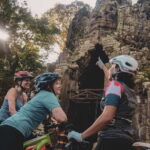
- They also help with photos, including where to stand for better angles.
On the driving side, people mention drivers such as Naro, Vichet, Ro, Water, Seyha, and Mao. The big practical win: they keep the group moving safely and provide cold water and cold towels at the right moments, not as a gimmick. That refreshment rhythm is a big deal in Siem Reap heat.
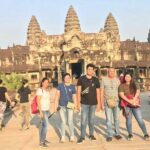
Small group size helps too. One pattern that shows up a lot: groups often feel smaller than the max (people report about 5–6 on some days). That makes it easier to stop, regroup, and keep everyone together on uneven stone.
Day 1: Banteay Srei and the outer-temple circuit with sunset payoff
Day 1 starts later than the sunrise day, usually with hotel pickup around 7:40 AM to 8:00 AM. You’ll return to Siem Reap in the afternoon/evening window (roughly 4–5 PM drop-off for many schedules).
The day is built around contrast: Hindu temples, fine sandstone carving, and ruin-and-root scenery.
Pre Rup: a Hindu temple built like a time marker
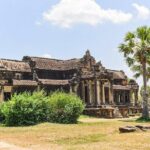
Your first major stop is Pre Rup, a Hindu temple dating to the late 10th century. What makes it worth your attention isn’t just age—it’s how it’s constructed and how the structure reads visually as you move around it.
Practical tip: expect some climbing and step-up paths. Wear shoes you can trust on uneven stone.
Banteay Srei: where detail is the main show
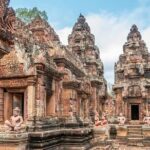
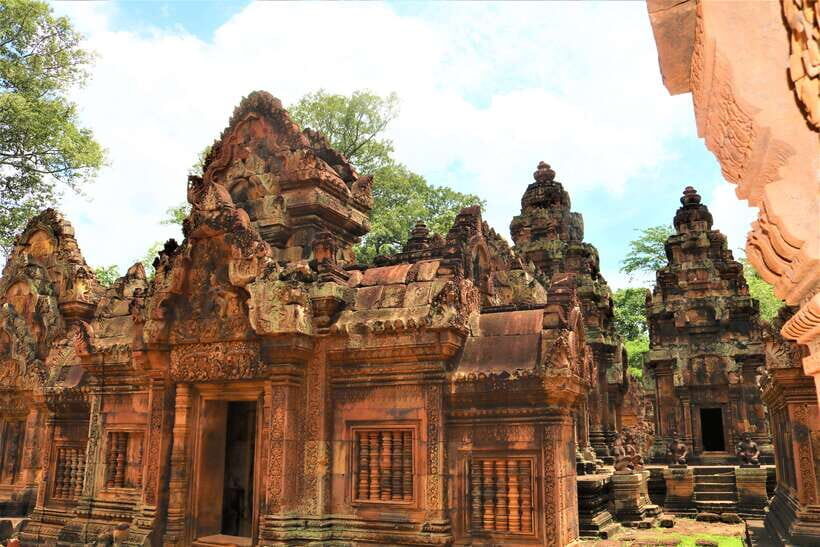
Then comes Banteay Srei, often described as one of the best for carving detail. It’s smaller than Angkor Wat, which changes your perspective. Instead of scanning the skyline, you start reading surfaces.
People love this stop for the same reason: the reliefs feel crisp and the craftsmanship stands out. In a full Angkor trip, this is the counterweight to the big monuments—more human-scale, more intricate.
Other multi-temple archeological tours we've reviewed in Siem Reap


Neak Pean: calm, Buddhist, and a break from the crowds
Next is Neak Pean, a Buddhist temple on a circular artificial island within Jayatataka Baray. It’s quieter in feel than the main icons, and it gives your brain a reset.
This is also a good moment to slow down and look around. The setting matters here more than brute scale.
Preah Khan: ruin with real atmosphere
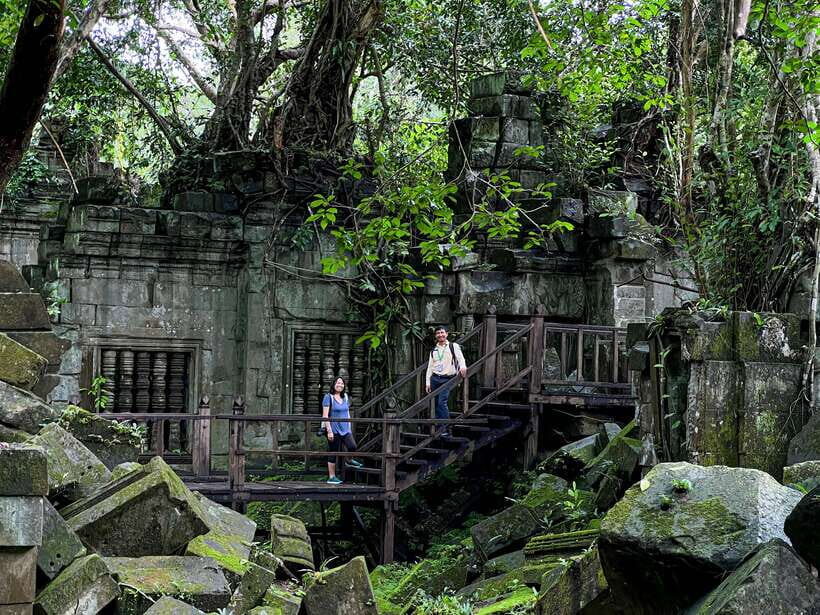
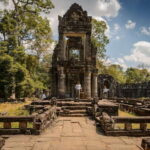
Last on Day 1 is Preah Khan. This is a more ruined, atmospheric site—part stone, part tree roots, part crumbling structure. It’s the kind of place where the temple still feels alive, even if parts are damaged.
You also get context: Preah Khan is linked to Jayavarman VII, who commissioned many major temple projects in his era. Knowing that makes the visit feel more meaningful and less like you’re just walking through “old stuff.”
A bonus that comes up often: this site has been restored by the World Monument Fund in places, so you can see how preservation affects what you experience.
Sunset on Day 1: why it’s not just an add-on
Day 1 ends with a beautiful sunset before returning toward town. That matters because you’re likely to be hot, tired, and slightly stone-overloaded by then. Sunset turns the day’s final visuals into something more memorable than another courtyard photo.
Day 2: Angkor Wat sunrise first, then Angkor Thom’s faces and terraces
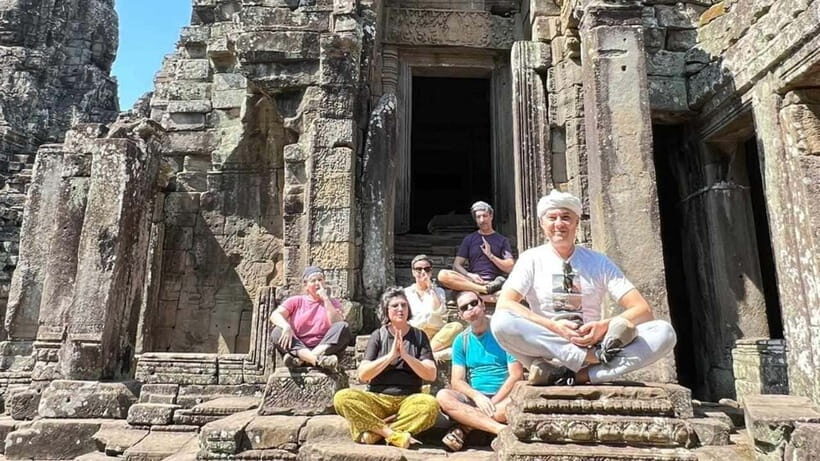
Day 2 is the early one. Your hotel pickup is usually 4:20 AM to 4:35 AM, with drop-off back around 12:30–1:30 PM.
This day is structured to hit Angkor Wat before daytime crowds fully take over.
Catching sunrise: why timing changes everything
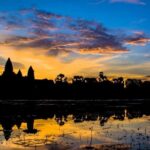
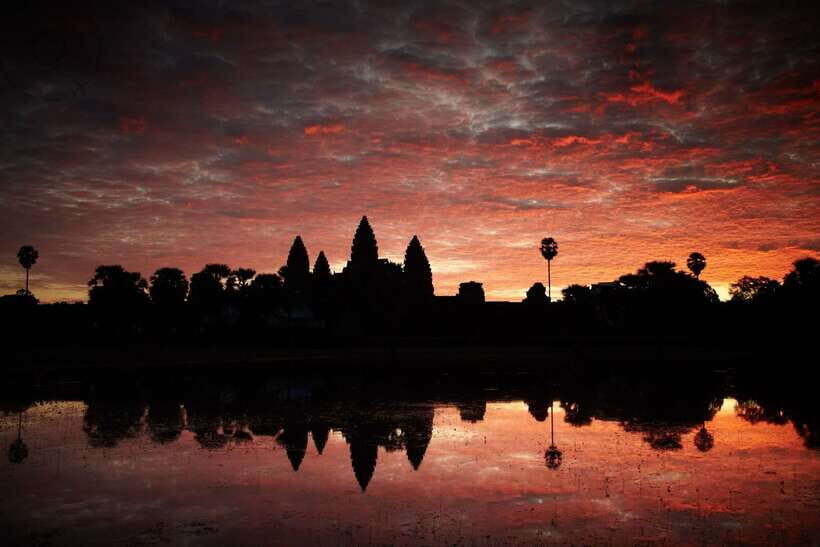
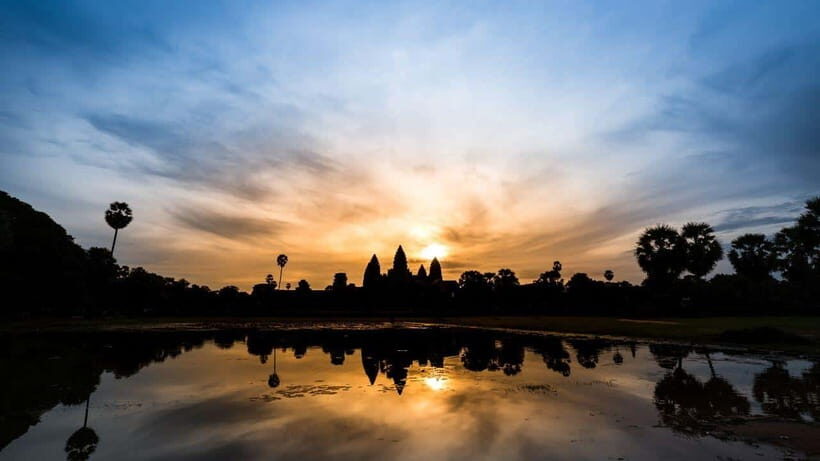
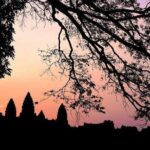
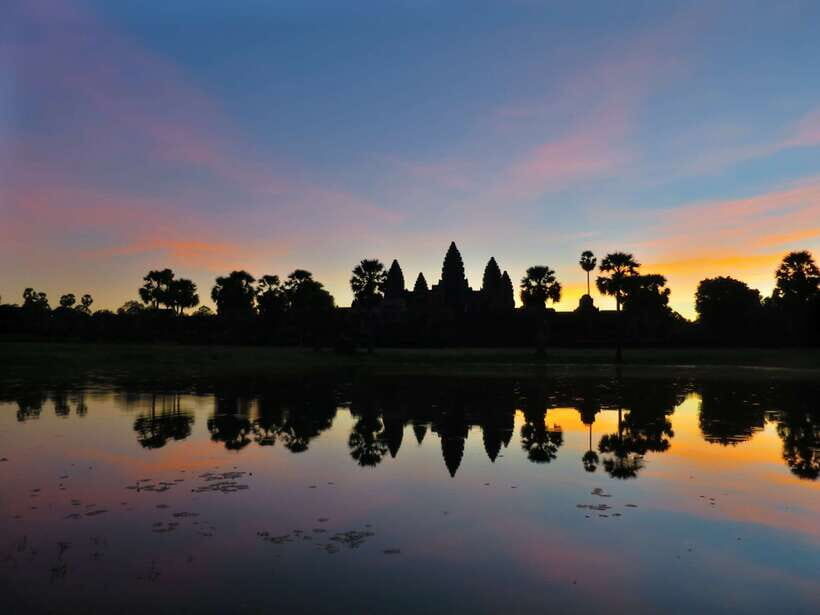
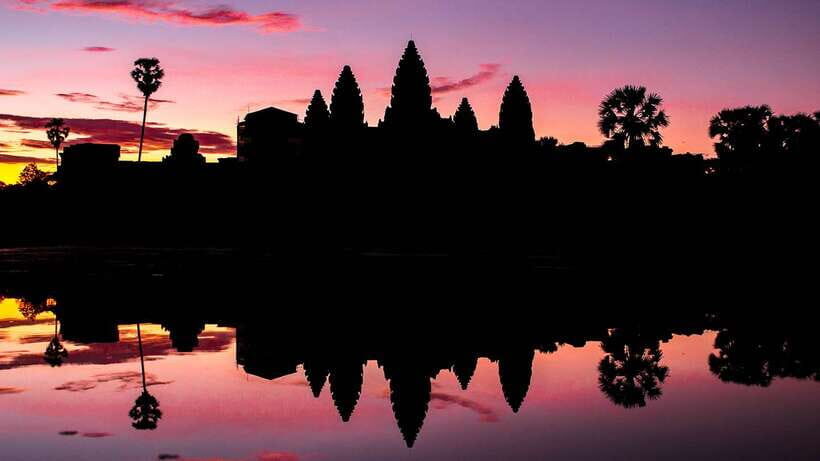
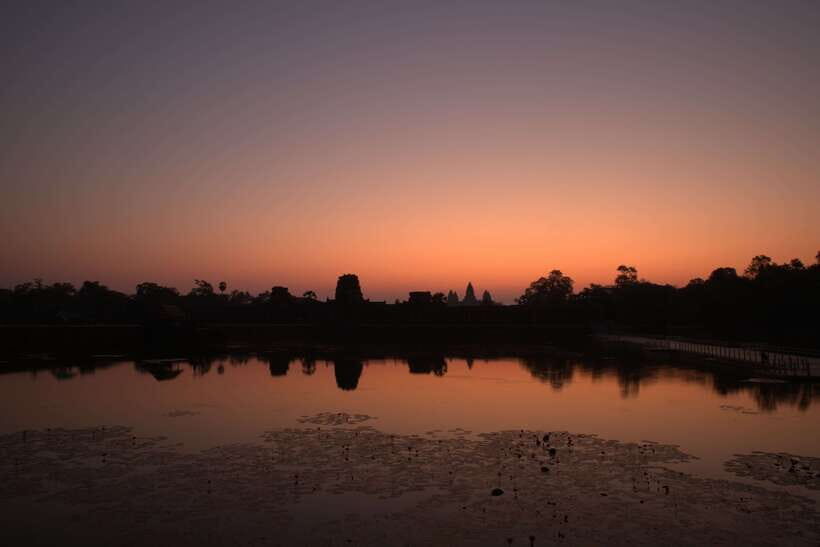
You’ll be heading to Angkor Wat for sunrise from a pre-dawn departure. People repeatedly mention that the guide helps you get into position early enough to take good photos and see the reflections as the light shifts.
Even if the sky doesn’t cooperate perfectly (cloud cover can happen), the effort usually pays off. Sunrise here isn’t just a view. It’s a way to read the temple without the harsh midday glare.
Inside Angkor Wat: slow walking beats rushing
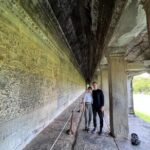
After sunrise, you spend around two hours exploring Angkor Wat’s interior—corridors, central chambers, and upper terraces.
This is where the guide storytelling becomes crucial. You’ll hear explanations tied to the carvings and the Khmer Empire worldview, not just a list of where you are standing.
Practical reality: there’s walking, some stair climbing, and uneven surfaces. The guide can help manage pace, but you still need sturdy footwear.
Breakfast at the temple zone
You’ll have breakfast just outside Angkor Wat. It’s a smart break. You’re leaving the coolest part of the day and moving into bigger daytime crowds and heat.
Angkor Thom’s Southern Gate: gods and demons
Next up is the Southern Gate of Angkor Thom. The gate is flanked by rows of stone figures: 54 on each side, with gods on the left and demons on the right.
This is a great example of why guided tours work. Without explanation, you’d see “cool statues.” With explanation, you start understanding the religious symbolism the Khmer carved into stone.
Bayon and the Central City: 200+ face towers
You then move through Angkor Thom, including the central towers covered in more than 200 enormous faces.
Look for alignment and repetition. Those faces aren’t just decoration—they’re part of the city’s identity in stone, repeated across towers to define space and power.
Leper King Terrace and Terrace of Elephants
After that, you’ll explore the central terrace of the Leper King and the Terrace of Elephants. These are signature areas for a reason: they’re dramatic, detailed, and they help you connect what you saw at the gates to the ceremonial space inside the city.
Ta Prohm: the jungle temple moment that ends the trip right
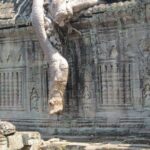
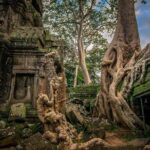
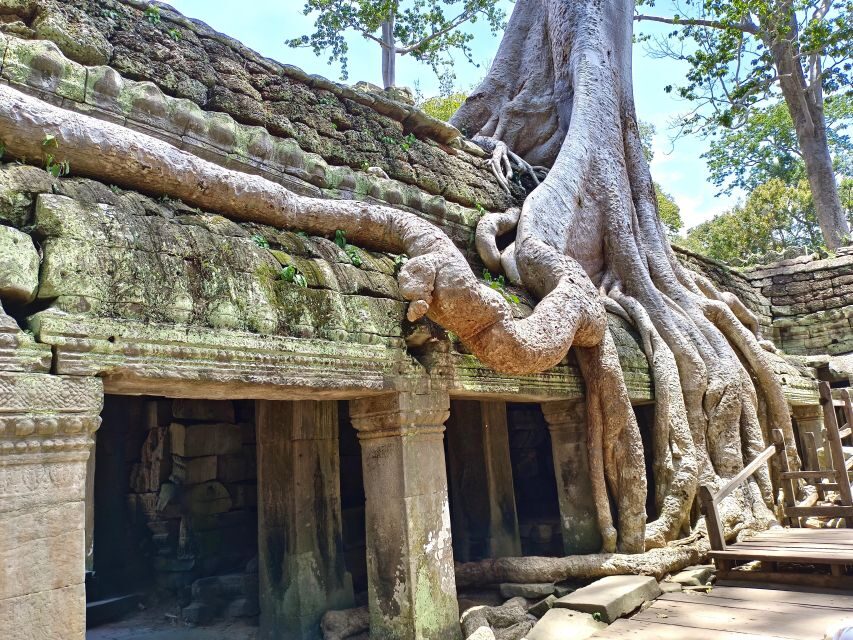
Later in the day, you visit Ta Prohm, the temple known for big tree roots and a jungle setting. It once hosted nearly 3,000 monks, and it still feels like a living place even after centuries of change.
People often name Ta Prohm as a favorite, and not just because it’s famous. It’s the kind of site where the visuals and the mood match: stone, roots, and shade in a way that’s hard to fake with photos.
Expect more uneven ground. But this is also one of the stops where you’ll likely pause more often just to look at how the roots frame doorways and walls.
What you really pay for: $19 vs the temple pass reality
The headline price is $19 per person, and that’s a big part of why people book quickly. But the essential note: the 2–3 day temples pass isn’t included (listed at $62 USD per person for all temples), and meals aren’t included either.
So what’s the real value?
You’re paying for:
- hotel pickup and drop-off
- an English-speaking guide
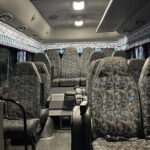
- air-conditioned transportation
- bottled water and cool towels
- skipping ticket lines
In practice, when you compare options, the best argument is less about the total arithmetic and more about time. With sunrise schedules, multiple temple sites, and a lot of walking, organizing it yourself can cost more than it seems once you factor in transport and ticket logistics.
Logistics that matter: timing, walking, heat, and dress rules
Pickup times
Day 1 pickup is typically around 7:40–8:00 AM. Day 2 sunrise pickup is around 4:20–4:35 AM.
The exact pickup time is typically confirmed the day before, which helps if you like a tight schedule.
Dress code (don’t wing it)
You’ll need to cover knees and shoulders at temples. That means plan to avoid shorts. Light breathable layers help, but they must still cover the right areas.
What to bring
Stick to practical basics:
- comfortable shoes
- sunglasses and a sun hat
- camera
- insect repellent
If you forget sun protection, you’ll feel it. Angkor days don’t do shade evenly.
Not included meals
Meals can be purchased near the temples. That gives you flexibility, but you’ll want cash or card ready because you won’t have a sit-down meal inside the tour cost.
Who this tour fits best (and who should skip)
This is a strong match if you:
- want a guided, structured Angkor visit without day-after-day planning
- care about explanations, carvings, and meaning (not just selfies)
- like the sunrise idea and want help getting into a good position
It may not be a good fit if you:
- need wheelchair access (the tour is not suitable for wheelchair users)
- want a kid-friendly option (it’s not for children under 8)
- hate early mornings and stair climbing on uneven stone
Quick “should you book it” verdict
If your priority is seeing Angkor Wat at sunrise and still covering key temples efficiently, I’d book this. The combination of small group, English guiding, and the repeated praise for cold towels and water makes it feel well managed, not chaotic.
My personal rule: if you’re only in Siem Reap for a short time and you want the highlights with context, this is the kind of tour that saves your energy for actually enjoying the temples.
If you’re the type who would rather go slow with no schedule, you might prefer a more independent day. But for most first-timers, this two-day structure hits the sweet spot.
FAQ
Is the temple pass included in the price?
No. The temple pass for the 2–3 day temples is listed separately at $62 USD per person.
What about meals during the tour?
Meals are not included. You can buy food at local restaurants near the temples.
What time do pickups happen for Day 2 sunrise?
Day 2 pickup is typically 4:20–4:35 AM, and you’re dropped off around 12:30–1:30 PM.
Do I need to dress a certain way at the temples?
Yes. You must cover your knees and shoulders, and shorts are not allowed.
How big is the group?
This is a small group tour limited to up to 15 participants.
Is the tour suitable for wheelchair users or young children?
No. It is not suitable for wheelchair users, and it is not for children under 8.