REVIEW · SIEM REAP
Full-Day Temples of Angkor Small Group Tour
Book on Viator →Operated by Journey Cambodia · Bookable on Viator
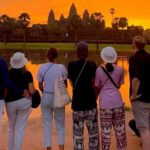
Waking up early changes Angkor. This full-day small-group tour is built around seeing the big names fast: Angkor Wat, Angkor Thom, Bayon, and Ta Prohm, with a professional English-speaking guide. You’ll ride in an air-conditioned minivan, and the day runs like a tight history walk through jungle air, stone carvings, and Khmer symbolism.
I especially like the small-group feel (max 15, and you may end up with only a handful of people), because you get smoother pacing and more time to ask questions. I also love the practical touch of mineral water, cool towels, and frequent check-ins—nice when you’re climbing stairs in real heat.
One thing to consider: this is a lot of walking and climbing in a single day. If your knees or stamina are limited, the temple stairs at Angkor Wat, Bayon, and Ta Prohm can feel like nonstop effort.
In This Review
- Key things to know before you go
- From Siem Reap hotel pickup to an Angkor day that actually flows
- Angkor Wat: the first wow factor, plus the stair rhythm
- Angkor Thom South Gate: 108 guardians that set the mood
- Bayon Temple: faces, bas-reliefs, and Khmer power you can read
- Terrace of the Leper King and Terrace of the Elephants: quick passes, big imagination
- Srah Srang and lunch: a needed reset before Ta Prohm
- Ta Prohm: jungle claws, fig trees, and the Tomb Raider atmosphere
- Why the small group (and great guides) make this tour worth $19
- Practical tips that will save you pain at Angkor
- Should you book the Full-Day Temples of Angkor Small Group Tour?
- FAQ
- What’s included in the $19 tour price?
- Is the temple entrance fee included?
- How much is the temple pass?
- Can I buy the temple pass on the day of the tour?
- How long is the tour?
- What should I wear to visit the temples?
- Is lunch included?
- Will I have water during the day?
- What’s the maximum group size?
- Is the tour refundable if plans change?
Key things to know before you go
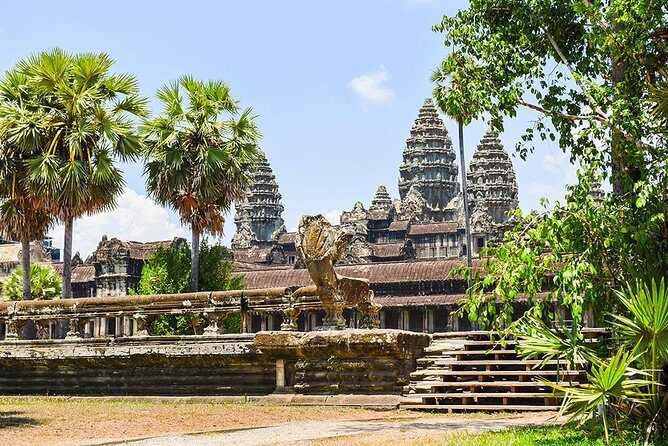
- Early start and sunrise advantage: Pickup is typically around 4:30 am, so Angkor Wat is cooler and more magical.
- The “one-day hits” itinerary: You’ll cover Angkor Wat, South Gate of Angkor Thom, Bayon, Terrace of the Leper King/Elephants area, and Ta Prohm.
- Guide-led storytelling: The best moments are the explanation—bas-reliefs, apsaras, and the meaning behind the carvings.
- Comfort in the heat: Cold water and fragrant cool hand towels are provided on the way back to the van.
- Temple pass is extra: The $19 tour cost doesn’t include the $37 temple entrance fee paid directly at the site.
From Siem Reap hotel pickup to an Angkor day that actually flows
This tour starts by picking you up from your Siem Reap hotel and whisking you out to the Angkor area in an air-conditioned minivan. The biggest value here is not just the transport—it’s the timing. Many people get to the ruins after the crowds and heat peak. Here, the day begins early enough that you can see Angkor Wat in softer light, then move through the rest of the complex while the day is still working with you.
The minivan ride matters because the day is long. Even if the total duration is around 8 hours, your “active time” is temples, stairs, and walking paths. Having cold water and cool towels help you keep going without the frantic mid-day scramble for shade and drinks.
Also pay attention to the dress rule. You need shoulders and knees covered. A scarf can work for shoulders, but don’t show up in bare arms or shorts. This isn’t a small detail—temple entry staff can turn you away.
Other multi-temple archeological tours we've reviewed in Siem Reap


Angkor Wat: the first wow factor, plus the stair rhythm
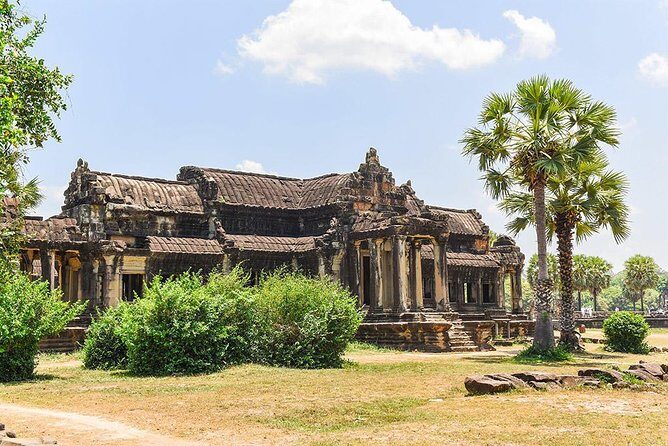
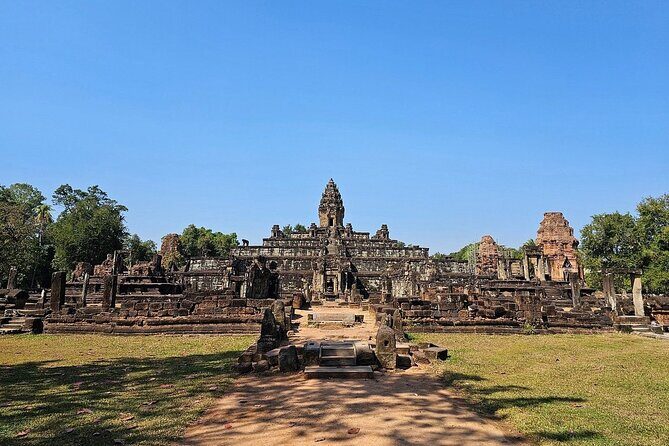
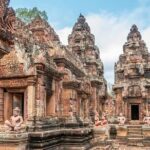
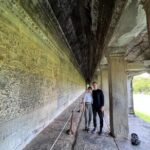
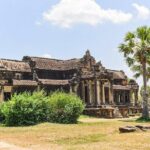
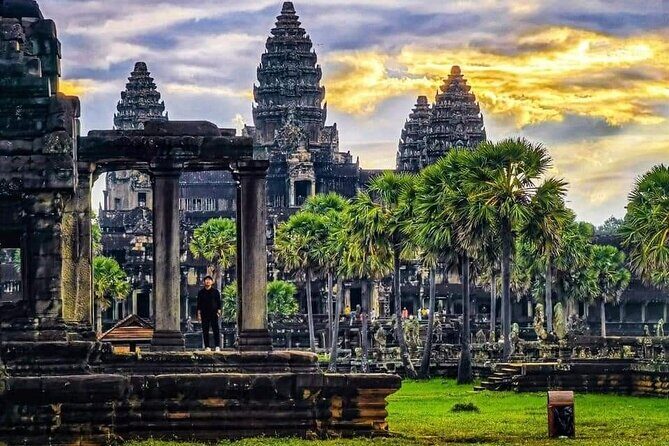
Angkor Wat is the headline. You’ll arrive to temple passageways that feel like stone corridors leading you into a giant story carved in bas-reliefs. Expect to see shrines and the kinds of details that are easy to miss if you’re just walking fast—this tour keeps you oriented so you know what you’re looking at.
The guide-led part starts right away: you’ll learn about Angkor Wat’s place as the world’s largest religious monument, then you’ll move through narrow stone passages where carved scenes wrap around you. One of the most memorable moments is how the temple’s visual language builds as you go—gold-shrouded statues tended by local monks are part of the scene, and that helps the site feel lived-in, not only archaeological.
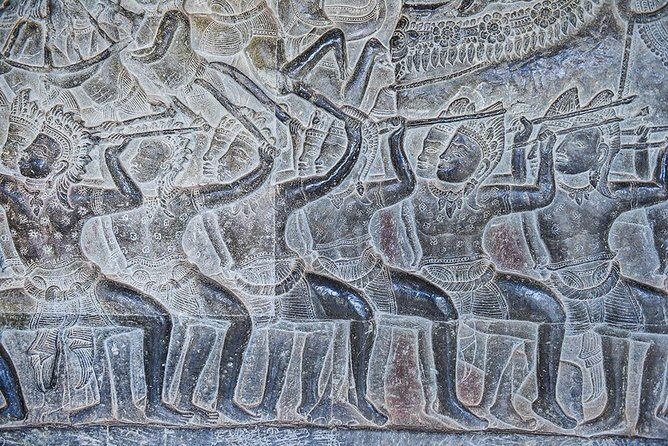
Then comes the climb. Angkor Wat has stairs into the central gallery, and there you’ll see dancing apsaras figures in the carvings. Even if you don’t read every detail, you’ll understand the theme: motion, myth, and Khmer religious art fused into architecture.
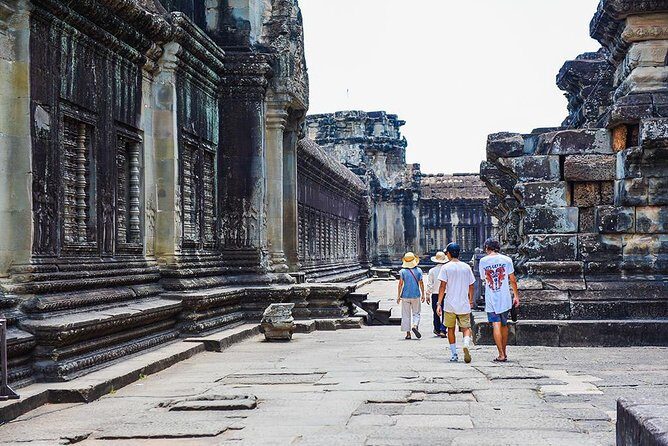
What to watch for: this is not a flat walk. Plan for up-and-down steps and take it slow. If you’re thinking about shoes, choose something you can trust on uneven stone—your feet will do most of the work today.
Angkor Thom South Gate: 108 guardians that set the mood
After Angkor Wat, you shift into Angkor Thom, starting at the southern gate. The vibe changes. Angkor Wat feels ceremonial and controlled; Angkor Thom feels more like a kingdom you’re stepping back into.
At the South Gate, the star attraction is the lineup of guardians—108 statues of smiling gods and fierce demons. It’s one of those details that’s hard to appreciate fully without context, because from a distance it can look like repeating faces and shapes. With a guide explaining what the imagery represents, it turns into a symbolic statement about opposing forces and cosmic balance.
You’ll spend enough time to pause, look, and orient yourself before walking into the city.
Potential drawback: the gate is impressive, but if you’re expecting a long “wander,” the schedule moves you on. Think of this stop as a strong entrance, not a long lounge.
Bayon Temple: faces, bas-reliefs, and Khmer power you can read
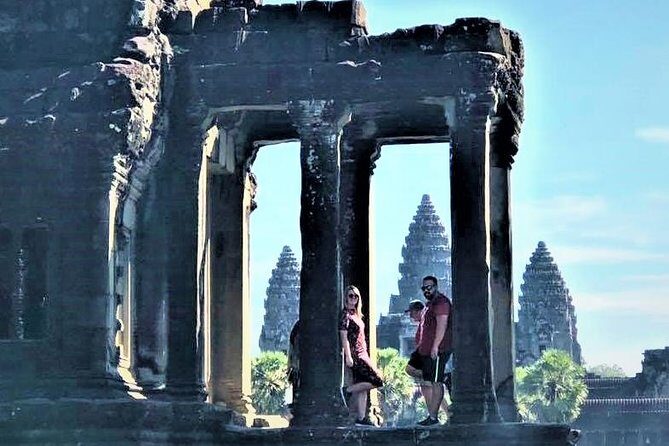
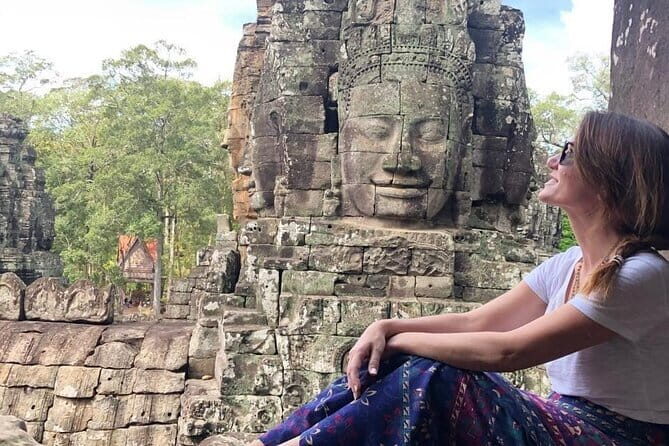
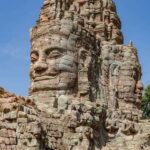
Bayon sits inside Angkor Thom and is famous for the stone faces that stare out from the towers. When you approach, it’s one of those sights that instantly makes your brain quiet—then your guide brings it back to life with explanation.
You’ll also see bas-reliefs that tell a story of Khmer victories against the Cham warriors. This isn’t abstract art. You can follow the dramatic narrative through scenes in the stone, and the guide’s job is to show you what to look for: how the figures are arranged, what the scenes emphasize, and how the carvings reflect the worldview of the Khmer empire.
Bayon can be busy, but the tour pacing helps you get your moments without feeling like you’re being shoved through. Still, expect stairs and uneven surfaces. If you hate climbing, this portion is a reality check.
Terrace of the Leper King and Terrace of the Elephants: quick passes, big imagination
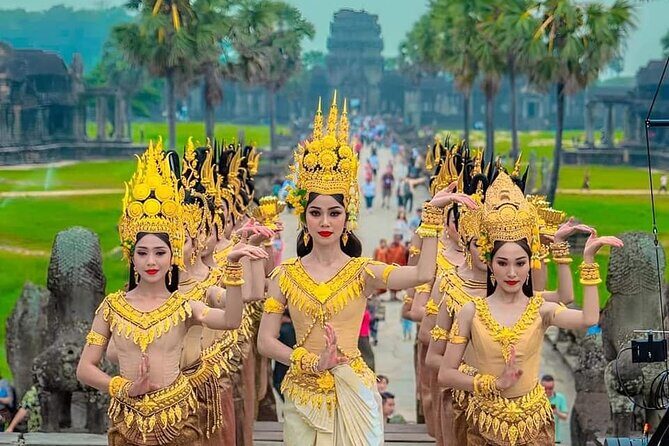
Between Bayon and lunch time, you’ll pass by the Terrace of the Leper King and the Terrace of Elephants area. These terraces are known for their intricate carvings and distinct character, and even without a long stop, the “quick look” works because you’re already primed from Bayon and the South Gate.
Here’s the best way to enjoy this kind of stop: look for textures and scenes. Even when you can’t fully explore, you’ll usually catch a few carving details that you can remember later when you see photos or map the layout in your head.
If you’re the type who wants to read every story stone-by-stone, you may wish this was longer. If you’re okay with a highlight pass and want the full spread of sites, the timing makes sense.
A few more Angkor & Siem Reap tours and experiences worth a look
Srah Srang and lunch: a needed reset before Ta Prohm
Lunch happens near Srah Srang. The tour takes you to one of the Khmer local restaurants nearby for a break. Lunch isn’t included, but you’ll get time to eat and cool down before the next temple stretch.
This matters because Ta Prohm can be physically demanding. Without a real reset, you arrive tired and grumpy, and that’s when ruins become work instead of wonder. A decent lunch stop in a cooler room helps you keep the day enjoyable.
The restaurant stop has generally been described as clean and good value, which matters more than people expect. After hours of walking, you don’t want a chaotic line or a kitchen that can’t handle tourists.
Ta Prohm: jungle claws, fig trees, and the Tomb Raider atmosphere
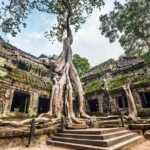
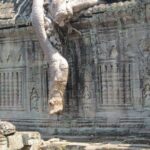
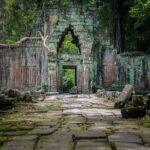
Ta Prohm is the jungle-shrouded temple people connect to the Tomb Raider name. The ruins here feel different from the other major stops. The structures aren’t just stone relics; they’re fighting for space with the trees. That’s the point.
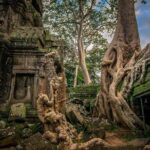
You’ll wander through maze-like ruins and pay attention to how fig trees and roots grow through and over parts of the temple. Creeping vines and tight pathways can make you slow down without needing to be told. It’s one of those places where your camera will always catch something, but a guide helps you understand what you’re seeing in a way that doesn’t feel like a lecture.
Another physical factor: Ta Prohm involves lots of up-and-down paths and steps. The best way to enjoy it is to treat it like a slow hike, not a sprint for “the best photo angle.” If you rush, you’ll miss what makes Ta Prohm special—the tension between nature and human design.
Heat tip that really helps: bring sun protection and reapply. Even with water and towels, you still want a hat or head covering. One day here can hit brutal temperatures.
Why the small group (and great guides) make this tour worth $19
Let’s talk value, not just price. The tour cost is $19 per person, but the temple pass is not included (it’s paid at the site and priced at $37 per person). Even with that add-on, what you’re paying for is more than transportation.
You’re buying structure: a guide who keeps you from wandering in circles, a route that packs in the major highlights, and the comfort extras that reduce fatigue—mineral water, cool towels, and air-conditioned transit.
Where the small group shines is human scale. Even though the tour can run with up to 15 people, many days end up feeling much smaller. In multiple departures, groups have been as low as three to five people, which turns the day into something closer to a private tour. You get more speaking time, quicker answers, and less time waiting for everyone to catch up.
Guide impact is a recurring theme. Names you might encounter include Mr. Sokpee, Saruon (Pal Saruon), Sarak, Chhay, Kiss (Sok), Samnang Yean (Lucky), Nuon Chan Sarak, Sarai, Sak, and Yuth. The common thread in how people describe their experiences is not just English—it’s the way the guide explains the meaning behind carvings and keeps the day moving smoothly with photo stops and timing.
Even the drivers get credit. People consistently mention drivers who stay punctual and calm, like Mao, Naro, and others, with the added detail of keeping water and towels coming at the right times.
Practical tips that will save you pain at Angkor
If you want the day to feel like a win, here’s how to prepare based on the realities of the itinerary.
- Wear comfortable walking shoes. There are climbs and uneven stone in multiple temples.
- Bring sun protection. One day here can feel punishing—heat can make stairs harder than they look on flat ground.
- Plan for a long day. This is not a quick drive-by. You’ll be out for hours, with temple time stacking up.
- Keep your shoulders and knees covered. Use a scarf to cover shoulders; pack light layers you can handle in humidity.
- Expect the temple pass to be your main extra cost. You’ll pay directly at the site, and visa cards are accepted.
Should you book the Full-Day Temples of Angkor Small Group Tour?
I’d book this tour if you want a clear, well-timed route through the most important Angkor sights without spending weeks planning every detail. It’s a smart choice for first-timers who want Angkor Wat, Angkor Thom, Bayon, and Ta Prohm in one day, plus a guide who helps you actually understand what you’re seeing.
I’d think twice if you hate stairs or have limited mobility. This route includes steep steps and a lot of walking. You can still do it with a slower pace, but the day will be physical.
If you want a single, high-value Angkor day with air-conditioned comfort, small-group energy, and guide storytelling that turns carvings into something you can follow, this is a strong pick.
FAQ
What’s included in the $19 tour price?
Hotel pickup and drop-off, an English-speaking licensed guide, air-conditioned minivan transport, mineral water and cool towel, and local tax.
Is the temple entrance fee included?
No. The temple pass is not included and must be paid directly to the site.
How much is the temple pass?
It’s listed as $37.00 per person.
Can I buy the temple pass on the day of the tour?
Yes. The information says it can be purchased on the day of the tour, and visa cards are accepted.
How long is the tour?
The duration is about 8 hours.
What should I wear to visit the temples?
You need respectful dress with shoulders and knees covered. A scarf can cover shoulders, and bare shoulders or knees aren’t allowed.
Is lunch included?
Lunch is not included. You’ll stop at a Khmer local restaurant nearby Srah Srang for lunch time.
Will I have water during the day?
Yes. Mineral water and cool towels are included, and cold water and cool hand towels are provided when you return to the van during the day.
What’s the maximum group size?
The tour has a maximum of 15 travelers.
Is the tour refundable if plans change?
It says free cancellation is available up to 24 hours in advance for a full refund. It also notes the experience requires good weather, and if canceled due to poor weather you’ll be offered a different date or a full refund.