REVIEW · SIEM REAP
Angkor Wat Highlights and Sunrise Guided Tour from Siem Reap
Book on Viator →Operated by Journey Cambodia · Bookable on Viator
Early sunrise at Angkor is worth the scramble. This guided small-group day turns that pre-dawn start into a history lesson you can actually feel, with UNESCO temple icons like Angkor Wat and Bayon handled in a smart order. I love the way the tour builds from sunrise viewpoints into explanations of bas-relief carvings and key structures, and I also like the comfort touches like bottled water and cool towels during the long morning. The only real drawback to plan for is the extra temple pass fee not included in the listed tour price, plus the fact that 4:30am pickup means an early wake-up.
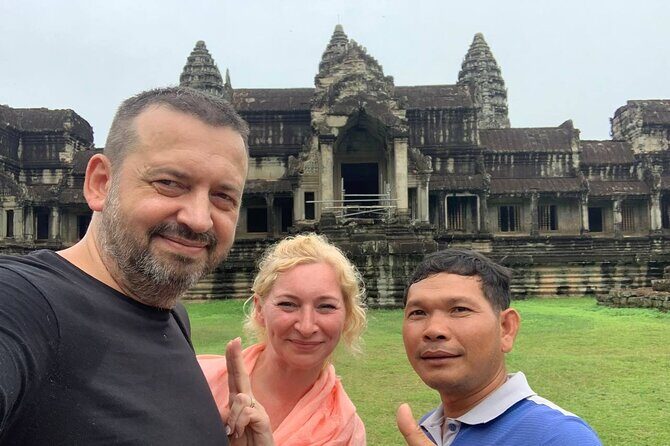
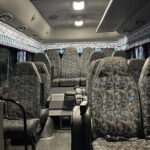
You’re traveling with a licensed English-speaking guide, usually in a group capped at 15, so it’s not one of those chaotic bus swarms. Expect an air-conditioned minivan, a calm pacing strategy meant to avoid the thickest crowds, and respectful temple etiquette with a clear dress code (shoulders and knees covered, scarf required if you need to cover up).
One more practical note: breakfast is part of the schedule as a stop, but it isn’t included. If you can get your hotel to pack a breakfast pack, you’ll save time and keep the morning smoother right after sunrise.
In This Review
- Key things to know before you go
- Why the 4:30am start changes everything at Angkor Wat
- Pickup to cool towels: how the tour feels in Siem Reap
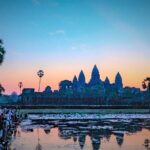
- Angkor Wat sunrise: the quieter entry and what to look for
- Srah Srang and the breakfast stop that keeps your energy up
- Ta Prohm: the jungle temple and why it hits so hard
- Terrace of the Leper King, Terrace of the Elephants, and Bayon’s face towers
- Angkor Thom South Gate: closing the loop on the Khmer capital
- Price and value: what you really pay for a sunrise Angkor day
- A guide can change the day: what to look for on your tour
- Who this sunrise highlight tour is best for
- Should you book this Angkor Wat sunrise tour?
- FAQ
- What time does the tour start?
- Is hotel pickup and drop-off included?
- Is the temple pass included in the price?
- Can I buy tickets on the day of the tour?
- What should I wear to the temples?
- Is breakfast included?
- How many people are in the group?
Key things to know before you go
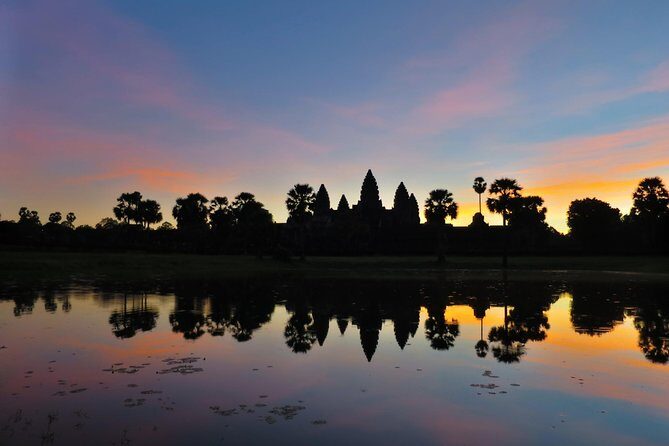
- 4:30am departure keeps you ahead of the worst crowds for sunrise at Angkor Wat
- Licensed English guide with storytelling that connects carvings, temples, and Khmer history
- Small-group size (max 15) makes it easier to move, stop for photos, and hear explanations
- Comfort extras: bottled water and cool towels for a long hot-morning shift
- Big-name highlights in one circuit: Ta Prohm, Bayon, terraces, and Angkor Thom
- Temple pass is extra (paid directly at the sites) and you’ll want to factor that into value
Why the 4:30am start changes everything at Angkor Wat
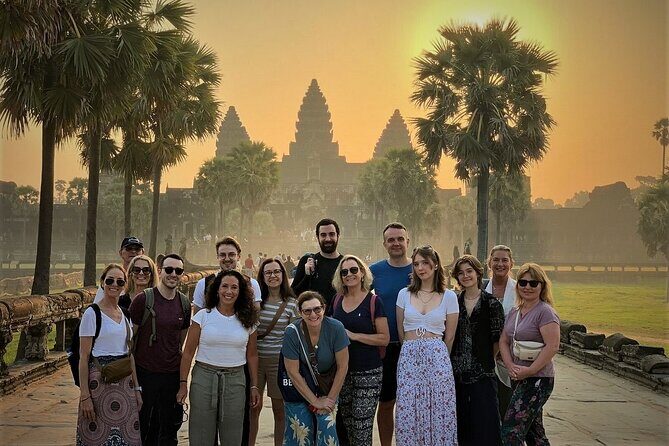
This tour is built around one simple idea: see Angkor Wat when it’s quiet and atmospheric, not when it’s a photo line. Pickup runs early, around 4:30am (it can shift a little by season), so you’re already moving while the sky is still dark.
Once you arrive, you get the payoff right away. The group enters Angkor Wat from the eastern side, which is described as a less-used entrance route. That matters because it helps you avoid the crush that often forms when everyone is funneling toward the same camera spots.
If you’re the type who likes a plan but also wants breathing room, this schedule is what makes the day feel worth the effort. You also get that classic sunrise moment without spending the whole time fighting for a place to stand.
Other Angkor Wat sunrise tours we've reviewed in Siem Reap
Pickup to cool towels: how the tour feels in Siem Reap
The tour keeps you moving with hotel pickup and drop-off, so you’re not negotiating tuk-tuks in the dark. Transport is in an air-conditioned minivan, and the small comfort details show up during the day, not just at the beginning. Bottled water and cool towels are included to help you handle the heat as the morning warms up.
Group size also affects the vibe. With a maximum of 15 people, the guide can manage timing, keep the group together, and still take a moment when someone needs a photo position. That’s a big deal at Angkor, where a single stop can turn into a traffic jam if the group is too large.
Angkor Wat sunrise: the quieter entry and what to look for
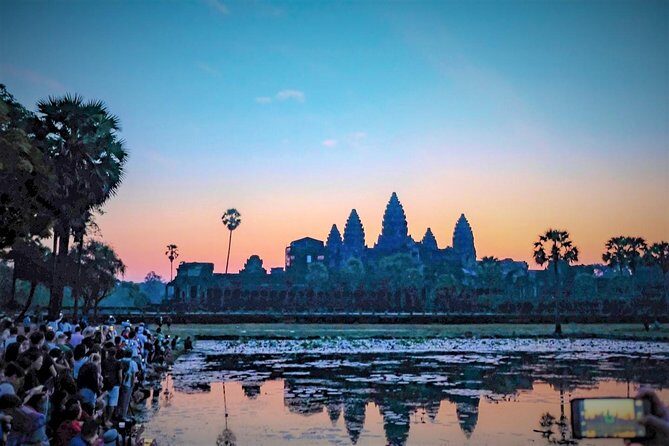
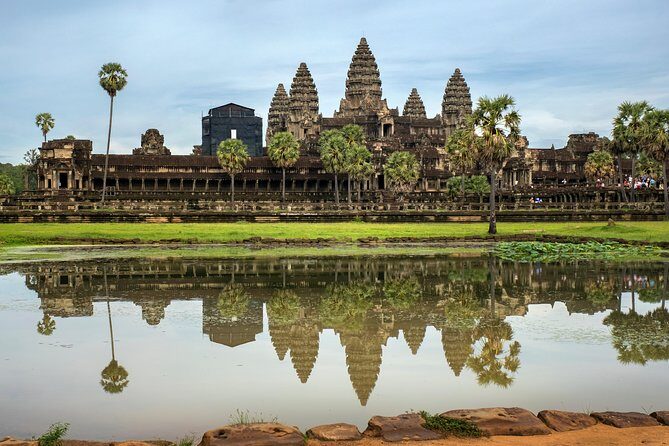
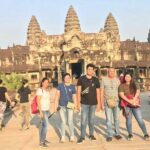
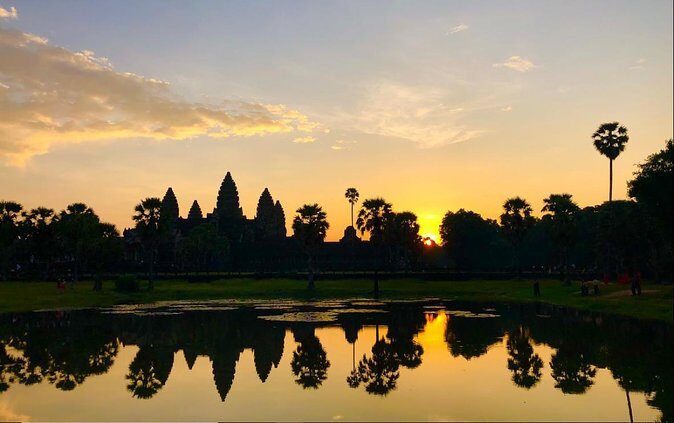
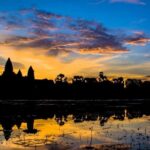
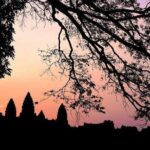
Sunrise is the headline, and the approach is practical. After pickup, you reach Angkor Wat before sunrise and watch the light change across the temple in a more controlled way than later-day visits.
Here’s what makes the guided format useful once you’re inside:
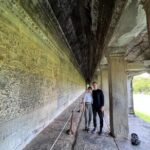
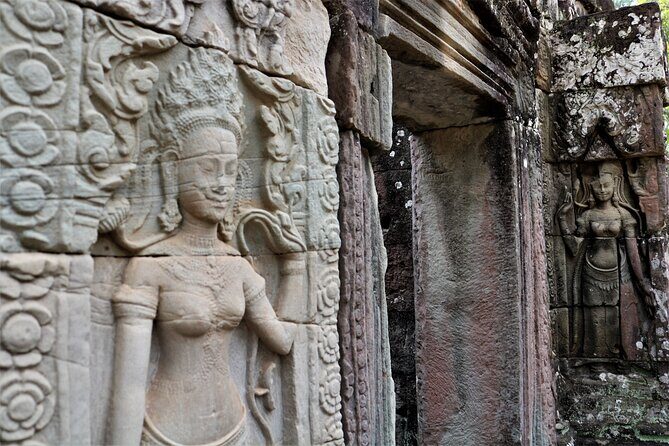
- You’re not just walking past stone. The guide explains bas-relief carvings so you know what you’re seeing instead of guessing.
- You’ll also hear about the ancient library pools, which are easy to overlook if you’re only focused on the main views.
Also, the tour is designed to reduce time spent standing still in crowds. The guide helps position you for photos and then moves you along when it makes sense. In some of the guided styles shared by this operator’s team, guides like Sopheaprath and Sak are praised for helping the group get picture time while still keeping history explanations flowing.
Dress code matters here. Temples require respectful coverage: shoulders and knees must be covered. A scarf is specifically mentioned as a way to cover your shoulders, so pack one if your outfit leaves them bare. Comfortable shoes are also worth it because you’ll be walking on uneven paths.
Srah Srang and the breakfast stop that keeps your energy up
Not every early morning in Cambodia is gentle. After Angkor Wat, the tour makes a stop at Srah Srang, the water area that’s part of the Angkor complex landscape.
Then comes a key point for anyone planning their day: breakfast is offered at a Khmer local restaurant, but breakfast itself isn’t included. What you can control is how you handle that gap between sunrise and eating.
If your hotel can provide a packed breakfast, do it. The tour notes recommend requesting a breakfast pack from your hotel so you can eat after sunrise. This is especially smart if you’re prone to getting lightheaded before midday. You’ll also be better off with less time pressure when the group is moving again.
Ta Prohm: the jungle temple and why it hits so hard
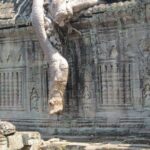
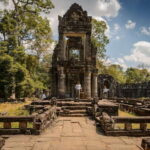
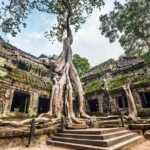
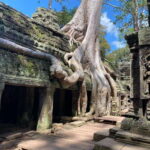
After the sunrise anchor, the tour shifts to one of Angkor’s most cinematic stops: Ta Prohm. This is the temple with overgrown, jungle-framed views, the one people often recognize from photographs.
What makes it more than a pretty backdrop is the story you’re given. The tour describes how Ta Prohm once housed 2,740 monks, and how it resembles its look from the early 1850s when it was re-encountered by European explorers. That context turns the “crumbling stones and trees” look into a place with a living timeline.
The schedule gives you about 1.5 hours here. That’s enough time to walk through the iconic sections, find a few solid angles for photos, and still have room to listen to the guide’s explanations without feeling rushed.
If you tend to get sweaty early, this is another reason to stay ready with water and keep your pace steady. The tour includes cooling touches, but you’ll still be outdoors for a while.
Other Angkor Wat temple tours we've reviewed in Siem Reap
Terrace of the Leper King, Terrace of the Elephants, and Bayon’s face towers
Between Ta Prohm and the final anchor of the morning, you’ll pass by two famous terrace areas:
- the Terrace of the Leper King
- the Terrace of Elephants
You might not have the time to treat these like standalone photo sessions, but passing by them with a guide is useful. It helps connect them to the bigger temple layout and the way the Khmer Empire staged power and ceremony.
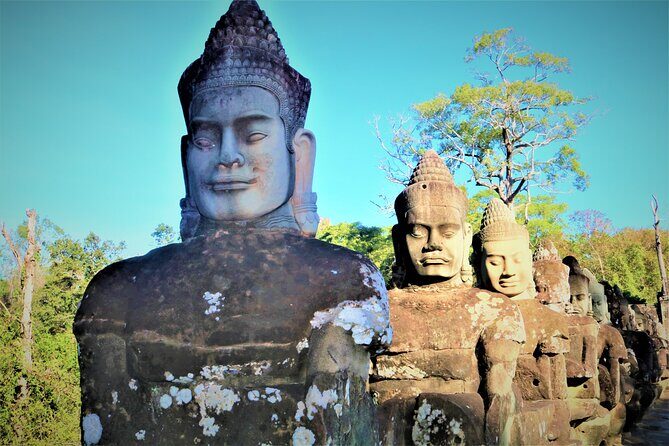
Then you reach Bayon Temple, one of the most recognizable parts of Angkor Thom. The tour describes Bayon’s central towers adorned with over 200 enormous faces. Walking through a complex with that many faces is a very different experience than seeing Angkor Wat from a single angle. It feels more like moving through a statement than admiring one monument.
The Bayon stop is around 1.5 hours, which is a good length for turning “Wow, faces” into “I understand why they’re there” with guide commentary.
Angkor Thom South Gate: closing the loop on the Khmer capital
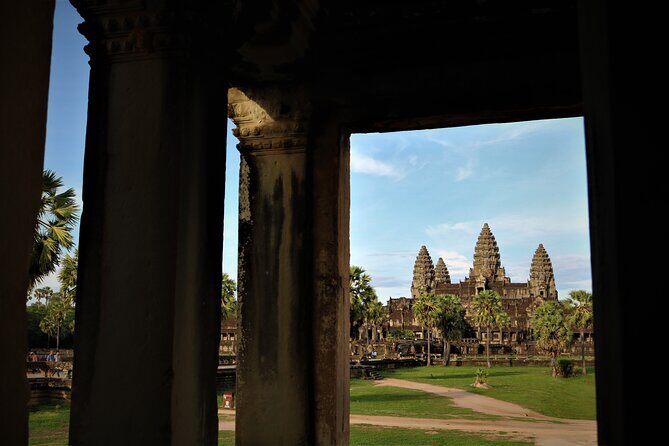
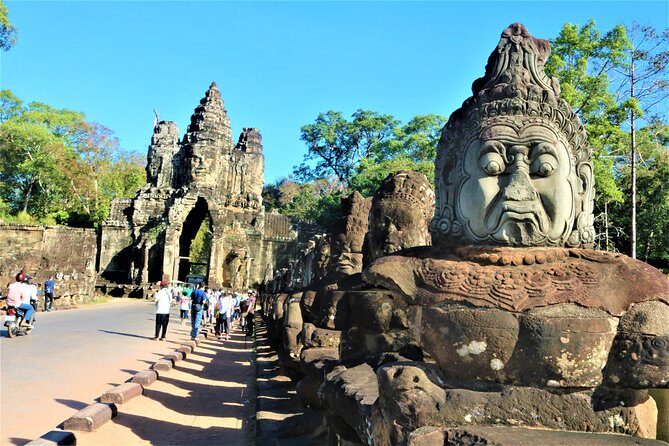
The last big thematic stop is Angkor Thom South Gate, followed by a look at Angkor Thom as the former capital of the Khmer Empire.
This part of the tour is about scale and context. When you see Angkor Thom after Angkor Wat and Bayon, the whole setting starts to feel like a connected city rather than separate temples. The guide’s timing also tends to matter here: you want the group to move at a pace that doesn’t strand you in heat or leave you too tired to absorb what you’re seeing.
South Gate is shorter on the schedule (around 30 minutes), but it can still be a meaningful capstone if you’ve been listening. Think of it like the final sentence that makes earlier details click.
Price and value: what you really pay for a sunrise Angkor day
The tour price is $23 per person, which sounds like a bargain for a full-day highlights circuit. But here’s the part you must plan for: the temple pass is not included and is listed at $37 per person, paid directly at the sites.
So your practical total is closer to $60 for most travelers, assuming you’re buying the pass for the tour. That can still be good value because the $23 includes several things that would cost you time or money otherwise:
- Licensed English-speaking guide
- Air-conditioned minivan
- Hotel pickup and drop-off
- Bottled water and cool towel service
- A structured route that focuses on major sights in one morning-to-late-morning stretch
One more pro tip from the tour info: temple entrance fees accept Visa cards, and you can buy tickets on the day of the tour just before sunrise. That means you’re not trapped if you missed pre-purchasing, but you should still arrive prepared and avoid last-second panic.
A guide can change the day: what to look for on your tour
Angkor can be overwhelming fast. With the wrong guide, it’s easy to end up with photos and no understanding. With the right guide, carvings, terraces, and face towers start making sense.
From the guide styles mentioned for this tour, a few patterns come up again and again:
- Photo positioning help during sunrise. Guides like Pi and Sopheaprath are praised for getting people into good spots and keeping a smooth photo routine.
- Storytelling that connects the stone to Cambodia’s past. Guides including Sak, Chhay, Bun, and Pal are described as sharing personal or cultural context, plus clear explanations of what you’re walking through.
- In-the-moment assistance beyond sightseeing. One example: Yot is noted for helping locate a lost camera lens, and the driver team (like Kea and others) is repeatedly mentioned as attentive with water and towels.
You can’t choose your guide for sure, but you can set yourself up to benefit. Ask questions early when you’re still at Angkor Wat, and don’t be afraid to say you prefer shorter explanations for photos, then longer explanations once you’re inside a quieter gallery.
Who this sunrise highlight tour is best for
This tour fits best if you:
- want Angkor Wat at sunrise without doing logistics solo
- prefer a guided story over wandering
- like moving through major sights in a single circuit: Ta Prohm, Bayon, and Angkor Thom
- can handle an early pickup (minimum age is 8 years)
It’s also a solid first-timer approach. You’ll see the headliners, but with enough context to understand why they matter.
If you’re the type who hates early mornings, you might still enjoy it, but sunrise tours are inherently about sleep trade-offs. Plan your previous night like it’s a vacation workout: go to bed early, set a backup alarm, and keep water within reach.
Should you book this Angkor Wat sunrise tour?
Book it if you want the highest-impact way to experience Angkor in one day: sunrise outside Angkor Wat, then a guided sweep through the biggest emotional hits of the Angkor Thom zone.
I’d skip it only if you’re trying to keep your total cost ultra-low or you can’t do early mornings. The temple pass fee ($37) is non-negotiable for most visitors, and the schedule starts before sunrise with a very early pickup.
If you do book, come ready to cover up (scarf if needed), wear walking shoes for uneven ground, and consider a breakfast pack from your hotel. That small prep choice makes the whole day feel less like survival and more like a smooth, memorable morning at one of the world’s most famous temple complexes.
FAQ
What time does the tour start?
The tour starts at about 4:30am, with pickup running around that early window depending on the season.
Is hotel pickup and drop-off included?
Yes. Free hotel pickup and drop-off are included.
Is the temple pass included in the price?
No. The temple pass is not included and must be paid directly to the sites. The listed cost is $37 per person.
Can I buy tickets on the day of the tour?
Yes. Tickets can be purchased on the day of the tour just before sunrise, and they accept Visa cards.
What should I wear to the temples?
Dress respectfully with shoulders and knees covered. If your shoulders are bare, you’ll need a scarf to cover them. Bring comfortable shoes for walking on uneven ground.
Is breakfast included?
Breakfast is not included. There is a breakfast stop at a Khmer local restaurant, and the tour notes suggest you may request a breakfast pack from your hotel to eat after sunrise.
How many people are in the group?
This tour has a maximum group size of 15 travelers.