REVIEW · SIEM REAP
Angkor Wat: Highlights and Sunrise Guided Tour
Book on GetYourGuide →Operated by Journey Cambodia · Bookable on GetYourGuide
Sunrise at Angkor Wat feels unreal. I love the pre-dawn start that gives you calmer temple time, and I love the photo-friendly guidance that helps you nail the sunrise view and angles. One thing to consider: it’s very early, and you’ll still need to pay the Angkor Pass ($37) on the day of the tour.
This tour is built for people who want the big moments without wasting hours figuring logistics out. You get hotel pickup in a comfortable air-conditioned vehicle, bottled water, and cool towels—then a guide leads you through the UNESCO-listed Angkor Archaeological Park with clear context on what you’re seeing.
The schedule moves fast enough to beat the heat, but not so fast that you feel rushed from stop to stop. If you’re comfortable covering shoulders and knees and walking through uneven temple paths, it’s a strong value way to see the core sights around Angkor Wat.
In This Review
- Key highlights you’ll actually feel
- Why Angkor Wat Sunrise Beats the Usual Late-Morning Rush
- The 4:15–4:35 Pickup and the Eastern Entrance Walk in Darkness
- The Reflection Pool Sunrise Near the Library: What to Watch For
- Angkor Wat Inside: Galleries, Bas-Reliefs, and Staying Oriented
- Srah Srang Stop: A Real Break Without Losing Your Place
- Ta Prohm: Jungle Roots, Crumbling Stone, and Better Timing
- Angkor Thom’s Gates and Bayon: 200+ Faces Up Close
- Price and Value: What $19 Really Buys (and the $37 Pass Reality)
- Practical Tips That Make the Tour Easier
- Who Should Book This (and Who Might Skip It)
- Should You Book This Angkor Wat Sunrise Tour?
- FAQ
- FAQ
- What time does hotel pickup happen?
- How long is the tour?
- Is the Angkor Pass included in the price?
- Do I need to buy tickets in advance?
- What’s included during the tour?
- What should I wear or bring?
- Do I need a passport for this tour?
Key highlights you’ll actually feel
- Pre-dawn entry and flashlight walking: quieter corridors first, then sunrise without the scramble panic.
- Reflection-pool sunrise near the library: a classic viewpoint paired with practical photo tips.
- Two hours inside Angkor Wat: galleries and bas-reliefs explained in a way that clicks while you’re there.
- Ta Prohm with giant tree roots: you’ll see why the Khmer ruins feel so cinematic up close.
- Angkor Thom + Bayon faces: photo stops at major gates plus time at the 200+ stone faces.
- Cooling support all day: bottled water and cool towels at multiple points, not just at the start.
Why Angkor Wat Sunrise Beats the Usual Late-Morning Rush
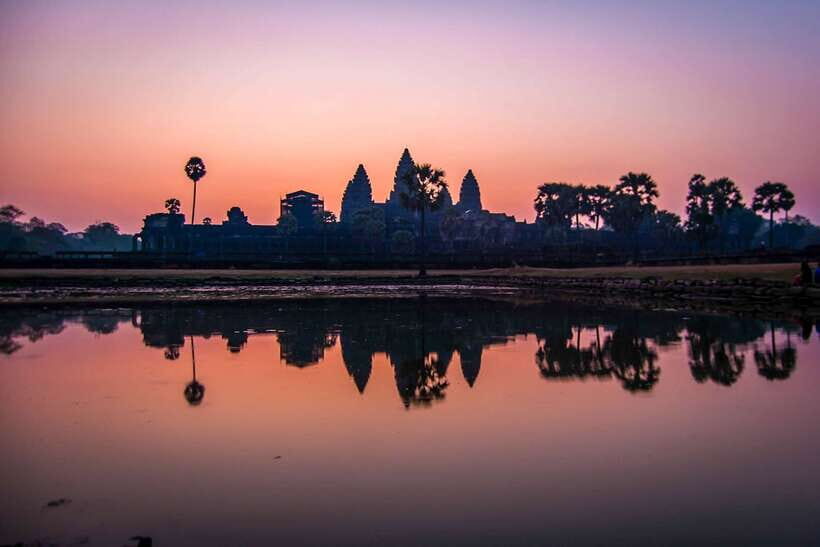
Angkor Wat is famous for a reason. But the real magic is when it’s still half-dark and the temple seems to breathe with the day. Starting early means you’re walking in the cool morning air and arriving before the heaviest crowd wave—so you can look longer, take photos without shoulder-to-shoulder pressure, and actually notice details in the carvings.
What I like most is how the tour pairs that early timing with a clear plan. You’re not just dropped at the entrance and left to guess where the best views are. The guide helps you get set for the sunrise moment, then you transition into guided temple time while the lighting is still good.
One practical note: sunrise quality depends on weather. If clouds roll in or it rains, the sky won’t look the same. Still, the early morning atmosphere and the early temple access usually keep the experience worthwhile—even when the sunrise is muted.
Other Angkor Wat sunrise tours we've reviewed in Siem Reap
The 4:15–4:35 Pickup and the Eastern Entrance Walk in Darkness
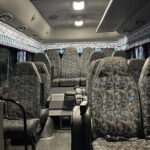
Your day starts in the dark. Pickup happens between 4:15 AM and 4:35 AM, depending on your hotel. You’re in an air-conditioned vehicle, which matters in Siem Reap—especially when you’ll be out for most of the morning before the heat ramps up.
At the Angkor Archaeological Park, you enter via the eastern entrance, when the site is quieter than the later routes. You use a flashlight to move through those early corridors. Even if you’ve seen pictures of Angkor Wat, walking those passageways in near-silence makes the place feel more real and less like a postcard.
From a comfort standpoint, I also appreciate how the tour handles the “long morning” problem. The vehicle includes bottled water and cool towels, and the driver is used to keeping people comfortable between stops. It’s one of those small things that becomes a big thing by mid-day.
The Reflection Pool Sunrise Near the Library: What to Watch For
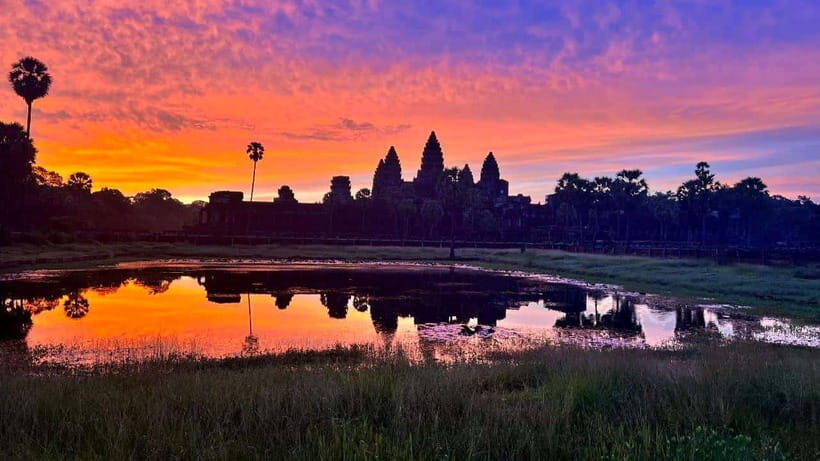
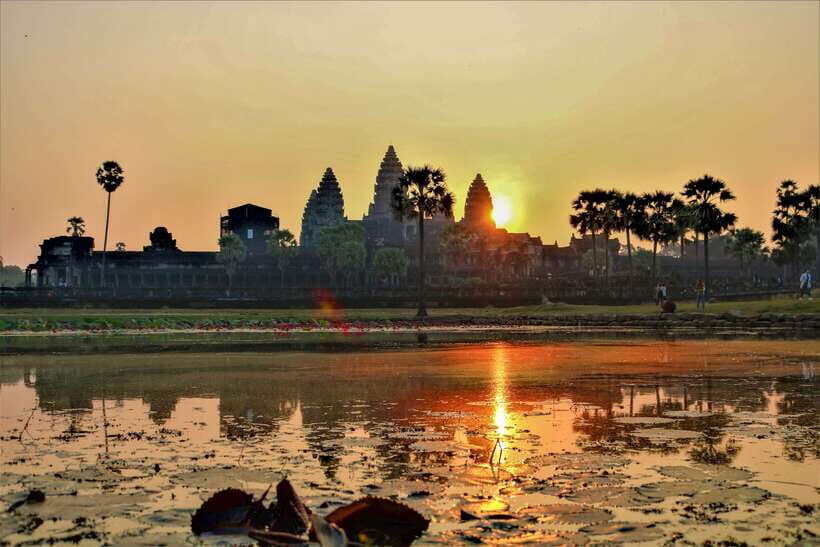
The sunrise part isn’t random. You head to a viewing spot near the reflection pools by the library, one of the most famous vantage points inside Angkor Wat’s complex.
The key visual you’re looking for is timing: as the light rises, the temple spires and their shadows change fast. That’s why the schedule matters. You’re there early enough to get your bearings, then the sky shifts from deep pre-dawn tones into crimson and gold.
Photo help is part of the experience, and it’s useful. Guides often give simple, practical direction on phone and camera positioning—where to stand, when to shoot, and how to frame the spires and reflections. If you want a smooth “how do I set this up?” experience, this is the right kind of tour.
Bring sunglasses, even in the morning. Also bring your patience: the light changes quickly, and you’ll want to be ready when it does.
Angkor Wat Inside: Galleries, Bas-Reliefs, and Staying Oriented
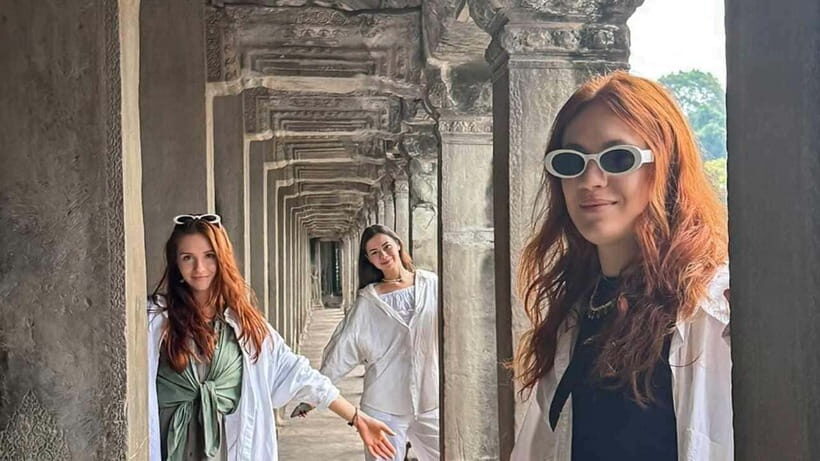
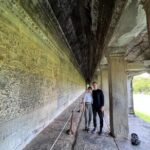
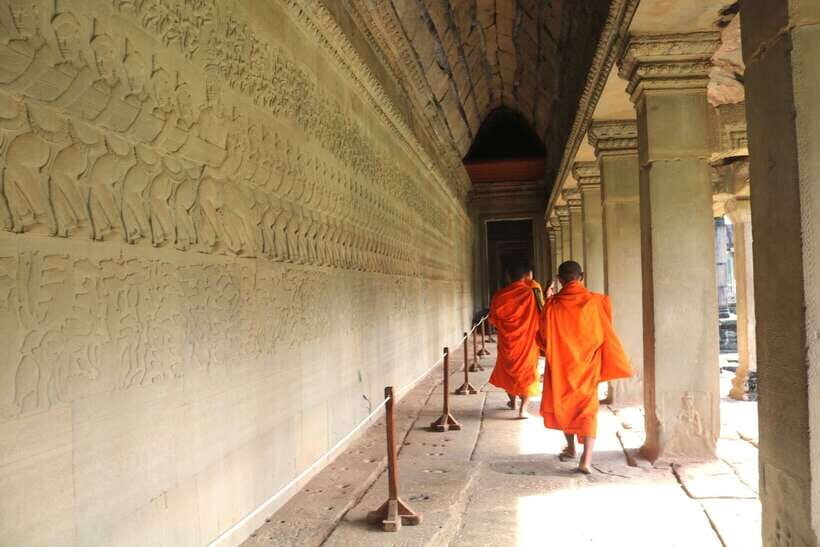
After the sunrise moment, you transition into guided exploration at Angkor Wat itself. The tour includes about two hours inside the complex, focused on the galleries and the carvings that tell stories about gods and kings.
Here’s why the guide time matters: Angkor Wat isn’t one building you walk around once. It’s a whole system—walls, corridors, repeating patterns, and bas-reliefs that reward attention. Without context, it can blur into “old stone everywhere.” With a good guide, you start noticing what’s where, what the scenes refer to, and why the layout is designed the way it is.
You’ll also be doing this while temperatures are still manageable. That’s a big deal. Most visitors hit the hottest part of the day later in the afternoon when they’ve already spent energy walking. This tour front-loads the most meaningful temple time when your body is fresh.
Practical drawback to mention: temples require a dress code. You must cover knees and shoulders, and short skirts aren’t allowed. Pack a lightweight layer you’re comfortable moving in.
Srah Srang Stop: A Real Break Without Losing Your Place
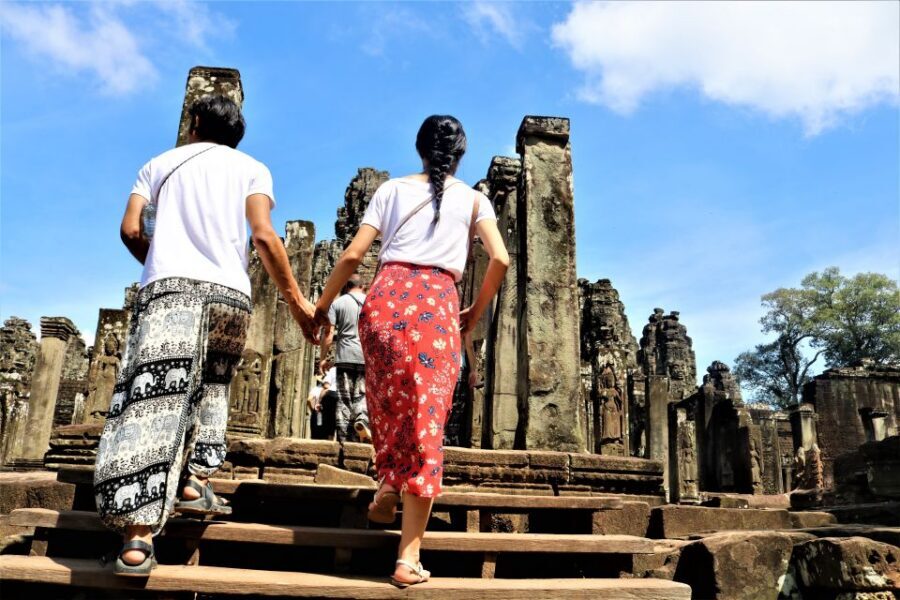
Between the sunrise and the later temple hopping, the tour includes a stop at Srah Srang. You can grab coffee or tea, and there’s time for breakfast if you want it. It’s not included as part of the price, but the break helps you reset.
Why this matters: an early start plus temple walking can turn your mood sour fast if you go without food. The stop gives you a chance to use facilities, drink something, and keep your energy up for the next round of monuments.
If you prefer breakfast-on-the-go, this stop makes it easy. If you’d rather skip and eat later, you still benefit from the pause and the hydration reset.
Other Angkor Wat temple tours we've reviewed in Siem Reap


Ta Prohm: Jungle Roots, Crumbling Stone, and Better Timing
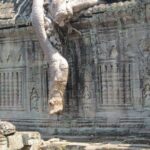
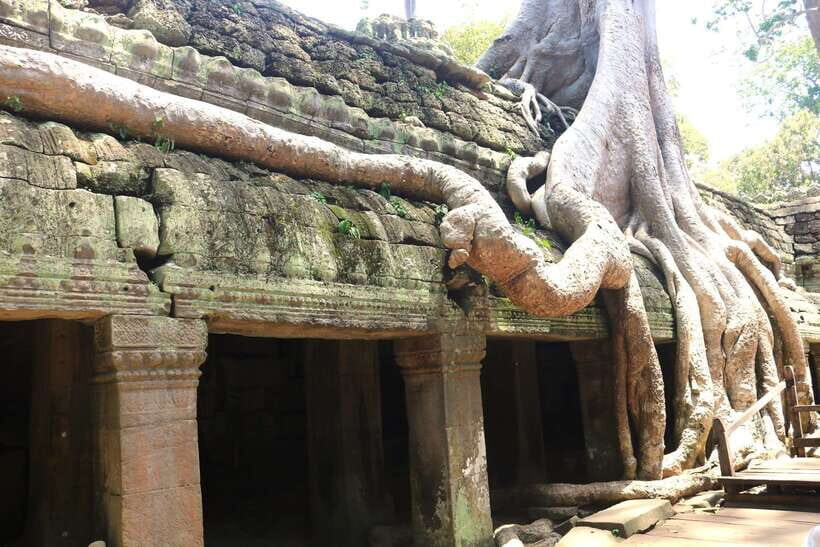
Then you’re on to Ta Prohm, the temple many people associate with dramatic tree roots wrapping ancient stone. The tour schedules this as a focused visit with guided context and time to walk around.
What you’ll feel here is a different kind of atmosphere than Angkor Wat. Angkor Wat is more formal and symmetrical in its feel. Ta Prohm feels grown-over and breakable—like nature is still negotiating with the ruins.
Walking time is included, and you’ll want it. This is one of the sites where small angles make photos look very different. The guide can help you spot the spots that read well in photos while still keeping you moving safely on uneven ground.
Angkor Thom’s Gates and Bayon: 200+ Faces Up Close
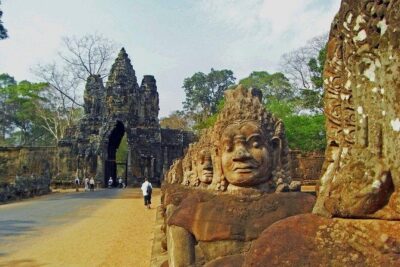
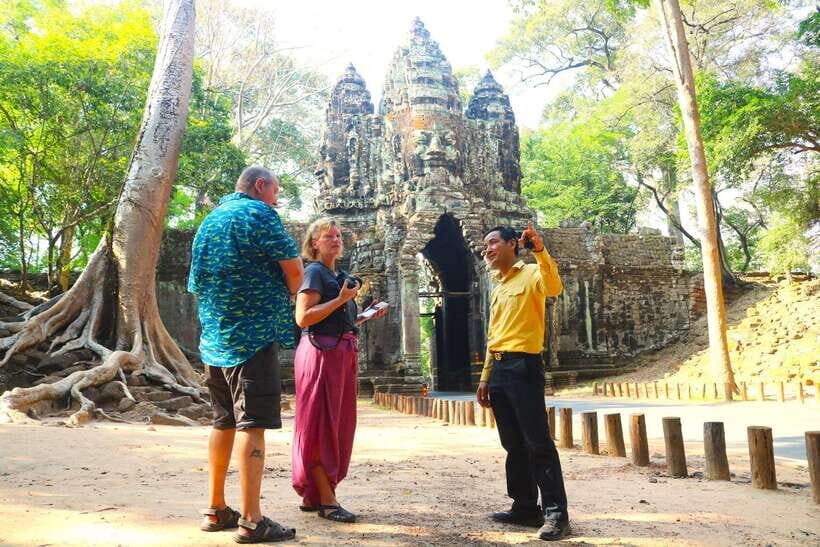
After Ta Prohm, the tour heads into Angkor Thom—the ancient city center of the Khmer Empire—with key photo stops and guided visits.
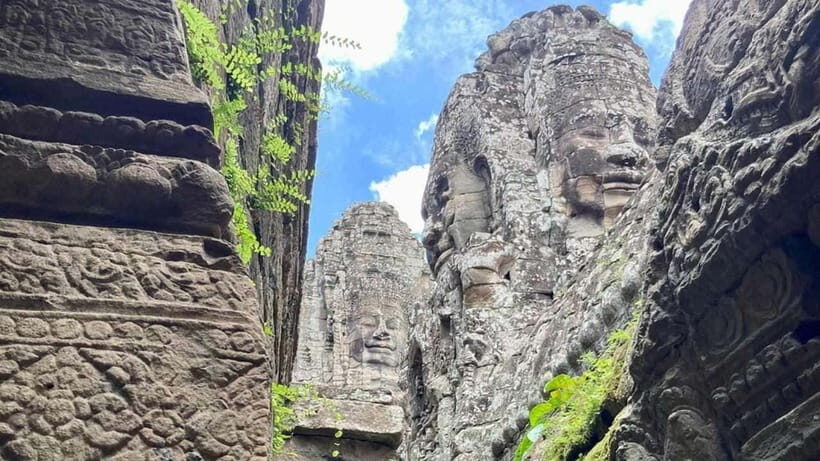
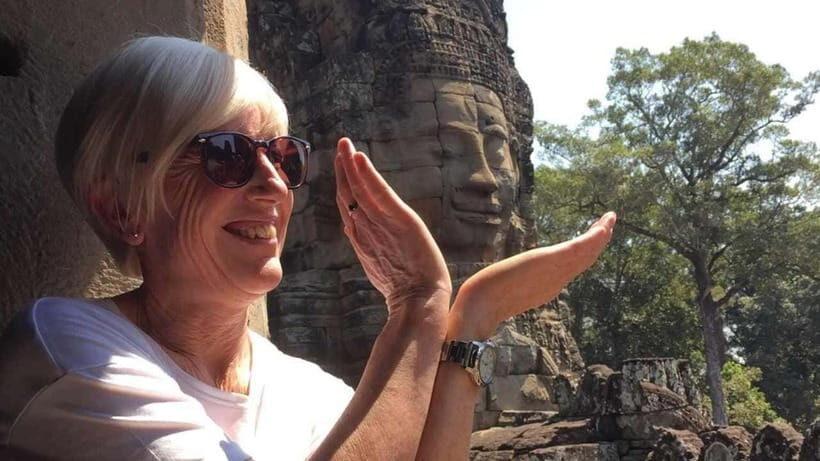
You’ll see the Southern Gate and then move to Bayon Temple, famous for its 200+ stone faces. This is where the tour pacing matters again. Bayon is visually busy, and it’s easy to rush through without noticing the details around the faces—unless you have a guide pointing out what to watch.
Expect photo stops along the route, then time to walk through Bayon with guided explanations. The best part is getting face-to-face with the carvings while the light is still favorable. Once the sun climbs, contrast changes and it can get harder to capture the facial expressions clearly.
If you want the faces to look sharp in photos, be ready to adjust your position more than once. The tour structure usually gives you that chance.
Price and Value: What $19 Really Buys (and the $37 Pass Reality)
The headline price is $19 per person, for an 8-hour guided experience that includes:
- hotel pickup and drop-off
- air-conditioned transport
- an English-speaking guide
- bottled water and cool towels
The big “not included” piece is the 1-day temple pass (Angkor Pass), $37 per person, paid on the day of the tour. That’s the one cost you must plan for.
So is it good value? For this specific day structure, yes—because you’re paying for more than sightseeing. You’re paying for:
- the early sunrise logistics (pickup in the dark, park access timing)
- guided context across multiple UNESCO-listed sites
- comfort support during temple walking (water + cool towels)
- a plan that avoids dead time
If you tried to DIY this, you’d still need transport, you’d still need someone to explain the carvings and layout, and you’d still need to time sunrise correctly. This tour bundles those moving parts into a single morning-to-midday plan.
Practical Tips That Make the Tour Easier
A few practical things will save you stress.
Dress code: cover knees and shoulders. Short skirts aren’t allowed. Wear lightweight long pants or a long skirt with leggings, and choose breathable fabric.
Bring essentials: sunglasses, a hat, insect repellent, and comfortable clothes you can walk in. Temple paths can be uneven, and you’ll be out early and then move again later in the morning.
Sun and comfort: even in the morning, Siem Reap warms up. The tour helps with bottled water and cool towels, but you still need to dress smart.
Expect walking: you’ll be out of the vehicle for multiple temple areas and photo stops. If you hate uneven ground, you might find this day tiring.
Weather matters for sunrise: if it’s cloudy or raining, the sunrise effect changes. The tour still runs the plan, so your experience is less about perfect sunrise colors and more about early access and temple time.
Who Should Book This (and Who Might Skip It)
This tour is a good match if you want:
- the Angkor Wat sunrise experience without guessing logistics
- guided explanations that help you understand what you’re seeing
- a midday finish (around 12:30 PM–1:30 PM return) so you keep your afternoon free
It may not be ideal if:
- you’re traveling with children under 8
- you need wheelchair access (it’s not suitable for wheelchair users)
- you dislike very early mornings (pickup is before sunrise)
One more small fit check: if you’re traveling with limited patience for dress-code rules, plan ahead. Bring the right clothing so you’re not scrambling at the last minute.
Should You Book This Angkor Wat Sunrise Tour?
If sunrise at Angkor Wat is on your Siem Reap checklist, I’d book this. The combination of early timing, guided temple time, and real comfort support (water and cool towels) makes it feel like the smart way to do the classics in one day.
Book it if you want less confusion and more meaning: you’ll spend the morning seeing Angkor Wat, Ta Prohm, Angkor Thom, and Bayon with context instead of just walking past stones. Skip it only if the early wake-up and required coverage rules sound like your personal nightmare.
FAQ
FAQ
What time does hotel pickup happen?
Pickup happens between 4:15 AM and 4:35 AM, depending on where your hotel is.
How long is the tour?
The tour lasts about 8 hours, with arrival back at your hotel between 12:30 PM and 1:30 PM.
Is the Angkor Pass included in the price?
No. The 1-day temple pass (Angkor Pass) costs $37 per person and is payable on the day of the tour.
Do I need to buy tickets in advance?
The tour includes a way to skip the ticket line, but you still need the Angkor Pass for entry.
What’s included during the tour?
You get hotel pickup and drop-off, transportation in an air-conditioned vehicle, an English-speaking guide, and complimentary bottled water and a cool towel.
What should I wear or bring?
You should bring sunglasses, comfortable clothes, insect repellent, and a hat. You must cover your knees and shoulders at the temples, and short skirts aren’t allowed.
Do I need a passport for this tour?
No passport is required for this activity.