REVIEW · SIEM REAP
Siem Reap: Angkor Wat Sunrise Explore The Most Iconic Temples
Book on Viator →Operated by Hellobird Tour · Bookable on Viator
Sunrise at Angkor is never just a photo. This Siem Reap tour times your day to hit Angkor Wat early, then keeps rolling through some of the most striking temples in the Angkor Archaeological Park. You get an English-speaking guide plus air-conditioned transport, so you’re not just wandering with a map and hope.
What I like most is how the schedule is set up for momentum: hotel pickup starts you on the right foot, and the route covers key sights without turning the day into a commute. I also like that you’ll get history you might miss if you self-explore—guides often bring the Khmer Empire context into plain language, with names like Channoun and Nuon showing up in the guide notes.
One thing to consider: the sunrise part depends on weather. Even with a fast start, rain can blur the view, and on at least one outing the sun didn’t fully show. Add in the fact that group sizes can reach up to 25, and your experience is best when you’re flexible about pacing and guidance coverage.
In This Review
- Key Things to Know Before You Go
- Why a Sunrise-First Route Changes Everything
- Hotel Pickup and Tickets: The Practical Part (That Trips People Up)
- What I’d do the night before
- Angkor Wat: Your First 3 Hours and What to Focus On
- A real-world consideration: sunrise may be blocked
- Banteay Kdei: The Calmer Temple Stop That Makes the Day Work
- Why this stop is good value
- Ta Prohm: The Jungle-Temple Photo Hit (With Time to Actually Look)
- How to make your 2 hours count
- Bayon and the 54 Towers: When the Faces Follow You
- A time note
- Tonle Om Gate and the South Gate Area: The Big-Causeway Moment
- Price and Logistics: Does $26 Really Make Sense?
- My practical suggestion
- Who This Tour Fits Best
- Should You Book This Angkor Sunrise Tour?
- FAQ
- What time does the tour start in Siem Reap?
- How long is the tour?
- Are Angkor Wat entrance tickets included?
- What temples and sights are included?
- Does the tour include pickup and transportation?
- What happens if the weather is bad?
Key Things to Know Before You Go
- 4:30 am pickup from Siem Reap keeps you from losing daylight to traffic and ticket lines.
- Angkor Wat admission isn’t included in the tour price, so budget for the park ticket separately.
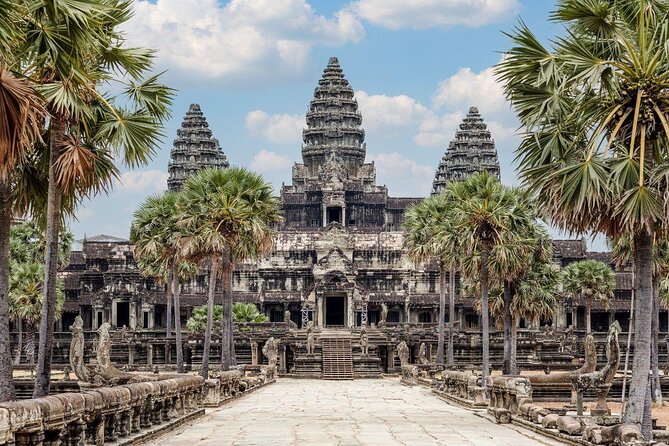
- A tight, logical temple route: Angkor Wat, Banteay Kdei, Ta Prohm, Bayon, and the Tonle Om Gate area.
- English-speaking guide focus helps you understand what you’re seeing instead of just photographing it.
- Rain can change the sunrise plan, but umbrellas and water are part of the setup.
- Maximum group size can reach 25, which affects how quickly you move and how often you get attention.
Why a Sunrise-First Route Changes Everything
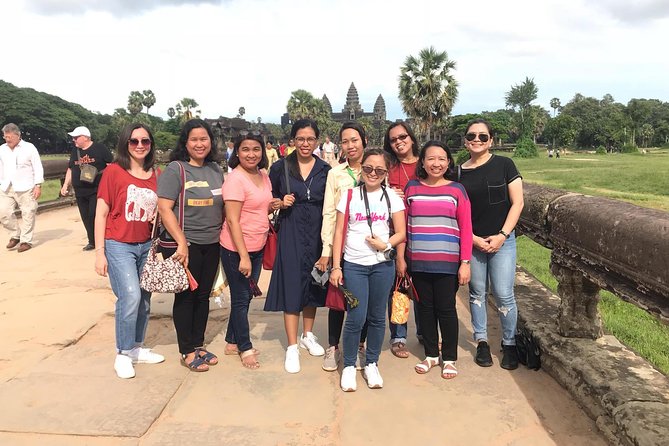
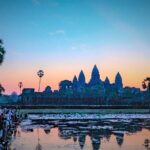
Angkor Wat at sunrise isn’t only about the view. It’s also about timing—before the crowds fully arrive, the place feels more like a living monument than a check-list item. This tour is built around that idea: you’re picked up around 4:30 am and taken into the park early so you can spend your best energy when it matters.
The other big win is that the morning isn’t wasted. A lot of Siem Reap plans start late, then bolt from temple to temple in hot midday chaos. Here, the route is structured so that after the early Angkor Wat time, you still get the slower, photo-friendly stops: Ta Prohm’s tree roots and the face-heavy towers of Bayon.
Finally, a guide helps the whole experience click. You’re not only seeing stone—your guide explains the Khmer Empire story and points out what features mean, which changes how you walk through each doorway and corridor.
If you're still narrowing it down, here are other tours in Siem Reap we've reviewed.
Hotel Pickup and Tickets: The Practical Part (That Trips People Up)
Pickup and drop-off are included, and you’re traveling in an air-conditioned vehicle. That matters early in the morning because you’ll be dealing with a full day of walking later. The tour also includes drinking water, which is a lifesaver when you’re doing sun-up sightseeing and then continuing through multiple sites.
Now, the catch: Angkor Wat ticket/park admission is not included. The tour provides the experience and transportation; you still need to purchase the park entrance ticket on your own (your guide can help you navigate the process, but the admission itself is separate). If you’re planning your budget, factor this in so the $26 tour price doesn’t feel misleading.
You also get a mobile ticket for the tour itself. That usually makes meeting up and identifying your booking simpler, especially at a busy time of day when everyone is trying to leave.
What I’d do the night before
I’d set out clothes for early morning and bring a small day bag with rain protection. Sunrise can be fragile; your schedule isn’t. If it turns wet, you’ll still want to move comfortably.
Angkor Wat: Your First 3 Hours and What to Focus On
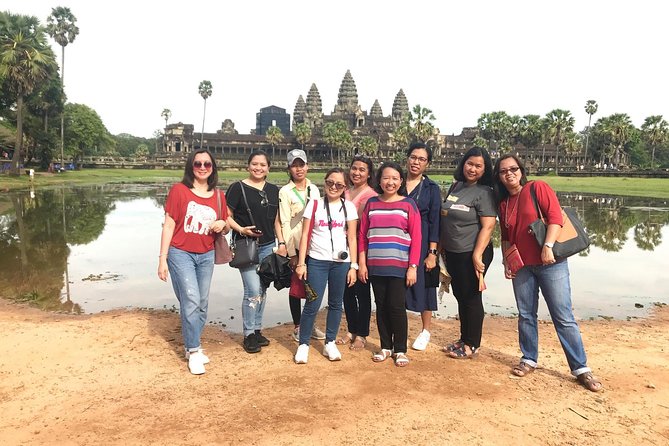
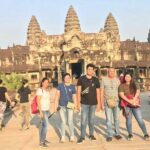
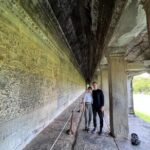
You start with Angkor Wat for about 3 hours. That’s plenty of time if you don’t try to do everything at once. Your guide’s job here is to help you see the site in layers—architecture, symbolism, and the big-picture Khmer Empire context—so you don’t just bounce between photo angles.
Angkor Wat can feel overwhelming because it’s not one temple. It’s a whole system: causeways, levels, courtyards, and carved details that reveal themselves as you move. With 3 hours, you can slow down. You can also do the sensible thing: first, get your bearings at key points; second, return for close-up carvings and faces; third, step back again to understand the layout.
A real-world consideration: sunrise may be blocked
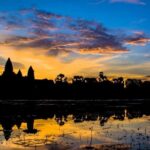
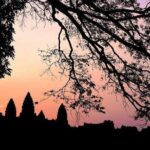
The tour is designed for sunrise viewing. But weather can interfere. On rainy mornings, you may not get the sky drama you hoped for. The good news: this outing is still worth doing even without perfect sunrise light because Angkor Wat’s stonework holds up in cloudy conditions—and the morning start still keeps the site calmer than later hours.
If you’re the type who will hate missing sunrise no matter what, keep your expectations flexible. Even when the sun doesn’t show, you can still get a strong, early-morning Angkor Wat experience.

Banteay Kdei: The Calmer Temple Stop That Makes the Day Work
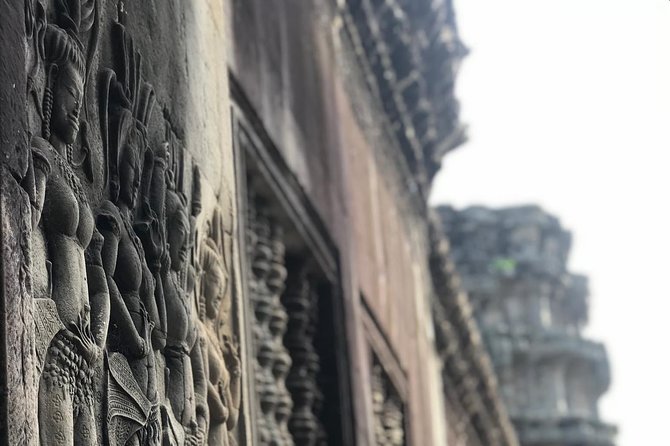
After Angkor Wat, you move to Banteay Kdei for about 1 hour. This stop matters because it gives your eyes a break. Compared to the headline temples, Banteay Kdei tends to feel quieter, and the carvings and interior corridors can be more peaceful when the crowd level is lower.
Banteay Kdei is described as a Buddhist monastery built in the late 12th century, and its meaning is often given as Citadel of Chambers. Translation: you’re not just seeing a temple exterior. You’re walking through a maze-like set of spaces where the stonework and structure reward slower movement.
Why this stop is good value
In a long park day, one or two “quieter” temples can be the difference between burnout and enjoyment. Banteay Kdei gives you that balance. If you only visited the most famous Angkor spots, you’d miss the sense of how diverse these sites are across different periods and functions.
Ta Prohm: The Jungle-Temple Photo Hit (With Time to Actually Look)
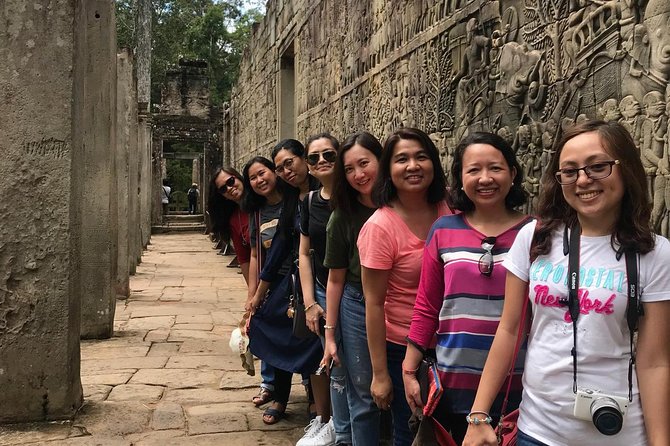
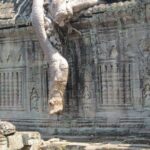
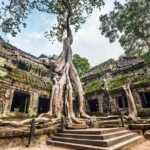
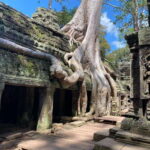
Next up is Ta Prohm for about 2 hours. This is the temple most people recognize: massive tree roots wrapping around walls, creating that famous jungle-temple look. You get about enough time here to do two things well: stop for the iconic photos, then walk further in to see how the restoration choices left parts of the site feeling raw and exposed.
Ta Prohm is a 12th-century temple, and one of the reasons it feels so cinematic is that it’s been left largely unrestored. That means you get the strong contrast between living nature and ancient stone, and your guide can point out how the roots interact with architectural details.
How to make your 2 hours count
- Take photos, but also look for carvings and doorways between the roots.
- If you’re getting tired, pause in shaded corridors and just watch how people move—this temple rewards a slower approach.
If sunrise light was disappointing earlier, Ta Prohm often makes up for it with texture and atmosphere. Roots + stone + morning cool air is a winning combo.
Bayon and the 54 Towers: When the Faces Follow You
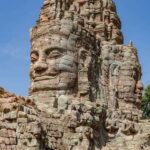
Then comes Bayon Temple for about 1 hour, located at the center of Angkor Thom. Bayon is known for its 54 towers and the famous faces of Avalokiteshvara. This is one of those places where your brain keeps trying to figure out why the carvings feel so present, like someone is watching from every direction.
The best part of having a guide at Bayon is interpretation. The temple isn’t only about spotting a famous face. It’s also about noticing how carvings depict scenes of daily life and historical moments. That context turns the towers from a spooky landmark into a window on how people understood their world.
A time note
One hour can feel short only if you treat Bayon like a photo-only stop. If you walk slowly, look upward, and ask your guide to explain what you’re seeing, an hour is workable. Think of it as getting the main experience plus some detail, not trying to memorize every wall.
Tonle Om Gate and the South Gate Area: The Big-Causeway Moment
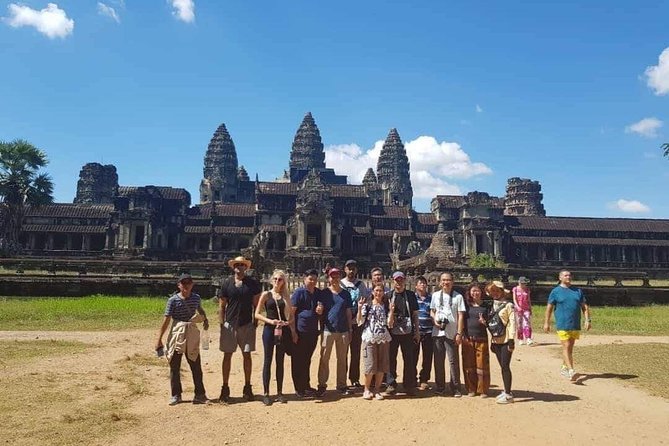
You finish with a stop at the causeway and gate area: North Gate Bridge, described through Tonle Om Gate (South Gate of Angkor Thom). It’s flanked by a dramatic causeway lined with statues of gods and demons, and it’s crowned with giant stone faces similar to those at Bayon.
This stop is valuable because it changes your pace. After the temples, you get a more open-feeling visual moment: the gate, the causeway, and the stone faces give you a last set of “wow” angles before the return trip.
It also helps you understand Angkor Thom as a whole. Even if you don’t spend hours inside every corner, the gate setting gives you a strong mental map for how the city was designed around entrances and symbolic pathways.
Price and Logistics: Does $26 Really Make Sense?
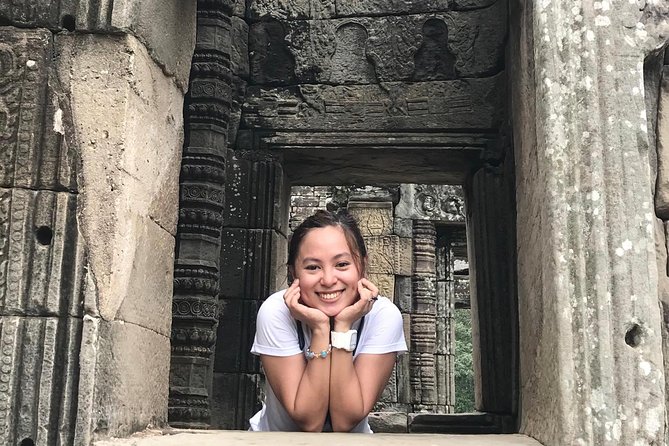
For a price around $26 for an ~8-hour outing, this tour can be excellent value—mainly because it bundles the parts that cost time and energy when you’re traveling independently: early pickup, air-conditioned transport, an English-speaking guide, and drinking water.
Here’s the balanced view:
- If you were planning to do this on your own, you’d still have to manage early transport, meet-up timing, and figuring out what you’re looking at. You’d also likely spend extra time trying to connect the history dots.
- If your priority is only the photo landmarks and you don’t care about explanations, then a guide may not feel worth it. But even then, the schedule and transport are convenient.
The possible drawback is group size and coverage. The tour is set with a maximum of 25 travelers, and on at least one instance the group had more people across multiple vehicles. That can reduce how much attention one guide can give to everyone at once. If you’re the kind of traveler who wants constant, personal guidance, you may feel rushed in busier moments.
My practical suggestion
If you book, treat it as a fast, well-structured day with good guidance, not a private tour. You’ll get the big sights plus a clearer story—just don’t expect one-on-one pacing.
Who This Tour Fits Best
I think this tour is a great match if you:
- want a sunrise-first plan without the hassle of figuring out transport that early
- enjoy learning what you’re seeing (the Khmer Empire context makes the temples land harder)
- prefer a structured route that still includes less-crowded-feeling stops like Banteay Kdei
It may be less ideal if you:
- are extremely sensitive to sunrise disappointment from weather
- want very small groups and constant guide attention
- plan to spend hours lingering at one site and skipping the rest
Should You Book This Angkor Sunrise Tour?
Yes, I’d book it if you want a well-timed, no-stress way to hit the must-sees—Angkor Wat early, then Ta Prohm, Bayon, and the gate-causeway finale. The value is strong because it includes pickup, drop-off, transport, an English guide, and water, and you’re saving effort versus going it alone.
I’d also book with one mindset: sunrise is a goal, not a promise. Bring rain gear, keep expectations flexible, and you’ll still get a full Angkor day that makes sense from start to finish.
If you’re hoping for a super-custom pace or a tiny-group feel, you might want to look for a smaller-group alternative. But for most people, this route hits the right balance of iconic sights and helpful context.
FAQ
What time does the tour start in Siem Reap?
The start time is 4:30 am, with pickup from your hotel area in Siem Reap.
How long is the tour?
It runs about 8 hours (approx.), covering multiple temple stops across the Angkor Archaeological Park.
Are Angkor Wat entrance tickets included?
No. Angkor Wat admission ticket is not included, and you purchase entrance tickets on your own at the site.
What temples and sights are included?
The tour includes Angkor Wat, Banteay Kdei, Ta Prohm, Bayon Temple, and a gate/causeway stop described as Tonle Om Gate (South Gate of Angkor Thom) within the North Gate Bridge area.
Does the tour include pickup and transportation?
Yes. Pickup and drop-off are included, and you travel by air-conditioned vehicle with an English-speaking tour guide, plus drinking water.
What happens if the weather is bad?
This experience requires good weather. If it’s canceled due to poor weather, you’ll be offered a different date or a full refund. If rain happens during the outing, umbrellas were provided on at least one rainy experience.