REVIEW · SIEM REAP
Siem Reap: 2-Day Temple Highlights Sunrise and Sunset Option
Book on GetYourGuide →Operated by Journey Cambodia · Bookable on GetYourGuide
Angkor is best when you see it with timing and context, not just tickets. This 2-day temple highlight tour pairs an early sunrise at Angkor Wat with a second-day route through the biggest crowd magnets plus quieter, more detailed sites. You also get heat-smart comfort with air-conditioned transfers and cool towels.
Two things I really like: the licensed English-speaking guide who connects Hindu and Buddhist symbolism to what you’re actually looking at, and the pacing that stays manageable even in the hot season. Guides such as Sak, Chhay, Bun, and Pi have been praised for answering questions and keeping photo stops smooth, and drivers like Vichet and Keal are repeatedly credited for cold water and cold towels after each temple.
One consideration: temple entry is separate, so the total cost isn’t just the $46 tour fee. Also, the days are long and involve stairs and uneven stone, so you’ll want solid shoes and a heat plan.
In This Review
- Key Things To Know Before You Go
- Why This 2-Day Angkor Tour Feels Well Designed
- Day 1: Pre Rup, Banteay Srei, Neak Pean, and Preah Khan (the Sacred “In-Between”)
- The Day 1 Sunset Choice: Rice Fields Drink or Bakheng Temple
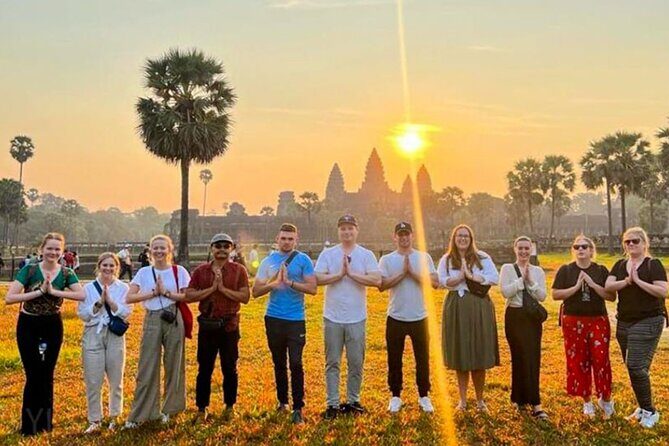
- Day 2 Sunrise at Angkor Wat: Walk in the Dark, Then Watch Light Land
- Ta Prohm, Ta Nei, and Angkor Thom: Jungle Roots and Face Towers
- Guides and Drivers: How You Turn Stone Into Stories
- Price and Value: What $46 Really Means With the $62 Pass
- What to Bring (and What the Temple Code Demands)
- Who This Tour Fits Best (And Who Might Want Another Option)
- Should You Book This Sunrise and Sunset Angkor Highlights Tour?
- FAQ
- What’s included in the $46 tour price?
- How long is the experience?
- What temples are visited over the two days?
- Is sunrise at Angkor Wat included?
- Is there a sunset option, and what is it?
- Do I need to pay an additional temple entry fee?
- Are meals included?
- What should I bring?
- Are there any clothing rules?
- Is the tour wheelchair accessible?
Key Things To Know Before You Go
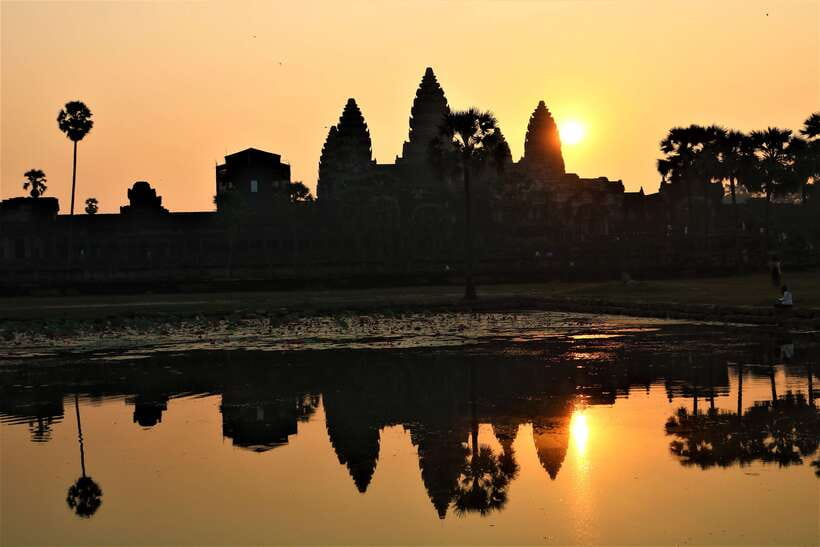
- Sunrise entry from the eastern side lets you walk corridors in near-darkness before the light hits Angkor Wat.
- Day 1 focuses outside Angkor Thom, including Pre Rup and Banteay Srei, which many people find more detailed and less overwhelming.
- Two sunset options: a rice-fields sunset drink (private) or sunset at Bakheng Temple (small group).
- World Monument Fund restoration at Preah Khan adds a real-world feel to the site you’re seeing.
- Air-conditioned round-trip transfers plus bottled water and cool towels help you keep your energy.
- A torch is required for the sunrise walk, so don’t rely on your phone flashlight.
Why This 2-Day Angkor Tour Feels Well Designed
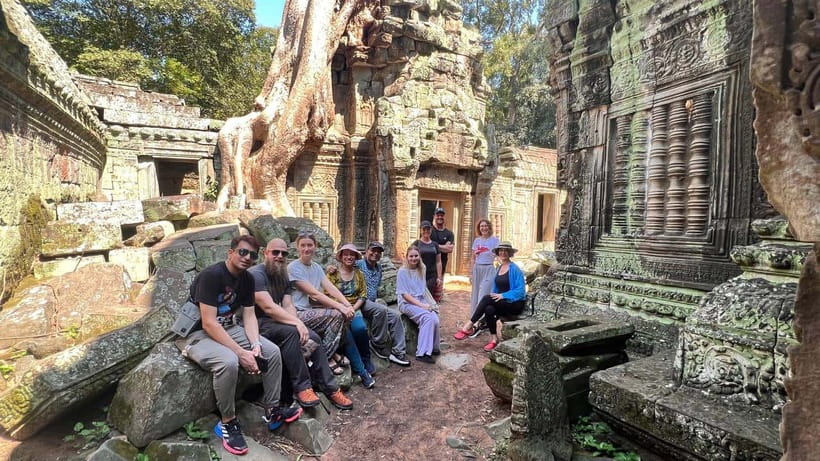
Angkor isn’t one temple. It’s a whole system of sacred spaces, kings, gods, and messages carved into stone. What makes this tour work is that it doesn’t try to cram everything in with sprinting energy. You get two full days with a logical arc: Day 1 leans into the lesser-visited temples and craftsmanship, while Day 2 tackles the biggest icons at the best light.
I also like that you’re not forced to figure things out alone. A licensed English-speaking guide gives the story behind Hindu temple mountains, laterite brickwork, Buddhist island symbolism, and why certain faces and gates show up where they do. In practice, that turns a “pretty ruin” into something you can read.
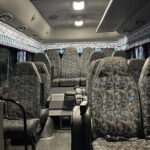
You’re also protected from one of the worst parts of Angkor day-tripping: heat stress. Air-conditioned vehicle transport is included, and you’ll have complimentary bottled water plus a cool towel. If you’ve ever tried to tour in Cambodia’s sun and humidity, you know those small resets matter.
If you're still narrowing it down, here are other tours in Siem Reap we've reviewed.
Day 1: Pre Rup, Banteay Srei, Neak Pean, and Preah Khan (the Sacred “In-Between”)
Day 1 starts with Pre Rup, a Hindu temple mountain built as a state temple for Khmer king Rajendravarman. The site is dated to the 10th century (dedicated in 961 or early 962), and it’s a great introduction because it explains how Khmer sacred architecture worked: layered materials, symbolic elevation, and a religious purpose that shaped the entire layout.
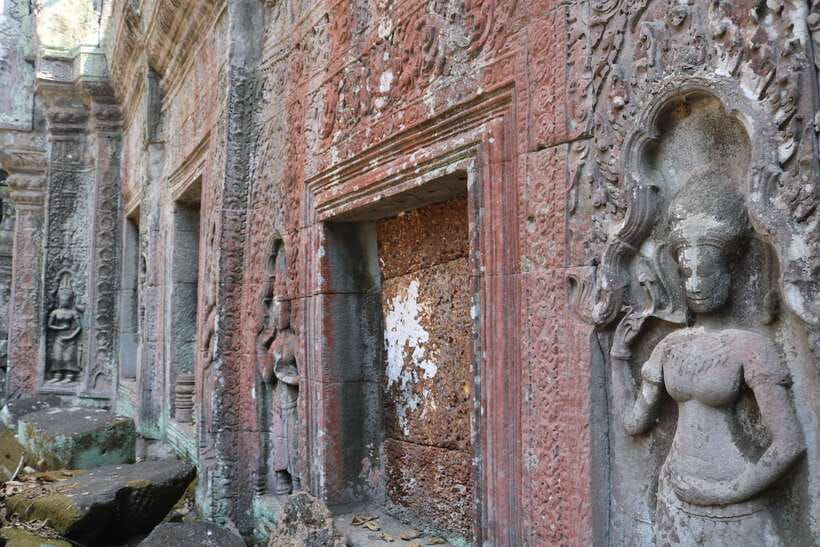
From there, the tour shifts to Banteay Srei, often called one of the most finely crafted temples in Cambodia. It’s smaller than Angkor Wat, but the payoff is in the relief work—tight details in sandstone that reward slow looking. One very practical detail: this area has only been accessible since the late 1990s after the Khmer Rouge period, so it doesn’t have the same “worn-in” feel as older, heavily overexposed stops.
Then you head to Neak Pean, an artificial island temple set inside the Jayatataka Baray reservoir. The setting matters as much as the stone: the circular-island concept is a neat way to understand how Khmer religion used water as part of the sacred design. Neak Pean also gives you a calmer change of pace after the more visually busy carved surfaces.
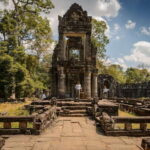
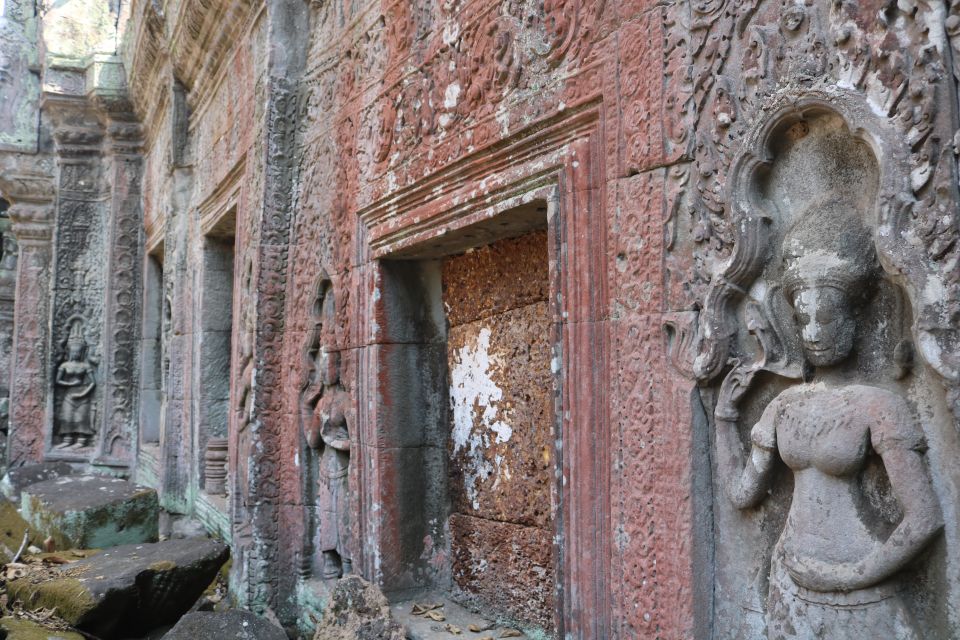
The afternoon continues at Preah Khan, which feels atmospheric because it’s a ruined complex of roots and crumbling stone. This is also a strong contrast to the grand scale of Angkor Wat. Construction is linked to Jayavaraman VII, commissioned in honor of his father—so you’re looking at a site built to make a point about power, memory, and piety. The tour also notes restoration underway by the World Monument Fund, and in many areas the condition is surprisingly good, which helps you better “see” the temple’s original structure instead of only guessing.
The Day 1 Sunset Choice: Rice Fields Drink or Bakheng Temple
At the end of Day 1, you get a sunset finish that makes the long day feel complete. Depending on your option, you’ll do one of two things:
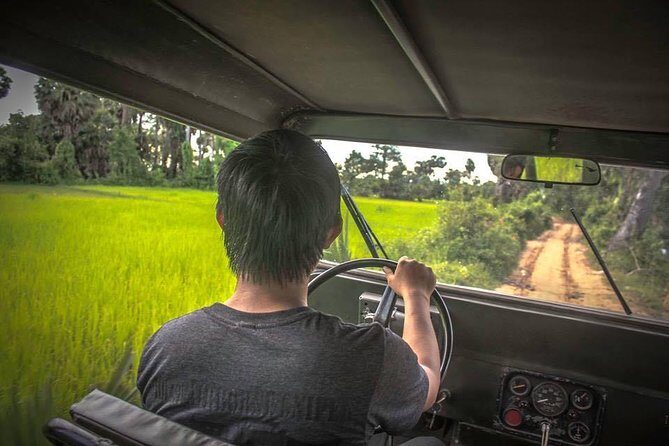
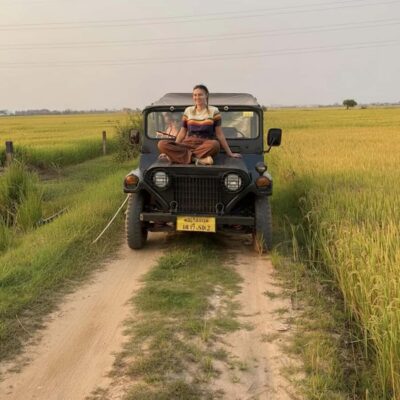
- Rice-field sunset drink (private option): You end in the peaceful Siem Reap countryside as the sun drops toward the horizon. This is a lower-stress way to close the day and great if you want something restorative rather than crowded.
- Sunset at Bakheng Temple (small group option): If you choose this, you’re trading calm fields for a more iconic sunset viewpoint. The reward is the payoff many people come for, but it’s also more sensitive to timing and crowding—so you’ll want to follow your guide’s instructions closely.
Either way, this is a smart inclusion. Angkor days can turn into nonstop “look, walk, sweat, repeat.” A real sunset moment helps your brain connect the dots between all the temples you just saw.
Day 2 Sunrise at Angkor Wat: Walk in the Dark, Then Watch Light Land
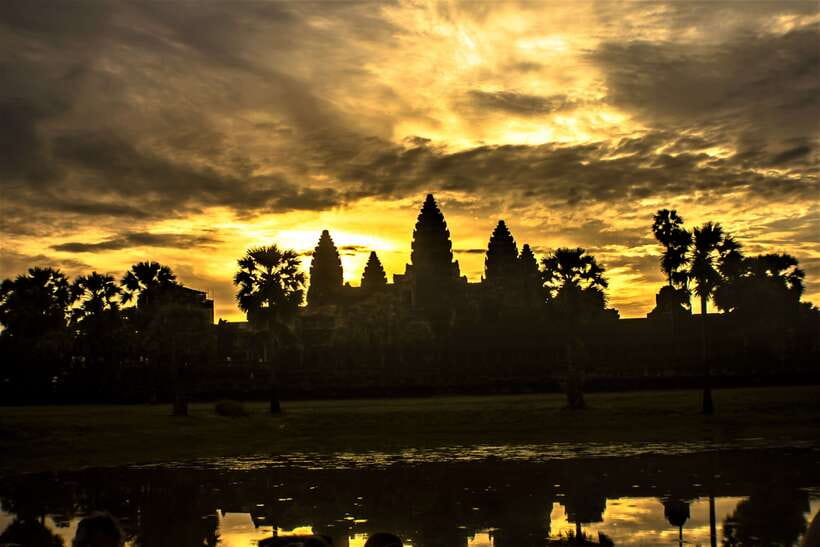
Day 2 is the big one: Angkor Wat at sunrise. You’ll get a pre-dawn departure and arrive early enough to enjoy the temple entrance while it’s still dark. The tour specifically asks you to bring a torch, which matters because it helps you see your footing and move through corridors safely during the low-light part of the experience.
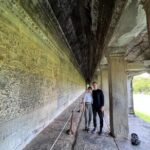
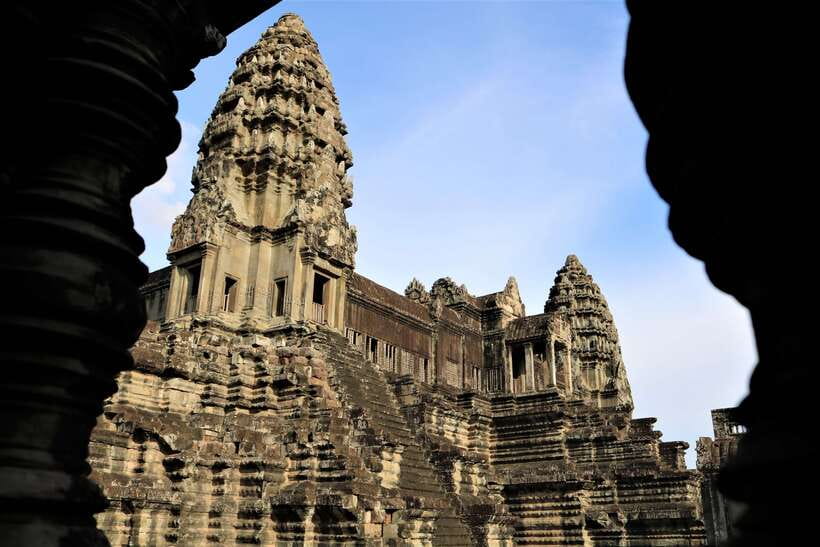
One of the most compelling details here is that you enter from a less busy eastern side and begin walking through hoary cloistered corridors past long stretches of bas-relief carvings. The meaning of that, for you, is simple: the carvings hit differently when you’re not surrounded by a rush of daytime noise. Light slowly changing over stone makes symbols easier to read, and it also gives you a slower rhythm than you’ll experience later.
After the sunrise and your time in the temple, the tour includes time for breakfast outside Angkor Wat. Meals are listed as not included, so think of this as a stop where you can eat rather than a guaranteed sit-down meal. Still, it’s a practical way to avoid a cranky crash right after the early morning.
Ta Prohm, Ta Nei, and Angkor Thom: Jungle Roots and Face Towers
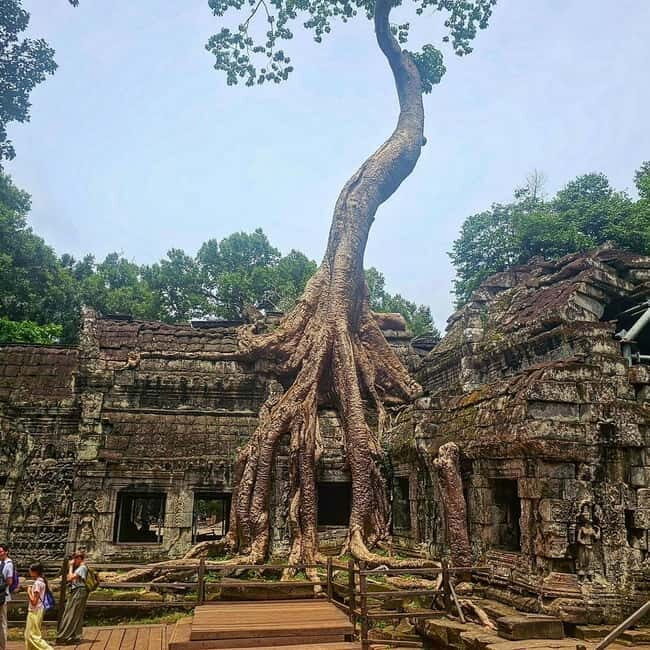
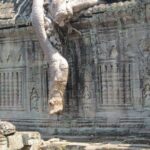
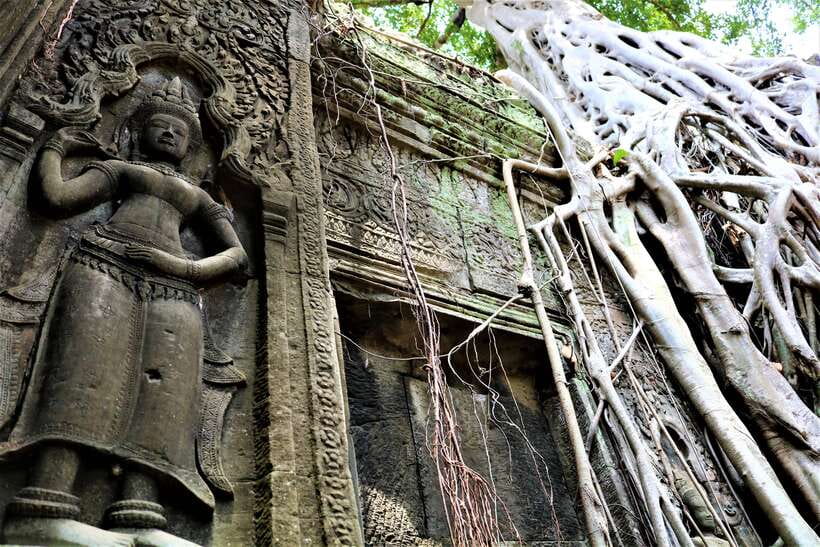
Once sunrise is done, the day shifts from “quiet awe” to “wow, this is huge.” Next up is Ta Prohm, one of the most atmospheric temples in the Angkor area. It’s famous because it still looks like something you’d stumble into from another century—roots, stone, and a jungle-enveloped mood that feels cinematic even before you start taking photos. Historically, the site supported thousands of monks (the tour notes 2,740), so it’s not just a ruin. It’s a memory of a whole religious community.
Then you move to Ta Nei, a late 12th-century stone temple. This stop is a nice balance: not as globally famous as Ta Prohm, but still worth your time if you like seeing how Khmer builders reused ideas across different temple sizes.
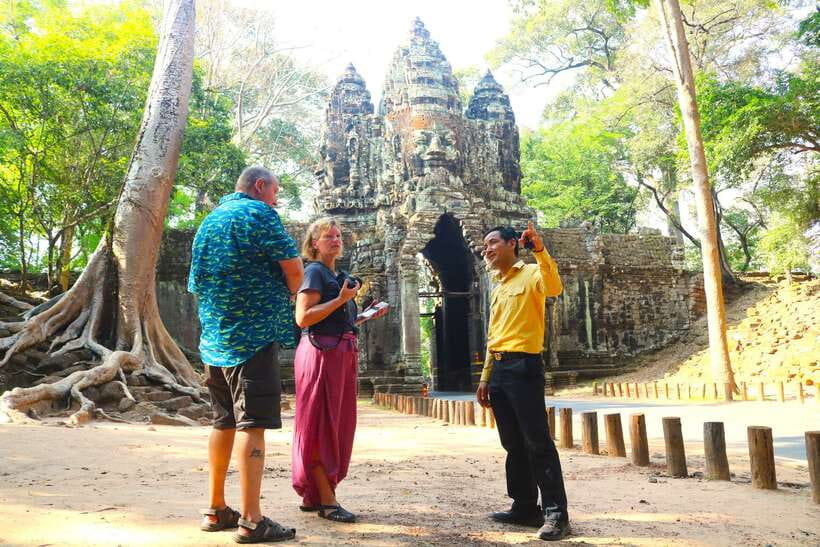
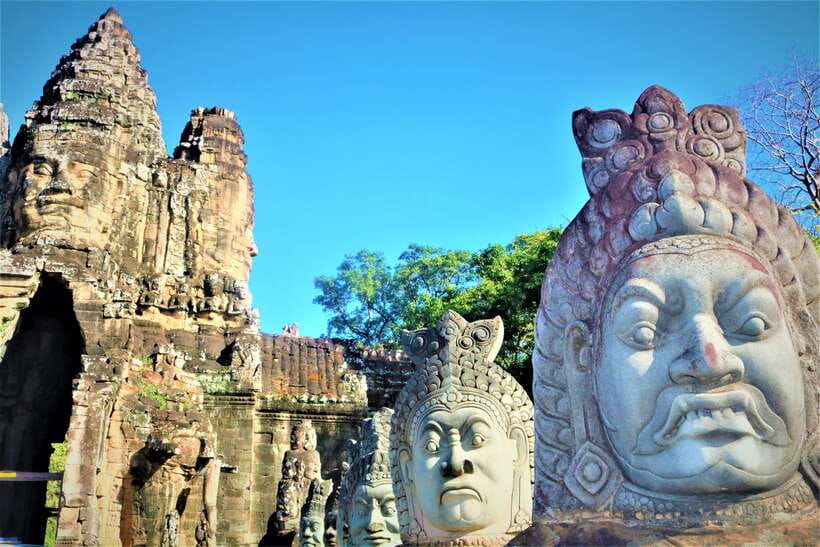
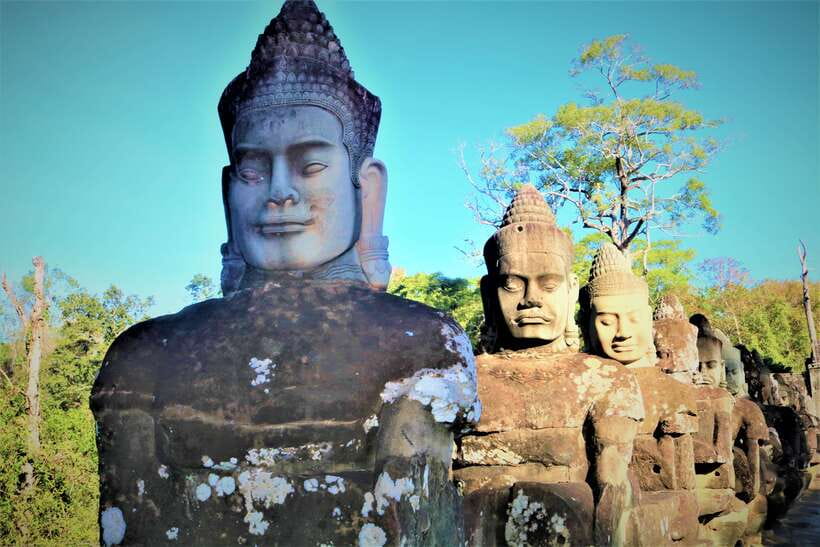
After that, you enter the southern gate of Angkor Thom. This is where the tour turns into a visual lesson. The gate area features a row of stone figures on each side—gods on the left and demons on the right—so you’re seeing religious storytelling built into the architecture at a scale you can’t replicate on Instagram.
The next highlight is Bayon, with its central towers covered in enormous faces (the tour notes more than 200). Then you explore the Terrace of the Leper King and the Terrace of Elephants. These terraces are good for people who like symbolism and social history, not just architecture photography, because the carvings and spaces connect ritual, power, and public performance.

Guides and Drivers: How You Turn Stone Into Stories
This is a tour where the human factor makes a noticeable difference. The guide isn’t just reciting dates. The best guides on this route—people like Chhay, Sak, Bun, Pi, Pal, and Yuth show up in the feedback—tend to connect temple design to Khmer religion and daily meaning. You’ll hear explanations that help you interpret what you’re seeing instead of treating every temple as a separate postcard.
A recurring praise point is pacing and responsiveness. Several guides are described as funny, patient, and good at managing the group pace in heat. If you ask questions, they’ll often answer them without acting like you’re slowing them down. Some guides also help with photos—positioning you for angles and taking shots so you don’t have to keep handing your camera to strangers.
Drivers also play a big role here because they’re the heat-management system. Across the feedback, drivers are credited with arriving on time, driving safely, and keeping cold towels and ice-cold water ready after each temple stop. That sounds small, but it’s the difference between enjoying a second day and feeling cooked by lunchtime.
One more practical note: the transport is air-conditioned round-trip from your hotel, and hotel pickup covers hotels across Siem Reap City. That reduces the hassle of finding your own ride at pre-dawn hours.
Price and Value: What $46 Really Means With the $62 Pass
The tour price is $46 per person for 2 days. That’s the cost of the guided experience plus the included services: hotel pickup and drop-off, air-conditioned transportation, a licensed English-speaking guide, and the listed refreshment extras (bottled water and cool towels). Depending on your option, you’ll also get the rice-fields sunset drink or sunset at Bakheng Temple.
The big “add-on” is the temple entry fee, listed at $62 per person for a 2- or 3-day pass. Meals are also not included.
So what’s the real value? You’re paying for two things most people can’t easily DIY:
1) Timing for sunrise and smart routing, and
2) Interpretation so you understand why each temple is shaped the way it is.
If you were to do Angkor alone, you’d still face early mornings, crowd logistics, and transportation planning. This tour folds all that into a single package, which is why the value holds up even after you add the entry pass.
What to Bring (and What the Temple Code Demands)
If you only remember one prep list item, make it shoes. You’ll be walking a lot and stepping on uneven stone. The tour recommends comfortable walking shoes, and that’s exactly what you’ll want before you start climbing and moving through temples.
Bring insect repellent too. You’ll be outdoors during hot hours, and mosquitoes can be a problem around vegetation and water areas.
For the sunrise day, bring a torch. It’s specifically requested so you’re not guessing in the dark.
Clothing rules are also strict. Shorts aren’t allowed, and you’re asked to dress respectfully with covered shoulders and knees. This isn’t about rules for their own sake; temple spaces can be hot, but they’re still sacred sites with expectations.
Who This Tour Fits Best (And Who Might Want Another Option)
This is a solid fit if you want a high-impact Angkor itinerary without wasting time. It’s especially good for first-timers because it hits the major icons—Angkor Wat sunrise, Ta Prohm, Angkor Thom—and also makes time for detailed stops outside the main circuit like Banteay Srei and Preah Khan.
It also suits people who care about meaning. If you like learning the Khmer mix of Hindu and Buddhist symbolism, you’ll get more out of the day than someone who just wants photos.
That said, it’s not suitable for children under 8. It also isn’t wheelchair accessible, and it’s not suitable for people with mobility impairments, based on the info provided. If you fall into any of those categories, you’ll want to choose a different tour style.
Finally, expect a physically active schedule. Even with air-conditioned transport, you’re still on foot for temples, stairs, and uneven ground.
Should You Book This Sunrise and Sunset Angkor Highlights Tour?
If you’re going to Siem Reap and you want the “greatest hits” of Angkor with a guide explaining what you’re seeing, this is an easy yes. The pairing of Angkor Wat sunrise with a second day through Ta Prohm and Angkor Thom is exactly the kind of timing that makes early mornings worth it.
Also, I like that the tour includes comfort supports—air-conditioned transfers, water, and cool towels—because Angkor is not a gentle experience in the heat. Add the fact that you’ll have a guide who can answer questions (not just give a script), and the whole thing becomes more than sightseeing.
Book it if:
- you want a planned route that avoids confusion before dawn
- you care about history and religion as you look
- you want sunset and sunrise without handling logistics
Pass or consider alternatives if:
- you need an itinerary with minimal walking and stairs
- you can’t do pre-dawn starts
- you want meals included in the price
FAQ
What’s included in the $46 tour price?
The price includes hotel pickup and drop-off in Siem Reap City, air-conditioned transportation, a licensed English-speaking guide, bottled water and cool towels, plus either a rice-field sunset drink (private option) or sunset at Bakheng Temple (small group option).
How long is the experience?
It’s a 2-day tour.
What temples are visited over the two days?
You’ll see Pre Rup, Banteay Srei, Neak Pean, Preah Khan, Angkor Wat, Ta Prohm, Ta Nei, Angkor Thom (including the southern gate and Bayon), plus the Terrace of the Leper King and the Terrace of Elephants.
Is sunrise at Angkor Wat included?
Yes. Day 2 includes a pre-dawn departure for sunrise at Angkor Wat. The tour asks you to bring a torch for the dark temple entry.
Is there a sunset option, and what is it?
Yes. If you choose the private option, you’ll end Day 1 with a rice-field sunset drink. If you choose the small group option, you’ll get sunset at Bakheng Temple.
Do I need to pay an additional temple entry fee?
Yes. Temple entry fees are not included and are listed as $62 per person for a 2- or 3-day pass.
Are meals included?
No. Meals are not included.
What should I bring?
Bring comfortable walking shoes and insect repellent. For the sunrise visit, bring a torch as requested by the tour.
Are there any clothing rules?
Yes. Shorts aren’t allowed. Plan to dress respectfully with covered shoulders and knees.
Is the tour wheelchair accessible?
No. The tour is not wheelchair accessible and isn’t suitable for people with mobility impairments or children under 8.