REVIEW · SIEM REAP
Siem Reap: Angkor Wat Tour Explore The Most Iconic Temples
Book on GetYourGuide →Operated by Angkor Wat Combine Tours · Bookable on GetYourGuide
Angkor looks different at dawn. This Siem Reap tour is built for getting you to the big sights in smart order, with a driver who keeps things moving and adds local context along the way. I like that the day balances the headline temples with a calmer stop at Banteay Kdei, and I also like the photo-friendly pacing of sunrise at Angkor Wat when you can still breathe and see details before the crowds thicken. The main catch is simple: you still need to buy your own Angkor Pass, and you’ll be walking on uneven ground for hours in the heat.
You also get practical comfort touches that matter in Angkor: bottled water is included, and you’ll receive a cool towel during the day. In the real world, that support turns a long temple circuit from miserable to manageable, especially when the day is bright and warm. You’ll likely have an English-speaking driver, and in past tours people have highlighted guides like Chamrong and Lay for staying helpful and ready between stops.
One possible drawback: the temple circuit is not wheelchair accessible, and you’ll want breathable clothing that follows the shoulder-and-knee rule. If you’re sensitive to early mornings or long walking stretches, plan accordingly.
In This Review
- Key things to know before you go
- From your hotel to the temple pass desk
- Sunrise at Angkor Wat: calm light and sharper photos
- Angkor Wat inside: bas-reliefs, galleries, and the main sanctuary
- Banteay Kdei: the calmer temple stop you’ll actually remember
- Ta Prohm: giant roots, movie fame, and staying comfortable
- Ta Keo: the unfinished pyramid temple that breaks the pattern
- Bayon Temple: 54 towers and faces that follow you
- Tonle Om Gate: the causeway gods and demons photo stop
- Price and logistics: $24 value depends on one thing
- Comfort, rules, and what to bring (so your day doesn’t get derailed)
- The human factor: drivers that keep the day smooth
- Who this Siem Reap circuit is best for
- Should you book Angkor Wat Explore The Most Iconic Temples?
- FAQ
- Is the Angkor Wat temple pass included in the tour price?
- How long is the tour?
- Does the tour include hotel pickup and drop-off?
- What’s included for comfort during the tour?
- What should I bring and wear?
- Is the tour wheelchair accessible?
- Is free cancellation available?
Key things to know before you go
- Sunrise option at Angkor Wat helps you catch the calm look of the moat and towers before peak arrival.
- Smaller, quieter timing at Banteay Kdei gives your eyes a rest from the most crowded monuments.
- Ta Prohm’s jungle-roots look is best when you slow down and let the frame of the trees do the work.
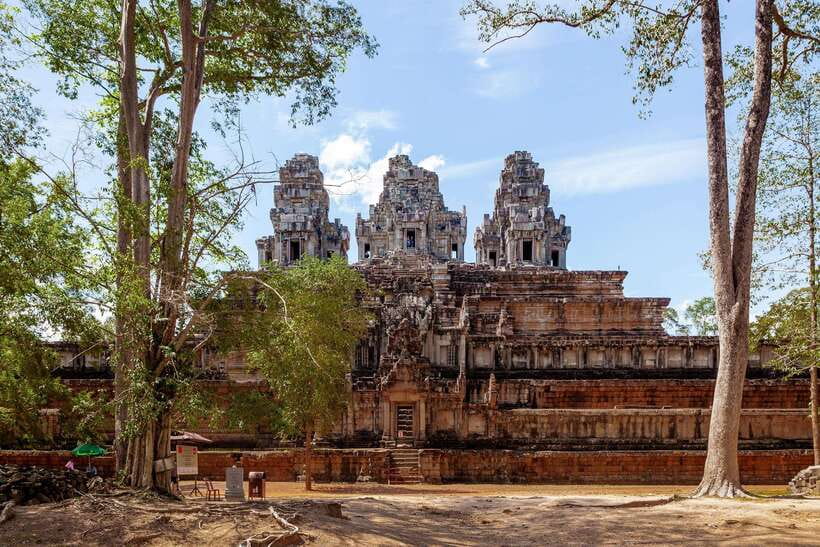
- Ta Keo’s unfinished layout is a rare change of pace in Angkor, and it makes the climb feel different.
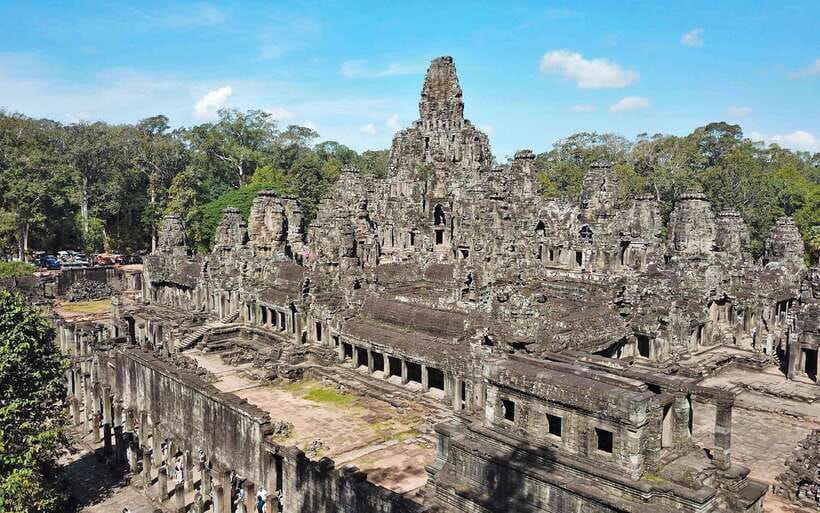
- Bayon Temple’s stone faces on 54 towers are a standout visual even after you’ve seen Angkor Wat.
- Tonle Om Gate is a strong photo stop that ties the Angkor Thom entry scene together.
From your hotel to the temple pass desk
Your day usually starts with pickup from your Siem Reap hotel, and the driver typically arrives a few minutes before departure. From there you head to buy the entrance tickets, since the Angkor Wat pass is not included in the tour price. That sounds like a small detail, but it matters: the pass is required, and buying it first keeps you from scrambling mid-morning.
Once the pass is handled, the driver takes you temple by temple in a structured flow. This is the big value of a private circuit: you’re not negotiating buses, you’re not hunting tuk-tuks, and you’re not losing time to unclear routes across the temple zone.
If you're still narrowing it down, here are other tours in Siem Reap we've reviewed.
Sunrise at Angkor Wat: calm light and sharper photos
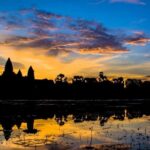
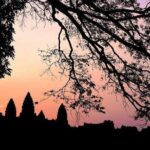
If you book the option that starts early, you’ll start at the Angkor Wat sunrise point in the Angkor Archaeological Park. The reason this matters is timing. At dawn, the scene feels more readable—the reflections in the moat, the silhouettes of the towers, and the carved edges look cleaner before the day heat kicks in.
You’ll want to treat sunrise like a photo mission with a purpose, not just a spectacle. Get a few wide shots first, then walk a little to spot details—bas-relief lines, column edges, and the geometry around the terraces. Even if you’re not a serious photographer, the early light helps you see why Angkor Wat became such an enduring symbol.
Angkor Wat inside: bas-reliefs, galleries, and the main sanctuary
After sunrise, you’ll explore inside Angkor Wat, including its galleries and central sanctuary areas. It was originally built as a Hindu temple for Vishnu and later became a Buddhist site, so the design feels layered and symbolic even before you read any labels.
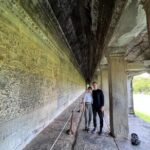
This is where the carvings do the heavy lifting. Spend time at the galleries where bas-reliefs run along the walls—this is the kind of detail that disappears when you rush. The tour structure is helpful here because you’re not guessing where to go next; you’re following a planned path with someone who can guide your attention.
A practical note: the site is large, and the walking adds up. Wear shoes you can stand and climb in, because the temple surfaces can be uneven and you’ll be on your feet for long stretches.
Banteay Kdei: the calmer temple stop you’ll actually remember
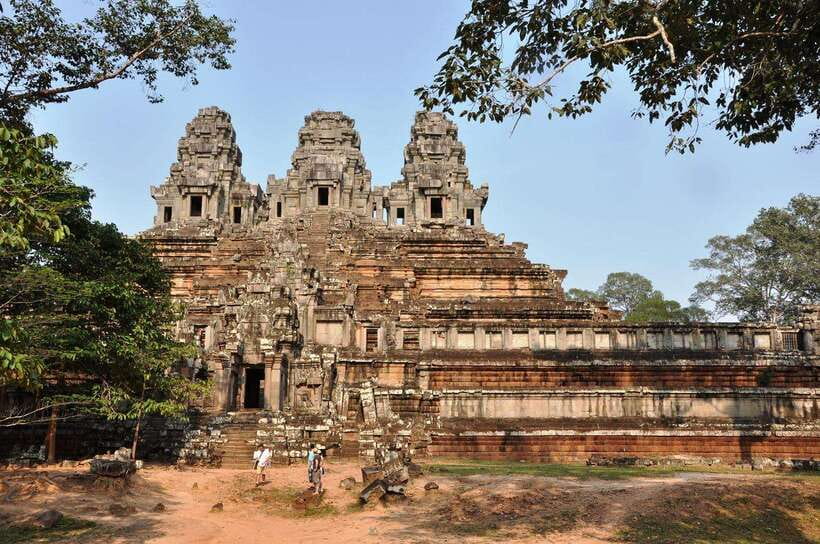
Next comes Banteay Kdei, a Buddhist monastery with serene corridors and distinctive carvings. Compared with the big draw temples, this one often feels quieter, and that quiet is a real benefit. When you’re bouncing between major monuments, your brain starts skimming. Banteay Kdei slows you down again.
You’ll also notice the partially ruined feel—people describe it as peaceful and mysterious. That isn’t just ambience; it changes how the carvings and stonework look, because the structure is less polished. The result is a temple that feels lived-in by time, not staged for visitors.
If you’re the type who enjoys architecture and atmosphere over crowds, this is one of the best reasons to take this specific circuit rather than only seeing Angkor Wat and Bayon.
Ta Prohm: giant roots, movie fame, and staying comfortable
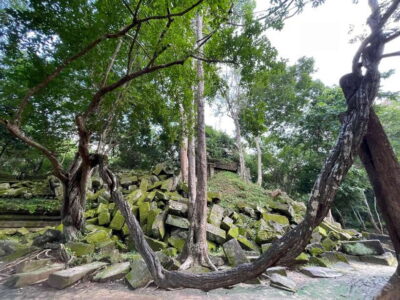
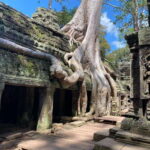
Ta Prohm is famous for the huge tree roots that twist over the ruins. It’s also one of those places where the effect is so well-known that you might assume you’ve already seen it online. Then you arrive and realize the scale is different in person, especially when the roots frame doorways and walls.
This temple is often left largely unrestored, which creates that jungle-temple effect. Here’s how to enjoy it without getting overwhelmed: pause at a few “anchor” spots where the roots make natural scenes, then take a short break from moving so your eyes can reset. The tour pacing helps because you’re not rushing from viewpoint to viewpoint every 30 seconds.
One more reality check: Ta Prohm is outdoors and exposed. You’ll want sunscreen and sunglasses, and you’ll appreciate the included water and cool towel when the day warms up.

Ta Keo: the unfinished pyramid temple that breaks the pattern
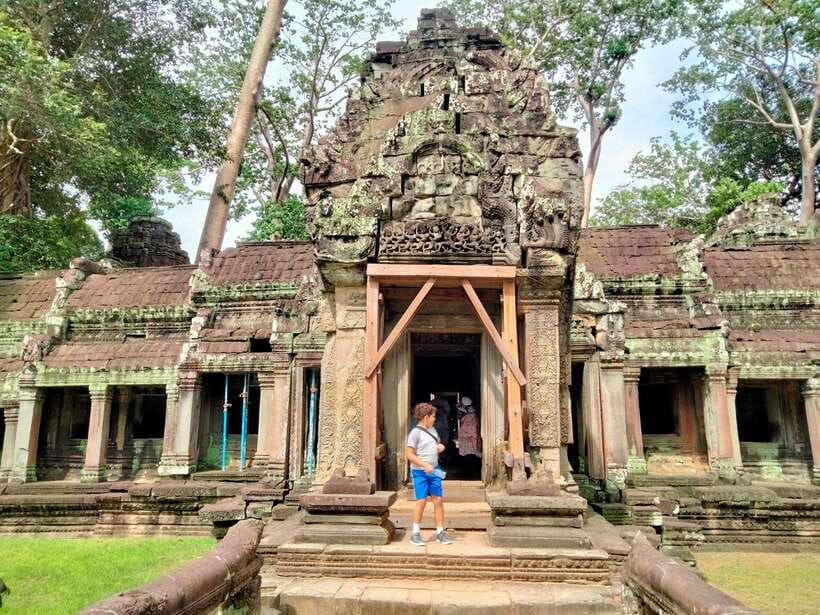
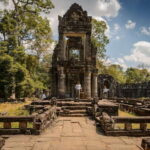
Ta Keo is a standout because it was never fully completed. Built during the late 10th to early 11th century by King Jayavarman V, later successors continued parts of the work, but the temple remains an incomplete story in stone.
This matters for your experience because it changes the feel of the climb. In other temples you get a sense of completion, even when parts are ruined. At Ta Keo, you feel the construction in its incomplete state, which makes the steps and platform levels feel more like you’re navigating an active idea rather than a finished artifact.
If your brain is temple-fatigued after Angkor Wat and the Bayon area, Ta Keo can actually refresh you because it’s a different kind of visual and spatial puzzle.
Bayon Temple: 54 towers and faces that follow you
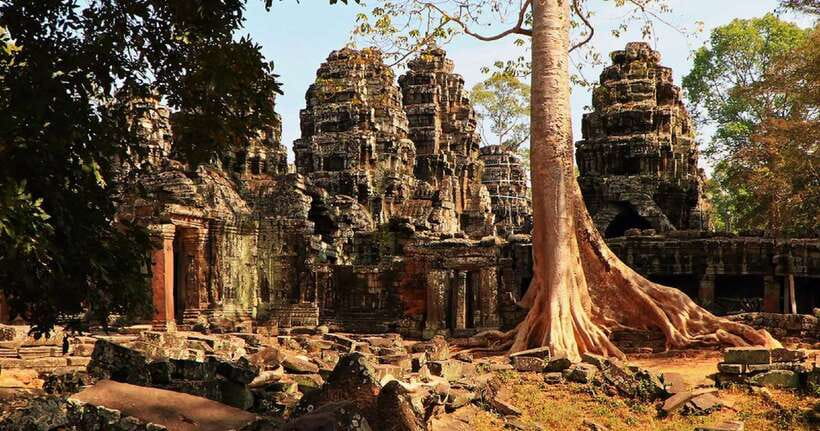
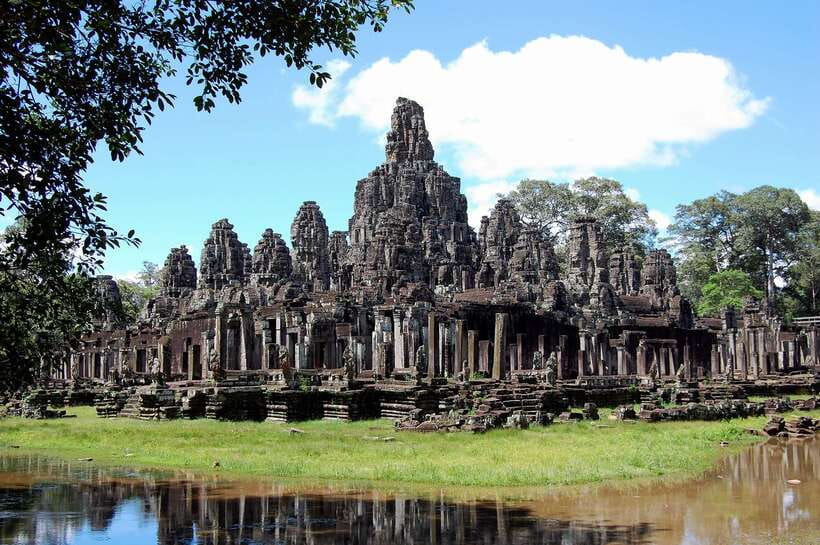
Now you get the iconic heart of Angkor Thom: Bayon Temple. It’s known for 54 towers, each crowned with massive faces of Avalokiteshvara. The faces are serene, but the temple isn’t subtle—every angle feels like it’s watching you back.
Spend a bit of time around the towers and walls where carvings show scenes of daily life and battles. That blend of everyday detail with historical action is one reason Bayon hits so hard. Even without reading much, you can see the temple was built to communicate stories, not just decorate space.
It can get visually intense, so use a simple approach: find a face that seems symmetrical from one spot, then walk slowly along a path to see how the expression and angle shift.
Tonle Om Gate: the causeway gods and demons photo stop
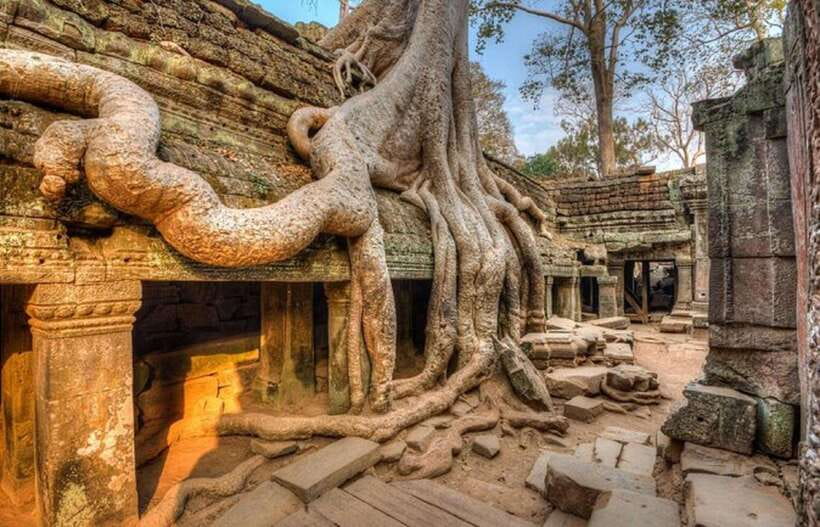
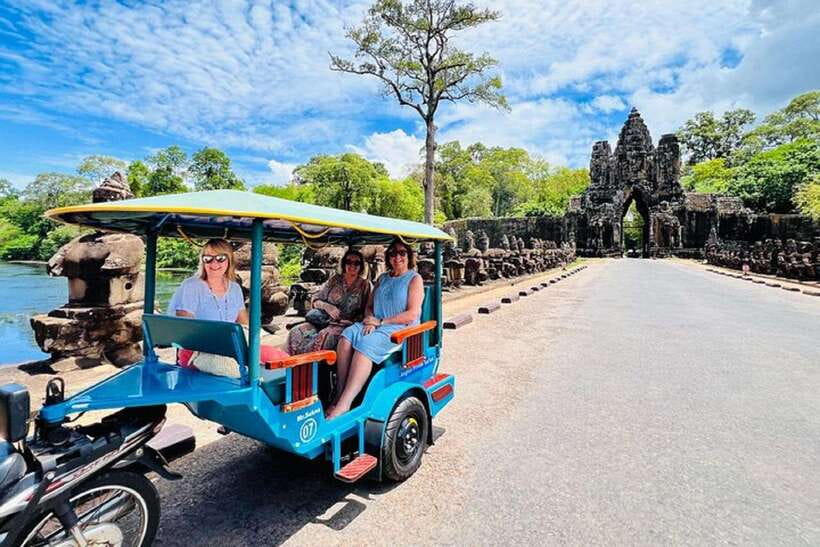
Before you head back, there’s a stop at Tonle Om Gate, the South Gate of Angkor Thom. The big causeway is lined with statues of gods and demons, leading you into the kind of grand entrance scene Angkor is famous for.
The massive gate is crowned with four giant stone faces, similar in style to what you saw at Bayon. This makes Tonle Om feel like a visual bookend: you’ve seen the faces up close at Bayon, and now you see them from the perspective of entry and approach.
If you care about photos, treat this as your late-day reset. It’s often easier to capture a strong wide image here than it is in the densest temple zones.
Price and logistics: $24 value depends on one thing
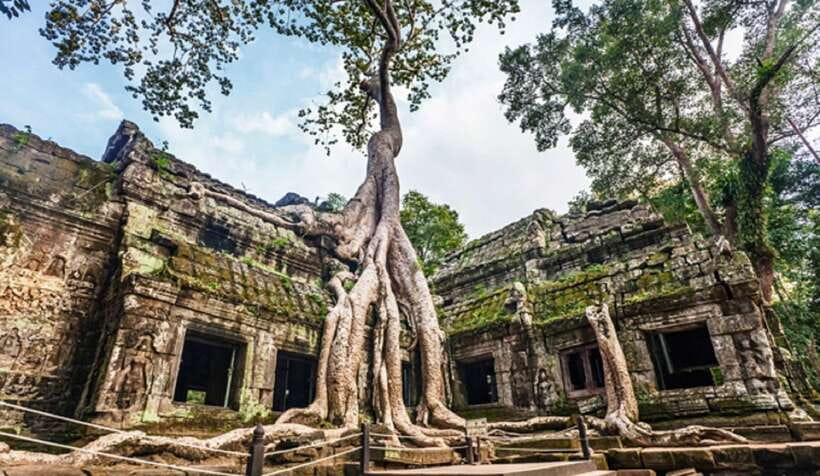
The tour price is listed at $24 per group up to 2 for an 8-hour experience, which is why it can be a strong deal for couples or friends traveling together. Where the math gets real is the extra cost: the temple pass is not included and you’ll buy it separately.
Think of it this way: you’re paying for the driver, the private transport, and the structure that gets you efficiently between major temples. The pass is the fixed ticket cost tied to the park, so your decision should focus on whether you value comfort and guided pacing over doing everything solo.
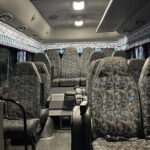
Also note: the pickup is part of the package, and bottled water plus a cool towel are included. That sounds small, but in a hot temple day it can save you money and hassle.
Comfort, rules, and what to bring (so your day doesn’t get derailed)
Angkor days are simple: you walk, you wait in lines sometimes, and you deal with sun. Bring sunscreen and sunglasses, plus cash for purchases that come up on-site. Wear comfortable walking shoes, because the terrain is uneven.
There’s also a clothing rule that’s worth respecting early. You’ll need shoulder and knee coverage, so plan a light layer that you’re comfortable wearing while moving around. This is one of those rules that can cause delays if you show up unprepared.
Not allowed items include pets, and alcohol and drugs. Not wheelchair accessible too, due to uneven temple terrain.
The human factor: drivers that keep the day smooth
A major reason these temple tours work (or don’t) is the person behind the wheel and between the stops. Past experiences for this kind of circuit have praised drivers who arrive on time and stay available when you need them.
People have highlighted English-speaking help from individuals like Ray, Chamrong, Lay, Paul, Danny/Daniel, and Soka. What stands out in that feedback is not just friendliness—it’s the practical side: waiting outside each temple, offering direction, and keeping the timing realistic so you aren’t sprinting.
Some guides also point out small things like where monkeys show up so you can stay calm rather than surprised. If you’ve never dealt with temple monkeys, it’s a small heads-up that can keep your day from feeling chaotic.
Who this Siem Reap circuit is best for
I’d pick this tour if you want a full, efficient Angkor sampler without the stress of arranging transport between distant sites. It’s also a good choice when you want sunrise at Angkor Wat, but still want room later in the day for other temples that feel quieter or more unusual.
You might also like it if you value comfort touches—cool towel, water, and private pickup/drop-off. And if you’re traveling with someone and can split the group price (up to 2), it’s even better value.
If you hate early starts, hate walking, or need step-free access, you’ll probably find the experience less comfortable than you’d like.
Should you book Angkor Wat Explore The Most Iconic Temples?
Yes—if sunrise at Angkor Wat is your priority and you want an organized route that includes both the iconic faces of Bayon and the more atmospheric stops like Banteay Kdei and Ta Prohm. This is a practical, high-value way to see a lot without feeling lost.
Before you book, do two things: budget for the temple pass since it’s required but separate, and pack for walking and heat with proper clothing and shoes. If you handle those basics, the day’s structure plus the consistently praised driver support makes this tour a smart choice in Siem Reap.
FAQ
Is the Angkor Wat temple pass included in the tour price?
No. The Angkor Wat Pass / temple tickets are not included and must be purchased separately.
How long is the tour?
The tour duration is 8 hours.
Does the tour include hotel pickup and drop-off?
Yes. Pickup and drop-off at your hotel or accommodation are included.
What’s included for comfort during the tour?
You get unlimited bottled water and a cool towel during the tour.
What should I bring and wear?
Bring sunglasses, sunscreen, and cash, and wear comfortable walking shoes. You also need clothing that covers your shoulder and knee.
Is the tour wheelchair accessible?
No. It is not wheelchair accessible because of uneven temple terrain.
Is free cancellation available?
Yes. You can cancel up to 24 hours in advance for a full refund.