REVIEW · SIEM REAP
Angkor Wat Tour by Tuk-Tuk with English Speaking Driver
Book on GetYourGuide →Operated by About Cambodia Travel and Tours · Bookable on GetYourGuide
A day at Angkor can feel like a puzzle. This private tuk-tuk setup turns it into an easy plan: you get picked up from your hotel, drive between sites, and the driver waits while you explore. I really like the flexible pace, because you can linger at the parts that catch your eye instead of being dragged along. The one drawback to plan around is the cost of the Angkor Pass and temple entrance fees, which are not included.
What makes this option practical is the way the day is structured around real temple time. You’ll visit Angkor Wat first, then move into Angkor Thom for the big south gate-to-Bayon section, and keep going through classic nearby temples like Ta Prohm, plus several additional stops depending on your route. You’ll also have an English-speaking driver, and if you select the option with an official English-speaking license tour guide, you get richer explanations on top of that.
In This Review
- Key things I’d watch for before you book
- Why this tuk-tuk Angkor route works so well
- Price and value: what $15 actually covers
- Hotel pickup and how the driver keeps you from getting lost
- Angkor Wat stop: make the most of the first hour
- Angkor Thom south gate and Bayon: the smiling faces moment
- Baphuon and the terraces: Elephant Terrace and the Leper King
- Ta Prohm and Ta Keo: roots, mystery, and stone steps
- Ta Nei, West Prasat Top, Banteay Kdei, and Prasat Kravan: the quieter finish
- Comfort in the Cambodian sun: water, cold towels, and smart shoes
- Who this tour suits best (and who might want a different style)
- Should you book this Angkor Wat by tuk-tuk tour?
- FAQ
- What’s included in the price?
- Do I need an Angkor Pass and pay entrance fees?
- Is this a private tour or shared group?
- Will the driver speak English?
- How long is the tour?
- Does the tour include hotel pickup?
- How much flexibility do I have during the day?
- Can I cancel for a refund?
Key things I’d watch for before you book
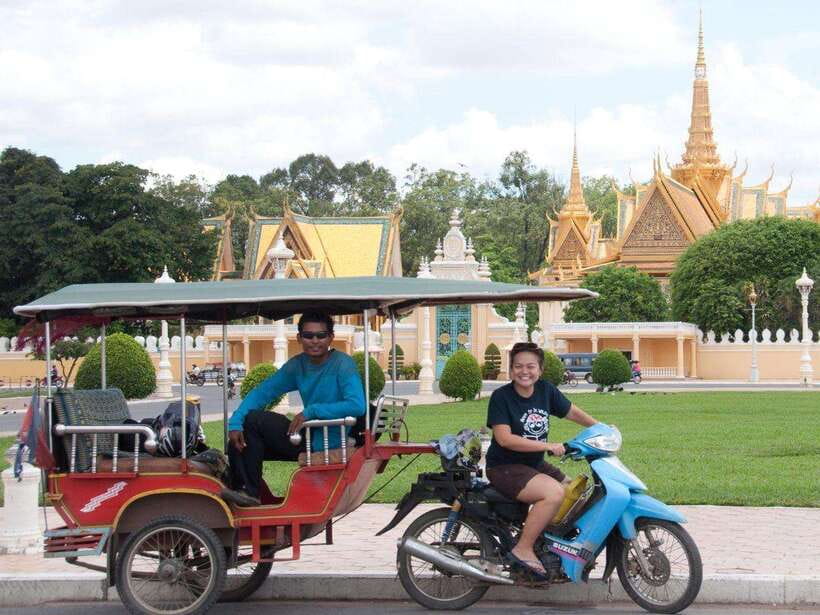
- Private tuk-tuk pickup and waiting: Your driver meets you at the hotel lobby and stays up front at each site.
- English speaking driver, with an optional licensed guide: Choose the booking option that includes the license tour guide if you want full storytelling.
- You control the pace: The day is built for stopping, walking, and returning without rushing.
- Comfort matters in the heat: Many bookings include water and cold towels, and some drivers handle rain with an umbrella.
- Most entrance costs are on you: The price you see covers transport and the guide option, not the Angkor Pass or site entry.
Why this tuk-tuk Angkor route works so well
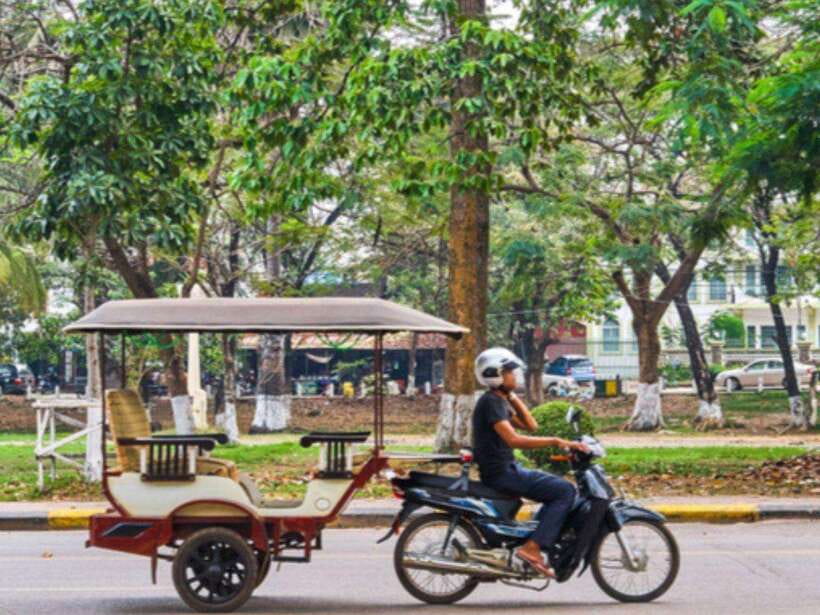
Angkor is spectacular, but it can also be tiring in a hurry. The temples mean walking, stairs, and lots of standing in sun. A private tuk-tuk makes that manageable because you’re not figuring out transport between far-flung sights all day.
I like that the driver doesn’t treat the day like a checklist. Instead, you can take your time at the spots you enjoy most. People have specifically praised drivers who waited while they explored, and who helped keep the schedule calm even when weather turned ugly.
Another big practical win: this format keeps your route flexible. If you want more time at Angkor Wat, or you’d rather spend longer inside Ta Prohm, you can usually adjust on the fly. That’s a comfort in Angkor, where crowd energy can change moment to moment.
If you're still narrowing it down, here are other tours in Siem Reap we've reviewed.
Price and value: what $15 actually covers
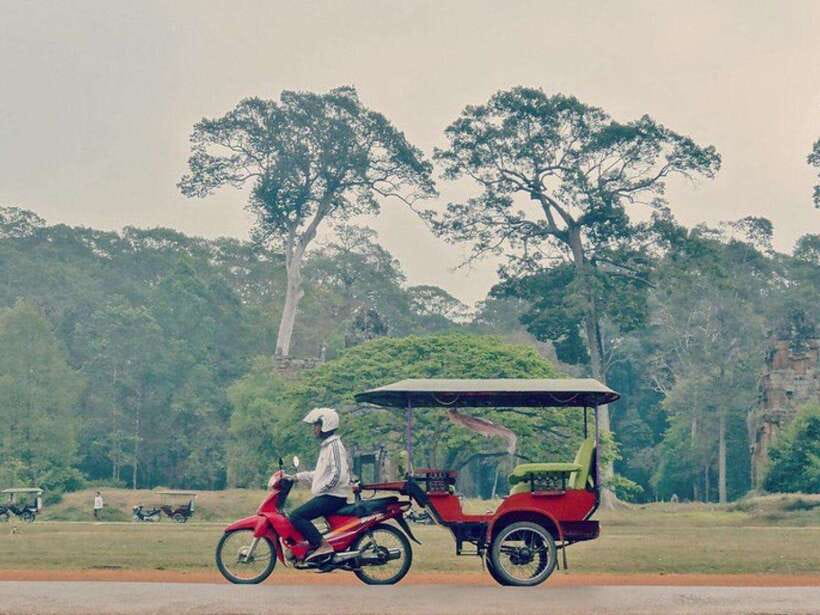
The headline price you’ll see is $15 per person, and that can be a strong deal for Siem Reap. But it’s also important to understand what comes with that price.
What you get is a private round-trip tuk-tuk from your hotel area, plus an English-speaking driver. If you select the option that includes the official English-speaking license tour guide, then you also get that added layer of interpretation.
What’s not included: sightseeing entrance fees and the Angkor Pass. Also, the tour guide is not automatically included unless you pick the booking option that explicitly adds the licensed guide. So the true cost depends on how you choose to tour—transport-only with a driver, or transport plus a licensed guide.
If you’re the kind of person who likes context while walking through Khmer stone, you’ll likely feel the value more when you add the guide option. If you prefer to explore mostly at your own pace with general interest and photos, the driver-only style can still be worth it, as long as you budget for entrance costs.
Hotel pickup and how the driver keeps you from getting lost
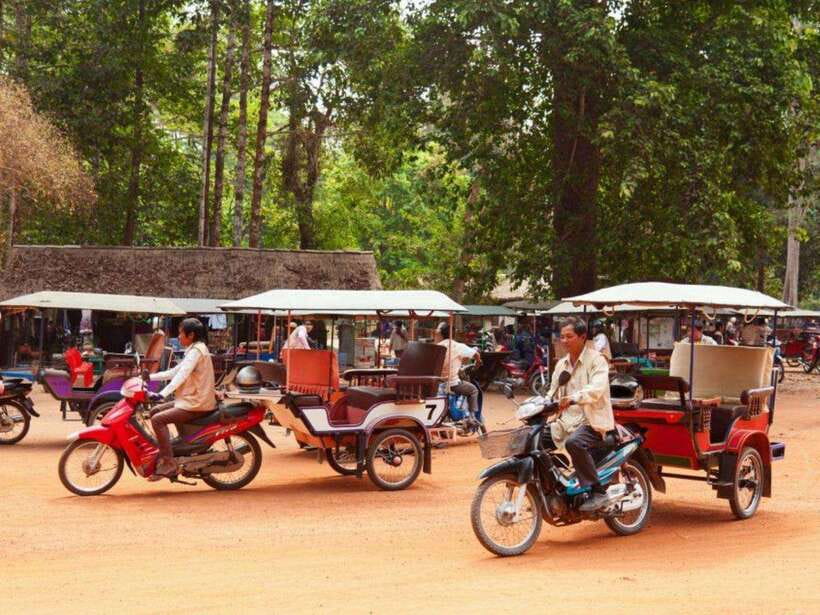
This tour is designed to start the day the easy way: pickup from your hotel lobby in Krong Siem Reap. You’ll meet the driver at the lobby by the starting time, and the transport runs round-trip back to your accommodation.
In practice, what you care about is reliability and clarity. Several people praised drivers for staying organized with pick-up locations and using pin-drop style guidance on WhatsApp if needed. That matters at Angkor because it’s easy to wander a bit, then spend too long trying to relocate your vehicle.
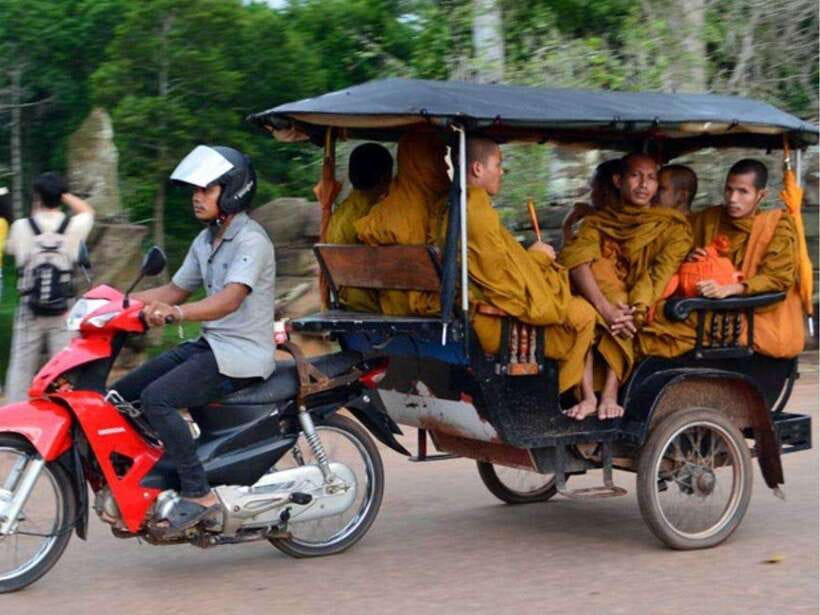
You also get a helpful rhythm: the driver waits in front of each temple, then drops you back afterward. That means you’re not sprinting across paths to catch up with a group, and you’re not stuck negotiating local transport mid-day.
One more comfort point that shows up in feedback: water and cold towels. In the heat, it’s the difference between feeling like you can keep going and feeling like you’re done after the second temple.
Angkor Wat stop: make the most of the first hour
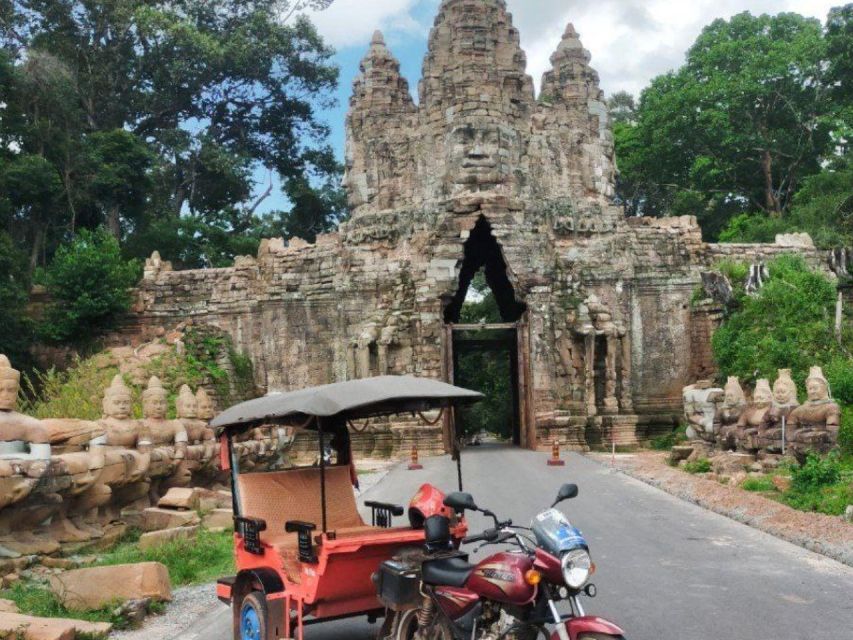
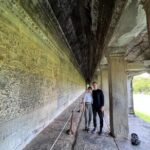
Angkor Wat is where most first-time visitors want to start. In this style of tour, you’ll arrive by tuk-tuk and spend time visiting and walking at your own pace. The stop is long enough to take photos, pause for viewpoints, and decide how much time you want before moving on.
A smart way to use the time is to treat the first hour as your orientation period. You’re not just taking pictures—you’re learning the flow of the grounds so the rest of the day feels easier. If you’re climbing a bit and walking more than expected, having your vehicle waiting nearby is a relief.
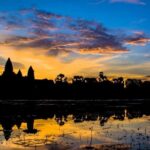
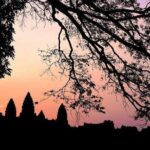
If you chose a sunset or sunrise variant (some bookings on the same operator let you pick options like sunset at Angkor Wat), plan your clothing for early light and later heat shifts. Either way, bring water and wear shoes that handle steps without making your feet hate you by noon.
Angkor Thom south gate and Bayon: the smiling faces moment
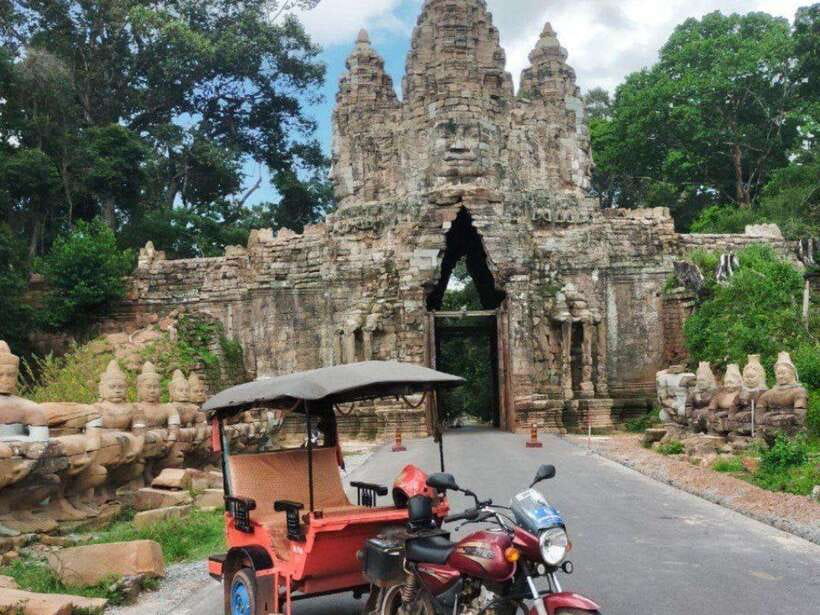
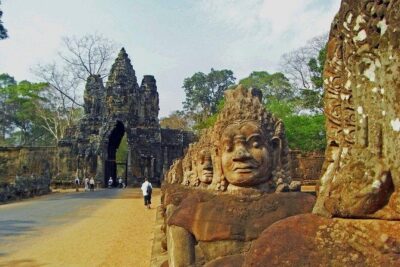
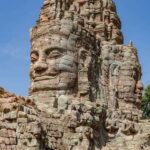
After Angkor Wat, you move into Angkor Thom, starting at the impressive south gate. From there, the day flows toward Bayon, with its famous 216 giant smiling faces carved into stone. Even if you don’t know every detail, this is the part of the complex that hits immediately, because your attention keeps getting pulled back to those faces.
The value here is pacing. You’re not just driving past. You park and you walk, then you’re back on the tuk-tuk for the next section. That breaks up the long stretches that make temple tours feel exhausting.
Bayon can also be visually busy. The trick is to slow down and pick a few angles instead of trying to see everything at once. If you’re traveling with a licensed English-speaking guide, this is often where explanations help you stop seeing it as just scenery and start seeing it as design and meaning.
Some guides and drivers also do something subtle but helpful: they manage timing so you don’t feel rushed. People have praised drivers who will wait while you finish exploring and who communicate clearly on where they’ll pick you up next.

Baphuon and the terraces: Elephant Terrace and the Leper King
From Bayon, you continue through the surrounding Angkor Thom highlights, including Baphuon. Then the route includes the Terrace of the Elephants and the Terrace of the Leper King (Preah Ponlea Sdach Komlong). These are the kinds of stops where the most interesting parts can be small details—stone surfaces, carving patterns, and the scale of the terraces.
The Elephant Terrace gets its name from the motif, but what you’ll feel most is size. Even when you’re not a hardcore stone-carving fan, stepping onto terraces gives you a different sense of what the complex was built to do: guide movement, create views, and set a ceremonial stage.
The Leper King terrace is more unsettling in mood. You’ll be walking around a structure tied to Khmer-era legend and name associations, and that mood shift is part of why people remember this section.
Practical note: these spots can mean a lot of standing and looking up. Wear something light but covering, because sun exposure adds up quickly.
Ta Prohm and Ta Keo: roots, mystery, and stone steps
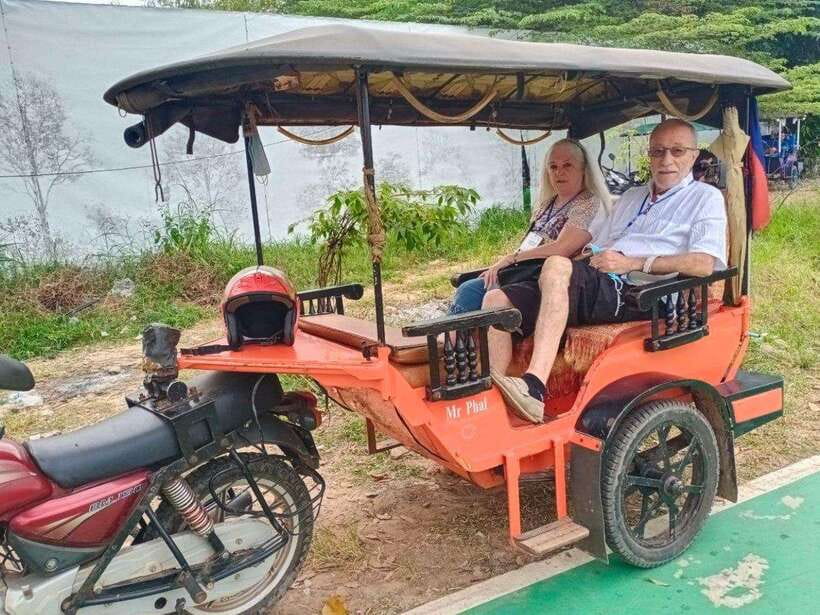
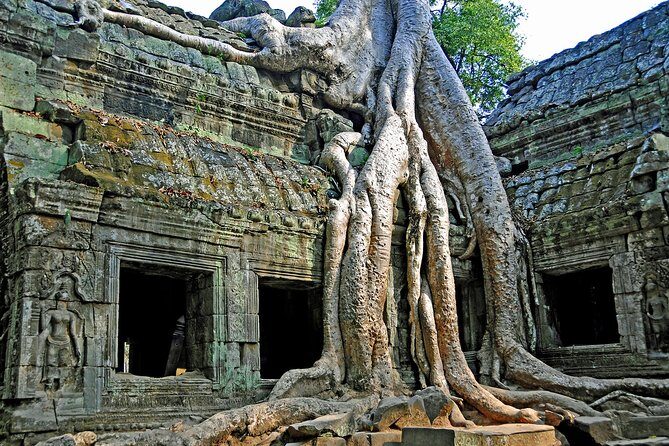
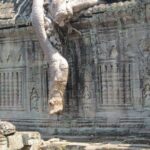
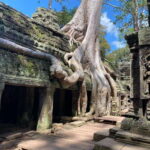
Ta Prohm is one of those temples that feels like the world turned the volume up on nature. It was built in the late 12th century by King Jayavarman VII, and you’ll see parts of the temple that seem swallowed by giant tree roots.
The best way to enjoy Ta Prohm is to move slower than you think you need. Don’t just photograph the most obvious root areas. Instead, spend time looking at how the roots frame doorways and walkways, because that’s where the feeling of mystery comes from.
From there, you’ll also have time for Ta Keo. This stop is a more focused climb-and-stare type of visit. Ta Keo tends to reward patience: take your photos, then give yourself a few extra minutes to enjoy the geometry and viewpoints before your tuk-tuk time resumes.
In feedback, people have highlighted the value of not being rushed. When it rains, the day can become slower anyway, and having a driver who can handle the logistics makes a big difference. Some drivers have even provided an umbrella when the weather trapped someone on-site.
Ta Nei, West Prasat Top, Banteay Kdei, and Prasat Kravan: the quieter finish
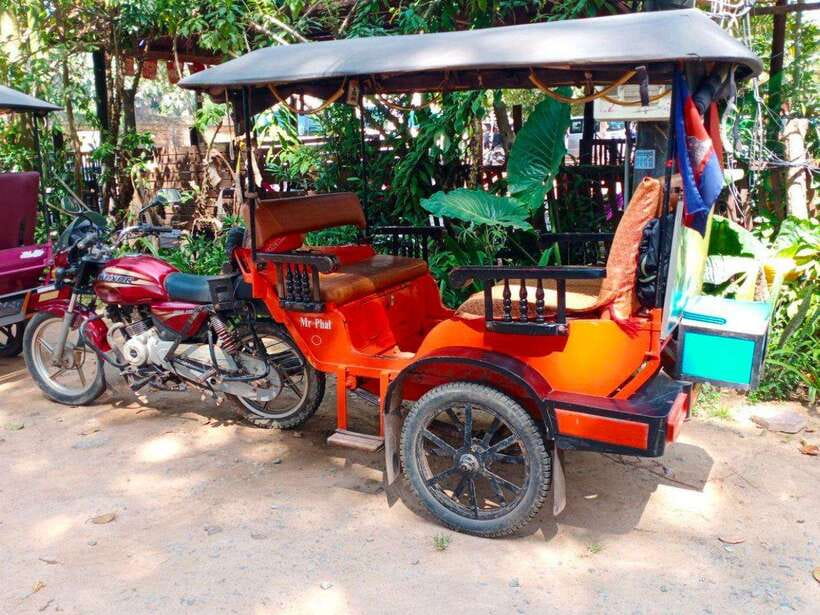
Later in the day, you’ll visit additional temples that keep the route varied rather than repeating the same scene. Stops can include Ta Nei, West Prasat Top, Banteay Kdei, and Prasat Kravan, plus photo opportunities along the way.
These temples often feel like the “slow down” part of the day. The pacing here can be easier because you’re not only chasing the biggest name sites. You’re building a mental picture of Angkor as an entire region of connected monuments, not just one highlight.
Banteay Kdei typically gives you that classic multi-gate, multi-compound feel where you can wander a little and still stay oriented. Prasat Kravan is shorter on time but good for quick photography and a final taste of carved stone detail.
One nice thing about this tour style is that your tuk-tuk keeps the day from turning into a long hike between disconnected ruins. You still get the walking, but you’re not paying for it with exhaustion every time you switch temples.
Comfort in the Cambodian sun: water, cold towels, and smart shoes
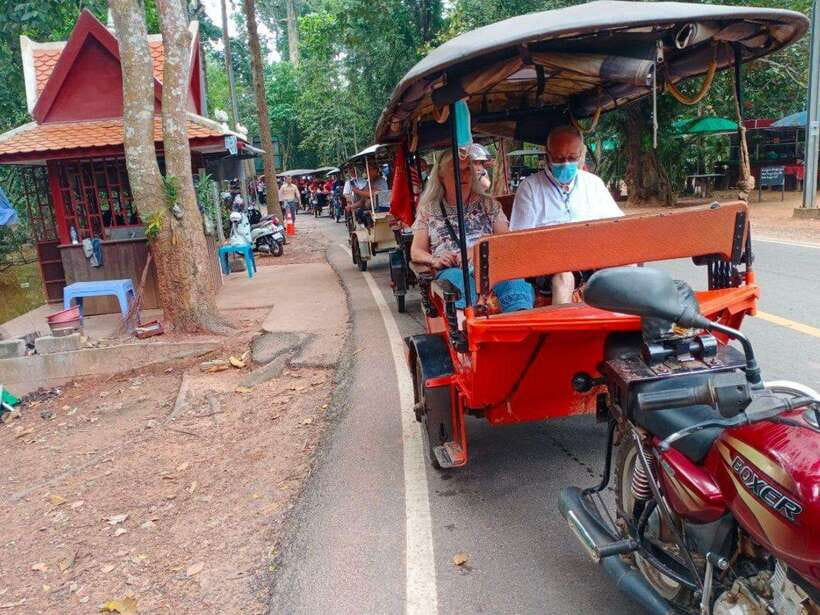
Angkor in the dry heat is no joke. This is where the small comforts matter, and they show up in the way drivers look after you. People have mentioned freezing cold bottled water and cold towels during the day, which you’ll genuinely appreciate once you’ve been walking for hours.
Shoes matter too. This route involves lots of walking and climbing steps. If you’re wearing sandals you love for everyday city days, you may regret it here. Pick footwear with grip, and expect uneven stone surfaces.
Also plan for weather changes. Rain can roll in fast. At least one driver handled a sudden downpour by providing an umbrella and pushing through the ride home carefully.
Who this tour suits best (and who might want a different style)
This works especially well if you want freedom without the stress of figuring out logistics. If you’re traveling as a couple, friends, or solo, a private tuk-tuk plus optional licensed guide is a strong match.
I’d also recommend it if you want to customize the day. People have praised drivers who adjusted to what they hadn’t seen before and who matched the time to the temple pace that felt right.
It’s less ideal if you want a fixed, tightly timed itinerary with no negotiation. This is a flexible tour. If you love strict schedules and constant group commentary, you might prefer a standard group tour with set time slots.
Finally, remember that the entrance fees and Angkor Pass are on you. If you don’t want to think about that cost at all, budget for it now so the day stays stress-free.
Should you book this Angkor Wat by tuk-tuk tour?
I’d book it if your top priority is a private, flexible Angkor day that keeps you comfortable in the heat. The combination of hotel pickup, waiting at each temple, English communication, and practical care like cold water and towels makes this feel like a smooth way to see a lot without running your body into the ground.
Choose the option that includes the official English-speaking license tour guide if you want explanations that turn stone into a story. If you go driver-only, plan to spend more time reading signs and asking your driver basic questions so you still get context as you walk.
Bottom line: if you want Angkor Wat and the Angkor Thom core (Bayon, terraces, and Ta Prohm) with a pace you control, this is a smart value play. Just confirm your exact starting time, and budget for the Angkor Pass and site entrances so you’re not surprised when you arrive.
FAQ
What’s included in the price?
You get round-trip pick-up and drop-off at your hotel by private tuk-tuk, plus a private tuk-tuk with an English-speaking driver. An official English-speaking license tour guide is included only if you select the booking option that adds it.
Do I need an Angkor Pass and pay entrance fees?
Yes. Entrance fees and the Angkor Pass are not included, so you should budget for those costs separately.
Is this a private tour or shared group?
It’s listed as a private group.
Will the driver speak English?
Yes. The driver is English speaking.
How long is the tour?
The activity duration is listed as 2.5 hours, and it also shows a longer time range. Check availability for the exact starting time shown on the booking page.
Does the tour include hotel pickup?
Yes. The driver meets you in your hotel lobby in Krong Siem Reap and returns you to your accommodation.
How much flexibility do I have during the day?
This tour style supports stopping, walking, and exploring at your own pace while the driver waits in front of each temple. You can generally adjust how long you spend at each stop.
Can I cancel for a refund?
Yes. Free cancellation is offered if you cancel up to 24 hours in advance for a full refund.