REVIEW · SIEM REAP
Journey Through Time: Grand Tours with professional photographers
Book on Viator →Operated by Marvel Angkor Tours · Bookable on Viator
Temples unfold at a slower, smarter pace. This private Grand Circuit day in Siem Reap takes you past standout Angkor sites with a professional photographer and an English-speaking guide, plus round-trip hotel transfer so you’re not wrestling transport. You also get an e-ticket you can download to your phone, which helps the driver find you fast.
I love that you can move through the ruins without a big-group rhythm. You get about an hour at each stop to take photos, catch details, and ask questions without feeling rushed. I also love the extra care built into the small stuff: mineral water, tissue, and natural fruits keep the day comfortable, even when the heat climbs.
The main drawback is simple: the big Angkor Temple Pass is not included (listed at $37 per person), so you’ll want to budget for that before you fall in love with the plan.
In This Review
- Key highlights you’ll feel right away
- Why the Grand Circuit works better than rushing
- Getting to Angkor: private van, hotel transfer, and an e-ticket that saves hassle
- Stop 1: Preah Khan, the Royal Sword Temple, and the scale of Jayavarman VII
- Stop 2: Neak Pean on an artificial island (and why it feels different)
- Stop 3: Ta Som—when trees and ruins share the story
- Stop 4: Pre Rup—turn the body, then slow down for the view
- Stop 5: Eastern Mebon—an island temple now surrounded by dry ground
- Stop 6: Banteay Srei—small size, big attention, and free admission
- Guide + photographer: why the team makes or breaks the day
- Price and value: what $237 buys you (and what to add)
- Dress code: cover up to avoid getting turned away
- Who this private Grand Circuit suits best
- Should you book this Grand Circuit day with Marvel Angkor Tours?
- FAQ
- How long is the Grand Circuit tour from Siem Reap?
- Is pickup from my hotel in Siem Reap included?
- What’s included in the tour price?
- Do I need to buy the Angkor Temple Pass?
- Is there an entry fee for Banteay Srei on this tour?
- What dress code do I need for the temples?
- Can I cancel and get a full refund?
Key highlights you’ll feel right away
- Private pacing on the Grand Circuit: walk the route without a large crowd pushing you along
- Hotel pickup and drop-off included: complimentary round-trip transfer from your accommodation
- Photo-focused experience: a professional photographer helps you get great shots and videos
- A guide who ties the temples to the kings: Khmer history explained in clear, practical terms
- Some temples are easier on the wallet: Banteay Srei admission is listed as free
- Dress code matters: knees and shoulders covered, no sleeveless tops or shorts
Why the Grand Circuit works better than rushing
The Grand Circuit is a smart choice if you’re tired of the start-stop tempo that big groups bring. Instead of sprinting from one photo spot to the next, you get a route that still hits the famous names, but with room to slow down. That matters because Angkor temples are all about small visual clues: layers of carvings, ruined walls that hint at former layouts, and the way later builders reused earlier spaces.
This tour is designed around comfort and control. It’s private, so you’re not stuck with mismatched walking speeds. You’re also with a professional guide who can explain what you’re seeing while you’re actually standing in front of it, not after the fact.
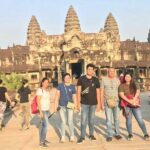
The photographer angle is a real plus here. When someone else is thinking about timing and angles, you spend less energy fighting your camera settings and more energy noticing the temple details. You’ll also get help capturing your group at each stop, which is the easiest way to make the day feel like more than a checklist.
If you're still narrowing it down, here are other tours in Siem Reap we've reviewed.
Getting to Angkor: private van, hotel transfer, and an e-ticket that saves hassle
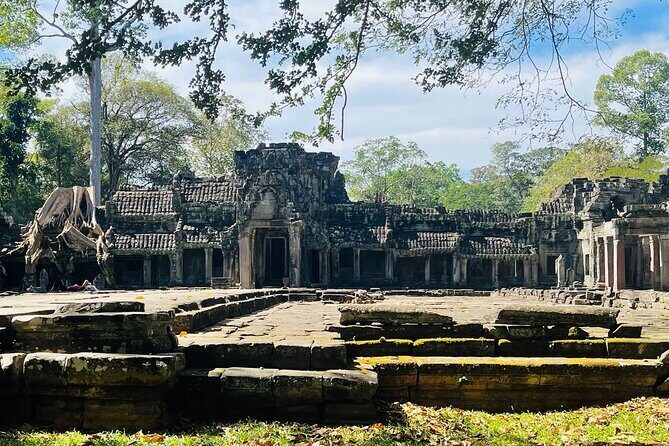
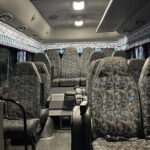
Your day begins in Siem Reap with private car/van transport. The tour includes a complimentary round-trip hotel transfer, so you’re not figuring out meeting points and negotiating ride options at the last minute.
There’s also the practical smart part: pickup is easier because you can download the e-ticket to your phone. When you hand the driver a clear digital ticket, you cut down on waiting time and confusion. On a temple day, every extra 10 minutes matters.
You’ll also get small onboard comforts listed as part of the experience, including mineral waters, tissue, and natural fruits. That doesn’t sound glamorous, but it keeps you from spending your budget on convenience snacks mid-route. It also helps when you’re juggling sun, heat, and uneven walking surfaces.
Stop 1: Preah Khan, the Royal Sword Temple, and the scale of Jayavarman VII
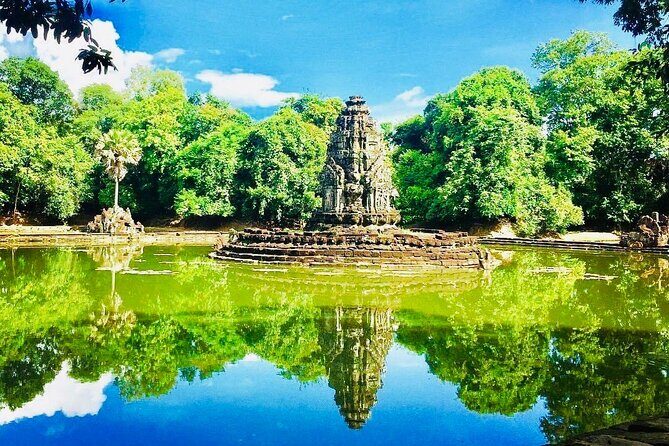
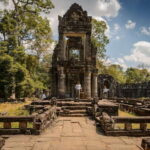
Preah Khan is often remembered for atmosphere, but it’s also a temple with a big historical argument behind it. You start at Preah Khan, also known as the Royal Sword Temple. It was built in the early 12th century by King Jayvarman VII to honor his father.
Here’s what makes this stop worth time: Preah Khan wasn’t just a religious site. It’s described as a huge center for a substantial organization, with almost 100,000 officials and servants. That kind of scale changes how you read the ruins. You can look at the stone work and think beyond a single shrine. You’re seeing evidence of an entire working world that supported a royal and religious system.
Practical note: you’ll have about an hour here. Use that hour for both photos and context. Ask your guide to explain the temple’s function and how the layout reflects that large administrative life, then walk it again with that lens. The second look is usually where the details start clicking.
Stop 2: Neak Pean on an artificial island (and why it feels different)
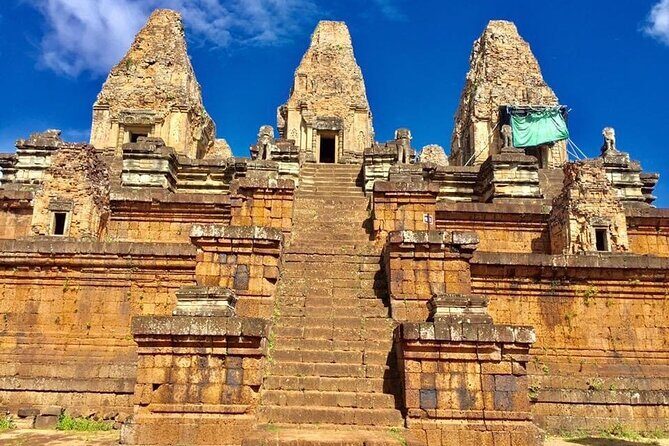
Next you head to Neak Pean, nearby Preah Khan. This is a Buddhist temple built in the center of an artificial island area associated with Preah Khan’s water system. The information provided points to King Jayavarman VII as the builder, and Neak Pean sits within the context of the Preah Khan Baray (Jayatataka).
The reason Neak Pean makes the Grand Circuit feel varied is that it doesn’t read like the same kind of temple experience as the larger complexes. It’s more intimate and more atmospheric, with the artificial island setting giving you a different sense of space. If you’re the type who likes temples that feel slightly off the main rush, this is one of the reasons this route earns its reputation.
Photo tip without over-inventing it: treat Neak Pean like a pause button. Give your camera a moment to capture the setting and the temple’s placement, not just the face of the main structure.
Stop 3: Ta Som—when trees and ruins share the story
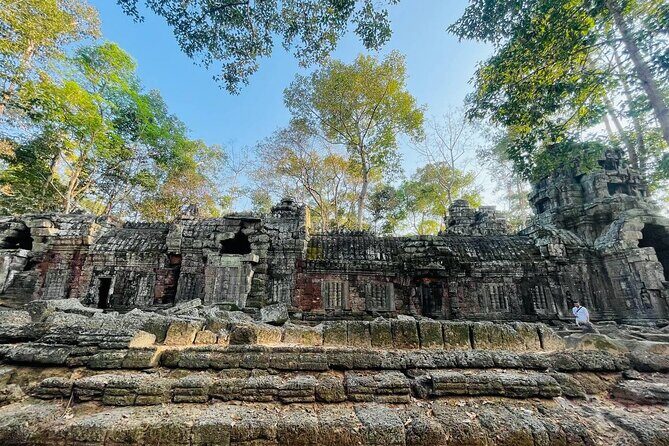
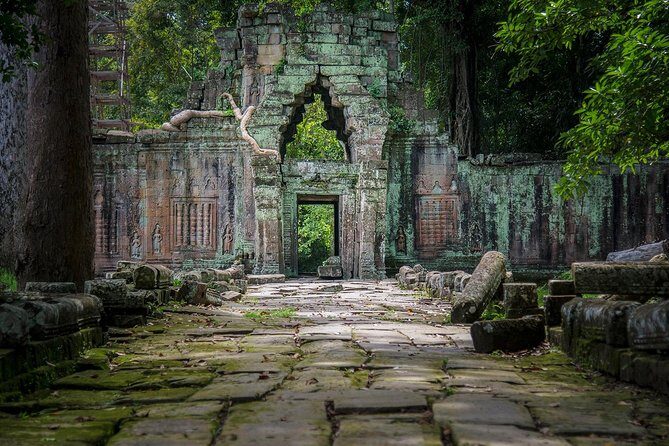
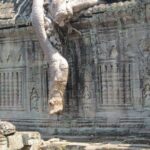
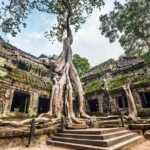
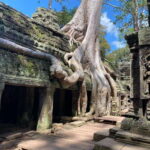
Ta Som is a temple you’ll appreciate if you like the sense that nature has taken its time. It was built at the end of the 12th century by King Jay Jayavarman VII to dedicate to his father, and it remains largely unrestored. The description also notes the presence of trees and other features that remain part of the temple’s look.
This is the stop where the day starts to feel less like a march and more like exploration. Unrestored temples can be visually messy in the best way. You’ll see structures that look touched by time rather than freshly repaired for display, and that helps you understand how long these sites have lived outside human plans.
Because you get about an hour, you can pace yourself. Don’t feel like you have to photograph every broken corner. Instead, pick a few frames that show how the tree growth interacts with the stones. Those are the pictures that usually look the most “you were there” instead of generic.

Stop 4: Pre Rup—turn the body, then slow down for the view
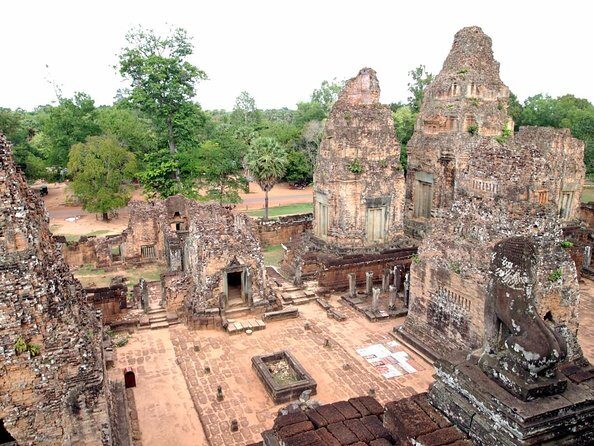
Then comes Pre Rup, described as a Hindu mountain temple built by Khmer King Rajendravarman in 961 or early 962. The modern Khmer meaning of the name is “turn the body.” The description also mentions Cambodian beliefs connected to funerals.
That word choice is a clue that Pre Rup isn’t only about architecture. It’s tied to ritual thinking about bodies, transitions, and sacred movement. When your guide explains that connection, you’ll see the temple differently. You’re not just reading stone lines. You’re reading an idea of ceremony built into a physical form.
This stop is listed at about an hour. If the sun is strong, plan for breaks. You’ll likely want some shade time so you can keep your attention sharp for both the story and the photos.
Stop 5: Eastern Mebon—an island temple now surrounded by dry ground
Eastern Mebon is a 10th-century temple built by King Rajendravarman to dedicate to the Hindu god Vishu and to honor the king’s parents. The key detail is geographic: it used to be an artificial island at the center of what is now a dry East Baray.
That “now dry” part matters. It means your brain needs a quick adjustment: don’t assume you’re looking at the exact same watery setting the builders intended. Instead, use the temple as the anchor point and let the guide help you imagine the earlier water landscape when it was functional.
This stop also works well for slower photo time. If you like wide context shots that show how the ruin sits in its surroundings, Eastern Mebon gives you space to do that without feeling like you’re in someone else’s schedule.
Stop 6: Banteay Srei—small size, big attention, and free admission
The last listed stop is Banteay Srei Temple, described as being about 25 kilometers northeast of the Angkor Archaeological Park. It’s also noted as smaller than Angkor Wat, and the listed admission is free for this tour stop.
Banteay Srei is a great closer because it naturally balances the day. Earlier stops can feel large and imposing. A smaller temple can give you a more careful, detailed look, especially once your eyes are trained from the previous sites.
If you’re aiming for variety in your photos, this is a good finisher. It’s outside the same immediate feel as the grandest complexes, and the free admission is a real value win if you’re tracking costs.
Guide + photographer: why the team makes or breaks the day
This tour is built around three roles: the English-speaking guide, the private transport, and a professional photographer.
The guide isn’t just there to read a script. In the experience details, the emphasis is on history explained at the temple level—kings like Jayvarman VII and Rajendravarman, plus what those rulers meant to the sites you’re walking through. In past day reports, guides such as John, Diamond/Pich, and Davann show up for being funny and friendly, and for keeping the history clear. People also mention help avoiding lines, which is practical when you’re trying to spend your limited time actually inside the temple areas.
The photographer component is the other big value driver. A professional photographer changes your day in subtle ways. You’re more likely to get composed shots rather than a bunch of half-focused selfies. You’ll also likely get helpful direction for angles and video, because the photographer is managing the moment while your guide handles the story.
The best part is that you don’t have to ask for basic photo help. Your “what do I do now” energy drops, and you can focus on enjoying the ruins.
Price and value: what $237 buys you (and what to add)
The price listed is $237 for a private experience lasting about 5 to 6 hours. That sounds specific enough to evaluate.
Here’s what’s included from the provided details:
- luxury private car/van
- professional English speaking tour guide
- professional photographer
- mineral waters and tissue
- natural fruits
What’s not included:
- 1-Day Angkor Temple Pass ($37 per person)
- personal expenses
- food and drinks
- tips
- a line-item listed as Sun light ($15.00 per person)
- admission tickets are marked as not included for most stops
So the value is strongest when you want privacy and don’t want to spend your day coordinating transport. If you’re splitting the cost among a small group, the private van and guide become far more affordable per person than hiring a driver and a separate guide on your own.
However, if you’re already getting to Angkor on your own and planning a self-guided day, you may feel the price more. In that case, you’re really paying for the “human layer” (guide context and photo help) and the comfort bundle (water, fruits, transfer).
Either way, do the math before you book. The Angkor Pass is the main add-on, and it’s required for entry to the temple areas covered by the day.
Dress code: cover up to avoid getting turned away
This matters a lot in Angkor temple areas. The provided requirements are clear: you need to dress for places of worship and selected museums. No shorts or sleeveless tops, and knees and shoulders must be covered for both men and women. If you don’t comply, you may be refused entry.
If you only pack one set of temple-friendly clothes, you’ll feel safer. I also like bringing something light that covers shoulders without overheating. It’s not about fashion. It’s about protecting your schedule from getting disrupted at the doorway.
Who this private Grand Circuit suits best
This tour is described as a private tour/activity, meaning only your group participates. That alone makes it a good fit for couples and friends who want quiet pacing, and for people who don’t want to keep up with strangers.
It also lists that most travelers can participate, and there’s a past mention of a group with an 82-year-old where the company handled care well. That suggests the day can work for older visitors, as long as you’re comfortable with temple walking and the rhythm of a multi-stop route.
If you’re the kind of person who loves temple photography but also wants real context, this is a strong match. The photographer helps with the images; the guide helps with the meaning.
Should you book this Grand Circuit day with Marvel Angkor Tours?
Book it if you want:
- a private Grand Circuit route with hotel transfer
- a guide who can connect the temples to Khmer rulers and temple purpose
- a professional photographer so you spend less time fussing with your camera
- a day plan that includes comfort touches like water, tissue, and fruit
Consider another option if:
- you’re very budget-sensitive once you add the Angkor Temple Pass ($37 per person) and the listed Sun light line item
- you prefer fully self-guided temple days and don’t care about photo direction or history explanations
- you don’t want to follow the dress code rules
My practical advice: if you’re going to spend money in Angkor, spend it where you’ll feel it during the day. This package puts your time on the temples and keeps the logistics under control, while the guide and photographer help you actually enjoy the stops rather than just check them off.
FAQ
How long is the Grand Circuit tour from Siem Reap?
It runs about 5 to 6 hours.
Is pickup from my hotel in Siem Reap included?
Yes. The tour includes a complimentary round-trip hotel transfer, and pickup is supported with an e-ticket you can download to your phone.
What’s included in the tour price?
The listed inclusions are a luxury private car/van, a professional English speaking tour guide, a professional photographer, mineral waters and tissue, and natural fruits.
Do I need to buy the Angkor Temple Pass?
Yes. The 1-Day Angkor Temple Pass is not included and is listed at $37 per person.
Is there an entry fee for Banteay Srei on this tour?
Banteay Srei admission is listed as free for this activity.
What dress code do I need for the temples?
You must cover knees and shoulders. No shorts or sleeveless tops are allowed for men and women.
Can I cancel and get a full refund?
Yes. Free cancellation is available up to 24 hours in advance for a full refund.