REVIEW · SIEM REAP
Shared day tour with Spanish-speaking guide at Angkor Temple.
Book on GetYourGuide →Operated by Camboya Travel · Bookable on GetYourGuide
Angkor hits hard in eight hours. You start with Angkor Thom and end at Angkor Wat, with Bayon’s giant faces and Ta Prohm’s jungle mood in between. This is the kind of day tour that helps you connect the dots instead of just taking photos and moving on.
I really like two things here. First, the group stays small (max 9), so your guide can slow down when someone has questions. Second, the Spanish-speaking guiding style can make a big difference; one guide named Sem gets called out for explaining the temples in detail.
One possible drawback: it is a full walking day across uneven temple grounds. Also, it is not suitable for people over 331 lbs / 150 kg, so plan your comfort and mobility first.
In This Review
- Key things to know before you go
- Hotel pick-up and how the 8-hour schedule really works
- South Gate into Angkor Thom: demons, gods, and the Naga causeway
- Bayon temple faces: the best place to learn how Angkor “talks”
- Terrace of the Elephants and Terrace of the Leper Kings: carving details that matter
- Ta Prohm in the jungle: the temple that feels paused
- Angkor Wat in the afternoon: finishing with the big icon
- Price and what $50 covers in a small-group day
- What to bring (and why the list is oddly useful)
- The guide experience: Spanish explanations that change how you see Angkor
- Who this tour fits best (and who might want a different style)
- Should you book this Angkor day tour with a Spanish-speaking guide?
- FAQ
- FAQ
- What is the duration of the tour?
- Is this a shared tour or private?
- What languages are the guides available in?
- Where does the tour start?
- Which temples are included in the itinerary?
- Is there a cancellation option?
- How much does it cost?
- Can I reserve without paying right away?
- What should I bring?
- Are pets allowed and is there any size limit?
Key things to know before you go
- Small group, max 9 means less waiting and more time to ask questions
- Spanish, Portuguese, and English are supported, so you can match your comfort level
- Angkor Thom first, Angkor Wat later keeps the day paced and lets you finish with the big icon
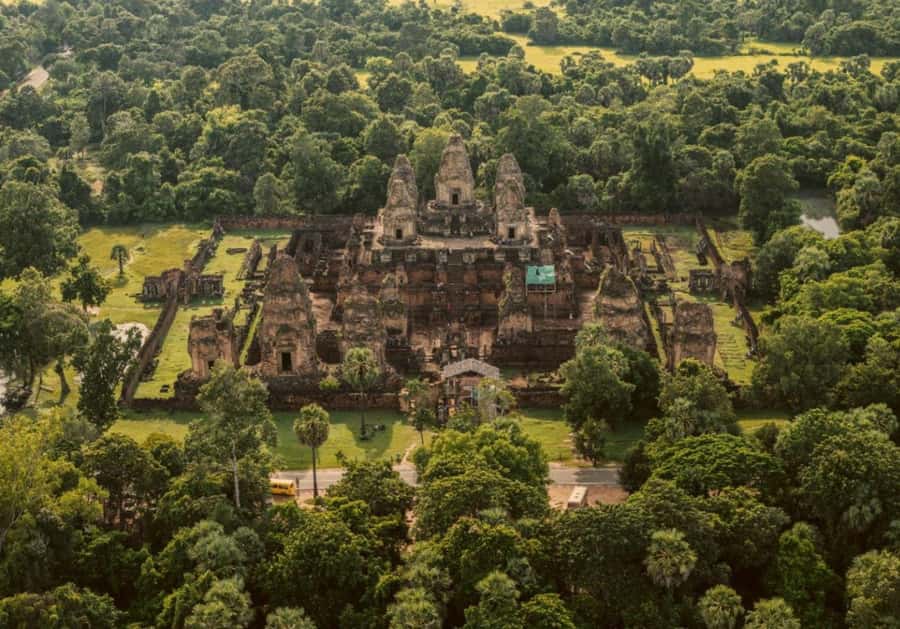
- Ta Prohm stays jungle-feeling even after all these years
- Bring drinks and a jacket since you’ll be outside for hours
- There’s a weight limit (150 kg / 331 lbs), so check it before booking
Hotel pick-up and how the 8-hour schedule really works
In the morning, you get picked up at your hotel in Siem Reap, then you head straight to the ancient core of Angkor. The day is built in two chunks: Angkor Thom territory in the morning, then Angkor Wat in the afternoon. That split matters because it reduces backtracking and gives your brain a chance to reset between temple styles.
This tour also leans on the value of a guide. When you’re standing in front of dense stone carvings, it helps to have someone translate what you’re seeing into human-scale meaning. The small group size (limited to 9) supports that, because it is easier to keep a steady rhythm when the whole group is not stuck behind the one person who is lost.
If you're still narrowing it down, here are other tours in Siem Reap we've reviewed.
South Gate into Angkor Thom: demons, gods, and the Naga causeway
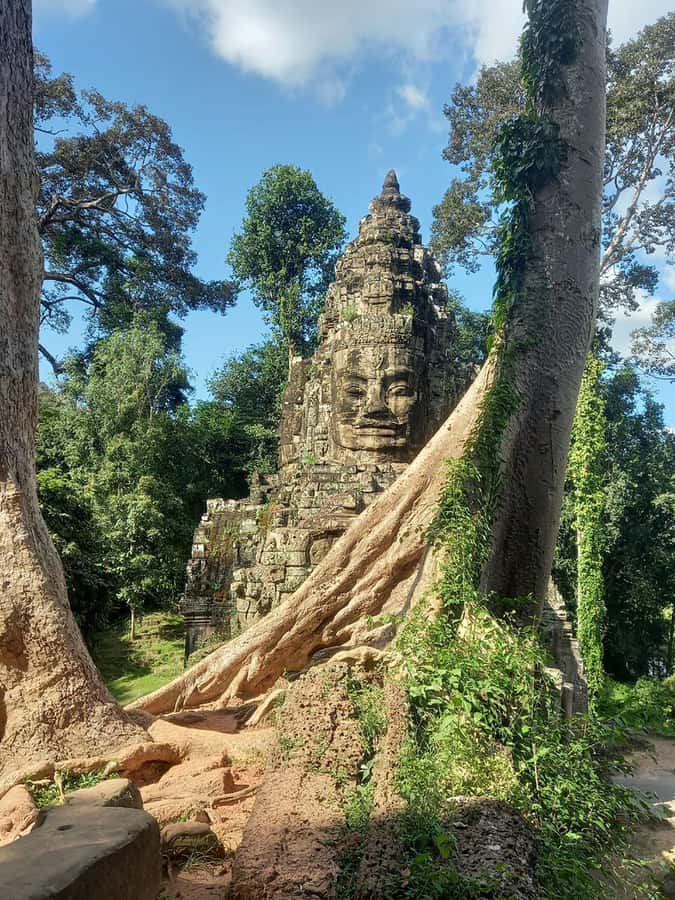
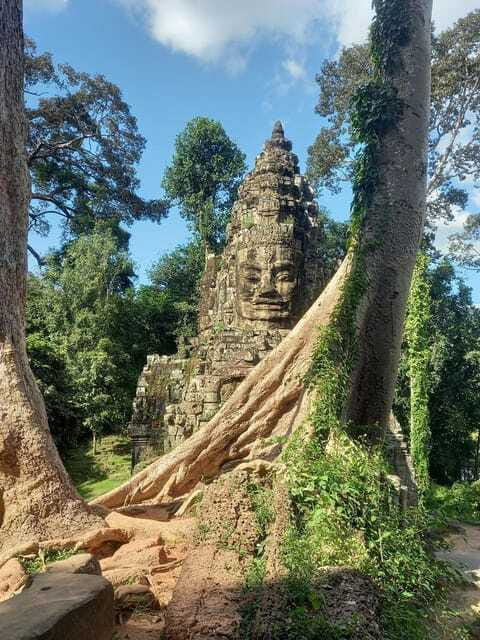
Your first real moment is entering Angkor Thom. You go in through the monumental South Gate on a causeway lined with statues of demons and gods. Between them, you’ll see giant nagas (mythical serpents) along the route.
Why this stop is worth attention: the gate is not just decoration. It sets the tone for how Angkor tells stories in stone—big, theatrical, and meant to be viewed as you move through. Even if you only half-remember the myth behind it, you’ll still feel the effect of the scale and the symbolism.
Practical note: this entrance and the early walking sections are where good shoes pay off. You’ll be on pathways around ancient stone, not a flat city sidewalk.
Bayon temple faces: the best place to learn how Angkor “talks”
Next comes the famous Bayon temple, where you’ll encounter the enormous carved faces. These are the visuals most people come for, but what makes Bayon special on a guided day tour is context: you start to see how the design and placement shape your path through the complex.
The face towers can feel weirdly personal, like they’re watching you wander. That reaction is normal. A guide’s job here is to keep you from treating it like random artwork. Instead, you begin to recognize patterns—how Angkor uses repetition and scale to create meaning, and how the temple works as a whole rather than as a pile of individual structures.
This is also where I think the Spanish-speaking aspect helps most. If you want to understand the “why” behind the stone, you’ll get more out of your visit when explanations land in your language—not just in the loud English tour-sprint version.
Terrace of the Elephants and Terrace of the Leper Kings: carving details that matter
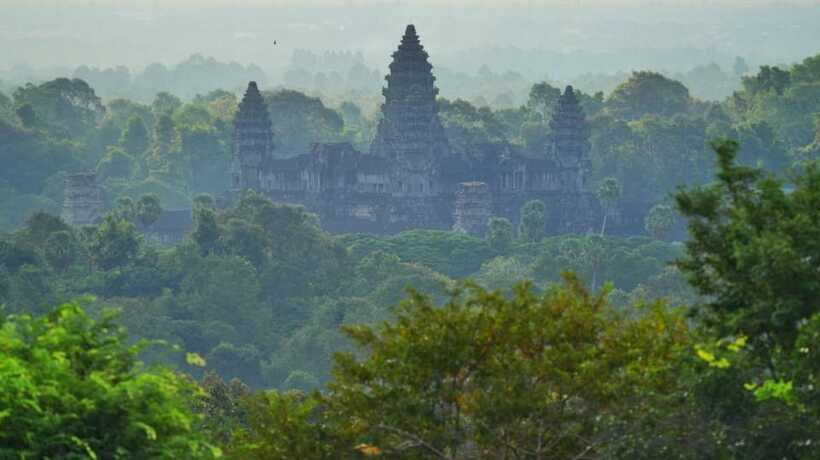
After Bayon, the route continues to the Terrace of the Elephants and the Terrace of the Leper Kings. These terraces can feel like the “in-between” stops, but don’t treat them that way.
Terraces are where Angkor becomes less about single iconic views and more about storytelling detail. You’re looking at carvings and architectural design that turn a platform into a stage. Standing there with a guide, you start to notice how Angkor uses surface texture and arrangement to guide your eye and communicate ideas.
Downside to know: if you’re expecting the same kind of big-face wow moment as Bayon, these terraces can feel slower. But slow is good here. This is where you start understanding why Angkor looks so deliberate.
Ta Prohm in the jungle: the temple that feels paused
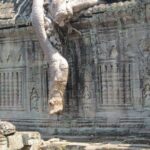
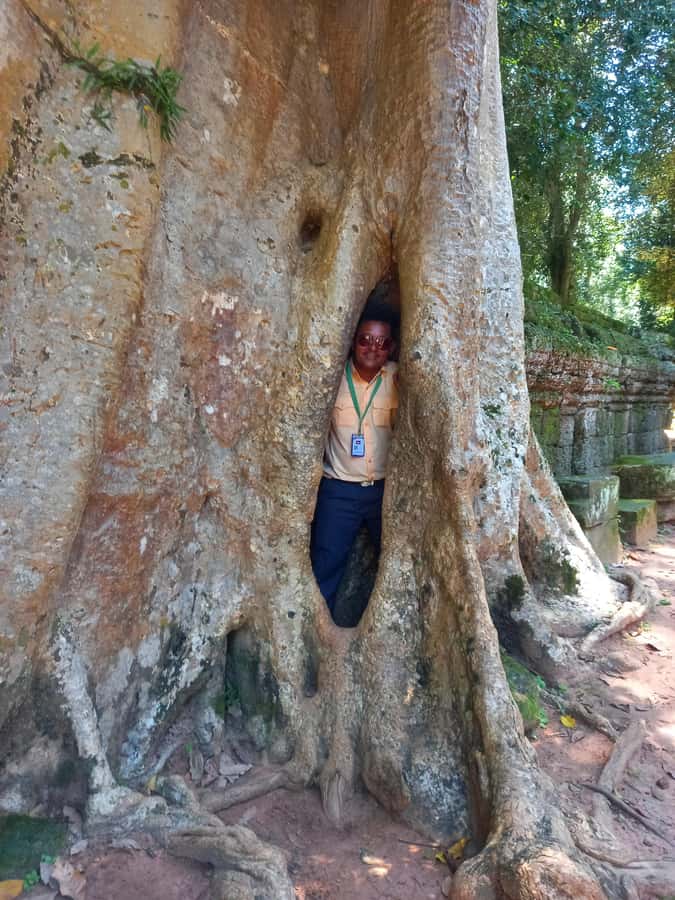
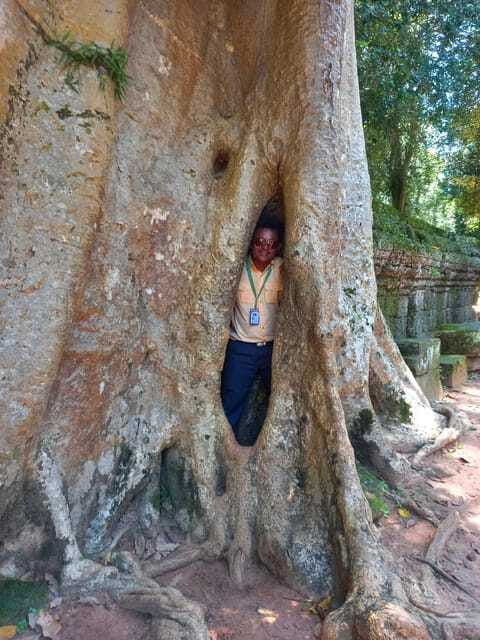
In the afternoon portion, you visit Ta Prohm, the temple that people describe as jungle-set and that many visitors find visually haunting. The key detail is that it has remained relatively untouched since it was discovered, so you get that feeling of trees and roots working their way around the stone.
Ta Prohm is different from Angkor Thom and Bayon because it doesn’t read like a perfectly controlled museum exhibit. Instead, it feels like nature and history sharing the same frame. That contrast is exactly why it makes a strong middle-to-late-day stop: it changes the mood before you hit Angkor Wat.
Practical consideration: Ta Prohm can be busy on any given day, even when your group is small. Keep your expectations flexible. If you miss one photo angle, just shift your focus to the way roots and stone interact around you.

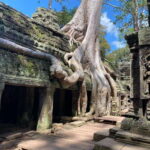
Angkor Wat in the afternoon: finishing with the big icon
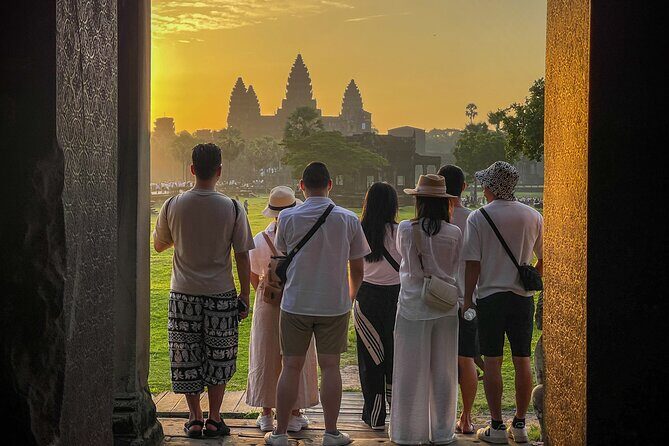
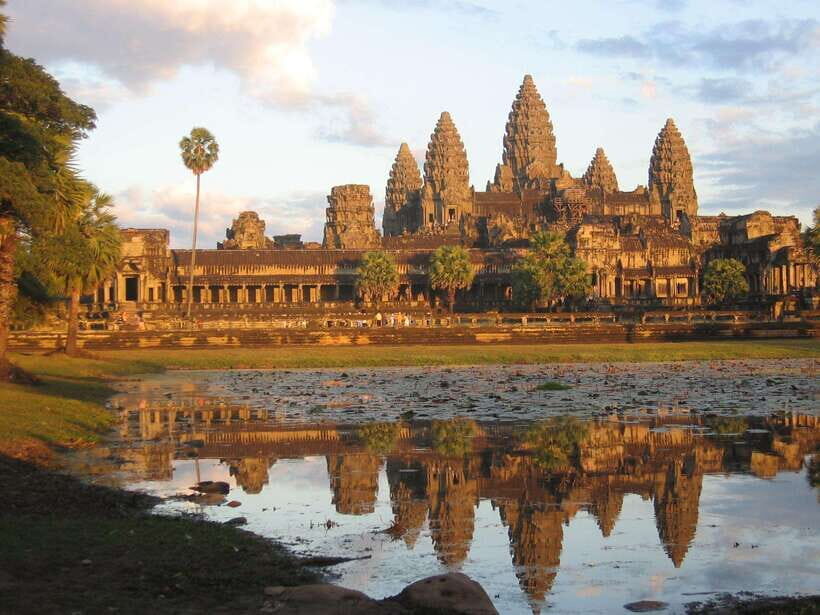
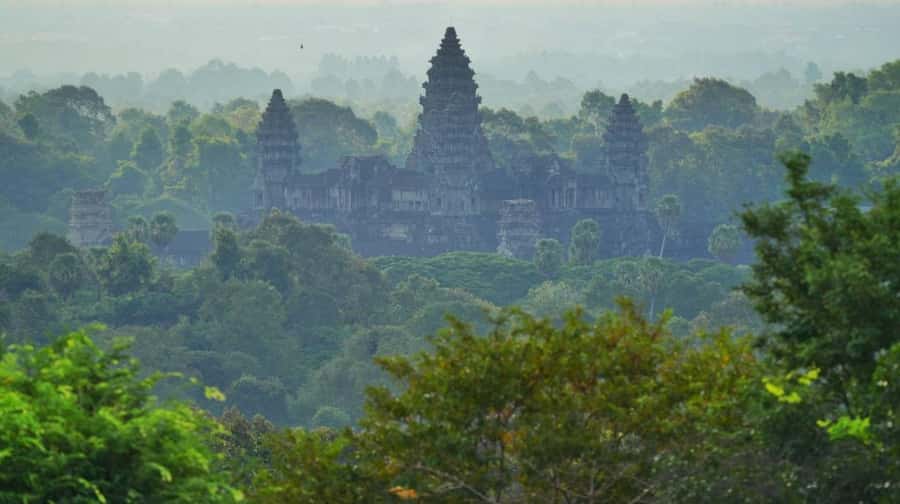
Finally, you arrive at Angkor Wat, the most famous temple on the Angkor plain. This complex covers 81 hectares, and it’s often compared in size to major royal compounds elsewhere. You don’t need the comparison to understand why people call it legendary—you just need time to look.
What makes Angkor Wat worth the afternoon slot is its scale and layout. Earlier temples teach you how to recognize features. Angkor Wat then rewards you with composition—balance, proportion, and sculptural detail working together across a huge area. A guide helps you not just see the highlight, but understand where to look first and what to notice as you walk.
If you only do one Angkor site in one day, Angkor Wat is the correct choice. If you want the day to feel coherent, this itinerary’s order helps a lot: Thom first, then Bayon/terraces, then Ta Prohm, then the grand finale.
Price and what $50 covers in a small-group day
At $50 per person for an 8-hour guided day tour, the value comes from the combination of sites and the guide format, not just the ticket number. You’re paying for:
- A full-day route across multiple major temples
- Hotel pickup in Siem Reap to cut down hassle
- A live guide with Spanish, Portuguese, and English
- A small group limited to 9, which affects how much you can actually ask and understand
To judge value, think about what you’d spend if you tried to do this on your own: transportation between sites plus someone to interpret the carvings and layout. Most people end up paying more than they expected once you factor in time, tickets, and the cost of “guessing” what you’re looking at.
If you’re the type who wants the photos and the meaning, this price feels reasonable for a guided day. If you’re traveling solo with zero interest in explanations and you’re okay winging it, you might find cheaper options, but you’ll likely lose the benefit of guided context at key points like Bayon and the terraces.
What to bring (and why the list is oddly useful)
The tour asks you to bring drinks and a jacket, plus a few practical extras: GPS/map and a pen, and it even calls out internet access. It might sound random, but it makes sense for Cambodia travel where phone data helps with navigation and updates, and a pen can come in handy if you need to fill something out on the day.
So here’s my practical packing take:
- Drinks: you’ll be outside for hours, and hydration helps you enjoy the ruins instead of counting minutes until you can sit
- Jacket: even if it’s warm, temple days can get breezy, and cool air or evening comfort can matter
- GPS/map: helps when roads and signs don’t match your memory
- Pen: small item, big relief if you need it
Also remember the rules: no pets. And if you have mobility limits, check the 150 kg / 331 lbs weight suitability note before booking.
The guide experience: Spanish explanations that change how you see Angkor
One reason this tour gets strong feedback is the guide role. The standout detail is that a Spanish guide named Sem is specifically praised for explaining things in detail and helping people understand the history of the temples. That matters because Angkor is not a simple checklist.
Without guidance, it’s easy to admire the stone and miss the patterns. With guidance, the same stops turn into a story: gates and thresholds at Angkor Thom, icon faces at Bayon, terrace symbolism, Ta Prohm’s jungle-time feel, then Angkor Wat’s monumental design logic.
This is where a small-group format helps again. If you have questions about carvings, names, or what you’re seeing from different angles, your guide can respond without rushing the whole group.
Who this tour fits best (and who might want a different style)
This tour is a strong match for:
- First-time Angkor visitors who want a smart hit list with meaning
- Travelers who prefer Spanish (or Portuguese/English) explanations rather than guessing
- People who like small-group comfort instead of big-bus chaos
- Anyone who enjoys a day structured around major anchors: Thom, Bayon, Ta Prohm, Angkor Wat
It may be less ideal if:
- You want a super slow, unstructured wandering day with no pacing
- You’re sensitive to walking on uneven temple paths
- You need accommodations beyond the posted weight suitability limits
If you fall into the last group, you’ll likely do better with a more specialized setup. For everyone else, this is a solid “see the core and understand the core” option.
Should you book this Angkor day tour with a Spanish-speaking guide?
I’d book it if you want a guided Angkor day that feels organized, with enough language support to actually understand what you’re seeing. The small group and the attention paid to explanations (especially in Spanish, with guides like Sem getting high marks) are the main reasons.
I wouldn’t book it if you’re looking for a purely casual stroll with no focus on history or if you know you’ll struggle with a full day of walking. Also, double-check the 150 kg / 331 lbs suitability note.
If your goal is to leave Siem Reap with more than images—if you want meaning, names, and structure—this route hits the right temples in the right order.
FAQ
FAQ
What is the duration of the tour?
The tour lasts 8 hours.
Is this a shared tour or private?
It is a shared day tour in a small group limited to 9 participants.
What languages are the guides available in?
The live tour guide is available in Spanish, Portuguese, and English.
Where does the tour start?
You are picked up at your hotel in Siem Reap in the morning.
Which temples are included in the itinerary?
The tour includes Angkor Thom (with the South Gate), Bayon temple, the Terrace of the Elephants, the Terrace of the Leper Kings, Ta Prohm, and Angkor Wat.
Is there a cancellation option?
Yes. Free cancellation is available up to 24 hours in advance for a full refund.
How much does it cost?
The price is $50 per person.
Can I reserve without paying right away?
Yes. It offers Reserve now & pay later, so you can book your spot and pay nothing today.
What should I bring?
You should bring drinks and a jacket, plus GPS/map and a pen. Internet access is also listed.
Are pets allowed and is there any size limit?
Pets are not allowed, and the tour is not suitable for people over 331 lbs (150 kg).