REVIEW · SIEM REAP
Angkor Wat: Full-Day Temples Small Group Tour
Book on GetYourGuide →Operated by Journey Cambodia · Bookable on GetYourGuide
Angkor Wat in one focused day is a masterclass in Khmer power. This full-day tour strings together the big three (Angkor Wat, Bayon, Ta Prohm) plus key parts of Angkor Thom, with an English-speaking guide who turns stone carvings into clear stories. I especially like the small-group pace and the way you get comfort help along the way, like bottled water and cool towels.
One possible drawback: it is a long, early start with heat, lots of uneven paths, and temple dress rules, so you’ll want real walking shoes and lightweight coverage.
In This Review
- Key Highlights You’ll Actually Feel on the Day
- What This Tour Is Really Like (And Why It Works)
- Timing: The Very Early Pickup and the Mid-Afternoon Finish
- The Money Breakdown: $17 Tour vs. the $37 Angkor Pass
- Getting to the Complex: Air-Conditioned Comfort and Faster Entry
- Angkor Wat: The Main Act and What to Look For
- Angkor Thom’s Southern Gate: Gods and Demons in Stone
- Bayon Temple: The Faces That Make the Whole Place Feel Alive
- Terrace Stops: Leper King and Elephants
- Srah Srang Break: Lunch and Downtime That Helps You Last
- Ta Prohm: Jungle-Enveloped Atmosphere Without the Museum Feel
- The Heat Reality: What Helps You Stay Comfortable
- Guides and the Best Kind of Small Group Day
- Where the Schedule Feels Tight (And How to Handle It)
- Who Should Book This Tour
- Should You Book This Angkor Temples Full-Day Tour?
Key Highlights You’ll Actually Feel on the Day
- Skip-the-line entry with a separate entrance, so you waste less time at the gates
- Angkor Wat (12th-century, ~30 years to build) explained in plain, human terms
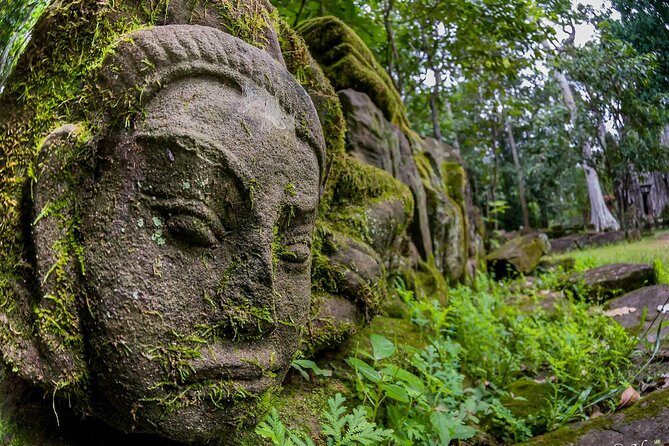
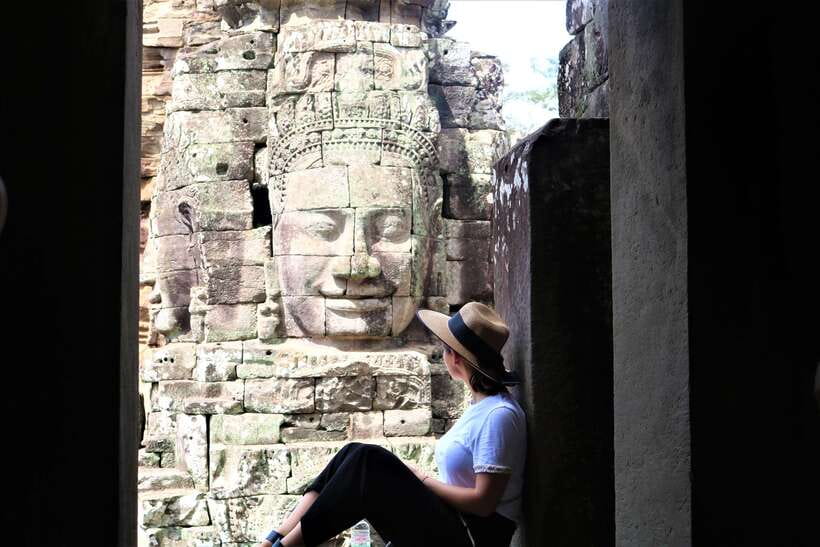
- Bayon Temple faces: more than 200 enormous stone expressions, up close
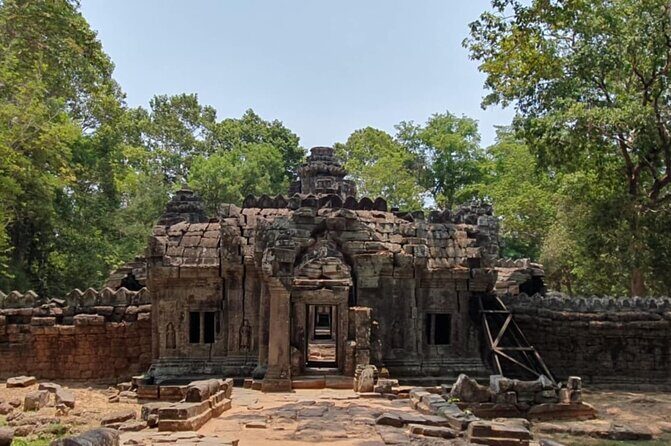
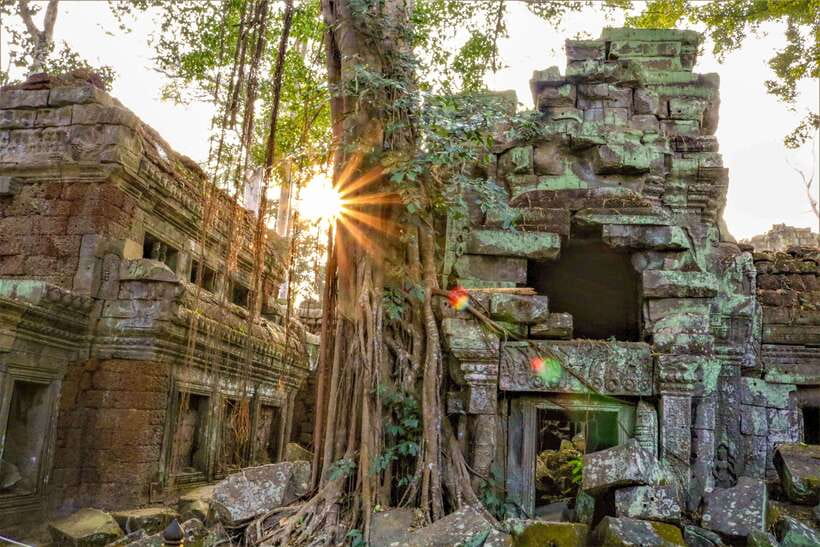
- Ta Prohm’s jungle look, where crumbling stone and roots create real atmosphere
- Comfort boosts: bottled water and cool towels between temple stops
- Photo-friendly guidance, with guides helping you position for sharper shots
What This Tour Is Really Like (And Why It Works)
This is the kind of Angkor day that makes sense when you only have one full day in Siem Reap. You’re not bouncing randomly across the map. You follow a route that hits the essential sights while keeping breaks and guidance built into the schedule.
The price is also striking for what you get: the tour itself is listed at $17 per person, and it includes an English-speaking guide, air-conditioned transport, and hotel pickup/drop-off. Then, you add the Angkor Pass separately on the day of the tour (listed as $37 per person for a one-day pass that covers the temples). In other words, you’re really paying for the organizing and the guide’s time, not just bus transportation.
If you're still narrowing it down, here are other tours in Siem Reap we've reviewed.
Timing: The Very Early Pickup and the Mid-Afternoon Finish
You’ll leave Siem Reap early. The tour notes a standard pickup between 4:10 AM and 4:30 AM, depending on where your hotel is, with the exact time confirmed the day before. At the same time, another listed pickup window says between 7:40 AM and 8:00 AM, so the key is this: confirm your exact pickup time with the operator one day prior.
Either way, the payoff is that you get the temples while the day is still cooler and the crowds feel less intense. You return to your hotel in the mid-afternoon, typically around 4:00–5:00 PM, which is nice if you want to keep an evening plan alive.
The Money Breakdown: $17 Tour vs. the $37 Angkor Pass

Here’s the clean way to think about value. The $17 tour covers your guide, shared transport, and key guided visits. But the temple entry is separate, listed as $37 per person for the 1-day Angkor Pass, and that pass covers all the temples on the route.
Lunch is also not fully straightforward. The tour highlights a lunch stop during the day, but the pricing section states lunch is not included, while lunch is available at local restaurants near the temples. In practice, you should budget for a meal during the day, even if a lunch break is part of the schedule.
Getting to the Complex: Air-Conditioned Comfort and Faster Entry
Once you’re picked up, you’re carried to the Angkor complex by bus in an air-conditioned vehicle. You’ll also have practical comfort touches included, like complimentary bottled water and a cool towel, which you’ll appreciate because the day includes walking on uneven ground and lots of stairs.
A smart perk here is the skip-the-line setup through a separate entrance. When you’re doing multiple major temples in one day, shaving time off each stop matters more than it sounds.
Angkor Wat: The Main Act and What to Look For

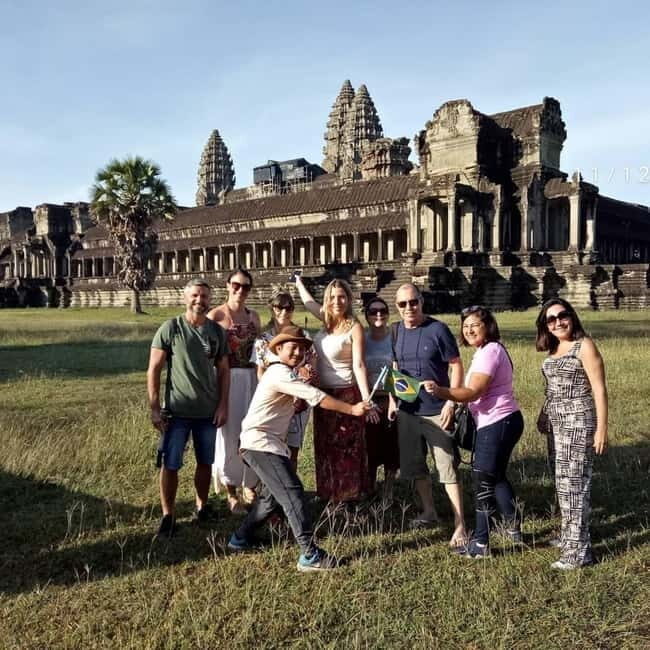
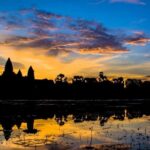
Angkor Wat is the headliner, and your guide spends real time making it click. The tour frames it as a masterpiece of Khmer civilization, built in the 12th century, with the temple taking about 30 years to complete. Even if you’ve seen photos before, it hits differently when someone explains how the layout reflects Khmer beliefs and power.
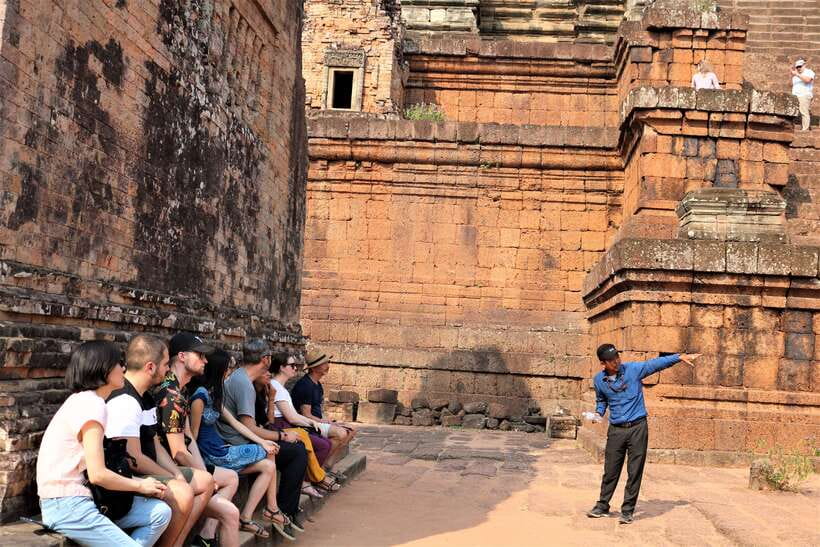
Expect a guided visit of about 2 hours at Angkor Wat, focusing on architecture and symbolism rather than rushing the site. This is where you’ll want your posture as well as your camera. Look for the geometry of the towers, the way corridors guide your movement, and the carved details that change as you shift your angle.
One detail I like about a guided format: you’re not left to guess what you’re seeing. Guides on this tour often translate Buddhist and Khmer history into a story you can follow. Some guides, like Mr. Sarkiya, are praised for explaining history and religion with energy and clarity, not just dates.

Angkor Thom’s Southern Gate: Gods and Demons in Stone
Next you move into Angkor Thom City, starting at the southern gate. This gate is famously flanked by 54 stone figures on each side—gods on one side and demons on the other. The design is dramatic even when you’re tired, which is impressive after an early start.
This stop is short enough to keep momentum, but it’s long enough to feel like more than a photo break. Your guide can point out what the figures are doing in the larger story of the site, so you end up understanding the gate instead of treating it like scenery.
Bayon Temple: The Faces That Make the Whole Place Feel Alive
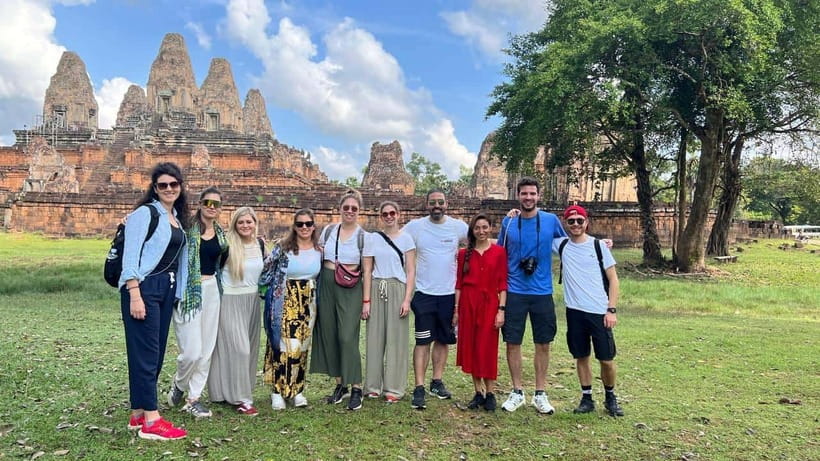
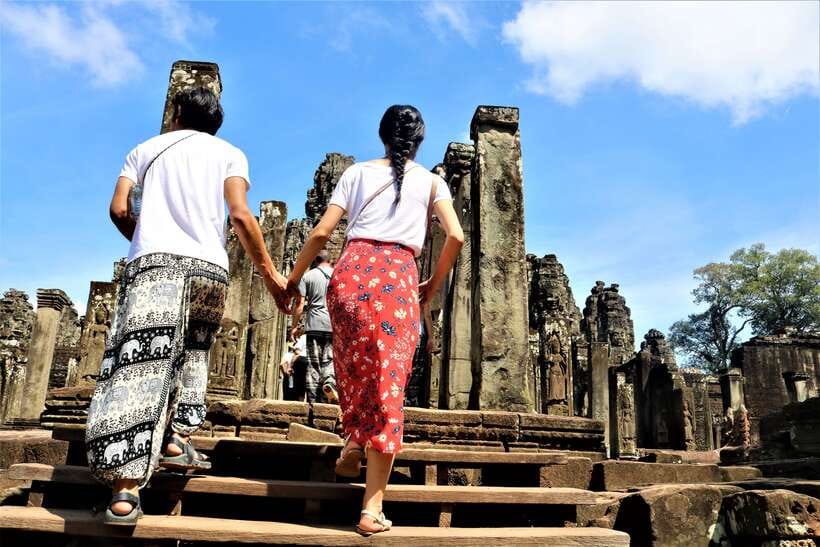
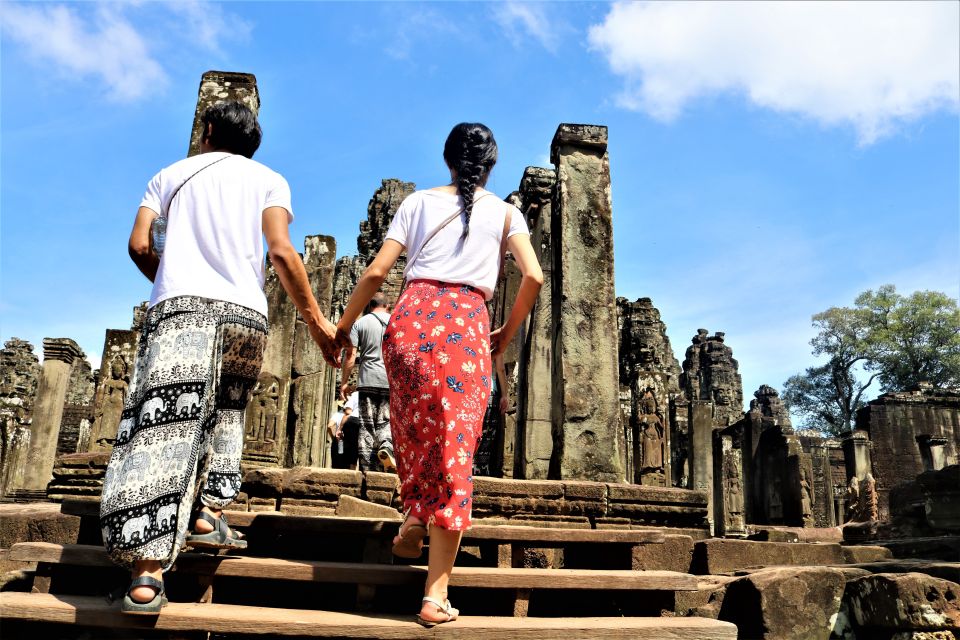
Then comes Bayon Temple, with guided time of about 1 hour. This is where the tour really earns its reputation. Bayon’s central towers are covered with more than 200 enormous faces, and they change how you feel as you walk through the area.
I like this sequence because it shifts you from grandeur (Angkor Wat) to intensity (Bayon). Angkor Wat can feel monumental and formal. Bayon feels watchful. If you like architecture, it’s worth paying attention to how the towers dominate the space and how the faces line up with walkways and sightlines.
If your guide is the type to help you place your group for photos, this is also a great stop for it. Several guides are praised for taking time to get good shots without turning the day into a production.
Terrace Stops: Leper King and Elephants
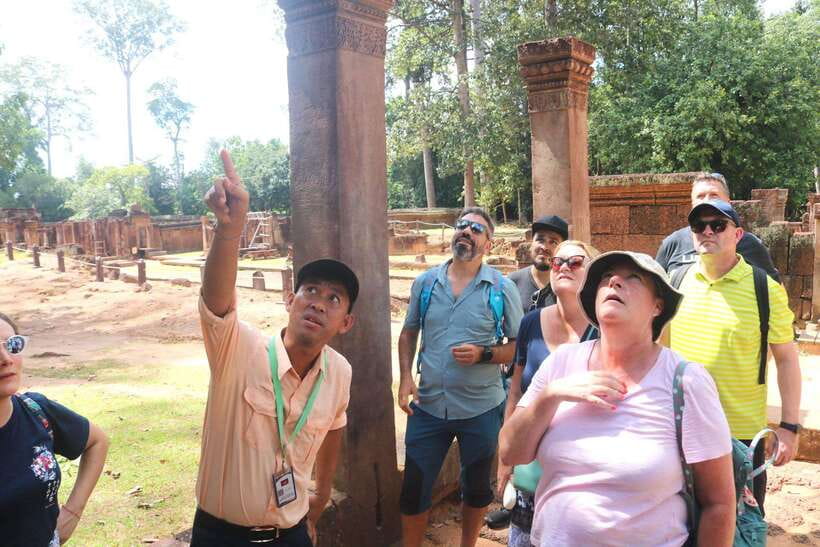
Between Bayon and your later temple time, you pass the Terrace of the Leper King and the Terrace of the Elephants. These terraces can feel like “quick stops” in some tours, but here they work as context. They’re part of the living machine of Angkor Thom—space where power, ceremony, and story were all staged.
The terraces are also a useful breathing rhythm. After full temple interiors and towers, you get open views and a chance to recover your feet and hydrate.
Srah Srang Break: Lunch and Downtime That Helps You Last
You also get a 1-hour stop at Srah Srang, which includes beer, coffee, tea, and lunch, plus free time. Even if you end up keeping lunch simple, the point is the break. It helps you reset before Ta Prohm.
This is the moment you should use wisely. Sit in the shade. Drink water. Reapply sunscreen if you wear it. And if you’re carrying an insect repellent, this is a good time to check you used it before your next walk.
A note from the real world: one downside of full-day temple schedules is fatigue. Some guests mention how the day gets hot and involves quite a lot of walking. That’s exactly why breaks like this matter more than they seem on paper.
Ta Prohm: Jungle-Enveloped Atmosphere Without the Museum Feel
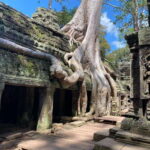
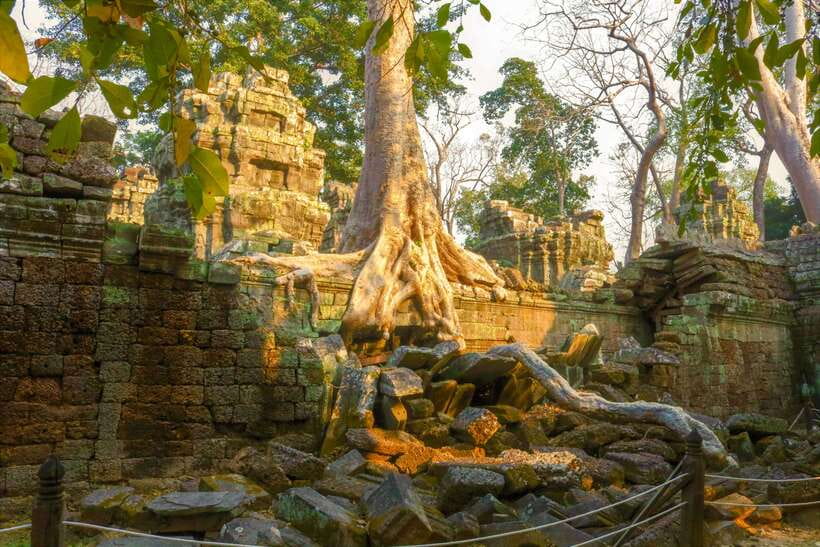
Ta Prohm is next, with about 1 hour of guided visit and walking. The tour frames it as the famous Tomb Raider Temple, but the real reason it’s special is the visual story. The jungle has grown into the ruins, and the stone feels like it’s actively being reclaimed.
One of the best parts here is the context your guide provides. Ta Prohm was once home to 2,740 monks, and it is described as looking much like it did after a French explorer, Henri Mouhot, rediscovered the site in the early 1850s. That mix of religious purpose, later neglect, and then global attention makes the place feel layered.
Expect maze-like paths. You’ll need to slow down and let the guide show you what to notice. Uneven ground is normal here, so keep your steps careful and your camera hand ready for short moments, not long sprints.
The Heat Reality: What Helps You Stay Comfortable
Angkor days punish sloppy planning. Even with an air-conditioned vehicle and included water, you’ll still face sun exposure and stairs. The tour provides bottled water and cool towels, which show up repeatedly as a highlight in guide-and-driver feedback.
Also, your equipment matters:
- Wear comfortable shoes with grip
- Bring sunglasses and a sun hat
- Use insect repellent
- Use the dress rule as a planning tool, not an afterthought: cover knees and shoulders and don’t wear skirts
If you forget the dress requirement, you may be forced to improvise. Better to dress correctly from the start.
Guides and the Best Kind of Small Group Day
The experience is built around the intimacy of a small-group tour. That matters because you get time to ask questions without your guide rushing away every time someone wants clarification.
This is also where you’ll see why so many people rate the guides highly. Several names come up again and again: Pal Saruon, Yuth, Sam, Chhay, Mr. Bun, Sok, Pi, and Mr. Sarkiya. The consistent theme is that these guides don’t just list facts. They explain the temples and Khmer history in a way that helps you connect what you see to why it exists.
Some guides are also praised for being helpful with photos and good photo spots. If you want sharp images without standing awkwardly in traffic for 20 minutes, this matters.
Where the Schedule Feels Tight (And How to Handle It)
The day is packed. That’s the trade. You get the big temples and key parts of Angkor Thom, but you’re also moving on before you feel fully “done” with any one area. If you like lingering for long stretches, you might feel a little rushed, especially as the afternoon heat rises.
The upside is you leave with a solid orientation to Angkor’s layout and major monuments. Instead of scattered impressions, you get a connected mental map of how these temples relate to each other.
Who Should Book This Tour
Book it if:
- You want Angkor Wat, Bayon, and Ta Prohm in one efficient day
- You like having a guide explain symbolism and history in English
- You value comfort touches like water and cool towels
- You prefer a small group over a chaotic crowd
Skip it or consider a different format if:
- You hate early mornings and long walking days
- You need wheelchair access (the tour is listed as not suitable for wheelchair users)
- You’re traveling with very young kids (it lists children under 5 as not suitable)
Should You Book This Angkor Temples Full-Day Tour?
Yes, if you want the smartest way to see the core Angkor sites without burning time figuring things out yourself. The small-group feel, the skip-the-line entry, and the repeated focus on guide explanations and comfort make this a strong value play for $17, with the understanding that you’ll also pay the $37 Angkor Pass on the day.
I’d book it when you care about getting context, not just standing in front of temples. If you’re the type who likes photos, you’ll likely appreciate the photo help too. Just plan for a long, warm day, follow the dress rules, and wear shoes that can handle uneven temple stone.