REVIEW · SIEM REAP
2-Day Angkor Wat with Temples On Small Circle & Kulen Waterfall
Book on Viator →Operated by Happy Angkor Tour · Bookable on Viator
Two mornings. Two views. One unforgettable Angkor rhythm. This 2-day Angkor Wat + Small Circuit + Kulen Waterfall plan is interesting because it stacks the must-see temple highlights with a full day in Phnom Kulen National Park. I like that it pairs classic Angkor moments like Ta Prohm’s tree roots and the sea of faces at Bayon with a less-temple, more-adventure setting at Kulen. I also like the way the schedule is built around light: sunset at Phnom Bakheng on Day 1 and sunrise at Angkor Wat on Day 2.
One consideration: the biggest sights require paid admissions on top of the tour price, and you’re looking at very early pickup plus some uphill climbing at Phnom Bakheng.
In This Review
- Key Points at a Glance
- Why This Angkor Wat + Kulen Route Feels Efficient
- Day 1: Angkor Wat Morning, Small Circuit Temples, and Phnom Bakheng Sunset
- Angkor Wat: Start With the Big Icon
- Ta Prohm: Tree Roots, Stones, and a Movie-Set Feeling
- Ta Nei: The Smaller Stop That Helps You Breathe
- Victory Gate and Bayon: The Faces of Angkor Thom
- Baphuon and Phimeanakas: Hindu Temples in Royal Enclosure Space
- Terrace of Elephants and Terrace of the Leper King: Carvings With Stories
- Phnom Bakheng: The Sunset Hill (and the Option to Skip)
- Day 2: Angkor Wat Sunrise Pickup and Phnom Kulen National Park
- Angkor Wat at First Light: Why Sunrise Changes Everything
- The 60+ km Ride to Phnom Kulen: Different World, Same Khmer Talent
- The Big Reclining Buddha and the Waterfall
- Pink Sandstone Banteay Srei and the Hindu Temple Trio After Lunch
- Banteay Srei (Lady Temple): Pink Sandstone That’s Made to Be Seen
- Banteay Samre: The Subtle Builder’s Exam
- Pre Rup: The Meaning Behind the Name
- Price and Logistics: What You Pay For and What You Still Need to Budget
- Is it good value?
- Comfort Tips That Make the Big Sights Easier
- Who This Tour Suits Best (and Who Might Want a Different Plan)
- Should You Book This Angkor Wat + Kulen Tour?
- FAQ
- What time does pickup happen on Day 1 and Day 2?
- Are admission fees included in the tour price?
- What’s included in the price?
- How far is Phnom Kulen National Park from Angkor Park?
- Can I skip the sunset at Phnom Bakheng?
- Is there free cancellation?
Key Points at a Glance
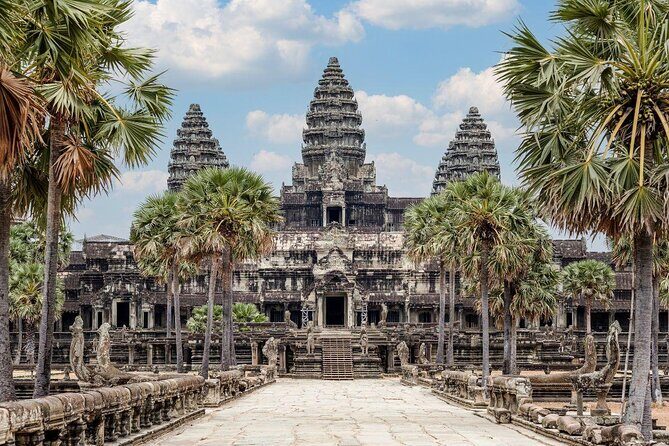
- Sunrise at Angkor Wat plus sunset from Phnom Bakheng gives you two different lighting moods for the same overall trip.
- Small Circuit temples are planned with crowd sanity in mind, including the root-choked Ta Prohm and the calmer Ta Nei.
- Angkor Thom highlights are grouped efficiently, with Victory Gate, Bayon’s 49 towers, and the Terrace of the Elephants and Leper King.
- Phnom Kulen National Park is not just a drive-by: you’ll see the 1000 Lingas riverbed carvings, a big reclining Buddha, and a waterfall.
- Banteay Srei (Lady Temple) comes after lunch, so you don’t spend the hottest part of the day just sitting in lines at Angkor.
- English guide support and private A/C vehicle comfort help you move fast without turning the trip into a heat-stress marathon.
Why This Angkor Wat + Kulen Route Feels Efficient
Angkor Wat alone can eat a whole day, and most people arrive thinking they’ll “just wing it.” This itinerary solves that problem by mixing two kinds of sights: tightly packed temple circuits and a long outing to Phnom Kulen.
The value is in how the day shapes itself. Day 1 stays mostly inside the Angkor Park temple zone, so you’re walking stone paths without big travel gaps. Day 2 starts at 5:00am for sunrise, then shifts to the 60+ km ride to Kulen, where the scenery and subject matter change fast. You’ll feel like you saw more than “just Angkor,” even though that’s still the anchor of the trip.
Other Angkor Wat temple tours we've reviewed in Siem Reap
Day 1: Angkor Wat Morning, Small Circuit Temples, and Phnom Bakheng Sunset
Day 1 begins with an 8:00am pickup from your hotel or guest house. You head to pick up what you need for temple entry along the way, then your guide brings you into the Angkor rhythm: short segments, steady walking, and the kind of photo stops that don’t derail the schedule.
Angkor Wat: Start With the Big Icon
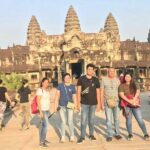
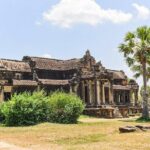
You begin with Angkor Wat first, and that choice makes sense. It’s the most recognizable symbol of the whole complex, so seeing it early in the day helps you understand the layout before you jump into the smaller, more interpretive temples.
The time on this stop is listed at about 2 hours 30 minutes, which is a good amount. You’re not stuck staring at one angle. You can get a feel for the courtyards and central axis, and you can also adjust if the light or crowd flow shifts.
Ta Prohm: Tree Roots, Stones, and a Movie-Set Feeling
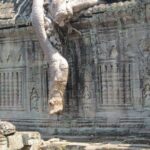
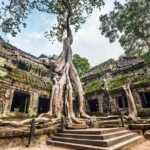
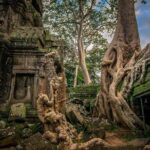
After Angkor Wat, you move on to Ta Prohm, famous for those gigantic tree roots wrapped around the ruins. This is one of the most photogenic stops on the Angkor Park circuits, but it’s more than a postcard.
What I like here is the contrast: carved sandstone and temple geometry next to living, twisting roots that look almost too dramatic to be real. If you want a break from the “faces and towers” theme, Ta Prohm gives you a different texture and mood.
Ta Nei: The Smaller Stop That Helps You Breathe
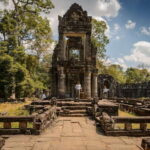
Then comes Ta Nei, a smaller temple with less restoration. That matters because it tends to feel calmer, with more breathing space around you and fewer people crowding the exact same viewpoint.
This is a smart pause in the day. It’s also a nice reminder that not every moment at Angkor needs to be the loudest, most famous structure. Ta Nei’s appeal is that it lets the surrounding trees do some of the work.
Other multi-temple archeological tours we've reviewed in Siem Reap


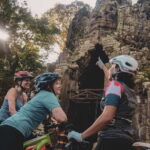
Victory Gate and Bayon: The Faces of Angkor Thom
From there you enter the Angkor Thom area highlights, starting with the Victory Gate on the east side. It’s a quick photo and orientation moment (around 10 minutes), and it helps you “place” what you’ll see next.
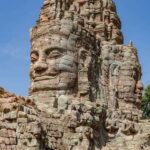
Next is Bayon Temple, with 49 towers, each featuring four faces (so 196 faces total). The point of Bayon isn’t just counting faces. It’s the way the expressions repeat across the towers, giving you a visual map of the temple’s central space. Your visit is listed at about 45 minutes, which feels right for circling and letting the faces change as you move.
Baphuon and Phimeanakas: Hindu Temples in Royal Enclosure Space
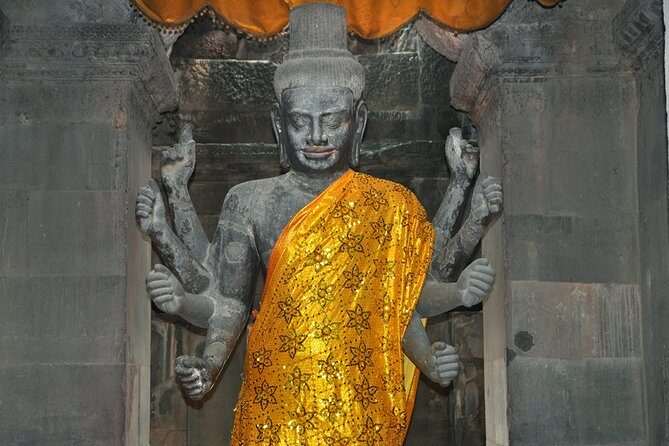
After Bayon, you head to Baphuon, a Hindu temple built before Angkor Wat in the 11th century. The reclining Buddha behind it was built later, in the 16th century, which creates an “older structure, newer focal point” vibe.
Then you visit Phimeanakas, a pyramid Hindu temple from the 10th century located in the center of the former royal palace area. You’ll also see the surrounding ancient royal enclosure wall. These stops are short (around 15 minutes each), but they’re designed to keep the day moving while still giving you the core temple types: pyramid form, enclosing walls, and iconic sculptural features.
Terrace of Elephants and Terrace of the Leper King: Carvings With Stories
Two quick platforms round out the Angkor Thom walk: Terrace of the Elephants and Terrace of the Leper King.
- The Terrace of the Elephants is known for carvings of elephants, and it’s tied to the idea of kings viewing returning victorious armies.
- The Terrace of the Leper King is another platform nearby on the north side, and it’s a separate visual experience rather than just a rest stop.
The time is listed at about 10 minutes each. That’s not “long,” but it matches the reality of these terraces: you get what you need fast, especially if your guide points out what to look for.
Phnom Bakheng: The Sunset Hill (and the Option to Skip)
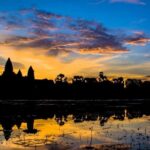
Finally, you climb up to Phnom Bakheng for sunset views. This stop is listed as a two-hour block, with an important note: if you don’t want to wait for sunset, you can skip it.
This is one of the most practical built-in flex points of the tour. If you’re comfortable timing the climb and you want the view payoff, you stay for sunset. If you’d rather conserve energy, you can still enjoy the hill experience without turning it into a long wait.
Day 2: Angkor Wat Sunrise Pickup and Phnom Kulen National Park
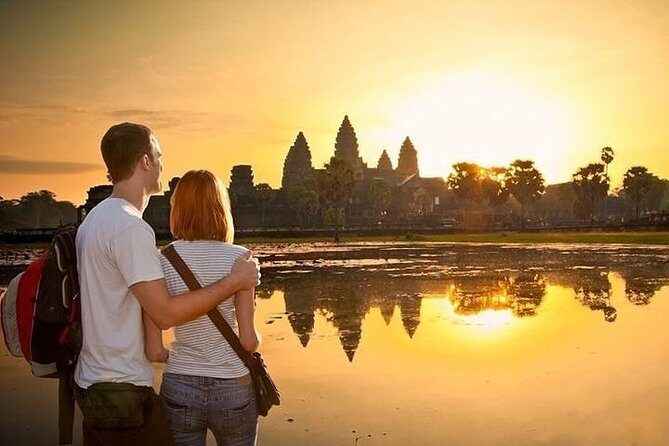
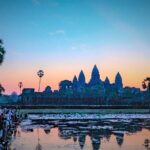
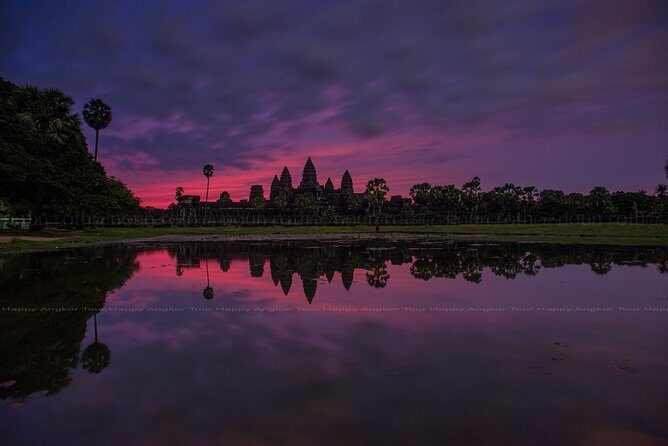
Day 2 starts early for a reason. Your pickup is at 5:00am, and you go straight to watch the sunrise at Angkor Wat. The time listed for the sunrise stop is about 1 hour 45 minutes.
Angkor Wat at First Light: Why Sunrise Changes Everything
Sunrise at Angkor Wat isn’t just a “nice photo.” It changes the whole feel of the complex. Less heat means less harsh glare on stone textures. Fewer people means you can actually think about alignment, courtyards, and sightlines.
This tour’s early start gives you the best chance to enjoy that calm before the later-day crowds. If you’re not a morning person, this is where you’ll pay for the advantage with a rough alarm clock.
The 60+ km Ride to Phnom Kulen: Different World, Same Khmer Talent
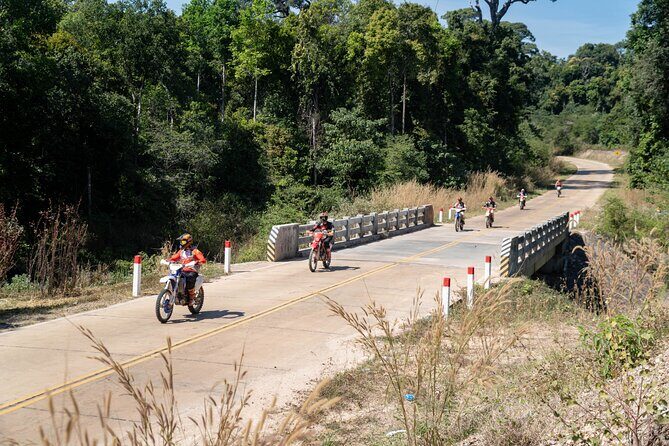
After sunrise, you continue onward after breakfast to Phnom Kulen National Park, located more than 60 km from Angkor Park. This is listed as a 5-hour stretch, so expect a full chunk of the day dedicated to the drive and the park experience.
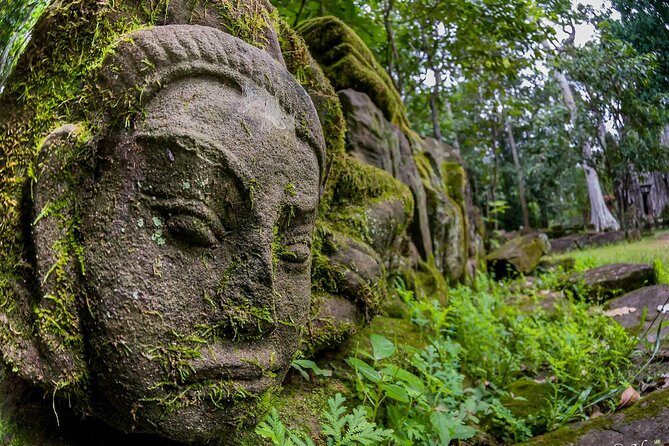
Kulen is described as a more nature-and-stone setting than the temple grid. You’re looking at riverbed areas covered with sculptures of Lingas, called the 1000 Lingas—a key Shiva symbol representing Shiva’s supreme essence.
The Big Reclining Buddha and the Waterfall
Inside the national park, your sightseeing includes:
- the 1000 Lingas carvings in the riverbed area
- a big reclining Buddha built from a large stone
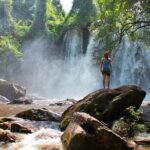
- a waterfall visit
This is the part of the tour that gives you a “this isn’t just more temples” feeling. You’re shifting from architecture into sculpted religious imagery set in a landscape context, and then you get water as a natural finishing touch.
If you like contrast—stone art plus movement from water—this is where the tour earns its place on a short list.
Pink Sandstone Banteay Srei and the Hindu Temple Trio After Lunch
After Kulen, the day continues in the afternoon. The schedule specifically calls out lunch, then moves into more temple stops: Banteay Srei, Banteay Samre, and Pre Rup.
Banteay Srei (Lady Temple): Pink Sandstone That’s Made to Be Seen
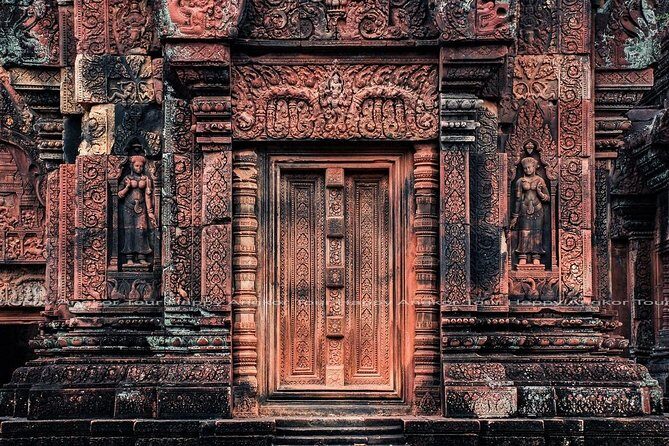
Banteay Srei—often called the Lady Temple—is built from pink sandstone and dates to the half of the 10th century. It was built by Hindu King Rajendravarman II and dedicated to Hindu trinity gods, with a strong focus on Shiva.
The time is listed as about 1 hour, and that seems about right. Banteay Srei’s appeal is detail work. When you don’t have the time to linger, you miss the finer carvings. When you do have that hour, you get to see why the color matters and why people love this stop more than they expected.
Banteay Samre: The Subtle Builder’s Exam
Next is Banteay Samre, a Hindu temple from the 12th century. The key note here is that its architecture doesn’t show as many obvious features as some other temples, yet people believe it follows a similar model to Angkor Wat.
That means your best approach is to think like a viewer, not a checker. Spend your time noticing proportions and comparing what you recall from Angkor Wat. This stop can feel more quiet and contemplative than the big highlight temples.
Pre Rup: The Meaning Behind the Name
The last listed temple stop is Pre Rup. The name is linked to the idea of turning the body, and the temple is associated with Hindu beliefs about funerals taking place at the most distant junction.
Pre Rup is a short stop (about 30 minutes), so it’s not about exhaustive exploration. It’s about getting the shape of the place and letting the story give the stones context.
Price and Logistics: What You Pay For and What You Still Need to Budget
The tour price is $181.75 per person for the 2-day experience. That base price covers a private A/C vehicle with driver, an English-speaking licensed guide, parking and road tolls, plus cool drinking water and wet towels. Pickup and drop-off are included at your hotel.
Then come the admissions, which are not included in the package:
- Angkor + all temples: $62.00 per person
- Phnom Kulen National Park: $20.00 per person
Meals are not included either. Lunch is listed as about $5.00 per person, depending on the menu.
Is it good value?
For many people, it’s good value because the schedule is tight and the timing is demanding. You’re paying for early pickups, structured temple ordering, and transportation between far-flung parts of the region. If you try to replicate this yourself, the early mornings and the distance to Kulen can quickly turn into a mess of planning, waiting, and re-planning.
Also, the guide component matters here. Angkor’s best moments are often understanding what you’re looking at, not just walking through it. In one example guide profile, Chhay is described as informative and friendly, and especially helpful with photos for solo visitors. That kind of guidance is hard to copy when you’re winging it.
Comfort Tips That Make the Big Sights Easier
This tour includes practical comfort items: cold water and wet towels, plus an A/C vehicle to reset between stops. Still, you’ll be on your feet for long parts of both days.
I suggest packing for heat and stone:
- solid shoes for uneven temple surfaces
- a hat and sunscreen (you’ll be exposed during multiple temple walks)
- a light layer for the early morning chill, especially for sunrise timing
Also, plan your phone strategy. The guide will support stops and photos, but if you want steady results, keep a simple routine: wide shot first, then close details once your framing is set.
Who This Tour Suits Best (and Who Might Want a Different Plan)
This experience fits you if:
- you have limited time in Siem Reap and want both Angkor and Kulen covered
- you care about sunrise and sunset views, not just a checklist
- you want a guide’s help to make sense of what you see at each temple stop
It might be less ideal if:
- you hate very early wake-ups (Day 2 starts at 5:00am)
- you’re not comfortable with uphill climbs and stair-like hill viewing for Phnom Bakheng
- you prefer a totally free-form schedule with no set timing blocks
The nice thing is that Phnom Bakheng includes an option to skip the sunset waiting. That flexibility helps for people who want the hill view without the long hold.
Should You Book This Angkor Wat + Kulen Tour?
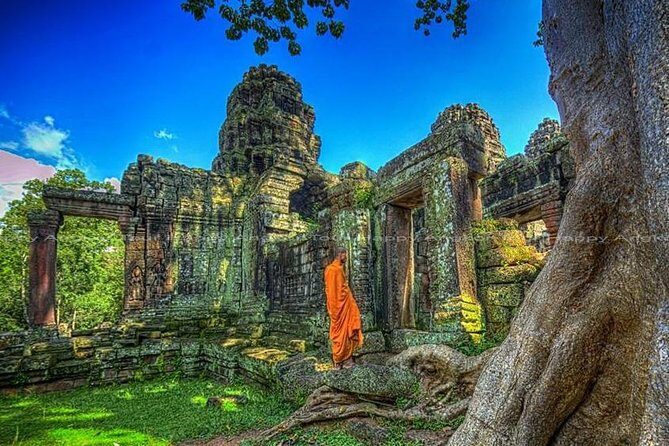
Book it if you want a structured 2-day plan that covers the Angkor Small Circuit, the major Angkor Thom highlights, and then adds Phnom Kulen’s 1000 Lingas, big reclining Buddha, and waterfall. The early sunrise + sunset combo is the kind of thing that’s hard to recreate on a DIY schedule without extra effort.
Skip it if you’re already comfortable navigating temple admissions and circuits on your own, and you’d rather trade early morning time for extra free wandering.
If you’re on the fence, use this rule: if you’ll actually use the timing advantage (sunrise and sunset, orderly temple flow), this tour fits your trip. If you’re not excited about early starts, you may feel rushed by the schedule.
FAQ
What time does pickup happen on Day 1 and Day 2?
Day 1 pickup is at 8:00am from your hotel or guest house. Day 2 pickup for sunrise is at 5:00am.
Are admission fees included in the tour price?
No. Angkor + all temples cost $62.00 per person, and Phnom Kulen National Park costs $20.00 per person.
What’s included in the price?
The tour includes a private A/C vehicle with driver, an English-speaking licensed guide, parking fees and road tolls, cool drinking water and wet towels, plus pickup from and drop-off back to your hotel.
How far is Phnom Kulen National Park from Angkor Park?
Phnom Kulen National Park is located more than 60 km from Angkor Park.
Can I skip the sunset at Phnom Bakheng?
Yes. The itinerary notes that you can skip the sunset waiting if you prefer.
Is there free cancellation?
Yes, you can cancel for a full refund up to 24 hours in advance of the experience start time.