REVIEW · SIEM REAP
Private Tuk Tuk Tour to Angkor Wat and Small Circle with Two Extras
Book on Viator →Operated by Angkor-Travel Tours · Bookable on Viator
Angkor at two-daylight moments is a smart move. This private tuk tuk route hits Angkor Wat twice—morning light from the East Gate and late-afternoon reflections—so your photos and your attention never stall. You also get a side of Angkor that most people skip, including the smaller temples that make the whole day feel more human.
I love how the plan blends big-name sites with lesser-visited stops like Ta Nei and the brick towers at Prasat Kravan. I also like the way it stays practical: it is private, you can move at a comfortable pace, and the driver keeps things flowing without turning the day into a race.
One consideration: the Angkor ticket is not included, and there’s no lunch built in. So if you hate uncertainty, plan for breakfast before pickup and have a lunch budget ready.
In This Review
- Key highlights that make this tour feel worth it
- Two Angkor Wat photo sessions: East Gate morning and pond reflections
- The Small Circle format: how you cover more without walking yourself into misery
- Prasat Kravan, Prasat Bat Chum, and Srah Srang: the carvings and the water details
- Banteay Kdei and Ta Prohm: jungle temples with time to breathe
- Ta Nei and Ta Keo: off-road ruins and steep stairs
- Spean Thma, Chau Say Tevoda, and Thommanon: stonework and myth carvings
- Angkor Thom gates and Bayon: quick shots at Victory Gate and South Gate
- Wat Thmey memorial: what you’ll see at a Khmer Rouge killing field
- Pace, comfort, and the private tuk tuk advantage in real life
- Price and value: what $15 covers, and what you still need to pay
- Who this tour suits best
- Should you book this Angkor Wat and Small Circle tuk tuk tour?
- FAQ
- What time does the tour start in Siem Reap?
- How long is the private tuk tuk tour?
- Is pickup included, and where does the tour end?
- Is the Angkor temple ticket included in the price?
- Which Angkor Wat gates do you visit?
- Does the tour include Ta Prohm and other main temples?
- Do you visit Wat Thmey?
- What’s included in the tour price?
- Is there free cancellation?
Key highlights that make this tour feel worth it
- Two Angkor Wat visits for morning angles and mirrored-tower shots later in the day
- Lesser-known temples with short stop times so you see more without committing to long waits
- Ta Prohm and Banteay Kdei for jungle temple atmosphere, with time to actually look
- Ta Nei off the main roads for an Indiana Jones-style ruins vibe without the usual crowd crush
- Wat Thmey memorial stop to see a Khmer Rouge killing field with a small stupa and photo boards
Two Angkor Wat photo sessions: East Gate morning and pond reflections
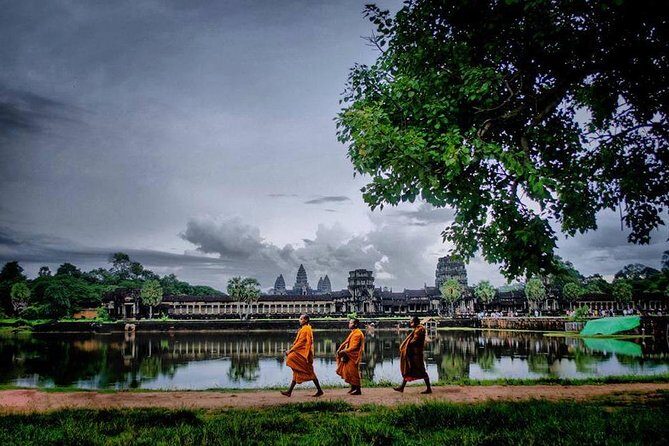
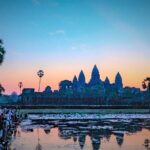
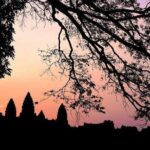
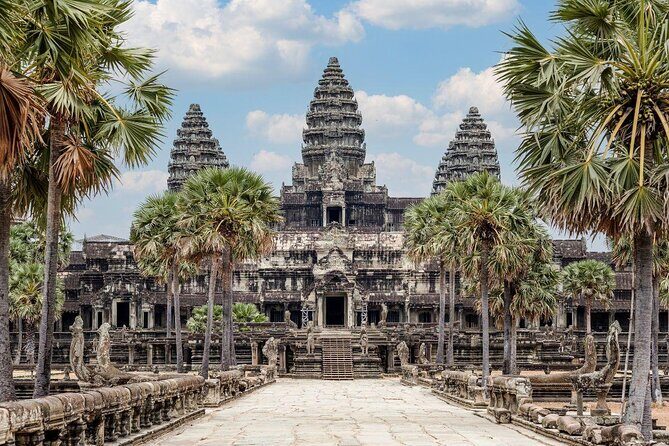
The day starts early at 7:00 am, and that matters. Your first big stop is Angkor Wat, but you begin from the less-frequent East Gate so you get the softer morning light on the approach. It is a smart setup for photos, and it also helps you avoid the feeling of arriving late and fighting for the best angles.
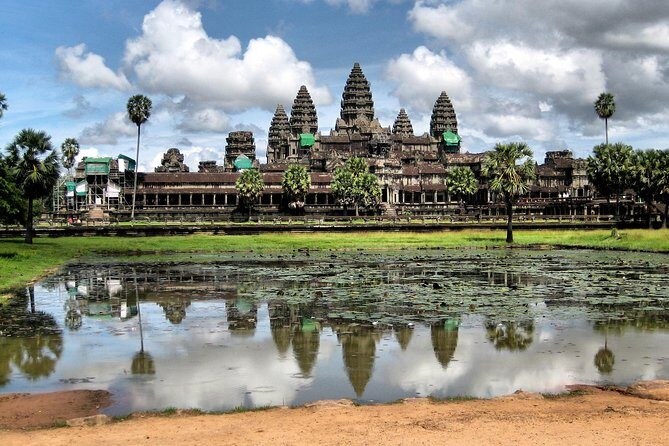
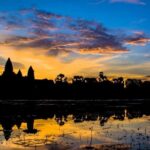
You then return to Angkor Wat again in the late afternoon, when the light shifts and the ponds and moats start doing their job. Expect another half hour at the famous complex, with time focused on the classic mirrored-tower look. If you care about photography, this is the heart of the value: you are not betting everything on one lighting window.
Admission isn’t included for Angkor Wat, but it is standard for all Angkor temples with a one-day ticket. What you are paying for with this tour is the transportation plan, the sequencing, and the pacing that lets you enjoy the stones instead of just rushing past them.
Other Angkor Wat temple tours we've reviewed in Siem Reap
The Small Circle format: how you cover more without walking yourself into misery
This tour is built around visiting multiple key sites in a long day, roughly 9 to 10 hours. The private tuk tuk helps because you are not stuck planning transit or trying to time buses between distant ruins. You also get a clean flow from stop to stop, which is the difference between seeing temples and actually getting something out of them.
A lot of the sites on the route are short visits—often 10 to 20 minutes. That is not necessarily a bad thing. In Angkor, ruins can be overwhelming, and short stops can help you choose what you want to see: one tower you love, one carved panel you want to study, one viewpoint worth climbing toward.
A good example is the run of smaller temples that sit just off the main flow. You go from Prasat Kravan’s brick tower carvings (five towers in a line) to Prasat Bat Chum’s three towers on a shared platform, noted for large inscriptions. These are the kinds of stops where a driver’s explanations outside the gate can add context without eating your whole time budget.
Prasat Kravan, Prasat Bat Chum, and Srah Srang: the carvings and the water details
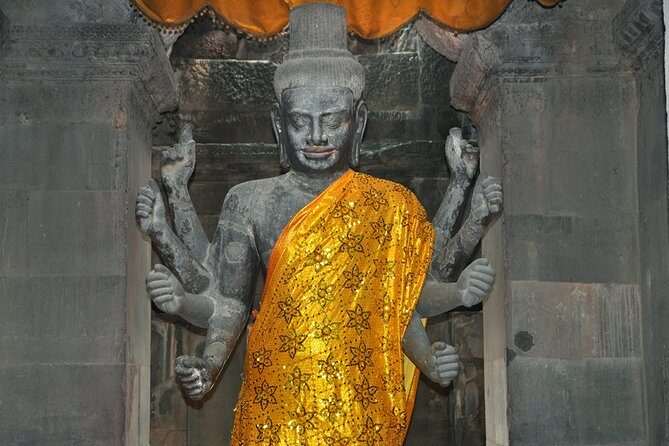
After Angkor Wat, you hit Prasat Kravan for about 20 minutes. This one is known for its brick carvings, which are larger in scale than what you usually see elsewhere in Angkor’s stone-heavy look. It is the kind of stop that rewards you for slowing down for a minute and studying the patterns instead of only taking selfies.
Next is Prasat Bat Chum for about 20 minutes. The standout here is the large inscriptions, which indicate Buddhism found its way into Angkor. Even if you are not reading Khmer script, you’ll likely notice the emphasis on written or symbolic elements compared with pure sculpture.
Then comes Srah Srang (around 10 minutes). It is an artificial basin with animal sculptures, and the details matter here: it is a smaller Srah (deepened artificially), not a Baray reservoir. If you like water architecture, this stop gives you a different side of Angkor besides temple walls—more like a landscaped ritual space.
Banteay Kdei and Ta Prohm: jungle temples with time to breathe
Banteay Kdei is about 45 minutes, and it is often described as the smaller sister of the famous Ta Prohm. The reality on the ground is still big enough to feel like a full complex, but it keeps a labyrinth-like layout that you navigate without feeling completely lost. If you want jungle atmosphere without a nonstop crowd crush, this slot is a solid choice.
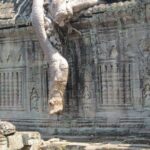
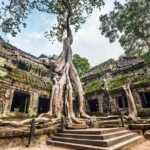
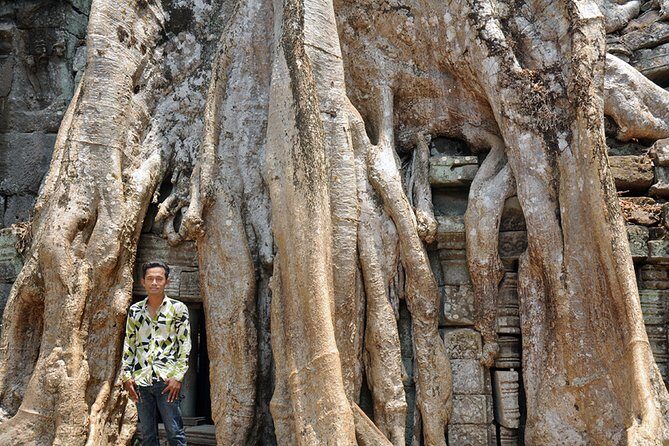
Then you move to Ta Prohm for about 1 hour 15 minutes. This is the world-famous jungle temple, with enormous strangle fig trees grown into the ruins. The trick here is not just to look up—though you will want to. Take a slow loop through the compound, because the best moments are often in the mid-distance: framed corridors, broken doorways, and the way the roots grab the architecture.
If you tend to rush, set a rule for yourself now. Spend your first 10 minutes just watching how the trees and walls line up, then start picking specific photo spots after your eyes adjust. It makes the extra time feel justified.
Ta Nei and Ta Keo: off-road ruins and steep stairs
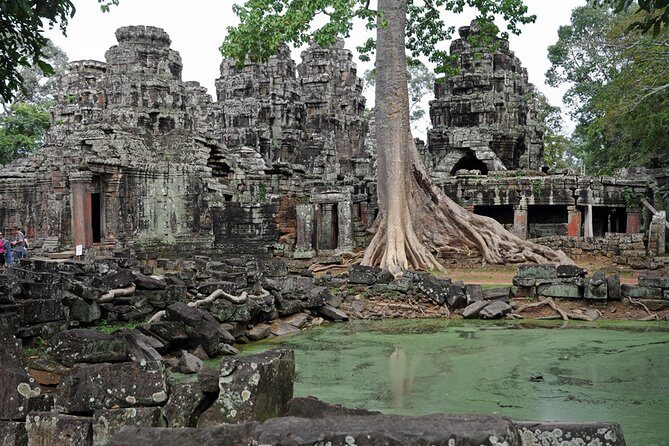
Ta Nei is next for around 30 minutes, and it is described as hidden in the jungle, reached by gravel roads. That is why many people miss it. When you arrive, you get an Indiana Jones feeling—less polished, more “how did this survive?” and more space to enjoy the silence between looks.
After Ta Nei, you get Ta Keo for about 40 minutes. This one is a stepped pyramid, an artificial mountain with stairs that are extraordinarily steep. If you are short on stamina or have any knee issues, plan your climb like you plan a museum: go as far as you feel good, then stop. You can still get the top-platform views and the sense of the design without forcing it.
This is also a good place to remember that not all Angkor sites are about the same kind of wow. Ta Nei gives you texture and atmosphere. Ta Keo gives you geometry and scale.
Other tuk-tuk tours we've reviewed in Siem Reap

Spean Thma, Chau Say Tevoda, and Thommanon: stonework and myth carvings
Spean Thma is a quick photo stop (about 5 minutes), but it is a meaningful one. It is a late Angkor period stone bridge built using carved stones taken from earlier temples. That reuse makes the site feel like a living archive, not just a standalone structure.
Then you go to Chau Say Tevoda for about 20 minutes. This temple has a processional route from the east and lots of pediment carvings with mythological themes. If you like the storytelling side of Khmer art, this is the stop where your eyes can spend real time tracing scenes.
Thommanon follows for about 15 minutes as the sister temple of Chau Say Tevoda. The towers share a style similar to Angkor Wat’s, so it is a nice “echo” stop that lets you compare how styles shift across the complex.
Angkor Thom gates and Bayon: quick shots at Victory Gate and South Gate
The schedule moves back into Angkor Thom territory. You visit the Victory Gate for about 10 minutes and you have a chance to climb the wall for a view toward the southern giant face of the gate. Even if you only climb partway, it changes the way you see the carvings—suddenly the whole gate design clicks into place.
Next is Bayon, but only for a photo stop of about 10 minutes on the Small Tour. That means you are not going deep here. Go in with one target: pick your best angle, grab your key photos, then move on. In a long day, that focus prevents the usual photo-scramble.
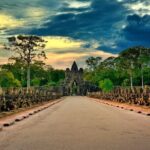
Finally, you end this part at Angkor Thom South Gate for about 15 minutes. The face tower and the railing made of rows of giant demons and gods are one of the must-sees of the city. If you only had time for one gate on this route, this would be the one I’d protect.
Wat Thmey memorial: what you’ll see at a Khmer Rouge killing field
The last stop is Wat Thmey, the killing field memorial, for about 10 minutes. Admission is free here. The site includes a small memorial stupa for victims of the Khmer Rouge and photo boards with images of people killed here, plus an open prayer hall.
This is not a casual sightseeing stop, so keep your pace slow. Bring your emotions with you, not just your camera. If you’re traveling with kids, you’ll want to gauge their readiness before you go in, since the subject matter is heavy.
What makes this stop valuable is that it connects Angkor’s beauty with the human cost of Cambodia’s recent past. It is also a reminder that history here is not only in carved stone.
Pace, comfort, and the private tuk tuk advantage in real life
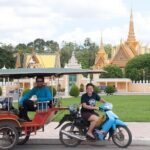
This is a private tour, so it is just your group on the tuk tuk. That matters more than it sounds when your day is stretched over 9 to 10 hours. You can pause for photos, take a short breath at a shade spot, and skip a temple if you need to reset.
From the experience setup, the driver seems to handle more than driving. I’ve heard from people who valued how friendly drivers stayed flexible with pacing and how they offered extra context even if they were not allowed to accompany you inside every temple area. Names that came up in the past include guides like Vannak and drivers like Kim and Sina—each described as helpful and able to adjust the day to fit the pace you want.
You also get cold bottled water during the tour. That seems minor until you realize Siem Reap mornings can turn hot fast, especially when you are bouncing between stone sites that have little cover.
If you’re the type who likes your sightseeing with structure but not stress, this setup fits. If you hate walking at all, note that you still need to move around each temple site once you arrive—tuk tuk transport reduces transit, but it doesn’t remove the ruin-walking part.
Price and value: what $15 covers, and what you still need to pay
The tour price is $15.00 per person, but the Angkor temple ticket is not included. The one-day Angkor ticket costs $37 per person and is valid for temples. Lunch is also not included.
So your realistic baseline is about $52 for transport plus temple access, before any meal costs. In return, you get private transportation, an English-speaking driver, and free drinking water during the tour. For a full-day Angkor circuit—especially one that visits Angkor Wat twice—this can be strong value if you want the convenience without sacrificing a thoughtful pace.
The best value part is not just price. It is timing. Morning East Gate entry and late afternoon pond reflections are the kind of choices that can make the difference between decent photos and great ones.
Who this tour suits best
This is a great match if you want a structured Angkor day but with room to breathe. You’ll likely enjoy it if you like photography, you want to see more than the headline sites, and you prefer a driver-led route over DIY map juggling at 7:00 am.
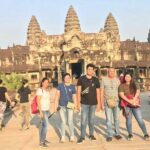
It also works well if you are traveling with a small group or family. Private means you can adjust stop priorities. If you need more time at Ta Prohm, you can often take it. If you’d rather pass quickly through a smaller temple, you can generally do that too.
If you are determined to spend hours reading every carving and tracing every inscription, you might find the stop lengths short. But if your goal is smart coverage with highlights and context, this plan fits well.
Should you book this Angkor Wat and Small Circle tuk tuk tour?
Yes—if your priority is timing, convenience, and a wider range of sites without the stress of self-planning. The two Angkor Wat visits alone are a strong reason to consider it, and the route’s mix of temples gives you more variety than a one-template itinerary.
I’d hold off if you only want a small number of stops or if you want a long deep-study pace at each site, because several stops are intentionally brief. Also, be ready to budget for the Angkor temple ticket and lunch.
FAQ
What time does the tour start in Siem Reap?
It starts at 7:00 am.
How long is the private tuk tuk tour?
It runs about 9 to 10 hours.
Is pickup included, and where does the tour end?
Pickup is offered, and the drop-off is back at your hotel or at any point you choose in the town centre of Siem Reap.
Is the Angkor temple ticket included in the price?
No. The Angkor ticket is not included and costs $37 USD per person for 1 day (valid for all temples).
Which Angkor Wat gates do you visit?
You enter Angkor Wat from the East Gate in the morning, and you also get the classic Angkor Wat views during the day, with a second visit in the late afternoon.
Does the tour include Ta Prohm and other main temples?
Yes. It includes Ta Prohm, plus stops at several Angkor Thom and surrounding temples such as Bayon and the South Gate.
Do you visit Wat Thmey?
Yes. Wat Thmey is included at the end, and admission is free.
What’s included in the tour price?
Private transportation, an English-speaking driver, and bottled water/free drinking water during the tour.
Is there free cancellation?
Yes, free cancellation is available up to 24 hours in advance for a full refund.