REVIEW · SIEM REAP
Angkor Wat Private Tour by Tuk-Tuk with English Speaking Driver
Book on Viator →Operated by About Cambodia Travel & Tours · Bookable on Viator
A tuk-tuk makes Angkor feel local. This tour has hotel pickup and a driver who waits at each temple, so you move at your pace. The one catch: the basic package is mostly transport, so if you want a story-heavy experience, make sure you choose the English guide option.
You get a classic Angkor route built around the big sights and the in-between ones, with stops that run from Angkor Wat to Angkor Thom and through Ta Prohm. Expect roughly 3 to 8 hours depending on which option you pick, and plan for the Angkor Pass to be an extra cost since entrance fees aren’t included.
If you’re lucky (and from what I saw, you often are), the driver can add little comfort touches—like water and chilled towels that help when the day gets hot or humid. One person even highlighted having a reliable guide-driver named Sophal.
In This Review
- Key things I’d watch for before you go
- How the private tuk-tuk setup changes your Angkor day
- Entering Angkor Wat without feeling herded
- Angkor Thom South Gate: the best warm-up into the city-temple maze
- Bayon Temple faces: why the smiles slow you down
- Baphuon Temple: short time, strong payoff
- Ta Nei and Ta Prohm: the quieter detour and the famous one
- Ta Nei: small, rarely visited, and worth your attention
- Ta Prohm: the monastery vibe under the roots
- Banteay Kdei and Prasat Kravan: temples you’ll remember for being different
- Banteay Kdei: concentric walls and garuda details
- Prasat Kravan: the smaller Hindu temple stop
- Sunrise and sunset options: which one matches your energy
- Price, tickets, and lunch: where value really shows up
- Driver vs. guide: your English experience depends on one booking choice
- Comfort and pacing: how to make the day feel manageable
- Who this Angkor Wat tuk-tuk tour is best for
- Should you book this Angkor Wat private tuk-tuk tour?
- FAQ
- Is hotel pickup and drop-off included?
- Are temple entrance tickets included in the price?
- How long is the tour?
- Does the tour include an English tour guide?
- What tour options are available?
- Is lunch included?
- Can I cancel and get a full refund?
Key things I’d watch for before you go

- Private pickup and drop-off from your hotel saves you the scramble that comes with shared tours
- Your tuk-tuk driver waits while you explore at each stop, which keeps the day flexible
- English-speaking driver is included, but an English-speaking tour guide is an option
- Angkor Pass isn’t included, and your driver helps you buy it at the park entrance
- You can choose sunrise, classic day, Banteay Srei, or sunset depending on your timing
- Lunch is on your own, usually simple local restaurants (roughly $3 to $10 per dish)
How the private tuk-tuk setup changes your Angkor day
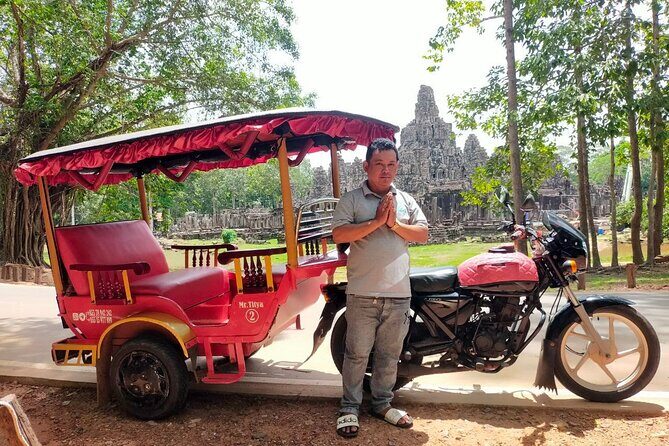
Angkor is big. A lot of people start the day excited and then realize the real challenge isn’t just seeing temples—it’s moving between them without losing half the morning to logistics. This is why the tuk-tuk format works so well for you.
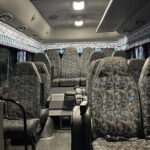
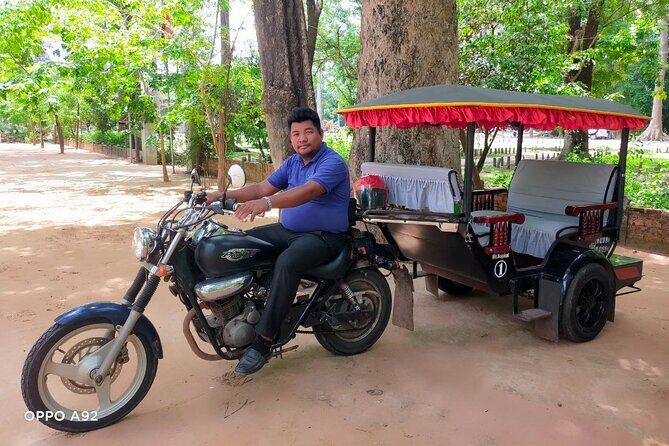
You’re picked up and dropped off at your hotel, and the transport stays private. That matters when you’re tired, want a slower photo stop, or need to duck out early because the heat is getting serious. The driver doesn’t rush you through the gates; they wait at every temple stop so you can move at a human pace.
Just don’t assume the driver is automatically acting as your guide. The experience clearly positions the driver as English-speaking (so communication is easier), while a licensed English-speaking tour guide only happens if you add it during booking. In plain terms: with the guide option, you get context. Without it, you’ll still see a lot, but you may lean more on signs, apps, or your own curiosity.
Other Angkor Wat temple tours we've reviewed in Siem Reap
Entering Angkor Wat without feeling herded
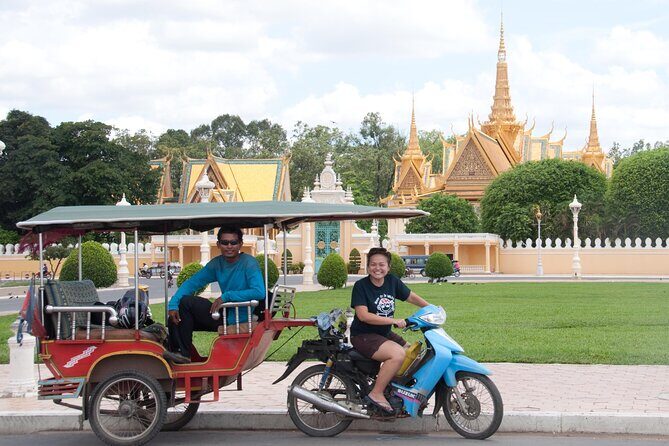
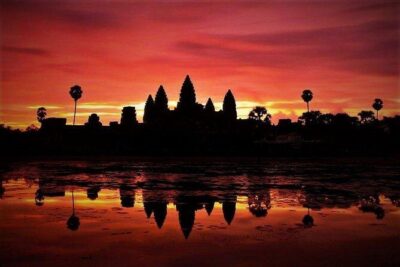
Angkor Wat is the obvious anchor of any Angkor visit—and here, it’s where the day starts, with about 3 hours set aside at the complex. That time window is useful. You’re not forced into a 45-minute sprint, and you can pace yourself through the main areas.
What to focus on when you’re there:
- The layout and order of the successive capitals, which is part of what makes Angkor feel intentionally designed rather than random ruins
- The way the site’s architecture reflects a high level of Khmer Empire social structure and ranking
- The sheer visual impact of Angkor Wat’s scale from different viewpoints as you walk the paths
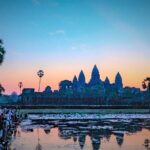
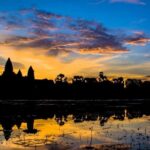
If you’re doing the sunrise or sunset option, keep your expectations realistic. You’ll still be outside at a key temple moment, but one review note you should respect is that a sunset option can function more like transport than a guided viewing session. If that matters to you, choose the option that includes the English tour guide.
Angkor Thom South Gate: the best warm-up into the city-temple maze
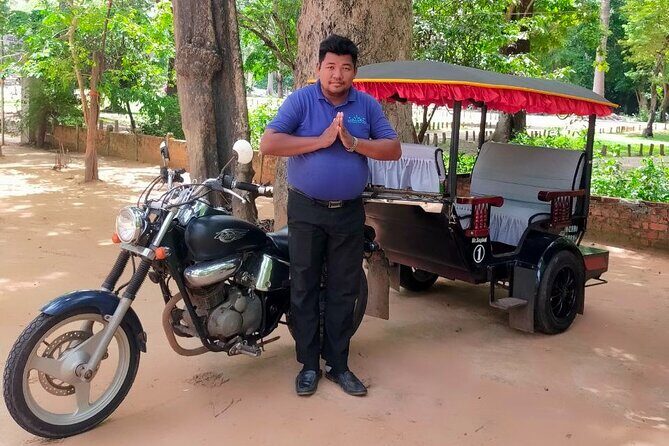
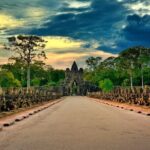
After Angkor Wat, your route moves into Angkor Thom, starting at the South Gate. This is about a 30-minute stop, and it’s a smart bridge between the big iconic site and the more narrative-heavy temples inside.
This gate gives you quick orientation. Angkor Thom literally means Great City, and it’s packed with famous features you may recognize from photos: Bayon Temple, the Terrace of the Elephants, the Terrace of the Leper King, and Baphoun Temple, among others.
Even if you don’t memorize every name on arrival, walking through the gate is valuable because it puts you into the mindset of Angkor Thom as an entire royal city zone—not just one temple. You start to understand why the later stops feel like you’re moving through a built world.
Bayon Temple faces: why the smiles slow you down
Bayon Temple is given about 1 hour, and that’s about right. Bayon’s signature is the multitude of serene, smiling stone faces of the Buddha—faces that are commonly associated with the look of King Jayavarman VII. Every tower has them, so you keep encountering the same expression from different angles.
This stop is where many people hit a calmer rhythm. You’ll find it harder to rush, because the faces are literally repeating across your path. And it’s not just decorative: it’s part of why the place feels psychologically present, not just visually impressive.
Also, Bayon sits in the Angkor Thom zone, so you’ll feel the flow of the whole city complex. That’s the benefit of a logical sequence: you don’t feel like you’re bouncing randomly between unrelated ruins.
Baphuon Temple: short time, strong payoff
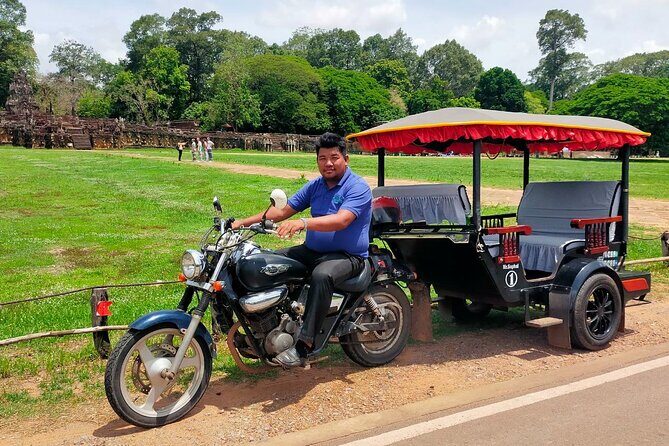
Baphuon gets about 30 minutes. That’s not long, but it’s enough if you treat it as a breather and a viewpoint stop between the heavier moments.
The temple is tied to Udayadityavarman II and connects to the Buddhist central temple tradition linked to Jayavarman VII. In other words: it’s a good place to reflect on the religious shifts you’ll see across Angkor—temples that were built for different faiths over time, sometimes influencing how later structures were used.
If you’re trying to maximize your day, I’d spend your time here on photos and overall impressions rather than trying to master every architectural detail. Thirty minutes flies by, but you’ll still walk away with a strong sense of place.
Other tuk-tuk tours we've reviewed in Siem Reap


Ta Nei and Ta Prohm: the quieter detour and the famous one
You get two very different experiences back-to-back: Ta Nei and Ta Prohm.
Ta Nei: small, rarely visited, and worth your attention
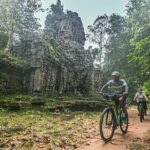
Ta Nei is described as very small and rarely visited, with the idea that the lack of other visitors is one of the reasons to go. That’s exactly why it works for you if you like quieter moments. You can slow down, take your time, and actually look at how the temple sits in its setting.
This stop is also ideal when you’ve had enough crowds. You get variety, and the contrast makes the whole day feel less repetitive.
Ta Prohm: the monastery vibe under the roots
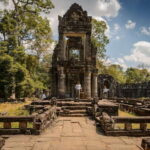
Ta Prohm gets about 1 hour. It’s tied to Jayavarman VII, originally known as Rajavihara, dedicated as a Buddhist monastery. It’s famous for how nature and stone share the same space, and it’s also connected to the mother of Jayavarman VII.
Here’s a practical way to enjoy Ta Prohm: don’t just take the standard photos. Walk deeper into the areas that feel darker or more shaded, because Ta Prohm’s mood changes as you move. When you’re ready to reset, your driver waiting at the temple keeps it stress-free—you don’t have to hunt them down or worry about losing the rest of your schedule.
Banteay Kdei and Prasat Kravan: temples you’ll remember for being different
By the time you hit Banteay Kdei and Prasat Kravan, your day should start feeling more like a temple circuit than a single checklist.
Banteay Kdei: concentric walls and garuda details
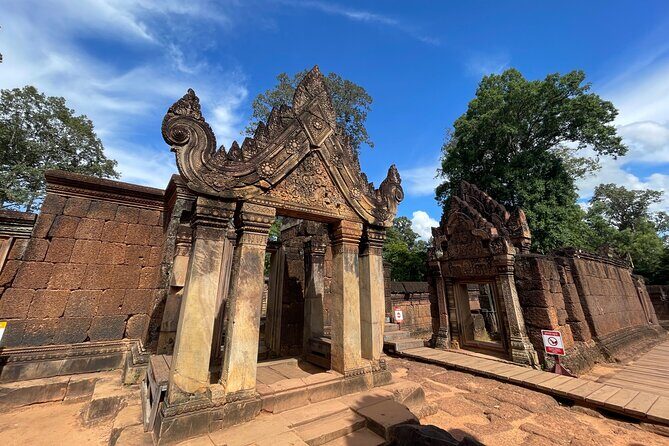
Banteay Kdei is a massive Buddhist monastery from the latter part of the 12th century. It’s surrounded by four concentric walls, and each of its four entrances is decorated with garudas holding one of Jaya-varman’s symbols (as described in the temple information you’ll get on-site).
This is the kind of temple that pays off when you’re not rushing. Even if you only capture a few photos, walking around the walls helps you feel the scale and planning.
Prasat Kravan: the smaller Hindu temple stop
Prasat Kravan is about 30 minutes and is a 10th-century Hindu temple dedicated to Vishnu. It’s also described as relatively small compared to other temples in the park.
That size difference matters. It gives your body a break while still adding variety. If you’ve been in huge spaces all day, a smaller temple can feel like a satisfying reset—less walking, more focused looking.
Sunrise and sunset options: which one matches your energy
This tour is offered in different versions: Angkor Wat Sunrise by Tuk-Tuk, Classic Angkor Wat, Angkor Temples & Banteay Srei, and Sunset at Angkor Wat.
Here’s how to choose without overthinking it:
- Pick sunrise if you want that iconic moment when the complex feels dramatic and fresh.
- Choose sunset if you want a slower end to the day, but understand you might be dealing with a shorter, more transport-focused experience unless you selected an English guide.
- Go for classic full day if you want the most complete run through major highlights.
- Add Banteay Srei if you’re excited by the pink sandstone temple concept—but note that one person felt the Banteay Srei add-on wasn’t worth the extra cost.
If you’re the type who gets cranky from early mornings, skip sunrise. If you’re the type who loves quiet and atmosphere, sunrise can be exactly the right move.
Price, tickets, and lunch: where value really shows up
The price is listed at $13.50 per person, and that’s the headline number. But the real value comes from understanding what’s included and what isn’t.
What you get:
- Roundtrip pickup and drop-off at your hotel via private tuk-tuk
- A private tuk-tuk charter from Siem Reap
- An English-speaking driver
- A wait-at-each-temple experience style (so you’re not constantly re-assembling)
What costs extra:
- All sightseeing tickets, including the Angkor Pass
- Gratuities for your driver
- Lunch (you choose local restaurants)
Your driver assists with purchasing the Angkor Pass at the park entrance before you start. That’s helpful, because it removes one more task from your brain while you’re trying to focus on the temples.
Lunch is on your own, and the price range you can expect is about $3–$10 per dish, with both vegetarian and non-vegetarian options. This matters if you’re trying to control your budget. You’ll likely eat somewhere practical and local rather than a pre-set tourist meal.
Driver vs. guide: your English experience depends on one booking choice
The tour includes an English-speaking driver, and that can be plenty if:
- you already have an idea of what you’re seeing, and
- you want smooth logistics more than deep explanations
But there’s a clear path to a different experience: add the option for an official English-speaking licensed tour guide. That changes your day in a big way because you’ll get history and context at each stop, not just navigation.
One review specifically said their driver was kind and did a good job driving between temples, but also reminded that this service is not automatically a tour guide. Another review highlighted a guide/driver named Sophal who was helpful and knowledgeable, plus a smooth, safe approach and added comfort items.
So my advice to you is simple: if you care about understanding why each temple looks the way it does, pay for the English guide option. If you care more about flexibility and just want to be in the right places at the right times, the English-speaking driver may be enough.
Comfort and pacing: how to make the day feel manageable
Angkor days can get hot fast, and the walking adds up even when your route is efficient. The good news is that your day is built for stops, not nonstop sprinting. Your tuk-tuk waits at each temple, which reduces stress and keeps you from feeling like you’re constantly rushing back to a vehicle.
Comfort details matter. In at least one account, the driver brought water and chilled towels, which sounds small until you’re standing in the sun and your brain suddenly wants to be anywhere else. That kind of practical touch can make the difference between a day you enjoy and a day you just survive.
Because the tour is private, you also have more room to adjust timing. If a temple is crowded, you can spend less time there and move on. If you want to linger at Bayon’s face towers a little longer, you can.
Who this Angkor Wat tuk-tuk tour is best for
This is a strong pick if you:
- want private transport without needing to drive yourself
- value flexibility and fewer hassles between temple stops
- prefer an English-speaking driver who can handle basic communication
- want a route that covers the big hits plus some less-visited temples like Ta Nei
It’s especially useful for couples, solo travelers, and small groups who want control over pacing. If you’re traveling with kids, the private waiting setup can reduce whining that comes from constant boarding and re-boarding.
If you’re a hardcore history person who wants nonstop interpretation, make sure you choose the English guide option. Without it, you’ll still see the temples, but the storytelling won’t be built in.
Should you book this Angkor Wat private tuk-tuk tour?
If you want Angkor in a way that feels practical and doable, I’d book it—especially the private tuk-tuk plus English-speaking driver setup. The value is strongest because it handles the hardest part of the day: getting between temples smoothly while you explore at your pace.
My only hesitation is the one you should confirm before paying: whether you truly want a guided experience or you’re happy with transport-focused service. If you want explanations, choose the English guide option. If you want flexibility and logistics more than narration, the driver-only version can still work.
Either way, you’ll spend your day in the right places, without losing hours to logistics—exactly what you want when you’re going to Angkor.
FAQ
Is hotel pickup and drop-off included?
Yes. You get roundtrip pickup and drop-off at your hotel by private tuk-tuk.
Are temple entrance tickets included in the price?
No. Entrance fees are not included. You’ll need the Angkor Pass, and your tuk-tuk driver will assist you in purchasing it at the entrance of Angkor Park.
How long is the tour?
It’s listed as about 3 to 8 hours, depending on the option you choose and how long you spend at each stop.
Does the tour include an English tour guide?
A private tuk-tuk with an English-speaking driver is included. An official English-speaking licensed tour guide is included only if you select that add-on during booking.
What tour options are available?
You can choose Angkor Wat Sunrise by Tuk-Tuk, a classic Angkor Wat tour by tuk-tuk, Angkor Temples & Banteay Srei, or a Sunset at Angkor Wat tour by tuk-tuk.
Is lunch included?
Lunch isn’t included. You can eat at local restaurants near the temples, and typical dish prices are listed at about $3–$10.
Can I cancel and get a full refund?
Yes. Cancellation is free up to 24 hours in advance for a full refund. If you cancel less than 24 hours before the experience starts, there’s no refund.