REVIEW · SIEM REAP
Angkor Wat Sunrise Tour
Book on Viator →Operated by Easy Angkor Trip · Bookable on Viator
A pre-dawn start can feel like a small mission. The payoff is Angkor Wat at sunrise, plus a tight loop through major Angkor sights like Bayon and Ta Prohm, all with a guide to help you read what you’re seeing. It’s also built for convenience: hotel pickup and drop-off, cold water, and an air-conditioned ride.
I especially like that you get a professional English-speaking guide and a sensible temple route, so the day doesn’t turn into wandering and guessing. I also like the value angle here: the tour includes transport and guidance, and only the Angkor Temple Pass is the big extra you must budget for.
One consideration: you’re in a long, early schedule, with a lot of walking in Cambodia’s humidity. If you’re booking the sunrise option, the start time means you’ll want to plan your energy and hydration carefully.
In This Review
- Key points I’d bank on before you go
- Sunrise at Angkor Wat: why this tour model works
- Price and what you actually pay for (the $37 temple pass)
- Pickup, AC vehicle, and the morning comfort details
- The itinerary flow: what each stop gives you
- Stop 1: Angkor Wat (up to 2 hours)
- Stop 2: Bayon Temple (about 2 hours, marked free in itinerary)
- Stop 3: Chau Say Tevoda (about 30 minutes)
- Stop 4: Ta Prohm (about 2 hours, marked free in itinerary)
- Stop 5: Ta Nei (about 35 minutes, shorter temple reset)
- Stop 6: South Gate of Angkor Thom (about 35 minutes)
- The guide makes the difference (Mr K is a recurring name)
- What a 6 to 8 hour temple day feels like in real life
- Comfort and packing tips for Angkor sunrise tours
- Who this tour fits best
- Should you book this Angkor Wat sunrise tour?
- FAQ
- FAQ
- What is the price for the Angkor Wat sunrise tour?
- How long is the tour?
- Does the tour include sunrise?
- Are hotel pickup and drop-off included?
- What’s included in the tour besides the guide?
- Do I need an Angkor temple pass?
- Is there admission for every temple included?
- Is this a private tour?
- What is the cancellation policy?
Key points I’d bank on before you go
- Sunrise timing is the whole point, with an early departure from your hotel around 4:30am.
- Hotel pickup and drop-off plus an air-conditioned vehicle keeps the morning from feeling chaotic.
- English-speaking guidance helps you connect Angkor Wat, Bayon, Ta Prohm, and the smaller temples into one story.
- Some stops list different admission expectations, but the Angkor Temple Pass ($37) is the main thing to budget.
- Ta Prohm is a must-stop if you enjoy pop-culture history, since Tomb Raider was filmed there.
- A guide can change your photos and comfort, and guides like Mr Kosorl Oun (often called Mr K) are praised for timing and adaptability.
Sunrise at Angkor Wat: why this tour model works
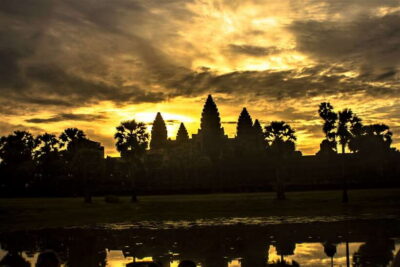
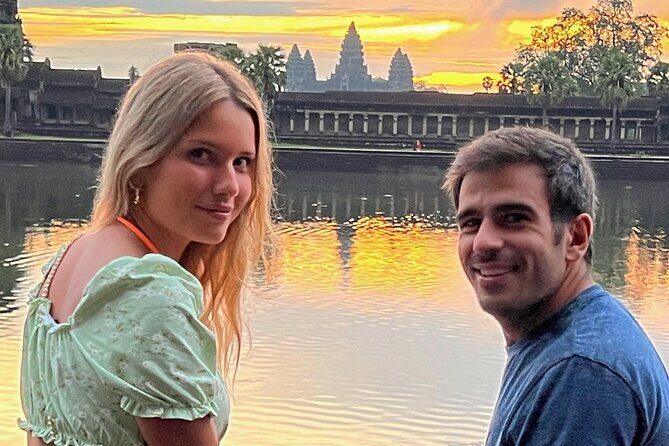
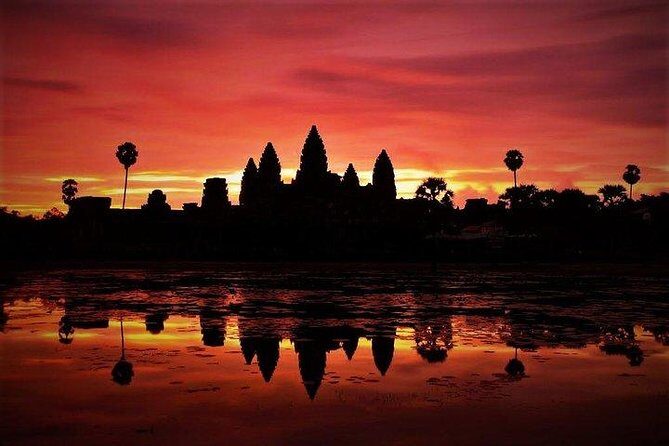
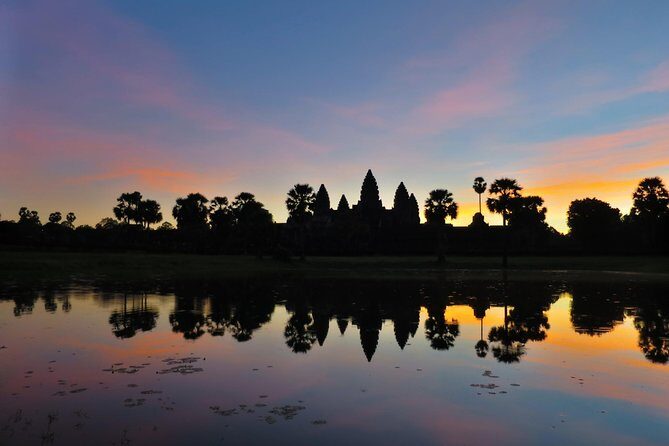
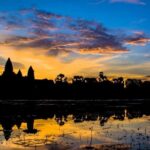
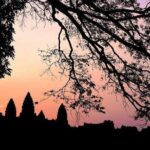
Angkor Wat is the reason most people plan Siem Reap. The sunrise version adds a useful advantage: light and atmosphere do part of the storytelling for you. When you arrive early, you’re less likely to feel like you’re fighting the crowd flow. You also get a calmer first look at the temple’s scale, before the day gets loud.
This tour is built around that idea. You leave very early (the sunrise option departs around 4:30am from your hotel) and you start with Angkor Wat first, when the grounds are still in that soft-morning rhythm. From there, the day shifts from the iconic big moment to several other major sites, so you don’t waste hours later trying to “catch up.”
Another smart feature is the presence of an English-speaking guide. Angkor isn’t just impressive rocks and carvings; it’s layered Khmer-era religion, royal politics, and later conversions. A good guide helps you understand why Bayon’s faces look the way they do, why Ta Prohm feels half-forgotten, and what you’re walking past beyond the obvious photo angles.
Other Angkor Wat sunrise tours we've reviewed in Siem Reap
Price and what you actually pay for (the $37 temple pass)
The tour price is listed as $50 per person, lasting roughly 6 to 8 hours. That price covers the practical stuff: pickup and drop-off, an air-conditioned vehicle, a professional guide, and cold drinking water.
The main extra is the Angkor Temple Pass, listed as $37 per person and not included. That’s the number you should treat as your “must budget” entry cost for the day.
Here’s how I’d think about value: this is a guided circuit with transport. In Angkor, time is expensive. Without a route and guide, it’s easy to lose hours to entrance lines, getting oriented, or spending too long at one site and rushing the rest. Paying for the guided structure is often what turns Angkor from a photo scramble into an actual understanding of what you’re seeing.
Also note: in the itinerary, several stops show admission ticket not included while others are marked admission ticket free. The key takeaway from your planning perspective is that the temple pass is the anchor cost. Don’t assume you’ll only pay for one temple.
Pickup, AC vehicle, and the morning comfort details
This tour includes pick-up and drop-off plus an air-conditioned vehicle. That matters more than it sounds. The sunrise option starts before the heat builds, but you’ll still be out for hours, and the later temple hours get warmer fast.
Cold drinking water is included, and a towel is mentioned in the tour description too. Even with those basics, I’d still bring your own small comfort items, because sunrise tours can turn into a long day faster than you expect.
You’ll also be traveling with only your group (it’s described as private activity where only your group participates). That tends to make timing smoother. You’re less likely to be stuck waiting for a slow-moving cluster, and the guide can keep the pace realistic for your group.
The itinerary flow: what each stop gives you
This route isn’t random. It’s a mix of grand monument, spiritual centerpiece, big carved faces, then iconic “ruins with personality,” and finally a couple of smaller temples that add variety.
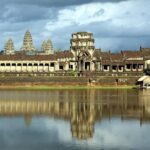
Stop 1: Angkor Wat (up to 2 hours)
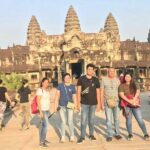
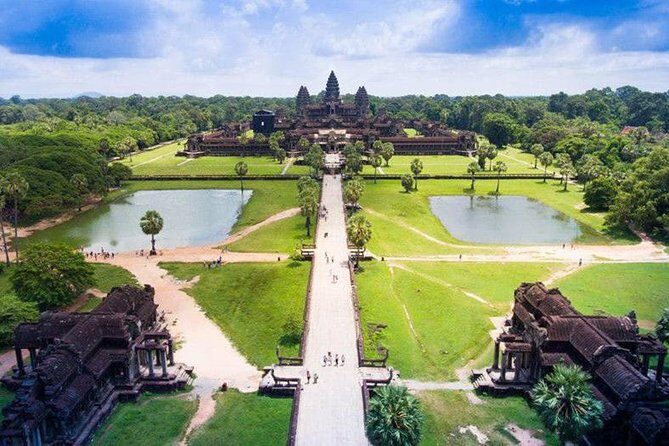
Angkor Wat is the heavyweight: a Khmer temple from the 12th century (built between 1113 and 1150) under Suryavarman II, and it sits about 65 meters high. The big idea is scale. When you first enter the area, you see the moat and the geometry that makes the complex feel planned and ceremonial.
For sunrise tours, this is where the morning “turns on.” The early light changes how stone textures read, and it helps you notice details like the temple’s symmetry and the way pathways guide your movement. With a guide, you’ll also get the history and context that helps the carvings stop being random decoration.
Practical note: admission for Angkor Wat is not included in the tour price, and you’ll need the temple pass planned for your day.
Other Angkor Wat temple tours we've reviewed in Siem Reap
Stop 2: Bayon Temple (about 2 hours, marked free in itinerary)
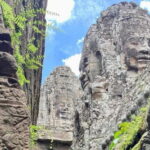
After Angkor Wat, the route shifts to Bayon in Angkor Thom. Bayon is tied to the late 12th/early 13th century, associated with Jayavarman VII. The most talked-about feature is the 54 towers representing provinces in the Khmer empire, and the iconic faces you see across the complex.
This stop is where the guide really earns the day. Without context, you can stare at faces and feel like you’re only seeing a repeating motif. With explanations, you start to understand how the faces connect to royal power and religious expression at the time.
Stop 3: Chau Say Tevoda (about 30 minutes)
Chau Say Tevoda is a smaller, more niche temple stop east of Angkor Thom. It’s described as a Hindu temple in the Angkor Wat period and it sits across the Victory Way from Thommanon. Because it’s shorter and less famous, it often feels like a breath between bigger sites.
This is a good moment to slow down and look at what changes from temple to temple. You can see how different religious influences and architectural choices show up in layout and ornamentation.
Admission is marked not included for this stop in the itinerary, so again, plan around the temple pass rather than treating each temple like an isolated ticket.
Stop 4: Ta Prohm (about 2 hours, marked free in itinerary)
Ta Prohm is the one that many people already know from photos. It’s built in the late 12th century, dedicated in 1186 to Jayavarman VII’s mother. Over time, its background shifted, with Buddhist galleries later appearing after earlier Hindu dedication.
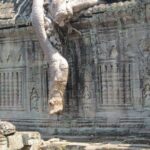
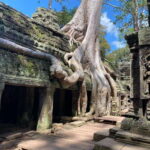
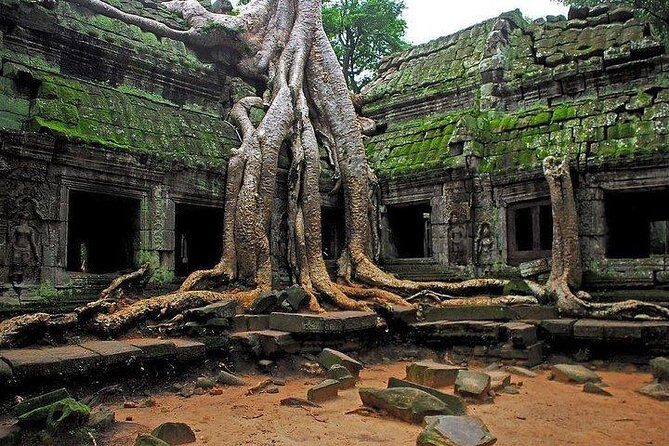
The famous detail is that Ta Prohm is the temple where Tomb Raider was filmed. That pop-culture link is fun, but the real value is how Ta Prohm looks in person: trees and roots interact with the stone in a way that feels almost chaotic, even though the temple’s layout is still doing its job.
I like Ta Prohm on guided days because you don’t just chase a single “movie moment.” You get to understand which parts are original, which parts were restored, and how the temple’s survival shaped its look.
Stop 5: Ta Nei (about 35 minutes, shorter temple reset)
Ta Nei is a late 12th-century stone temple near the northwest corner of the East Baray, dedicated to the Buddha. It’s shorter and quieter than the major hitters, which is a good thing after a full morning.
Think of this stop as variety. You’ll get another architectural snapshot without repeating the same big iconography you’ve already seen. If you’re the type who loves small details—materials, carving style, the feel of a less crowded path—this is a welcome change.
Admission is marked not included in the itinerary, so keep your temple pass planning consistent.
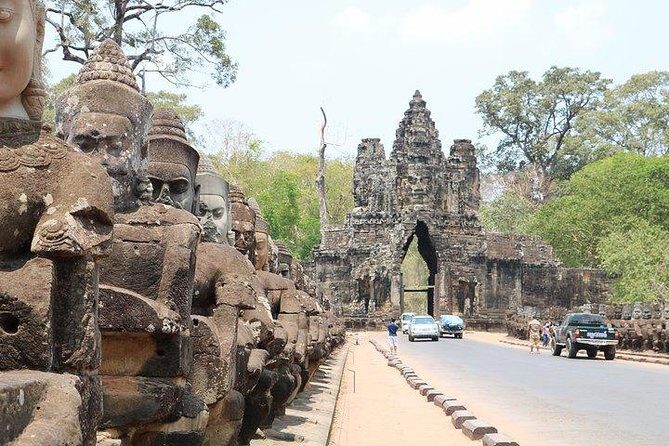
Stop 6: South Gate of Angkor Thom (about 35 minutes)
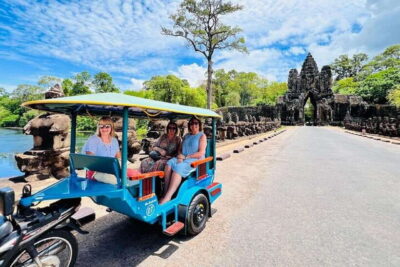
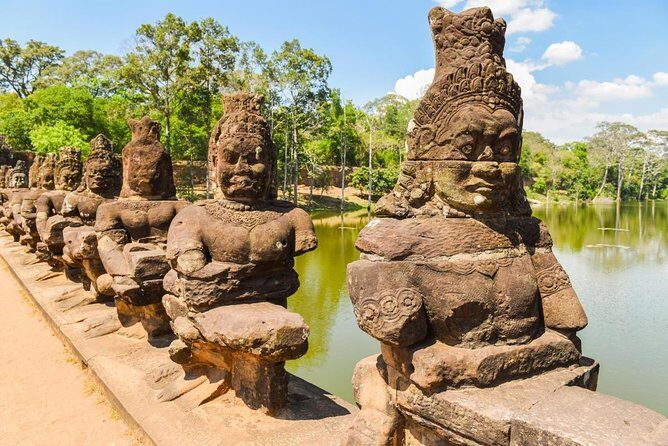
This portion focuses on the South Gate of Angkor Thom, described as the best-preserved and most famous gate. The standout feature is the impressive causeway lined with smiling faces.
If you’re moving through Angkor Thom for the first time, the gates help you understand the city’s “ring” structure and how the approach routes frame the experience. It’s a strong photo-and-orientation stop: you see where you’ve been and where you’re going.
Admission is marked free for this stop in the itinerary.
The guide makes the difference (Mr K is a recurring name)
In this kind of day, timing and explanation are everything. A sunrise tour can feel repetitive if you only get location names and not context.
In the feedback you’ve been given, one guide name comes up often: Mr Kosorl Oun, usually called Mr K. The recurring praise is about knowing when and where to be for the best views, sharing history and culture in a way that’s fun, and finding photo angles that aren’t just the most obvious ones.
The other reason this matters is human logistics. Sunrise mornings are early, temples are hot, and sometimes you’re traveling with kids or someone who doesn’t feel great. A guide who can adapt your pace and still keep the route efficient can turn a stressful day into something smooth. That kind of flexibility is harder to find if you’re doing everything on your own.
Also, one practical bonus noted in the feedback: some guides will share helpful local tips, including suggestions for good street food. That’s not part of the temple circuit itself, but it’s the kind of add-on that makes your Siem Reap time feel more complete.
What a 6 to 8 hour temple day feels like in real life
Even with pickup and AC, you’re still outdoors most of the time. Sunrise helps because the earliest hours are cooler, but the day will heat up, especially during the mid-morning temple hours.
Here’s what you should plan for based on the tour’s structure:
- Start early for sunrise. Expect to be awake and moving well before sunrise.
- You’ll be walking between temples, with time spent mostly on-site (often around 2 hours for major stops).
- You’ll be on your feet for multiple blocks, not just quick photo stops.
If you’re going with children or someone who tires easily, this kind of tour can still work, but you’ll want realistic pacing. Reviews mention that guides like Mr K have been accommodating and adaptable when families hit heat or fatigue.
Comfort and packing tips for Angkor sunrise tours
You’re getting cold water and likely a towel, but you’ll still want to show up prepared. I’d think in layers, plus protection from sun and humidity.
Practical ideas:
- Bring a hat and sunscreen. Early sunrise sun can still be intense once the day ramps up.
- Wear breathable shoes you don’t mind getting dusty. Temple walkways can be uneven and sometimes slick.
- Have a small backup plan for kids. The tour is structured, but children may need breaks and slower pacing.
- Bring a light cover-up. Temple sites often involve more standing and waiting than you expect.
One more comfort factor: camera time. This tour seems designed for good photo angles, but if you want photos without stress, set expectations before you go. You’ll probably want a few planned shots at major stops and fewer stops for random wandering.
Who this tour fits best
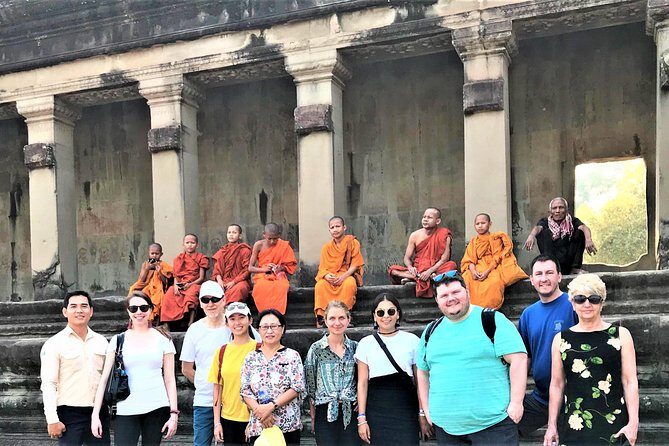
This is a strong fit if you:
- Want the classic Angkor Wat first moment with sunrise timing
- Prefer guided context over self-guided guesswork
- Like a structured route that covers major sights in one day
- Appreciate private group pacing rather than joining a larger bus-style scramble
It’s also a good option for families, as long as you can handle the early start and long walking day. If you’re traveling with mobility concerns, you’ll want to consider whether temple walking for several hours is workable for your group, since the itinerary includes multiple sites and open courtyards.
Should you book this Angkor Wat sunrise tour?
Yes, I’d book it if your top goal is seeing Angkor Wat at sunrise and getting a guided, efficient route through Angkor Thom and Ta Prohm. The combination of hotel pickup, English-speaking guidance, cold water, and a tight selection of temples makes it feel like a day that respects your time.
I’d rethink it if you dislike early mornings or you know you’ll struggle with heat and extended walking. Sunrise tours can be worth it, but only if you’re ready for the physical rhythm of temple hopping.
If you do book, budget the $37 Angkor Temple Pass in advance, and treat the temple pass as your main cost. Then focus on comfort: good shoes, sun protection, and patience for a day that starts before you’d normally start.
FAQ
FAQ
What is the price for the Angkor Wat sunrise tour?
The tour is listed at $50.00 per person.
How long is the tour?
It runs about 6 to 8 hours.
Does the tour include sunrise?
Sunrise is optional, and the sunrise option departs from the hotel around 4:30am to witness sunrise.
Are hotel pickup and drop-off included?
Yes, pick-up and drop-off are included.
What’s included in the tour besides the guide?
You get an air-conditioned vehicle, an English-speaking tour guide, and cold drinking water. A towel is also mentioned in the tour description.
Do I need an Angkor temple pass?
Yes. An Angkor Temple Pass is listed at $37.00 per person and is not included in the tour price.
Is there admission for every temple included?
The itinerary notes admission ticket not included for some stops, while other stops are marked free. The key fee you should plan for is the Angkor Temple Pass.
Is this a private tour?
It’s described as a private tour/activity, with only your group participating.
What is the cancellation policy?
Free cancellation is available up to 24 hours in advance for a full refund. If you cancel less than 24 hours before the experience’s start time, the amount paid is not refunded.