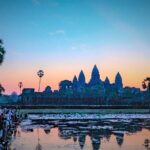
Waking up for Angkor at dawn pays off. This private tour starts at 4:30am and gets you into sunrise light at Angkor Wat, where the dawn colors can turn the moat into a mirror. I also like that the operator handles air-conditioned pickup from your hotel in Siem Reap and includes bottled cold water to keep the early start bearable.
Private doesn’t mean flawless. One risk with any sunrise schedule is that your experience depends on exact timing, and if the driver runs late you can lose the best photo spots before crowds thicken. In one case, pickup was about half an hour late and the guide’s English was only okay, so I’d set expectations early and double-check your pick-up details.
In This Review
- Quick hits before you go
- Sunrise Angkor Wat at 4:30am: the real reason this tour exists
- Private transport in Siem Reap: comfort that actually helps
- The packed Angkor route: Wat, Thom South Gate, Bayon, Ta Prohm
- Angkor Wat: sunrise color and the moat reflection mood
- Angkor Thom South Gate: the gate that frames the whole city
- Bayon Temple: the 49 towers and 200+ faces effect
- Ta Prohm: the jungle-root atmosphere in a short visit
- Don’t skip the viewpoint add-ons: Wat Damrei Sor and Phnom Banan
- Orange farm break and Cambodian grape wine: the countryside palate reset
- Bamboo train ride: a must-confirm item
- Price and value: $49 private, but entrance fees are extra
- Timing reality check: why 4:30am means you should plan for speed
- What to expect from the guide and language factor
- Who this tour suits best
- Should you book this Angkor Wat sunrise private tour?
- FAQ
- What time does the sunrise tour start?
- How long is the tour?
- Is this tour private?
- How much does it cost?
- What’s included in the price?
- What’s not included?
- Do I need to pay temple entrance fees separately?
- What size groups can book this private tour?
- Is free cancellation available?
Quick hits before you go
- 4:30am sunrise start with time carved out specifically for Angkor Wat
- Private format (1 to 15 people max) with hotel pick-up/drop-off and AC transport
- Major Angkor anchors: Angkor Wat, Angkor Thom South Gate, Bayon, and Ta Prohm
- Panoramic viewpoints planned at Wat Damrei Sor and Phnom Banan
- Orange farm + Cambodian grape wine tasting for a countryside break from temple stone
- Entrance fees not included, so budget for tickets separately
Sunrise Angkor Wat at 4:30am: the real reason this tour exists
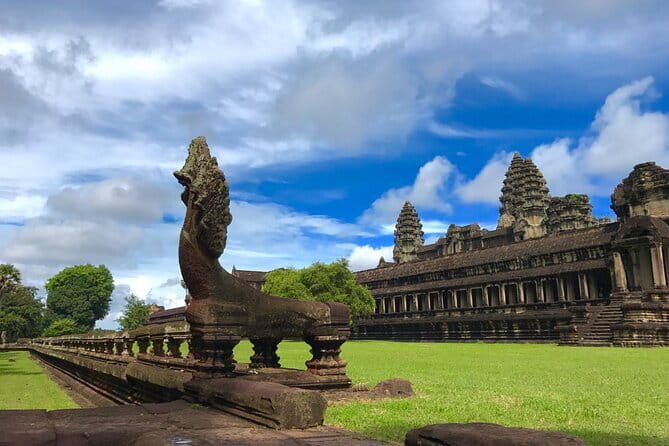
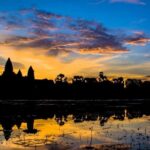
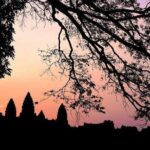
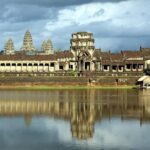
This is built around one big idea: catch Angkor Wat when the world is quiet. When you arrive at dawn, the whole complex feels different than midday. Instead of heat, you get cool air, softer light, and that chance for strong reflections around the temple grounds.
The schedule leaves you about two hours at Angkor Wat during sunrise time. That matters because sunrise photos take time—waiting for the color to change, watching light slide across carvings, and finding a spot that matches what you want to shoot or see. If you’re the type who enjoys small details like textures on stone and light on water, this timing is the payoff.
Other Angkor Wat sunrise tours we've reviewed in Siem Reap
Private transport in Siem Reap: comfort that actually helps
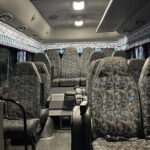
A sunrise tour lives or dies by logistics. The fact that the tour includes hotel pick-up and drop-off, plus an air-conditioned vehicle, is not a small thing. Sitting in AC on the way out helps you arrive less frazzled, and a cold bottle of water is a practical touch for early-morning dehydration.
You’re also not sharing the ride with strangers. It’s private, with a maximum group size of 15 people. That size is still large enough for a bit of variety in pace, but it’s much easier to manage than a big bus crowd if you want a slower walk or a quick question mid-stop.
If you want one safety net, keep your phone ready right before 4:30am. Sunrise tours have zero margin for error. If pick-up slips, you won’t magically regain that lost time inside Angkor.
The packed Angkor route: Wat, Thom South Gate, Bayon, Ta Prohm
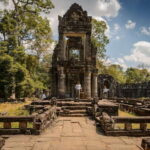
Your temple run is classic Angkor, but it’s arranged so you don’t just stamp through big names. After sunrise at Angkor Wat, you move to Angkor Thom, then you hit the two faces-temples that most people remember: Bayon and Ta Prohm.
Here’s what each stop does for your day.
Angkor Wat: sunrise color and the moat reflection mood
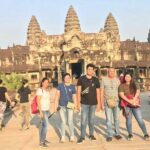
You get two hours here, and that’s long enough to do more than the one photo. Sunrise at Angkor Wat is famous because the light changes quickly. As the sky brightens, shadows shift across towers and corridors, and the reflection effect (when conditions cooperate) is often strongest early on.
Tip: go with a simple plan. Decide what you want first—wide views, close-up carvings, or the reflection. Trying to do everything at once usually makes you rush, and you’ll miss the moment you came for.
Angkor Thom South Gate: the gate that frames the whole city
Next is the Angkor Thom South Gate, where you’ll see the iconic 108 Deva and Asura figures and the protective wall concept behind the gate design. This is the kind of stop that helps you understand Angkor Thom not just as ruins, but as an organized city space.
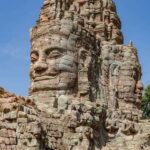
The South Gate also gives you a feel for the entrance imagery: four-faced Buddha figures are part of what makes this gate so visually striking. You get about one hour, which is enough time to look, orient yourself, and then move on without feeling stuck in one spot.
Other Angkor Wat temple tours we've reviewed in Siem Reap
Bayon Temple: the 49 towers and 200+ faces effect
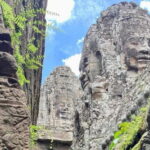
Then comes Bayon, often described as the mountain of victory. You’ll spend about one hour here, and the main event is the sea of faces across 49 towers. This is one of those temples where your brain keeps recalculating what you’re seeing. From different angles, the expression changes and the faces seem to watch you back.
I like Bayon because it’s not just a single view. You can walk a little, change your perspective, and get a different feeling each time. If you’re tired from the early start, this is still a worthwhile stop because the structure does the work for you.
Ta Prohm: the jungle-root atmosphere in a short visit
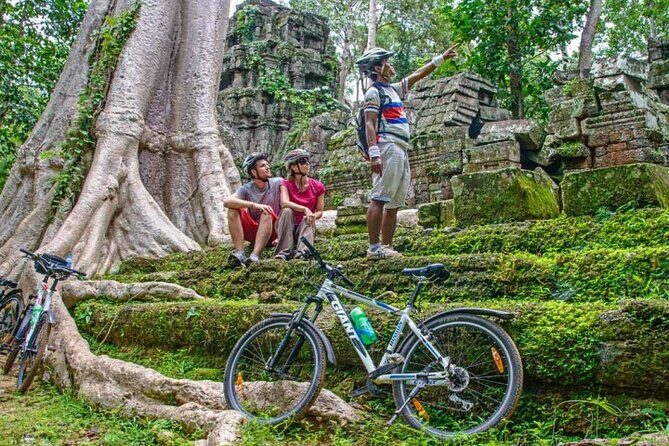
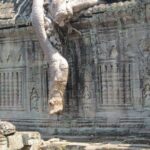
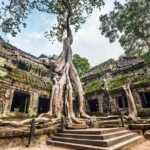
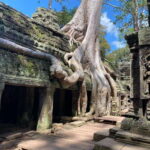
Ta Prohm is the temple people know for the way trees and roots interact with stone. You’ll spend about one hour, which is exactly what you need for Ta Prohm: long enough to notice how the roots frame doorways and collapse sections of the structure, but not so long that you melt in the heat.
This stop can be visually intense. I suggest slowing down for five minutes and picking a single area—like an entrance or a collapsed wall—and letting your eyes adjust. You’ll understand the “jungle temple” feel faster than if you keep racing for the next photo angle.
Don’t skip the viewpoint add-ons: Wat Damrei Sor and Phnom Banan
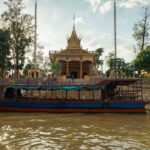
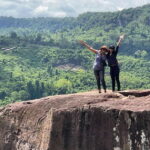
Two additional stops are listed for panoramic views: Wat Damrei Sor and Phnom Banan. These are the kind of stops that balance the morning’s dense temple stone with wider sightlines.
From a value standpoint, viewpoints are smart because they reduce the “temple overload” feeling. After Angkor Wat, Angkor Thom, Bayon, and Ta Prohm, you might think you’ve already seen everything. Then you hit a hilltop or pagoda view and suddenly your brain gets a breather: you see space, distance, and the surrounding countryside context.
Time-wise, your overall day is about 6 hours, so these viewpoint stops are likely short but meaningful. If you like photo breaks with a view—plus a chance to stretch—this is where your morning pays you back.
Orange farm break and Cambodian grape wine: the countryside palate reset
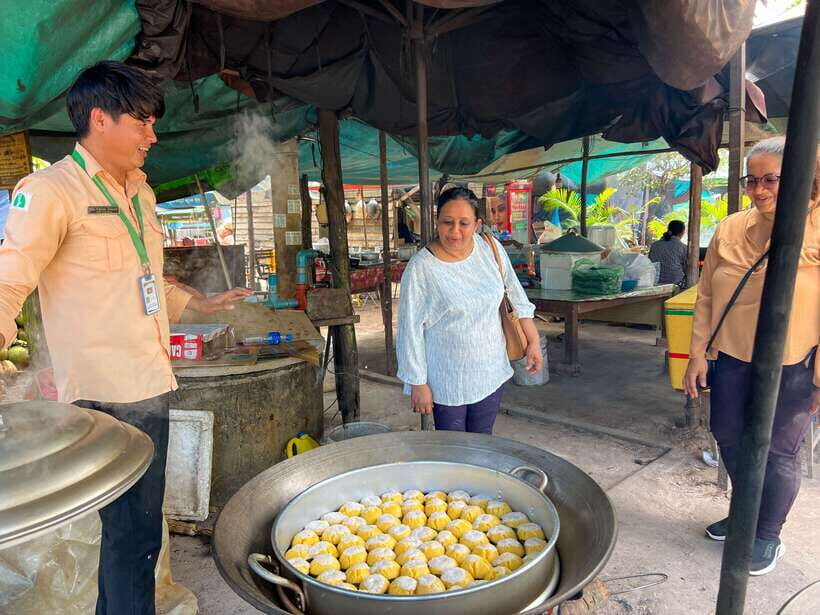
One highlight in the plan is a stop at an orange farm, followed by tasting locally-produced Cambodian grape wine. This is a nice change of pace because it breaks up the temple schedule with something grounded in daily rural life.
I like these “taste stops” when they’re simple and specific—orange farms aren’t just a random detour. They give you a human scale moment: what people grow, how they work, and what they make from local ingredients.
A quick practical note: wine tasting often means you’ll feel the day more than you expect. If you’re sensitive to alcohol or you want to stay fully alert for the road afterward, go slow during the tasting portion and stick to water between sips.
Bamboo train ride: a must-confirm item
The tour overview mentions a bamboo train ride. That’s the kind of experience people remember because it’s active and quirky in a good way.
Still, because the provided stop list focuses heavily on Angkor temple sites and viewpoint/pagoda visits, I recommend confirming how the bamboo train fits into your specific day schedule. Ask the operator which part of the day it’s slotted for, and whether it’s guaranteed in your booking.
If bamboo train is a big reason you chose this tour, checking that up front is worth five minutes of messaging.
Price and value: $49 private, but entrance fees are extra
At $49.00 per person, this is positioned as a budget-friendly private way to see the main Angkor hits early. The value comes from two places: you’re paying for private guiding and transport, not just a ticket to a single site.
What’s included:
- Hotel pick-up/drop-off
- Licensed tour guide
- Air-conditioned vehicle
- Cold drinking water
What’s not included:
- Entrance fees
- Meals
- Other personal expenses
That means your final cost depends on how you handle tickets and food. Entrance fees can swing the total budget more than you might expect, especially if you’re visiting multiple major temple sites in a single morning. If you want clean cost control, figure out temple ticket totals before you go and plan to pay them separately.
For many people, the “private at sunrise” part is worth extra money because it saves time and coordination stress. For others, the cost is only worth it if the guide is strong and the timing holds. Based on what I’ve seen with sunrise tours in general, the schedule’s reliability matters as much as the price tag.
Timing reality check: why 4:30am means you should plan for speed
Your start time is 4:30am, and the total is about 6 hours. That’s not long for multiple major sights plus viewpoint stops plus the countryside element. So the day is efficient by design.
This efficiency can feel great when everything runs on time. It can feel disappointing if you arrive late and lose prime sunrise positioning. One thing to do before booking: confirm your exact pick-up window, ask for the driver name or contact method, and be ready to leave early.
Also, have a simple packing setup. Bring what you’ll want for temple walking and sunrise light (sun protection, water, and a layer for cool early hours). If your plan includes wine tasting, leave room for that too—don’t pack heavy items that slow you down.
What to expect from the guide and language factor
The tour includes an English-speaking guide and the guide’s job is to connect what you’re seeing with the stories behind it. In practice, the quality of explanation can vary, even when the language is listed.
If you want more detailed explanations during carvings, iconography, and temple layout, you’ll get the most out of the tour when you ask smart questions early. During the first stop at Angkor Wat, ask how long the city functions lasted, or what the major symbolism is at the gates. Even a guide with basic English can do better if you steer the conversation.
Who this tour suits best
This works well if you:
- want sunrise at Angkor Wat instead of arriving after the crowds
- prefer a private plan with transport handled for you
- like a guided run through the core Angkor sites (not just one temple)
- enjoy a mix of temples and a countryside pause (orange farm, wine tasting, and viewpoints)
It may not be ideal if:
- your main goal is a deeply slow, museum-like pace at each temple
- you’re very sensitive to timing—sunrise tours compress everything
- you need top-tier English commentary and you’re not comfortable asking questions to fill gaps
Should you book this Angkor Wat sunrise private tour?
I’d book it if your priorities are sunrise timing, private logistics, and covering the main temple hits in one smooth morning. The included hotel pick-up/drop-off and AC vehicle make the early start feel manageable, and the plan includes a nice change of pace with viewpoints and a rural stop.
I’d hesitate if sunrise positioning and guide commentary are your top two needs and you can’t accept schedule risk. Sunrise tours need tight execution. If you’re booking, spend a minute confirming the pick-up plan so you don’t end up watching the best light from the wrong spot.
FAQ
What time does the sunrise tour start?
The start time is 4:30am.
How long is the tour?
The duration is about 6 hours.
Is this tour private?
Yes. It’s listed as a private tour/activity, and only your group participates.
How much does it cost?
The price is $49.00 per person.
What’s included in the price?
Included are hotel pick-up/drop-off, a licensed tour guide, an air-conditioned vehicle, and cold drinking water.
What’s not included?
Entrance fees, meals, and other personal expenses are not included.
Do I need to pay temple entrance fees separately?
Yes. Entrance fees are not included.
What size groups can book this private tour?
The minimum is 1 pax and the maximum is 15pax.
Is free cancellation available?
Yes, you can cancel for a full refund up to 24 hours before the experience’s start time (local time).