REVIEW · SIEM REAP
Sunset or sunrise bicycle tour around Angkor Wat and nearby temples
Book on Viator →Operated by Angkor Wat Shared Tours · Bookable on Viator
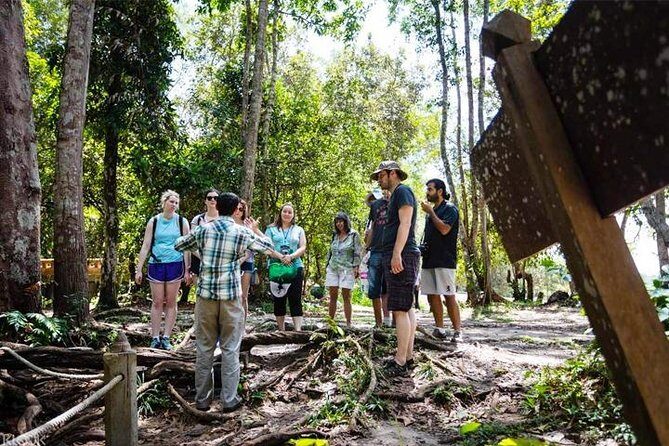
Angkor looks best when it’s quiet—and on two wheels it stays that way. I like that this is a small-group cycle with a guide, so you get more than a drive-by photo stop. I also love the built-in choice between sunrise at Angkor Wat or a sunset finish at Phnom Bakheng.
The best part is the mix of big-name temples and the less-herded-feeling stops, all while you’re moving under your own power. You’ll ride, walk, and climb in manageable chunks, with bottled water along the way and no transport stress because round-trip hotel transfers are included.
One watch-out: you’ll want moderate fitness, especially on the sunrise option when it can be dark for early riding. If you’re sensitive to heat, long walks, or uneven temple terrain, plan your pace and take breaks.
In This Review
- Key points worth pedaling for
- Why biking Angkor feels better than another bus-and-line day
- Sunrise at Angkor Wat or sunset from Phnom Bakheng
- Stop 1: Angkor Wat when the world is still waking up
- Stop 2: Angkor Thom and the South Gate to Bayon center
- Stop 3: Ta Prohm, aka the jungle-with-a-ruin vibe
- Stop 4: Banteay Kdei and the roots threading the walls
- Stop 5: Ta Keo, the unfinished pyramid with a different mood
- Stop 6 (sunset option): Phnom Bakheng’s big look back at Angkor Wat
- How hard is it really? Pace, walking, and what to expect
- Price value: is $45 fair for Angkor by bike?
- Transfers and the meeting point: keeping the start simple
- The guide experience: where the “wow” really gets made
- What to do with the temple pass (and budget your day)
- Should you book this Angkor Wat bike tour?
- FAQ
- How long is the bike tour?
- Where does the tour start and end?
- Is hotel pickup and drop-off included?
- Does the price include the guide, bike, and water?
- Is the temple pass included?
- Do I need to bring lunch?
- What are the two timing options?
- What’s the group size?
- Is the tour physically demanding?
Key points worth pedaling for
- Two timing options: sunrise at Angkor Wat or sunset from Phnom Bakheng
- Small group cap (max 15) keeps the ride calmer and easier to manage
- Transfers included so you’re not juggling tuk-tuks all morning
- Bikes + bottled water mean fewer logistics and less to carry
- Stops beyond the headline temples including Ta Prohm, Banteay Kdei, and Ta Keo
- Guide impact is real, with praised guides like Sam Vone for stories and photos
Why biking Angkor feels better than another bus-and-line day
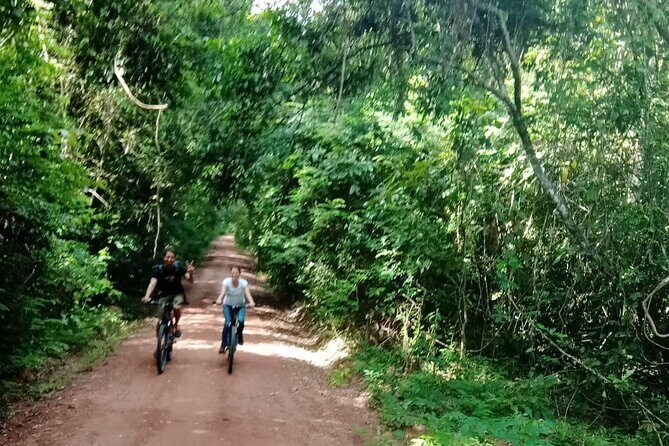
Angkor Wat is famous for a reason, but a lot of tours treat it like a checkbox. This one feels different because you’re already in motion. The bike gets you between sights without the constant stop-start hassle that drains your energy.
That matters because the temples are not just photo backdrops. You’ll be walking through gateways, circling ruins, climbing temple levels, and taking in the “how did they build this?” details at a human pace. When you’re not trapped in a bus schedule, the day feels more like your trip.
Also, cycling turns your sightseeing into a workout you can actually enjoy. It’s the kind of effort that makes later stops feel earned, not rushed.
Other Angkor Wat sunrise tours we've reviewed in Siem Reap
Sunrise at Angkor Wat or sunset from Phnom Bakheng
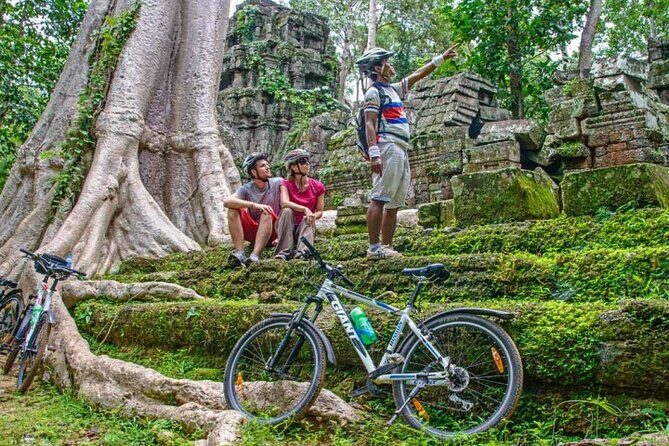
This tour gives you a real choice, not just a different start time.
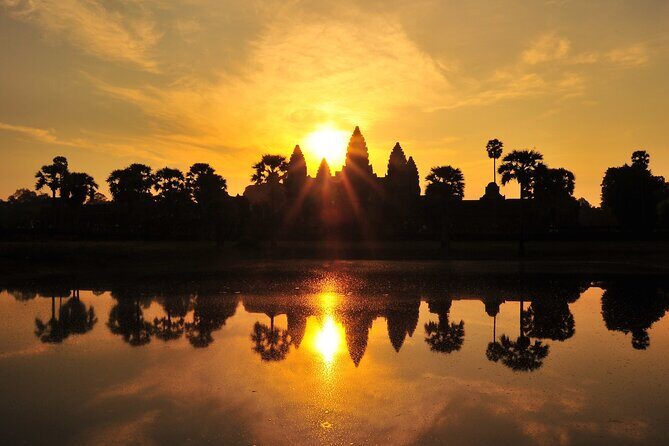
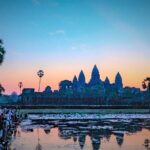
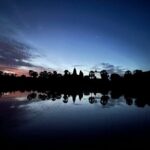
On the sunrise version, you’re up early enough to reach Angkor Wat while the light is still soft. One rider described a pre-dawn pickup around 4:30, followed by a ride into the dark to find the best sunrise spot. The reward is the slow reveal of the temple silhouette as the sky lightens.
On the sunset version, the big finish is the view from Phnom Bakheng, which looks back toward Angkor Wat. That puts the most dramatic sky timing at the end of your day, when you’ve already built momentum through the rest of the temples. You’re still active—just aiming for an evening payoff.
If you’re deciding between the two, think about your energy style. Sunrise is more intense and time-crunched. Sunset is more relaxed, but you’ll still climb and walk once you get there.
Stop 1: Angkor Wat when the world is still waking up
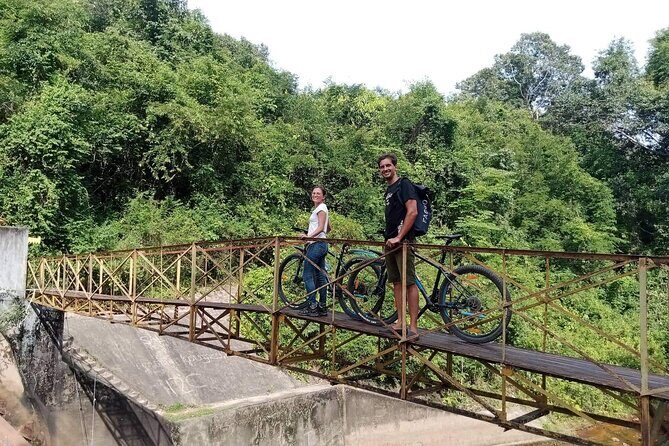
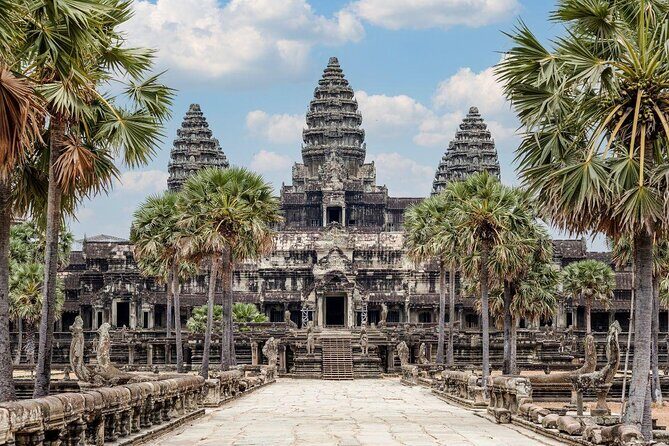
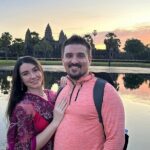
Angkor Wat is the headliner, and sunrise is when it’s at its most magical. You’ll be guided by local Khmer experts, and you’ll get the temple story as you watch the morning light roll over the biggest religious complex in the world.
You should also know what makes the sunrise experience work. You’re not just arriving early—you’re arriving before the crowd rhythm forms. That means you can look longer, take your time with the angles, and actually feel the symmetry and scale instead of only snapping photos.
A practical note: sunrise biking means you’re dealing with low visibility. One guest’s key suggestion was to have lights on the bikes or bring a flashlight for safety. Even if the tour has gear, I’d plan to be prepared so you’re not relying on perfect timing or perfect lighting.
Stop 2: Angkor Thom and the South Gate to Bayon center
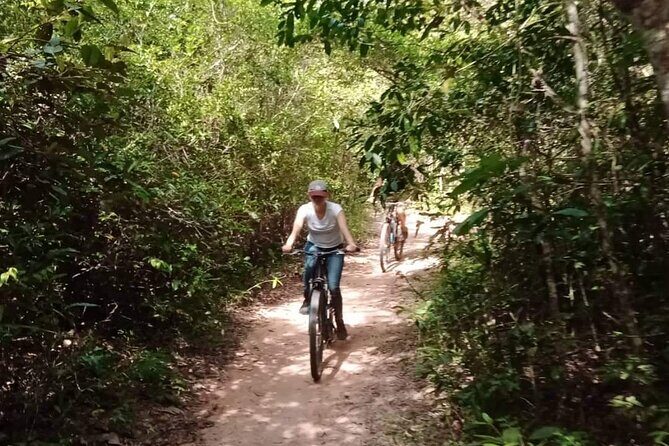
After Angkor Wat, you shift into Angkor Thom, the later capital of the Angkor Empire. This is where the experience leans more cinematic. The route passes the famous South Gate lined with gods and demons in that eternal tug-of-war style of stone storytelling.
Then you get to the Bayon, with its central position and distinctive faces. This is a temple where your perspective changes as you walk and climb. From a moving bike, it’s impressive in a flash. On foot, it becomes something you can really study—details, placement, and how the space is designed to guide your movement.
One value of going by bike here is rhythm. You’re not waiting at traffic lights or negotiating multiple tuk-tuk pickups. You’re just rolling between zones, then stepping off to explore.
Stop 3: Ta Prohm, aka the jungle-with-a-ruin vibe
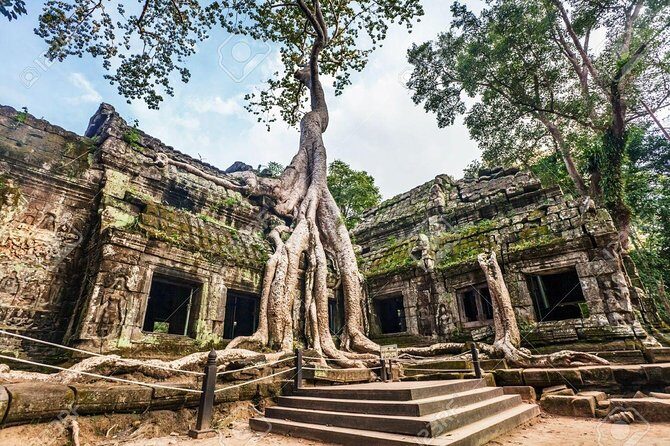
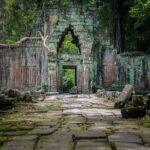
Ta Prohm is one of the most recognizable temples in the area, partly because it’s visually dramatic. It’s a partially jungle-retaken ruin, and it’s also known as the Tomb Raider temple thanks to its film fame.
What you’ll like here is how the setting shapes your photos and your sense of place. The stone feels older and more exposed, while the roots and overgrowth create that “nature is still negotiating the rules” look.
The guided part matters too. Without context, it’s easy to treat Ta Prohm like a postcard. With the right explanation, it becomes about how people used and adapted the area over time—why it looks the way it does now, and what that means for reading the ruins.
Other Angkor Wat sunset tours we've reviewed in Siem Reap
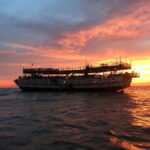

Stop 4: Banteay Kdei and the roots threading the walls
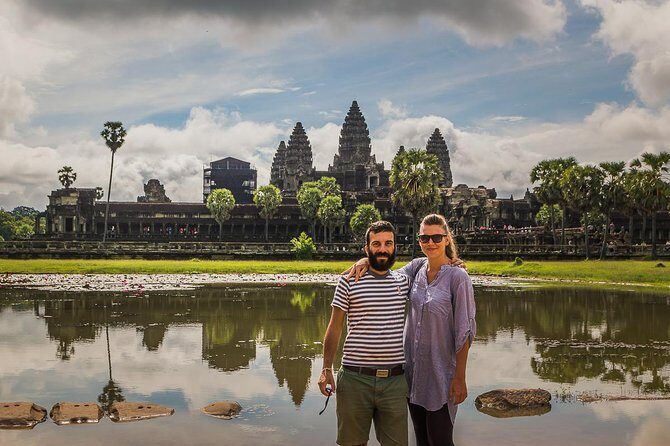
Banteay Kdei is one of those stops that feels like a visual reward for staying out of the loudest rush. It’s also called the citadel of monk’s cells, and it carries that “ruin with living texture” feeling.
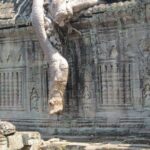
The standout here is the way towering trees and sinuous roots work through the site. The roots weaving through stones of ruined walls is a famously beautiful sight, and you’ll have a chance to see it slowly rather than from a fast vehicle window.
If you’re the kind of traveler who likes temples that feel a little more atmospheric than staged, this is where the tour earns its keep.
Stop 5: Ta Keo, the unfinished pyramid with a different mood
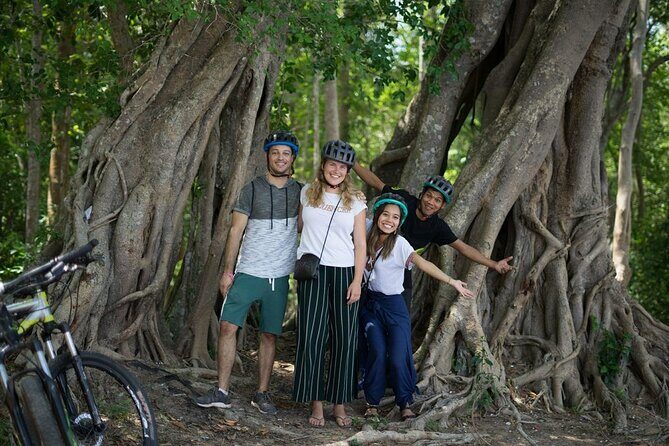
Ta Keo stands out because it was never finished. That changes the look and the mood compared with many of the smoother, more complete temple complexes around it.
It has a square, layered-pyramid shape, and that geometry is dramatic—especially when you’re walking the approach and then climbing sections. It’s not just about what’s there. It’s about the presence of “what wasn’t completed,” and how that affects the way you experience the structure.
This is a good stop to pace yourself. Even if you’re not a big climber, the layered design rewards steady steps and a calm stop to take in the angles.
Stop 6 (sunset option): Phnom Bakheng’s big look back at Angkor Wat
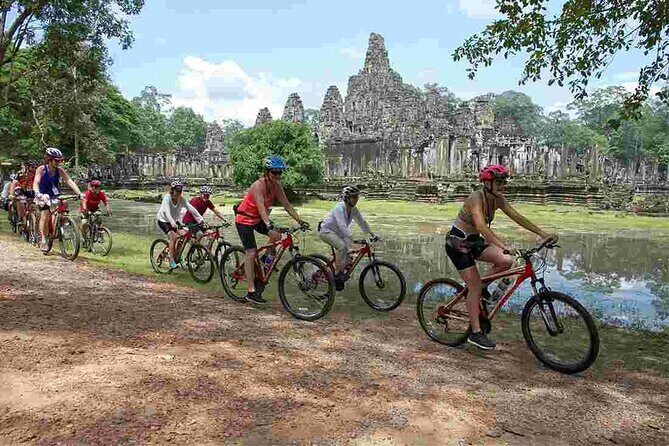
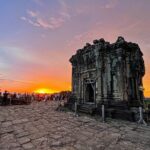
If you choose the sunset tour, Phnom Bakheng is your payoff. It’s a hilltop temple built hundreds of years before Angkor Wat, and the view is famous for a reason: it overlooks Angkor Wat itself.
Sunset here tends to feel like a reward for the whole day. You’re coming in after cycling and walking among multiple temple zones, and then suddenly you get a wide, horizon-type perspective. It turns the experience from “temples in front of you” into “temples in a landscape of light.”
One practical thing to remember: hilltop = more uneven ground and more walking than you might expect. Wear shoes that handle dust and uneven steps comfortably.
How hard is it really? Pace, walking, and what to expect
This tour fits travelers with moderate physical fitness. That’s not a vague marketing phrase here—it’s a heads-up that the day includes bike time plus walking and climbing.
A sunrise-focused day can feel longer and more physical because you’re starting early and you’re riding in cooler, dimmer conditions that still require focus. One rider summed it up as filled with lots of bike riding, walking, and climbing, finishing exhausted but happy.
The sunset version usually feels less like a predawn scramble and more like a full temple day with an evening highlight. You still need stamina, but you’re starting later and can manage your pace with less pressure.
My advice: if you’re unsure, choose based on your most realistic comfort level. If early mornings are hard, the sunrise option might feel like work. If you hate missing prime light, sunrise will be worth it.
Price value: is $45 fair for Angkor by bike?
At $45 per person, the value comes from what’s included—not just the low number.
You get a guide, bicycles, bottled water, and pickup and drop-off from your Siem Reap hotel area. For a temple-heavy day, that’s what reduces the hidden costs and friction that often make “cheap tours” feel expensive once you add add-ons and transport.
What’s not included is important: you’ll pay for the temple pass (Angkor Pass) separately, and lunch isn’t part of the package. That means your true trip cost depends on what you choose for meals and what your Angkor Pass timing looks like.
Still, as a way to see multiple core temples without organizing transport every step, this pricing is hard to beat.
Transfers and the meeting point: keeping the start simple
The meeting point is Siem Reap Pub Hostel, behind Angkor Night Market. The tour ends back at the meeting point.
That matters because you don’t have to figure out where to leave your hotel items or how to connect with the group. Pickup and drop-off are part of the package, so the day starts with less uncertainty.
If you’re using a rideshare or local tuk-tuk, arrive with a few minutes buffer. Early starts can make everyone a bit cranky, and you don’t need that energy before sunrise.
The guide experience: where the “wow” really gets made
The guide is not a small detail here—it’s a core part of what you’re paying for.
In recent experiences, guides like Sam Vone have been praised for being passionate about Angkor Wat and Khmer history, and also for helping with photography. One rider specifically called him out as a great photographer and a person who knew how to find the best sunrise spot.
You’ll feel the difference when you stop treating the temples like scenery. Good guidance helps you notice the right features, understand what you’re seeing, and walk away with more than just a memory of how it looked.
Even if English levels vary by guide day to day, the structure of the tour—guide-led, small group, steady route—generally gives you a better chance of learning something useful while you’re moving.
What to do with the temple pass (and budget your day)
Because the Angkor Pass is not included, you’ll want to plan that part in advance. This tour is essentially a day of guided temple visits that assumes you already have (or will purchase) access.
Also budget time for the temple pass process, especially on early starts. Sunrise or late-day visits can make every minute feel valuable, so don’t wait until the last second to sort the pass.
For lunch, you’re on your own. If you don’t want to hunt around while everyone else is resting, decide ahead of time where you’ll eat and how you’ll get back on track.
Should you book this Angkor Wat bike tour?
Book it if you want Angkor to feel active, guided, and efficient without the stress of constant transport switching. The mix of Angkor Wat, Angkor Thom, Ta Prohm, Banteay Kdei, and Ta Keo, plus the option for Phnom Bakheng sunset, gives you a full Angkor day that doesn’t only hit the same two spots.
Don’t book it if early mornings make you miserable or if you dislike walking and climbing on uneven ground. This is a bike tour, but it’s also a temple tour, and you’ll work for the views.
If you can handle moderate fitness and you like the idea of getting the best light while riding between sites, this is one of the smarter ways to experience the Angkor complex from Siem Reap.
FAQ
How long is the bike tour?
It runs about 7 to 8 hours.
Where does the tour start and end?
It starts at Siem Reap Pub Hostel and ends back at the same meeting point.
Is hotel pickup and drop-off included?
Yes. Pick-up and drop-off are included.
Does the price include the guide, bike, and water?
Yes. The tour includes a guide, bicycle, bottled water, and pick-up and drop-off.
Is the temple pass included?
No. The temple pass (Angkor Pass) is not included and is at your expense.
Do I need to bring lunch?
Yes. Lunch is not included.
What are the two timing options?
You can either do the sunrise experience at Angkor Wat with an early start, or a sunset experience with the finish at Phnom Bakheng.
What’s the group size?
The tour has a maximum of 15 travelers.
Is the tour physically demanding?
It’s designed for travelers with moderate physical fitness, since it includes biking plus walking and climbing.