REVIEW · SIEM REAP
Angkor 2-Day Sunset & Sunrise Small-Group Tour
Book on Viator →Operated by Journey Cambodia · Bookable on Viator
Two early mornings. One unforgettable sunrise. This 2-day small-group Angkor tour strings together the famous moments and the quieter ones, with Angkor Wat sunrise built in and air-conditioned transport keeping you sane between sites. The big win for your photos is timing, plus the guide helps you reach the right viewpoints before crowds swell.
I also like how the schedule mixes classic anchors (Angkor Wat, Angkor Thom) with stops such as Banteay Srei and the root-choked Preah Khan, so your second day does not feel like a repeat. One thing to plan for: the headline price does not include the required temple pass (USD 62), so your real total is closer to about $111 per person once you add that in.
In This Review
- Key things I’d bet you’ll care about
- Why This 2-Day Angkor Wat Tour Feels Efficient (and Still Fun)
- Price and Temple Pass Math: The Real Cost of Angkor
- Day 1 at 8:00am: Preah Khan, Neak Pean, and the Temples That Feel Like They Won
- Preah Khan: roots, ruin, and atmosphere
- Neak Pean: an artificial island temple on the water
- Banteay Srei: the fine carved sandstone that people miss
- Pre Rup: a temple mountain with strong Khmer design
- Day 1 Sunset: A Viewpoint, a Long Climb, and the Smog Variable
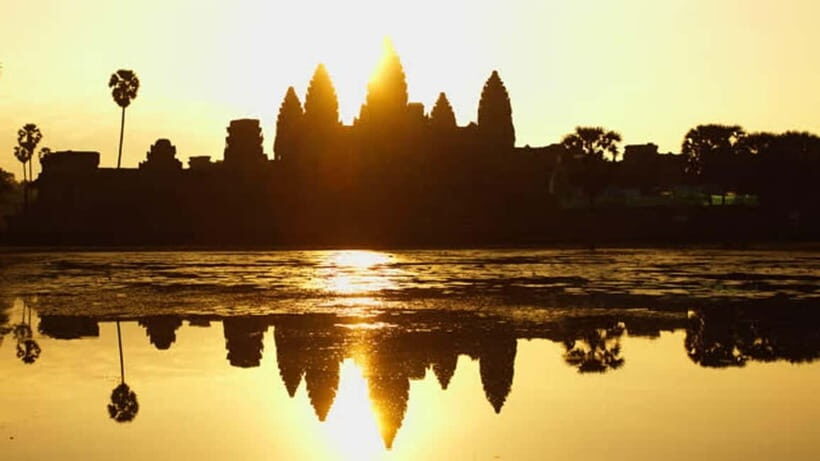
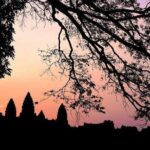
- Day 2 Sunrise at 4:10–4:30am: How Angkor Wat Looks Before Everyone Else
- Angkor Thom: The Capital City Walk Through Bayon and the South Gate
- Bayon area in Angkor Thom
- Angkor Thom South Gate
- Terrace of the Elephants and the Leper King Area: Big Names, Real Stone
- Ta Prohm: The Temple Set That Looks Like a Storybook, Without the Acting
- Small Group Size, Hotel Pickup, and the Photo-Friendly Setup
- What to Wear and Bring so Temples Don’t Steamroll Your Day
- How Guides Shape the Value at Angkor (Pal, Sak, Chhay, Sokpee, Bun, and Pi)
- Optional Add-On You Might Encounter: Landmine Museum
- Should You Book This Tour for Angkor Wat Sunrise and Banteay Srei?
- FAQ
- What time does the tour start in the morning?
- Is the temple pass included in the $49 price?
- What’s included for transportation and comfort?
- Are meals included?
- How big is the group?
- What should I wear inside the temples?
Key things I’d bet you’ll care about
- Angkor Wat sunrise with pre-dawn hotel pickup (about 4:10–4:30am depending on season)
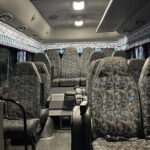
- Air-conditioned vehicle + cold water/cool towels to survive the midday heat
- Small group cap (max 15), which usually means more flexible photo stops
- A strong mix of iconic and less-visited temples, including Banteay Srei
- Dress code enforced inside temples: shoulders and knees covered
- Sunset can be a weather-smog roll of the dice, so don’t treat it like guaranteed perfection
Why This 2-Day Angkor Wat Tour Feels Efficient (and Still Fun)
Angkor can crush you with logistics. This tour attacks the hardest part first: getting you to sunrise without you having to figure out transport at 4am. You’ll also avoid the classic Siem Reap mistake—spending your whole day stuck on open-air rides in sweltering heat.
The other smart move is the temperature management. Between temples, you’re on a climate-controlled vehicle with bottled water and cool towels. That matters because Angkor isn’t a museum stroll. You’re walking, climbing, and negotiating uneven stone—often in dust.
Finally, there’s a practical feel to the way the tour works. Your guide keeps the group moving, but you’re not herded like cattle. In real-world terms, guides on this program (like Pal, Sak, Chhay, Sokpee, Bun, and Pi) are often praised for balancing explanations with enough time for questions and photos.
Other Angkor Wat sunrise tours we've reviewed in Siem Reap
Price and Temple Pass Math: The Real Cost of Angkor
The advertised price is $49 per person. That’s the part that looks like a steal—until you add the temple access. The tour requires a temple pass paid directly to the site: USD 62 per person. So yes, you should budget for roughly $111 total, not $49.
Is that still good value? For most people, it is, because you’re buying more than bus seats:
- Two full days that include sunset on day one and Angkor Wat sunrise on day two
- A licensed English-speaking guide (the difference between guessing and understanding is huge at Angkor)
- Hotel pickup/drop-off in Siem Reap
- Air-conditioned transport with water and towels
Meals aren’t included, so you’ll also want a plan for lunch breaks (you pick what you want at those stops). Still, if you’re short on time, the trade-off is worth it: you get a tight route without having to coordinate guides, timing, and transport yourself.
Day 1 at 8:00am: Preah Khan, Neak Pean, and the Temples That Feel Like They Won
Day one starts from Siem Reap with pickup timing that makes the full day possible. Expect a long day—one review clocked it roughly from 8am to around 7pm, including sunset. The upside: you’re not wasting your one-day-in-Angkor momentum.
Preah Khan: roots, ruin, and atmosphere
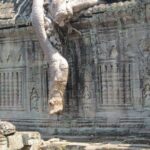
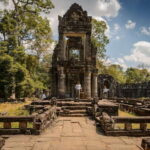
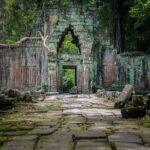
Preah Khan is a ruined temple scene that feels half-stone, half-nature. The standout is the way tree roots grab the architecture, turning walls into living tangles. You’ll be walking on uneven ground, so good shoes are not optional—think grip over style.
A drawback? It can feel like a lot of “look at everything” at once. A great guide helps you connect the physical chaos to what you’re actually seeing: the Khmer Empire’s planning, symbolism, and how these sites fit together.
Neak Pean: an artificial island temple on the water
Neak Pean sits on an artificial island in the Jayatataka Baray area. It’s smaller, calmer, and different from the surrounding chaos. You’re essentially getting a breather without leaving the temple circuit.
The trick here is mindset. Neak Pean is not the place to rush. Take the time to notice the setting—this is Angkor as engineered landscape, not just big monuments.
Other Angkor Wat sunset tours we've reviewed in Siem Reap
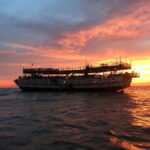

Banteay Srei: the fine carved sandstone that people miss
Banteay Srei is where the tour earns its “worth it” badge. It’s a smaller sandstone temple with some of the finest, most detailed carving in Cambodia. You’ll spend about an hour and a half here, which is a decent chunk of time—enough to wander and then come back to specific details.
If you love ornament and symmetry, this stop can steal the show. If you’re short on energy, make sure you slow down anyway. The beauty of Banteay Srei is in the small work, not the overall scale.
Pre Rup: a temple mountain with strong Khmer design
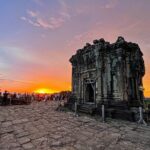
Pre Rup is a Hindu temple mountain dedicated to a Khmer king. Expect brick, laterite, and sandstone textures as you climb and view the structure from different angles.
This is also one of those stops where the “photo moment” and the “understanding moment” overlap. If your guide (for example, Pal or Sak) points out the religious layout and the reason for the mountain form, the place stops being just pretty stone.
Day 1 Sunset: A Viewpoint, a Long Climb, and the Smog Variable
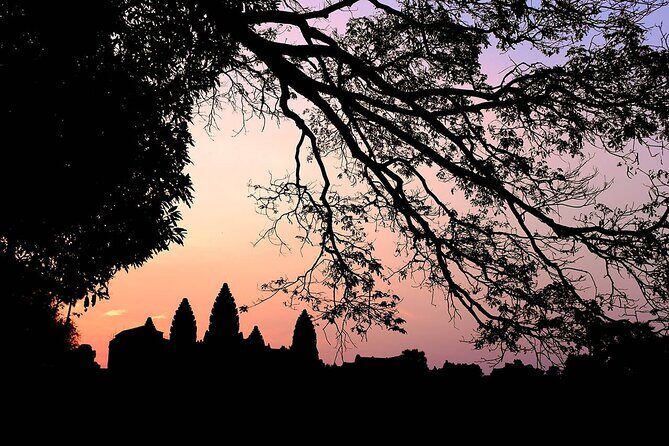
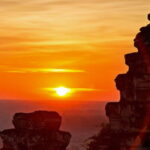
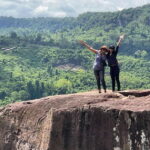
Day one includes sunset, and this part is why people book the 2-day format instead of a single-day whirlwind. The sunset is often described as being viewed from a hill or elevated spot.
That hill matters. One review flagged that the incline and heat can be problematic for anyone with breathing issues or asthma due to heat and pollution. So if that’s you, plan smart:
- Wear a mask if you know it helps your breathing
- Ask your guide what the route will feel like that day
- Pace yourself on the climb
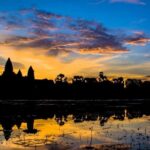
The other variable is air quality. Smog can soften the colors and make the sky look muted. There’s no magic fix for that. The best move is to treat sunset as a bonus. Even with clouds or haze, you still get the ritual feeling of ending your day at Angkor.
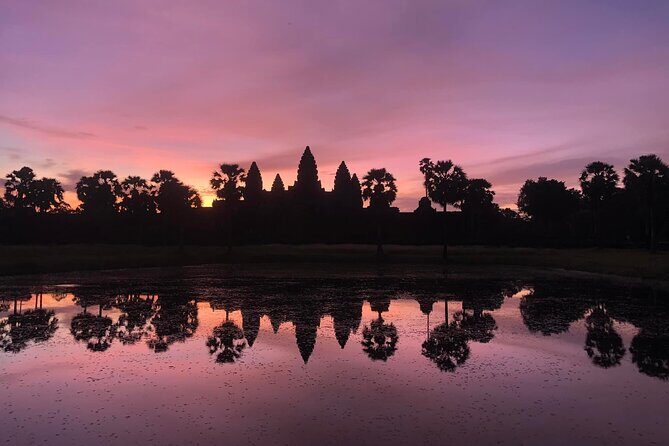
Day 2 Sunrise at 4:10–4:30am: How Angkor Wat Looks Before Everyone Else
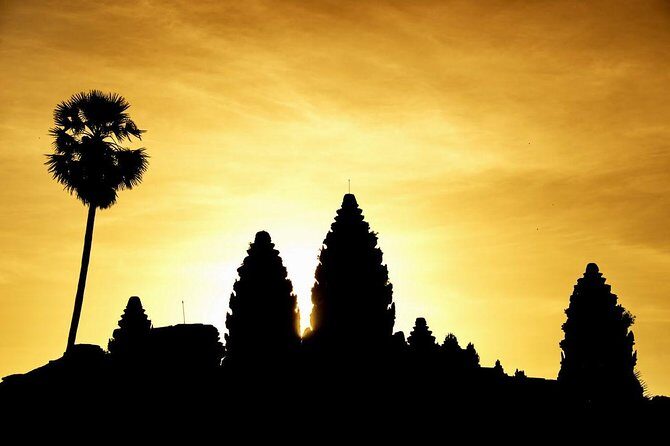
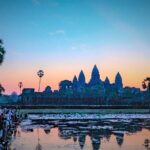
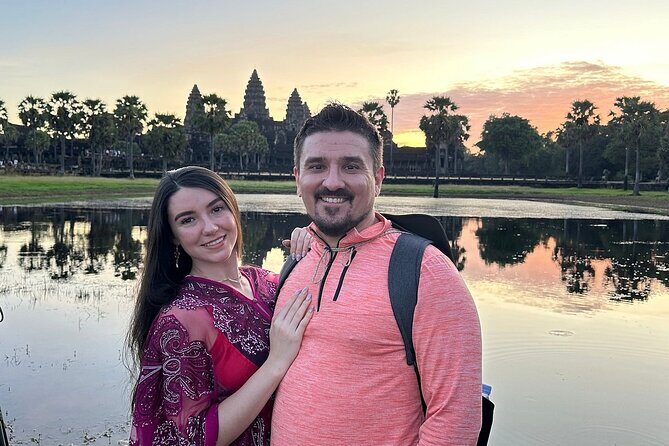
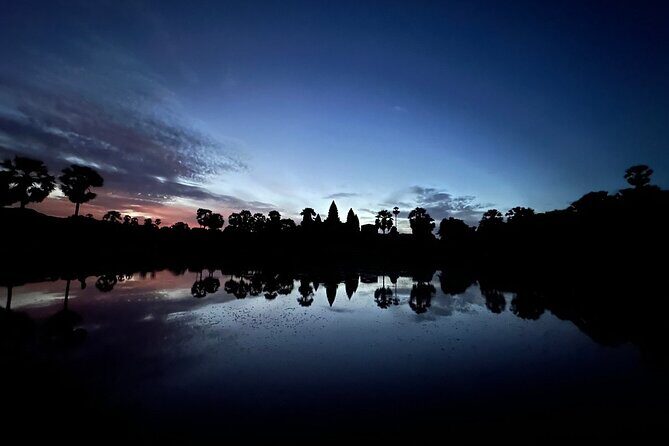
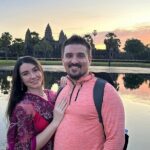
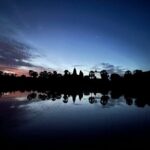
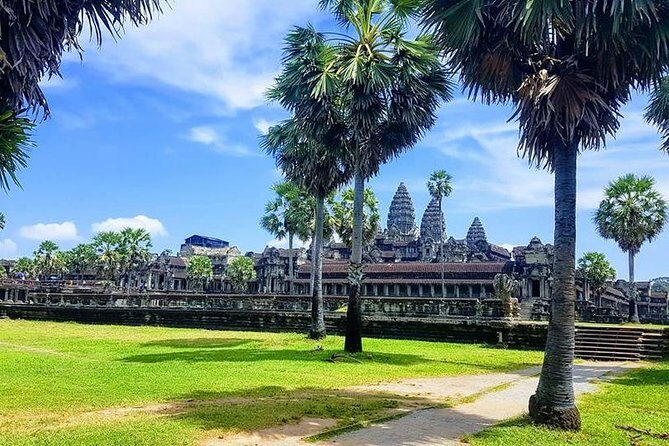
Day two begins in the dark with hotel pickup for Angkor Wat sunrise, typically around 4:10 to 4:30am depending on season. You’ll drive out early and then enter the temple area from the eastern side in darkness. That detail matters because it helps you get in position before the main rush.
Plan for waiting. Sunrise tours are not instant gratification. You may sit on the ground for about an hour or more until the light arrives. If you’re the type who wants to read in the waiting time, bring a small light source (one traveler even used their iPhone flashlight while waiting).
When the sun finally hits Angkor Wat, you’re not seeing the postcard version in full blast. You’re seeing the temple in its gentler early light. Reviews mention sunrise being peaceful and serene even when conditions were cloudy. That matches what you should expect: early mornings level you up emotionally.
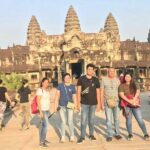
Then the tour continues through Angkor Wat itself for roughly a few hours total, and you’ll have time for photos from multiple angles. Guides like Pal, Sak, and Pi are specifically praised for photo help—choosing spots, timing the angles, and taking group shots for people who usually end up behind the camera.
Angkor Thom: The Capital City Walk Through Bayon and the South Gate
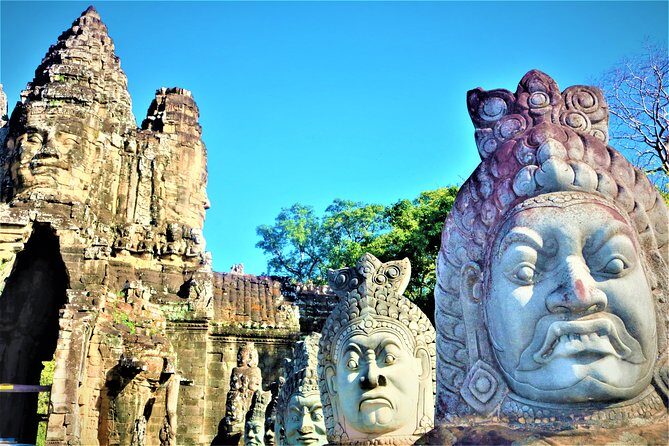
After sunrise, the energy shifts. You’ve gone from pre-dawn quiet to daytime exploring, and this is where the pace can feel intense.
Bayon area in Angkor Thom
Angkor Thom was the Khmer Empire’s capital city. Your stop focuses on the Bayon area, where the mood is grand and slightly surreal. Even if you don’t know the symbolism yet, the sheer scale makes you slow down automatically.
I like this stop because it gives you historical context you can’t easily get from photos. You’re standing in a place that served as the center of authority—so the faces, gates, and pathways start making sense.
Angkor Thom South Gate
This is a faster stop, around half an hour. Think of it as the “photo and orientation” segment. It also works as a mental reset before moving to the terraces.
Terrace of the Elephants and the Leper King Area: Big Names, Real Stone
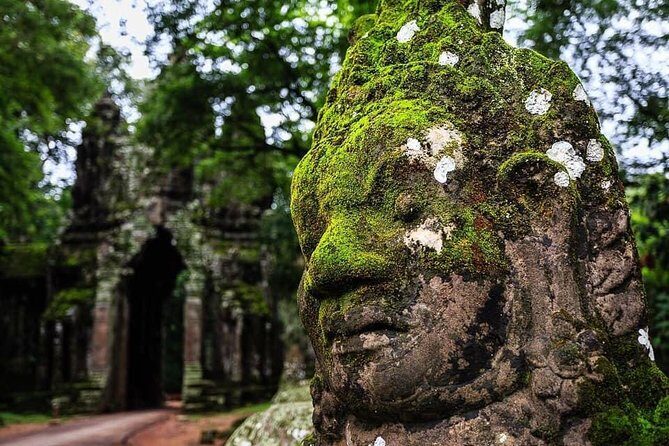
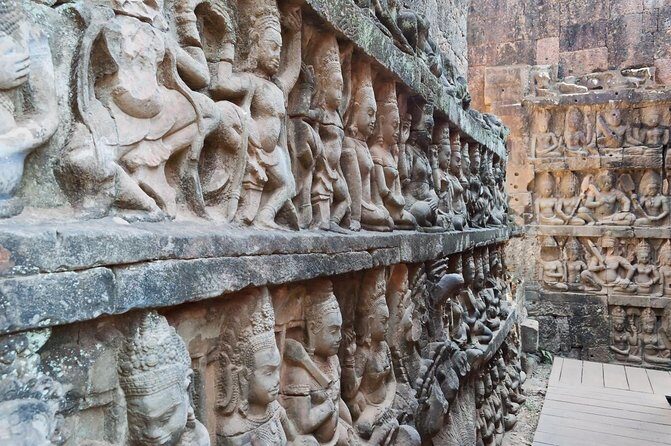
Next comes the Terrace of the Elephants, and you’ll also pass by the Terrace of the Leper King area. The terraces are famous because they’re full of carvings and scale cues that make you realize these weren’t decorative afterthoughts.
Expect about an hour and a half here. The key is to keep your eyes moving:
- Look at the figures and the carving work
- Then step back to see how the terraces frame the approach to the main temples
If you have asthma or heat sensitivity, you’ll also want to keep breaks in mind. Midday walking in Angkor means the air-conditioned rides become a real comfort tool.
Ta Prohm: The Temple Set That Looks Like a Storybook, Without the Acting
Ta Prohm is one of Angkor’s most atmospheric temples—roots, stone, and that sense of discovery that still feels theatrical even today. It’s also a popular one, so you won’t be alone here. Still, it’s one of the few places where the visual effect does not feel like it needs explanation.
You’ll spend about an hour at Ta Prohm. The guide’s job is to translate what you’re seeing: what the monks were there for historically, why the site is preserved in its present style, and how the root-growth interacts with the stonework.
This is where the pacing needs to feel right. If you rush, you only get “cool photos.” If you slow down, you get the mood and meaning together.
Small Group Size, Hotel Pickup, and the Photo-Friendly Setup
This tour runs with a maximum group size of 15. In practice, groups can be smaller on some departures. The benefit is that your guide can manage the crowd without you feeling like you’re stuck waiting behind a train of strangers.
Hotel pickup and drop-off is a big deal in Siem Reap. It saves you from negotiating transport before and after the long days. Reviews also mention that the driver takes care of comfort between stops—cold water, towels, and safe driving even on rough roads.
You’ll also notice how often guides are praised for photography help. Some guides go beyond “stand here.” They’ll take your photos at good angles and help solo travelers avoid the classic problem of never getting a shot with themselves in it.
One more practical comfort: cool towels and chilled water after stops. That sounds minor until you’re sweating through a temple visit. It’s the kind of service that lets you keep enjoying instead of just surviving.
What to Wear and Bring so Temples Don’t Steamroll Your Day
This tour is mostly outdoors with temple climbing and lots of walking. Dress casually, but keep it temple-friendly: shoulders and knees covered inside temples.
For your body, your top picks are:
- Comfortable walking shoes with grip
- Lightweight layers (the mornings are cool-ish; the afternoons roast)
- Sun protection (hat/sunglasses), because you won’t always be in shade
For your head and lungs, consider the smog/heat factors that can affect the sunset viewpoint. If you know you’re sensitive, you’ll feel better going in prepared.
Also think about rain. One review noted umbrellas were provided on a rainy day. You shouldn’t rely on that every day, though, so a light rain layer is still smart.
How Guides Shape the Value at Angkor (Pal, Sak, Chhay, Sokpee, Bun, and Pi)
At Angkor, a good guide doesn’t just give facts. They help you see patterns:
- Why a temple is built the way it is
- What the carvings represent
- How the layout connects to Khmer religious ideas
That’s why so many reviews call out specific guides. Pal and Sak show up repeatedly for mixing clear explanations with strong photo help. Chhay gets praised for going beyond temples into culture and safety. Sokpee gets credit for keeping the schedule tight while staying friendly. Bun and Pi are mentioned for making the day feel easy, with good pacing and patient support—especially helpful if you’re traveling solo.
You’ll also notice tech used to make history easier to grasp. One traveler described a guide using an iPad with pictures and videos to explain the sites. That can be a big help if you’re a visual learner.
Optional Add-On You Might Encounter: Landmine Museum
One of the reviews describes day one as including an optional visit to the landmine museum (with a separate entrance fee). That isn’t stated in the main stops list you’ll see in some places, so treat it as an “ask your guide” possibility rather than a guaranteed component.
If you choose it, it can add real context to Cambodia’s modern history and the lasting effects of war. If you’d rather keep the focus on temples only, you can usually take a pass and stay with the group.
Should You Book This Tour for Angkor Wat Sunrise and Banteay Srei?
Book it if:
- You want Angkor Wat sunrise without the hassle of figuring out transport at 4am
- You like a route that mixes icons (Angkor Wat, Angkor Thom) with a standout like Banteay Srei
- You’d rather sit in an air-conditioned vehicle than do constant open-air tuk-tuk rides
Consider another option if:
- You have significant breathing concerns and are sensitive to heat and pollution on hill viewpoints (the sunset climb may be rough)
- You strongly prefer going slower and spending more time in one temple rather than moving through multiple stops in two packed days
- You’re not ready for the extra USD 62 temple pass cost on top of the $49 price
If your goal is to hit the highlights, get good photos, and understand what you’re seeing, this tour is a solid pick. Just go in knowing you’re paying for more than sightseeing—you’re paying for timing, comfort, and interpretation, which is what makes Angkor click.
FAQ
What time does the tour start in the morning?
The standard start time is 8:00am for pickup. For Angkor Wat sunrise on day two, pickup is pre-dawn at about 4:10 to 4:30am depending on the season.
Is the temple pass included in the $49 price?
No. The required temple pass is an additional USD 62 per person and is paid directly at the site.
What’s included for transportation and comfort?
You get a licensed English-speaking guide and travel in an air-conditioned vehicle. Bottled water and cool towels are included.
Are meals included?
No. Meals are not included, but you’ll have breaks during the day where you can choose what you want.
How big is the group?
The tour has a maximum of 15 travelers.
What should I wear inside the temples?
Dress casually, but you must cover your shoulders and knees inside temples. Comfortable walking shoes are recommended.