REVIEW · SIEM REAP
Cambodian Cooking Class
Book on GetYourGuide →Operated by Angkor Wat Merge Tour · Bookable on GetYourGuide
Cooking in a real Khmer kitchen changes everything. This Cambodian Cooking Class in Siem Reap Province is built around hands-on lessons, a local market stop, and a meal that tastes like the day’s work. I especially love the chance to be guided through Fish Amok and other Cambodian favorites, and I like that you start with fresh ingredients instead of pre-made items; the cooking makes more sense when you’ve picked the food yourself. A fair heads-up: you should expect a home-kitchen experience, so the pace and comfort level are more local than “restaurant polished.”
You’ll begin with hotel pickup in a traditional tuk-tuk and then head straight to the market. After that, the class moves into your host’s home where you learn, cook, and then sit down to eat a four-course Khmer meal.
For a three-hour activity, it’s a lot of fun and food, but plan your evening afterward. You’ll leave comfortably full, and you might want to keep other plans light.
In This Review
- Key things to look forward to
- Tuk-tuk to a local market: the start that makes the food click
- Shopping for your Fish Amok ingredients like a pro
- Inside a local home: how the cooking class runs
- Four courses in three hours: what you’re really learning
- Fish Amok: the dish that teaches you Khmer fragrance
- Tom Yum: balancing sour, heat, and aroma
- The meal at the end: four courses you can finally savor
- Price and value in real terms: what you’re paying for
- Who this class is best for (and who may want a different option)
- Timing and comfort notes that matter
- Should you book this Cambodian Cooking Class?
- FAQ
- What is the duration of the Cambodian Cooking Class?
- Where does the class take place?
- What does the price include?
- Is alcohol included?
- Do I go to a market during the class?
- How many dishes will I cook?
- What language is the instruction provided in?
- What should I know about pickup timing?
- Is there a cancellation policy?
Key things to look forward to
- Tuk-tuk pickup from your hotel before you even touch a pan
- Market shopping where you buy fresh ingredients for your dishes
- Four Khmer courses you help cook, including Fish Amok
- English-speaking local host guiding the whole session
- Bottled water included, with alcohol not part of the package
- A sit-down meal after cooking, so you actually get to enjoy the results
Tuk-tuk to a local market: the start that makes the food click
The whole class feels smarter because it starts where Cambodian cooking begins: with ingredients. You’re picked up from your hotel and taken by traditional tuk-tuk to a local market first, which means you’re not just learning recipes in a vacuum. You’re learning how Khmer cooks think about flavors, textures, and what’s fresh today.
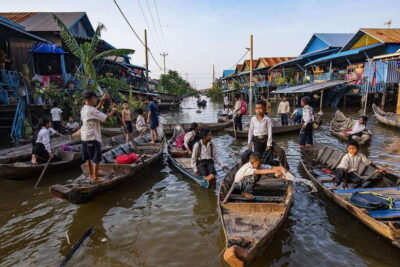
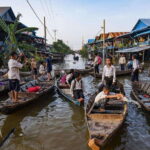
At the market, you meet your guide’s world in real time. The experience includes the practical side of shopping: you’ll see ingredients laid out, learn what matters for Khmer dishes, and then you haggle for what you’ll cook. Even if you’re not a confident bartering type, it’s still useful. You learn what to look for and why certain items show up in multiple dishes.
The market stop is also a great timing trick. If you’re traveling in Siem Reap, a lot of food experiences happen after you’ve already been sightseeing all day. Here, the market is the lead-in, so your brain stays in “food mode” from the first minute. You’ll also get a better appreciation for what “authentic” means: it’s not fancy presentation. It’s the right ingredients and the right technique.
Other Khmer cooking class tours we've reviewed in Siem Reap
Shopping for your Fish Amok ingredients like a pro
Fish Amok is the dish most people come for, and it’s also the dish that reveals how Khmer cooking works. It’s usually built on a fragrant base and a specific texture—creamy, aromatic, and distinct. To make that happen, the ingredients aren’t just “stuff to add.” They’re choices.
During the market visit, you’ll purchase fresh items for your meal. That matters because the class includes the ingredients, but buying them together gives you a sense of where the flavors come from. You see the components up close—herbs, aromatics, and the essentials behind the sauce. Then you carry that mental map into the kitchen.
If you’re the type who enjoys markets, you’ll likely love this part more than the cooking itself. If you’re not, you’ll still appreciate it because the market makes later steps less mysterious. You’ll understand why your guide tells you to handle certain herbs a particular way, and you’ll notice how smells change as you cook.
One practical note: because the pickup asks you to wait for the driver for about 30 minutes, build a little buffer into your departure time. If you’re the kind of traveler who hates uncertainty, set a reminder and be ready to move when the tuk-tuk arrives.
Inside a local home: how the cooking class runs
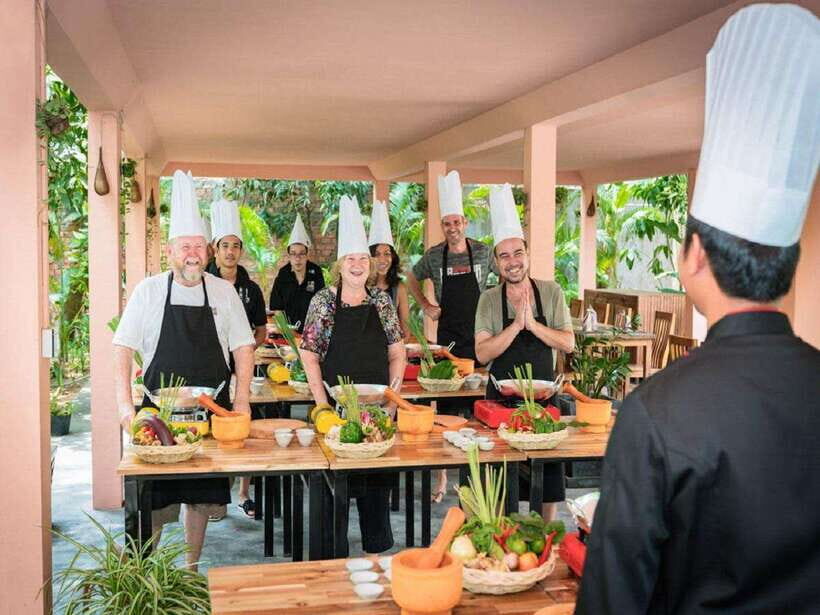
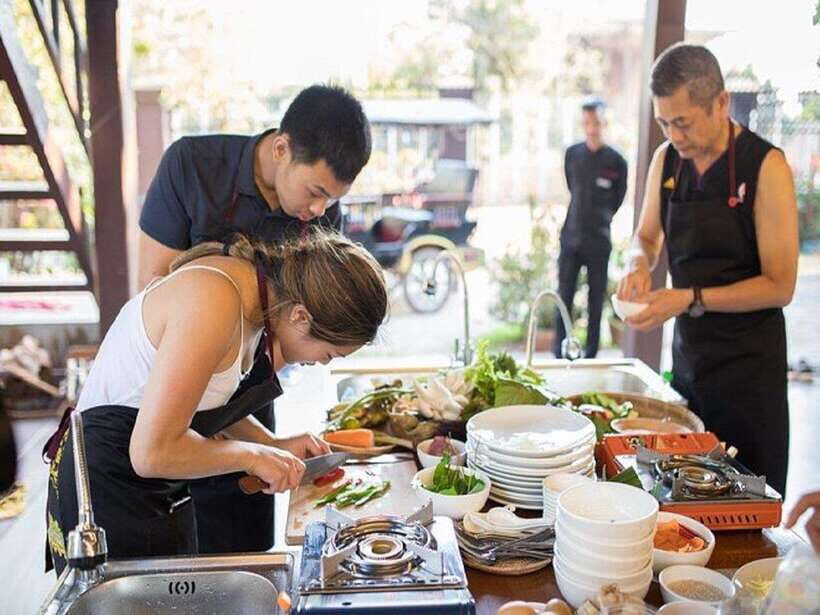
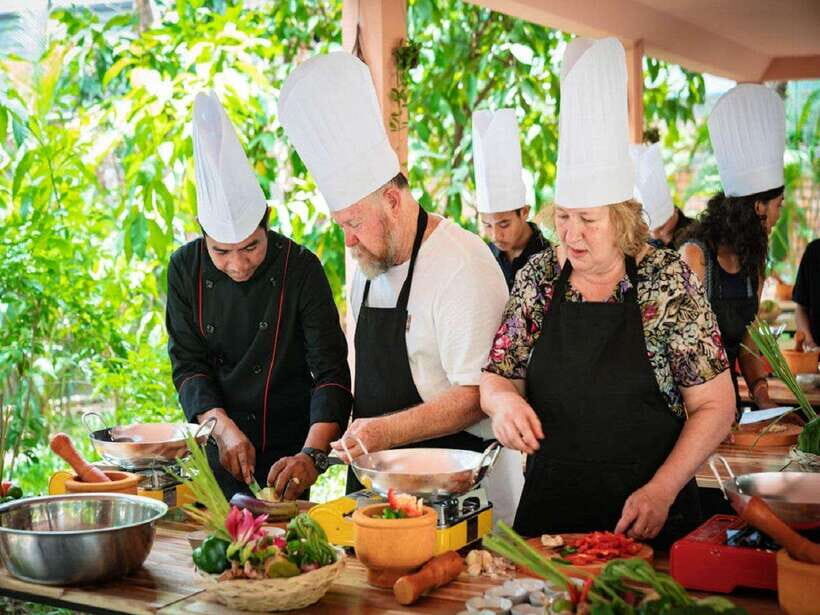
After the market, you head to your guide’s home. This is where the class gets personal. Instead of learning in a standardized studio kitchen, you cook inside a real household setup, which keeps the atmosphere casual and human.
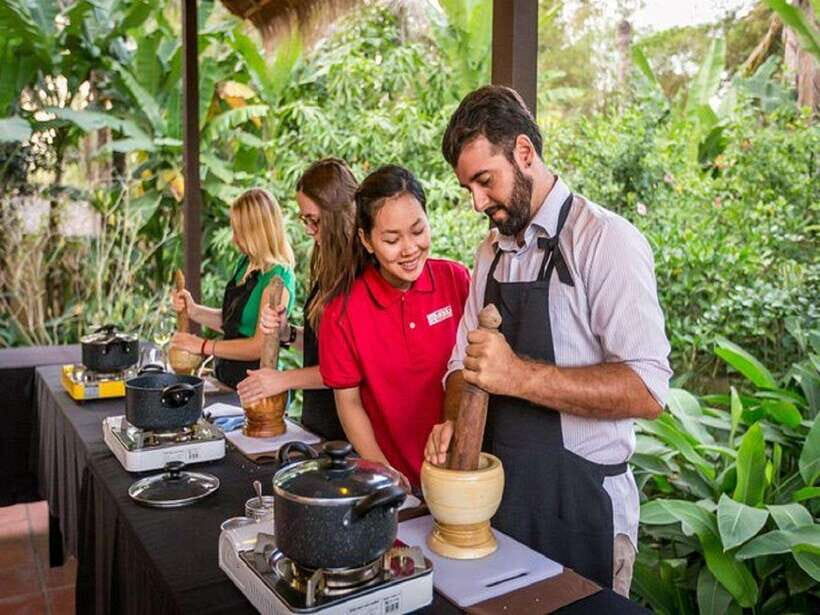
The lesson is led by an English-speaking local host/guide. You roll up your sleeves and cook with guidance, not just a script. You’ll learn tips and tricks as you go, which is the difference between watching cooking videos and actually getting the feel for Khmer techniques.
In this session, you create four authentic Khmer dishes. Fish Amok is included, along with another well-known favorite: Tom Yum. The remaining courses are Khmer specialities as well, and you may get some choice depending on your class setup. One thing that stood out: some people found they could select among options for each course, so it’s worth asking what your menu choices look like when you book.
Also, your host may take the time to make it feel memorable beyond the meal. In one account of this experience, Mr. Kong photographed the group during cooking and later shared the recipes, which is exactly the kind of “keep the memory practical” touch you want.
Four courses in three hours: what you’re really learning
A three-hour cooking class sounds short until you see how it’s structured. The timing pushes you to work efficiently, but you still get real instruction. The goal isn’t to teach every Khmer dish on earth. It’s to teach the dishes you’ll make—and the logic behind them—so you can recreate the flavors later.
Here’s how the four-course flow tends to feel:
1) First dish starts strong
You begin with a base or early technique. You’ll notice that Khmer cooking often layers flavor: aromatics go in early, then you build with herbs and balance the seasoning as you progress.
2) Midpoint dishes show texture and spice balance
As the class continues, you’ll get a deeper look at sauces and how to adjust richness. You’re learning how not to overcook or rush, because the finish matters.
3) Fish Amok becomes the highlight of the session
Fish Amok usually requires focus on texture and aromatics. Even if you’re a beginner, the guide’s steps help you avoid the common mistakes that lead to a bland result.
4) Tom Yum brings the bright, sour-heat counterpoint
Tom Yum is the dish that makes the meal feel alive. It’s not just spicy. It’s about balance—tang, aroma, and heat that lifts the rest of what you cooked.
Because it’s a hands-on class, you’ll likely end up with more than four dishes in your head. You’ll come away with a mental toolkit: when to add herbs, how fragrance changes during cooking, and how Khmer seasoning is adjusted for taste.
Fish Amok: the dish that teaches you Khmer fragrance
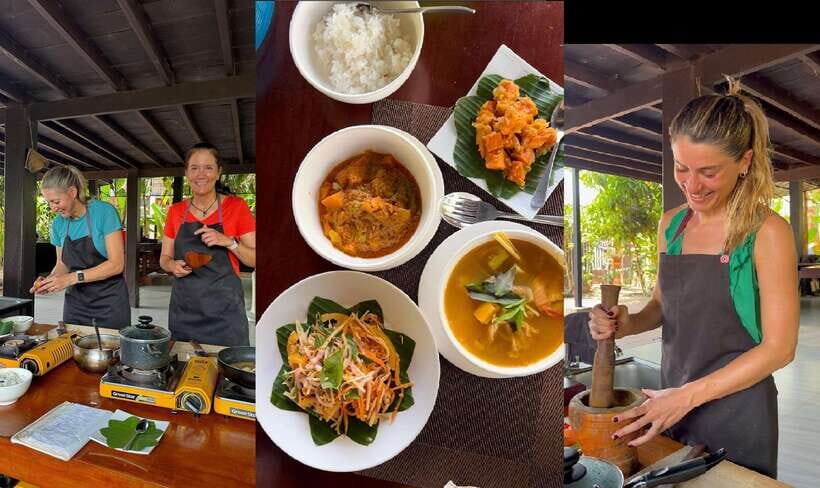
Fish Amok is often described as a signature Khmer comfort-food dish, and it earns the reputation. In class, it’s included as one of your four courses, so you’re not simply eating it—you’re making it.
What makes Fish Amok a great learning target is that it forces you to focus on two things:
- Aromatic foundations (the early mix that becomes the soul of the dish)
- Texture and richness (how the dish should feel when served)
This is also where the market shopping pays off. If you’ve just seen the key ingredients in front of you, you’re less likely to treat the recipe like a vague list. Instead, you can connect each step to the smell and the flavor it creates.
And when it goes well, it’s deeply satisfying because it’s not just “hot food.” It’s fragrant, creamy, and distinctly Khmer. That’s why most people remember this dish after they forget the rest of the itinerary.
Other cooking classes in Siem Reap
Tom Yum: balancing sour, heat, and aroma
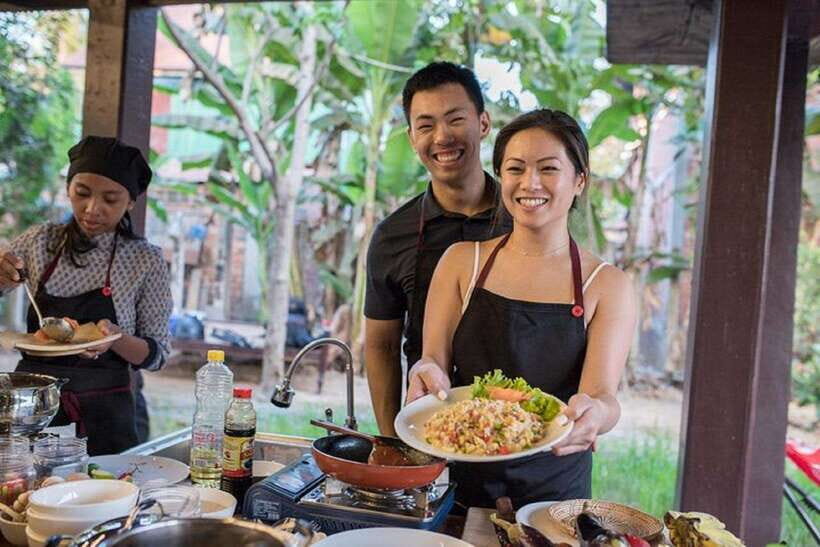
Tom Yum is another included course, and it’s the perfect contrast to Fish Amok. If Fish Amok can feel rich and rounded, Tom Yum is about brightness.
In practice, you’ll learn that Tom Yum isn’t simply a spicy soup. The guide’s instructions help you understand how sour elements and aromatic herbs work together. You’ll also get a feel for seasoning adjustments while cooking, which is one of the best takeaways you can bring home.
For future cooking, Tom Yum is a dish you can use as a model. Even if you don’t buy every exact ingredient again right away, you’ll know the direction: build aroma early, add tang, then tune heat and salt.
The meal at the end: four courses you can finally savor
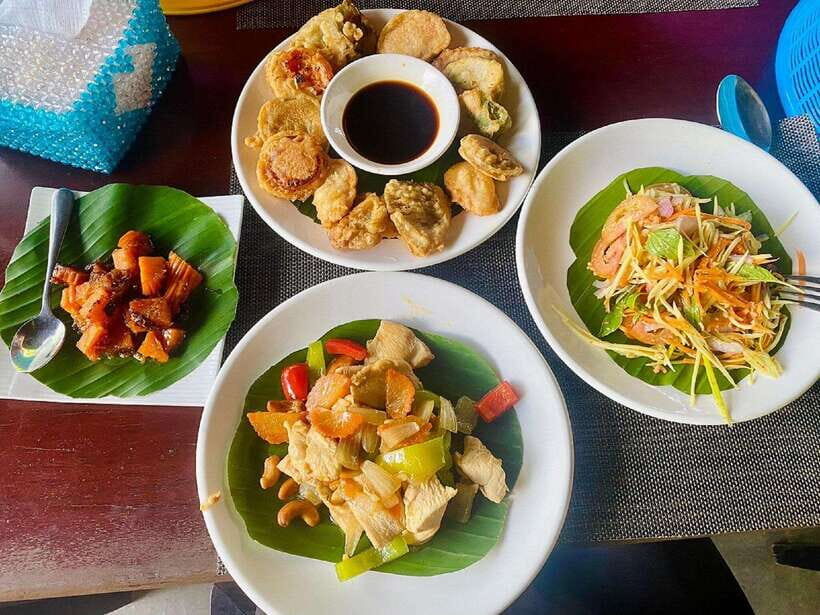
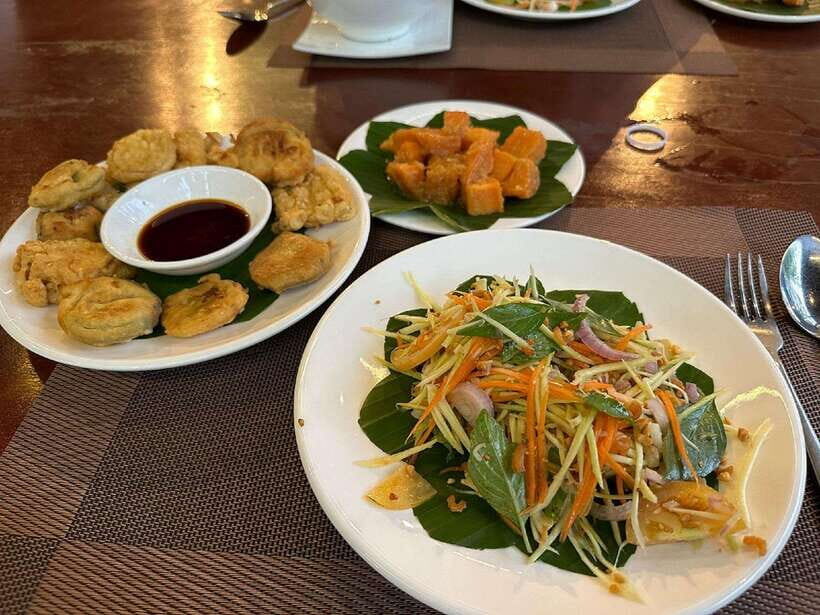
After you cook, you sit down to enjoy the meal. This is a big deal. Some cooking classes turn the “eating” into a quick snack and move you out fast. Here, the experience includes a four-course meal, and the point is clear: you get to taste what you made while it’s still fresh and you can actually talk about it.
You’ll likely appreciate the structure once you’re eating. You can identify which dish came from which technique. You can also compare flavors across courses: rich vs. bright, creamy vs. aromatic, mellow vs. hot.
You also get bottled water included, and alcohol is not included. That’s useful to know if you prefer to plan your own drink options.
Price and value in real terms: what you’re paying for
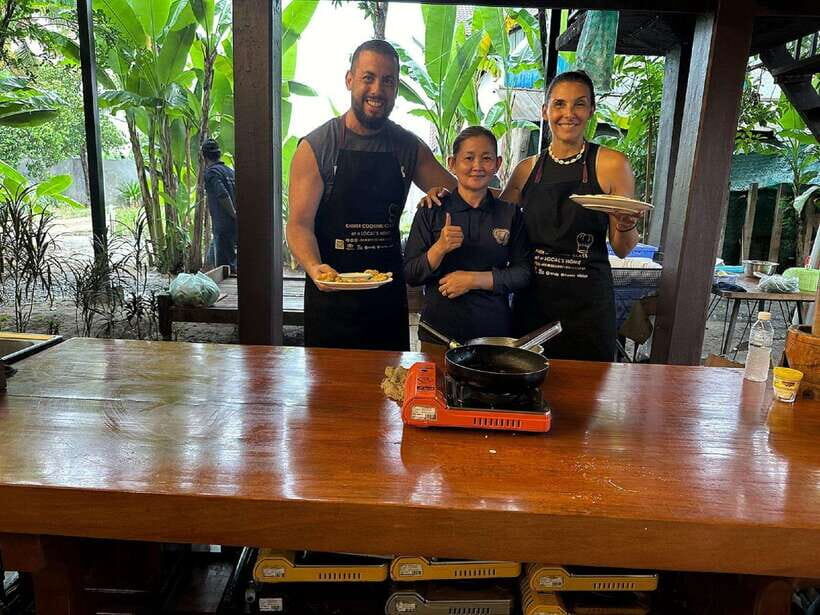
At $35 per person for about 3 hours, the value is strong because you’re not just paying for a recipe sheet. You’re paying for:
- Hotel pickup and drop-off
- Market shopping with fresh ingredients
- An English-speaking guide who teaches while you cook
- Ingredients for four dishes
- A sit-down meal at the end
In many places, the cost of a cooking class often jumps when you add extra stops or food shopping. Here, it’s integrated into the experience. You’re basically getting a guided half-day food event, plus dinner, without needing to figure out transport, ingredient sourcing, or dish sequencing.
If you enjoy food and want a more grounded Siem Reap experience than temple-hopping, this price makes sense. It’s also a good “use your guide time wisely” activity: a competent host does the translating between Cambodian flavors and your ability to cook them.
Who this class is best for (and who may want a different option)
This cooking class is ideal if you:
- Want real Cambodian food learning, not just tasting
- Like markets and seeing ingredients up close
- Enjoy cooking with instruction and then eating your work
- Travel with someone who’d enjoy sharing a meal with you
It may be less ideal if you:
- Hate markets or long walking in a heat-heavy environment
- Want a high-end, restaurant style experience rather than a home setting
- Are short on time and need a quick grab-and-go activity
For couples, solo travelers, and groups who like food, it’s a strong pick. For families, it could work well if kids are comfortable cooking and tasting, but you’ll want to check with the operator on comfort level in a home kitchen since the data here doesn’t specify.
Timing and comfort notes that matter
You’ll spend roughly 3 hours total, so plan a simple schedule before and after. You’ll start with pickup in a traditional tuk-tuk, then move to the market, then cook, then eat. It’s not a stop-start experience; it’s one food moment after another.
Also, remember the practical timing detail: you should wait for the driver about 30 minutes before the start. If you’re staying in a busy area, being ready (and nearby) helps the day run smoothly.
Should you book this Cambodian Cooking Class?
Yes, if you want a Siem Reap activity that feels personal and edible, not just photographed. The combination of market shopping, cooking four dishes, and then eating a four-course meal makes it feel like more than a demonstration. If Fish Amok is on your “must try” list, this is the most satisfying way to handle it, because you’ll learn how it’s built instead of just tasting a finished version.
Book it if you:
- Enjoy hands-on cooking and guided learning
- Want an English-speaking local host to translate flavors and techniques
- Like the idea of learning Khmer dishes you can recreate at home
Skip it if you’re looking for a big sightseeing day or you want a very formal setting. But if your travel style is food-first, this is one of the easiest wins you can make in Siem Reap.
FAQ
What is the duration of the Cambodian Cooking Class?
The class runs for 3 hours.
Where does the class take place?
It’s in Siem Reap Province, Cambodia.
What does the price include?
The price includes hotel pickup and drop-off, an experienced local host/guide, ingredients, a 4-course meal, and bottled water.
Is alcohol included?
No. Alcoholic drinks are not included.
Do I go to a market during the class?
Yes. You visit a local market first and purchase fresh ingredients for your Khmer dish.
How many dishes will I cook?
You’ll cook 4 authentic Khmer dishes, including Fish Amok.
What language is the instruction provided in?
The instructor is English.
What should I know about pickup timing?
You should wait for the driver about 30 minutes before the start time.
Is there a cancellation policy?
Free cancellation is available up to 24 hours in advance for a full refund.