REVIEW · SIEM REAP
Siem Reap: Angkor Temples Off-Track Bicycle Tour
Book on GetYourGuide →Operated by OFF TRACK Tours · Bookable on GetYourGuide
Angkor feels different when you pedal there. I love the off-track jungle paths and the fact that the guide adjusts to your pace, so you can actually enjoy the temples instead of just surviving them. The main catch: you need to be comfortable riding a bike, and the dress rules can be a bit strict (no shorts or sleeveless tops).
This is also a rare kind of Siem Reap tour. It’s run as a non-profit, and the money you spend helps fund free education and vocational training through KKO, plus local farms and restaurants. You’ll be in a small group (up to 7), which matters a lot when you’re trying to avoid the big crowds.
In This Review
- Key things I’d plan around
- Pedal Power and Temple Time: What This Tour Really Delivers
- Starting at Bayon Pastry School: Your Morning Setup
- Angkor Thom’s South Gate: Where the Day Gets Its First Big Payoff
- Bayon Temple (and a Possible Extra Stop Inside Angkor Thom)
- Lunch in the Jungle: Fuel, Flavor, and Local Support
- Preah Khan: Big Temple Energy, With Less Traffic Noise
- Ta Nei Temple, the Ghost Temple: Quiet That Feels Rare
- Ta Keo and Angkor Wat: Finishing Strong
- Price and Value: How $65 Makes Sense for the Right Person
- Non-profit Impact You Can Feel in the Day
- Small Group Pace: The Difference Between a Tour and a Day
- What to Wear and Bring So the Day Stays Pleasant
- Who This Tour Is For (and Who Should Skip)
- Should You Book This Off-Track Angkor Bicycle Tour?
- FAQ
- Do I need an Angkor Pass for this tour?
- What’s the meeting point?
- Is lunch included?
- How long is the tour?
- What’s the maximum group size?
- What language is the guide available in?
- What should I bring?
- Is it only for experienced bikers?
Key things I’d plan around
- Off-road jungle routing means you spend time where fewer people go, not just where tour buses stop.
- South Gate of Angkor Thom + Bayon Temple give you the classic Angkor story, but with breathing room.
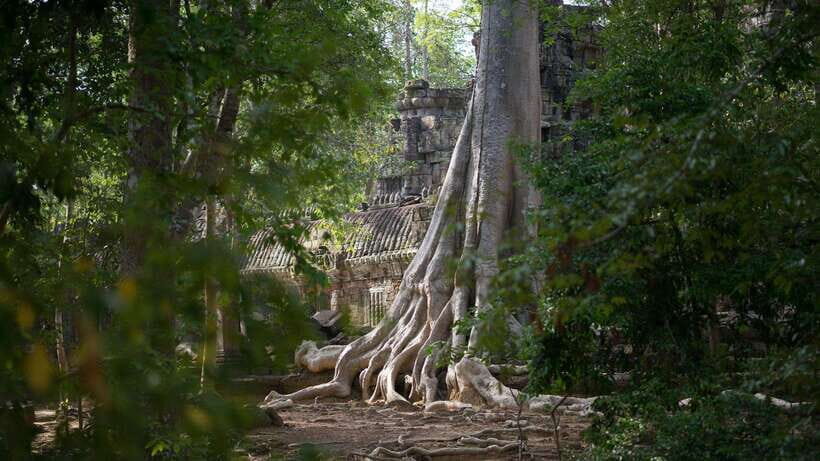
- Ta Nei Temple (Ghost Temple) is specifically chosen for its quiet, tucked-in feel.
- Included lunch in the jungle supports local places while keeping your day smooth.
- Quality bikes and a first-aid setup make it feel safer than “adventure rides” you might guess are less organized.
Pedal Power and Temple Time: What This Tour Really Delivers

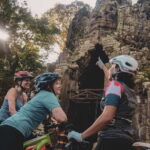
This Angkor temples bicycle tour is built around one idea: you get more out of Angkor when you’re not stuck with the herd. Instead of spending your day only at the busiest photo stops, you ride out through smaller paths and calmer temple areas. That shift changes the mood. The temples feel less like a checklist and more like places you arrived at through real landscapes.
You also get a guide who focuses on Khmer culture and the Angkorian Empire, not just pointing at carvings. That history context matters because Angkor can otherwise turn into a blur of stone faces and doorways. When your guide explains what you’re seeing, your photos look better too. You’ll notice details you’d otherwise walk past.
One more thing I like: the day is paced for humans. A small group of up to 7 means less waiting, fewer bottlenecks, and more time to ask questions. Even better, the tour can adapt if you need a tweak in the schedule or food needs, which is not something every day trip offers.
Other multi-temple archeological tours we've reviewed in Siem Reap
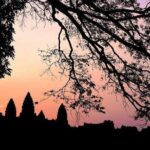
Starting at Bayon Pastry School: Your Morning Setup
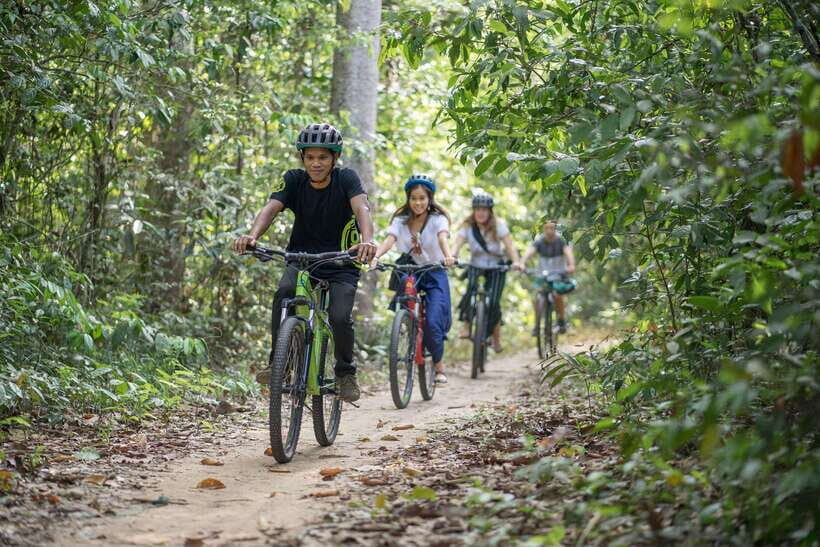
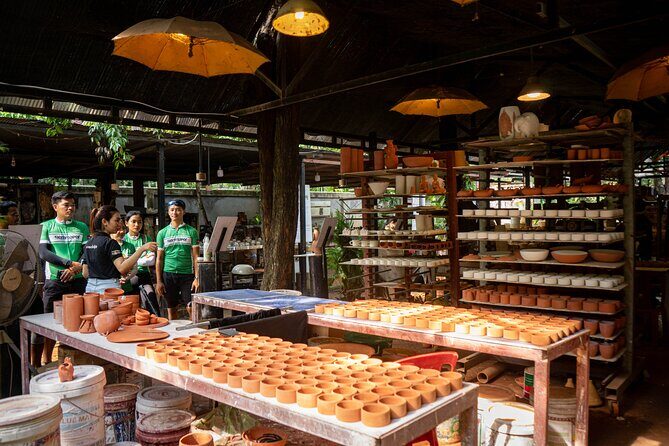
You meet at Bayon Pastry School in Siem Reap. It’s an easy, practical start point and a good reminder that this isn’t only about temples. The day begins with a short introduction, then you’re on the bikes toward Angkor Park.
The tour runs for about 8 hours, so you’re signing up for a full morning and early afternoon loop. The time commitment is part of the value. You’re not doing one temple and calling it a day. You’re riding, stopping, learning, eating, and then rolling back to town.
Two small practical notes that will save you discomfort:
- Bring sunscreen and insect repellent. Jungle heat and bugs are part of the deal.
- The tour has dress rules: no shorts, no short skirts, no sleeveless shirts. If you show up in typical hot-weather clothes, you may be stuck improvising.
Also, if you’re thinking about energy level: plan to ride steadily for long enough to feel like a bike day. This tour isn’t for people who can’t ride a bike.
Angkor Thom’s South Gate: Where the Day Gets Its First Big Payoff
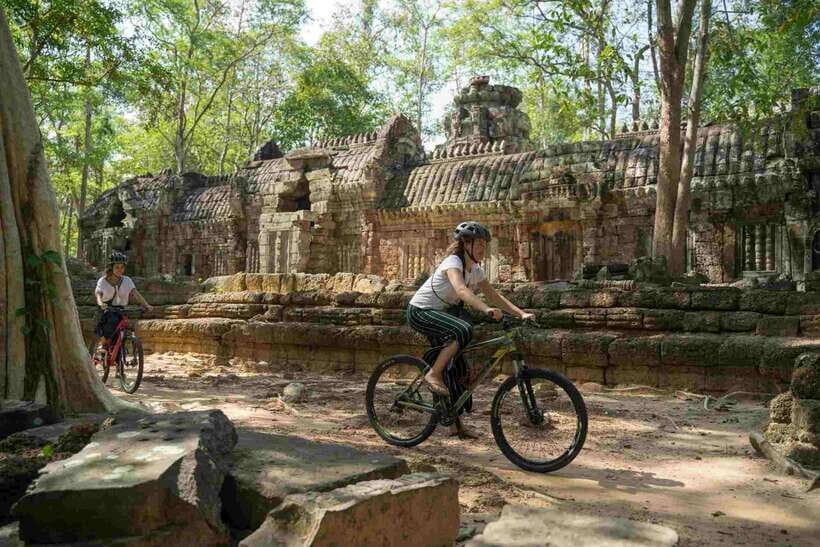
Angkor Thom is the classic walled city area, and the day starts steering you there. You’ll get a photo stop and then a guided visit and bike time focused on the South Gate. That’s a strong opening because it sets the tone for the whole loop: grand gates, strong geometry, and the sense of a designed city, not just scattered ruins.
You’ll also want to treat the South Gate as your warm-up for looking closely. Gates and walls are great places to practice the kind of attention your guide will likely bring to later stops. Once you understand how the space is organized, Bayon becomes much more meaningful.
A quick reality check: even when you’re trying to avoid crowds, Angkor is still Angkor. Expect some busy moments, but the overall strategy here is to reduce time in the busiest lanes and shift you into quieter parts of the area as the day goes on.
Bayon Temple (and a Possible Extra Stop Inside Angkor Thom)
Bayon Temple is one of the most recognizable parts of Angkor Thom, so it makes sense this is a core stop. You’ll visit with a guide, and the cycling time between stops keeps your legs moving instead of standing in one place too long.
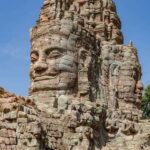
What makes this more enjoyable than the typical “arrive, take photos, leave” approach is that your guide gives you context as you go. Bayon’s faces can look like simple decoration until you understand what they represent and how the site fits into Khmer royal thinking. With that framing, you’ll likely notice recurring motifs and alignments more clearly.
There’s also a built-in flexibility here. The tour plan includes time to avoid crowds, and if you have the time, your guide may add a smaller temple within Angkor Thom such as Preah Palilay Temple. That matters because smaller temples are often where you get less noise and more atmosphere. Even if you don’t get the extra stop, the structure of the route aims to keep the day from feeling like a stampede.
Lunch in the Jungle: Fuel, Flavor, and Local Support
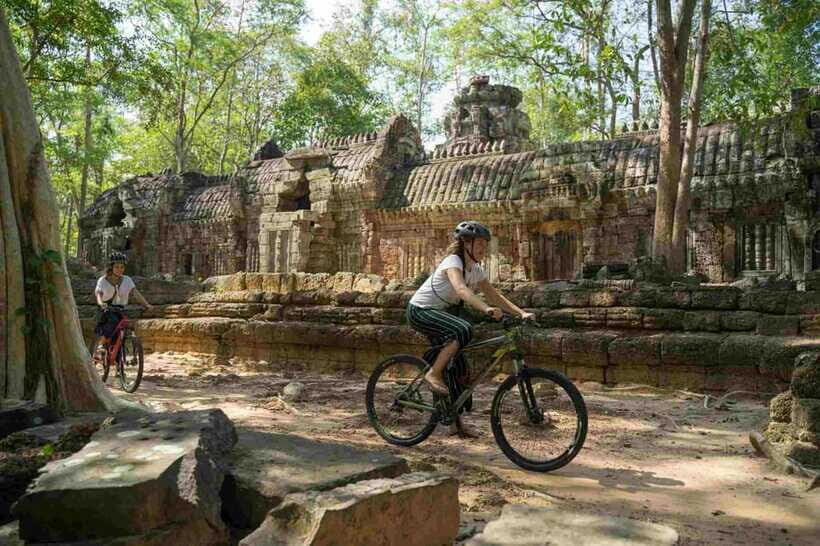
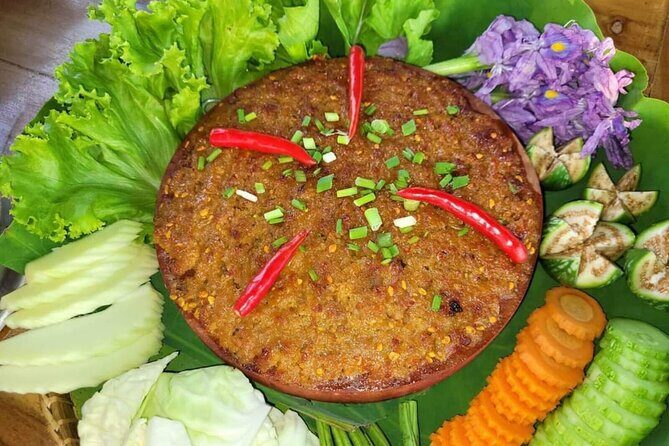
After the Angkor Thom segment, you’ll have lunch at a local restaurant in the jungle area. Lunch is included in the price, which helps keep the math easy when you’re planning your Angkor day.
This is also where the tour’s values show up in a practical way. The tour supports local restaurants, farms, and street vendors, so your meal is part of the local economy rather than just an engineered tourist stop. If you’re trying to travel with less impact, this is one of the simplest choices you can make.
The tour notes also include flexibility for food needs. If you want vegan food, you should be able to request it ahead of time, and the operator says they take care of needs like that. That’s a comfort for anyone who has had frustrating lunch experiences on temple tours in the past.

Preah Khan: Big Temple Energy, With Less Traffic Noise
After lunch, the route continues through the jungle to Preah Khan. This is where the “off-track” concept really starts paying you back. The plan specifically notes that there are other tourists, but it’s not as crowded as Bayon. That difference changes the feel of the carvings. You can actually slow down.
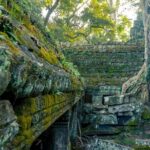
Preah Khan can feel like a living puzzle of stone and paths. When you’re moving by bike, you naturally spend more time passing around structures and entering from different angles. Standing and staring is only part of it. Riding helps you understand spatial relationships: where you came from, what lines connect, and how the temple area unfolds.
If you’re the type who likes photography, this stop can be great for framed shots away from the most obvious angles. Your guide can also steer your attention toward details you might miss if you’re rushing.
Ta Nei Temple, the Ghost Temple: Quiet That Feels Rare

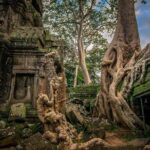
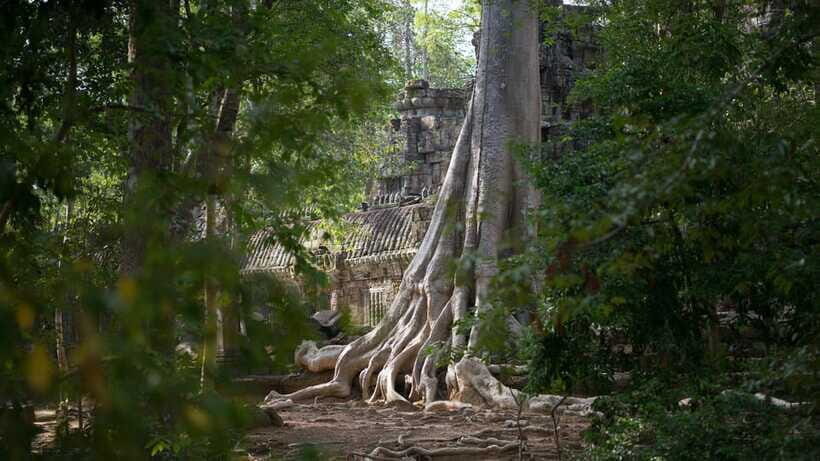
Next up is Ta Nei Temple, often called the Ghost Temple because it’s hidden and quiet in the jungle. This is the kind of stop you don’t stumble upon easily on your own, which is why a guided route matters.
The best part here is the low-key atmosphere. Quiet temples are where Angkor stops feeling like a theme park and starts feeling like something that grew out of a landscape. You’ll likely appreciate this even if you’ve seen other Angkor temples before, because the “feel” is different.
Also, this part of the day is designed to keep the overall experience calmer. The tour aims to avoid the most crowded areas, and Ta Nei is one of the intentional choices that supports that strategy.
Ta Keo and Angkor Wat: Finishing Strong
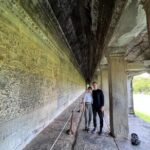
The last main temple segment includes Ta Keo Temple and then Angkor Wat before you head back to town. Ta Keo is often a memorable climb-and-view type of temple, and it gives the day a sense of upward momentum. It’s a good penultimate stop because it feels like escalation rather than repetition.
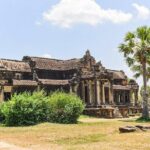
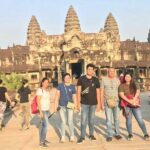
Then comes Angkor Wat. You’ll have photo stops and guided time here as well, plus cycling back afterward to return to Bayon Pastry School. Angkor Wat is the obvious star attraction, but doing it as the final stop changes your experience. You’ve already built context through the earlier temples, and your eye is likely more trained by then.
If you’re worried about getting tired at the end of the day, don’t ignore that feeling. This is an 8-hour outing with real riding time. The small group size helps because fewer people means fewer slowdowns, but you should still plan for heat and stamina.
Price and Value: How $65 Makes Sense for the Right Person
The price is $65 per person for an 8-hour small-group tour with lunch, a local guide, a bicycle, off-road jungle paths, and visits to multiple temple sites. On paper, it’s easy to see this as “reasonable.” In practice, the value comes from what’s included that many DIY or budget options often skip or replace with time-consuming planning.
Here’s what you’re paying for that matters:
- A guide who connects what you see to Khmer culture and the Angkorian Empire.
- Off-road routing that reduces time in the heaviest crowds.
- Lunch included in a local setting.
- Bike provision so you’re not dealing with rental logistics for a full-day temple ride.
- Non-profit impact tied to education and training through KKO.
Also, the tour is careful about equipment and safety. They provide quality bicycles and carry an emergency safety plan plus a first-aid kit. That doesn’t remove all risk from riding, but it suggests the operator takes the day seriously.
The biggest “value condition” is your fitness and comfort with biking. If you ride well and can handle a full day, the cost-to-experience ratio is strong. If biking sounds like a chore, you’ll likely feel the price more than the benefit.
Non-profit Impact You Can Feel in the Day
This is run by OFF TRACK Tours with a non-profit model. The tour emphasizes that profits support the NGO KKO – Khmer for Khmer Organisation, which provides free education to children in Siem Reap, plus vocational training. That’s the headline.
But what’s more useful for you as a buyer is how they say they operate day-to-day:
- They support local restaurants, farms, and street vendors.
- They also encourage time around the KKO school when you have spare time.
In practical terms, you’re not just buying a temple circuit. You’re funding education that affects local lives, and you’re putting money into places that serve the community rather than siphoning everything into large tourist infrastructure.
If you’re the kind of traveler who wants your money to do something beyond your own photos, this is one of the clearer ways to make that happen in Siem Reap.
Small Group Pace: The Difference Between a Tour and a Day
Small group tours are often marketed like a feature. Here, it’s functional. Limited to 7 participants, the guide can slow down for questions, adjust to your comfort level, and keep the riding manageable.
One theme from the kind of feedback this tour earns is that guides adapt. If you need a moment, they respond. If your pace is slower, they can work with it. That flexibility can be the difference between a tour that feels tense and one that feels like a real outing.
Language-wise, you’ll have a local guide with English and Cambodian. That’s helpful if you want history context and not just basic navigation.
What to Wear and Bring So the Day Stays Pleasant
This tour includes guidance that you’ll actually use.
Bring:
- Camera
- Sunscreen
- Insect repellent
Wear:
- Something with coverage that fits the no-shorts and no-sleeveless rule.
If you’re sweating a lot (and you will), lightweight long sleeves can help. Long pants may feel warm, but they align with the rules and also help with sun and bug protection. Consider that your comfort plan is also your access plan.
Who This Tour Is For (and Who Should Skip)
This tour is a great fit if you:
- Can ride a bike confidently.
- Want a slower, quieter Angkor day away from the most crowded routes.
- Like history explanations and culture context, not just temple photos.
- Value local impact and prefer tours that support education.
It’s probably not for you if:
- You can’t ride a bike.
- You hate riding for several hours in heat.
- You strongly prefer to do everything at a walking pace with minimal biking.
If you’re a “temple only” person who wants minimal physical effort, you might prefer a different Angkor format. If you want a mix of movement, learning, and calmer sights, this one is built for you.
Should You Book This Off-Track Angkor Bicycle Tour?
Book this tour if you want Angkor to feel like a journey, not a waiting room. The route planning centers on cycling through jungle and visiting temples with less crowd pressure, and the included lunch keeps your day easy to manage. On top of that, the non-profit education support through KKO is a meaningful reason to choose this operator over something purely transactional.
Skip it if biking is a non-starter for you, or if your priority is maximum time at only the biggest headline sights with minimal riding. Also, take the dress rules seriously. Showing up unprepared can turn a good day into a logistics scramble.
If you’re ready to pedal and you want the quieter Angkor experience, this is the kind of day trip that leaves you with more than photos. You leave with stories you can explain.
FAQ
Do I need an Angkor Pass for this tour?
Yes. An Angkor Pass is not included, so you’ll need to arrange it separately.
What’s the meeting point?
You meet at Bayon Pastry School in Siem Reap.
Is lunch included?
Yes. Lunch is included, and it’s served at a local restaurant in the jungle area.
How long is the tour?
The tour runs for 8 hours.
What’s the maximum group size?
The group is limited to 7 participants.
What language is the guide available in?
The live tour guide speaks English and Cambodian.
What should I bring?
Bring a camera, sunscreen, and insect repellent.
Is it only for experienced bikers?
No special experience is mentioned, but it is not suitable for people who can’t ride a bike.