REVIEW · SIEM REAP
Angkor Wat Private Day Tour from Siem Reap
Book on Viator →Operated by Green Era Travel · Bookable on Viator
Big stone, tangled roots, with a real guide. This private Angkor Wat day tour maps the UNESCO Angkor Archaeological Park highlights and gives you a clear story, from Angkor Wat’s enduring bas-relief to the jungle takeover mood of Ta Prohm. You’ll also get a guided walk through Angkor Thom (South Gate, Bayon, and the terraces), then a calm wrap-up back to your hotel in an air-conditioned vehicle.
I like the personal pacing this kind of private tour gives you: you’re not stuck waiting for a big group between stops. I also like that the guide focus isn’t just big views—it’s the meaning behind the carvings and motifs, with real examples from guides such as Perth, Roem, Choud, and Nak who are repeatedly praised for clear explanations and warm attention.
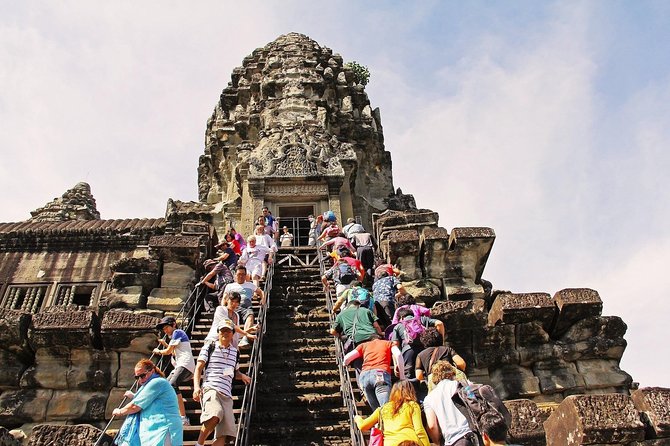
One thing to plan for: this is a long, hot day with lots of steps and walking. If you come in with low stamina for heat, you may feel it by the time you reach Ta Prohm.
In This Review
- Key things that make this tour work
- Angkor Wat Private Day Tour: what feels different right away
- Price and logistics: the real value behind the $49
- Your schedule in plain terms (and why the timing matters)
- Stop 1: Siem Reap start and your first orientation hour
- Stop 2: Angkor Wat for the bas-relief and the layout story
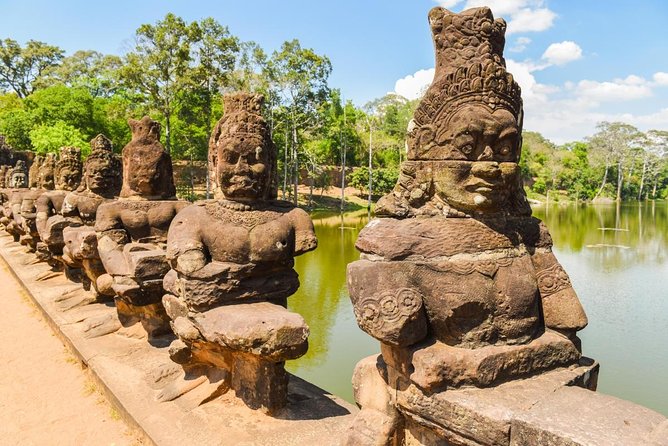
- Stop 3: Angkor Thom South Gate and the scale of the walls
- Stop 4: Bayon Temple and the “smiling faces” effect
- Stop 5: Terrace of the Elephants and the Leper King sculpture
- Stop 6: Ta Prohm for tree roots and a different kind of ruin
- The guide and driver experience that makes the day feel easy
- Dress code, shoes, and pacing tips that actually help
- Who this Angkor day trip is best for
- Should you book this Angkor Wat Private Day Tour from Siem Reap?
- FAQ
- What time is pickup, and how long is the tour?
- What’s included in the tour price?
- What extra costs should I budget for?
- Are admission tickets included for Angkor Wat and the other temples?
- What should I wear for the temples?
- Is this tour private, and can I cancel for a full refund?
Key things that make this tour work
- Private guide attention: you can ask questions about iconography and motifs instead of tuning out crowd noise.
- Comfort between temples: cold bottled water is included, and many guides also help keep you cool during walks.
- The “enduring vs invasive” contrast: clean, precise Angkor Wat stonework versus tree-root chaos at Ta Prohm.
- Major Angkor Thom hits in one loop: South Gate, Bayon’s face towers, and the Elephant/Leper King terraces.
- Flexible transport for your group size: tuk-tuk for 1–2 people, minivan if you’re 3+.
- A guided photo and orientation advantage: you spend less time guessing and more time seeing.
Angkor Wat Private Day Tour: what feels different right away
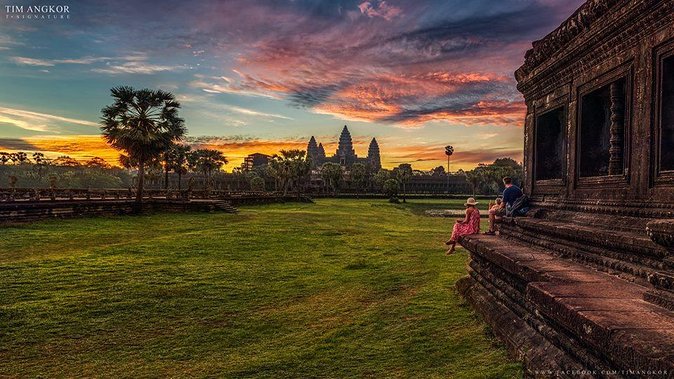
This is the kind of Angkor day trip that helps you understand what you’re looking at. Angkor can be overwhelming. You arrive, you see jaw-dropping architecture, and then you’re left trying to connect dots on your own. Here, the guide brings those dots together—how the temples were built, what you’re looking at on the walls, and why the layout matters.
A private format also changes the rhythm. Instead of one fixed pace that suits a group, you can move at a human speed, pause when a carving catches your eye, and keep your energy for the stops that matter most to you. That’s exactly what shows up again and again in the service experience with guides like San, Sammy, Dy, and Sorphea—people who handle the day smoothly and keep conversations flowing, not lecture-style, just steady storytelling.
If you're still narrowing it down, here are other tours in Siem Reap we've reviewed.
Price and logistics: the real value behind the $49
On the surface, $49 per person looks like a steal for a private tour. The fine print matters, though: the Angkor National Park ticket is required and runs $37 per person, and food/drinks aren’t included. Add that up and you’re closer to $86 for the core day, before lunch.
So is it still good value? For most people, yes—because you’re paying for time and local expertise, not just transport. This tour includes:
- hotel pickup and drop-off
- transportation (tuk-tuk for 1–2, minivan for 3+)
- an English-speaking guide
- cold bottled water during the tour
Also, the itinerary is built around top “must-sees” without scattering you across the park for hours on end. You hit Angkor Wat, Angkor Thom, Bayon, the terraces, and Ta Prohm in one loop, which saves you from spending your limited Cambodia time hopping between disconnected plans.
Your schedule in plain terms (and why the timing matters)
Pickup is at 8:00 AM from your hotel, and the day runs about 6–7 hours. That timing is part strategy, part reality. You’re heading into a well-traveled site, and by late morning the crowds and heat can stack up fast.
This itinerary also makes sense physically. It starts with Angkor Wat first (the big anchor), then moves outward to Angkor Thom’s gates and temple faces, and finally ends with Ta Prohm where walking and photo stops can slow you down. If you’re the kind of person who likes to linger at carvings, you’ll appreciate that the order keeps your energy from disappearing too early.
Stop 1: Siem Reap start and your first orientation hour
The morning begins with pickup at your hotel in Siem Reap and your transfer into the Angkor area. That first hour functions like an orientation block: you get moving, you get your bearings, and you start building a mental map before the big complexes.
It’s also a practical time to settle in. You’ll be thinking about dress code, water, and how you’ll handle walking before the first major temple stop. Since the whole day includes a lot of steps, I’d rather spend that early hour getting ready than rushing once you’re already sweaty.
Stop 2: Angkor Wat for the bas-relief and the layout story
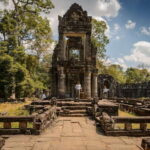
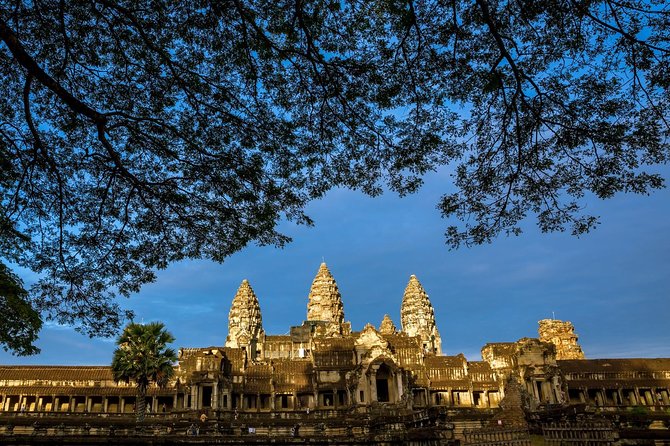
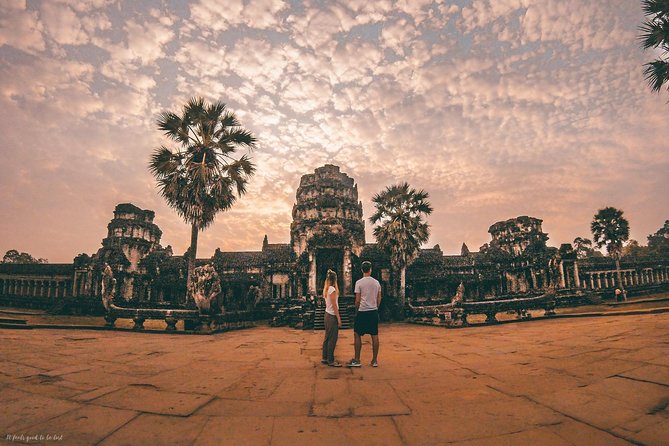
Angkor Wat is the headline, and it earns it. The temple complex dates to 1113–1150 AD, dedicated to Vishnu, and it’s considered the best preserved of the Angkor temples. Even if you’ve seen photos, standing in the space is different. Scale does something to your brain.
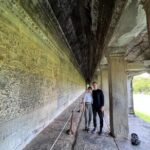
Here’s where a guide earns their keep. Angkor Wat is filled with iconography—motifs and scenes carved into stone. The tour also calls out a standout feature: the world’s longest continuous bas-relief at Angkor Wat. If you don’t know how to read bas-relief storytelling, it can look like endless detail. With a guide, you start recognizing themes and understanding how the images connect to the temple’s purpose.
What to watch for:
- how the walls and corridors guide your movement through the story
- details you’d miss if you were just speed-walking for photos
- why the temple’s design feels so controlled compared with later ruins
Possible drawback: Angkor Wat is busy and exposed in parts. If you’re prone to heat fatigue, you’ll want to pace your walking and take shade when you can.

Stop 3: Angkor Thom South Gate and the scale of the walls
Next you shift to Angkor Thom, starting at the South Gate. This isn’t just a postcard arch. The tour highlights the engineering scale of the walled city: the walls are described as about 6 meters wide, 8 meters high, and stretching roughly 13 kilometers in length.
That wall scale matters because it changes how you see the temples inside. Angkor Thom isn’t random ruins; it was a planned, enclosed royal city area. Standing near the gate, you can feel the idea of power and order.
If you want good photos, this is also a smart stop because it’s built for viewpoints and approach angles. The guide can help you find positions that show the gate without turning the day into constant repositioning.
Stop 4: Bayon Temple and the “smiling faces” effect
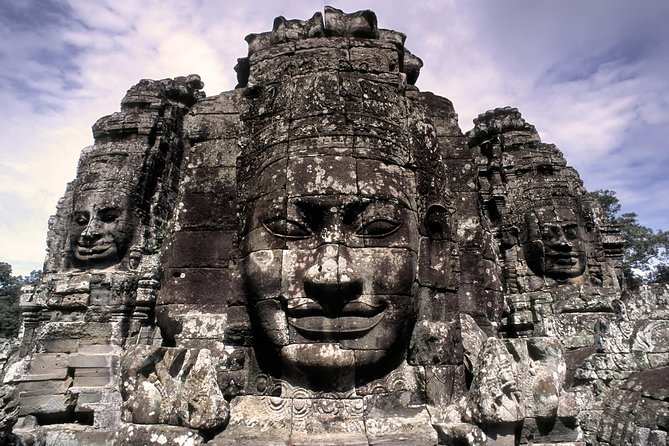
Bayon Temple is the moment where Angkor shifts from stone storytelling into sheer visual impact. The itinerary focuses on Bayon’s 200 smiling faces, a feature that makes this temple instantly recognizable.
What I like about having a guide at Bayon is simple: you stop treating it like a single attraction and start seeing it as part of a complex urban design. The Bayon sits at the center of Angkor Thom, and the guided walk helps you understand what that meant for the city’s ritual and daily symbolism.
What this stop is good for:
- learning what you’re actually looking at on the towers
- understanding the temple as a hub, not just a photo wall
- slowing down just enough to appreciate repeated patterns
Trade-off: This is another heavy-walking stop, and the faces don’t come all at once. If you’re exhausted, it’s easy to rush. Go slow enough to take in the composition, not just individual carvings.
Stop 5: Terrace of the Elephants and the Leper King sculpture
Then you move into the terraces. These are the places where your guide’s commentary becomes extra valuable, because terrace carvings can be dense. The tour covers the Elephant Terrace, named for its standout elephant depictions, and it also includes the Terrace of the Leper King, tied to a famous sculpture commonly referred to as the leper king.
Terraces are a great “learning payoff” stop. From a short distance, you might think, okay, decorations. From the right angle and with context, you see scenes and symbolism that connect to the temple’s larger world.
Practical note: terraces involve uneven surfaces and lots of visual scanning. Good walking shoes help a lot here, especially if you’re dealing with humidity.
Stop 6: Ta Prohm for tree roots and a different kind of ruin
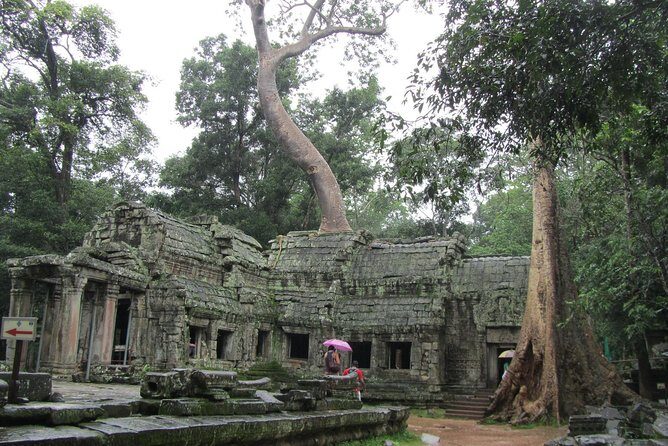
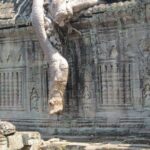
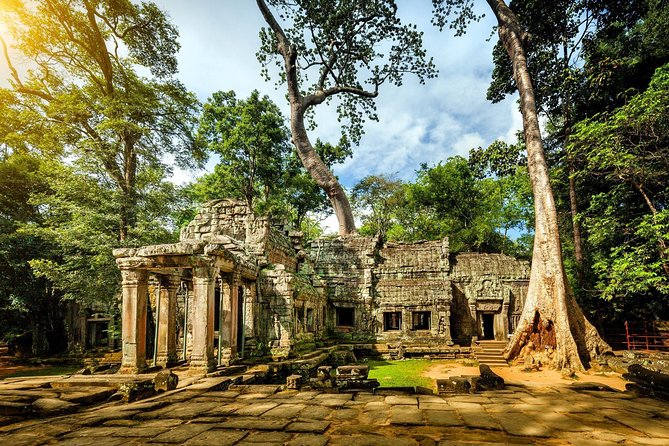
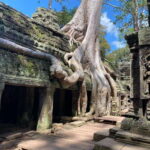
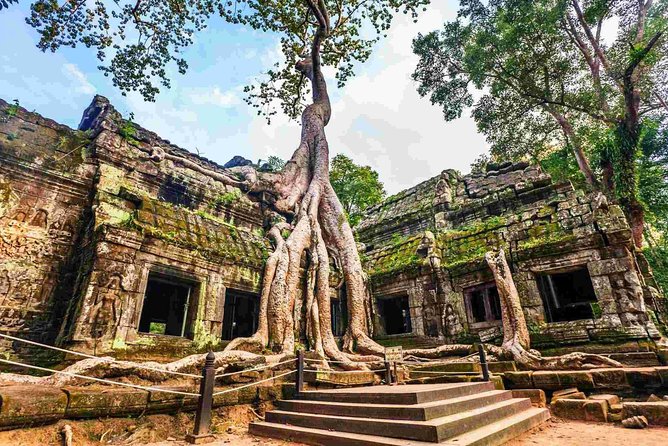
Ta Prohm is where Angkor feels wild again. Instead of clean, intentional stone lines, you see ruins partly swallowed by roots. The contrast is the point: Angkor Wat’s lasting construction versus the invasive “nature takes over” mood at Ta Prohm.
This is also the stop where the day’s pace can change. People often slow down here because the photos are endless, and the framing is different every few steps. The tour is built with a dedicated block of time (about an hour), so you’re not fighting the clock.
There’s also guided context here about how the site was treated by French archaeologists—left in a way that lets you see the interaction between stone and roots instead of presenting it like a fully restored fantasy.
Tip: bring your focus for this one. Pick a couple of carvings or root formations you want to study, then take wide shots to place them in context. Otherwise you’ll run out of energy before you really see the site.
The guide and driver experience that makes the day feel easy
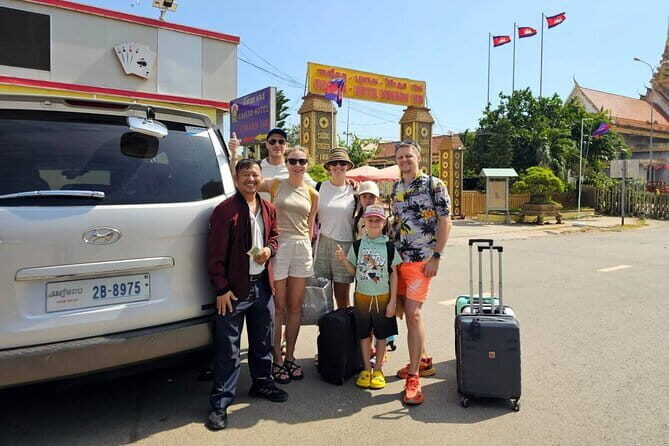
Transportation is part of what makes this tour comfortable. If you’re 1–2 people, you travel by tuk-tuk. If you’re 3 or more, you ride in a minivan. Either way, you get a private setup that lets you hop between stops without losing time to crowd congestion.
And then there are the small cooling touches that matter in Cambodia heat. Cold bottled water is included. Plus, guides and drivers in this style of tour are often praised for keeping you comfortable between temple segments, including cooling towels and quick check-ins after walks. Names like Channa, Cheang, Choub, Mr. Sim, and Samun show up tied to safe, attentive driving and smooth timing.
At the end, the tour includes a debrief and return to your accommodation in an air-conditioned private vehicle. That matters more than you’d think. You’re done walking, you’re sunburn-tired, and you want the day to end with a calm ride, not more chaos.
Dress code, shoes, and pacing tips that actually help
This tour has a clear clothing rule: only pants or knee-length skirts/dresses are permitted. That’s not just bureaucracy. It helps you move comfortably through temples and manage the day without feeling underdressed or stopped.
Bring good walking shoes. Angkor involves uneven stone, lots of steps, and long stretches where your legs will ask you to hurry. If you’re trying to see everything, don’t treat it like a sprint. The people who enjoy it most are the ones who slow down at key carvings and accept that there’s no such thing as seeing every detail in one day.
Also, plan for moderate physical fitness. You’re not climbing mountains, but you are doing repeated walking and steps in heat.
If you’re traveling with kids, they must be accompanied by an adult. And if you want a specific language, the tour may sometimes be operated by a multi-lingual guide with an extra surcharge depending on availability.
Who this Angkor day trip is best for
This is a strong fit if:
- you want a structured route through Angkor Wat + Angkor Thom + Ta Prohm without decision fatigue
- you care about understanding what you’re seeing, not just taking pictures
- you’re short on time and want the “big hits” in one day
- you prefer a private pace, especially if you’re traveling as a couple
It may be less ideal if:
- you dislike long walking and stairs in heat
- you want a very relaxed, slow museum-style visit with minimal walking
Should you book this Angkor Wat Private Day Tour from Siem Reap?
Book it if you want the fastest route to the core Angkor temples with context, comfort, and a guide who can explain why the carvings matter. The combination of Angkor Wat’s bas-relief focus, Bayon’s face towers, terrace sculptures, and Ta Prohm’s root-choked drama gives you a well-rounded Angkor day without feeling scattered.
Skip it (or adjust your expectations) if you know you’ll struggle with the heat and steps. In that case, you might still want a shorter route, or you’ll need to bring smart pacing habits from the start.
If you’re deciding today: this private format is the main reason it’s worth it. It turns Angkor from a photo list into a story you can actually follow.
FAQ
What time is pickup, and how long is the tour?
Pickup is scheduled for 8:00 AM, and the tour typically runs about 6 to 7 hours.
What’s included in the tour price?
The tour includes hotel pickup and drop-off, transportation (tuk-tuk for 1–2 people or a minivan for 3+), an English-speaking guide, and cold bottled water.
What extra costs should I budget for?
You must buy the Angkor National Park ticket (37 USD per person). Food and drinks are not included, and gratuities are also not included.
Are admission tickets included for Angkor Wat and the other temples?
No. Admission ticket costs are not included for Angkor Wat, Angkor Thom South Gate, Bayon Temple, Terrace of the Elephants, or Ta Prohm.
What should I wear for the temples?
You need to wear pants or a knee-length skirt/dress. You should also bring good walking shoes because there’s a lot of walking and steps.
Is this tour private, and can I cancel for a full refund?
Yes, it’s a private tour with only your group participating. There is free cancellation up to 24 hours in advance for a full refund.