REVIEW · SIEM REAP
Cambodia 7 Days Tour from Siem Reap to Battambang and Phnom Penh
Book on Viator →Operated by About Cambodia Travel & Tours · Bookable on Viator
Seven days can change how you see Cambodia.
This route strings together three very different sides of the country: Angkor Wat-level wonder, rural waterways around Tonle Sap, and Phnom Penh’s hardest-history museums. You’re also moving with a real plan—private transport, an English-speaking guide, and the key entrances handled—so you spend less time figuring things out and more time actually looking.
What I like most is the combo of private guide + private transport, which makes temple days and museum days feel controlled instead of chaotic. I also really appreciate that daily breakfasts plus admission fees are included, along with bottled water—small things that keep your budget from getting jumpy.
The only thing to watch is the pace. With long days of walking, heat, and a couple of emotionally heavy stops in Phnom Penh, you’ll want comfortable shoes and a little mental room.
In This Review
- Key highlights worth planning for
- The Route: Siem Reap to Phnom Penh with temples, water, and history
- Angkor Wat: The City of Temples, organized for real viewing
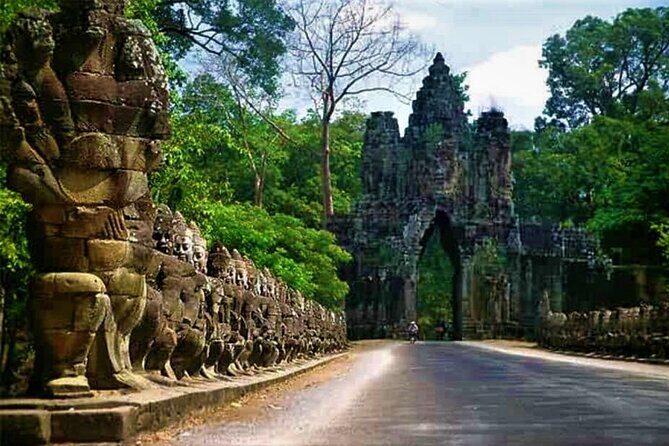
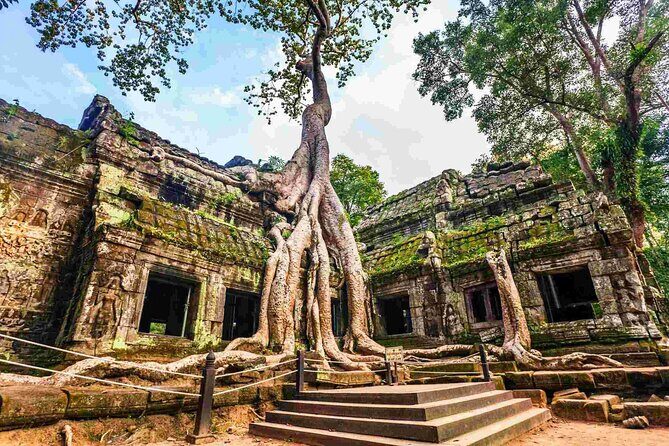
- Angkor Thom South Gate to Ta Prohm: elephants, faces, and time-worn stone
- Angkor beyond the big names: Banteay Chhmar and the value of variety
- Tonle Sap Lake and Kampong Phluk: the real Cambodia runs on water
- Artisans Angkor and Wat Bo: a cultural break that doesn’t feel like a detour
- Battambang by norry bamboo train: fun that stays practical
- Battambang Central Market and White Elephant Pagoda: slow city energy
- Peace Museum, pagodas, and the countryside pace
- Udong Mountain and the meditation stop near Phnom Penh
- Phnom Penh: royal sights and Khmer Rouge memory in the same week
- Phnom Penh’s walkable sights: markets, pagodas, and monument time
- Hotels and transport: what private routing really changes
- Price and value: what $1,025.05 covers (and what it doesn’t)
- Who should book this tour (and who might want a slower version)
- Should you book this Cambodia 7-day loop?
- FAQ
- What’s included in the tour price?
- Is pickup provided?
- What if I need a single room?
- Which major sites will I see in Phnom Penh?
- Is this a private tour?
- How does cancellation for a full refund work?
Key highlights worth planning for
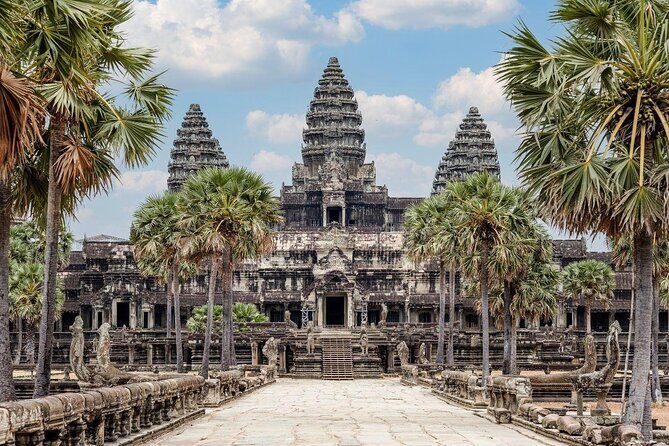
- Angkor Wat plus the full Angkor Thom circuit: South Gate, Bayon, Ta Prohm, and more in a single stretch
- Tonle Sap and Kampong Phluk: floating life and mangrove scenery on the biggest freshwater lake in Southeast Asia
- Battambang’s norry bamboo train: simple, fast, and always on time by local standards
- Battambang bat caves at sunset: millions of bats streaming into the sky from Phnom Sampeau
- Khmer Rouge history in Phnom Penh: Cheung Ek and two major genocide sites
- One group only: it’s a private tour, so your schedule stays yours
The Route: Siem Reap to Phnom Penh with temples, water, and history
This is a classic Cambodia sweep—start in Siem Reap, end in Phnom Penh, and cover Battambang in between. The big win is that you’re not bouncing around on your own. You arrive, you get picked up, you move city to city, and each day includes a packed set of stops with entrances and a guide.
The itinerary also helps you experience Cambodia in layers. Day 2 is all about Angkor’s stone giants. Day 3 shifts to water and everyday village life. Day 4 slows into Battambang’s countryside rhythm, from markets to pagodas to bats. Then Phnom Penh brings the emotional weight—royal monuments on one hand, genocide documentation on the other.
If you’re the kind of person who likes structure (and hates wasting time on ticket lines and map puzzles), this format usually works very well.
Other Phnom Penh transfer tours we've reviewed in Siem Reap

Angkor Wat: The City of Temples, organized for real viewing
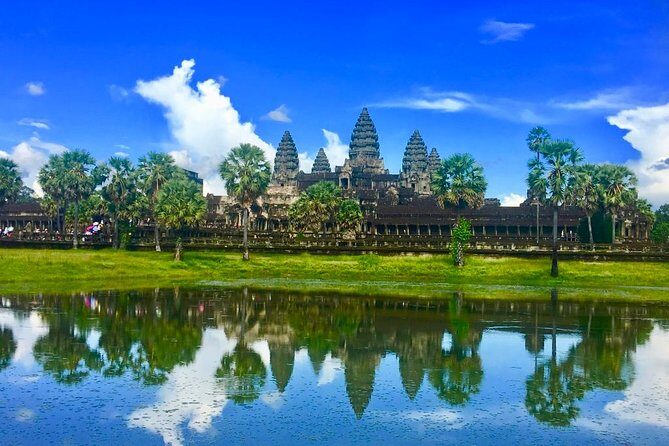
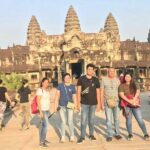
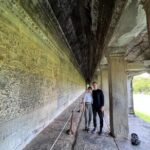
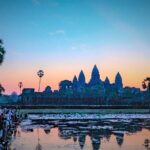
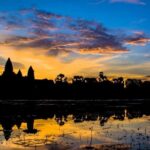
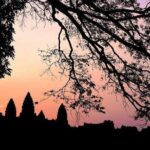
Angkor Wat is the name everyone knows. What makes it land better here is that it’s part of a multi-temple day, not a quick photo stop. You get time to understand why Angkor still feels engineered—proportions, reliefs, and the way the complex is laid out so it rewards slow looking.
Angkor Wat is also a different mood than Ta Prohm or Bayon. It’s more geometric, more composed. If you want one “anchor” experience for your first Cambodia week, Angkor Wat is that moment.
Practical tip: Angkor sites can get hot fast. You’ll want a hat, water, and clothing that covers shoulders and knees. Even with entrances included, you still need to be comfortable enough to walk.
Angkor Thom South Gate to Ta Prohm: elephants, faces, and time-worn stone
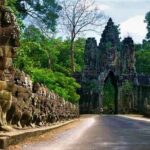
Day 2 is where your feet meet your imagination. The circuit starts at Angkor Thom South Gate, then moves into some of the most recognizable Angkor identities:
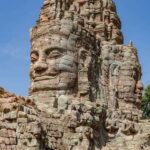
- Bayon Temple: those late-12th-century faces at the center of the royal city idea—more haunting than you expect.
- Baphuon and Phimeanakas: quieter stops that give you context for how power and architecture were tied together in Jayavarman-era design.
- Terrace of the Elephants: you’ll see the famous bas-reliefs that helped portray ceremonies and movement through the royal spaces.
- Terrace of the Leper King: ornate bas-reliefs and a lot of detail if you pause instead of rushing.
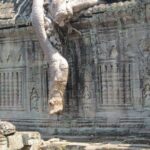
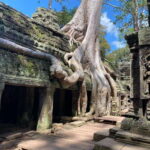
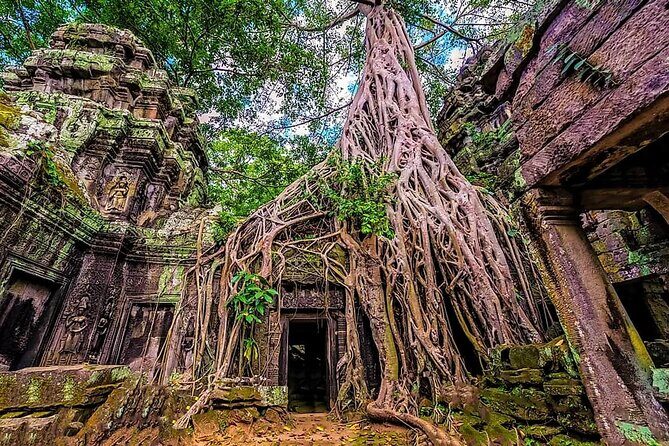
- Ta Prohm: the “trees and stones” look that many people think they know—until they stand there and realize how much effort went into clearing and strengthening paths.
One reason this day feels satisfying is that the stops aren’t random. They follow the “royal city” theme: entrances, royal structures, ceremonial terraces, and then the kingdom’s most famous jungle-gone-temple.
Possible drawback: this day is a lot. If you know you’ll get temple fatigue, take small breaks. Sit when you can. The stone will still be there.
Angkor beyond the big names: Banteay Chhmar and the value of variety
The tour’s overview also includes Banteay Chhmar, described as an ancient temple hidden in the jungle. Even when Angkor is your main focus, variety matters. Big complexes can blur in memory. A lesser-frequented temple concept helps you separate the “once-in-a-lifetime wow” from the “more real-life feeling” of ruins in nature.
I like how that kind of stop keeps your week from turning into a single visual theme. You’re still in the Angkor world, but the texture changes.
Tonle Sap Lake and Kampong Phluk: the real Cambodia runs on water
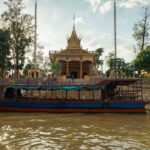
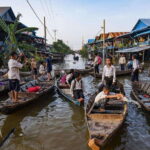
Day 3 shifts away from stone. You visit Tonle Sap Lake and then Kampong Phluk Floating Village. This is one of the best ways to understand Cambodia without trying too hard.
Tonle Sap matters because it’s described as the largest freshwater body in Southeast Asia, and the local economy connects directly to fishing and harvest. Then Kampong Phluk adds the natural layer with mangroves in the area. You get scenery, plus you see how people live with the water rather than against it.
A good sign here: the tour doesn’t just toss you into a viewpoint. It builds an arc—lake ecology first, floating village second—so you know what you’re looking at.
What to watch: you’ll likely be around village life and uneven ground. Wear footwear that can handle it, and keep your phone secured.

Artisans Angkor and Wat Bo: a cultural break that doesn’t feel like a detour
Day 3 also includes Artisans Angkor, a social business that supports young people in rural areas while reviving traditional Khmer craftsmanship. In plain terms, it’s the sort of stop that helps you understand how Cambodia is building back from disruption.
Then you visit Wat Bo, which includes older pagoda history and well-preserved wall paintings from the 19th century. Even if you’re not a temple-architecture person, wall paintings usually make a difference because they show everyday stories and religious art styles that are hard to get from photos.
There’s also time at the Royal Residence in Siem Reap. It’s a quick look, but it adds to the sense that Cambodia’s royal story still shapes the places you walk through.
Battambang by norry bamboo train: fun that stays practical
If Angkor is your “I can’t believe this exists” day, Battambang is your “this feels real” week. The star is the bamboo train—also called norry.
The tour frames it as simple transport that’s become a cultural experience. It’s described as fast and always on time (by the standards of a small roadside system), and the whole thing is built for fun. You’ll ride it as a moving slice of Cambodia, not as a staged theme park.
Practical tip: bring sun protection. The ride is outdoors, and the countryside light can be brutal.
Battambang Central Market and White Elephant Pagoda: slow city energy
Battambang’s Central Market is included for a full market look, and then you go to White Elephant Pagoda (Wat Tahm-rai-saw). The pagoda is described as a meaningful landmark and a known place locally, which is exactly what you want on a city day. You’re mixing commerce with quiet religious architecture.
This section is also where the tour’s “private” style shows. You can ask questions as you go: about daily trade, about why specific pagodas matter, about what people do near these sites. A guide matters more in markets than in museums.
Peace Museum, pagodas, and the countryside pace
Day 4 doesn’t stop at “pretty sights.” It includes the Cambodia Peace Gallery / Cambodia Peace Museum—focused on recovery and peace engagement after the trauma rooted in the country’s history. After Angkor’s grandeur and Tonle Sap’s everyday life, this museum stop helps you keep your understanding balanced.
Then you head to Ek Phnom Pagoda and Phnom Sampeau. Ek Phnom is described as atmospheric and partly collapsed, with laterite walls and an older baray reference in the setting. That kind of structure often feels more honest than perfectly restored sites because you can see the passage of time.
And finally, you’ll get the big spectacle: Battambang Bat Caves at the foot of Phnom Sampeau, with the description of the sun sinking and millions of bats pouring from caves into the sky.
That last one is worth planning for. If you can, time your energy so you’re not running on fumes. This is the kind of moment that deserves your attention.
Udong Mountain and the meditation stop near Phnom Penh
Day 5 is a transition day. You leave Battambang and head toward the capital area. Along the way you make a stop at Udong Mountain, once the site of a royal capital from the 17th to 19th centuries. You also get the detail that the mountain has two mounds connected by a bridge-like structure.
This is a good “reset” before Phnom Penh’s dense city stops. Mountain views can also help you mentally shift from ruins and water into the political and memorial story of the capital.
The itinerary also includes a stop at a Vipassana-style center (listed as QQW7+WQH) where the primary purpose is teaching meditation techniques. You can wander the gardens and grounds and enter the main temple area. Even if you don’t meditate, it gives you space to breathe.
Phnom Penh: royal sights and Khmer Rouge memory in the same week
Day 6 is the emotional core of the trip. It starts with Cheung Ek killing field, described as a historical site connected to Khmer Rouge regime killings around Phnom Penh.
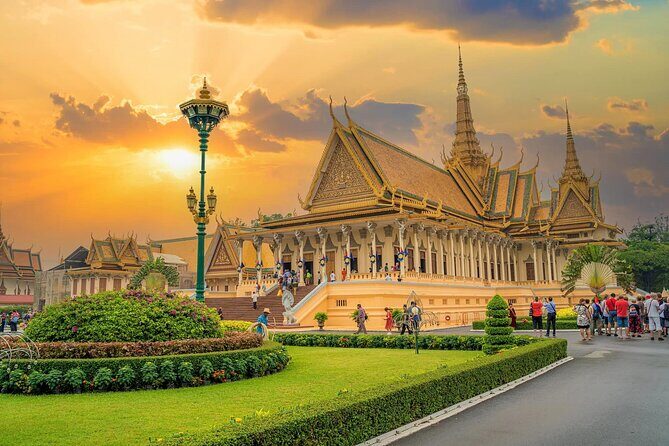
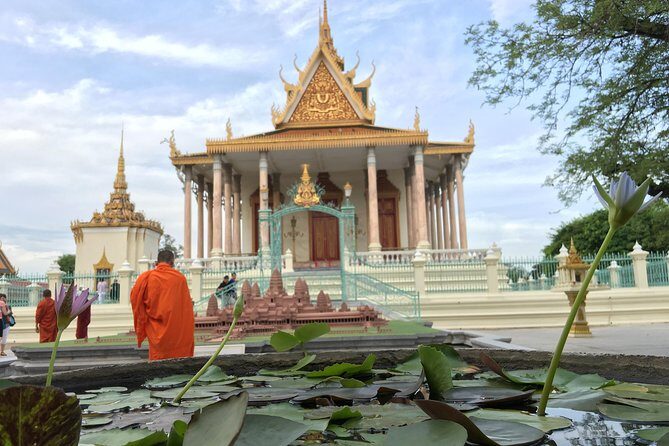
From there, you move into the Royal Palace area: Royal Palace construction is described as beginning in 1886 after the royal capital relocated to Phnom Penh, and completed before World War I. You also see the Silver Pagoda next to it, plus Wat Phnom, Independence Monument, and the Norodom Sihanouk Memorial.
That mix can feel strange at first—beauty and ceremony on one side, mass atrocity documentation on the other. But that’s Phnom Penh: a city where the present and the past sit close together.
Then the tour goes to the two sites that many people consider the hardest:
- Tuol Sleng Genocide Museum (Security Prison 21)
- Choeung Ek Genocidal Center (mass graves documented for the Khmer Rouge period)
I think the value here is that the history isn’t abstract. You’re taken to specific places with an educational structure. It’s not pleasant. It is important.
Practical consideration: if you tend to shut down emotionally on serious museum visits, prepare for breaks. Don’t pack yourself too tightly with snacks, water, and rest gaps.
Phnom Penh’s walkable sights: markets, pagodas, and monument time
After the major museum stops, you still have time for classic city exploration: Wat Ounalom on the riverfront (near the Tonle Sap River), plus the Central Market.
The Central Market is described as a dome structure built in 1937 with stalls branching into hallways. That kind of detail matters because it means you can plan your time: you’re not just “walking by a market,” you’re walking through a designed market space.
If you like buying small gifts, this is a good time to do it while you’re already in the city center.
Hotels and transport: what private routing really changes
Accommodation is included and comes in different star levels. In Siem Reap, options listed include Royal Crown Hotel & Spa (3-star), Regency Angkor Hotel (4-star), and Angkor Paradise Hotel (5-star). In Battambang, the listed options include Classy Hotel & Spa (3-star), Cambana La Riviere Hotel (4-star), and Maisons Wat Kor (5-star). In Phnom Penh, options listed include Mahasakor Inn (3-star), Sun & Moon Urban Hotel (4-star), and Sun & Moon Riverside (5-star).
What I like about having choices is that you can match your comfort level without changing the itinerary rhythm. You’re also not doing an early-morning hotel hunt—pickup is part of the plan.
One more thing: the reviews you can find for this tour repeatedly connect quality to the guide and driver pairing. Names that show up include Mr Sara (guide) and Mr Art (driver), and other guides like Vany, Meng, and Chany appear in feedback as well. The consistent theme isn’t just friendliness; it’s careful driving and explaining sights in clear English so the time doesn’t feel like wasted waiting.
That matters because Cambodia’s road network and site pacing can be unpredictable. A driver who drives carefully reduces stress. A guide who can answer questions makes the day feel meaningful, not just scheduled.
Price and value: what $1,025.05 covers (and what it doesn’t)
At $1,025.05 per person for about 7 days, you’re paying for a bundle: accommodation (double or twin), private transport, English-speaking tour guide, entrance fees, and 6 breakfasts, plus bottled water. You’re also getting a mobile ticket and pickup.
For many people, that bundle is where the value shows up. Entrance fees at major sites, private transport between Siem Reap–Battambang–Phnom Penh, and guide time add up fast if you try to DIY it. Here, those costs are grouped.
What’s not included is tipping for the guide and driver. That’s normal in this kind of setup, but it’s still an extra cost you should plan for so it doesn’t surprise you at the end.
Also note the single-room option: there’s an extra charge of 40% of the total tour price per person for single room stays. If you’re traveling solo, that changes the math. If you can share a twin room, the value is stronger.
Who should book this tour (and who might want a slower version)
This tour fits best if you want:
- A structured route from Siem Reap to Phnom Penh with Battambang included
- Guided temple viewing across major Angkor sites
- A balanced week that mixes architecture, nature, markets, and history
- The ease of entrances and breakfasts handled
It might feel like too much if you:
- Want only one heavy-history museum day (this itinerary includes multiple Khmer Rouge-linked stops in Phnom Penh)
- Hate fast-paced days with lots of walking and heat
If you’re okay with an active week and you’re willing to handle serious history respectfully, this is a strong fit.
Should you book this Cambodia 7-day loop?
I’d book it if your dream Cambodia week includes Angkor Wat, a real change of scenery with Tonle Sap, and the countryside contrast of Battambang’s bamboo train and bat caves, then you also want Phnom Penh’s royal landmarks paired with Tuol Sleng and Choeung Ek.
If you’re unsure, here’s the simplest check: can you comfortably handle long days and one or two emotionally intense museum experiences? If yes, the included entrances, breakfasts, and private routing are a big reason this feels like good value instead of “just another itinerary.”
If that sounds right for you, this is a very practical way to see a lot of Cambodia without losing a day to logistics.
FAQ
What’s included in the tour price?
The tour includes accommodation for double or twin rooms, transport, an English-speaking tour guide, entrance fees, and bottled water. Breakfast is included for 6 days.
Is pickup provided?
Yes. Pickup is offered from Siem Reap Airport for the start, and the tour ends with transfer to Techo International Airport (KTI).
What if I need a single room?
If you want a single room, there is an extra charge of 40% of the total tour price per person.
Which major sites will I see in Phnom Penh?
In Phnom Penh, you’ll visit Cheung Ek killing field, the Royal Palace, Silver Pagoda, Wat Phnom, Independence Monument, Norodom Sihanouk Memorial, Wat Ounalom, Tuol Sleng Genocide Museum, Choeung Ek Genocidal Center, and Central Market.
Is this a private tour?
Yes. It’s listed as private, meaning only your group participates.
How does cancellation for a full refund work?
You can cancel up to 6 days in advance for a full refund. For a 50% refund, cancellation must be 2–6 days before the experience start time. Less than 2 days before usually isn’t refunded.