REVIEW · SIEM REAP
Angkor wat and Small group temples Full day tours
Book on Viator →Operated by Bayon Tabi Tour · Bookable on Viator
Angkor in one day needs smart timing. This small-group full-day tour is built for first-timers in Siem Reap, routing you through the big highlights across the Angkor Archaeological Park without the headache of coordinating transport between scattered sites. You get hotel pickup and drop-off, an English-speaking licensed guide, and a day that feels structured, not chaotic, even when the temples are busy.
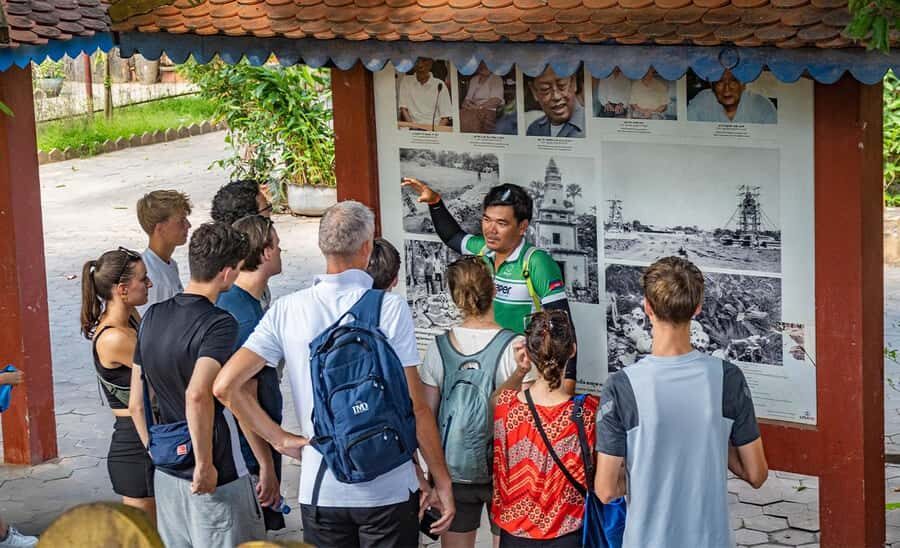
What I like most is the pace and the way the guide shapes the experience. With a group capped at 15 travelers, you’re not stuck in a human line the whole time, and you still cover a lot. The guides I saw highlighted names like Marin and CHUM NAK, and both came through with strong explanations of temple design and Khmer history, plus practical photo help.
One thing to plan for: this tour price is budget-friendly, but entrance fees aren’t included, and Angkor Wat is listed at $37 per person. Add lunch planning too, since meal costs aren’t included.
In This Review
- Key things I’d watch before you go
- A small-group Angkor day built for first-timers
- Meet your licensed guide: Marin, CHUM NAK, and what you learn fast
- Angkor Wat: the main event and why it works even without a big itinerary
- Angkor Thom and Bayon: the city walls and King Jayavarman VII’s faces
- Ta Prohm: when jungle and ruins negotiate space
- Terrace of the Elephants and the Leper King: details people miss
- Baphuon: the mid-11th century temple close to Bayon
- Timing, pacing, and getting photos without losing your mind
- Price and what you actually pay for with this $19 tour
- Who this tour suits best in Siem Reap
- Should you book this Angkor temples small-group tour?
- FAQ
- How long is the Angkor Wat and small-group temples tour?
- What is included in the tour price?
- Is the entrance ticket included?
- Does the tour offer hotel pickup and drop-off?
- How big is the group?
- Is a meal included?
- Do I get a ticket on my phone?
- What language is the guide?
- What is the cancellation policy?
Key things I’d watch before you go

- Small group size (max 15) keeps the day flexible when you want a slower look.
- Licensed English-speaking guides like Marin and CHUM NAK can turn stone and symbolism into a story you follow.
- Air-con van or bus helps on hot travel days between temple clusters.
- Hotel pickup and drop-off is a real time-saver in Siem Reap, especially for a 9-hour day.
- Entrance fees not included means your final cost depends on what you pay at the sites.
- Mobile ticket can simplify your day when you’re juggling tickets and checkpoints.
A small-group Angkor day built for first-timers
Angkor is huge. Even if you only scratch the surface, your brain needs help linking what you’re seeing to why it mattered. That’s where this style of tour earns its keep. Instead of spending your day guessing what to prioritize, you follow a sensible route through the main complexes people come for: Angkor Wat, Angkor Thom, Ta Prohm, Bayon, and a few of the connected highlights around Angkor Thom.
The small-group format is also practical. You don’t have to fight for space in a crowd, and you can step aside when you want to read carvings or simply catch your breath. In a place like Angkor, that breathing room matters.
One more detail that helps: you’re not just driven from one gate to the next. You’re brought in with context—temple names, what each complex represents, and how to look at architectural details instead of just taking photos and moving on.
Other Angkor Wat temple tours we've reviewed in Siem Reap
Meet your licensed guide: Marin, CHUM NAK, and what you learn fast
In Siem Reap, you’ll find plenty of tour options. The difference usually comes down to the guide. Here, you’re working with an English-speaking licensed guide, and the impact shows in how quickly you start noticing patterns.
Marin stood out for thoughtful pacing and practical history/architecture explanations. The approach makes a difference at Angkor Wat and Bayon, where lots of visitors see impressive stone faces or giant corridors but miss the logic behind the layout.
CHUM NAK is another name worth calling out. One of the strongest things about him is how he connects temple design to the Khmer worldview, with a background that comes through in the way he explains what you’re looking at. Even if you’re not a history buff, you’ll likely leave knowing what the temple complex is trying to represent, not just where it is.
The best part is how guides help you shift from seeing to understanding. When someone tells you what a structure symbolizes, you start reading the temple like a map.
Angkor Wat: the main event and why it works even without a big itinerary
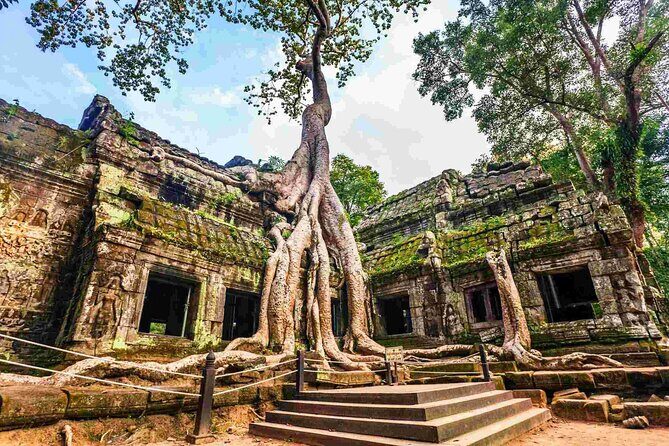
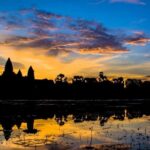
Angkor Wat is a Hindu-Buddhist temple complex and the reason many people plan an Angkor trip in the first place. It sits within a massive historical site measuring 162.6 hectares (1,626,000 m²). That scale hits even before you go inside—everything feels planned, intentional, and designed for grand movement.
In this tour, you spend about 2 hours at Angkor Wat. That’s a sweet spot for first-timers. It gives you time to walk key sections and still pause to look at patterns in carvings and the way the complex is arranged. If you only had 45 minutes, you’d barely scratch the surface. If you had half a day, you could go deeper, but you’d lose out on the other major stops.
A practical note: entrance tickets aren’t included. The Angkor Wat ticket is listed at $37 per person, so it’s one of the costs you should budget for upfront. You’ll want cashless payment options ready, too, since days like this can involve ticket processing at the gate.
Angkor Thom and Bayon: the city walls and King Jayavarman VII’s faces
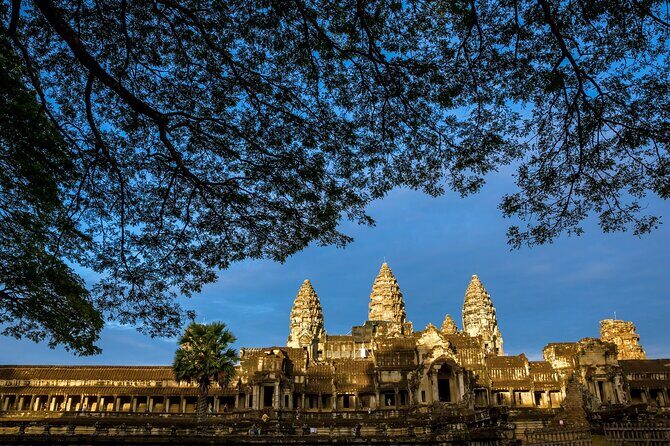
After Angkor Wat, the tour moves into Angkor Thom, the Khmer capital city—the Great City. This is where the day starts to feel like you’re inside a historic power center. The complex includes some of the biggest and most famous temples in the area, which is why it’s so often paired with Angkor Wat.
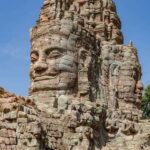
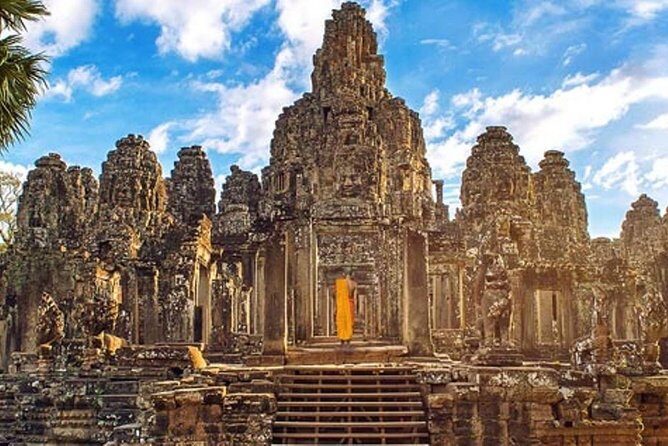
You get about 2 hours for Angkor Thom. Within that, you focus on the Bayon area as a key highlight, which is often the moment visitors realize they’re not just seeing “cool ruins.” Bayon is the state temple of King Jayavarman VII, built at the end of the 12th century. It’s a mountain temple meant to represent Mount Meru, the sacred mountain in Khmer religious ideas.
Bayon is also famous for its faces. Here’s the trick: don’t treat them as just a photo backdrop. The more you slow down, the more you start noticing how the temple’s layout draws your movement. Even in a short visit, you’ll likely understand why so many carvings and stone elements are aligned the way they are.
Time-wise, Bayon gets about 1 hour. For many people, that’s enough to see the main viewpoints and get a sense of the design. If you tend to read everything slowly, you’ll still have moments to linger thanks to the small-group approach.
Ta Prohm: when jungle and ruins negotiate space

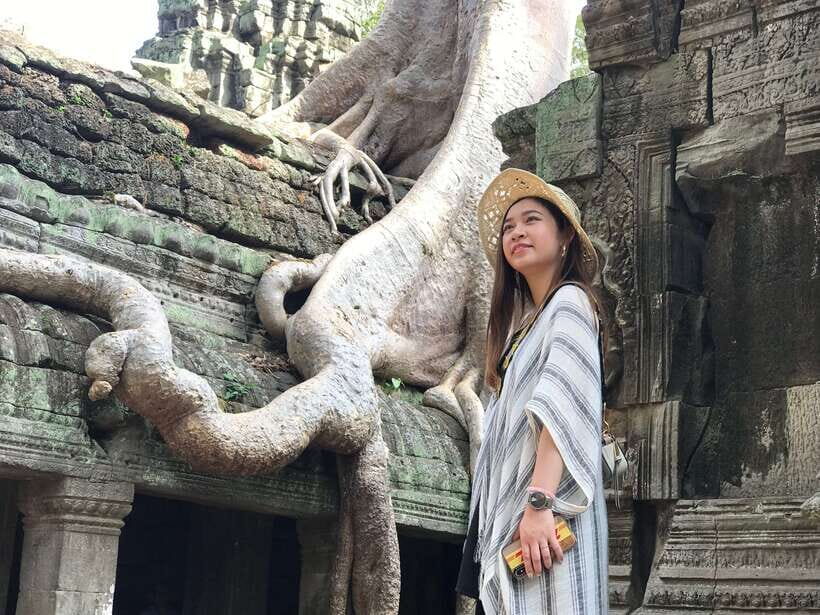
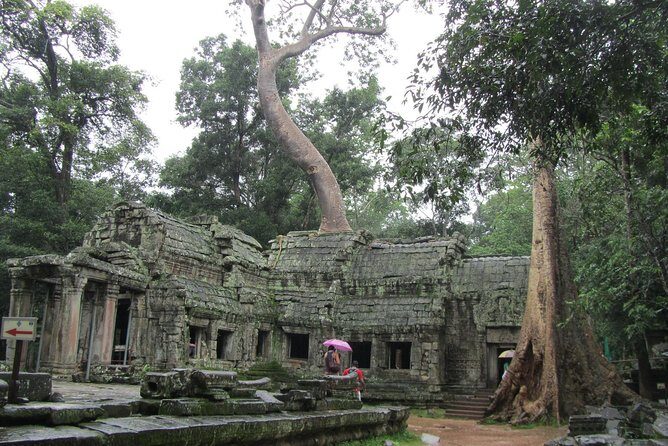
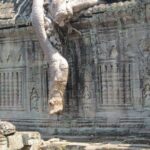
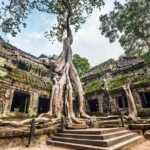
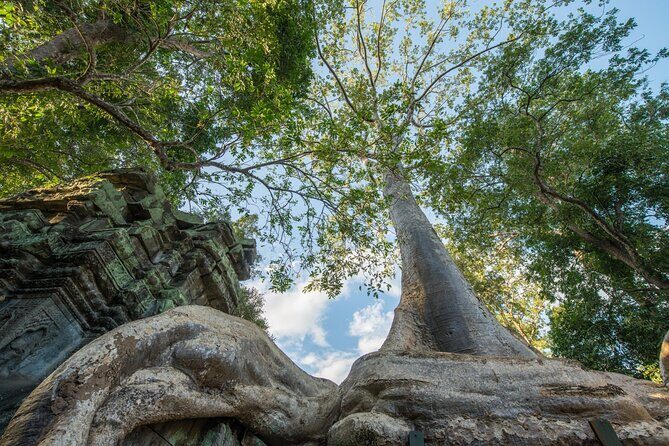
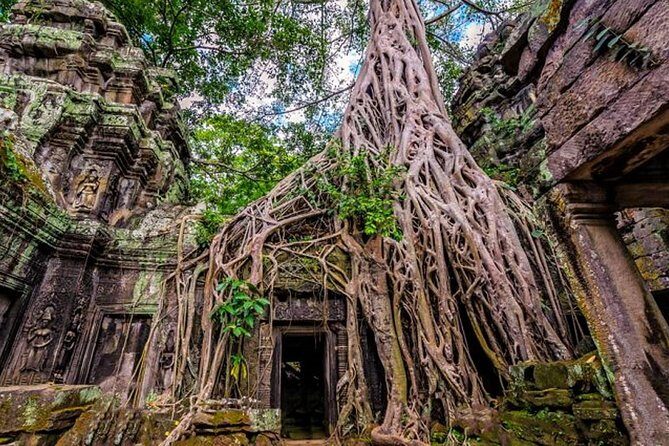
Then comes Ta Prohm. This is the one visitors often recognize instantly because of the dramatic look: ancient ruins intertwined with lush jungle. You can feel the weird comfort of it right away—nature is not just nearby, it’s part of the scene’s identity.
You spend about 1 hour at Ta Prohm. That’s usually the right length. Longer can start to feel repetitive if you’ve already seen a few other temples, while shorter can rush the main visual spectacle.
One tip that helps here is using your guide’s explanation to slow you down. If you know what you’re looking at—how the stone has survived, where roots have claimed space, and how the site is laid out—you end up with better photos and a stronger memory. In a small group, it’s easier to pause without feeling like you’re holding everyone back.
Other multi-temple archeological tours we've reviewed in Siem Reap


Terrace of the Elephants and the Leper King: details people miss
Angkor Thom continues with two smaller stops that pack a lot of meaning into shorter time windows.
First up is the Terrace of the Elephants, where you spend around 30 minutes. The terrace was created as a viewing platform to welcome back victorious armies. That matters because it changes how you look at the space. It’s not just a photo stop. It’s a stage designed for public moment-making—where power was displayed and celebrated.
Just north is the Terrace of the Leper King, another 30-minute stop. It dates from the late 12th century and sits as a 7-meter-high platform. These terraces can feel like “in-between” sights if you rush, but when you slow down, you start noticing the carving work and how the terraces connect to the larger city layout.
Even on a fast day, these stops are valuable because they fill in the texture between the big monuments. They show how Angkor wasn’t only temples—it was ceremony, processions, and daily ritual spaces built at scale.
Baphuon: the mid-11th century temple close to Bayon
Baphuon is a shorter stop at about 30 minutes, but it helps round out the story of Angkor Thom. It’s located in Angkor Thom northwest of Bayon and built in the mid-11th century. The temple is a three-tiered structure.
Why it’s worth your attention in a limited day: Baphuon gives you a second architectural style and a different sense of time within Angkor Thom. When you see it after Bayon, you can start comparing how different reigns shaped temple priorities. This is also where a guide’s explanation helps. If someone points out what the tiers represent or how the structure fits into the broader area, you stop viewing it as just another set of stones.
Timing, pacing, and getting photos without losing your mind
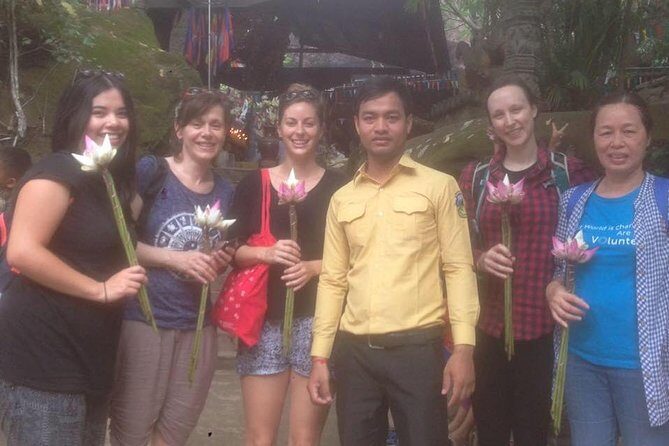
This tour runs about 9 hours and includes several major stops. That’s a full day, but it’s not a marathon-for-the-sake-of-it. The structure helps you avoid the common Angkor trap: spending your limited daylight bouncing between places you didn’t really understand.
The small group format also helps with pacing. In practice, it means you can explore at your own speed at certain points and still meet the group when it counts. With guides like Marin, the emphasis on thoughtful pacing makes the day feel manageable, not rushed.
Photo-wise, you’ll get guidance on where to stand for better angles. CHUM NAK and Marin were specifically associated with helping visitors find strong photo spots and taking picture moments seriously. That matters because the best photos at Angkor are rarely an accident. Small changes in position—height, distance, and how you frame the faces or towers—make a big difference.
Price and what you actually pay for with this $19 tour
At $19, this tour looks like a steal on paper. Here’s the catch: the entrance fee is not included, and Angkor Wat is listed at $37 per person. So your overall total depends on the site tickets you need that day.
Still, the value equation is solid because the tour price covers the things that cost money and time for independent planning:
- English-speaking licensed guide
- Air-con vehicle
- Mineral water
- Hotel pickup and drop-off
- Small group size that can feel easier than big-bus temple runs
- Mobile ticket for smoother check-in
When you’re deciding if it’s worth it, think like this: if you hired a driver and tried to figure out timing yourself, you might spend more quickly. Plus, at Angkor, the guide does more than transport you. It turns scattered monuments into a connected story.
If you’re traveling on a tight budget, this is one of the better ways to get expert context without paying for a premium private tour.
Who this tour suits best in Siem Reap
This experience is a strong fit if you’re:
- visiting Angkor for the first time and want a clear orientation
- short on time but still want the major stops
- the kind of person who likes learning as you go, not after the fact
- comfortable with a 9-hour day and a fair amount of walking between temples
It also suits you if you prefer a more human group size. With up to 15 people, you’re less likely to feel like you’re in a factory line.
If you want a slow, ultra-detailed temple study day with long breaks and optional add-ons, you might find the scheduled time at each stop a bit tight. But for a first Angkor visit, this route hits the essentials.
Should you book this Angkor temples small-group tour?
Book it if you want an efficient, first-timer-friendly day with licensed English guiding and a route that covers the big hitters without leaving you to wrestle with logistics. The small-group size is a real quality upgrade, and the guide stories—Marin’s history and pacing, plus CHUM NAK’s detailed explanations—suggest you’ll actually understand what you’re seeing.
Don’t book it if you’re looking for a fully inclusive, all-in price where entrance fees and meals are handled for you. You’ll need to plan for ticket costs (Angkor Wat is listed at $37 per person) and bring your own meal strategy since lunch isn’t included.
If you want an Angkor introduction that feels organized, informative, and easier than doing it solo, this is a good bet.
FAQ
How long is the Angkor Wat and small-group temples tour?
It’s about 9 hours.
What is included in the tour price?
The tour includes an English speaking licensed guide, air-conditioned vehicle, mineral water, and pickup/drop-off from your hotel in Siem Reap.
Is the entrance ticket included?
No. Entrance fees are not included. Angkor Wat is listed at $37.00 per person.
Does the tour offer hotel pickup and drop-off?
Yes, pickup and drop-off are included from your hotel stay in Siem Reap.
How big is the group?
This tour has a maximum of 15 travelers.
Is a meal included?
No meal (lunch/dinner) is included.
Do I get a ticket on my phone?
Yes. The tour includes a mobile ticket.
What language is the guide?
The guide is English speaking.
What is the cancellation policy?
You can cancel for free up to 24 hours in advance for a full refund. If you cancel less than 24 hours before the start time, the amount paid isn’t refunded.