REVIEW · SIEM REAP
Explore Angkor Temple Sunset With Tour Guided
Book on GetYourGuide →Operated by Angkor Pro Travel · Bookable on GetYourGuide
Angkor at golden hour can be chaos, but this route is built to make it workable. You’ll hit the key classics—Angkor Wat, Angkor Thom, Bayon, and Ta Prohm—while a local guide stitches together Khmer history and the meaning behind what you’re seeing. Guides such as Vichu and Chaat Long are known for clear explanations that go beyond dates and stone.
I especially like that you’re not just ticking temples. The walk into Angkor Thom’s South Gate, with the four colossal faces representing compassion and related virtues, gives you a strong starting point for the day. And Ta Prohm’s tree-root drama is exactly the kind of setting where a guide’s timing and storytelling make the photos and the context land.
One consideration: the schedule includes both sunrise and sunset references, and sunset at Phnom Bakheng requires a real uphill hike. If you’re tired, you’ll need to choose how much energy you want to spend after a full day of walking.
In This Review
- Key Things That Make This Tour Worth Your Time
- Hotel Pickup and the Angkor Jungle Road Trip
- South Gate of Angkor Thom: Four Faces and an Instant Story
- Bayon Temple: 200+ Smiling Faces You Can Actually Enjoy
- A Proper Break at a Local Restaurant (So You Don’t Burn Out)
- Ta Prohm: The Tree-Root Temple That Looks Like a Movie Set
- Angkor Wat: UNESCO, Suryavarman II, and Carvings That Reward Patience
- Phnom Bakheng Sunset: Worth It, but Know the Trade-Off
- Price and Value: $25 Plus the Ticket Reality
- Guide Impact: How Names Like Vichu, Thy, and Chaat Long Change the Day
- Who This Tour Suits Best (And Who Should Rethink It)
- Should You Book It? My Honest Take
- FAQ
- How long is the tour?
- What time does the pickup happen?
- What temples are included in the day?
- Is sunset included?
- What is the Phnom Bakheng hike like?
- Are Angkor tickets included?
- What’s included in the tour price besides guiding?
- Is the guide English-speaking, and is free cancellation available?
Key Things That Make This Tour Worth Your Time

- South Gate of Angkor Thom: those four giant faces set the tone with compassion-focused symbolism.
- Bayon’s 200+ smiling stone faces: you get a guided way to read the temple instead of just staring.
- Ta Prohm with famous tree roots: the guide helps you navigate without losing the magic.
- Angkor Wat with Suryavarman II context: you’ll learn what to look for in carvings and layout.
- Optional Phnom Bakheng sunset: you can trade a hike for big views and a classic Angkor moment.
Hotel Pickup and the Angkor Jungle Road Trip
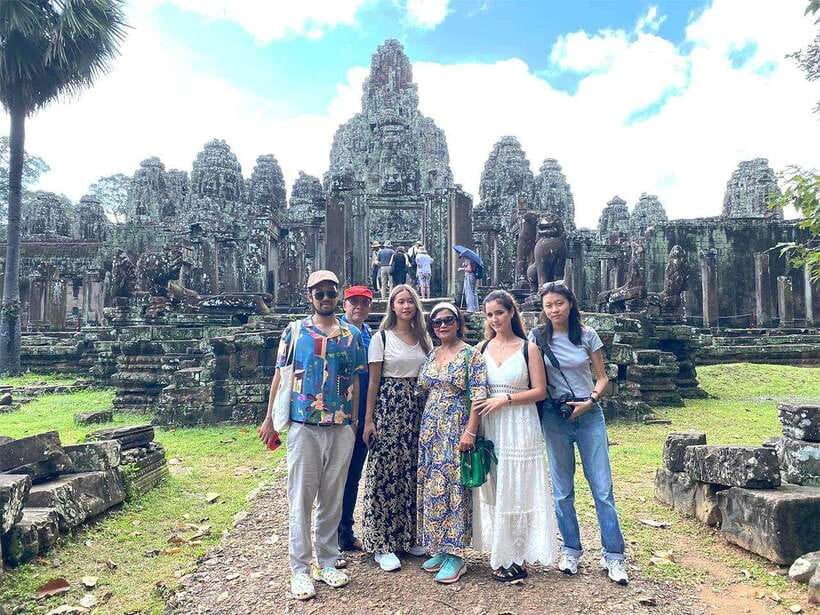
Your day starts with pickup from your hotel lobby in Siem Reap around 8:00am. The driver meets you holding a sign with your name, then you head out in an air-conditioned car or minivan. If you prefer a faster, more local feel, a tuk-tuk is available upon request.
This part matters because Angkor isn’t just one temple. It’s a whole zone, and travel time adds up fast. Getting moving early also helps you avoid the worst of the long midday lines and heat—especially if you’re planning to stay for sunset later.
It’s also worth noting the program is advertised as about 7 hours, but the route includes a full set of major temple stops plus the option of Phnom Bakheng sunset. In practice, your exact timing will depend on your guide and how you pace the walks, so check what sunset means for your specific day.
If you're still narrowing it down, here are other tours in Siem Reap we've reviewed.
South Gate of Angkor Thom: Four Faces and an Instant Story
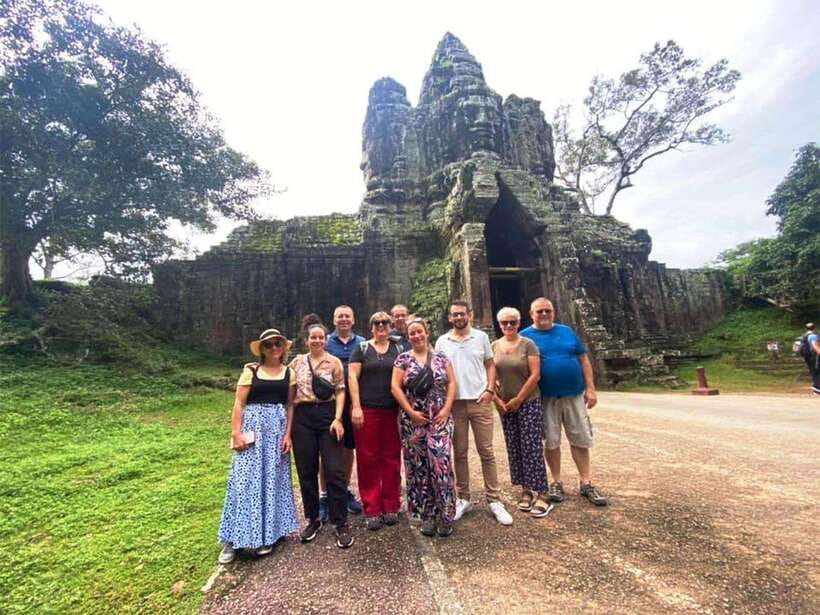
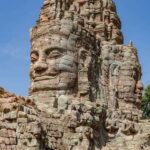
The first big temple moment is the South Gate of Angkor Thom. Instead of easing in with small ruins, the tour starts with a dramatic entrance: four massive faces that symbolize compassion, sympathy, equanimity, and charity.
I like this start because it gives your brain a framework. When you walk into a place like Angkor Thom without context, it can turn into lots of stone and no meaning. With the symbolism spelled out, you start noticing patterns: how entrances are designed, how power and religion get expressed through design, and why certain spots feel “important” the moment you arrive.
The South Gate also gets you moving right away. You’ll then continue through the Angkor Thom complex, where the guided pacing matters because there’s a lot to see and you don’t want to rush the key structures or miss good viewpoints.
Bayon Temple: 200+ Smiling Faces You Can Actually Enjoy
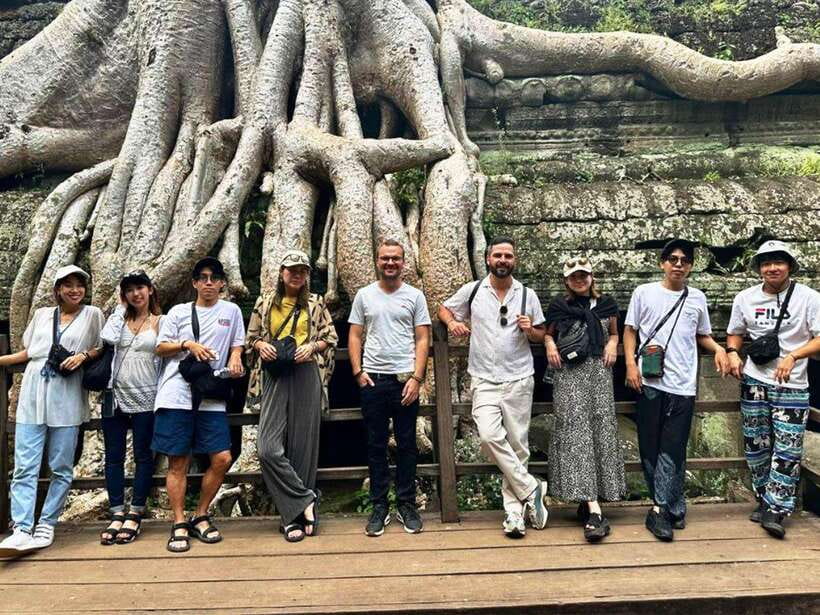
Next comes Bayon Temple, famous for its many smiling stone faces. The tour includes a guided visit and a walk-style exploration, with a highlight that Bayon has more than 200 faces.
Here’s what makes Bayon special beyond the obvious: the faces aren’t just decoration. They help you understand how the Khmer builders created a sense of presence—almost like the temple is watching you as you move through it. A good guide helps you spot where the faces appear, how they relate to temple movement, and why some angles make the expression feel different.
The program also links Bayon with several nearby highlights, including Baphuon, Phimeanakas, and terraces such as the Terrace of the Leper King and the Terrace of the Elephant. Even when you don’t spend equal time at each stop, you benefit from having the names connected to what you’re seeing. It turns a scattered complex into a coherent experience.
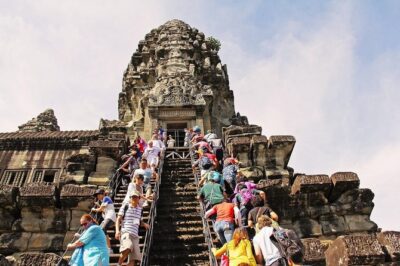
Practical note: Bayon can involve uneven surfaces and lots of steps. Wear shoes that won’t betray you halfway through the day. If your feet get angry easily, you’ll feel the difference most here.
A Proper Break at a Local Restaurant (So You Don’t Burn Out)
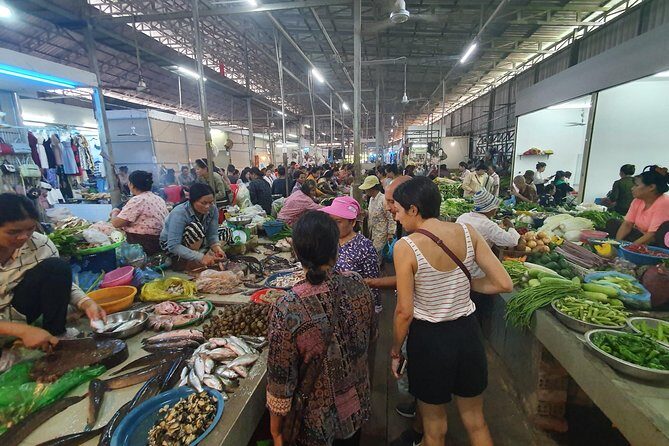
After the first cluster of temples, you’ll get a break at a local restaurant (about 1 hour). Meals and drinks aren’t included, so this is your chance to buy what you want and keep your energy up.
I like having this pause inside a temple-heavy itinerary because Angkor days can turn into a dehydration competition if you don’t plan for water and food. The tour includes mineral bottled water and fresh wet tissues, which helps, but it’s still smart to eat something that settles well in Cambodia’s heat.
Ta Prohm: The Tree-Root Temple That Looks Like a Movie Set
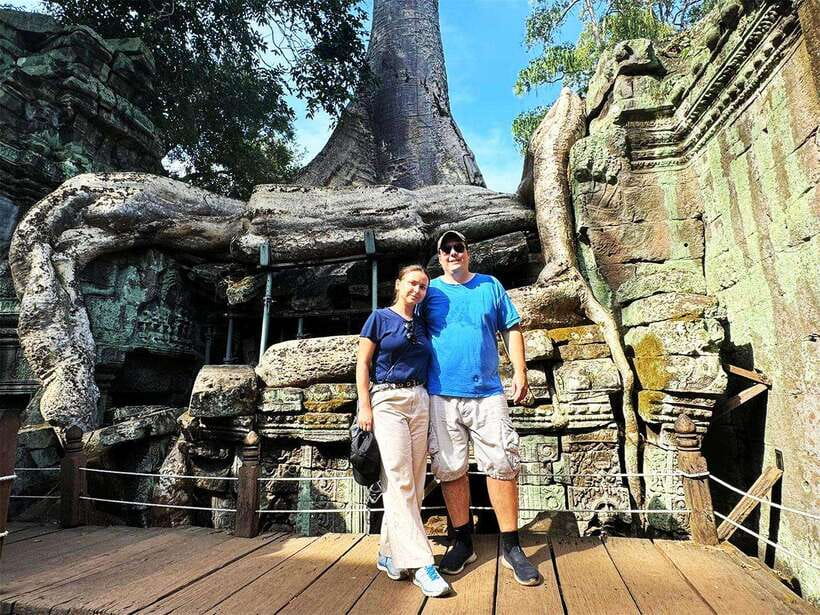
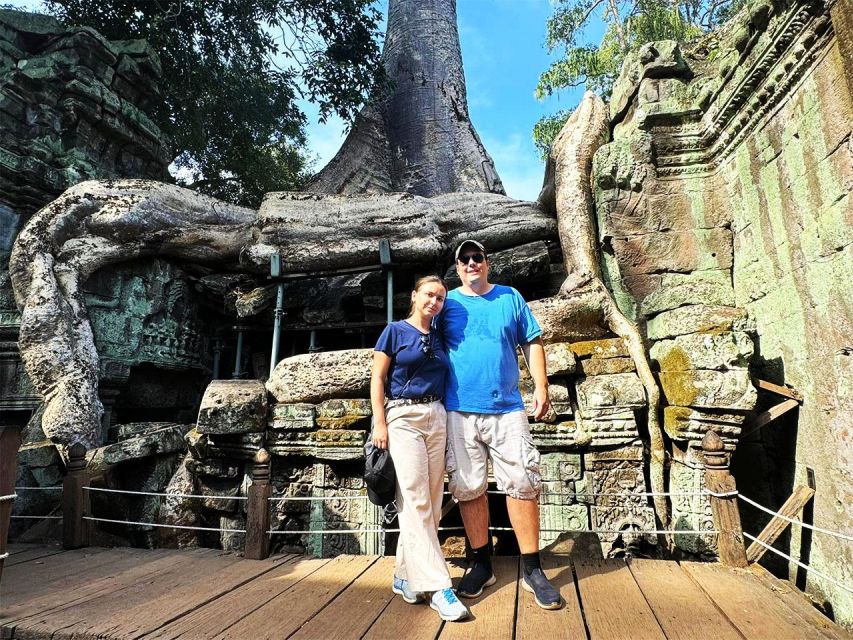
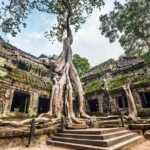
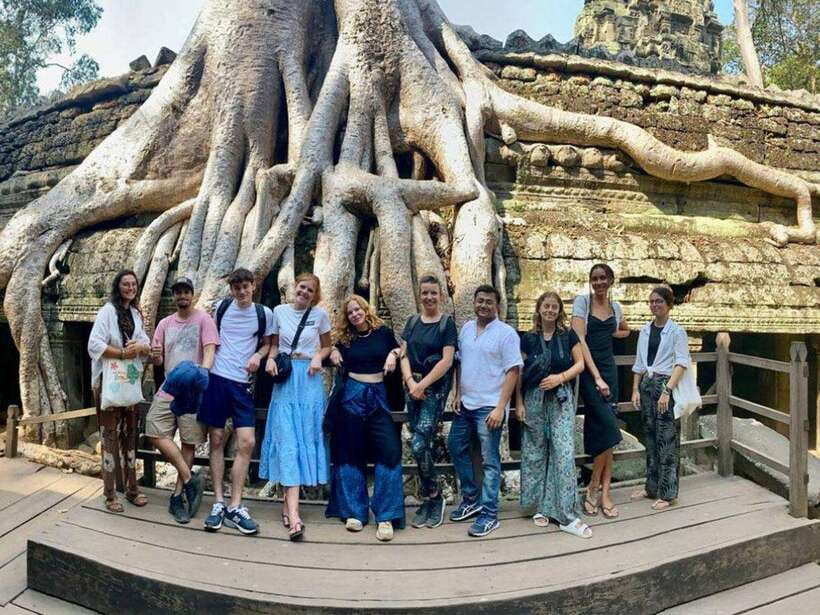
Then you move to Ta Prohm, the iconic temple known for the stunning tree roots wrapping around stone. The program includes guided sightseeing and walking here, with time set aside that also references sunrise timing. In real life, your guide will manage what you can see and where you can stand best depending on the day’s light and crowds.
Ta Prohm is one of those places where a guide can make a huge difference. Without context, you might just see dramatic roots. With context, you learn how the temple space works and why certain structures got left to grow into the ruins. The result is that you don’t only get great photos—you understand what you’re looking at.
Also, this is a good stop for photo timing. Roots create strong lines and framing, but the best angles depend on where the light falls and how crowded your preferred viewpoint gets. If you want fewer distractions in your shots, ask your guide to steer you to the quieter corners first.
One more thing: Ta Prohm involves walking and navigating temple paths. If you’re someone who hates detours and step-heavy areas, take it slower here and save your energy for Angkor Wat and whatever sunset plan you choose.

Angkor Wat: UNESCO, Suryavarman II, and Carvings That Reward Patience
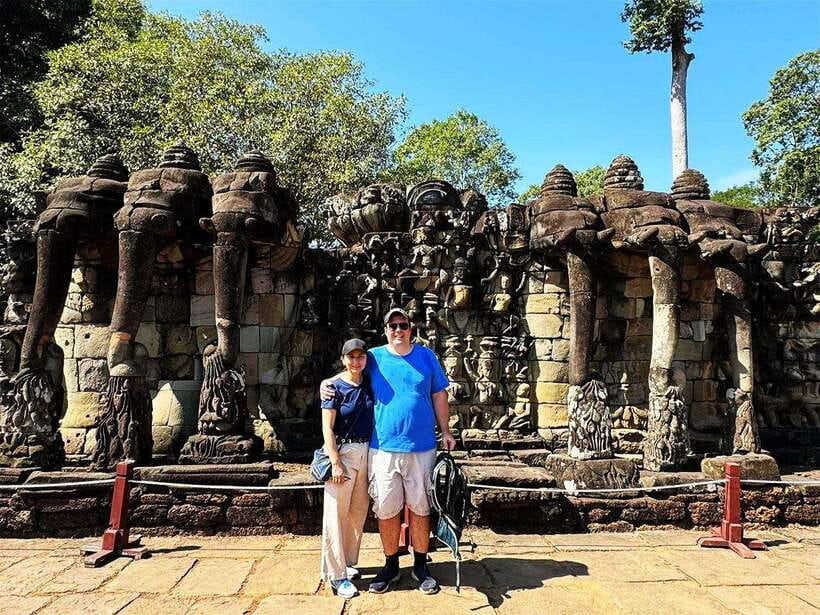
After Ta Prohm, you’ll continue on to Angkor Wat. This is the big one, and the tour’s guided time is built to help you read it instead of just wandering through it like a maze.
You’ll learn the basics that matter: Angkor Wat is a UNESCO World Heritage site, it’s one of the largest religious monuments in the world, and it was built by Suryavarman II in the 12th century. Your guide also connects the temple to the broader Khmer Empire and explains architectural masterpieces and carvings that date back to that era.
I like how this kind of explanation changes the experience. When you know what you’re looking for, the carvings stop being random decoration and start feeling like information—stories, beliefs, and power made visible. Even if you don’t know Khmer history in advance, your guide helps you spot the key features.
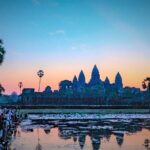
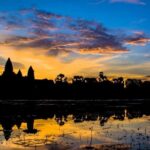
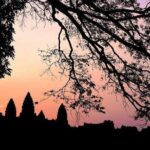
The program references Angkor Wat with sunset time as well. Translation: depending on your route pacing that day, you may get the light shift that makes the stone glow. If you’re chasing sunset specifically, this is the time to pay attention to how your guide positions the group and how long you linger at the most important viewpoints.
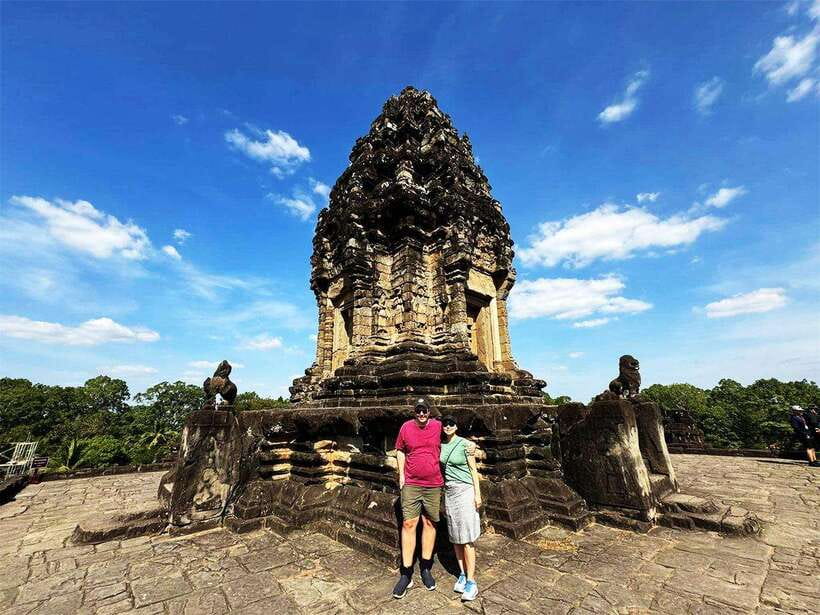
Phnom Bakheng Sunset: Worth It, but Know the Trade-Off
For sunset, the tour notes Phnom Bakheng as the place to go. The key detail: it’s a hike. You’re looking at about 25–30 minutes each way, up to the hilltop.
Two things matter here:
1) It’s usually touristy. That doesn’t mean it’s bad—it means you should expect crowds and plan for a slower, more spaced-out climb.
2) You can choose to skip it if you’re tired. The tour explicitly allows you to decide based on your energy level.
No extra cost is mentioned for the sunset, which is a practical plus. You’re paying for the experience and time, not paying again for the view.
If sunset is your top priority, go. If you’re already worn down from steps at Bayon and Ta Prohm, consider sitting out and focusing on getting the best out of Angkor Wat with calmer pacing. Your feet will thank you.
Price and Value: $25 Plus the Ticket Reality
The tour price is $25 per person, and that’s the part people can feel good about at first glance. Then the important detail appears: the Angkor ticket is not included and costs $37 per person.
So your realistic baseline for temples is about $62 per person, before meals. Meals aren’t included, and drinks are also not included (though water is provided during the tour). After that, you’re paying for a full guided day with hotel pickup, an air-conditioned vehicle (or tuk-tuk on request), temple entry support through the route, and a local English-speaking guide.
What makes this good value isn’t just the vehicle. It’s the guide quality. English-language guides such as Thy and Vichu are praised for explaining the differences between Buddhism and Hinduism and for bringing temple history to life in a way that stays clear. You’re not only buying access to monuments—you’re buying interpretation.
The guide also gets credit for practical help: making the visit feel easier, picking better photo places, and adapting when the group size changes.
Guide Impact: How Names Like Vichu, Thy, and Chaat Long Change the Day
This tour’s strongest selling point is how it’s guided. The guides linked to this experience are described as friendly and attentive, and they’re not afraid to answer questions that come up mid-walk.
In particular, I like that some guides focus on how religion shows up in what you see—especially the relationship between Buddhism and Hinduism in Cambodian context. That matters because Angkor doesn’t read as one uniform “theme.” It’s layered, and the symbolism can feel confusing if you don’t have someone translating it.
There’s also evidence of flexibility: when there weren’t many people booked, the group can shift into a private experience. A more personal pace can mean you spend less time waiting and more time getting your bearings in each temple area.
Who This Tour Suits Best (And Who Should Rethink It)
This tour is a strong fit if you want a guided first-timer day that covers the core Angkor stops—South Gate of Angkor Thom, Bayon, Ta Prohm, and Angkor Wat—plus an optional sunset hike at Phnom Bakheng.
It’s also a good choice if you care about learning. You’ll get Khmer culture and history in a way designed to make the stone feel understandable, not just impressive.
You might want to rethink it if:
- You hate long walks and steps. This route involves walking time at multiple temples.
- You’re sensitive to crowds at sunset. Phnom Bakheng can be packed.
- You need a perfectly fixed schedule for sunrise and sunset. The program references both, and your guide will manage timing on the day.
Should You Book It? My Honest Take
If you’re going to Angkor once, this is the kind of day that makes that one trip count. Angkor Wat, Bayon, and Ta Prohm are non-negotiable temples, and the guidance adds meaning so you leave with more than photos.
I’d book it if you’re comfortable with walking and you’re open to choosing your sunset plan based on energy. The Phnom Bakheng option is a classic, but it’s a hike—so treat it as a bonus, not a requirement.
If you’re mostly chasing one thing—say only Angkor Wat at sunset with minimal walking—then you might get a better match from a shorter, more focused route. But for a first big Angkor circuit with strong guiding, this is a practical, good-value way to see the highlights.
FAQ
How long is the tour?
The activity is listed as 7 hours. Your exact pace may vary because the program includes multiple guided temple stops and an optional sunset hike.
What time does the pickup happen?
Pickup is at 8:00am from your hotel lobby in Siem Reap. The driver meets you about 10 minutes early and holds a sign with your last name.
What temples are included in the day?
You’ll visit Angkor Wat, Angkor Thom (starting from the South Gate), Bayon, and Ta Prohm. There’s also an option to visit Phnom Bakheng for sunset.
Is sunset included?
Sunset at Phnom Bakheng is available as an option, and the tour notes there is no additional cost for sunset. The program also references sunset at Angkor Wat.
What is the Phnom Bakheng hike like?
It’s a hike up the hill of about 25–30 minutes per way. The tour notes it’s often touristy, and you can skip it if you’re tired.
Are Angkor tickets included?
No. Angkor ticket costs are listed as $37 per person and are not included in the tour price.
What’s included in the tour price besides guiding?
You get hotel pickup and drop-off, travel by air-conditioned car or minivan (tuk-tuk available on request), the guided temple activities, plus mineral bottled water and fresh wet tissues.
Is the guide English-speaking, and is free cancellation available?
Yes, the live tour guide is English-speaking. Free cancellation is available up to 24 hours in advance for a full refund.