REVIEW · SIEM REAP
Siem Reap: Grand circle tour Sun set on bakeang hill & Guide
Book on GetYourGuide →Operated by Siem Reap Experiences · Bookable on GetYourGuide
Temple time in Siem Reap ends with sunset magic. This Grand Circle loop strings together Pre Rup, Neak Pean, Preah Khan, and Phnom Bakheng, with an English-speaking guide who explains how the temples connected to Hindu-Buddhist beliefs and royal power. I love that the day goes beyond the biggest-name sites, and I love how guides such as Mr Sayon or Sam turn stone carvings and temple layouts into clear, human stories. The one thing to watch is that you’ll still need to budget for the temple pass and lunch since they’re not included.
You start with a relaxed pickup from Krong Siem Reap and ride in an air-conditioned minibus, with chilled bottled water and a wet towel to make the heat a little easier. At each stop, you get guided time plus chances to wander, look, and take photos without feeling totally rushed.
This isn’t a sit-around tour. It’s an active, full-day circuit through mountain, reservoir, and hilltop temples, ending with sunset at Phnom Bakheng. And it’s not suitable for people over 95, so keep that in mind.
In This Review
- Key things I’d watch for on this Grand Circle day
- Why this Grand Circle route feels smarter than a one-spot day
- Pickup, AC minibus comfort, and the day’s pacing
- Pre Rup: Shiva on a mountain and a “coffin-shaped” meditation structure
- East Mebon: ancestors, a reservoir setting, and an early 10th-century feel
- Ta Som: the east gate’s giant tree and dancers carved in stone
- Neak Pean: four symbolic pools and a full break in the middle of the loop
- Preah Khan: the Sacred Sword temple and why it’s the biggest on this loop
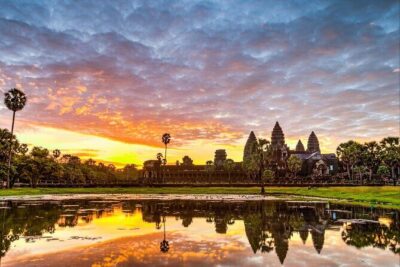
- Phnom Bakheng sunset: Hindu-Buddhist heaven towers on a hilltop
- Guide style is the real “upgrade” here
- Price and value: what $19 gets you, and what you must pay separately
- What to bring, what to wear, and what to skip
- Should you book this Grand Circle sunset tour?
- FAQ
- How long is the tour?
- Where is pickup located?
- What does hotel pickup mean exactly?
- Which temples are included on this circuit?
- Is the temple pass included in the price?
- Are meals included?
- What’s provided during the tour?
- What should I bring?
- What clothing is not allowed?
- Is this tour suitable for very elderly visitors?
Key things I’d watch for on this Grand Circle day
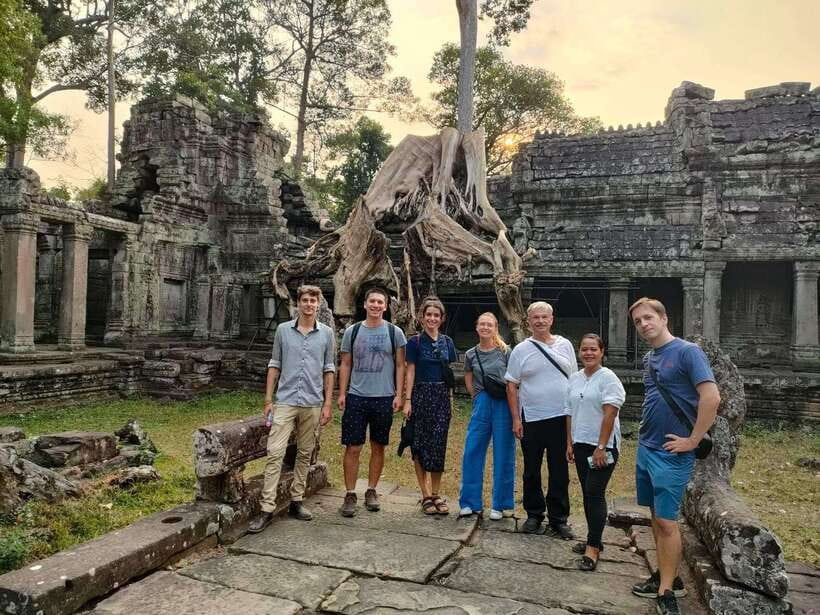
- A full loop, not just Angkor Wat: you see 6 major temples in one outing.
- A guide who explains the “why,” not only the “what” (English, with guides like Sary, Sina, Pip, Tom, Narith, and Vone in the rotation).
- Meaningful temple symbolism: Shiva meditation at Pre Rup, royal context at Preah Khan, and the 33 heaven-tower concept at Phnom Bakheng.
- Neak Pean includes a real pause: there’s a dedicated break time, not just a quick stop.
- Cooling touches on the road: AC minibus, chilled water, and a wet towel.
- Temple pass and meals are extra: plan around the official pass and bring spending money.
Why this Grand Circle route feels smarter than a one-spot day
Angkor is famous for a reason. But if you only hit one landmark, you miss how the city of temples worked as a whole system. This tour builds a full story arc across the Grand Circle—starting with mountain-temple atmosphere and ending with hilltop sunset—so you get a stronger sense of how different sites fit together.
The real value is the guide layer. You’re not just collecting photos; you’re connecting details: what was built for whom, why certain structures were shaped the way they were, and what rituals the Cambodians of the Angkor era likely associated with these spaces. Guides in past groups (like Mr Sayon and Sam) are often praised for organizing the day well, explaining history and culture in an engaging way, and even helping with photos so you’re not stuck fighting your camera.
The other smart part: you cover temples that many first-time visits don’t reach in one day. That means you’re more likely to come away feeling you saw “real Angkor logic,” not just a checklist of the most photographed stones.
If you're still narrowing it down, here are other tours in Siem Reap we've reviewed.
Pickup, AC minibus comfort, and the day’s pacing
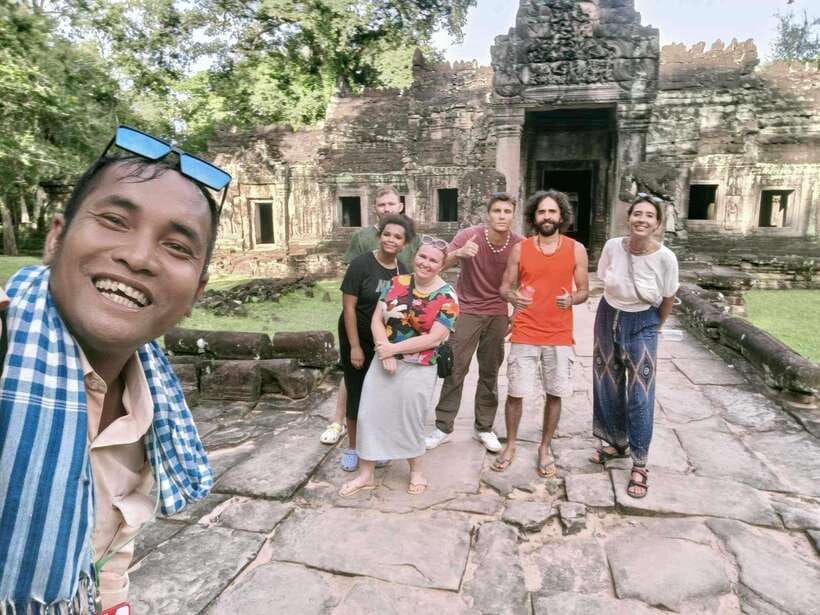
This tour starts with hotel pickup and drop-off in Krong Siem Reap. The driver arrives about 30 minutes before the scheduled start time, then you’re on the road in a comfortable air-conditioned minibus. A big plus here is the small cooling extras: chilled bottled water and a wet towel.
The day’s pacing matters. You’re at six temple stops with guided time at each one, plus a long break at Neak Pean. That break helps you reset before the bigger temples and the final push to Phnom Bakheng for sunset. And because the tour keeps moving, you’ll want to come ready with practical gear—especially comfortable shoes, sunscreen, and sunglasses.
One more practical note: the tour includes a guide and transport, but it does not include the temple pass or food. You’ll need to buy your temple pass separately through the official Angkor Enterprise site: https://www.angkorenterprise.gov.kh/ . Also remember the on-site dress rules: no shorts, short skirts, or sleeveless shirts, and you can’t bring alcohol or drugs.
Pre Rup: Shiva on a mountain and a “coffin-shaped” meditation structure
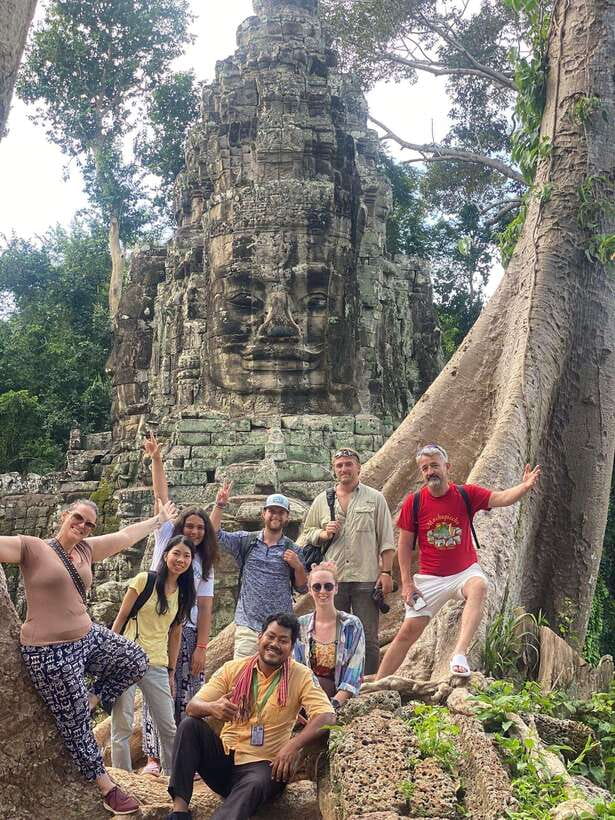
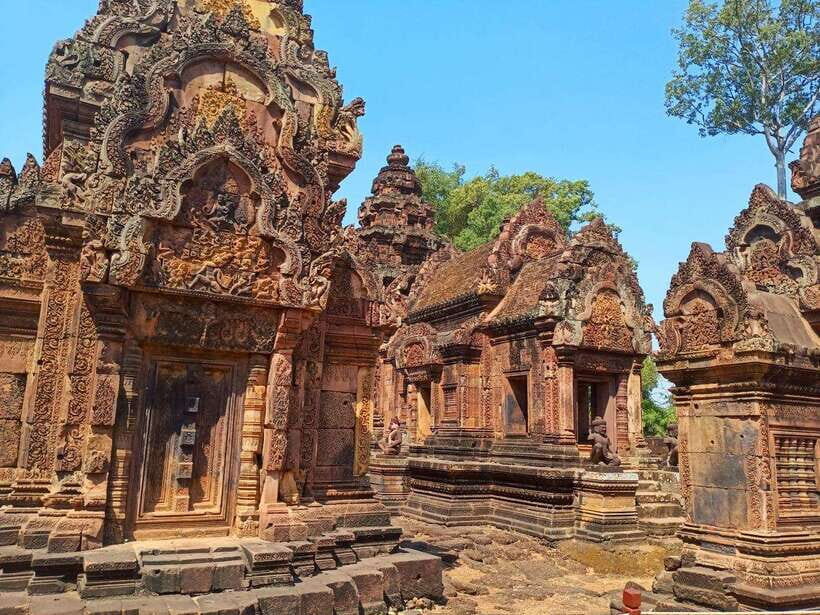
Pre Rup is your first strong dose of temple mood. It’s a mountain temple dedicated to Lord Shiva, which gives the site a more dramatic feel than a flat-ground ruin. During your guided hour here, focus on two things: the devotional framing (Shiva) and the distinctive stone structure people often misread at first glance.
You’ll hear that some visitors confuse Pre Rup with a crematorium because of the way the stone structure resembles a coffin. The explanation that matters is what it represented in practice: Hindus used the meditation-like space during full moon observances. That detail changes how you see the structure. Instead of only looking at shapes, you start looking for intent—how design supported belief and ritual.
My tip for this stop: slow down for a few minutes and let the guide’s story settle before you start photographing. Pre Rup is one of those places where meaning is embedded in the form.
East Mebon: ancestors, a reservoir setting, and an early 10th-century feel
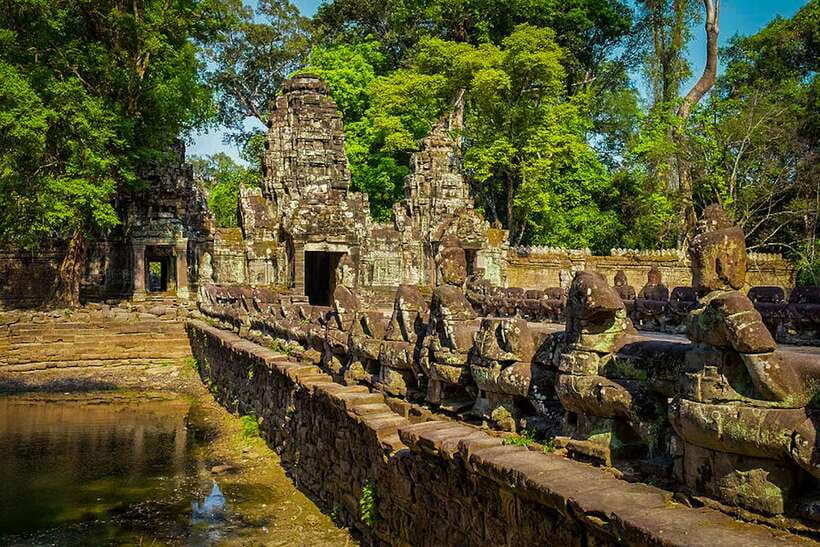
Next up is East Mebon, another guided hour. This one is described as built for the ancestors, which helps you understand why this kind of temple wasn’t only about gods—it was also about family line, memory, and continuity.
A standout detail here is the setting: East Mebon used to be in the middle of a reservoir. You’re seeing a temple that was designed around water-based context, not just placed beside it. And the tour notes it was constructed as early as the 10th century, which gives the stop a time-anchor quality. It’s a good moment to remember that the Angkor story didn’t begin with the biggest later monuments. It grew.
Potential drawback to consider: because this day is packed, you might want to avoid rushing. East Mebon rewards patience. If you only glance and move on, you’ll miss how the reservoir story changes the temple’s whole “posture.”
Ta Som: the east gate’s giant tree and dancers carved in stone
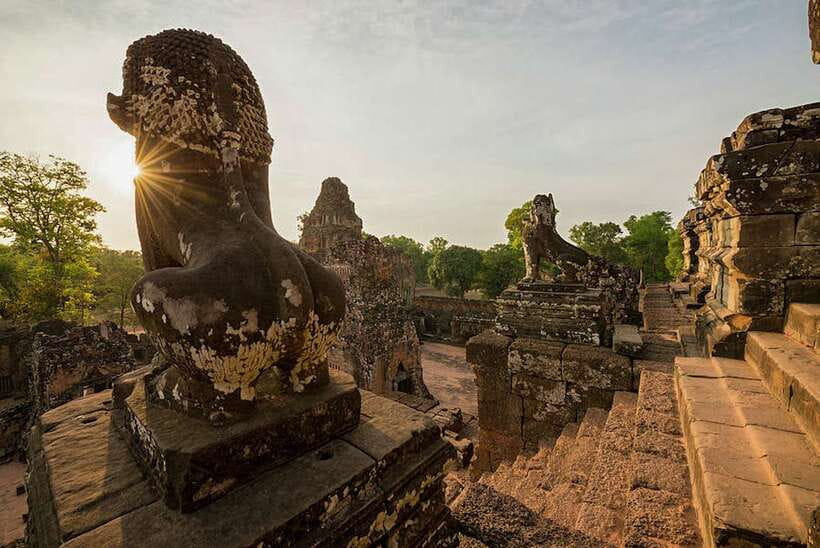
Ta Som is where the day turns more charming and visually surprising. You’re not just looking at bricks and towers—you’re looking at a site shaped by nature and decorated with figures.
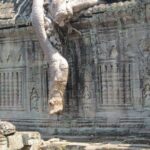
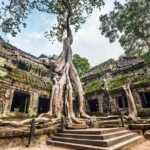
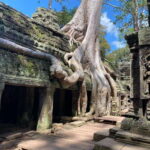
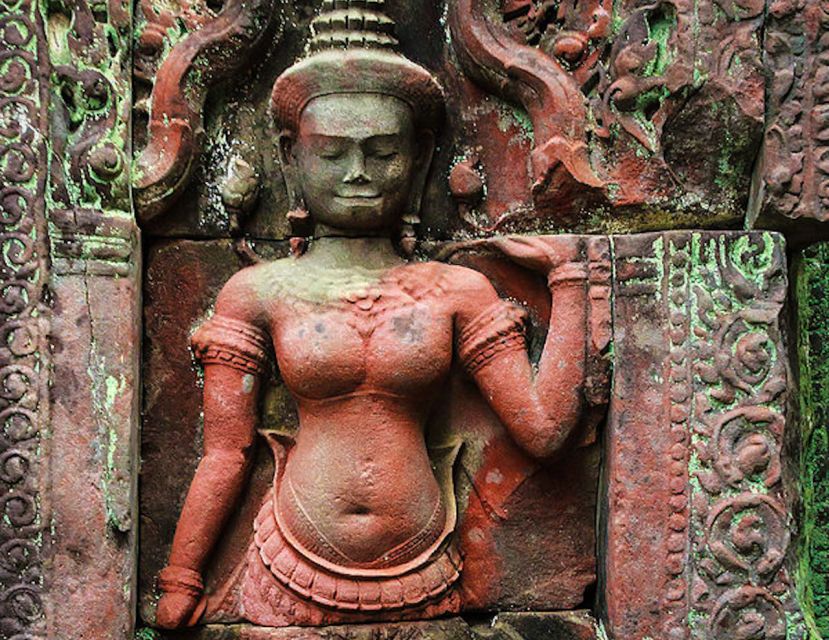
The guide will point out the big tree over the east gate, a striking feature that makes Ta Som feel alive. You’ll also learn about the sculptural theme: Ta Som is formed with lots of sculptures of dancers with long hair, built for the king’s sister. That family connection helps you read the carvings differently. They aren’t only decoration; they connect to a person, a patron, and a royal narrative.
If you care about photos, Ta Som is one of the best places on the loop for that “wow, I didn’t expect this” feeling. The tree-and-gate composition is naturally frameable, and the dancer details give you plenty of close-up angles.
Pro tip: keep your camera settings ready and save battery. You’ll want time for both wide shots around the gate and tighter shots of the sculpted forms.

Neak Pean: four symbolic pools and a full break in the middle of the loop
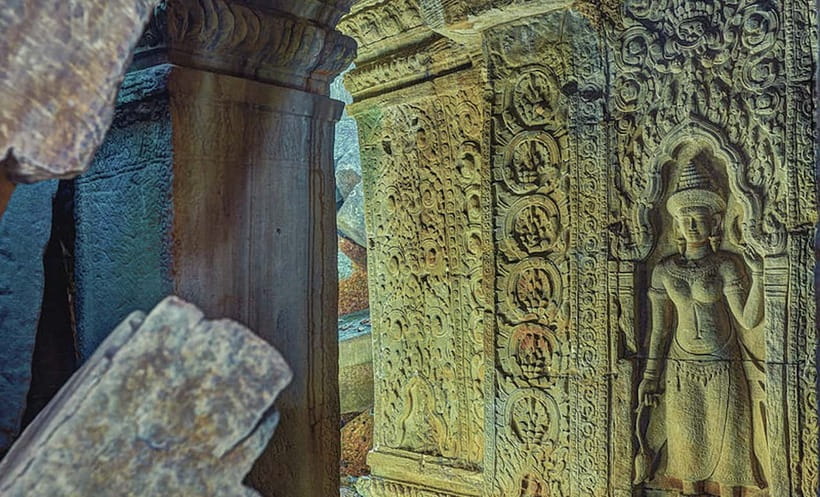
Neak Pean is one of the most thought-provoking stops. It’s tied to bathing and health, and the guide will explain the symbolism of its pools: each of the four pools represents water, earth, fire and water. (Yes, water is repeated—so don’t be surprised if the explanation sticks to the tour’s exact list.)
What makes Neak Pean practical on a touring day is that it includes a real reset. You’ll get guided time and then break time. This matters because the next stretch includes Preah Khan and Phnom Bakheng, where you’ll likely want your energy back—especially before sunset.
Even if you’re not a symbolism person, Neak Pean can still land. The combination of stories—health, bathing, and material elements—turns a temple feature into something easier to imagine as part of everyday belief.
Watch for: the day can get tiring. If you need shade or a moment to cool down, Neak Pean’s break is your built-in chance.
Preah Khan: the Sacred Sword temple and why it’s the biggest on this loop
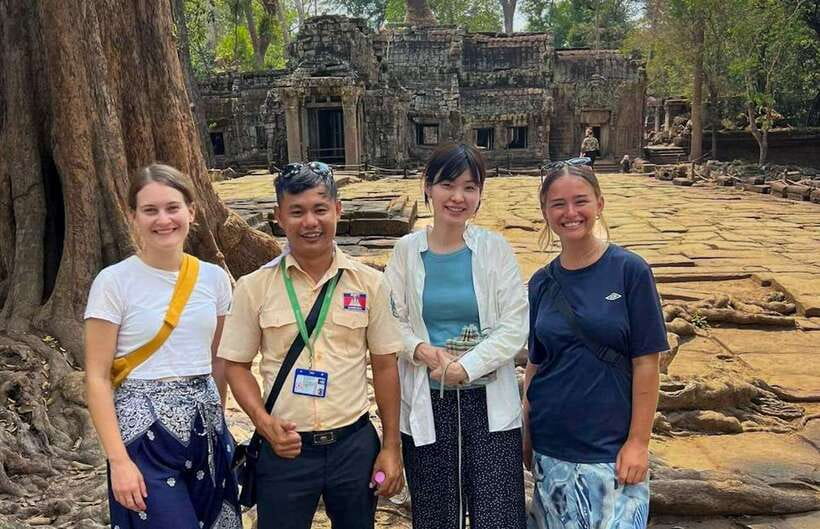
Preah Khan is often the turning point of the Grand Circle day. It’s described as the biggest temple on this loop, and it carries a strong royal backstory.
Here’s the key context you’ll hear: Preah Khan was built by King Bayon for his father. And the name itself has meaning. Preah Khan translates to the Sacred Sword, which gives you another way to look at the temple beyond architecture alone.
Spending time here is worth it because it connects power and identity. When a king builds for a parent, it’s not a small gesture—it’s an argument about legitimacy, memory, and spiritual duty. The guided explanation helps you see that the temple is part monument, part message.
If you’re short on time elsewhere: don’t skip details at Preah Khan. It’s the kind of site where the guide’s interpretation makes the difference between seeing a big ruin and understanding why it mattered.
Phnom Bakheng sunset: Hindu-Buddhist heaven towers on a hilltop
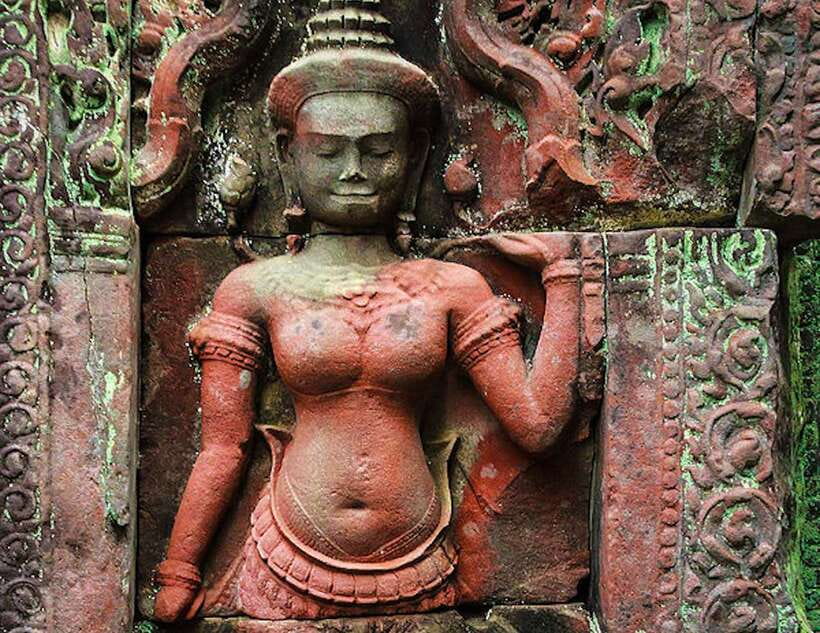
The final stop is Phnom Bakheng, and it’s the reason this tour is often picked for the day’s payoff. It’s at the top of a hill, and it’s described as a Hindu and Buddhist temple—so you get layered religious identity rather than a single-theme site.
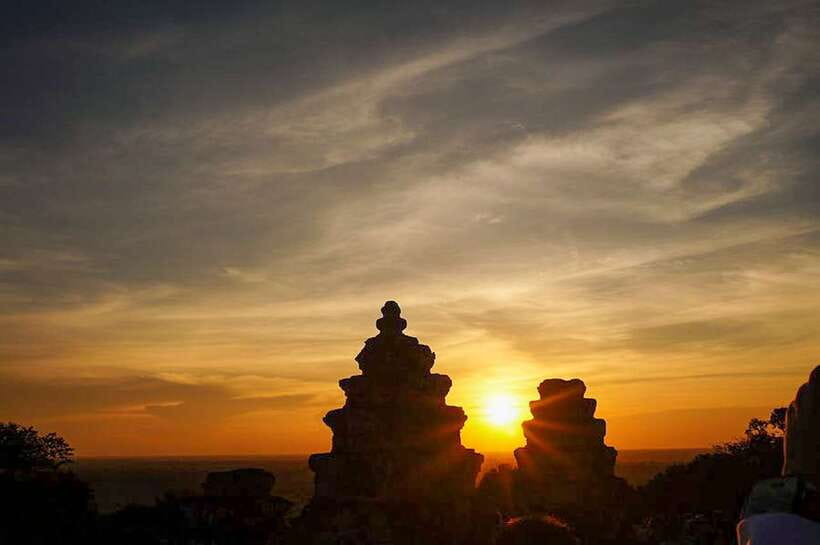
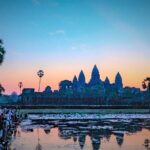
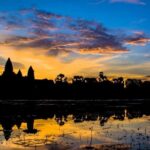
Then comes the sunset angle. Phnom Bakheng is one of the standout sunset spots in the circuit. You’ll also hear the “33 towers” symbolism: the 33 towers represent the heavens. The meaning is simple but powerful. The whole hilltop complex is arranged as a sky-map idea—turning a viewpoint into a cosmology.
And yes, this is where photos often happen in earnest. Many guides on this route are praised for helping with timing so you can get the light you came for. The hilltop setting also makes the moment feel like a finale, not just another stop.
Consideration: sunset days can be crowded in general around popular viewpoints. This tour’s format, with guided timing and an organized schedule, helps you avoid feeling totally lost—but still, come with patience and an open mind.
Guide style is the real “upgrade” here
Transport gets you there. A good guide helps you see what you’re looking at.
This tour is led by an English-speaking tour guide, and the local guide experience is described as over a decade for the kind of insight you’ll get on this route. In real-world groups, guides like Mr Sayon, Sam, Sary, Sina, Pip, Tom, Narith, and Vone are repeatedly singled out for organization, strong explanations, friendliness, and (in some cases) humor that keeps long days from dragging.
A practical detail I really appreciate in this kind of tour is photo help. Some guides are specifically noted for being around during the day to help capture moments. That means you’re not always waiting for strangers to stop moving before you get the shot you want.
My advice: treat the guide’s stories like prompts. After the guide explains what something means—like Preah Rup’s meditation use at full moon or Preah Khan’s sacred-sword idea—go back and look again with that new lens. It changes how the stones “read.”
Price and value: what $19 gets you, and what you must pay separately
At $19 per person for an 8-hour day, the headline value is simple: you’re getting hotel pickup/drop-off, AC minibus transport, an English-speaking guide, water, a wet towel, and guided time across six temples. That’s a lot of coordination baked in.
What’s not included is also clear:
- Temple pass (required; buy it through https://www.angkorenterprise.gov.kh/)
- Food and drinks (you’ll need to budget)
When you compare that, the $19 feels less like a cheap add-on and more like a transportation-and-guide package for a full circuit day. The temple pass is the main extra cost you can’t avoid, but that’s standard for Angkor.
If you’re budgeting: plan one meal or a meal plan of your choice. Since meals aren’t included, choose based on where you’ll be during breaks and how much you want to spend.
What to bring, what to wear, and what to skip
Bring:
- Comfortable shoes
- Charged smartphone (you’ll want it for photos and directions)
- Sunscreen
- Sunglasses
Wear:
- Light, respectful clothing that fits the rules. No shorts, short skirts, or sleeveless shirts.
Skip:
- Alcohol and drugs are not allowed.
Also note the practical suitability rule: this is not suitable for people over 95 years. If you’re in that range, you’ll want to choose a gentler alternative.
If you want the best day possible, don’t overpack. Keep your gear minimal and your batteries topped up. The day is about moving through sites, listening to the guide, and getting the sunset moment at Phnom Bakheng.
Should you book this Grand Circle sunset tour?
I’d book it if you want an Angkor day that feels like a guided story, not a stamp-collecting exercise. The route is well balanced: Shiva on a mountain, ancestor context at East Mebon, a more romantic Ta Som with its tree-and-dancer carvings, symbolism and a break at Neak Pean, and then the big royal statement at Preah Khan before finishing with Phnom Bakheng sunset and the 33 heaven-tower idea.
Skip it if you only care about one or two sites, or if you get exhausted by a full 8-hour schedule. And if the temple pass or meal costs would stretch your budget, plan for those upfront so there are no surprises.
If you do book, do two things: buy your temple pass ahead of time through the official Angkor Enterprise site, and come dressed for the temples. Do that, and this $19 Grand Circle day has a real shot at being one of your most satisfying hours in Siem Reap.
FAQ
How long is the tour?
The tour duration is listed as 8 hours.
Where is pickup located?
Pickup is included from Krong Siem Reap.
What does hotel pickup mean exactly?
Your driver will pick you up from your accommodation about 30 minutes before the scheduled tour start time.
Which temples are included on this circuit?
The stops listed are Pre Rup, East Mebon, Ta Som, Neak Pean, Preah Khan, and Phnom Bakheng.
Is the temple pass included in the price?
No. The temple pass is not included.
Are meals included?
No. Food and drinks are not included.
What’s provided during the tour?
The tour includes an English-speaking guide, an air-conditioned minibus, hotel pickup and drop-off, chilled bottled water, and a wet towel.
What should I bring?
Bring comfortable shoes, a charged smartphone, sunscreen, and sunglasses.
What clothing is not allowed?
Shorts, short skirts, sleeveless shirts are not allowed.
Is this tour suitable for very elderly visitors?
It is not suitable for people over 95 years.