REVIEW · SIEM REAP
Siem Reap: Angkor Wat, Angkor Thom, and Banteay Srei Tour
Book on GetYourGuide →Operated by Tour Guide Team Cambodia · Bookable on GetYourGuide
Angkor in one calm, private day. You’ll tour Angkor Wat and Angkor Thom plus the intensely detailed carvings of Banteay Srei, all with a licensed English guide and a driver who keeps the day moving. I especially liked the guided photo timing around Bayon and Ta Prohm, and I liked that the pacing gives you real time on the stones instead of a speed-walk. One drawback: the heat and sun still hit hard, so pack protection and expect some long, exposed stretches.
In the best cases, the guide is the difference-maker. People highlighted guides such as Tong (history, smart photo spots) and Seng (strong explanations and great timing), and drivers like Long for keeping everything smooth. If you’re picky about repetition, you might find the commentary sometimes circles back, but the overall feel is relaxed and well-managed.
In This Review
- Key points at a glance
- Why This 1-Day Angkor Tour Works (and Where It Can Feel Tight)
- Meet the Team: Private Transport, Cold Water, and Real English Guidance
- Angkor Wat: South Gate Photo Timing and the World’s Biggest Temple
- Angkor Thom’s Southern Gate and Bayon’s 200+ Faces
- Ta Prohm: Tree Roots, Tomb Raider Fame, and Photo Reality
- Lunch Break at Srah Srang: A Breather Before Banteay Srei
- Banteay Srei: The Red-Pink Sandstone Carvings You Came For
- Banteay Samre or a Palm Sugar Village Stop on the Return
- Price and Logistics: Is $155 Per Group Up to 6 Good Value?
- What to Bring (and What to Wear) for a Long Day of Stones
- Who This Tour Suits Best (and Who Should Think Twice)
- Should You Book This Siem Reap Temple Day Trip?
- FAQ
- What temples are included in the tour?
- Is this a private tour or a group tour?
- How much time do I spend at the main temples?
- What’s the total duration of the experience?
- Are temple tickets included?
- What about lunch—do I get a meal included?
- What language is the guide?
- What should I bring for the day?
- Can I use a separate entrance to avoid lines?
Key points at a glance
- Skip-the-line entry with a separate entrance to save time at major sights
- Private van + licensed driver with hotel pickup and drop-off in Krong Siem Reap
- Three temple highlights packed well: Angkor Wat, Angkor Thom, and Banteay Srei
- Bayon faces and Ta Prohm roots are built into the day with photo-focused stops
- A midday break at Srah Srang so you’re not temple-hopping nonstop
- A local stop on the way back via a palm sugar village or a quieter temple like Banteay Samre
Why This 1-Day Angkor Tour Works (and Where It Can Feel Tight)
This trip is built for people who want the Angkor “big hits” without turning the day into chaos. You start with hotel pickup in Krong Siem Reap, then you’re on a private schedule that threads between landmarks across Angkor Archaeological Park. With a group size capped at up to 6, you’re not stuck watching a slow shuffle of strangers while you’re trying to photograph, read, or just breathe.
The value isn’t only in the number of temples. It’s in the structure: you’re given guided context so the stones make sense, and you get enough time at key points to actually see what you came for. Angkor Wat gets the longest spotlight, and the day also includes Bayon, Ta Prohm, and Banteay Srei—each for about an hour or so, which is usually the sweet spot for photos plus walking.
Where it can feel tight is the sheer scale and the sun. Even with a private van, you still walk a lot on uneven surfaces and you still have long open areas where shade disappears. If you want a slow, lingering “only one temple” day, this isn’t it. If you want maximum payoff for one day, it’s a strong fit.
Other Angkor Wat temple tours we've reviewed in Siem Reap
Meet the Team: Private Transport, Cold Water, and Real English Guidance
You’ll travel in an air-conditioned private vehicle with a licensed driver, and you also get a professional licensed guide in English. That matters because Angkor isn’t just pretty ruins—it’s a complex mix of symbolism, shifting Khmer history, and temple architecture. A guide can point out what to notice: where carvings cluster, why certain gates matter, and how each site’s design reflects the period it belongs to.
Cold waters are included, which sounds small until you’re standing in direct sun with a camera strap cutting into your hand. Parking and toll roads are also handled, so you’re not spending mental energy on logistics.
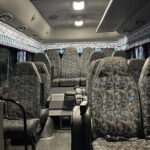
One practical note: the van is comfortable and built for group comfort. In one booking, a traveler specifically praised the roomy feel on a private vehicle for a small group. That’s the kind of detail that makes a one-day temple tour less exhausting.
Angkor Wat: South Gate Photo Timing and the World’s Biggest Temple
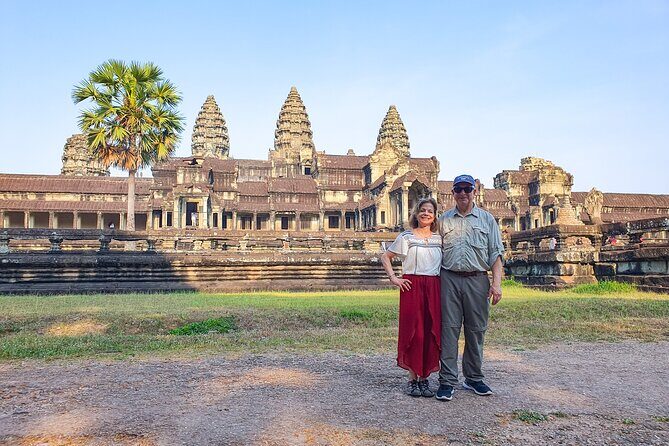
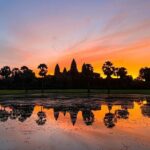
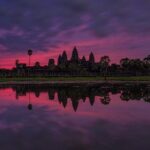
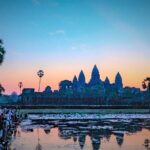
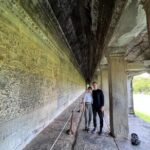
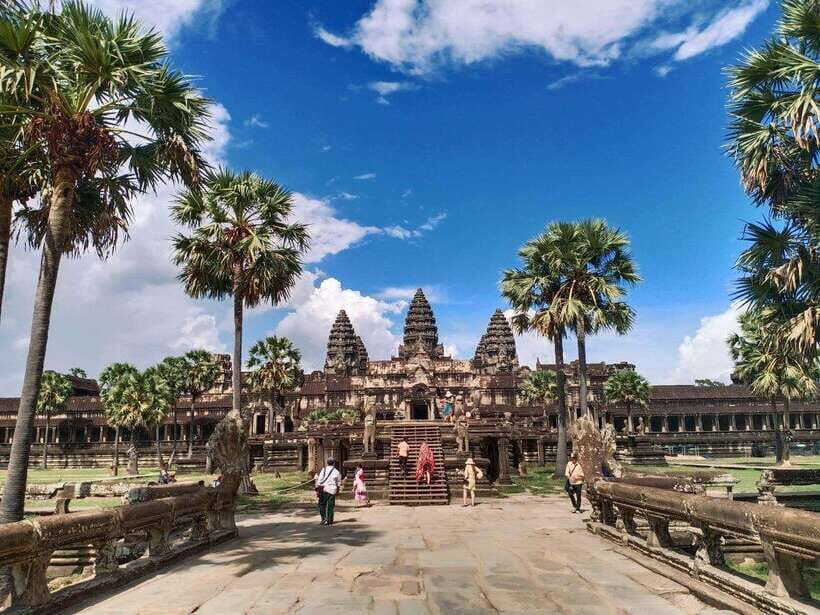
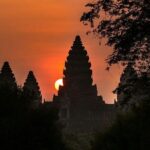
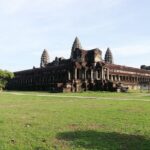
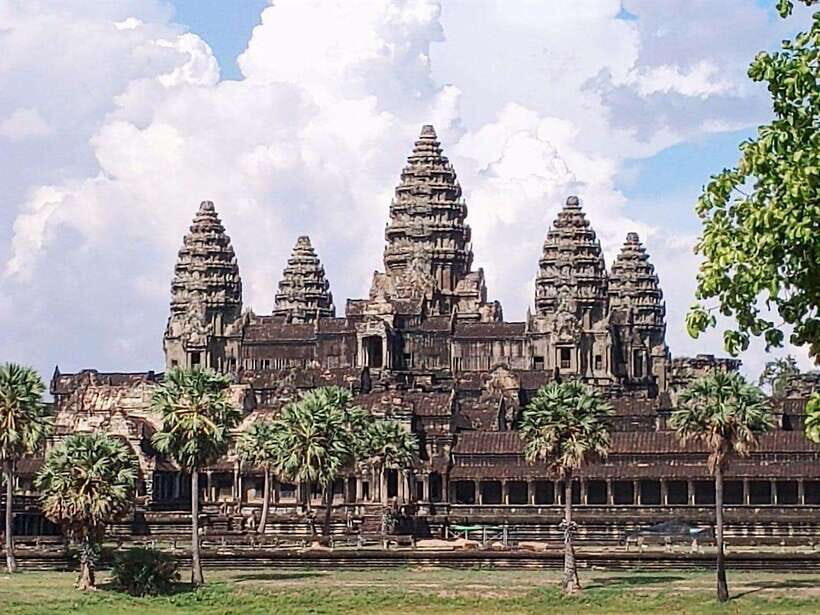
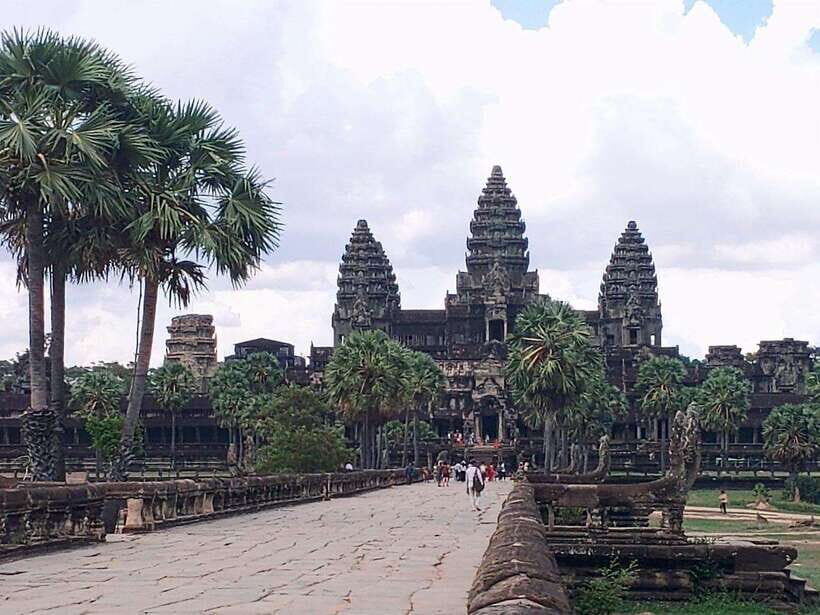
Angkor Wat is the headline for a reason. This massive 12th-century complex was built under Suryavarman II, and it remains the largest monument of its kind within the Angkor realm. Even before you reach the central structures, the scale is the first shock: this place was designed to be seen from far away and to guide your movement like a map.
In this itinerary, you’ll spend about two hours at Angkor Wat with a guided walk and time for photos. The day also includes a stop at the South Gate area in Angkor Thom later, but at Angkor Wat itself, the emphasis is on orientation and key views—so you’re not just wandering. The guide explains the layout and what the carvings and architecture are trying to communicate, which makes the carvings feel less like decoration and more like a language.
If you’re camera-minded, this is also where you’ll benefit from a guide who knows where angles work and how to move without losing your place. One practical tip is to start early in the day if your schedule allows, because the later light can be harsher and crowds rise.
Angkor Thom’s Southern Gate and Bayon’s 200+ Faces
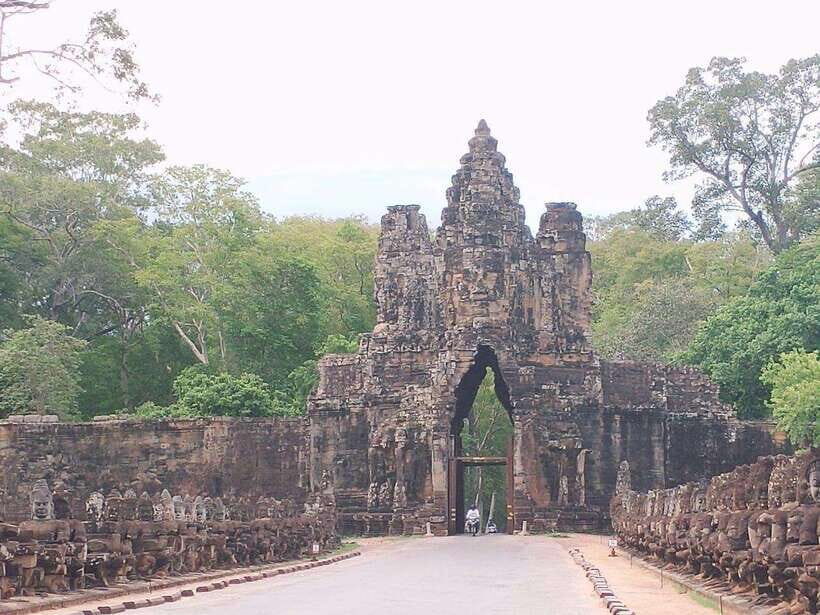
Next comes Angkor Thom, the walled city area that many people remember as the place with the stone faces. You’ll stop at the Tonle Om Gate (Southern Gate) for a quick photo moment, then transition to Bayon.
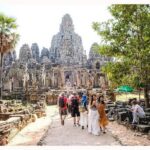
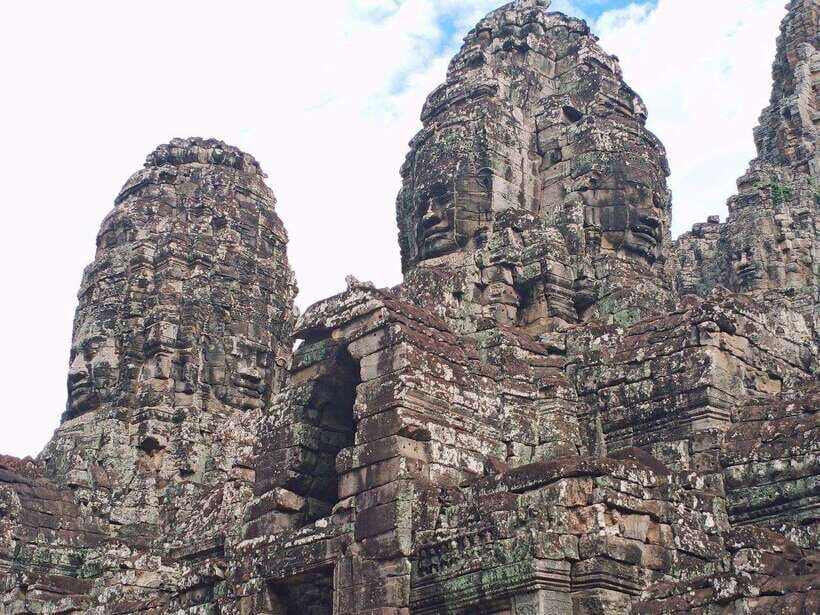
Bayon is where you’ll feel the “wow” most people come for: the temple has more than 200 smiling stone faces. In this plan, Bayon gets about one hour, including guided explanation, photo stops, and time to walk through the spaces at your pace. When you understand what you’re looking at—how the faces relate to Buddhist symbolism and royal authority—it hits harder than just seeing them from one angle.
The route also includes short stops around other Angkor Thom landmarks, including Baphuon and the Terrace of the Elephants. These segments are brief (around 15 minutes each), which is both a benefit and a limitation. The benefit: you get a taste of multiple major features without losing the whole day. The limitation: if you want long, slow studying, you’ll likely want to come back another time.
At the Terrace of the Elephants, the main value is the photo opportunity plus the context your guide gives. Without a guide, you can miss why the carvings and positioning are important.
Ta Prohm: Tree Roots, Tomb Raider Fame, and Photo Reality
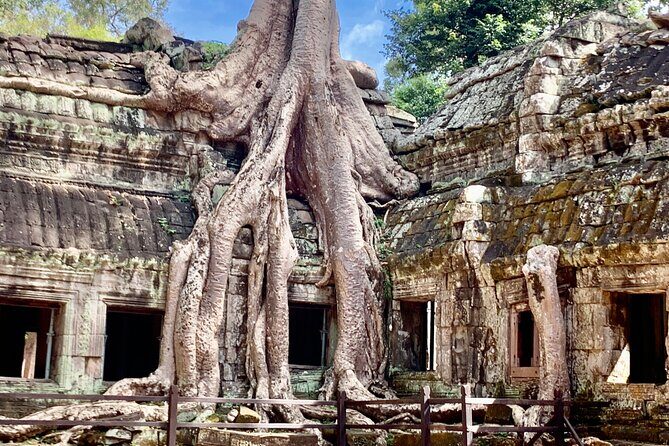
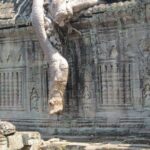
After lunch time break, you’ll head to Ta Prohm. This is the jungle temple most people recognize, partly because of that famous movie filming connection. Even if you don’t care about pop culture, Ta Prohm works because nature and architecture are literally intertwined: huge tree roots wrap around stone, creating dramatic lines and a constant sense of motion.
You’ll spend about one hour here, including a guided walk and photo stops. The best way to enjoy Ta Prohm is to slow down at key viewpoints and let your eyes trace the roots and stonework. It’s not the best place for sprinting. Your guide’s job is to keep the story clear while you’re busy looking at details.
A realistic caution: root areas and steps can be slick or uneven, especially after heavy rain. Wear comfortable shoes and expect to step carefully. With the right shoes and hydration, this becomes one of the most memorable stops of the day.
Other Angkor Thom and Bayon tours we've reviewed in Siem Reap
Lunch Break at Srah Srang: A Breather Before Banteay Srei
Between temple zones, you get a break at Srah Srang. The schedule gives about one hour for lunch time. Meals and drinks aren’t included in the price, so you’ll likely buy food during this break, or plan to eat what you brought if your day includes that option.
Why this break matters: it’s the moment when you can reset your feet and your brain. Angkor days stack up fast. A pause at Srah Srang gives you a chance to sit, cool down a bit, and regroup before you hit Banteay Srei, which is all about fine details and careful looking.
Banteay Srei: The Red-Pink Sandstone Carvings You Came For
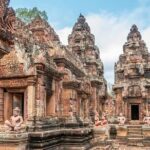
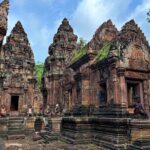
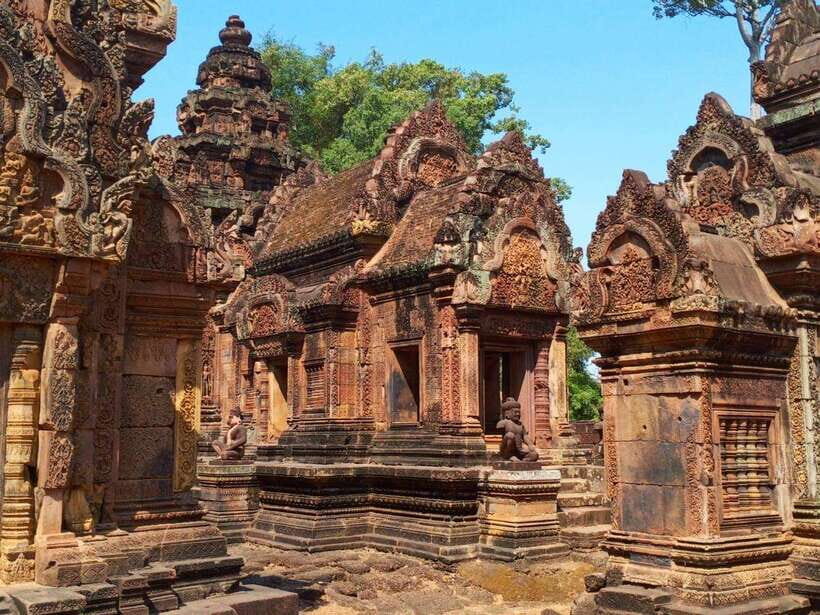
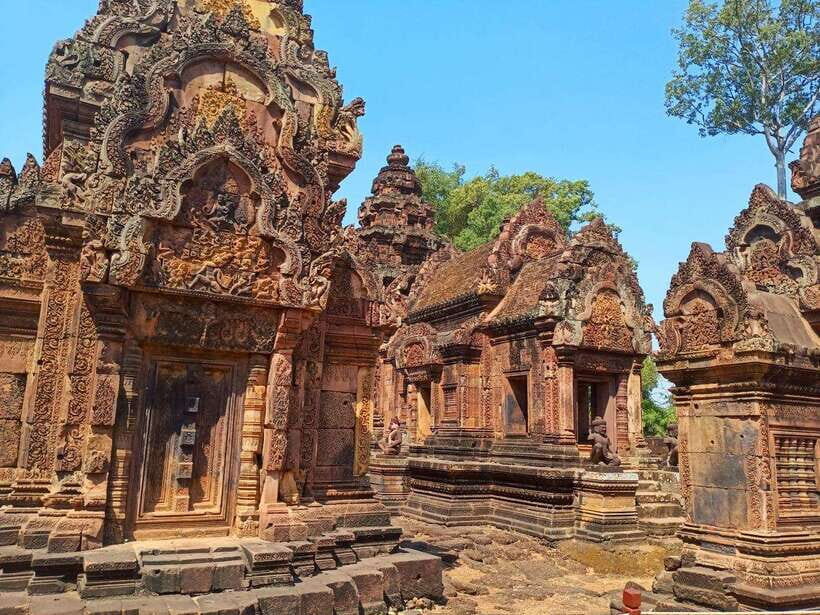
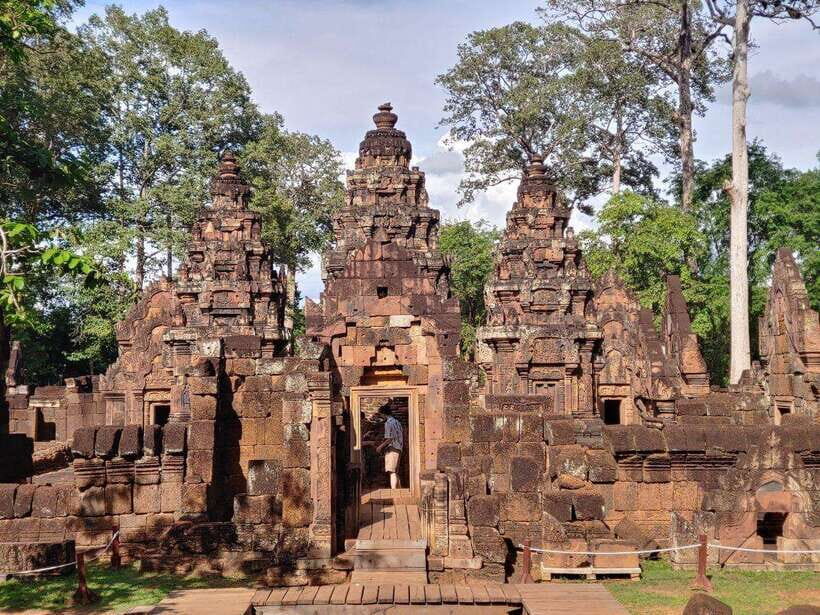
Then comes the highlight for many detail lovers: Banteay Srei. It’s often described as a jewel of Khmer art, and the reason it earns that reputation is the fine carving and the distinctive red-pink sandstone look. This temple doesn’t feel like a giant monument from a distance; it feels like you’re close to craftsmanship—pattern by pattern, figure by figure.
In this itinerary, you’ll have about one hour here with guided touring and time for photos. This is where a good guide makes the biggest difference. Carvings can blur together if you’re just trying to capture everything. With guidance, you start to notice the themes and where the best details are concentrated.
One practical consideration: Banteay Srei can be visually “busy” up close, so don’t plan to photograph every inch. Plan to pick a few focal sections and spend real time there. Your photos will look better, and you’ll actually remember what you saw.
Banteay Samre or a Palm Sugar Village Stop on the Return
On the way back, the tour can include a stop at a palm sugar village and local handicraft souvenirs, or it may swap to Banteay Samre for a calmer temple visit. The exact choice depends on the flow of the day.
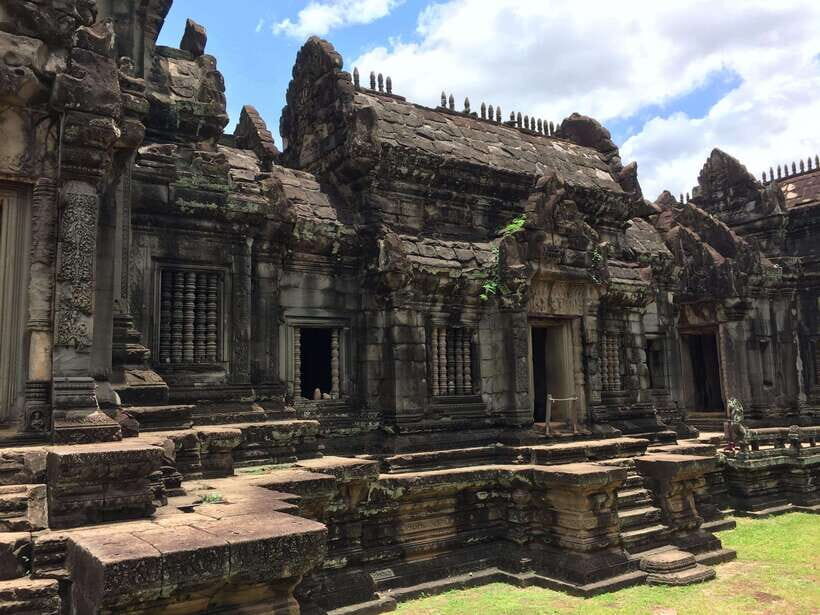
If you go the village route, you’ll get a more everyday look at Cambodian craft and local production. If you go to Banteay Samre, you’re stepping back into temple history with a different mood. Banteay Samre was built in the 12th century during the Angkor period, and it’s noted for its serenity—often a welcome shift after the more visually intense sights.
You’ll also get a guided, photo-friendly walk here (about 1.5 hours if Banteay Samre is included). Either way, it’s a nice way to transition from temple focus to human stories, especially if you’ve been walking on stones all day.
Price and Logistics: Is $155 Per Group Up to 6 Good Value?
The price is $155 per group up to 6, and it includes private air-conditioned transport, a licensed guide, hotel pickup/drop-off, private travel insurance, cold waters, and all toll roads and parking. Temple tickets and meals aren’t included.
Here’s the value math: if your group fills the limit of 6 people, you’re essentially paying about $25 per person for private transport and guide time. That’s the part most people can’t replicate on their own without a lot of coordination. Even if you travel with fewer people, you’re still paying for convenience and for the guide who helps you make sense of what you’re seeing.
The skip-the-line entrance is another meaningful time saver. Angkor can waste your energy in queues. When you’re on a one-day schedule, saving even 30–45 minutes can be the difference between enjoying carvings and feeling rushed.
The one “cost” to understand is that temple ticket time and meal choices are on you. Also, because you’re packing a lot into one day, you’ll want to be comfortable walking and you’ll want to protect yourself from sun.
What to Bring (and What to Wear) for a Long Day of Stones
Bring comfortable shoes first. Angkor footpaths can be uneven and sometimes slippery. Plan for a lot of walking on temple grounds.
Also pack a hat, sunscreen, camera, and water. Even with cold waters provided, you’ll drink more than you expect during a hot, sunny day. You’ll also want light, comfortable clothes and modest temple-appropriate dressing.
If you forget these basics, the day becomes more about managing discomfort than appreciating the temples. With the right gear, it turns into exactly what you want: smooth movement, clear explanations, and time to enjoy the big moments.
Who This Tour Suits Best (and Who Should Think Twice)
This one-day Angkor tour is ideal if you:
- want Angkor Wat + Angkor Thom + Ta Prohm + Banteay Srei in a single day
- like a guide who explains history and architecture in English
- prefer a private group over shared day tours
It’s also a good option for people who enjoy photo stops, because the itinerary builds in dedicated viewing and walking time for landmark angles.
It’s not suitable for wheelchair users or pregnant women, based on the activity’s setup and walking demands.
If you want a slow, deep study of just one temple complex, you might find the schedule packed. But if your goal is to hit the essentials with good guidance, this plan fits that mission.
Should You Book This Siem Reap Temple Day Trip?
Book it if you want maximum Angkor value in one day and you care about understanding what you’re seeing—not just passing through. The combination of private transport, an English guide, and skip-the-line entry makes the day feel less stressful, especially when the temples can feel overwhelming on your own.
Pass if you’re extremely heat-sensitive, need lots of mobility support, or you prefer fewer stops with longer free time. In that case, you’d likely be happier with a slower, single-temple plan.
For most people visiting Siem Reap for a short time, this is a practical way to see the highlights: Angkor Wat, the faces and gates of Angkor Thom, the jungle drama of Ta Prohm, and the close-up artistry of Banteay Srei—plus a local cultural stop or a quieter temple on the way back.
FAQ
What temples are included in the tour?
You’ll visit Angkor Wat, Angkor Thom (including the Southern Gate/Tonle Om Gate and Bayon), Ta Prohm, and Banteay Srei. The day also includes short stops at places like Baphuon and the Terrace of the Elephants, plus Srah Srang. On the way back, you’ll either stop at a palm sugar village and handicraft souvenirs or visit Banteay Samre.
Is this a private tour or a group tour?
It’s a private tour with a private group setup (priced for a group up to 6). You travel in your own air-conditioned vehicle with a licensed driver and guide.
How much time do I spend at the main temples?
The schedule includes about two hours at Angkor Wat, about one hour at Bayon, about one hour at Ta Prohm, and about one hour at Banteay Srei. Other sites are shorter photo and guided stops.
What’s the total duration of the experience?
It’s listed as one day.
Are temple tickets included?
No. Temple ticket costs are not included in the tour price.
What about lunch—do I get a meal included?
Meals and drinks are not included. There is a break time at Srah Srang for lunch.
What language is the guide?
The tour guide provides live guidance in English.
What should I bring for the day?
Bring comfortable walking shoes, a hat, a camera, sunscreen, and water. Also plan to dress modestly for temple visits.
Can I use a separate entrance to avoid lines?
Yes. The experience includes skip-the-line access through a separate entrance.