REVIEW · SIEM REAP
2-Day Angkor Wat and Banteay Srei with Countryside Exploration
Book on Viator →Operated by Asean Angkor Guide · Bookable on Viator
Four-thirty starts, then wow.
This 2-day Angkor Wat and Banteay Srei tour is interesting because you get the Angkor Wat sunrise experience early, then you switch gears to a countryside-style temple circuit with village stops and smaller ruins like Ta Som and Neak Pean. I also like that you’re not just “temple hopping”—you’re led with a professional English-speaking guide and you stop for a local breakfast at Srah Srang. The one drawback to plan for is the schedule: it’s a long day on Day 1, and you’ll be moving most of the time, not wandering slowly.
You’ll start with pickup from your hotel lobby around 4:30–5:00 am (Day 1) and return to Siem Reap the afternoon/evening. Day 2 begins at 8:00 am, then runs through more temples and finishes with a quick stop at the Cambodia Landmine Museum before heading back. The price is $160 per person, and it’s best value if you like structure: guide, A/C vehicle, bottled/poured cool water and towels during the tour, plus breakfast Day 1 and lunch Day 2.
One more practical note: you’ll need to handle the Angkor pass yourself (it’s not included). Also, the dress code matters—no shorts, and plan to cover knees and shoulders.
In This Review
- Key things I’d highlight before you go
- Sunrise at Angkor Wat: why 4:30 am is worth it
- Day 1 route from Angkor Wat to Bayon (and the real pace)
- Srah Srang and breakfast at a local family spot
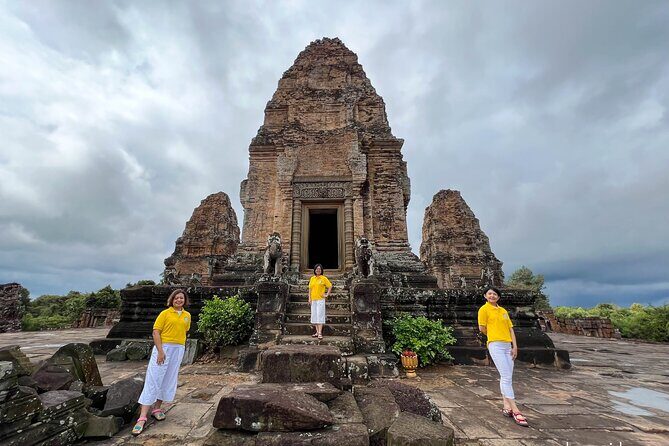
- Pre Rup: the big brick temple stop
- Ta Prohm: jungle roots and a temple left “as is”
- Victory Gate at Angkor Thom South Gate
- Bayon: the smiling faces
- Day 2 countryside temples: smaller stops, more texture
- Preah Khan: major Buddhist temple time
- Neak Pean: the artificial island concept
- Ta Som: small temple, end-of-12th-century scale
- Eastern Mebon: 10th-century island-in-a-reservoir feel
- Angkor Archaeological Park lunch break
- Banteay Srei: the finest sandstone reliefs stop
- Cambodia Landmine Museum: adding context after the temples
- Price and value: what $160 buys (and what you still must plan)
- Comfort, timing, and dress code tips that matter in real life
- Early starts and long days
- Vehicle comfort and small details
- Dress code: no shorts, cover knees and shoulders
- Vegetarian option (ask ahead)
- Who this tour fits best
- Should you book this 2-Day Angkor Wat and Banteay Srei tour?
- FAQ
- Do I need an Angkor pass for this tour?
- What is included in the $160 price?
- What is not included?
- What time is hotel pickup on Day 1 and Day 2?
- Are meals provided both days?
- Is the Landmine Museum ticket included?
- Is there a dress code?
- Can I request vegetarian meals?
- What is the cancellation policy?
Key things I’d highlight before you go
- Sunrise timing at Angkor Wat with hotel pickup before dawn
- Small-group/private setup so your guide can move at a human pace
- Temple mix: big hits (Angkor Wat, Bayon) plus detailed stops (Banteay Srei, Ta Prohm)
- Local food moments including breakfast with a local family at Srah Srang and lunch on Day 2
- A serious pivot at the Landmine Museum that adds context beyond the ruins
- Air-conditioned minivan/minibus + cold water and towels during the day
Sunrise at Angkor Wat: why 4:30 am is worth it
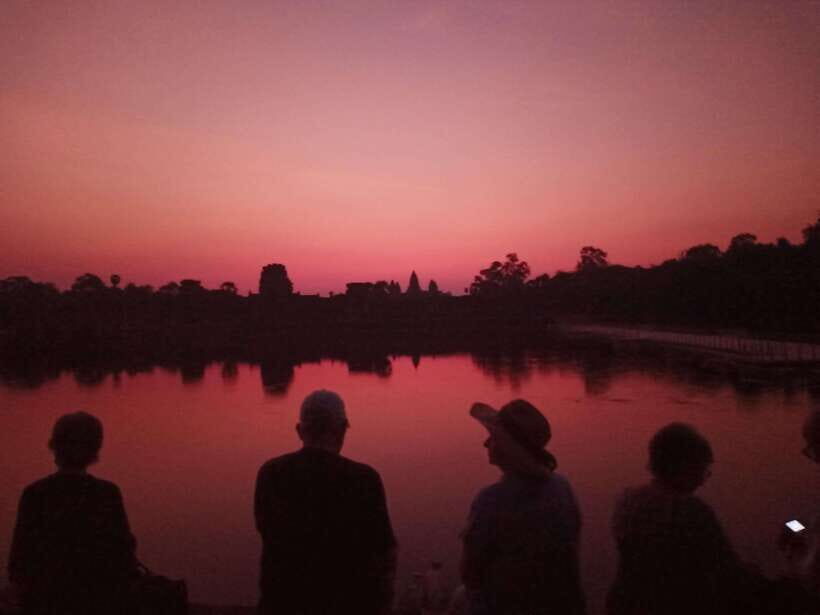
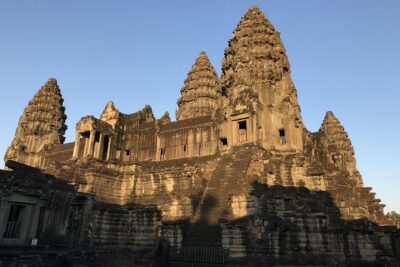
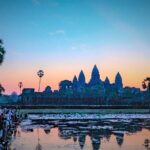
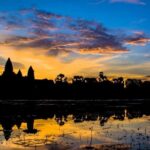
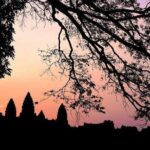
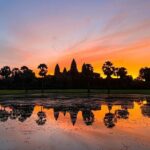
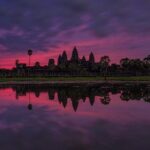
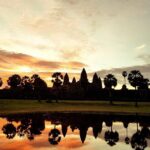
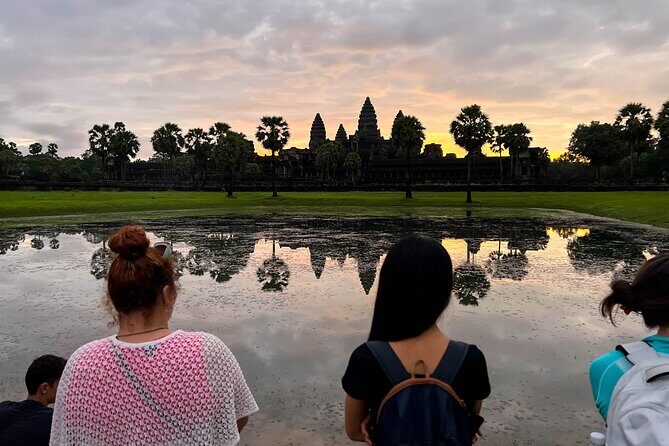
If you’re only going to do one “early start” in Cambodia, this is a good one. The pickup window is 4:30–5:00 am, and you’re set up to watch the sunrise at Angkor Wat. The tour gives you about 2 hours at Angkor Wat, which is just enough time to orient yourself, find a decent view, and actually experience the light change rather than just posing and leaving.
Also, this timing avoids the most annoying part of sunrise visits: arriving late and standing where the view is worse. Since the tour requires an Angkor temple pass before the start, you won’t burn time scrambling at the last minute. (That requirement is a real quality-of-life thing.)
Plan for logistics too. Temples mean uneven ground, and the early hour means you’ll want to be ready to move when your group moves. The good news: you’re in an organized flow with a guide and transport, so you’re not figuring it out on your own in the dark.
Other Angkor Wat temple tours we've reviewed in Siem Reap
Day 1 route from Angkor Wat to Bayon (and the real pace)
Day 1 is your big “greatest hits” run—huge scale in the morning, then more variety through the Angkor complex. The upside is that you see a lot without having to micromanage schedules. The tradeoff is that Day 1 is intense.
Srah Srang and breakfast at a local family spot
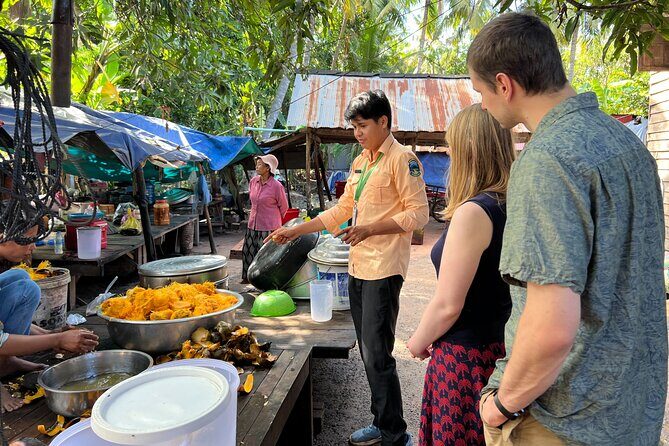
After the sunrise portion, you’ll enjoy breakfast at Srah Srang. This is listed as a local family restaurant, and it’s included. You’ll also have about 1 hour here.
Why I like this stop: it breaks up the heavy temple load. You refuel and you get a taste of how the day is built around normal life, not just monuments. It also helps you stay patient for the next blocks of ruins.
Pre Rup: the big brick temple stop
Next is Pre Rup, described as the largest brick Hindu temple in Angkor Park. You’ll have around 40 minutes and admission isn’t listed as included, so the Angkor pass becomes central here.
Pre Rup works well because it’s not just a name-drop. It’s the kind of temple you can read as architecture—brickwork, steps, and views from the layout. If you’re the sort of person who likes noticing construction details, this is a satisfying detour.
Ta Prohm: jungle roots and a temple left “as is”
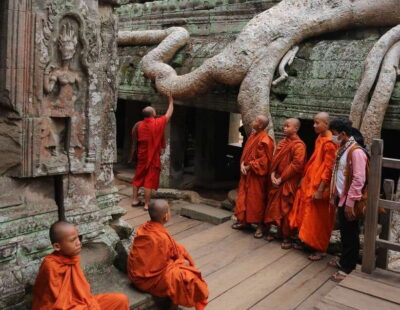
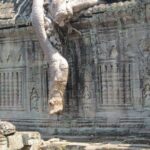
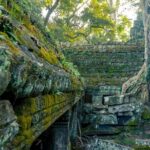
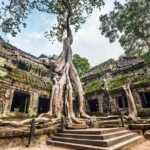
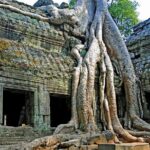
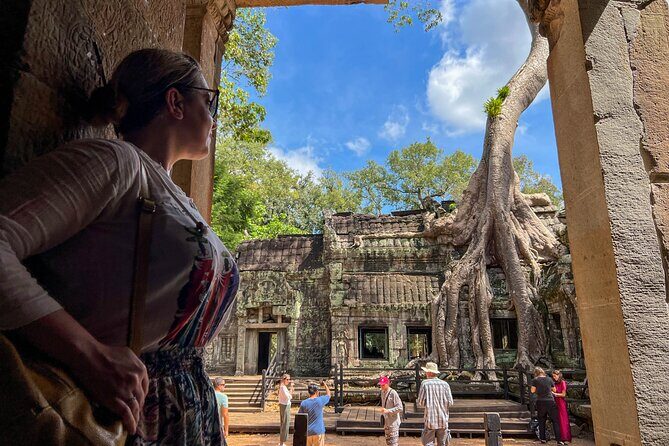
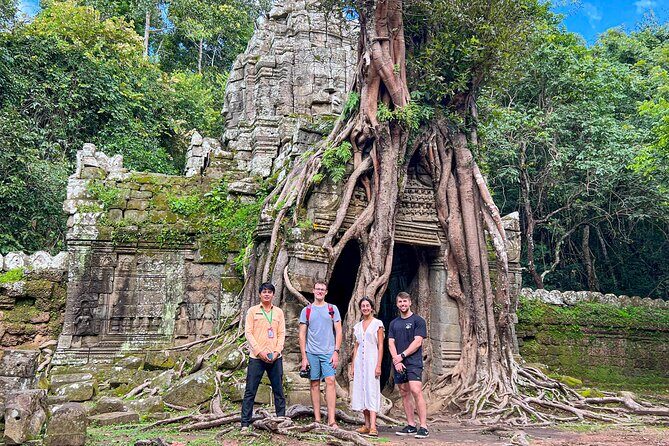
Then comes Ta Prohm, the famous jungle temple. The tour gives about 1 hour, and you’ll see it left partly in its original state with huge tree roots.
This is one of those stops where the site looks “alive” rather than orderly. If you like photos, this is one of the best places on the route. If you don’t, you can still enjoy it by watching how the temple and vegetation share the same space. It changes the mood from formal stone to something more wild and surprising.
Other Banteay Srei tours we've reviewed in Siem Reap
Victory Gate at Angkor Thom South Gate
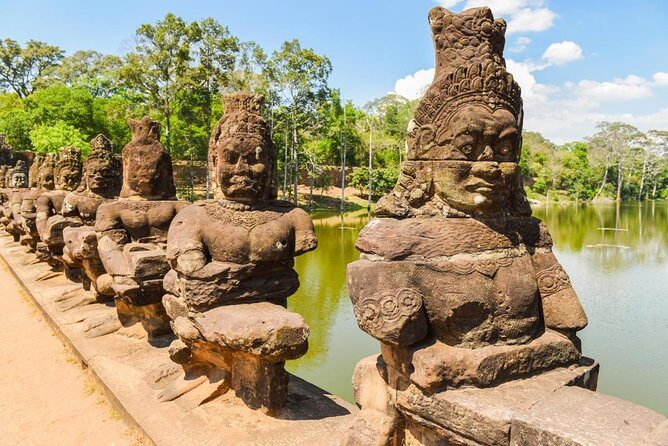
After Ta Prohm, there’s a short 15-minute stop at the Angkor Thom South Gate, also called Victory Gate, decorated with statues of demons and gods.
This is brief on purpose. It’s a quick “wow, I recognize that” moment before you move to a place where you can slow down.
Bayon: the smiling faces
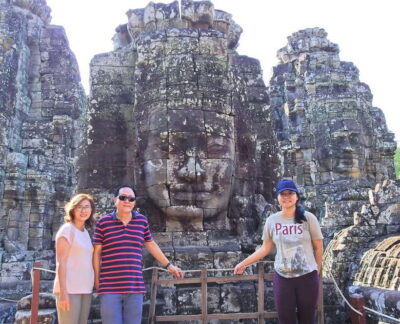
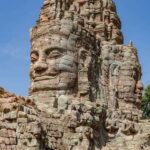
Finally on Day 1, you reach Bayon Temple, with more than 200 Buddha faces carved on the towers. You get about 1 hour here.
Bayon is a great capstone because it shifts the Angkor focus from massive architecture to repeating face motifs. Even if you don’t read inscriptions, your brain catches patterns fast. It’s also a good photo stop without feeling rushed the way some other temples can.
Afterward, the tour transfers you back to Siem Reap (about 30 minutes).
Day 2 countryside temples: smaller stops, more texture
Day 2 starts later and feels calmer, but don’t confuse that with “easy.” You’re still on a tight loop—just with a different tempo and more smaller ruins.
Pickup is at 8:00 am from your hotel after breakfast. Then you drive out from the city center into the temple area for morning sights and countryside exploration.
Preah Khan: major Buddhist temple time
Your first stop is Preah Khan, with about 1 hour. Admission isn’t listed as included, so your Angkor pass matters here too.
Preah Khan is a strong transition from Day 1 because it’s a Buddhist-focused stop, and it helps balance your understanding of Angkor beyond just Hindu temple highlights.
Neak Pean: the artificial island concept
Next is Neak Pean—an artificial island with a Buddhist temple on a circular island in Jayatataka Baray, associated with Preah Khan. You’ll have about 30 minutes.
This is a stop for people who like “layout design.” The idea of a temple set into water features changes how you experience the site. Even if you’re not doing deep history reading, you can still appreciate the planning.
Ta Som: small temple, end-of-12th-century scale
Then you visit Ta Som, described as a small temple built at the end of the 12th century for King Jayavarman VII. Time on site is about 30 minutes.
This one is easy to overlook if you only chase big-ticket names. But if you enjoy the in-between ruins—places that feel less like a single famous landmark and more like a puzzle—Ta Som fits the bill.
Eastern Mebon: 10th-century island-in-a-reservoir feel
After Ta Som, it’s Eastern Mebon, a 10th-century temple built during King Rajendravarman’s reign. It’s described as standing on what was an artificial island in the now-dry East Baray reservoir. Again, you get about 30 minutes.
This stop helps you understand Angkor as a whole water-and-causeway system, not just stone towers. The Baray detail is part of the point.
Angkor Archaeological Park lunch break
You’ll stop for lunch at the Angkor Archaeological Park at a local restaurant, with about 1 hour. Lunch is included, but you order from a menu. If you’re vegetarian, there’s a specific note that you can request vegetarian options in advance for breakfast Day 1 and lunch Day 2.
Banteay Srei: the finest sandstone reliefs stop
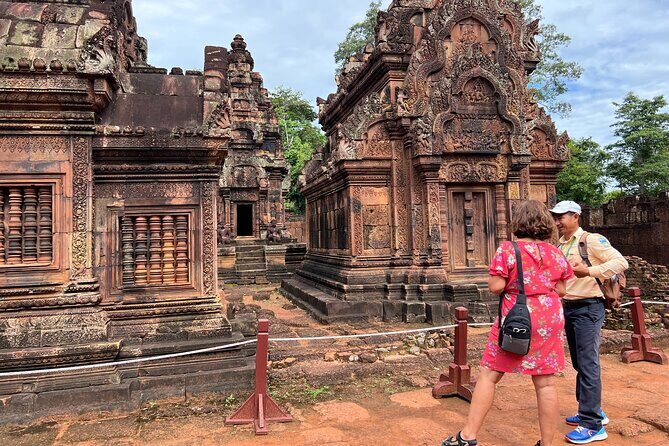
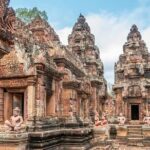
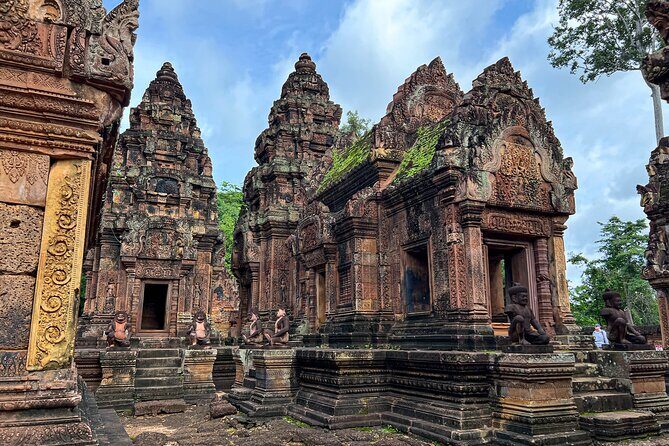
In the early afternoon, you head to Banteay Srei—the tour calls out its intricate carvings and “well-preserved” nature. It’s a smaller sandstone temple, and the reliefs are described as the finest and most skillfully crafted in the region (the key idea is that the artistry is the main attraction). You’ll have around 2 hours here.
This is the emotional payoff for many people. It’s not “bigger is better.” Banteay Srei is where you slow down and look closely—because the detail is the point. If you only focus on Angkor Wat and Bayon, you miss what makes Banteay Srei special.
Cambodia Landmine Museum: adding context after the temples
At the end of the sightseeing loop, you visit the Cambodia Landmine Museum. It’s about 20 minutes, and the ticket is $5 per person (not included).
This stop is short, but it changes the meaning of your trip. Temples show power and devotion from centuries ago. The museum brings you to a more recent and painful reality. It’s not a “fun extra,” but it can make your visit to Cambodia feel more complete—past and present in the same day.
If you prefer your tours to stay strictly “light and scenic,” you might find this part heavy. Still, it’s worth knowing it’s included in the plan and not optional.
Price and value: what $160 buys (and what you still must plan)
At $160 per person for two days, this tour is priced as a guided, organized Angkor experience with meals and transport. What you get included:
- Professional English-speaking guide
- A/C transportation (minivan/minibus)
- Breakfast Day 1 (local food)
- Lunch Day 2 (menu ordering)
- Cold water and towels
- Hotel pickup and drop-off
- Mobile ticket
- Group discounts (if available in your booking)
What you must plan for:
- Angkor pass (2-visit) is not included and is required before the tour starts
- Temple admissions are not listed as included (so the pass becomes your key)
- Landmine Museum ticket: $5 per person is not included
Is it good value? It usually is if you’re okay paying for convenience. You’re not piecing together sunrise timing, vehicle rental, tickets, and a guide. You’re buying an organized route, and Day 2 includes a lunch stop that’s handled for you.
The biggest “value test” for you is this: do you already want to see Banteay Srei and also do sunrise at Angkor Wat? If yes, this structure can save time and stress versus building it yourself.
Comfort, timing, and dress code tips that matter in real life
This kind of Angkor tour lives or dies on comfort and rules.
Early starts and long days
Day 1 begins before sunrise. Expect it to feel long, even if you’re having a great time. Your advantage is that the day is paced by scheduled stops: breakfast, then Pre Rup, Ta Prohm, Victory Gate, Bayon, and back to Siem Reap.
Vehicle comfort and small details
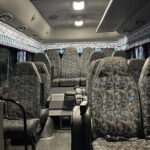
The tour provides A/C and you’ll get cool water and towels during the trip. That’s not a luxury detail. It matters when you’re walking in temple areas after early wake-ups.
Dress code: no shorts, cover knees and shoulders
The tour explicitly notes a dress code rule: visitors aren’t allowed to wear shorts. Plan clothing that covers knees and shoulders, and you’ll avoid last-minute friction before you reach the temples.
Vegetarian option (ask ahead)
If you’re vegetarian, tell the operator in advance. Vegetarian options are noted for breakfast Day 1 and lunch Day 2.
Who this tour fits best
This works well for:
- First-time Angkor visitors who want a guided route without planning hassles
- People who value sunrise timing and want it done correctly
- Travelers who like seeing both the big famous temples and the smaller detail-focused sites like Ta Som and Banteay Srei
- Anyone who wants a serious context stop without turning the day into a full museum marathon
It might not fit you as well if you:
- Hate early mornings and long schedules
- Want totally free time at each temple (this route is structured and time-boxed)
- Prefer to skip anything heavy like the Landmine Museum
Should you book this 2-Day Angkor Wat and Banteay Srei tour?
I’d book it if you want the classic Angkor experience with an efficient plan that hits sunrise, major temples, and Banteay Srei—plus a museum stop that makes the day feel grounded in real Cambodian history. The included guide, A/C transport, and meals reduce the daily friction that often ruins “good intentions” travel days.
I’d think twice if you’re only interested in one or two temples and would rather stay flexible on your own schedule. Also check that you’re ready for the dress rule and that you can secure your Angkor pass before the tour begins—since that’s part of how the sunrise timing works.
If your goal is to see a lot, see it in a sensible order, and have someone explain what you’re looking at, this two-day setup is a strong choice.
FAQ
Do I need an Angkor pass for this tour?
Yes. The Angkor temple pass for a 2-visit is not included, and you are required to have it before the start of the tour so you do not miss the sunrise at Angkor.
What is included in the $160 price?
It includes a professional English-speaking tour guide, A/C transportation, free cool water and towels during the tour, breakfast on Day 1, lunch on Day 2, and hotel pickup and drop-off. Mobile tickets are also included.
What is not included?
The Angkor temple pass is not included, and the tour notes that admission tickets are not included for many temple stops. The Cambodia Landmine Museum ticket is also not included and costs $5 per person.
What time is hotel pickup on Day 1 and Day 2?
Day 1 pickup is between 4:30 am and 5:00 am for the sunrise. Day 2 pickup is at 8:00 am after breakfast.
Are meals provided both days?
Breakfast is provided on Day 1. Lunch is provided on Day 2. Food & soft drinks are not specifically listed beyond that.
Is the Landmine Museum ticket included?
No. The Landmine Museum ticket is $5 per person and is not included.
Is there a dress code?
Yes. Shorts are not allowed. You should plan to cover your knees and shoulders.
Can I request vegetarian meals?
Yes. If you tell the operator in advance, they can offer vegetarian options for breakfast on Day 1 and lunch on Day 2.
What is the cancellation policy?
Free cancellation is available up to 24 hours in advance for a full refund. If you cancel less than 24 hours before the experience starts, the amount paid is not refunded.