REVIEW · SIEM REAP
Private One Day Tour with Sunrise at Angkor Wat
Book on GetYourGuide →Operated by Private Siem Reap Tour Guide & Transport · Bookable on GetYourGuide
Waking up for Angkor can feel like a chore, but this tour makes it work. You’ll get sunrise at Angkor Wat with a private guide and your own pace, then hit the main temples with clear explanations (not a stream of audio-only blur). I love the way the tour filters the day through the most iconic sights, including Ta Prohm’s tree-root chaos, while still slowing down enough to notice the stone details. The one drawback: it starts very early and you’ll be walking a lot, and the temple ticket and lunch aren’t included.
This is also a format that respects your time. Pickup is at 4:30AM, and you’ll move between sites efficiently in an air-conditioned car, with cold water ready and a licensed guide focused on what matters most. Even the “learning parts” are practical: your guide points out carvings, storylines, and photography angles so you’re not just moving through rooms.
One more thing to consider: if you’re hoping for an easy, seated day, this is not it. The itinerary includes stairs and uneven temple ground, plus viewpoints like Phimean Akas that require a climb. And if the sky turns cloudy, you might not get a dramatic sun break, though the day still offers plenty to shoot and understand.
In This Review
- Quick take: what you’ll remember most
- Sunrise at Angkor Wat: why the 4:30 AM start hits
- Angkor Wat inner galleries: carvings you can follow instead of just stare at
- Angkor Thom via the South Gate: giant faces and myth in stone
- Bayon and Baphuon: 216 faces, then the rebuilt puzzle
- Phimean Akas, Terrace stops, and the art of not rushing
- Ta Prohm with tree roots: where stone and jungle negotiate
- Private guide pacing and skip-the-line entry: fewer hassles, better moments
- Price and value: what $135 for up to 2 really buys you
- What the day feels like: timing, stops, and walking reality
- Temple rules, dress code, and what to pack so you don’t suffer
- Should you book this private sunrise day tour?
- FAQ
- What time is pickup?
- How long is the tour?
- Is the tour private?
- What’s included in the price?
- Do I need a temple ticket?
- Is lunch included?
- Do we skip the line?
- Is this tour wheelchair accessible?
- What should I wear or bring?
Quick take: what you’ll remember most
- 4:30AM sunrise timing that beats the worst crowds and gives you cooler light for photos
- A private guide who connects carvings and temple layout to what you’re actually seeing
- Angkor Thom highlights in one pass: South Gate with giant faces, Bayon’s many expressions, and Baphuon
- Ta Prohm with roots on purpose, not as a quick photo stop
- Real-world pacing with multiple short stops for angles, explanations, and breaks when you need them
Sunrise at Angkor Wat: why the 4:30 AM start hits
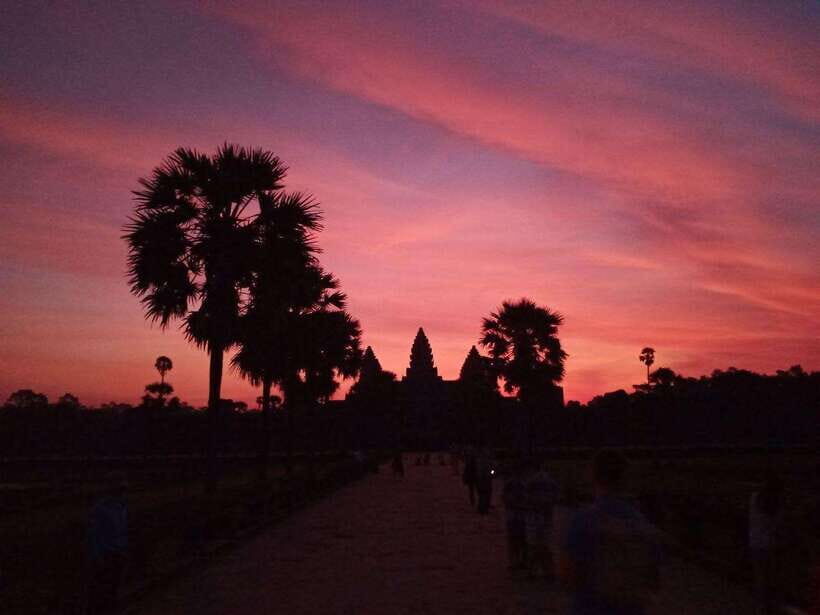
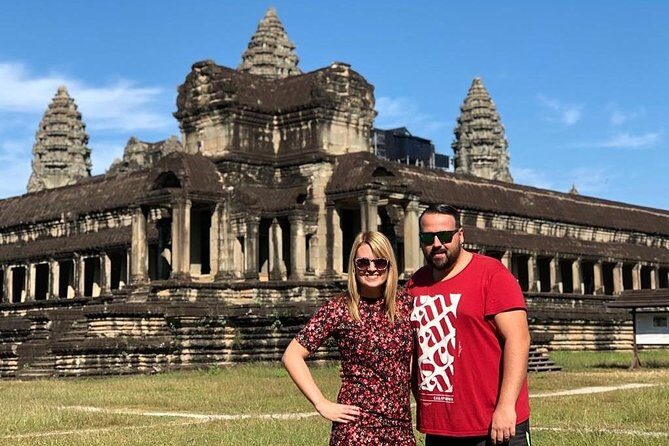
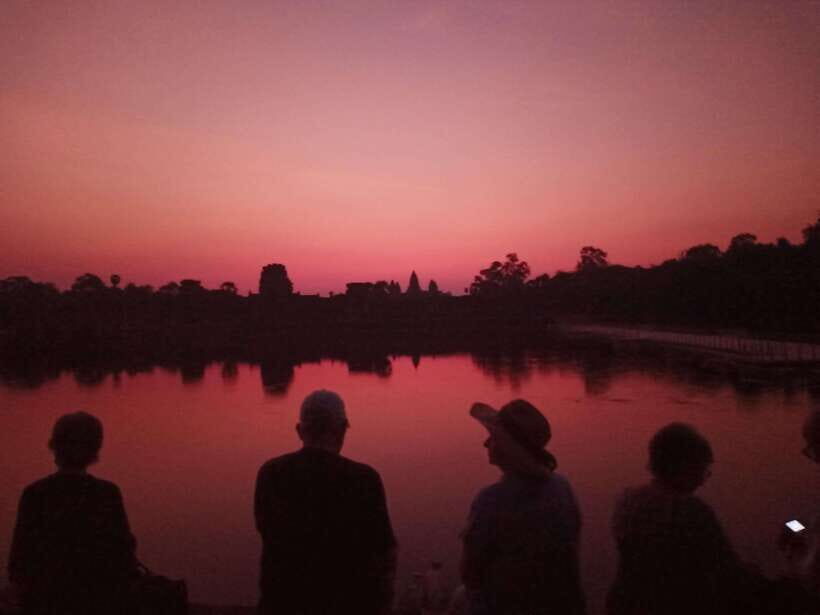
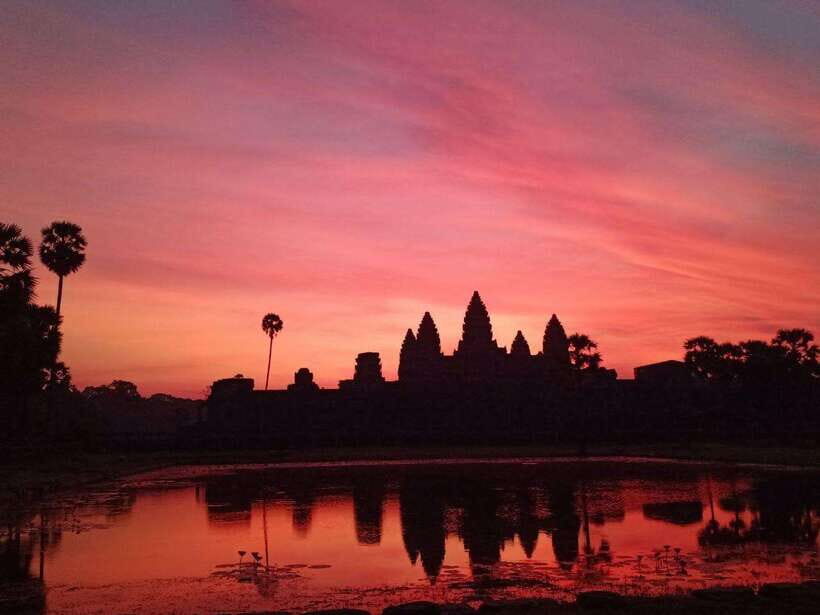
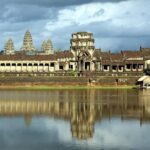
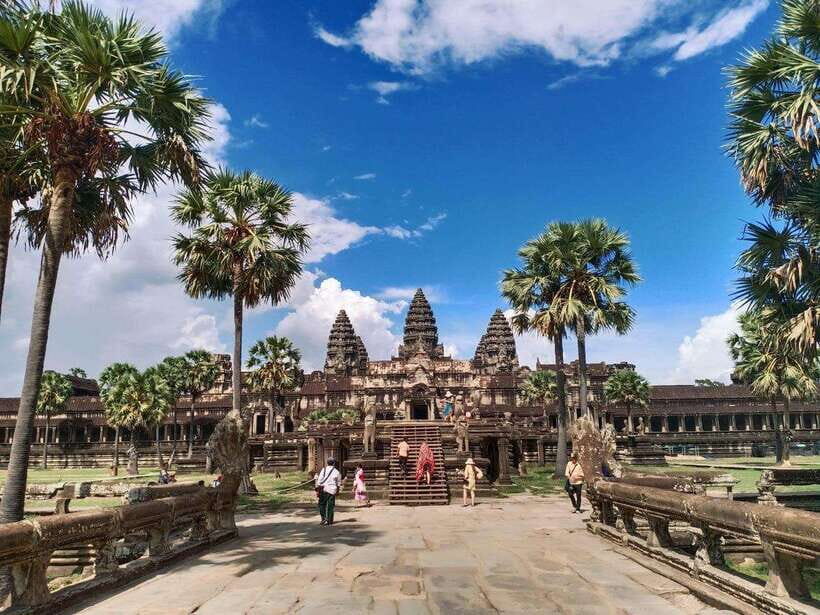
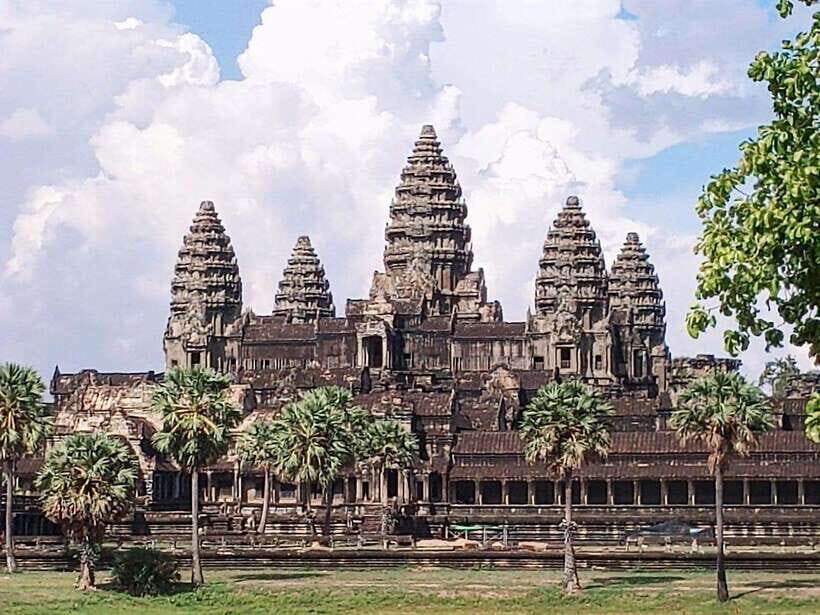
Angkor at dawn is a different place. When you’re driven in while it’s still dark, the silhouette of Angkor Wat builds slowly in front of you, and the first light makes the temple feel almost solid and floating at the same time. This is the moment many people chase, and the early start gives you the best chance at calm viewing before the biggest wave of visitors.
What I like here is the structure. After pickup at 4:30AM, you’re transferred to the temple for a sunrise window, then you’re guided into the inner areas once the color starts to fade. That matters because sunrise can turn into a chaotic scramble if you’re relying on luck or crowds. Here, you’re not just waiting for the sun; you’re planning your whole day around it.
If weather doesn’t cooperate, the experience doesn’t collapse. One guide-style approach you may see in this setup is turning grey moments into photo play, like using puddles and reflections when the light is muted. Even if the sunrise is less dramatic than you hoped, the Angkor Wat setting still rewards patience.
Other Angkor Wat sunrise tours we've reviewed in Siem Reap
Angkor Wat inner galleries: carvings you can follow instead of just stare at
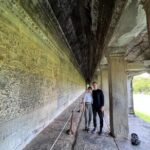
Angkor Wat isn’t only about big towers from far away. The best part for many first-timers is what happens inside the galleries: stone stories, repeating motifs, and detailed carvings that look “busy” at first glance. With a live guide, those details stop being random.
Your tour shifts from sunrise into a guided visit through the inner parts, where you’ll learn how the temple was built and how the artwork fits the larger temple design. You’ll also get help reading the galleries, including the practical stuff that makes a difference when you’re walking: where to look, what to notice first, and which angles make the carvings easier to see.
Photography helps here too. The guide isn’t just pointing at spots; they’ll help you time your shots as light changes. That makes the difference between getting a pile of images and getting the kind of photos where the temple’s design actually shows.
Angkor Thom via the South Gate: giant faces and myth in stone
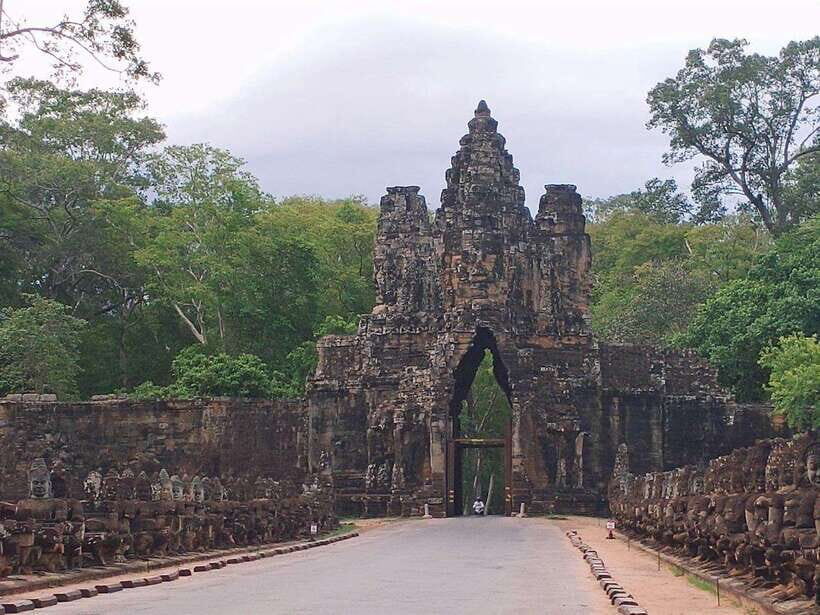
After Angkor Wat, you head to Angkor Thom through the South Gate, also known for its massive scale. This gate is about 23 meters high, and it’s built with an iconic lineup: two rows of figures called Deva and Asura holding up a Naga. It’s the kind of scene that looks like pure fantasy until someone explains the symbolism.
This is where a private guide pays off. You’re only at this area briefly, so you want your time to count. Instead of drifting, you’re moving with intention: photo stop first, then the guided walk that connects the gate to what comes next inside the city.
Then you transition toward Bayon, which is the next big visual hit. The whole Angkor Thom loop is designed like a slow reveal—gates, then courtyards, then the temple faces that seem to look back at you from every angle.
Bayon and Baphuon: 216 faces, then the rebuilt puzzle
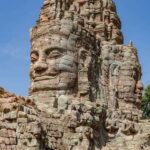
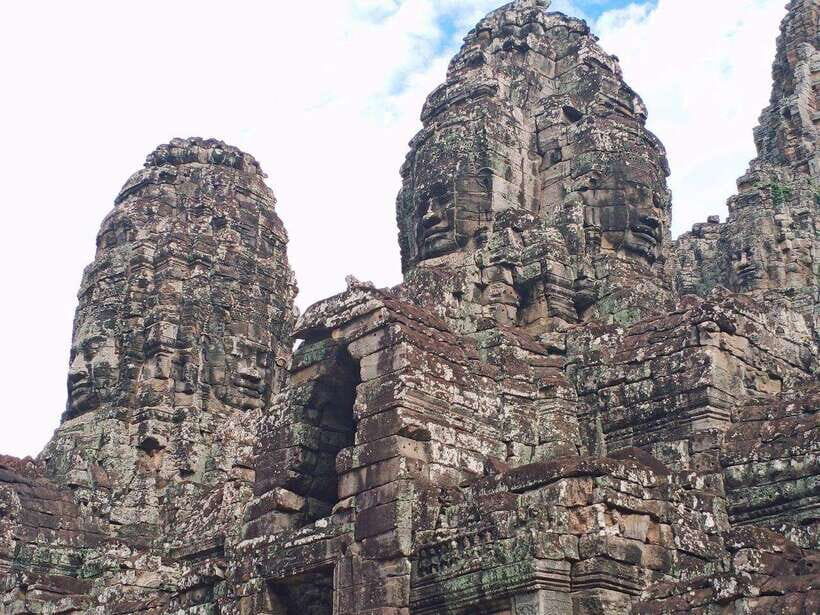
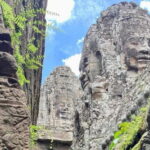
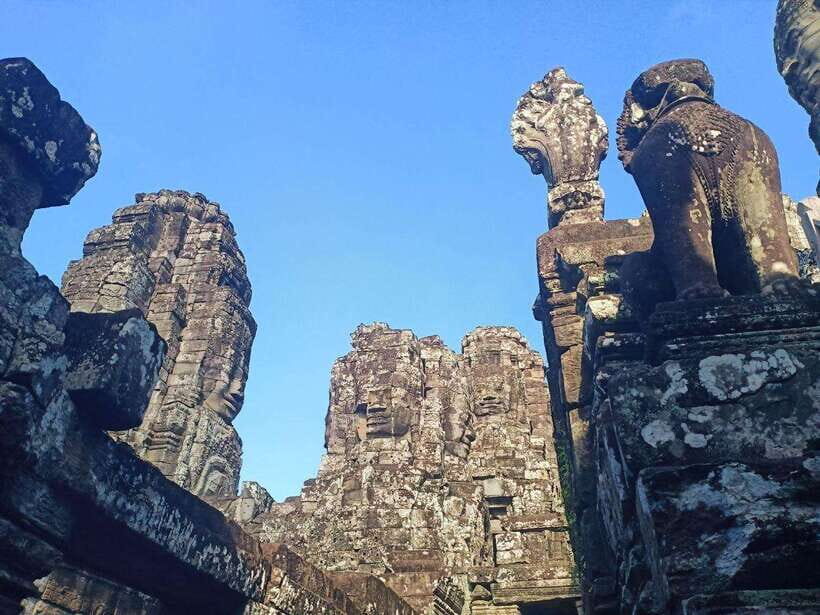
Bayon is famous for its faces, and this tour treats it like more than a one-minute photo moment. You’ll visit the temple with time to walk, plus guidance on photography angles so you’re not just standing under one face and calling it done. Bayon’s 216 enigmatic faces are part of why people get hooked on Angkor: the expressions feel different depending on where you stand and how the light hits.
Your guide also points out wall carvings in the galleries, explaining what they depict and how to recognize the patterns. That turns Bayon into something you understand, not just something you photograph.
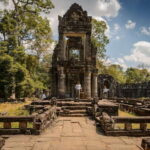
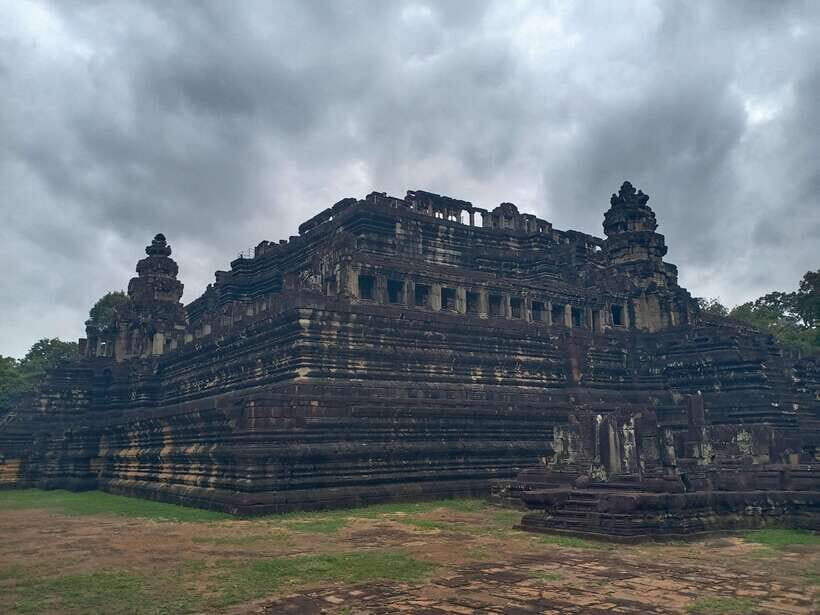
Next comes Baphuon. The highlight here is the story of the giant Reclining Buddha, which was treated like a long-running restoration project after damage and disruption. The tour notes that it was put back together in 2011 following a 37-year disruption caused by war. Even if you’ve never read a restoration timeline before, that context helps you see the temple differently: you’re looking at art and history under active repair, not a “museum piece” stuck in time.
Phimean Akas, Terrace stops, and the art of not rushing
Not all temple stops are equal. Some are famous because of fame (the crowd magnets). Others are worth it because they add texture: views, geometry, and smaller carvings that most people miss when they speed through.
This itinerary includes Phimean Akas, tucked into shaded jungle areas and topped with a viewpoint that can be reached only if you’re willing to climb steep steps. It’s a practical kind of payoff: you’ll likely get an over-the-tops view that helps you understand the layout of what you’ve been walking through all morning.
After that, you’ll visit the Terrace of the Elephants and the Terrace of the Leper King. These are the “details and textures” stops. The terrain and carvings at terraces often don’t feel as dramatic as a main tower, but they’re where Angkor’s craft becomes obvious. If you enjoy architecture and story-carved stone, these terraces can be the moments you remember after the big names start to blend.
One small practical point: these are also short stops, so wear comfortable shoes and keep your phone charged. You’ll want to capture the terrace carvings without spending your time searching for the right camera setting.
Other Angkor Wat temple tours we've reviewed in Siem Reap
Ta Prohm with tree roots: where stone and jungle negotiate
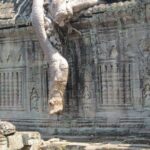
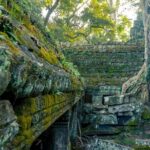
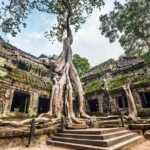
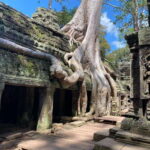
If Angkor has a “movie scene” temple, it’s Ta Prohm. This is the one people associate with Tomb Raider, and the roots are exactly why. What matters on this tour is that you’re not only doing a quick walk-by. You’ll have time for a guided visit where the relationship between ancient stones and spung tree roots covered in moss is explained and pointed out.
The famous look of Ta Prohm comes from a real decision in restoration and preservation: nature was allowed to keep its grip. That’s why you see roots clambering over stones and framed doorways, and why the temple feels like it’s half swallowed and half protected.
You’ll likely walk for about an hour here, which is enough time to do more than collect a single “root shot.” You can try multiple angles: roots against walls, roots inside doorframes, and wider compositions where the jungle becomes part of the temple’s architecture.
Private guide pacing and skip-the-line entry: fewer hassles, better moments
A huge part of the value in this tour is how it prevents the most common Angkor problems: losing time, getting stuck behind slow groups, and misunderstanding what you’re seeing.
You get private transport in an air-conditioned vehicle with a licensed driver, and you also get a licensed English-speaking guide. There’s no audio-device relay. Instead, you can ask questions and get explanations that match where you are right then.
There’s also skip-the-line entry using a separate entrance. That matters in practice because sunrise tours and popular temples can turn into waiting games. Reducing that waiting lets you spend more of the day where it counts: looking, learning, photographing, and walking.
In the real world, this “local and personal” style can change your experience. Some guides you might get are the kind of teachers who bring maps and explain how the complex works, like Phanit, Mr. Tong, or Chansip (names that show up in the experiences behind this tour style). Whether your guide uses blueprints or focuses on how myths connect to carvings, the goal stays the same: you leave with more than just photos.
Price and value: what $135 for up to 2 really buys you
This tour is priced at $135 per group up to 2 for a full day. For Angkor, that’s a tradeoff: you’re paying for a private vehicle, licensed guide time, and a structured route through the biggest highlights.
If you’re traveling solo, it can still make sense because you’re not paying per person to join a crowd. If you’re traveling as a couple, it’s often the sweet spot: you get private pacing at a cost that’s easier to justify than paying individual guide fees on top of crowded group tours.
Here’s what to watch for on the value side. The temple ticket and lunch are not included. So your true total cost is the listed price plus your temple admission and your meal plan. Still, because the guide time is built into the price and you’re skipping the line, you’re paying for time savings and context, not just transport.
What you get that’s hard to duplicate on your own is the “translation” of the carvings and layout. That’s where private guiding often justifies itself fast—especially if it’s your first Angkor day.
What the day feels like: timing, stops, and walking reality
Your day is built around sunrise, then a chain of temple stops that keep you moving. Pickup at 4:30AM means you’ll want to sleep early the night before. Expect a morning that starts cold and ends hot as the sun climbs.
The itinerary flow makes sense for first-timers:
- Angkor Wat for sunrise and inner galleries
- Angkor Thom via the South Gate
- Bayon and Baphuon as major inner-city highlights
- Phimean Akas plus Terraces stops
- Ta Prohm to finish with the signature roots
Most stops are short enough that you can stay energized, but the walking adds up. This is not a sit-and-watch tour. Plan on uneven ground, steps, and sun exposure.
Also note the tour isn’t described as ideal for everyone. It’s listed as wheelchair accessible, but it’s specifically not suitable for visually impaired travelers. If mobility or vision is a concern, you should ask your provider what routes and surfaces you’ll use.
Temple rules, dress code, and what to pack so you don’t suffer
This tour comes with a clear “be ready” list, and it’s worth taking seriously. Temple visits can turn uncomfortable fast if you forget sun or bug protection.
Bring:
- Sun cream, mosquito repellent, hat, sunglasses
- Hand sanitizing gel
- Some cash
- Power bank and charger
- Daily medicine
- Camera or phone (and you’ll want it for sunrise and carvings)
Dress:
- Cover knees and shoulders
- Shoes or flip-flops are fine, but choose what works on dusty, uneven paths
One more practical item: there’s mention of taking cameras/phones, but your guide will also be pointing out angles for photography. So if you’re the type who likes to shoot, test your camera settings before sunrise gets too bright and the temple turns busy.
Should you book this private sunrise day tour?
Book it if you want a one-day plan that hits Angkor’s biggest hits with private pacing, a licensed guide, and help understanding the carvings. If you care about photography and you dislike the feeling of being herded by big groups, this tour style is a good match.
Skip it (or ask more questions first) if you’re not comfortable with an extremely early pickup, long walks, and stairs. Also factor in that you’ll need to pay separately for your temple ticket and you’ll handle lunch on your own.
If you’re trying to do Angkor with your eyes open, not just your phone out, this tour format is a smart way to spend a day.
FAQ
What time is pickup?
Pickup is at 4:30AM from your hotel lobby in Krong Siem Reap.
How long is the tour?
The experience runs for 1 day.
Is the tour private?
Yes. It’s a private group tour for up to 2 people.
What’s included in the price?
Included are private transport in an air-conditioned vehicle, a licensed private driver, a licensed English guide, hotel pickup and drop-off, cold waters, toll roads, parking, and travel insurance.
Do I need a temple ticket?
Yes. The temple ticket is not included.
Is lunch included?
No. Meals (lunch) are not included.
Do we skip the line?
Yes. You use a separate entrance to skip the line.
Is this tour wheelchair accessible?
It is listed as wheelchair accessible, but it’s not suitable for visually impaired people.
What should I wear or bring?
You’ll want to dress with shoulders and knees covered, and bring items like sun cream, mosquito repellent, a hat, sunglasses, hand sanitizer, and daily medicine. Shoes or flip-flops are fine.