REVIEW · SIEM REAP
Shared Tour to Angkor Wat, Bayon and Ta Prohm Temples
Book on Viator →Operated by Travel to Inspire · Bookable on Viator
Angkor in one day is doable. This shared tour strings together Angkor Wat, Bayon, and Ta Prohm with hotel pickup, an English-speaking guide, and air-conditioned comfort between stops. You also get to see the real temple story in context, not just a drive-by checklist.
I really like two things here. First, the guidance—when the guide is Mr. Thom San (spelled as Thom-san/Tom in some notes), you get clear explanations that connect what you’re looking at with how the sites worked in their time. Second, the tour is set up to help you actually enjoy the day: bottled water, sensible stop order, and photo-friendly timing so you can capture the temples without rushing every detail.
One thing to plan for: the tour price is $35, but the temple entrance fee is extra at $37 per person, and you’ll need to cover knees and shoulders at the temples.
In This Review
- Key things worth knowing before you go
- Price and value: what you really pay for
- Getting picked up: tuk-tuk vs minivan and why it matters
- Angkor Wat: the best use of 3 hours for inside and outside
- Angkor Thom South Gate (Tonle Oum): fast orientation, clear names
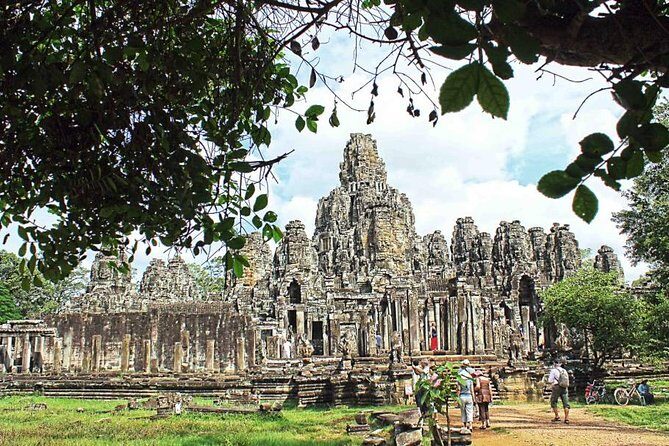
- Bayon Temple in one hour: what you can realistically do
- Ta Prohm Tree Temple: the jungle-covered Tomb Raider moment
- Small group size (max 15): why it feels easier than you expect
- What to wear and bring so the temples don’t stop you
- My call: who this tour fits best
- Should you book this Shared Tour to Angkor Wat, Bayon and Ta Prohm?
- FAQ
- How long is the tour?
- What does the $35 per person price include?
- Are temple entrance fees included?
- Which temples are included in the day?
- Is transportation provided from my hotel?
- What should I wear to enter the temples?
- How large is the group?
- Can I cancel for a full refund?
Key things worth knowing before you go

- Inside access at Angkor Wat: you’ll see it outside and also go inside as part of the guided experience.
- Tonle Oum stop is short but specific: Angkor Thom South Gate includes gate names and a quick orientation to the city layout.
- Ta Prohm is the movie moment: jungle-covered and famous as the Tree Temple linked with Tomb Raider.
- Small group by design: maximum of 15 travelers, which helps keep the day moving without feeling chaotic.
- Transport is part of the comfort: tuk-tuk for smaller groups, minivan for larger ones, plus bottled water.
Price and value: what you really pay for
This is priced at $35 per person, which is a fair deal for a guided half-day-plus temple circuit, especially since hotel pickup and drop-off are included. The big “gotcha” is the separate temple entrance fee: $37 per person. Plan on paying that on the day so your budget stays stress-free.
Also think about what’s not included. Meals aren’t part of the price, and tipping for the guide and driver is recommended. That doesn’t make the tour bad—it just means you should add a little buffer for lunch/snacks if your timing stretches toward a meal hour.
The duration is listed as 5 to 7 hours (approx.), and in practice that kind of time window matters at Angkor. Too-short tours can feel like a photo run. Too-long tours can drain your energy. This one is built to hit several major sites while still giving you time to walk, look, and listen rather than sprinting.
If you’re booking during a busy season, you’ll also like the fact that confirmation is handled quickly after booking, and the tour is commonly reserved about a month out. In plain terms: book ahead so you’re not scrambling when your dates are set.
Other Angkor Wat temple tours we've reviewed in Siem Reap



Getting picked up: tuk-tuk vs minivan and why it matters
You start with hotel pickup and drop-off, and the travel is handled by shared transport sized to your group: 1 to 3 people by tuk-tuk, and 4 to 8 people by minivan. That sounds like a small detail, but it changes how the day feels.
A tuk-tuk can feel fun and local, and it can make short transfers more flexible. A minivan is more comfortable if you’re traveling with others, especially when you’re dealing with heat between temple stops. Either way, the tour includes air-conditioned transfers and bottled water, which is honestly a big deal in Siem Reap.
There’s also practical guidance built in: wear comfortable walking shoes. These temples aren’t flat and even. Even if you take your time, you’ll be on your feet a lot.
Angkor Wat: the best use of 3 hours for inside and outside
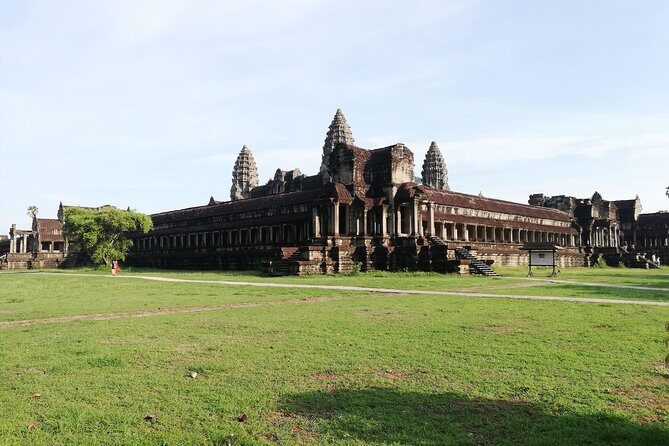
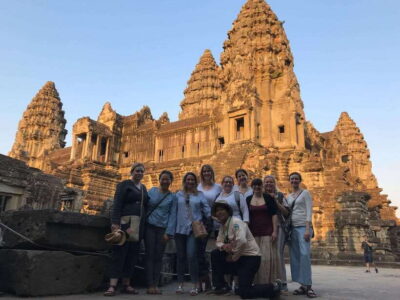
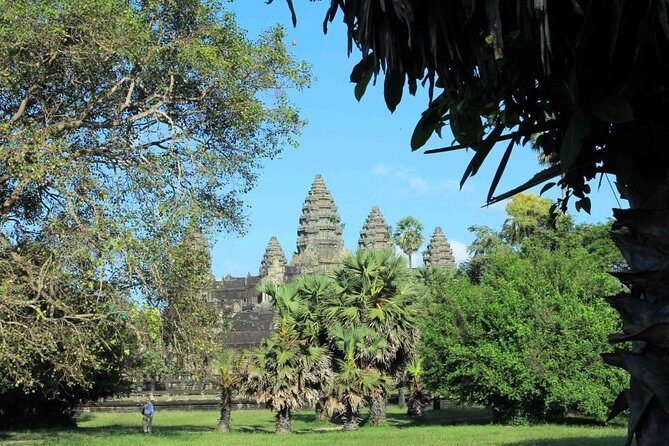
Angkor Wat is the centerpiece, and it’s scheduled first. You’ll see it from the outside, then also go inside with your local English-speaking guide. That combination is key. Outside views help you get scale and layout, while inside access is where you start understanding how the space is organized and what you’re actually standing in.
The guide framing matters too. You’ll hear history tied to what makes Angkor Wat special: it was built between AD 1113 and 1150, and it’s tied to the spirit of Cambodia. That doesn’t turn the visit into a lecture. Instead, it gives you a reason to look longer at details you might otherwise treat as background.
One practical tip: Angkor Wat can be crowded. Going early (since it’s stop one) gives you a better chance to slow down, take photos without jostling, and spend more time on the parts your guide points out.
Time note: the time at this stop is listed as 3 hours. That’s long enough to see what you came for and still ask questions.
Angkor Thom South Gate (Tonle Oum): fast orientation, clear names

After Angkor Wat, you hit Angkor Thom South Gate. It’s also called Tonle Oum. This stop is shorter—about 20 minutes—but it’s not random. You’re getting an orientation to the wider Angkor Thom complex, including how the city gates are set up.
Here’s what I like about the way this stop is taught: you don’t just walk through one gate and move on. You get names and meanings that make the layout easier to imagine later. The city has five gates, including the south gate, the ghost gate or gate of the dead, the victory gate, the dei chhnang gate or north gate, and the killing gate. The city is described as having sides of about 3 kilometres each side.
That matters because Angkor Thom is big. If you’ve only seen temples from one angle, it’s hard to connect them. A quick gate lesson gives you mental maps so the ruins feel less like scattered piles of stone.
If you’re sensitive to quick transitions, you might feel the schedule here. The upside is that this gate stop keeps your energy for the longer inside visits at Bayon and Ta Prohm.
Bayon Temple in one hour: what you can realistically do

Bayon Temple is next, with about 1 hour scheduled. Like the other major sites, it includes both outside viewing and time inside with your guide. In that limited time, the best strategy is simple: listen, look, then ask one or two questions if something stands out.
This is one of those stops where your guide’s approach really changes your experience. In the tour’s feedback, the guides are often praised for taking people to the best spots and helping with photos—so you’re not wandering aimlessly trying to figure out where to stand.
If you like structured museum-style visits, an hour is a solid chunk. If you prefer lingering, Bayon can feel like it moves a bit fast. The tradeoff is that the day doesn’t get bogged down, and you still get Ta Prohm, which many people treat as the highlight.
Other Angkor Thom and Bayon tours we've reviewed in Siem Reap




Ta Prohm Tree Temple: the jungle-covered Tomb Raider moment
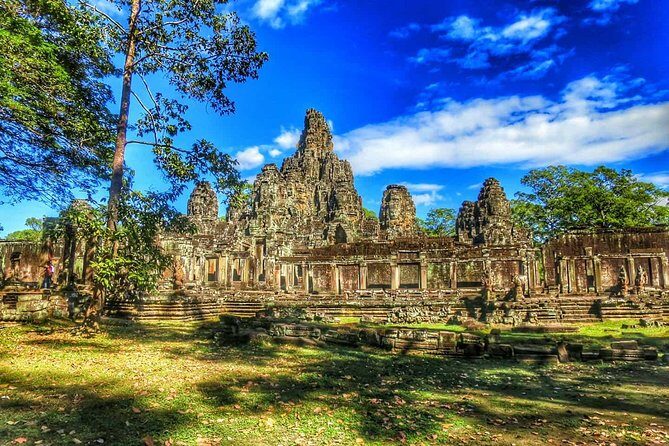
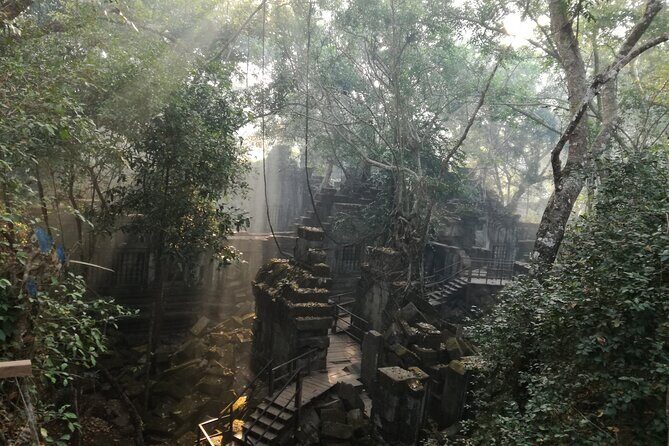
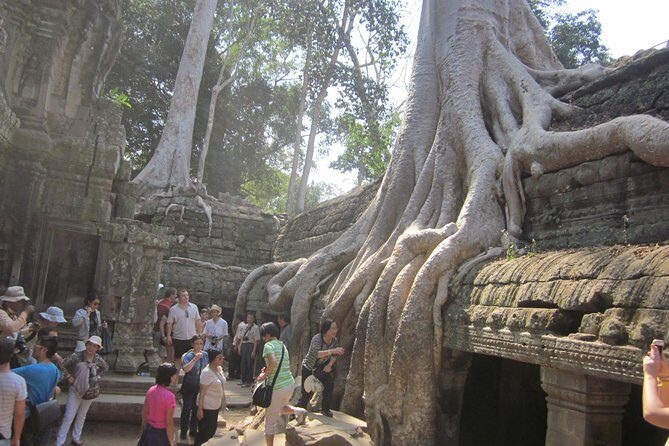
Ta Prohm is famous because it looks like nature is reclaiming the stone. The tour describes it as jungle-covered and also known as the Tree Temple, connected with the movie Tomb Raider. You’ll visit it from the outside and then go inside, again with your guide explaining what you’re seeing.
The practical reason this stop works on a shared tour is that Ta Prohm is visual right away. Even before any explanation, the atmosphere hits you—roots, shade, and a temple that feels half-ruin, half-stage set. Once you’re there, the guide’s talk helps you understand why it became such a recognizable image.
Time on this stop is about 1 hour. That’s enough to take in the iconic views and still move at a pace that keeps you comfortable. If you’re a photographer, treat this as your shot window: put effort here, not everywhere else. You can’t slow down for everything at Angkor in one day, so it helps to pick your priorities.
Small group size (max 15): why it feels easier than you expect
This tour caps at 15 travelers, which is a sweet spot. Big groups can turn temples into traffic. Smaller groups generally mean your guide can keep an eye on everyone, and you’re less likely to lose the thread of what you’re supposed to be looking at.
Also, shared doesn’t mean identical. In one set of experiences shared with the organizer, a family of three found themselves in a very small group setting. You shouldn’t count on that every time, but it’s a sign the day can stay friendly and not too crowded depending on who books.
What to wear and bring so the temples don’t stop you
This is one of those “follow these rules or your day gets interrupted” situations. You’re advised that when entering temples, you must cover your knees and shoulders. Wear light layers you can manage quickly in heat.
Bring comfortable walking shoes because the ground can be uneven and you’ll be moving between areas. If you’re thinking about accessories, keep valuables minimal. You’re advised not to bring valuables on the tour.
One more practical point: the tour includes bottled water, so you won’t need to start with a whole pack. Still, it’s smart to have a small bag that’s easy to keep with you while you’re walking.
My call: who this tour fits best
This is a strong pick if you:
- Want a one-day Angkor circuit without committing to a longer multi-day tour
- Like learning while you look, not after the fact
- Prefer the convenience of hotel pickup and air-conditioned transfers
- Need a schedule that still includes inside time at key sites
It’s also a good choice for families and first-timers who want structure. The downside is mainly the schedule density: if you hate walking and prefer slow sightseeing only, you may find the day moves through stops quickly.
And if you’re traveling solo on a budget, remember: the tour price is low, but the entrance fee is real. That doesn’t make it overpriced—it just helps you plan accurately.
Should you book this Shared Tour to Angkor Wat, Bayon and Ta Prohm?
Yes, I’d book it if your goal is a high-value Angkor day with inside access and guided context. The combination of Angkor Wat first, a clear Angkor Thom orientation at Tonle Oum, and then Bayon plus Ta Prohm gives you the kind of spread that makes your visit feel complete without dragging on forever.
I’d pause before booking only if:
- You don’t want to pay extra for the $37 entrance fee
- You’re not comfortable with a dress-code requirement (knees and shoulders covered)
- You’re aiming for a super slow, flexible day
If you want to see the major hits with a guide, this shared format is a smart balance.
FAQ
How long is the tour?
The tour runs about 5 to 7 hours (approx.).
What does the $35 per person price include?
It includes an English-speaking tour guide, drinking water, hotel pickup and drop-off, and transportation (tuk-tuk or minivan depending on group size).
Are temple entrance fees included?
No. Temple entrance fee is listed as $37.00 per person, and it’s not included in the tour price.
Which temples are included in the day?
You’ll visit Angkor Wat, Angkor Thom South Gate (Tonle Oum), Bayon Temple, and Ta Prohm Temple.
Is transportation provided from my hotel?
Yes. Hotel pickup and drop-off are included, with air-conditioned transfers.
What should I wear to enter the temples?
You must cover your knees and shoulders when entering the temples.
How large is the group?
This tour has a maximum of 15 travelers.
Can I cancel for a full refund?
Yes. Free cancellation is available, and you can cancel up to 24 hours in advance for a full refund. Within 24 hours, no refund is provided.