REVIEW · SIEM REAP
One Full Day Private tour of Angkor Wat, Ta Prohm, Angkor Thom & Banteay Srie
Book on Viator →Operated by Angkor Wat Shared Tours · Bookable on Viator
Four temples, one early morning. This private Angkor circuit is built for maximum impact: you’re covering Angkor Wat, Angkor Thom, Ta Prohm, and Banteay Srei in one long, well-paced day. I love that you’re not stuck in a rigid group flow, and a guide like Thom is known for staying flexible and matching your pace, even when kids are along. I also love the practical comfort touches: hotel pickup, an air-conditioned vehicle, and chilled bottled water throughout. The one catch to plan for is timing and tickets: it starts at 5:00 am, and you’ll still need the Angkor Pass (admission isn’t included).
The real win here is how the day is structured. You get about an hour at each major site, so you can see the highlights without racing from one photo spot to the next. And because it’s private, you can ask to adjust the route or start time if your group needs it.
That said, this is a full-day commitment (about 10 to 11 hours). If you’re the type who wants long, slow wandering, you may find the schedule brisk at times—especially at Angkor Wat, which is huge and takes time to process.
In This Review
- Key things that make this tour worth your time
- How this private Angkor route makes sense for real life
- The 5:00 am start and the ride between temples
- Angkor Wat: the world-famous monument you’ll still feel in an hour
- Angkor Thom: South Gate drama and Bayon in the center
- Ta Prohm: jungle-soaked ruins and that movie connection
- Banteay Srei: smaller scale, better restoration, big photo potential
- Price and value: what $75 gets you (and what it doesn’t)
- Who this tour is best for
- Quick planning tips so your day runs smoothly
- Should you book this private Angkor Wat, Ta Prohm, Angkor Thom & Banteay Srei day tour?
- FAQ
- What time does the tour start?
- How long is the full-day tour?
- Is hotel pickup and drop-off included?
- What transportation is used during the tour?
- Are the temple admission tickets included?
- Do I need the Angkor Pass to enter the temples?
- Is this a private tour or a group tour?
- Is bottled or drinking water included?
- Can the route or start time be changed?
- What is the cancellation policy?
Key things that make this tour worth your time
- Private pacing: only your group goes, so you can move at your rhythm instead of matching strangers
- An AC minivan (or tuk-tuk if you prefer): comfort for the long hours between temples
- Bottled water and chilled drinks: a simple but very welcome detail in Cambodia’s heat
- A guide named Thom is a standout for being patient and flexible with small children
- South Gate to Bayon: you don’t just pass through Angkor Thom, you hit the emotional center
- Angkor Pass required: admission is not included, so plan that upfront at the ticket office
How this private Angkor route makes sense for real life

Angkor can feel like three things at once: a major archaeological site, a photo magnet, and an all-day logistics puzzle. What I like about this tour format is that it turns that puzzle into something manageable. Instead of you trying to stitch together four separate temple visits with transport and timing, you get a single service that handles pickup, drops you where you need to be, and keeps the flow moving.
Because it’s private, the experience also adapts. If your group needs a slower start or extra time at one temple, you’re not “holding up” a bus of strangers. If you’re traveling with kids, that flexibility becomes even more valuable—one of the strongest points connected to this tour is that the guide stays patient with different walking speeds.
The other factor is volume. You’re hitting four major sites in one day. That’s a lot, and it can wear you down. But with good pacing and frequent breaks in transit, it’s one of the most efficient ways to see the big names without turning your trip into a checklist.
Other Angkor Wat temple tours we've reviewed in Siem Reap
The 5:00 am start and the ride between temples
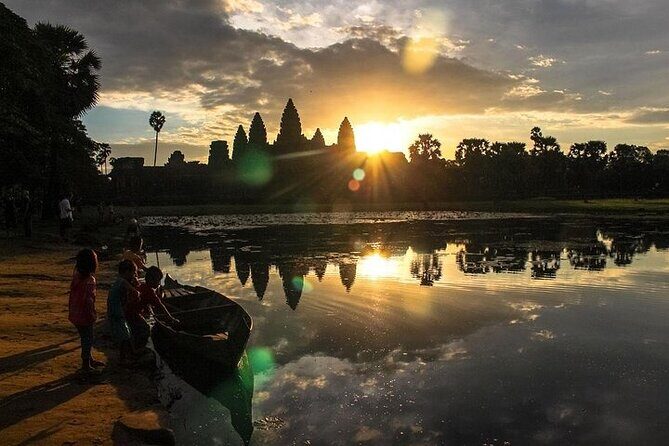
Your day kicks off at 5:00 am, with pickup from your hotel area and transport by air-conditioned minivan. There’s also an option for a tuk-tuk style experience if you want the wind-in-your-face version, though the comfortable baseline is the minivan.
This early start isn’t just about romance. It’s about buying yourself more usable daylight hours for sightseeing. By the time you’re deep into the circuit, you’ll be glad you’re not starting mid-morning when heat and fatigue start stacking up.
In practical terms, the transport matters because Angkor isn’t one compact block. There are real distances between the temples. An AC ride gives you a reset between walking zones, and the tour includes bottled water—plus chilled water during the day—so you’re not scrambling at every stop.
Angkor Wat: the world-famous monument you’ll still feel in an hour
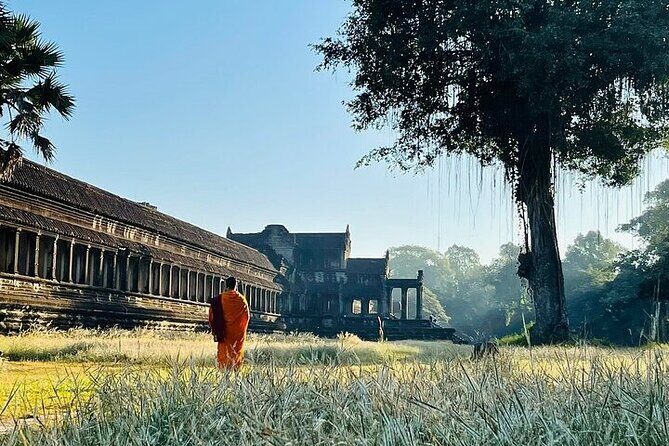
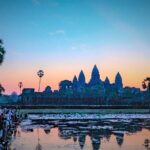
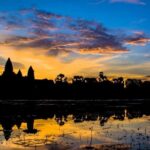
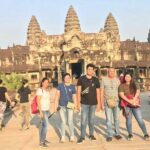
Angkor Wat is the headline for a reason. It’s the largest religious monument in the world, and it carries the legend of the most famous sunrise in the world. Even when you’re not doing a sunrise-focused morning, it’s still a place that hits you fast: scale, symmetry, and a sense of ambition from the first look.
On this tour, you’ll spend about one hour at Angkor Wat. That’s enough time to get your bearings, see key areas, and understand why it’s so iconic. The limitation is also obvious: one hour inside a complex this big can feel short if you’re the type who wants to slow down at every relief and corridor.
A smart way to handle the one-hour window is to set your priorities before you walk in. If you care most about overall composition, spend your time on the major visual viewpoints. If carvings are your thing, then move with purpose toward detailed sections and accept that you won’t catch everything.
The admission part is the practical gotcha: Angkor Wat tickets are not included, and you’ll need to purchase the Angkor Pass directly from the Angkor Park Ticket Office.
Angkor Thom: South Gate drama and Bayon in the center

Next comes Angkor Thom, the later capital of the Angkor Empire. This area works as a kind of transition from the grand statement of Angkor Wat to the more human, face-filled energy of Angkor Thom.
You’ll pass through the South Gate, famous for the gods and demons locked in an eternal tug-of-war. It’s the kind of gateway that instantly makes you feel like you’re walking into a myth, not just a set of ruins.
Then you reach Bayon Temple, at the center of Angkor Thom. Bayon is often remembered for its distinctive faces, but the stronger reason to prioritize it is how it anchors the whole experience. It’s a visual focal point that makes the rest of Angkor Thom easier to understand as a planned city, not a random scattering of structures.
You’ll also get about one hour here. That’s a good pace for seeing the central highlights without burning out. If you’re sensitive to long stair climbs or uneven ground, Angkor Thom can feel more tiring than Angkor Wat because of how you move through the complex.
Admission also isn’t included, so you’ll rely on the Angkor Pass to enter.
Ta Prohm: jungle-soaked ruins and that movie connection
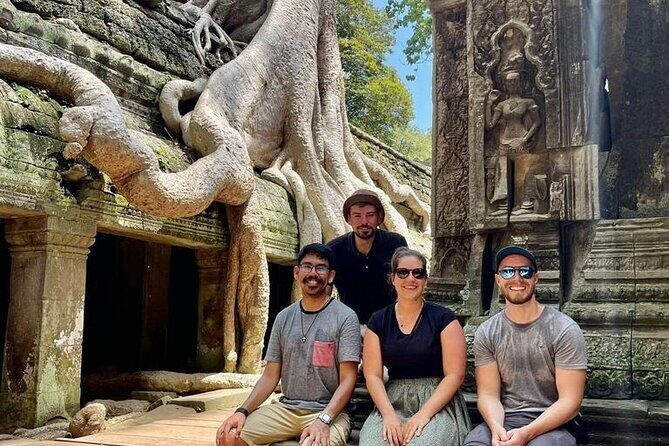
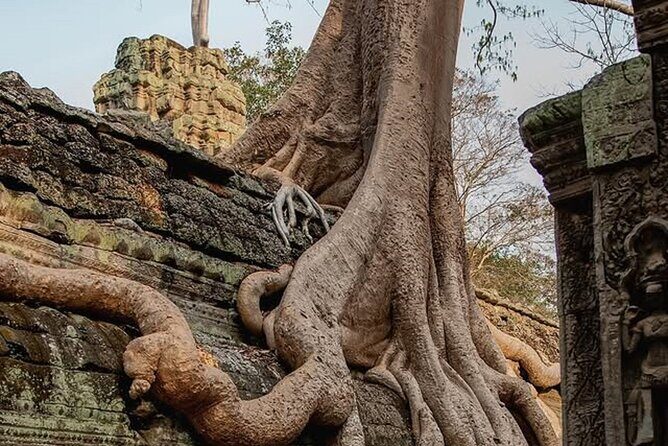
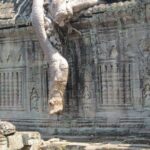
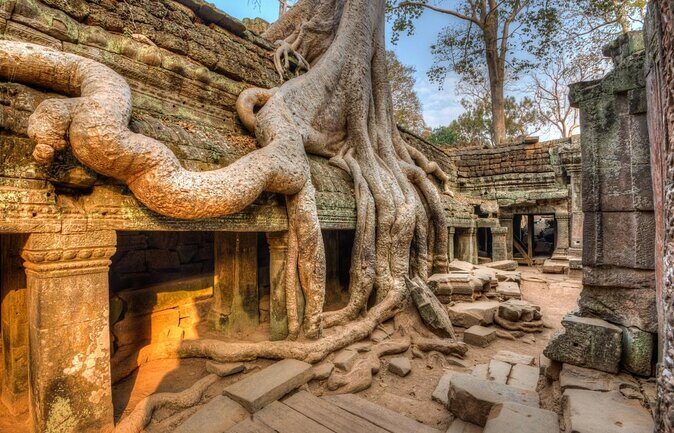
Ta Prohm is where Angkor often feels most cinematic. It’s a picturesque ruin partially taken back by jungle, and it’s widely known as the Tomb Raider temple due to its use in the 2001 film.
Even if you’re not chasing a movie connection, Ta Prohm is special because it feels unfinished in the best way—like time stopped mid-scene. The jungle involvement changes the mood. It turns the stones into something more alive, and it makes your walk feel more exploratory.
You’ll spend about one hour at Ta Prohm, which is usually the right length because it’s easy to get pulled into photos, details, and the play between tree roots and broken masonry. The practical consideration: the ground can be uneven and you’ll want stable footwear. If your group has kids or anyone with mobility issues, it helps to have a guide who can steer your path and keep you moving safely.
Another factor is shade. Ta Prohm’s jungle influence can be helpful for breaking sunlight, but it doesn’t mean you’re always comfortable. Bring a hat and stay hydrated between stops, especially because this is an all-day itinerary.
Other Angkor Thom and Bayon tours we've reviewed in Siem Reap



Banteay Srei: smaller scale, better restoration, big photo potential
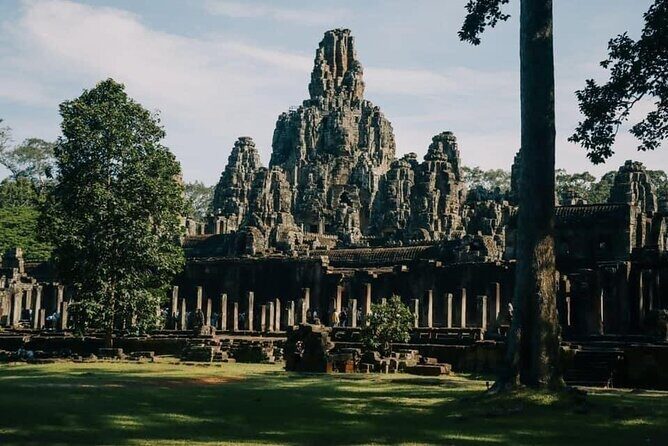
Finally, you reach Banteay Srei, sometimes described as a miniature temple compared to the heavyweights of Angkor. In this case, that “small” scale is a plus. It lets you slow down and actually look at the workmanship without feeling like you’re sprinting across a giant complex.
This temple is also in much better condition than most Angkor sites. It benefited from extensive restoration after it was rediscovered in the early 20th century, including elements rebuilt with original materials. That matters because you can see the temple’s details more clearly rather than guessing how it once looked.
You’ll have about one hour here as well. For many people, it becomes a satisfying closer: after bigger, more overwhelming sites, Banteay Srei feels more intimate and easier to appreciate.
The only drawback is expectation management. If your dream is massive courtyards and endless towering halls, Banteay Srei may feel less grand than the others. But if you like detail, restoration, and a temple that still reads clearly as you walk through, it’s a strong way to end the day.
Price and value: what $75 gets you (and what it doesn’t)
At $75.00 per person, this tour price sits in the “worth it if it saves you hassle” category. The main value isn’t just access to temples. It’s the full-day structure: hotel pickup and drop-off, transport by air-conditioned minivan, and a guided plan that keeps you from losing time to logistics.
It’s also a private tour, which changes the math. You’re not paying just for a guide’s talking time. You’re paying for a schedule built around your group, with chilled water, optional flexibility in route and start time, and a stop sequence that covers the biggest names people come to Angkor for.
What’s not included is just as important. You’ll need to buy the Angkor Pass from the ticket office. If you only glance at the base price, that can surprise you. Plan for it so there are no last-minute headaches.
One more detail that can affect value is that the tour includes group discounts and a mobile ticket feature. Even if you’re traveling solo, that often signals an operator that’s set up to handle the day smoothly.
Who this tour is best for

This tour is a strong fit if you want a “big-hitters” day without thinking too hard about transport and timing. I’d especially point it toward:
- Families who need patience built into the pacing (Thom’s flexibility is a key reason)
- Travelers who want comfort during long driving segments
- First-timers to Angkor who want to cover the essential temples in one day
- People who prefer guided highlights over self-navigating four separate sites
If you’re the kind of traveler who wants to spend half a day in just one corner of Angkor Wat, you may want a different style of tour with fewer stops. Four temples is efficient, but it’s still a lot for one day.
Quick planning tips so your day runs smoothly
Here’s how to make this schedule feel easier, not tougher:
- Decide your priority at each stop before you arrive. One hour goes fast.
- Wear shoes you trust on uneven stone. Ta Prohm in particular can demand careful footing.
- Bring a hat and sun protection. Even with AC between sites, temple time adds up quickly.
- Plan for the Angkor Pass. Admission is not included, and you’ll need it at the ticket office.
Also, if your group needs to adjust the route or start time, ask. The tour is set up with route and start-time flexibility, which is useful when travel days don’t go perfectly.
Should you book this private Angkor Wat, Ta Prohm, Angkor Thom & Banteay Srei day tour?
Yes, I’d book it if your goal is a high-impact Angkor day with comfort and minimal stress. This is the kind of tour that makes sense for first-timers: you’ll get the iconic Angkor Wat experience, the story-rich Angkor Thom with South Gate and Bayon, the jungle drama of Ta Prohm, and the clearer details of Banteay Srei.
I’d skip it—or switch to a slower format—if you want deep, unhurried exploration inside one site. With four stops and roughly one hour at each, you’re getting highlights, not total absorption.
If you’re okay with an early 5:00 am start and you plan for the Angkor Pass admission requirement, this private setup is a practical, value-focused way to see some of Cambodia’s most unforgettable temple architecture in a single day.
FAQ
What time does the tour start?
The tour starts at 5:00 am.
How long is the full-day tour?
It runs about 10 to 11 hours.
Is hotel pickup and drop-off included?
Yes, hotel pickup and drop-off are included.
What transportation is used during the tour?
You ride in an air-conditioned minivan. There’s also an option for a tuk-tuk.
Are the temple admission tickets included?
No. Admission tickets are not included, and you’ll need an Angkor Pass.
Do I need the Angkor Pass to enter the temples?
Yes. The tour notes that the Angkor Pass must be bought directly from the Angkor Park Ticket Office.
Is this a private tour or a group tour?
This is a private tour/activity, meaning only your group participates.
Is bottled or drinking water included?
Yes. Bottled water is included, and chilled water is provided during the tour.
Can the route or start time be changed?
The tour includes the option to customize the route and start time.
What is the cancellation policy?
You can cancel for a full refund up to 24 hours before the experience’s start time.