REVIEW · SIEM REAP
Angkor Wat, Ta Promh, Banteay Srei, Bayon temples Private Tour
Book on Viator →Operated by About Cambodia Travel & Tours · Bookable on Viator
Jungle shadows and stone monuments in one long day. I love how Angkor Wat lays everything out with massive symmetry, then adds jaw-dropping bas-reliefs, and I also love the precision of Banteay Srei with its fine pink sandstone carvings that feel almost too delicate for their age.
One thing to plan around: entrance costs and meals are extra, so the advertised price is only part of what you’ll spend for a full day at the park.
In This Review
- Key highlights before you go
- Private Angkor temples: why this route feels efficient
- Price and logistics: what you really pay for
- Hotel pickup and the AC comfort factor
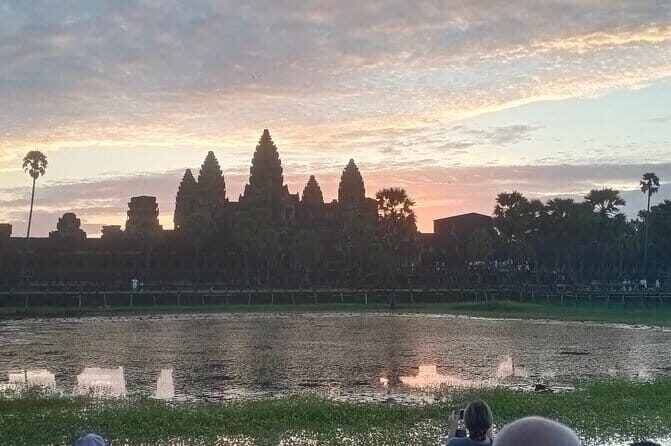
- Stop 1: Angkor Wat and how to read its bas-reliefs
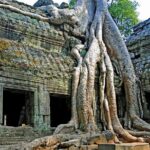
- Stop 2: Ta Prohm’s jungle collision (and why it feels different)
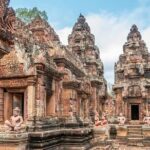
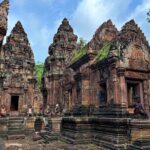
- Stop 3: Banteay Srei, the Citadel of Women’s fine carving work
- Stop 4: Pre Rup for that sunset-style finish
- Stop 5: Victory Gate as your Angkor Thom warm-up
- Stop 6: Bayon Temple and its stone face towers
- Stop 7: Angkor Thom and the capital-city feel
- Timing, heat, and how to make the day feel good
- Who this private tour is best for
- The guide makes the difference: what to look for
- Should you book this Angkor Wat, Ta Prohm, Banteay Srei, Bayon temples private tour?
- FAQ
- What’s included in the private tour package?
- Are temple entrance fees included?
- How long is the tour?
- Which temples are visited on this tour?
- Is lunch included?
- Is this tour private or shared?
- Is free cancellation available?
Key highlights before you go
- Private guide, hotel pickup, and AC transport: you get a smooth route between distant temple sites without guessing bus schedules.
- Angkor Wat and the Khmer “why” behind the stone: the guide helps you read what you’re seeing instead of just walking past it.
- Ta Prohm’s signature tree-and-temple look: you’ll get the story of why it still feels half-wild.
- Banteay Srei’s carving quality: the small-scale details make it an easy stop to slow down and appreciate.
- Pre Rup sunset option: a short, focused finish that helps the whole day end on a memorable note.
Private Angkor temples: why this route feels efficient
Angkor can be overwhelming on your own. The sites are spread out, the pathways aren’t always intuitive, and you’re dealing with heat, humidity, and crowds in some areas. This kind of private, guided day is built for sanity: you leave Siem Reap with a plan, then you move temple to temple at a pace that doesn’t turn your photos into a blur.
What makes this tour especially useful is the mix of temple styles. You start with the grand formal layout of Angkor Wat, then you move into the more mysterious, nature-choked Ta Prohm, and you finish with the political and spiritual center of Angkor Thom and Bayon. You end up with a more complete picture of how the Khmer Empire expressed power through religion, art, and city planning.
The “value” angle here is that you’re paying for time. Your guide is there to explain what you’re looking at, and your driver is there to keep the day moving smoothly in a private air-conditioned vehicle.
Other Angkor Wat temple tours we've reviewed in Siem Reap
Price and logistics: what you really pay for
The price is listed as $65.55 per person, and the tour runs about 7 to 9 hours. That’s a solid deal for a private, full-temple day because key things are included: hotel pickup and drop-off, private air-conditioned transfers, and an English-speaking licensed guide, plus cold drinking water and cold towels.
Two costs are not included, and they matter for budgeting:
- Entrance fee: you’ll need the Angkor Pass to cover the temples on this route. Your guide assists with purchasing it at the park entrance before you start.
- Lunch: you eat on your own at local restaurants, with menu prices roughly $3 to $10 per dish.
If you’re trying to compare prices, don’t just compare the base tour number. Add a realistic day budget for the Angkor Pass and lunch, and then you’ll see whether this day fits your plan.
Hotel pickup and the AC comfort factor
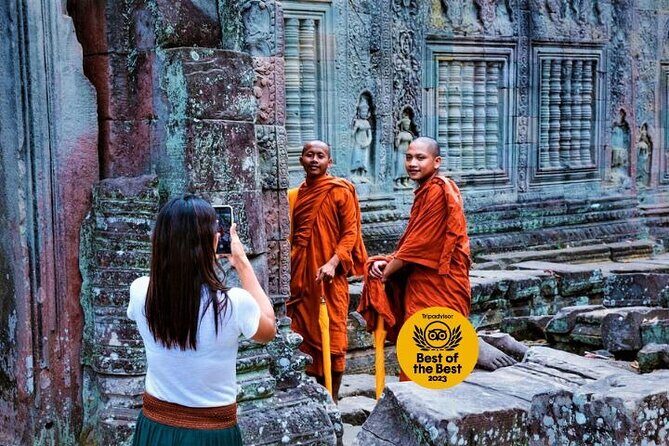
Starting with pickup is a bigger deal at Angkor than most people expect. Temple days are long, and the first hour can either set the tone or drain you. With pickup and return, you lose less time and you’re not stuck figuring out transport late in the day when you’re tired and sunburned.
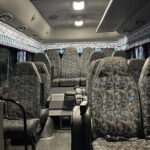
The private air-conditioned vehicle also helps you reset between sites. Most of the time you’ll be walking and standing in temple areas, so having a cool ride for the gaps keeps the day enjoyable rather than grueling. Plus, the cold water and cold towels are exactly the kind of small thing that makes you feel human again when the weather turns hot.
Stop 1: Angkor Wat and how to read its bas-reliefs
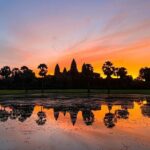
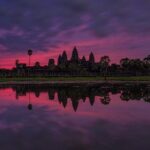
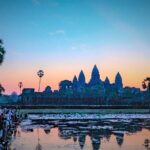
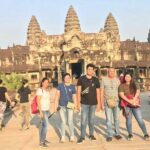
Angkor Wat is enormous, and your first job is to slow down enough to notice the details. This tour sets aside about 2 hours, which is a helpful amount of time. If you rush, you miss the point of Angkor Wat, which is more than a pretty skyline view.
Here’s what makes it special in practical terms:
- The scale is the first wow factor. You feel it in how space is arranged—courtyards, galleries, and temple axes built for a sense of order.
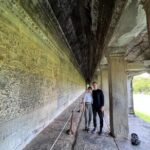
- The bas-reliefs are the second wow factor. They’re not random decoration. They’re storytelling in stone, and your guide’s job is to connect what you see to the broader Khmer religious context.
If you’ve only seen a couple of Angkor temples before, Angkor Wat is the place where your eyes start learning the language of Khmer art. Plan to look around as you walk, not just ahead at the biggest structures.
A consideration: because it’s one of the most famous temples, it can feel busy at peak times. Your private guide helps you keep your pace and attention on the important carvings and layouts rather than getting pulled around by the crowd flow.
Stop 2: Ta Prohm’s jungle collision (and why it feels different)
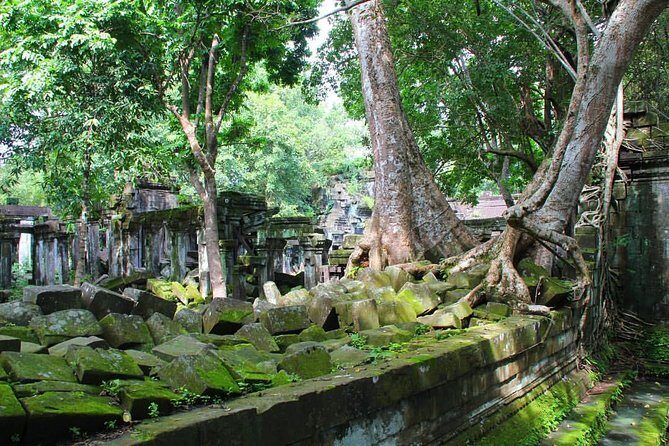
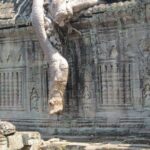
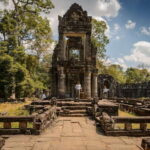
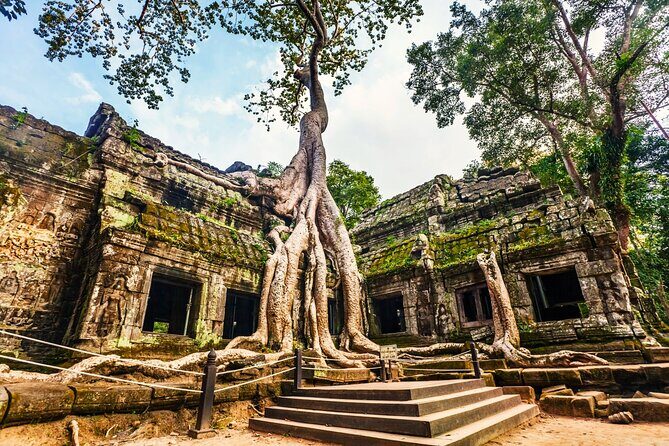
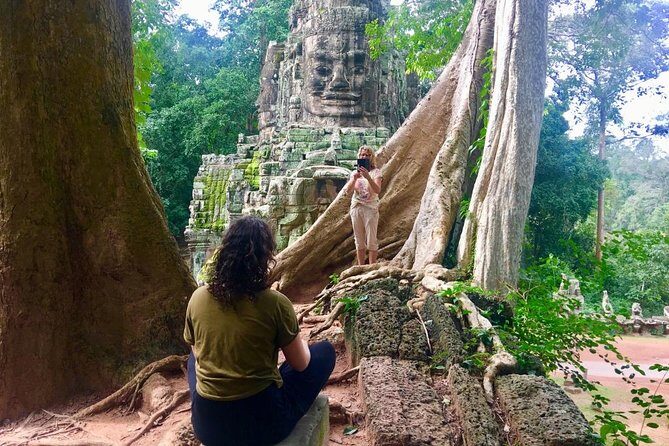
Ta Prohm is the temple people talk about because it looks like nature simply decided to take it back. You’ll spend about 1.5 hours, which gives you time to walk the main areas without feeling like you’re racing.
What you’ll likely love most about Ta Prohm is the mood. The stones and roots create a kind of haunting beauty that feels less “perfectly museum-clean” than the more formal temples. This stop also tends to be the one where you want to stop for photos and then take a few seconds to just look.
A practical tip for this part of the day: keep your eyes on the details as well as the big tree moments. The carved elements are easy to overlook when your brain is busy processing the dramatic plant growth.
Other Angkor Thom and Bayon tours we've reviewed in Siem Reap
Stop 3: Banteay Srei, the Citadel of Women’s fine carving work
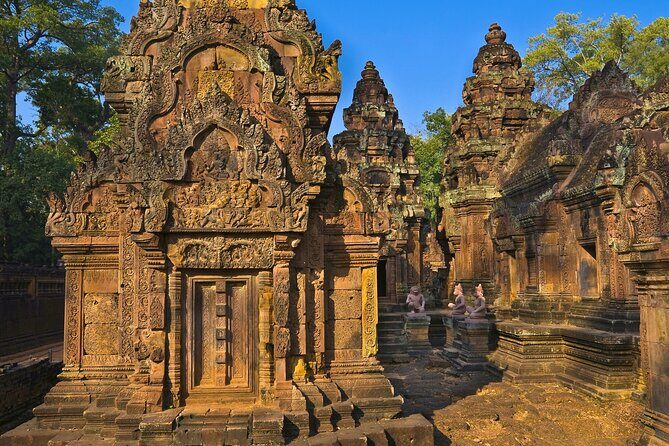
Banteay Srei gets less time on many schedules, so I like that this route gives it about 1 hour. That’s enough time to appreciate what makes it different.
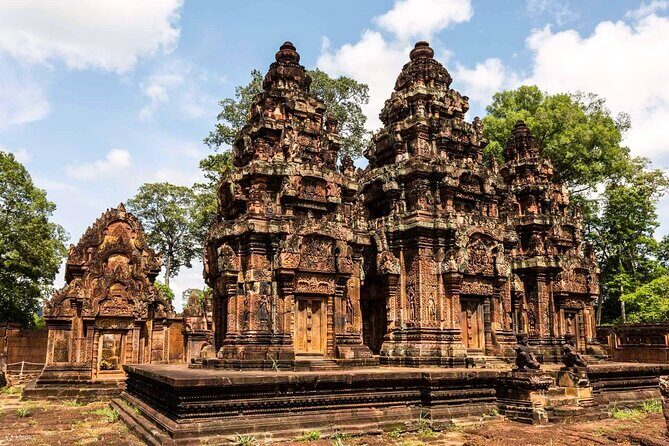
Banteay Srei is dedicated to Shiva and is famous for its fine pink sandstone carvings. In real terms, it’s the “quality over size” stop. Angkor Wat and the other large temples can dominate your attention with their scale. Banteay Srei flips that. The carvings demand closer viewing, and you start noticing how carefully the sculptors worked on lintels and friezes.
Why this stop is valuable: it breaks the pattern. After Ta Prohm’s dramatic jungle feel, and before the denser Angkor Thom area, Banteay Srei gives you a calmer moment to appreciate craftsmanship.
Stop 4: Pre Rup for that sunset-style finish
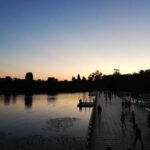
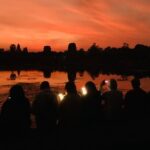
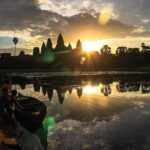
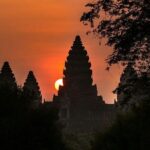
Pre Rup is a short, focused stop in this itinerary, about 40 minutes. The payoff here is the view at the end of the day. Sunset timing at temple sites can change based on the season, but the plan is built around the idea that finishing here gives you a memorable closing frame.
Even if you’re not chasing the perfect golden light, Pre Rup works because it’s a way to step back from tight carving details and see the bigger setting. You get a sense of where these temples sit in relation to the landscape.
The main consideration is energy management. By this point you’ve already walked a lot. Keep your expectations realistic: enjoy the viewpoint, take a few photos, and don’t try to over-sightsee when your legs are asking for mercy.
Stop 5: Victory Gate as your Angkor Thom warm-up
Before you reach the heart of Angkor Thom’s story, you go through Victory Gate, about 30 minutes. This is a great “transition” stop. It helps you orient yourself and mentally shift from one kind of temple experience to another: from major temple complexes to the more city-focused symbolism of Angkor Thom.
Victory Gate is famous, but what’s useful about having it in the itinerary is context. You’ll be looking at a piece of the capital’s structure, not just another photo spot. Your guide’s job is to connect the gate to what it meant within the Khmer capital system.
Stop 6: Bayon Temple and its stone face towers
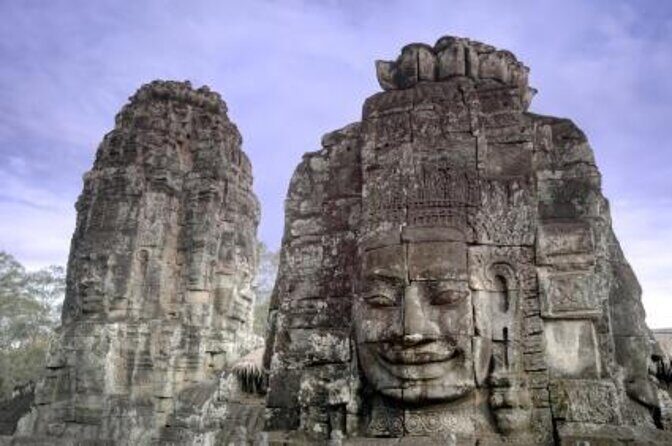
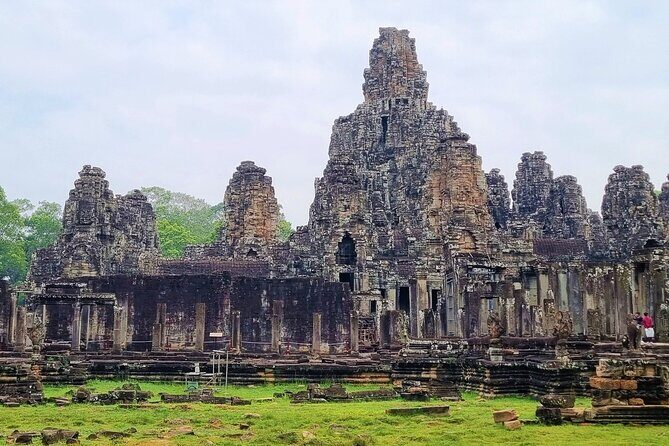
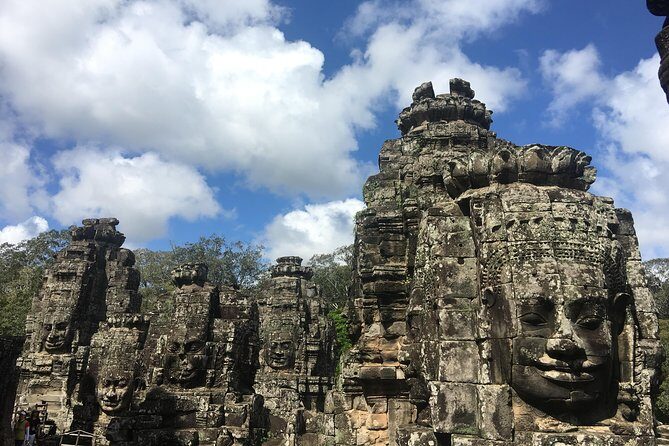
Bayon is where your day often clicks into a new gear. This stop gets about 2 hours, and that’s important because Bayon is visually layered. You’re not just looking at one central tower. You’re surrounded by “face towers,” and your brain keeps trying to find the right angle to understand the arrangement.
Bayon was constructed during Jayavarman VII’s reign, and it’s unique because it’s the only Buddhist state temple and the last temple built in the Angkor Empire. That matters because it explains why the symbolism feels different from the earlier Hindu-focused temples.
What you’ll likely notice:
- The stone faces keep pulling your gaze upward, even when you’re trying to look at floor-level carvings.
- The experience changes as you move. Different perspectives make the faces look more or less centered, and the temple reads like it’s responding to your position.
A practical thought: Bayon is a great place to slow down and let your guide point out what’s significant. Without that, you can end up with lots of photos and not much understanding.
Stop 7: Angkor Thom and the capital-city feel
This final Angkor Thom segment is shorter, about 30 minutes, but it works as a wrap-up. Angkor Thom was the last capital, and this area gives you the sense that Angkor wasn’t just a collection of monuments. It was a functioning city shaped by power, religion, and urban planning.
Even with limited time, you can benefit if you approach it as orientation. Ask your guide what to look for and how the capital layout ties into the temples you’ve already visited that day.
If you’re the type who likes to understand why places are designed the way they are, you’ll enjoy this segment more than you might expect.
Timing, heat, and how to make the day feel good
A 7 to 9 hour temple day isn’t a casual stroll. The tour involves several stops and a lot of standing and walking. This is where private guidance helps: you don’t have to make decisions on the fly, and you can keep a steady pace without constantly checking maps.
I’d plan your day like this:
- Start hydrated, and use the cold water along the way.
- Wear sun protection and shoes you trust for uneven stone.
- Take short breaks when you can. You’ll enjoy the details more when you’re not rushing.
Also, remember lunch isn’t included. If you tend to get hangry, decide in advance whether you’ll eat near the temples, and plan around the fact that you’ll pay out of pocket.
Who this private tour is best for
This is a strong fit if you want:
- A guided day that explains what you’re seeing (especially helpful at Angkor, where stone details can look similar until someone points out the story).
- Hotel pickup and private transfers to reduce stress.
- A route that combines large iconic sites with a carving-focused temple stop.
It may be less ideal if you prefer totally independent pacing with no guide. With a private tour, you’re still free to ask questions and move at a human pace, but you’re following a set sequence designed for efficiency.
The guide makes the difference: what to look for
The tour includes a professional English-speaking licensed guide, and that’s where your experience often goes from impressive to meaningful. When the guide is good, you stop seeing temples as generic landmarks and start understanding what each one is trying to communicate.
One detail that stands out from excellent guiding styles: patient explanations. If you find yourself stuck on one relief or one face tower angle, a great guide will slow down and answer instead of rushing you onward. That’s especially helpful in places like Angkor Wat and Bayon where the “important parts” aren’t always obvious.
If you can, go in with a simple mindset: ask one question early. You’ll get more value from every stop after that.
Should you book this Angkor Wat, Ta Prohm, Banteay Srei, Bayon temples private tour?
If you want a smooth, well-paced day through the most iconic Angkor sites without juggling logistics, I think this is a good booking choice. The included private AC transfers, hotel pickup/drop-off, and licensed English guide make the day feel worth it. Just budget for the Angkor Pass and lunch since they’re not included.
Book it if you care about understanding the temples, not only photographing them. Skip it (or shorten your expectations) if you dislike long temple walking days or if you’re trying to keep everything strictly to the lowest possible cost, since the entrance ticket is the big variable.
FAQ
What’s included in the private tour package?
The tour includes hotel pickup and drop-off, all transfers by private air-conditioned vehicle, a professional English-speaking licensed guide, cold drinking water and cold towels, and services charge plus current government VAT.
Are temple entrance fees included?
No. Entrance fees are not included. You’ll need the Angkor Pass to cover the temples on this itinerary, and your guide will assist you with purchasing it at the entrance of Angkor Park before starting the tour.
How long is the tour?
It runs about 7 to 9 hours, depending on the schedule and time spent at each stop.
Which temples are visited on this tour?
You’ll visit Angkor Wat, Ta Prohm, Banteay Srei, Pre Rup, The Victory Gate, Bayon Temple, and Angkor Thom.
Is lunch included?
No. Lunch is not included. You can find lunches at local restaurants, with vegetarian and non-vegetarian options, and meals are at your own expense.
Is this tour private or shared?
It’s a private tour/activity, so only your group will participate.
Is free cancellation available?
Yes. You can cancel for a full refund up to 24 hours in advance of the experience start time.