REVIEW · SIEM REAP
Siem Reap: Kulen Mountain, Beng Mealea, and Kampong Phluk
Book on GetYourGuide →Operated by Passion Indochina Travel Co.,Ltd. · Bookable on GetYourGuide
Holy places, plus boats and mangroves. This 10-hour day strings together Cambodia’s sacred sites and countryside, from Phnom Kulen to the Tonle Sap floating world. I love how the route mixes temple time with rural stops like Preh Dak and the Palm Sugar Village, so it feels more grounded than a pure sightseeing sprint. One consideration: you’ll pay separate site passes on top of the tour price, and they add up.
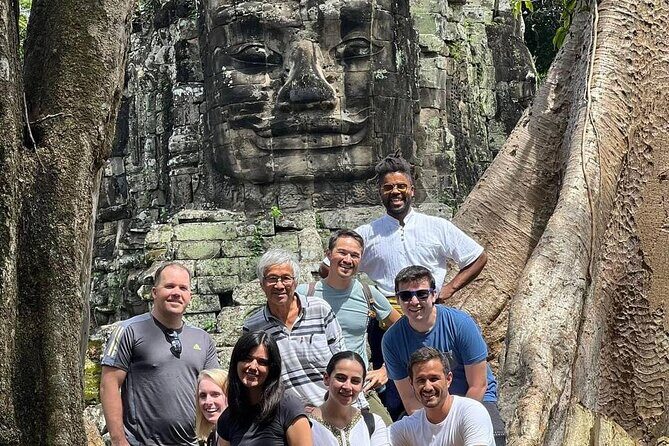
What I liked even more is the feeling of getting variety without losing the thread. I enjoy that Beng Mealea is accessed safely via a walkway, and the Kampong Phluk section happens by boat so you actually see how the lake shapes daily life. The pacing is tour-ready, and the English guide style tends to be patient and clear, including help with photos when you’re on the move.
In This Review
- Key highlights to watch for
- From Siem Reap Hotels to Phnom Kulen: the Morning Rhythm
- Kulen Mountain Tickets: plan for the extra costs
- Phnom Kulen National Park: sacred views plus countryside stops
- Pagodas and the Reclining Buddha: a calm, important stop
- The River of a Thousand Lingas and a holy-water blessing
- Kulen Waterfall timing: when the day shifts into nature
- Beng Mealea: walking the broken “jigsaw puzzle” temple
- Kampong Phluk on Tonle Sap: boat ride, floating life, mangroves
- Price and Value: what’s included, what you’ll pay at the door
- Who this tour is best for (and who should skip it)
- Final call: should you book this Kulen–Beng Mealea–Kampong Phluk day?
- FAQ
- What’s the duration of this tour?
- What time does the hotel pick-up happen?
- What is included in the price?
- What additional tickets or passes do I need to pay?
- Can I use my Angkor pass at Beng Mealea?
- Do I go by boat at Kampong Phluk?
- Is the tour guide available in English?
- Is there free cancellation?
- Is this tour private or small group?
Key highlights to watch for
- Phnom Kulen as a spiritual anchor: pagodas, holy ground, and a real sense of place
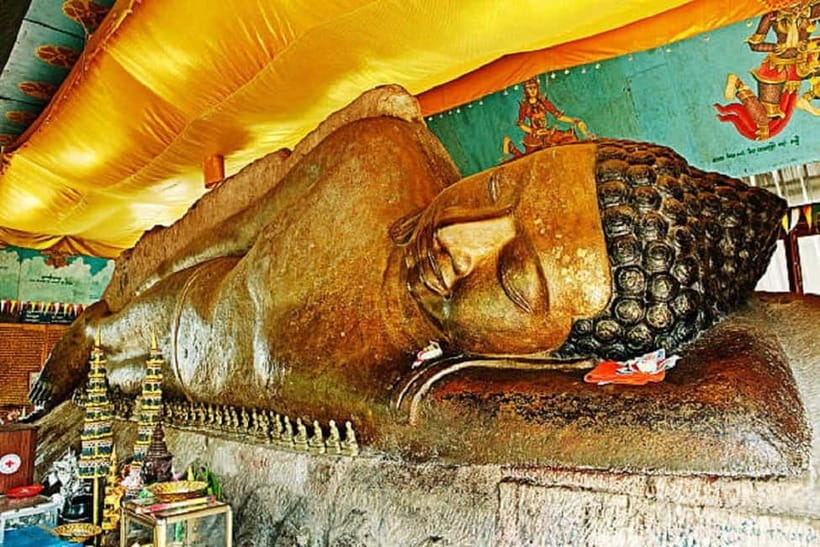
- The Reclining Buddha at rest, framed for easy viewing stops
- River of a Thousand Lingas: floor carvings and a Cambodian-style holy-water blessing
- Beng Mealea’s “jigsaw puzzle” ruins with improved access from wooden walkways
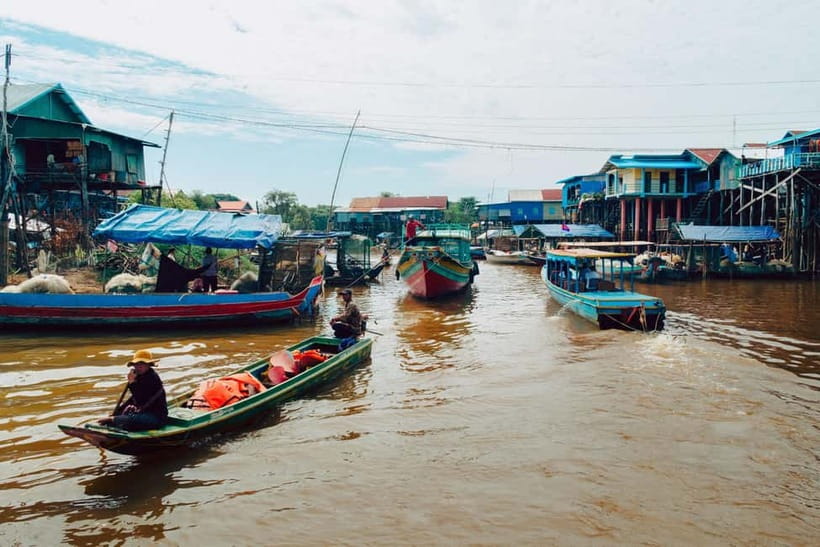
- Kampong Phluk by boat on Tonle Sap, with floating homes and real working routines
- Palm Sugar Village stop to see how sugar is made for local families
From Siem Reap Hotels to Phnom Kulen: the Morning Rhythm
Pick-up happens from your Siem Reap hotel around 7:30 am or 8:00 am, so you’ll start early enough to beat the day feeling rushed. Your guide and driver come to the lobby, and you’ll want to be ready about 30 minutes before that scheduled pick-up time.
The morning travel is not just highway time. You pass through rural villages—Preh Dak is one of the named stops—where it’s possible to see everyday life like rice paddies and traditional dwellings. This is a nice balance: you’re heading to major sites, but you’re also seeing what’s going on outside the Angkor bubble.
If you're still narrowing it down, here are other tours in Siem Reap we've reviewed.
Kulen Mountain Tickets: plan for the extra costs
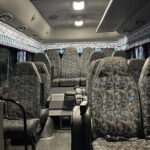
This tour is priced at $85 per person, and it includes A/C transport, an English-speaking guide, hotel pick-up and drop-off, plus small comforts like mineral water, towels, and seasonal fruit. That’s the base package, but you do need extra entry passes for the main stops.
Kulen Mountain admission is $20 per person, and the day includes a quick moment to purchase that ticket before heading into Phnom Kulen National Park. Beng Mealea has its own entry pass (listed as $10 per person), or you can use a valid Angkor pass instead. Then Tonle Sap boat activity at Kampong Phluk requires a lake pass with the boat ride, listed at $15 per person.
If you’re doing the full day, a realistic planning number is about $85 + $20 + $10 + $15 = $130 per person, assuming you’re not using an Angkor pass for Beng Mealea.
Phnom Kulen National Park: sacred views plus countryside stops
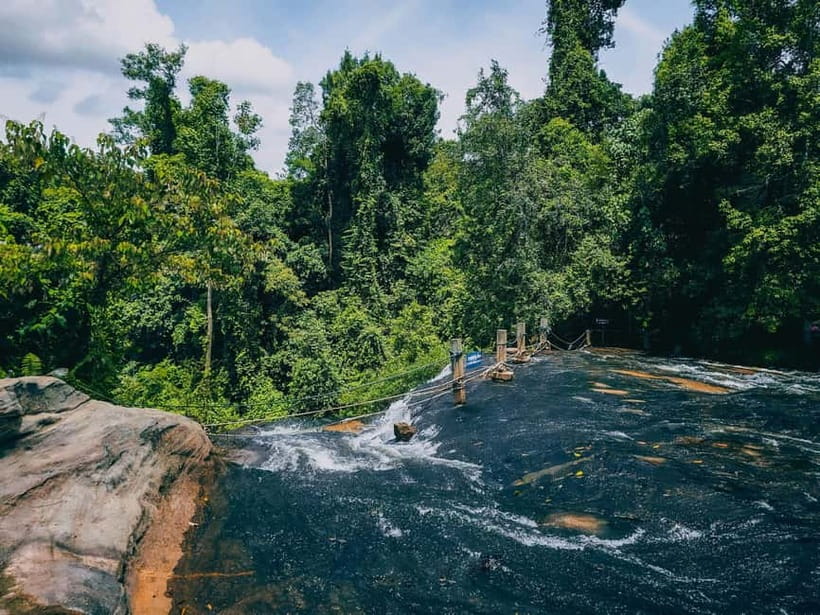
Once you arrive at the Phnom Kulen area, the park visit gives you room to breathe. You’ll have guided sightseeing and walking time (about two hours at this stage), with photo stops and some free time built in.
This matters because Kulen is not just one viewpoint. It’s a layered spiritual landscape. You’ll also get a named rural stop at Preh Dak first (around 15 minutes) so the day starts with context, not straight into stone.
Pagodas and the Reclining Buddha: a calm, important stop
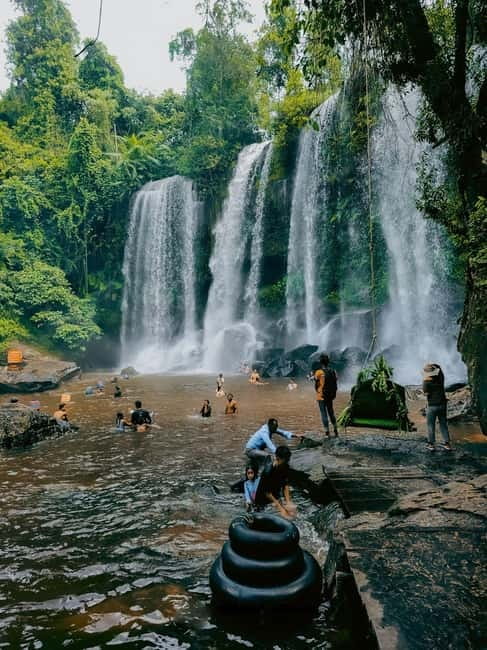
After the countryside and park entrance, the tour heads deeper into the holy mountain experience. You’ll visit the Preah Ang Thom Pagoda area with guided time, photos, and a walk that’s long enough for you to actually look, not just pass through.
The standout moment here is the world-famous Reclining Buddha at rest. This isn’t presented as a quick tick-box photo. You’re guided through what you’re seeing and how it fits into the religious meaning of the site for Hindus and Buddhists. If you like sites where the guide helps you connect symbolism to the real place in front of you, this portion is a strong match.
The River of a Thousand Lingas and a holy-water blessing
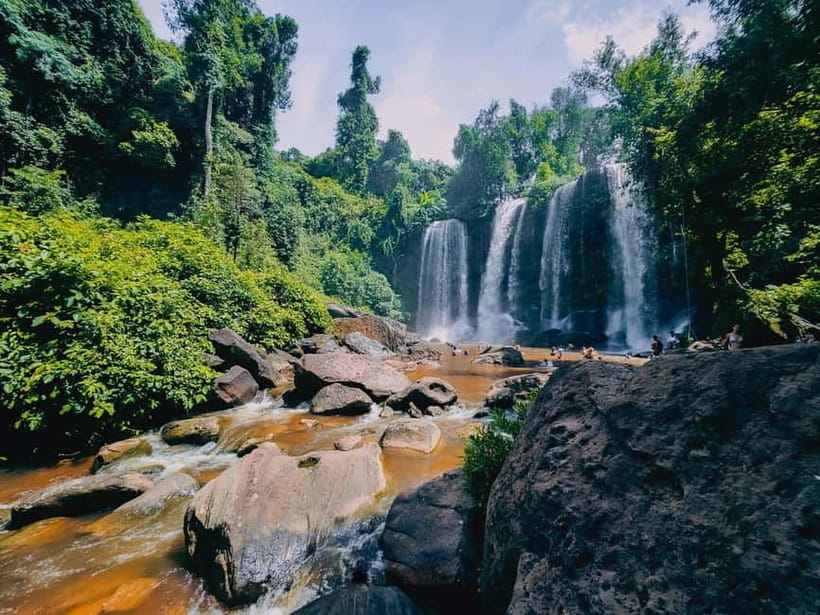
Next comes one of the most visually distinctive parts of the day: the River of a Thousand Lingas. You’ll get a shorter guided segment (about 20 minutes) with photo opportunities and sightseeing time.
The carvings here matter because they’re not on a distant wall. They’re on the floor of the river, and that changes how you notice details—you tend to look down, then look up again to place the carvings in context. The tour also includes a Cambodian-style blessing where you use holy water from this sacred river.
One practical note: treat this as a respectful ritual moment. Wear footwear you’re comfortable with for walking around holy areas, and don’t expect it to feel like a standard photo stop.
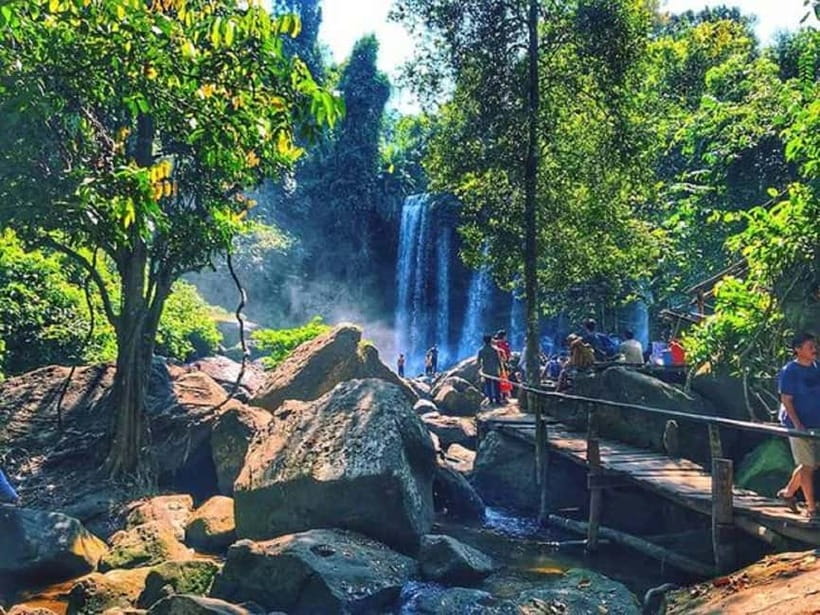
Kulen Waterfall timing: when the day shifts into nature
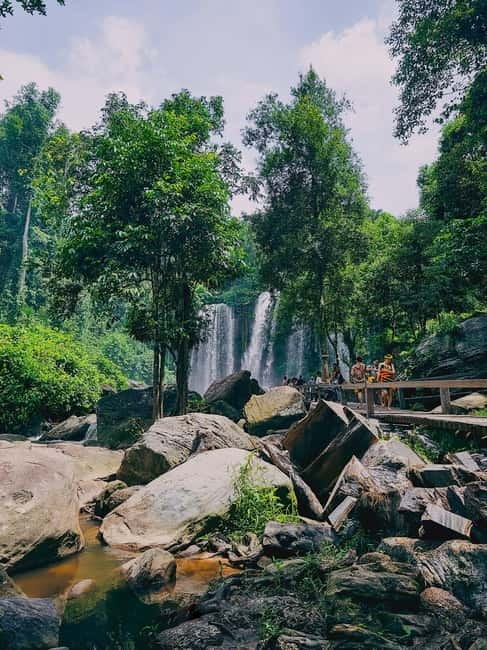
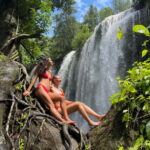
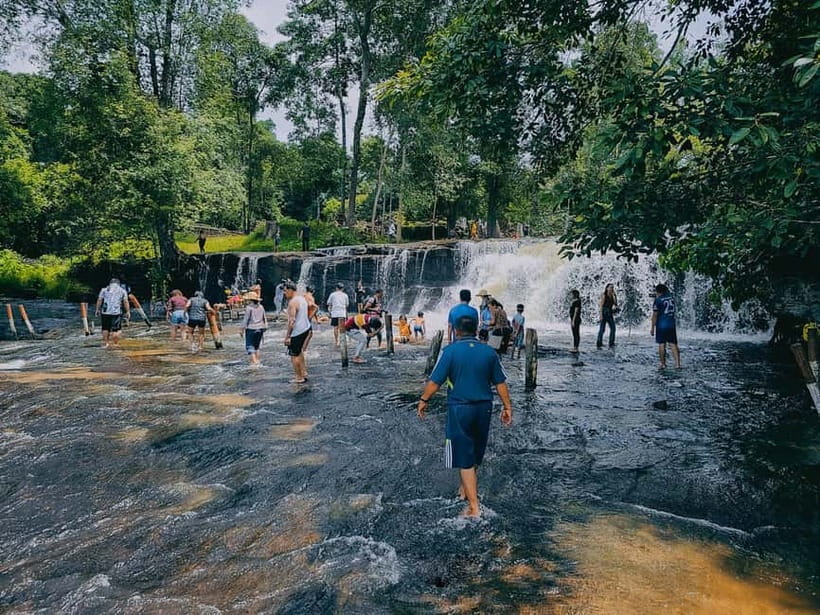
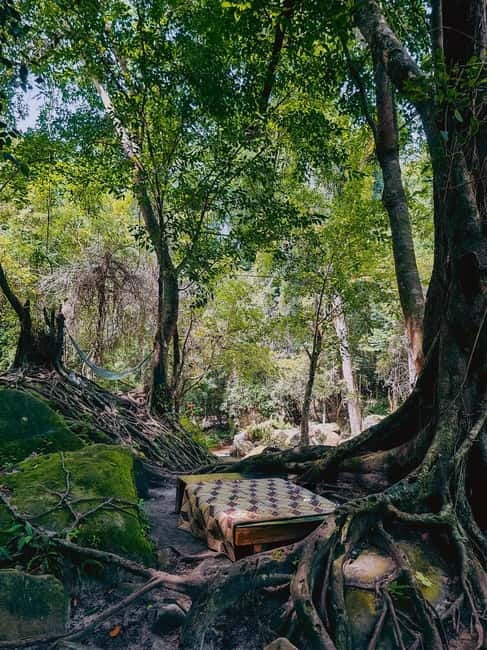
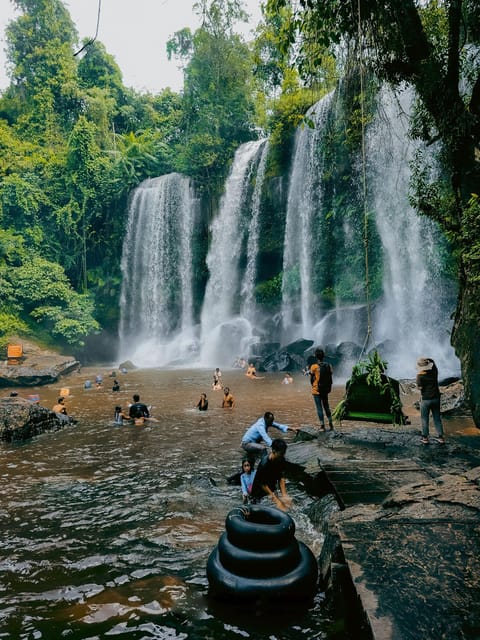
You’ll reach the Kulen waterfall area later, and this is where the tour loosens up. You’re given about 1.5 hours that includes guided time, photos, and enough free time for you to slow down and just be there.
This stop is a good contrast to the temple settings. It’s also where weather matters. In Cambodia’s wet season, Beng Mealea is especially mesmerizing, so if you’re traveling at that time, expect the day to feel more humid and damp. A light rain layer and shoes that handle slippery footing are a smart idea.
Beng Mealea: walking the broken “jigsaw puzzle” temple
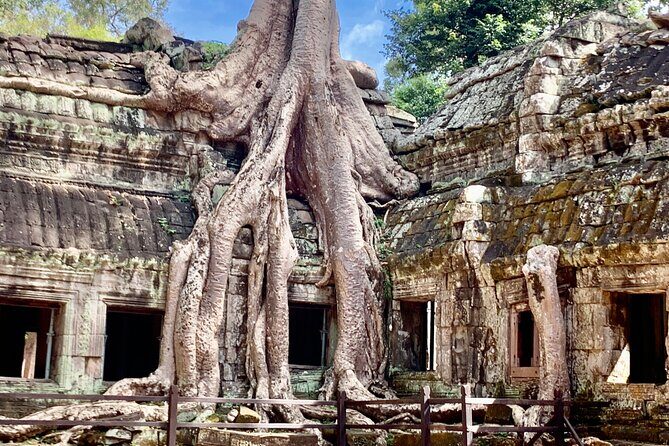
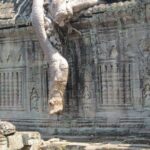
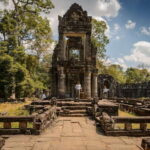
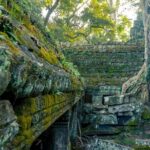
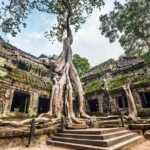
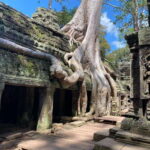
After lunch break, you head to Beng Mealea, a jungle-clad temple that’s famous for being in a state of disrepair, often described as like a giant jigsaw puzzle. The experience here is less about restored symmetry and more about atmosphere—stone shapes half-swallowed by nature.
The good news is that the area is made more accessible with a wooden walkway, which gives you safer footing and a slight elevation for better views. That improvement changes the entire feel of the visit. Instead of scrambling for your own path, you can focus on what you’re seeing—collapsed walls, scattered carvings, and how the structure still reads as a temple complex.
You’ll have around one hour here, including guided viewing, a photo stop, and walking time. If you want variety from the better-known Angkor highlights, Beng Mealea is a strong reason to include this tour.
Kampong Phluk on Tonle Sap: boat ride, floating life, mangroves
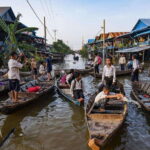
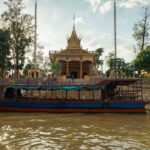
The day ends with the lake, and it’s handled in the most logical way: you take a local boat ride from the ferry area to explore Kampong Phluk, a floating village on Tonle Sap. The tour gives about 1.5 hours here, with guided sightseeing and walking time on land segments.
This isn’t about pretty houses only. It’s about how people live when the water rises. Most families earn livelihoods from fishing, and many live on the lakeshore in brightly colored houses on long poles, which helps them deal with changes in water level during the rainy season.
You’ll also see the surrounding flooded mangrove forest, where you might spot wildlife such as crab-eating macaques. The area supports about 3,000 inhabitants, so it’s not empty nature—it’s an active human-and-ecosystem mix.
Another notable stop is a Buddhist monastery built on an artificial island. It’s the kind of scene that makes you understand why Tonle Sap towns feel different from inland temples: the environment is part of the architecture and daily routine.
Price and Value: what’s included, what you’ll pay at the door
Let’s break down the value honestly. At $85, you’re paying for transport, a guide, and the structure that strings together four major experiences without you coordinating between tickets and timing. The included items—A/C car or minivan, English guide, mineral water, towels, and seasonal fruits—are small but real day-smoothers.
Then the reality check: you still have to cover passes for Kulen Mountain ($20), Beng Mealea ($10) unless your Angkor pass covers it, and Tonle Sap boat activity ($15). For many people, total spending lands around the $120–$140 range depending on pass use.
Is it worth it? Usually, yes—because the day includes both big spiritual landmarks and two very different nature/countryside experiences. You get temples plus waterfall plus lake life, all in a single long day with one guide guiding the meaning.
Who this tour is best for (and who should skip it)
This tour is a great fit if you want more than just one type of sightseeing. You’ll enjoy the day most if you like a mix of holy sites, ruined temple atmosphere, and water-based village life. It’s also ideal if you prefer a guide who can explain what you’re seeing clearly and take the time to keep things comfortable—there’s a strong emphasis here on being patient, especially when the group needs photo moments or extra time to understand the context.
You might want to think twice if you hate long days. At 10 hours, plus ticket stops and multiple walking segments, it’s not a half-day float-and-forget plan. Also, the extra entry fees mean the final cost won’t match the headline price exactly.
Final call: should you book this Kulen–Beng Mealea–Kampong Phluk day?
If you’re already in Siem Reap and you want a single outing that hits Phnom Kulen, Beng Mealea, and Tonle Sap floating village life in one sweep, this is a strong option. The guide-led flow helps you connect each stop to the bigger picture—sacred ground, carved symbolism, ruined temple atmosphere, and then how the lake shapes everyday livelihoods.
Book it if you’re okay paying the site passes and doing a full day of touring. Skip it only if you’re looking for something lighter, less walking, or you’d rather spend separate days on each area.
FAQ
What’s the duration of this tour?
It runs for 10 hours total.
What time does the hotel pick-up happen?
Pick-up is scheduled between 7:30 am and 8:00 am, and you should wait in the hotel lobby about 30 minutes before your pickup time.
What is included in the price?
The tour includes hotel pick-up and drop-off, A/C transportation, an English-speaking tour guide, a bottle of mineral water, towels, and seasonal fruits.
What additional tickets or passes do I need to pay?
You’ll need to pay separate fees for Kulen Mountain admission (US$20 per person), Beng Mealea (US$10 per person) unless using a valid Angkor pass, and Tonle Sap lake pass with the boat ride (US$15 per person).
Can I use my Angkor pass at Beng Mealea?
Yes. A valid Angkor pass can be used for Beng Mealea visits.
Do I go by boat at Kampong Phluk?
Yes. The tour includes a boat ride to explore the floating village of Kampong Phluk.
Is the tour guide available in English?
Yes, the tour guide is English-speaking.
Is there free cancellation?
Yes. You can cancel up to 24 hours in advance for a full refund.
Is this tour private or small group?
The tour offers private or small groups.