REVIEW · SIEM REAP
Angkor Wat Sunrise, Banteay Srei, Bayon & Ta Prohm Temple
Book on GetYourGuide →Operated by Euro Khmer Voyages · Bookable on GetYourGuide
Angkor at sunrise sets the whole day in motion. This tour strings together Angkor Wat at first light, the pale-pink carvings of Banteay Srei, and the jungle-clawed ruins of Ta Prohm so you get big visual variety without feeling rushed between provinces. I especially like that the early start targets the moment before the day crowds arrive, so the temples feel calmer and more focused.
Two things I really love: first, the craftsmanship—Banteay Srei’s pink stone has some of the most detailed carving work in the Angkor region. Second, the guide-led explanations can make the stones easier to read; in past experiences on similar tours, guides such as Sinan and Makara have been praised for explaining what you’re actually looking at. The one possible drawback: English quality can vary by guide, so if language is critical for you, plan to ask clarifying questions and take advantage of any time your guide gives you.
In This Review
- Key highlights that matter (not just pretty pictures)
- Sunrise at Angkor Wat: beat the day crowd and catch the mood
- Banteay Srei’s pink limestone carvings: where you slow down on purpose
- Pre Rup area and its six-tower temple feeling
- Ta Prohm: jungle takeover you can walk through
- Bayon Temple: 54 towers and 200 Buddha faces from many angles
- Timing, heat, and comfort on an 8-hour temple run
- Price and Angkor Pass value check (what you’re really paying for)
- Who should book this Angkor Wat Sunrise + Banteay Srei circuit?
- Should you book this tour?
- FAQ
- What’s the duration of the Angkor Wat sunrise day tour?
- How much does the tour cost per person?
- Is hotel pickup included?
- What temples will we visit during the day?
- Is the Angkor pass included in the price?
- What’s included in the tour price?
- Are meals included?
- What should I bring and wear?
- Is the tour suitable for everyone?
Key highlights that matter (not just pretty pictures)
- Angkor Wat before the crowds: Sunrise timing gives you a calmer viewing window.
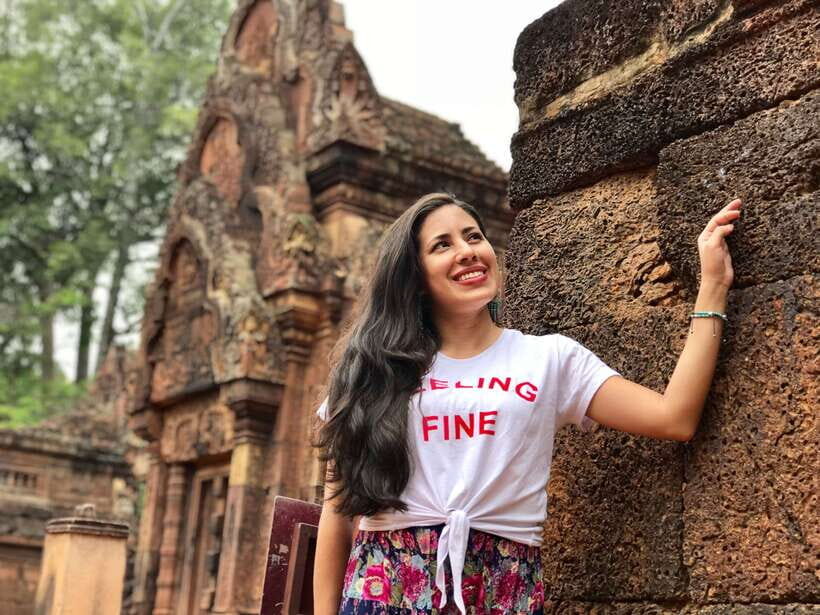
- Banteay Srei’s deep carvings: Pink limestone walls with some of the most intricate stonework in Angkor.
- Pre Rup area with six towers: A classic mountain-temple look that helps you understand temple layout.
- Ta Prohm’s jungle takeover: Fig and silk-cotton trees growing through towers and corridors.
- Bayon’s 54 towers and 200 faces: Lots of Buddha-smiling views from multiple angles.
- Cooling touches during heat: Air-conditioned transfers, plus coconut juice, water, and cool towels.
Sunrise at Angkor Wat: beat the day crowd and catch the mood
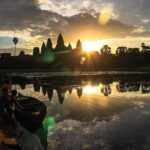
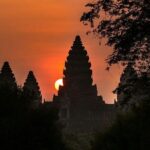
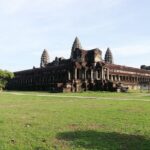
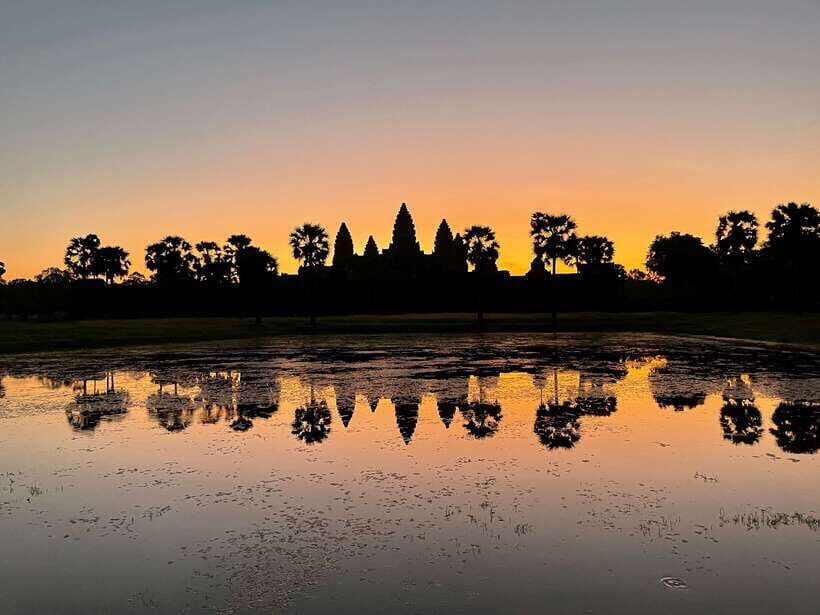
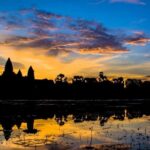
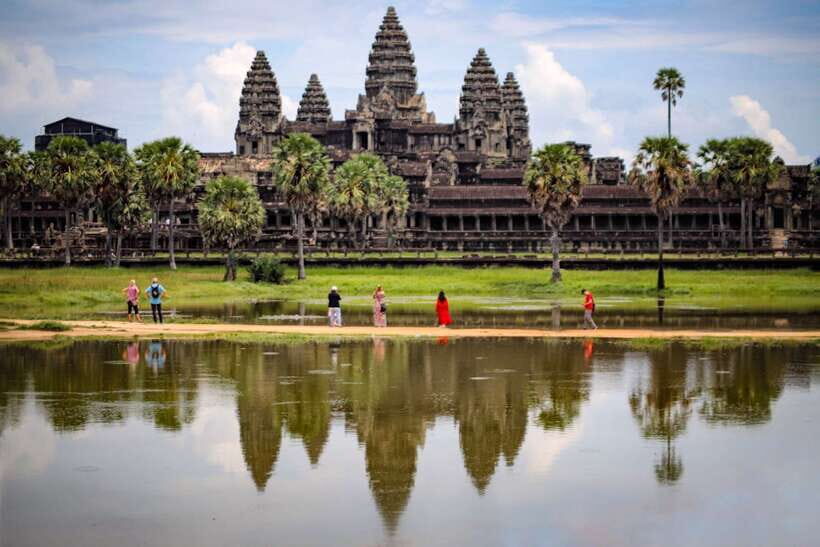
Angkor Wat is famous for a reason, and sunrise is the time when it feels most like a ritual site instead of a photo stop. You’ll be picked up from your hotel and then driven to the temple for an early viewing, before the daytime waves roll in. That timing matters because Angkor is a visual “compression system”: once it’s crowded, you spend more time waiting your turn than noticing details like symmetry, bas-relief placement, and the way light slides across the stone.
Expect an experience built around standing and looking. You’ll have time at Angkor Wat during the sunrise window, which usually means you can watch the sky shift and then notice how the temple’s geometry reads differently as brightness changes. If you’re the type who likes to photograph, this is where the tour earns its name—light and calm go together.
Practical tip: wear shoes you can walk in for a while. Stone edges and temple steps don’t care that you’re tired from an early start.
Other Angkor Wat sunrise tours we've reviewed in Siem Reap
Banteay Srei’s pink limestone carvings: where you slow down on purpose
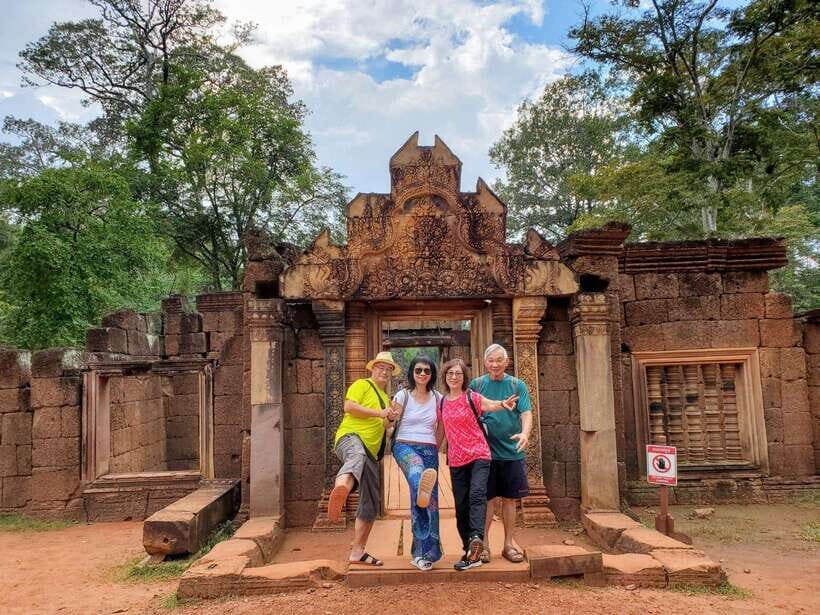
After the first temple hit, you’ll move to Banteay Srei, built in the 10th century under King Rajendravarman V. The big attraction here isn’t scale—it’s intimacy. The pink sandstone/limestone look is part of the charm, but the real wow factor is the depth and intricacy of the carved details covering the walls.
This is the stop where you should actually lean in. At many Angkor sites, you can appreciate the silhouette from a distance. At Banteay Srei, that doesn’t work as well. You’ll want to pause on specific panels and let your eyes adjust to the fine carving. The good news: this tour schedules time for walking and sightseeing rather than turning Banteay Srei into a quick drive-by.
You’ll also get a break and some chances to browse and pass by local scenes on the way. That matters if you want your temple day to feel connected to real life around Siem Reap instead of only sand, stone, and tour vans.
One watch-out: Banteay Srei can feel hot once the sun climbs. If you’re someone who gets irritated by heat, save your energy early and keep your water intake steady.
Pre Rup area and its six-tower temple feeling
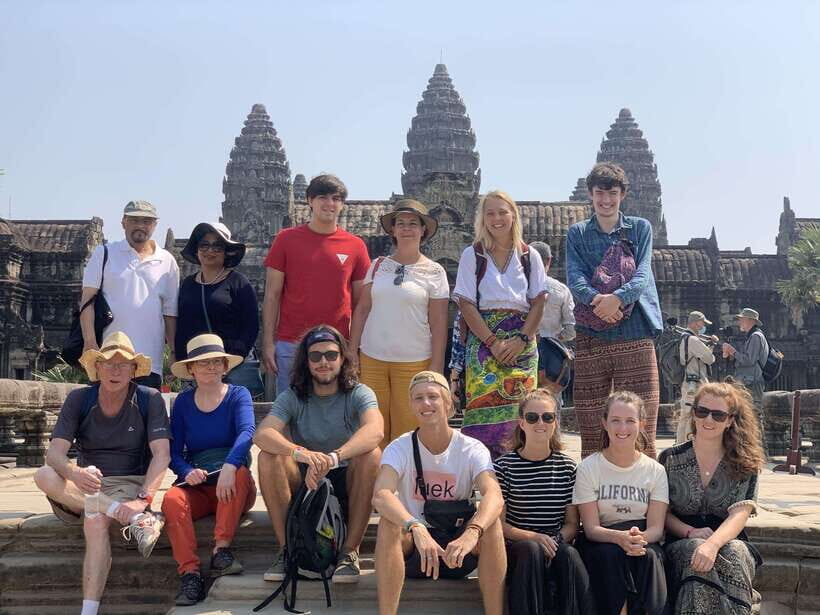
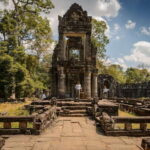
Next up is time at the Pre Rup temple area, highlighted for its mountain-temple style and its six large towers. Even if you’ve never studied temple layouts, this kind of stop helps you understand what you’re seeing elsewhere. Angkor temples often follow ideas of elevation and sacred space—towers and platforms that are meant to “raise” the temple into the spiritual realm.
Here, the value is context. After seeing Angkor Wat and then the intricate carving focus of Banteay Srei, Pre Rup gives you a different angle: more about structure and skyline shapes than close-up sculpture. It’s a good rhythm change.
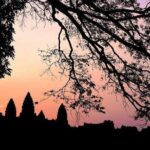
If you’re chasing photos, towers are your friend—there are usually angles where tower silhouettes read clearly against the sky. Just be mindful: it can get bright fast.
Ta Prohm: jungle takeover you can walk through
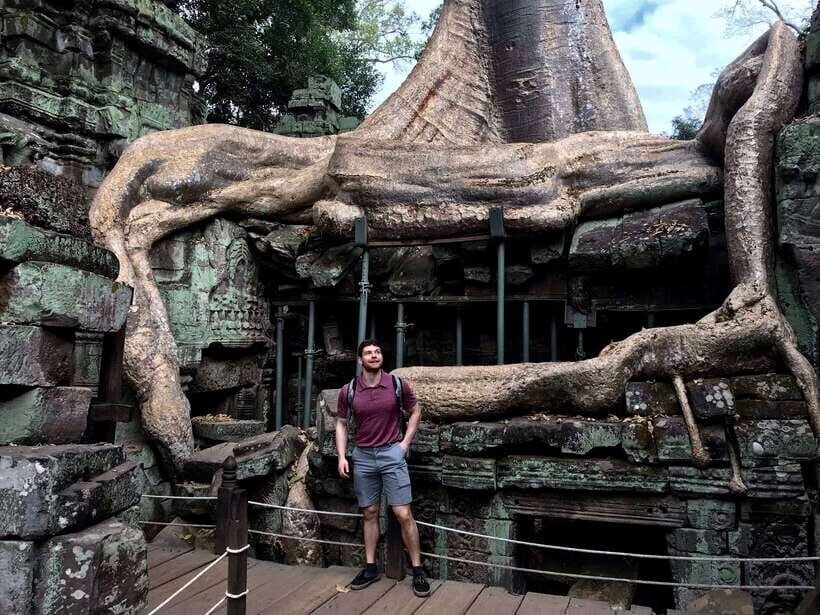
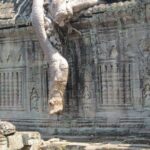
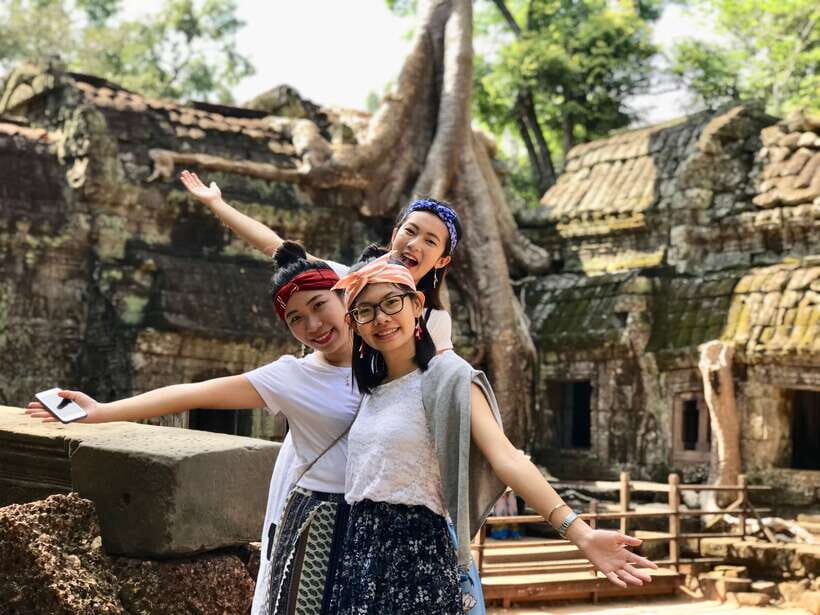
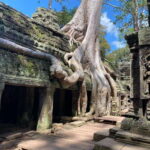
Then you’ll head to Ta Prohm, the monastic complex known for the way nature has claimed it back. This is where you’ll see how the jungle has overtaken the ruins, with massive fig and silk-cotton trees growing from inside towers and corridors. If you’ve only seen Ta Prohm in pictures, seeing the scale of the trees in person can be a little mind-bending. The roots don’t look decorative; they look like living infrastructure.
The tour gives you time to explore with a walk/sightseeing window. The best way to enjoy Ta Prohm is to slow your pace and pay attention to the “framing.” Trees create natural borders around doorways, and the stone corridors feel different when there’s shadow from foliage above. You also get a strong sense of how the complex survived through time—stone, vegetation, and weather all doing their part.
Practical tip: bring a bit of patience for walking surfaces. Ta Prohm is not designed for a smooth stroll. It’s ancient and uneven, so take your time and watch your footing.
Bayon Temple: 54 towers and 200 Buddha faces from many angles
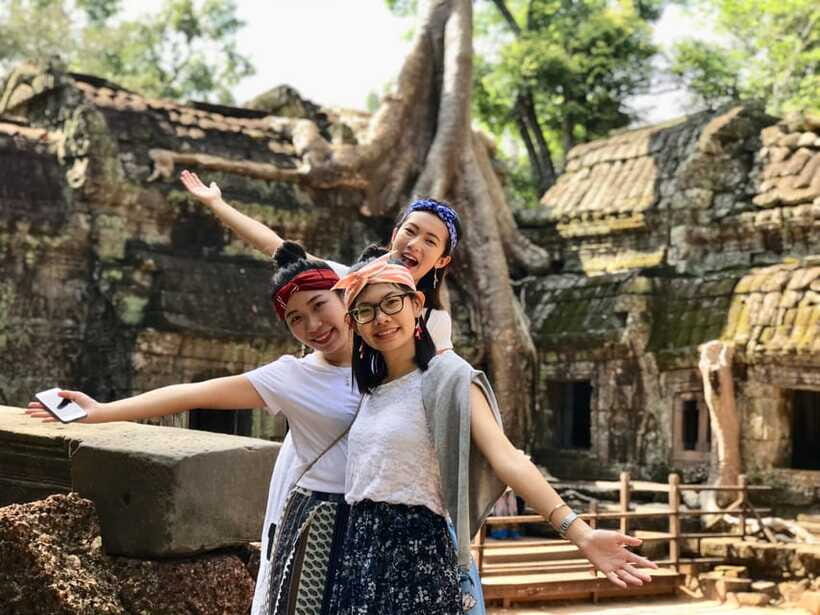
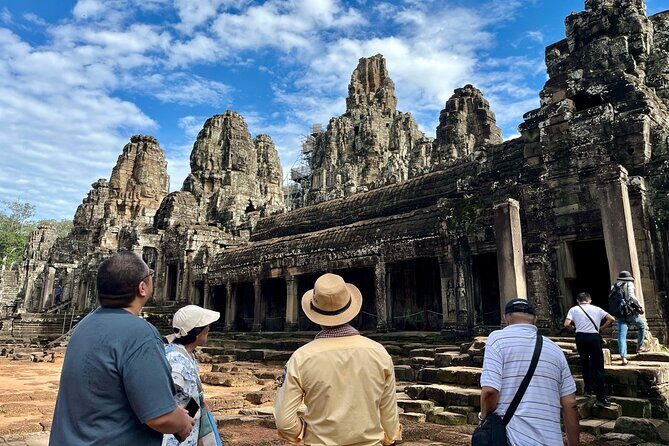
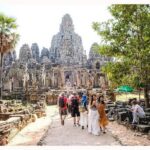
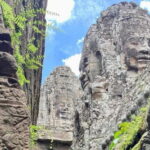
By the time you reach Bayon, you’re already in full Angkor mode—and Bayon is a complete visual shock in the best way. This is the temple with 54 towers decorated with around 200 smiling Buddha faces. The key thing here is that the faces aren’t just a single view. As you move through the temple spaces, you get different expressions and different angles, which makes the place feel alive even when you’re standing still.
The tour includes time to visit, plus free time for sightseeing and walking. That’s ideal because Bayon rewards movement. Stop, look upward, then step a little further and do it again. You’ll likely find yourself repeating that pattern a few times because each tower changes your perspective.
Balance note: Bayon can feel busy when tour groups overlap. Still, with your earlier starts and structured pacing, you’ll typically be in a good spot to enjoy the faces without spending the entire hour stuck waiting.
Other Angkor Wat temple tours we've reviewed in Siem Reap
Timing, heat, and comfort on an 8-hour temple run
This is an 8-hour circuit, built around efficient van transfers and a tight sequence of major sites. You’ll start with pickup from your accommodation, then drive to Angkor Wat for the sunrise viewing. The tour then moves to Banteay Srei, gives a break window, continues toward the Pre Rup area, and then transitions to Ta Prohm before finishing at Bayon and returning you to your hotel.
That means you’re doing a lot of standing and walking, but you’re not doing it all in the same style. Sunrise is slow. Banteay Srei is a detail-and-walk stop. Ta Prohm is shaded-by-trees walking. Bayon is moving for viewpoints.
Comfort perks you’ll appreciate:
- Air-conditioned transportation
- Fresh coconut juice on tour
- Drinking water
- Cool towels
One more important note: sportswear isn’t allowed. That’s unusual enough to matter. If you’re tempted to wear athletic clothes, swap to regular comfortable clothes and keep shoes comfortable for temple steps.
Price and Angkor Pass value check (what you’re really paying for)
The tour price is $80 per person, and the big value is that it bundles transportation, guide time, and cooling essentials (coconut juice, water, cool towels) into one package. For many visitors, that’s worth it because Angkor sites are spread out enough that managing everything yourself can turn into a long day of logistics.
Two cost realities to plan for:
- Meals aren’t included. A meal is roughly $8–$12 per person.
- The 1-day Angkor Pass is not included, and it’s about $37 per person.
So the real budget picture for most people is the tour plus the pass plus at least one meal. If you’re already sure you’ll pay for an Angkor pass anyway, the $80 becomes easier to judge as “guided, air-conditioned, and time-efficient temple time.”
If you’re doing a very tight Angkor schedule, this kind of organized route can save you from spending your best daylight hours figuring out what to visit next.
Who should book this Angkor Wat Sunrise + Banteay Srei circuit?
This tour is a strong match if you want:
- A first-time friendly day that hits major highlights without you having to plan every stop.
- A mix of experiences: sunrise calm, intricate carving, jungle ruins, and a face-filled finale.
- Guide-led explanations that help you decode the temples you’re seeing.
It’s also a good option if you prefer structure. The stops are timed and sequenced, and the guided flow reduces decision fatigue when you’re tired early in the morning.
It’s not a fit if you’re pregnant. Also, choose this tour carefully if you hate walking on uneven stone or if heat fatigue is a big issue for you—temples plus sun adds up, even with cool towels and water.
Should you book this tour?
I think you should book it if your top priority is maximizing your day at Angkor with smart ordering—especially Angkor Wat sunrise—and you want the day to feel guided rather than improvised. The combination of Banteay Srei carving detail, Ta Prohm’s jungle takeover, and Bayon’s face towers is a great way to see different sides of Angkor in one run.
But if you have zero interest in sunrise timing, or you’re sensitive to heat and long walking days, you might prefer a more relaxed, fewer-temple plan. For most visitors, though, this is a practical way to get a lot of iconic sights with comfort touches built in.
FAQ
What’s the duration of the Angkor Wat sunrise day tour?
The tour lasts about 8 hours.
How much does the tour cost per person?
It costs $80 per person.
Is hotel pickup included?
Yes. Pickup is included from your accommodation, and you’ll be asked to be ready at the hotel lobby about 5 minutes before the tour starts.
What temples will we visit during the day?
You’ll visit Angkor Wat for sunrise, Banteay Srei, the Pre Rup temple area, Ta Prohm, and Bayon.
Is the Angkor pass included in the price?
No. The 1-day Angkor Pass is not included and costs around $37 per person per day.
What’s included in the tour price?
Transportation by air-conditioned car/minivan, a fully vaccinated English-speaking tour guide, fresh coconut juice, drinking water, and cool towels.
Are meals included?
No. Meals and drinks are not included, and each meal costs around $8–$12 per person.
What should I bring and wear?
Bring comfortable shoes and comfortable clothes.
Is the tour suitable for everyone?
It is not suitable for pregnant women, and sportswear isn’t allowed.