REVIEW · SIEM REAP
Exclusive Angkor temples and Small group temples tours
Book on Viator →Operated by Bayon Tabi Tour · Bookable on Viator
Angkor feels big, but this day keeps it manageable. The mix of Angkor Wat, Angkor Thom, and Ta Prohm plus an evening temple viewpoint makes for a full Angkor highlight run without the typical bus chaos.
What I like most is the focus on small-group comfort: you ride in an air-conditioned van or bus, you get mineral water during the tour, and you’re not stuck baking in a packed crowd. Second, the team’s support seems to be practical, not just ceremonial. You’ll have an English-speaking local guide and a driver who help with smart picture spots so you spend more time seeing and less time guessing.
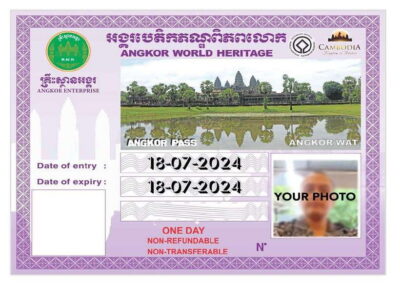
One consideration: the headline price does not cover temple admission, and meals aren’t included. So you’ll want to budget for the $37 per person entrance fees and plan food on your own during the day.
In This Review
- Key Points at a Glance
- Price and Value: $19 Sounds Good, Then Reality Adds Tickets
- Hotel Pickup and Air-Conditioned Transport: Why This Matters at Angkor
- How the Day Flows: A Ruins Circuit With a Sunset Finish
- Stop 1: Angkor Thom South Gate for Quick Orientation
- Stop 2: Angkor Thom Proper and the City Scale Feeling
- Stop 3: Bayon Temple and Those Famous Faces
- Stop 4: Terrace of the Elephants for Monumental Carving Time
- Stop 5: Terrace of the Leper King and the Story Behind the Stone
- Stop 6: Ta Prohm Temple Where Trees Steal the Show
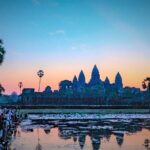
- Stop 7: Angkor Wat for the Big Finale Moment
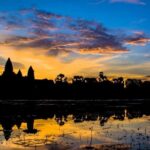
- Phnom Bakheng Sunset: The Khmer Evening Viewpoint
- Getting Back to Siem Reap: Less Hassle, More Recovery
- Who This Tour Fits Best (and Who Might Want a Different Style)
- Should You Book This Angkor Tour?
- FAQ
- Is hotel pickup and drop-off included?
- How long is the tour?
- What temples are included?
- Are meals included?
- How much are temple entrance fees?
- What’s the group size limit?
- Does the tour include a sunset?
Key Points at a Glance
- Air-conditioned small-group transport helps you stay sane between temple stops.
- Hotel pickup and drop-off from Siem Reap means less stress before and after the ruins.
- A local English-speaking guide helps you understand what you’re looking at, not just where to stand.
- Covered Angkor highlights include Angkor Thom, Bayon, Ta Prohm, and Angkor Wat.
- Sunset at Phnom Bakheng adds a night-time atmosphere without forcing you to do the logistics yourself.
- Max 25 travelers keeps the day from turning into a moving sidewalk.
Price and Value: $19 Sounds Good, Then Reality Adds Tickets
On paper, $19 for a 6 to 10 hour Angkor day is an attention-grabber. The catch is simple: temple entrance fees are not included, and those fees are where most of your cost lands.
Here’s how to think about the total:
- Tour price: $19
- Temple entrance fee: $37 per person (not included)
- Meals: not included
So you should treat the tour price as the transportation + guide + sunset logistics portion. Once you add entrance fees, you’re more in the realistic full-day range—but you’re still getting a full run across major sites with hotel pickup and an English guide.
If you’re trying to keep costs down and still see the big names (Angkor Wat, Angkor Thom, Bayon, Ta Prohm), this format makes sense. If you want meals handled for you, you’ll need to plan your own lunch or dinner.
Other multi-temple archeological tours we've reviewed in Siem Reap


Hotel Pickup and Air-Conditioned Transport: Why This Matters at Angkor
Angkor is stunning, but it’s also hot, dusty, and rhythm-heavy. This tour’s biggest practical win is that it starts and ends with pickup and drop-off at your hotel in Siem Reap. That saves you time and hassle, especially if you’re not eager to coordinate tuk-tuk rides and waiting time.
Once you’re on the road, you’re in an air-conditioned vehicle and you get mineral water during the tour. That’s not just comfort—it’s energy. Angkor days can run long, and being able to cool down between stops makes you more likely to enjoy the slower moments like reading carvings or taking your time at viewpoints.
The group size is also capped at up to 25 travelers, which usually means less crowd pressure than the giant bus tours you see all over town.
How the Day Flows: A Ruins Circuit With a Sunset Finish
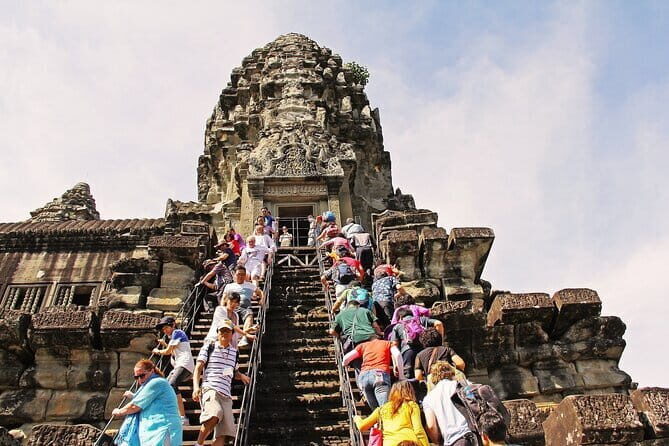
This is a classic full-day Angkor route, built to cover multiple temple zones without making you bounce around Siem Reap for transfers. You’ll move through the major complexes in a logical sequence, then finish with Khmer sunset at Phnom Bakheng before returning to town.
A helpful way to plan mentally: think of it as three parts—
- Morning to mid-day: Angkor Thom and its key structures
- Mid-day: Ta Prohm and Angkor Wat
- Late day: Phnom Bakheng for the mountain temple sunset mood
The exact timing can vary within the 6 to 10 hour window, but the structure stays the same: see the big temples, then end with the scenic payoff.
Stop 1: Angkor Thom South Gate for Quick Orientation
You start at the Angkor Thom South Gate, the entry point to Angkor Thom, the “great city” the ancient Khmer built as their capital.
This stop is short, but it’s smart. Getting oriented at the gate helps you understand why the city layout feels so deliberate once you’re inside the walls. If you arrive early in the day, the gate area can be less overwhelming than later temple cores.
Consideration: even short stops at gates can draw crowds if you’re not there at the right time. If you’re a photo person, have your water and hat ready; you’ll be standing in open sun quickly.
Stop 2: Angkor Thom Proper and the City Scale Feeling
Next you spend time at Angkor Thom itself. This is where the capital-city concept becomes real. You’re not just visiting one building—you’re walking through a fortified urban plan that’s central to understanding Khmer power and architecture.
This is a good time for your guide to put names and meanings onto what you’re seeing. When you know what was built where and why, the stone stops feeling like random stone blocks and starts feeling like a map.
Consideration: Angkor Thom is big. If you’re visiting when it’s very hot, pacing matters. Take breaks when you can, and don’t feel pressured to rush the walk to the next highlight.

Stop 3: Bayon Temple and Those Famous Faces
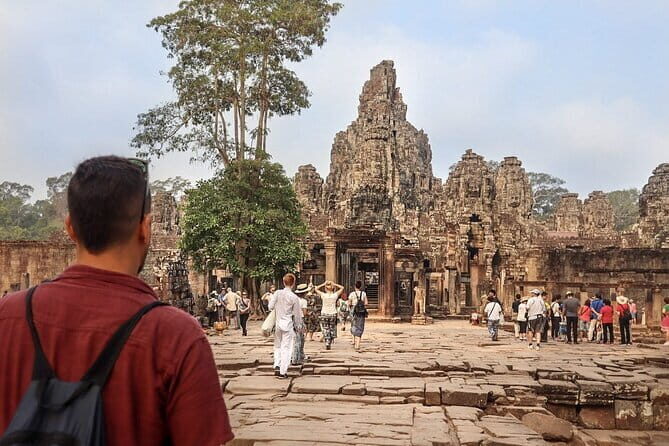
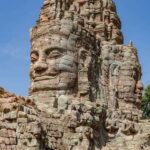
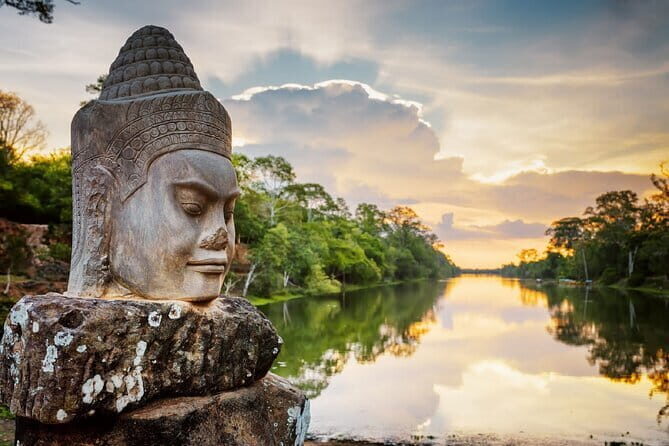
Then comes Bayon Temple, one of Angkor’s best-known and most decorated Khmer sites. Built in the late 12th or early 13th century, it’s famous for how its stone faces cover the structure.
What I like about putting Bayon at this point in the day is the shift from city-scale to focused iconography. You’ll likely find it easier to concentrate on the details here than later when fatigue sets in.
Practical tip: if you care about photos, this is the kind of moment where having someone point you to good viewing positions helps. The guide and driver support can make a real difference in getting an angle that doesn’t turn into constant crowd reshuffling.
Consideration: this stop can be visually crowded. If you dislike tight spaces, go for steady, patient viewing rather than “chasing the perfect shot.”
Stop 4: Terrace of the Elephants for Monumental Carving Time
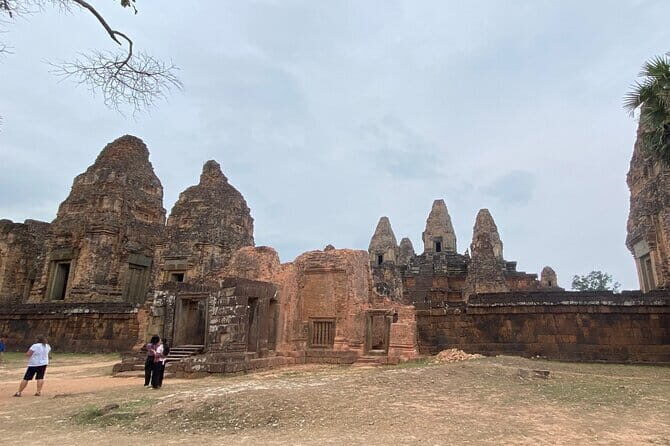
After Bayon, you move to the Terrace of the Elephants. This area stands out for its oversized decorative theme and the sense that the Khmer builders were designing for theater and procession, not just worship.
This is a stop where you can slow down. Carvings reward attention: you’ll start noticing patterns and the way scenes repeat across the stonework.
Consideration: terraces tend to be exposed. Keep water in mind and don’t plan on lingering too long in direct sun if you’re heat-sensitive.
Stop 5: Terrace of the Leper King and the Story Behind the Stone
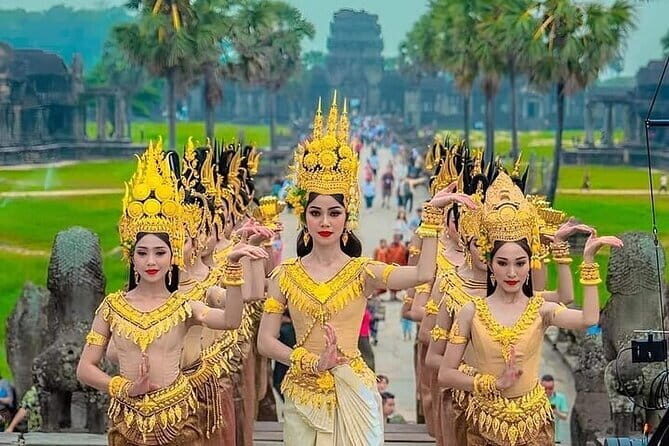
Next is the Terrace of the Leper King. You’ll hear the name explained through the statue’s discoloration and moss growth, which made it look like a person affected by leprosy. That naming also connects to local storytelling around the site.
This stop is short, but it’s valuable because it shows you how interpretation works at Angkor. People label and describe statues over time, and you’ll see how those stories become part of the experience you walk through today.
Consideration: because this is a quick viewing stop, you might want to ask questions fast if you’re curious about what you’re seeing. The guide can translate the symbols into plain language if you’re engaged early.
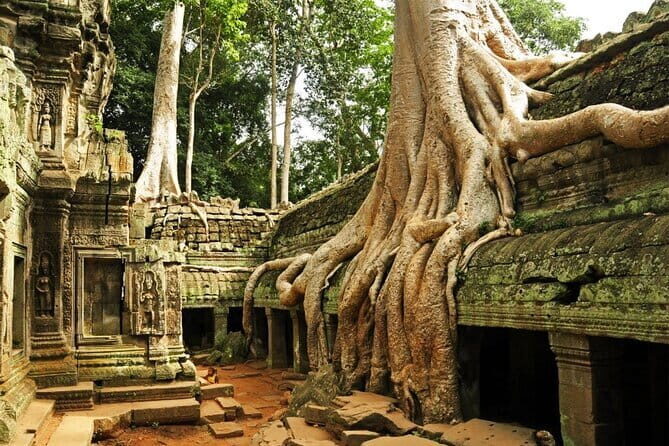
Stop 6: Ta Prohm Temple Where Trees Steal the Show
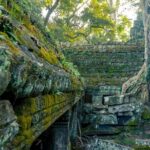
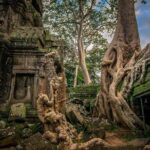
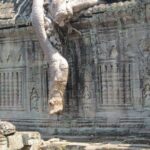
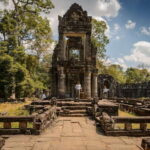
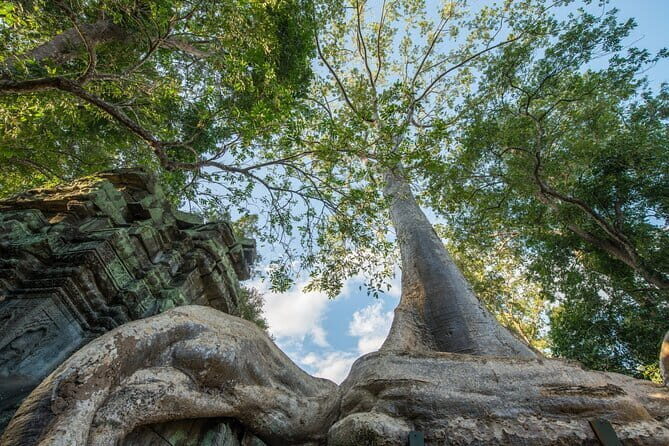
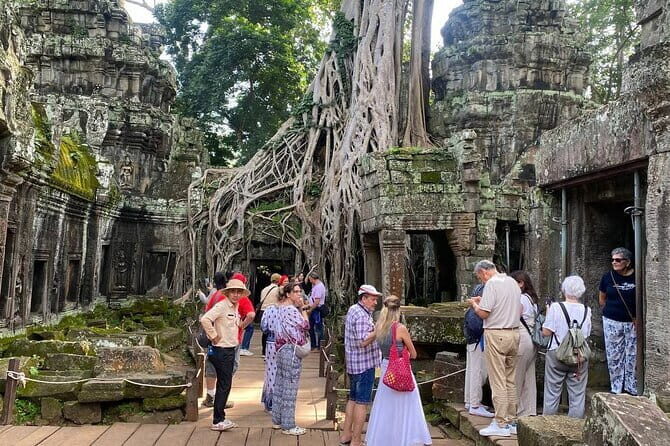
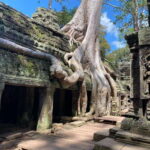
Now you hit Ta Prohm Temple, a Khmer monastery founded by King Jayavarman VII as a Mahayana Buddhist monastery and university. What makes Ta Prohm feel different is that it’s not like a neatly finished museum setting—unlike many other Angkorian temples, it has a distinctive relationship with the jungle.
This stop is usually a favorite because it feels atmospheric. The roots and stone clash in a way that makes the whole area feel alive.
Practical note: Ta Prohm can be busy. If you want the most enjoyable experience, focus on the texture—stone edges, root patterns, doorways—rather than trying to capture every angle at once.
Consideration: if you’re trying to see it at its best and the crowd is heavy, you may spend more time waiting for space than wandering freely.
Stop 7: Angkor Wat for the Big Finale Moment
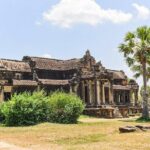
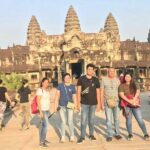
You end the main temple run at Angkor Wat. It’s the largest religious monument in the world on a site measuring 162.6 hectares, and it can feel overwhelming if you show up cold and under-informed.
That’s where having an English-speaking guide helps. With context, the scale becomes easier to process. Instead of treating Angkor Wat like one endless photo backdrop, you can understand how the complex was designed and how different areas connect.
This stop is also built to give you time—around 3 hours—so you’re not just rushing through the highlights.
Consideration: Angkor Wat is a major draw. You’ll want to bring patience and expect crowds. The best strategy is to pick a few targets and take your time with them rather than trying to “cover everything.”
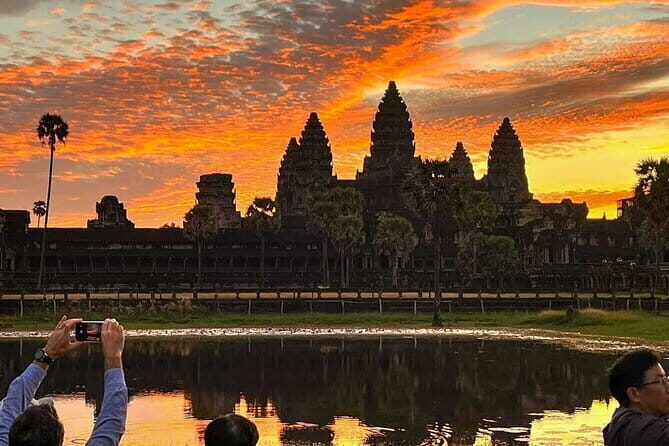
Phnom Bakheng Sunset: The Khmer Evening Viewpoint
After Angkor Wat, the day shifts into sunset mode at Phnom Bakheng, a Hindu and Buddhist mountain temple.
This is a key part of why the tour format works. Sunset at a mountain temple changes the vibe: light softens stone, shadows lengthen, and the whole complex feels more cinematic than midday ruins.
You’ll get the Khmer sunset experience, then you return to Siem Reap and get transferred back directly to your hotel. That last step is underrated. After a long day in heat and stone, you’ll appreciate not having to negotiate transport when you’re tired.
Consideration: sunset moments are time-sensitive. If you’re the type who dislikes crowds at viewpoints, go early enough to settle and plan to stand where you’re directed rather than chasing movement right at the peak.
Getting Back to Siem Reap: Less Hassle, More Recovery
The tour wraps with a return to Siem Reap and a direct hotel transfer after sunset. For a day that can run close to 10 hours, this convenience matters. You won’t have to switch modes of transport, find your way back, or wait around hoping someone shows up.
This is also the point where you’ll start feeling the day’s heat. So plan a simple evening after you return—cool shower, something easy to eat, and a quiet night.
Who This Tour Fits Best (and Who Might Want a Different Style)
This tour is a great fit if you:
- Want a small-group Angkor day instead of a huge bus
- Prefer air-conditioned breaks between major temple complexes
- Appreciate an English-speaking guide who explains what you’re looking at
- Want a full highlights circuit without spending your day on planning and routing
You might consider a different option if:
- You hate paying separate entrance fees (since $37 per person is not included)
- You want meals handled by the tour (meals are not included)
- You’re extremely heat-sensitive and need lots of downtime beyond what’s possible between stops
Should You Book This Angkor Tour?
If your goal is to see the core Angkor names—Angkor Thom, Bayon, Ta Prohm, Angkor Wat, plus a Phnom Bakheng sunset—this tour is strong value once you factor in transport comfort and hotel transfers.
Book it if you want:
- Smooth pickup/drop-off
- A guide who can make the day make sense
- A route designed to avoid the worst of the crush by keeping it in a smaller group
Skip or adjust your expectations if:
- You’d rather have meals included
- You’re budgeting tightly and don’t want to add entrance fees at the last minute
For most first-timers to Siem Reap who want a high-impact Angkor day without the stress, this is an easy yes.
FAQ
Is hotel pickup and drop-off included?
Yes. The tour includes pickup and drop-off from your hotel in Siem Reap.
How long is the tour?
The duration is about 6 to 10 hours.
What temples are included?
The stops cover Angkor Thom South Gate, Angkor Thom, Bayon, Terrace of the Elephants, Terrace of the Leper King, Ta Prohm, and Angkor Wat, with Khmer sunset at Phnom Bakheng.
Are meals included?
No. Meals are not included (lunch/dinner is listed as not included).
How much are temple entrance fees?
Temple entrance fees are $37.00 per person and are not included.
What’s the group size limit?
The tour has a maximum of 25 travelers.
Does the tour include a sunset?
Yes. You’ll enjoy a Khmer sunset at Phnom Bakheng, then return to Siem Reap and get transferred back to your hotel.
If you want, tell me your travel dates and whether you’re going in peak heat season—I can help you think through what to prioritize in your day so the crowds and sun don’t steal your joy.