REVIEW · SIEM REAP
Full-Day private Tour in Lost City & Angkor Wat from Siem Reap
Book on Viator →Operated by Journey2 Angkor · Bookable on Viator
Eight hours, one Khmer history lesson. I like the hotel pickup and private vehicle that gets you in and out without fuss, and I like the plan to enter Angkor Wat from the eastern side via a jungle path to help you miss some of the worst crowd pressure. The catch is simple: Angkor Wat admission isn’t included, and this is still a long walking day in Cambodia’s heat.
What makes this tour work so well is the human side. You get an English-speaking guide who connects what you see to the myths, stories, and bas-reliefs carved into the stones, not just dates and names. I also like that the pace stays flexible; one guide (Sim) is specifically praised for being willing to adjust the order if you need it.
You’ll also get breaks that feel practical, not rushed. Lunch happens at a restaurant near the temples with cold drinks, and the route includes a couple short stops in Angkor Thom that are described as secret or off-the-main-track moments. That said, if you get temple-weary, bring the right mindset: you’re seeing a lot of carved stone in one day.
In This Review
- Key things to know before you go
- Why this private Angkor day feels easier than doing it alone
- Entering Angkor Wat from the eastern side, then walking the jungle path
- Angkor Thom’s South Gate and Bayon: faces, gates, and bas-reliefs
- Baphuon, Phimeanakas (Vimeanakas), and the ceremonial terraces
- Baphuon: a temple mountain with major scale
- Phimeanakas: celestial temple in the palace zone
- Terrace of the Elephants and Terrace of the Leper King
- The short “secret stop” moments in Angkor Thom
- Ta Prohm: jungle temple atmosphere after lunch and cold drinks
- Price and value: what $30 covers, and what you should budget separately
- What to wear, bring, and expect on an 8-hour temple day
- Should you book this private Lost City and Angkor Wat day?
- FAQ
- Is hotel pickup and drop-off included?
- Is this tour private or shared?
- What is included in the tour price?
- Is lunch included?
- Do I need to pay an admission fee for Angkor Wat?
- How do I get my Angkor Wat ticket?
- Can I cancel for a full refund?
Key things to know before you go
- Private comfort from your hotel: pickup and drop-off, plus a comfortable vehicle so you don’t spend the day wrangling transport.
- Angkor Wat from the eastern side: a less-visited approach plus jungle-path walking before you reach the big interior areas.
- A guide who explains what you’re looking at: history, myths, and bas-relief stories are built into the experience.
- Most major Angkor Thom stops are listed as free: Bayon, Baphuon, terraces, and more have admission marked free on this route.
- Lunch near the temples with cold drinks: a built-in reset during an 8-hour day.
- Dress and shoe rules are real: cover knees and shoulders, and wear flat shoes for walking.
Why this private Angkor day feels easier than doing it alone
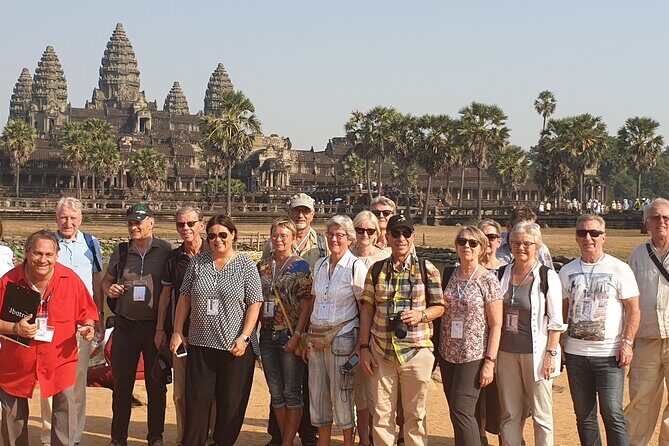
Angkor can turn into a logistics puzzle fast: where to start, how to order temples, how long you’ll wait, and how you’ll handle heat once you’re out there. This is built like a single-day solution. You start from your hotel, ride in a private vehicle, and you’re guided on foot through multiple temple zones without having to figure out the route yourself.
Value-wise, the pricing is surprisingly friendly for what you get. At $30 per person, you’re paying for an English-speaking guide, hotel pickup/drop-off, bottled water, and a private vehicle. Then you’re only separately responsible for the Angkor Wat admission fee (everything else on the route is marked free at the stops listed).
The other big win is mental. A good guide helps you look slower. In this kind of site, you’ll otherwise see a lot of faces, towers, and towers of stone and think, that’s nice, what does it mean? Guides on this experience are praised for being able to explain the stories carved into the walls and keep the day moving at your pace.
The one consideration: even with planning, you’re still doing an 8-hour temple circuit. Heat and humidity are part of the deal, so go in expecting a workout.
Other Angkor Wat temple tours we've reviewed in Siem Reap
Entering Angkor Wat from the eastern side, then walking the jungle path
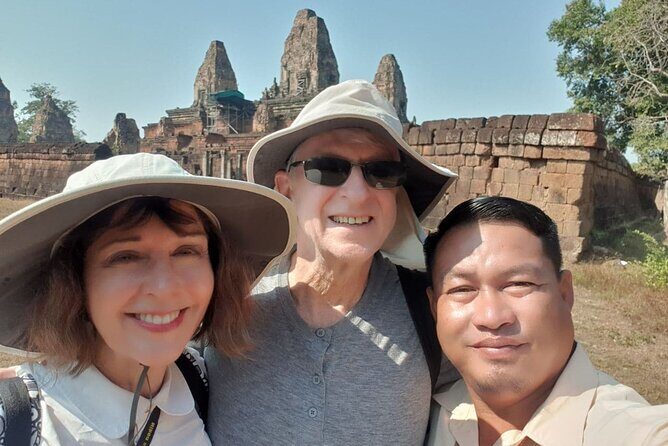
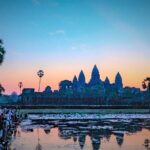
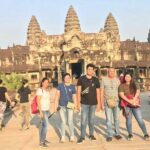
Angkor Wat is the centerpiece, and the standout detail here is how you enter. Instead of approaching the main areas the usual way, you come in from the eastern side, then you walk on foot through a jungle path toward a pool area connected with the temple complex.
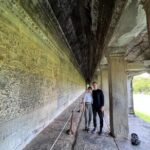
Once you’re inside, the focus shifts from viewpoint hunting to reading the stone. Your guide points out the bas-relief carvings and explains myths and stories depicted on the walls. The route highlights bas-reliefs as the longest stretch of bas-relief carvings in the world, and that’s a good clue for what you’ll be doing: looking closely, not just taking quick photos.
You’ll also spend time in key central areas and upper terrace zones, getting a sense of how the temple is layered. The experience is designed so you don’t just peek at the exterior and leave. You get time in the spaces that most people only skim.
What to know before you go:
- Angkor Wat admission isn’t included, so budget for the ticket separately.
- Dress and shoe rules apply in sacred spaces (knees and shoulders covered, and flat shoes that you can walk in).
- If it’s raining or the sky changes, the guide is described as flexible about adjusting the order, which can help you avoid worst timing.
If you want a first-class Angkor Wat visit without feeling like you’re being rushed through like a slideshow, this approach makes sense.
Angkor Thom’s South Gate and Bayon: faces, gates, and bas-reliefs
After Angkor Wat, the day pivots to Angkor Thom, the ancient capital city area of the Khmer Empire. You start with the South Gate, one of five main gates. Here, you’ll see the long rows of stone figures flanking the entrance. The gate matters because it sets the city scale: Angkor Thom once had a population estimated at more than one million people, larger than London by comparison in the description of the site.
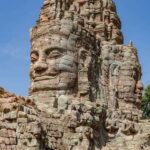
From there, you head to Bayon, which is where the eyes keep getting pulled upward. Bayon is known for its many towers covered with serene, smiling faces—more than 200 enormous faces. This stop is short enough that you won’t burn the day, but long enough that you can really see how those faces cluster around the central peak.
Bayon is also about storytelling in layers. The plan includes both sets of bas-reliefs: outer gallery scenes that mix historical events and everyday life, and inner gallery scenes tied to mythological events. Even if you only catch part of the carvings, a guide’s explanations help you avoid the common problem here: looking at faces without understanding the world around them.
Time is tight in a temple day, so Bayon’s 1-hour block is a smart move. You get the signature feature (the faces) plus the “why it’s here” context.
Baphuon, Phimeanakas (Vimeanakas), and the ceremonial terraces
This is the portion of the day where you get variety, not just one repeating style of temple. You’ll move through sites inside the Angkor Thom zone that each have their own vibe: mountain-temple forms, palace-enclosure context, and long ceremonial terraces.
Baphuon: a temple mountain with major scale
Baphuon is described as a three-tiered temple mountain built as a state temple, and it’s located northwest of Bayon. You’ll see size and structure cues that help you understand how the Khmer architects thought in “levels” and “processions” rather than single-room sightseeing.
It’s also part of the same King Jayavarman VII era context that you’ll feel across the day. Even if you don’t memorize dates, the point is that the complex wasn’t one isolated monument; it was a set of linked statements of power, religion, and ceremony.
Other city tours we've reviewed in Siem Reap





Phimeanakas: celestial temple in the palace zone
Phimeanakas (Vimeanakas) sits within the walled enclosure of the Royal Palace of Angkor Thom. The description focuses on its stepped, three-tier pyramid shape and the temple tower on top. It also mentions galleries along the edge of the top platform.
This is a good stop if you like seeing how sacred design ties into royal space. It’s not just “another temple”; it’s framed as a celestial temple built at the end of the 10th century and completed in a later reign.
Terrace of the Elephants and Terrace of the Leper King
Next you’ll reach two of Angkor Thom’s most famous ceremonial terraces.
- Terrace of the Elephants: a long reviewing stand, described as an “Ancient Khmer Stadium” nickname used by local Khmer residents. It’s tied to public ceremonies and royal audiences under King Jayavarman VII. The length matters here; you can feel the idea of an event space, not just a viewing spot.
- Terrace of the Leper King: the U-shaped structure associated with a name that comes from a sculpture found at the site. The description also links it to a possible royal cremation site concept, and mentions that the statue depicts Yama, the Hindu god of death.
These two terraces give you a different angle on Angkor: less about faces and more about ceremony and storytelling in stone.
The short “secret stop” moments in Angkor Thom
Two parts of this route are explicitly described as secret stops, with the guide taking you to places many tourists might not see. Both are brief, around 10 minutes each.
Are they magic? No. But they’re valuable because they change the rhythm. After big highlights like Bayon and the terraces, these micro-stops give you something fresher than yet another classic viewpoint angle. They also hint at a key benefit of private guiding: your day isn’t just a fixed checklist. You may get moments that feel more like exploring with a local compass.
If you love photos, this is your chance to grab shots that look different from the usual crowd photos. If you’re more into history, these stops can also help you connect the dots between major monuments and the broader flow of the city.
Ta Prohm: jungle temple atmosphere after lunch and cold drinks
By the time you reach Ta Prohm, you’ve already covered a lot. That matters because Ta Prohm is the emotional reset of the day.
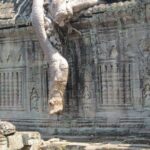
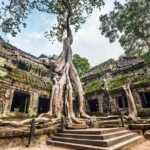
Ta Prohm is described as jungle-enveloped and one of the most atmospheric temples in Angkor. It’s famous for how trees grow into and around the ruins, creating that signature “ruins swallowed by nature” look. The description also notes it was built in the 13th century and that UNESCO inscribed it on the World Heritage List in 1992.
What I like about having Ta Prohm later in the day is contrast. Angkor Wat and Angkor Thom can feel architectural and ceremonial. Ta Prohm feels lived-in, like time has been paused rather than designed into neat layers. It’s easy to slow down here, because the visual details are everywhere: roots, branches, stone edges, and the frame of the trees.
Lunch is part of this experience: you eat at a restaurant near the temples with cold drinks. That’s practical because Ta Prohm often hits you with both visual weight and the reality of heat. A built-in break makes the last stretch more enjoyable.
Price and value: what $30 covers, and what you should budget separately
Let’s talk money in plain terms.
You’re paying $30 per person for:
- an English-speaking tour guide
- a private comfortable vehicle
- hotel pickup and drop-off
- bottled water
- the full guided route across Angkor Wat and multiple Angkor Thom temple stops
- photo opportunities and a plan meant to avoid crowds and escape heat (especially by the eastern-side Angkor Wat approach)
What you budget separately:
- the Angkor Wat admission fee (not included)
Everything else on the route is listed as having admission free at the stops shown, including Bayon, Baphuon, Phimeanakas, Terrace of the Elephants, Terrace of the Leper King, and Ta Prohm.
That mix makes the pricing feel like a bargain if you want a guided day but don’t want the cost of a high-priced private car-only or guide-only arrangement. The biggest “value shift” comes from the guide quality. In the feedback connected to this tour, guides Sim and Rith are praised for being very knowledgeable with history explanations and for flexibility in the day’s order and pacing.
If you’re the type who enjoys context while you look around, this price makes even more sense. If you’d rather wander without explanations, you might feel like you’re paying for time you could DIY.
What to wear, bring, and expect on an 8-hour temple day
The tour is straightforward about how to prepare, and you should take it seriously. For sacred spaces, you need clothes that cover your knees and shoulders. Casual clothing is fine if it meets that rule. This is the kind of requirement that can derail a day if you’re careless.
Shoes matter for comfort. The plan asks for flat shoes that are comfortable for walking, because you’re moving on foot through temple areas and paths, including a jungle path at Angkor Wat.
You also get bottled water, which helps because this is a long day. One of the comments mentions the heat and humidity, so don’t underestimate how much your body feels even when the sights are exciting.
In terms of pacing, you’re not trapped in a rigid script. One guide is specifically praised for flexibility, moving a temple earlier when needed and taking a break when the group felt tired. That’s a big deal in an 8-hour itinerary.
Also, be ready for weather surprises. One account references an afternoon downpour, and the guide helped manage the day before the worst hit. You can’t predict Cambodia weather reliably, but you can travel with the expectation that plans might adjust.
Should you book this private Lost City and Angkor Wat day?
I’d book this tour if you want:
- a guided Angkor day with context, not just stamp-collecting
- hotel pickup and a private vehicle that keeps the day from turning into transportation stress
- the eastern-side way of entering Angkor Wat to reduce crowd pressure
- a route that mixes the big famous stops (Angkor Wat, Bayon, Ta Prohm) with palace and ceremonial sites in Angkor Thom
- lunch with cold drinks and breaks built into an 8-hour schedule
I’d think twice if:
- you hate walking for a long stretch in heat and humidity
- you plan to bring very little money for separate temple entry (because Angkor Wat admission is not included)
- you don’t care about stories carved into the walls and would rather wander without a guide
Bottom line: for the price, the structure is strong. Private, guided, efficient, and focused on key experiences, with enough flexibility to keep the day enjoyable even when the weather or your energy level shifts.
FAQ
Is hotel pickup and drop-off included?
Yes. The experience includes hotel pickup and drop-off, plus a private comfortable vehicle for the day.
Is this tour private or shared?
This is a private tour/activity, meaning only your group participates.
What is included in the tour price?
It includes an English-speaking tour guide, private comfortable vehicle, hotel pickup and drop-off, and bottled water.
Is lunch included?
The day includes lunch with cold drinks at a restaurant near the temples.
Do I need to pay an admission fee for Angkor Wat?
Yes. Angkor Wat admission is not included, while the other listed temple stops on the route are marked as free.
How do I get my Angkor Wat ticket?
Your tour guide sends you a link to purchase the temple entrance e-ticket days in advance.
Can I cancel for a full refund?
Yes. You can cancel up to 24 hours in advance for a full refund. If you cancel less than 24 hours before the start time, the amount paid is not refunded.