REVIEW · SIEM REAP
One Day Private Guide Tour of Angkor Thom, Bayon, Ta Phrom & Angkor Wat
Book on Viator →Operated by Global Travel & Tours Asia · Bookable on Viator
One day, three temple worlds. This private 9-hour route links Angkor Thom’s grand gates with Ta Prohm’s brooding stone and ends at Angkor Wat for late-day light. You start at 8:00am, and you’re moved between sites by a modern air-conditioned vehicle while your guide keeps things organized.
I especially like the pacing: morning temples first, then you shift into the more photogenic late afternoon hours. The other big win for me is the guide—this tour uses a professional, licensed English-speaking guide, and that’s what turns stone-and-statues sightseeing into real understanding.
One consideration: you’ll be walking for long stretches on uneven temple paths and steps. If heat and stairs bother you, plan for slow breaks, good shoes, and water in hand.
In This Review
- Key points that make this tour easier
- Angkor in one day: why this route makes sense
- Entering Angkor Thom from the South Gate’s ocean-churning scene
- Bayon Temple: the 54 towers and the faces that won’t let you go
- Baphuon and the Royal core: from restoration to power symbolism
- Terrace of the Elephants and the Leper King: royal storytelling
- Phimeanakas: a Hindu temple with a Khmer timeline
- Ta Prohm: when the jungle and stone feel in the same mood
- Angkor Wat at late afternoon: the sunset finish you’ll actually remember
- Price and value: is $146.67 worth it?
- What to expect on the ground: heat, walking, and pacing
- Who this tour suits best (and who might want something else)
- Should you book this one-day private Angkor tour?
- FAQ
- What is the duration of the Angkor tour?
- What time does the tour start?
- Is this a private tour?
- Is pickup included?
- Are entrance fees included for the temples?
- What’s included during the tour?
- Is lunch included?
- Are drinks included with meals?
- How will I receive the ticket?
- How far in advance is this commonly booked?
Key points that make this tour easier
- Early 8:00am start to tackle Angkor Thom before the day gets heavy
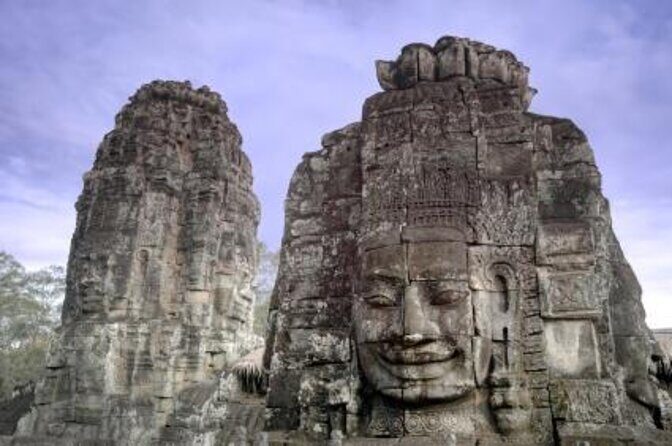
- Bayon’s face towers at the geographic and spiritual center of Angkor Thom
- Ta Prohm’s dark sandstone atmosphere dedicated to Jayavarman VII’s mother
- Angkor Wat late-afternoon focus with time for sunset lighting
- Licensed English guide who can explain what you’re seeing (and where to stand for photos)
- Private A/C transport + bottled water so you spend less energy on logistics
Angkor in one day: why this route makes sense
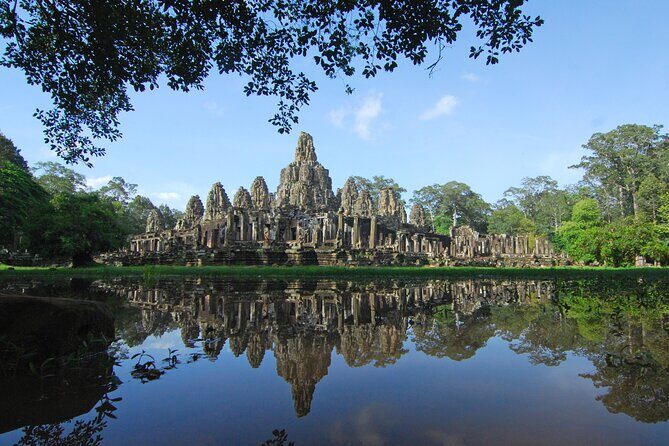
Angkor can be overwhelming. You arrive with a head full of names, then the heat kicks in, the crowds thicken, and suddenly it’s hard to remember what you’re looking at.
This one-day plan works because it’s built around the way the sites reveal themselves. You begin inside Angkor Thom, where you get the sense of the Khmer capital—walled, ceremonial, and intentionally dramatic. Then you move on to Ta Prohm, which feels darker and more enclosed, like the jungle and stone are sharing the same memory. Finally, you finish at Angkor Wat when the light turns kinder and the site feels extra monumental.
The private setup matters too. You’re not stuck in a large-group shuffle. Your driver and guide handle the flow between gates and courtyards, and your guide can adjust the order of viewpoints based on what you care about most—history details, photo angles, or just taking it all in.
Other Angkor Wat temple tours we've reviewed in Siem Reap
Entering Angkor Thom from the South Gate’s ocean-churning scene
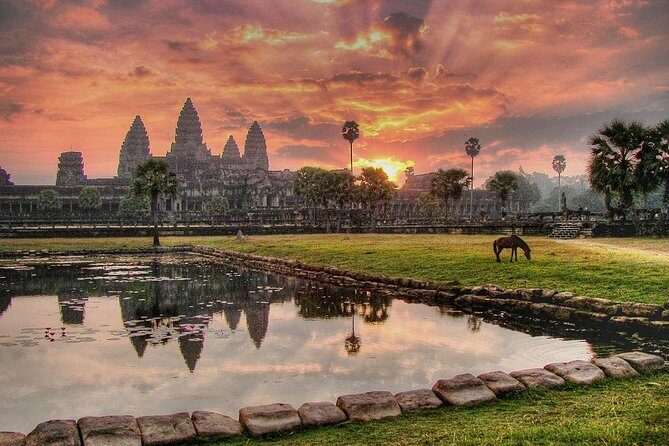
Your morning starts with Angkor Thom’s South Gate, the kind of entrance that makes you slow down without trying. This gate is tied to a famous Khmer-era story: huge statues depict the churning of the ocean of milk. It’s not just decoration. It’s a way of telling you that this capital is meant to feel mythic, like politics and religion are glued together.
From here, you get your bearings fast. Angkor Thom isn’t a single temple you wander around for an hour—it’s a walled complex with a deliberate layout. That helps you understand why the next stops feel centered and symbolic rather than random.
Practical tip: arrive ready to look up and look around. Gate carvings and bas-reliefs are often easiest to appreciate when you’re not rushing, and morning light usually makes the stone details pop more than mid-day glare.
Bayon Temple: the 54 towers and the faces that won’t let you go
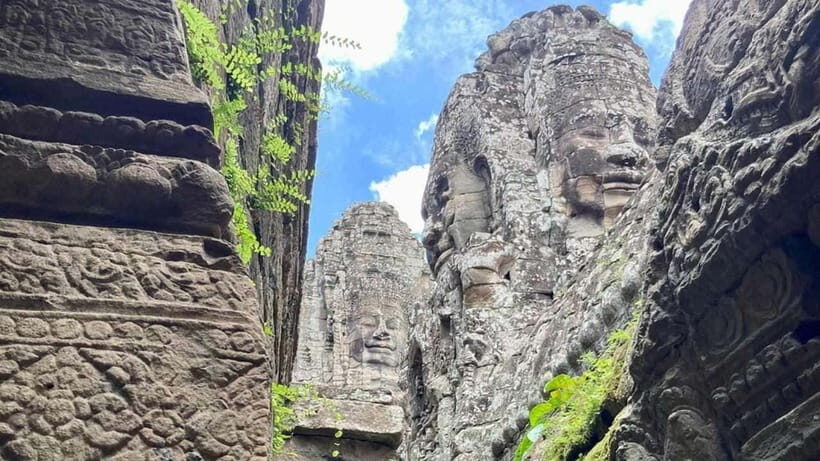
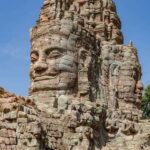
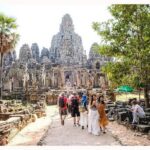
Next comes Bayon Temple, and yes, it’s famous for a reason. Bayon sits at the exact center of Angkor Thom, and it’s decorated with over 200 smiling faces of Avolokitesvara across its towers—listed here as 54 towers.
What I like about Bayon in a guided format is how the faces change how you move. When you understand that you’re seeing multiple viewpoints from different angles (not one “main” perspective), Bayon feels less like a photo spot and more like an experience you read with your feet.
A good guide also helps you notice patterns: where faces line up with passages, how the temple’s symmetry creates a feeling of being watched and guided. That’s where the guide quality becomes the real value, not just translation.
If you get a guide like Sim—mentioned as having strong historical knowledge and a knack for explaining daily life alongside temples—you’re likely to leave Bayon feeling like the stone has a voice.
Baphuon and the Royal core: from restoration to power symbolism
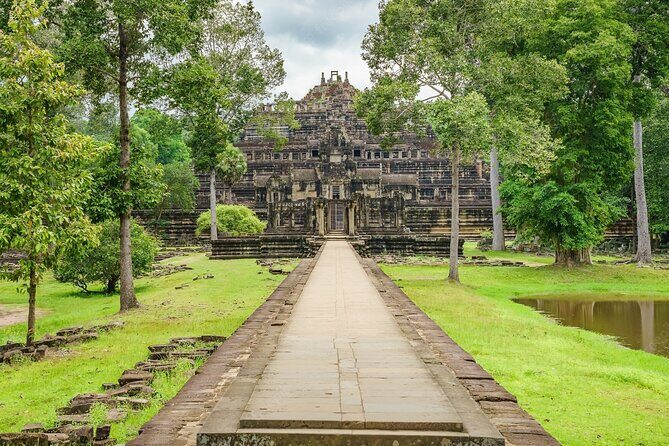
After Bayon, the tour continues to Baphuon, located in Angkor Thom northwest of Bayon. This temple is described as recently re-opened after years of restoration, and it’s laid out as a three-tiered temple mountain built as the state temple of Udayadityavarman II.
This stop is shorter, but it does something helpful: it broadens the temple story beyond one iconic style. If Bayon pulls you in with faces, Baphuon pulls you in with vertical staging—tier by tier, with the sense that rulers were building a world meant to rise.
Then you move through parts of the Royal Enclosure area, plus nearby structures such as Phimeanakas (covered later in the day) and the major open spaces. This is where the Khmer capital starts to feel like a system—ceremonial routes, royal zones, and religious meaning stacked on top of each other.
Terrace of the Elephants and the Leper King: royal storytelling
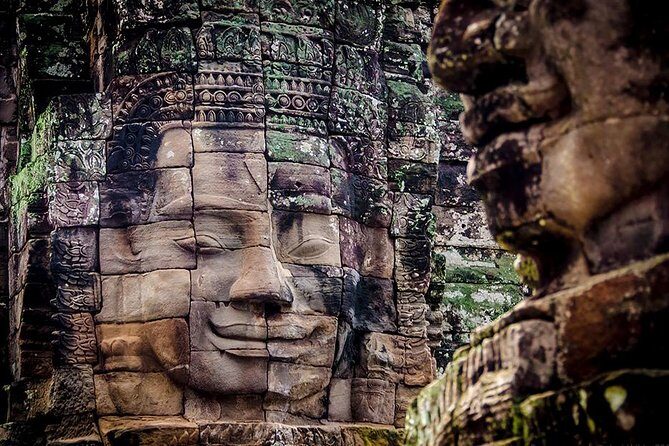
Two terraces come next, and they’re both practical for understanding how temple spaces functioned.
At the Terrace of the Elephants, you’re not just looking at carved stone. The terrace is described as part of Angkor Thom’s walled city, and it was used by Jayavarman VII as a platform to view his victorious returning army. That single sentence changes how you see the size and position of the terrace: this wasn’t built for quiet contemplation. It was built for public power.
Then comes the Terrace of the Leper King, located in the northwest corner of the Royal Square. It was built in the Bayon style under Jayavarman VII, and its modern name comes from how people interpret the appearance today.
A solid guide here can help you focus on what matters visually—where carvings are placed, what the terrace layout suggests about movement and viewing. Without that context, terraces can feel like “yet another stop.” With it, they become evidence: temples as stages for rule, celebration, and memory.
Other Angkor Thom and Bayon tours we've reviewed in Siem Reap

Phimeanakas: a Hindu temple with a Khmer timeline
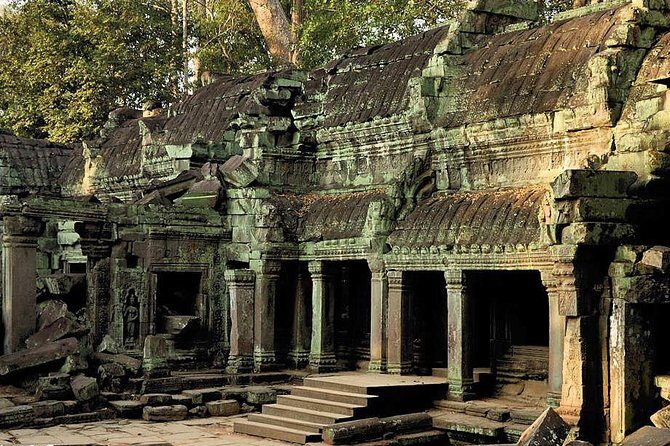
After the terraces, the day shifts into Phimeanakas (also called Vimeanakas). This is described as a Hindu temple built in the Khleang style at the end of the 10th century, during the reign of Rajendravarman, then completed later by Suryavarman I.
Even though your visit here is time-limited (about 30 minutes), this stop adds a layer that many rushed Angkor days miss: temples don’t sit still in history. They’re linked to reigns, restorations, and evolving styles.
Think of Phimeanakas as a checkpoint. You’ve already seen Khmer capital planning at work. Now you’re seeing how religious architecture fits into a longer timeline of leadership and artistic change.
Ta Prohm: when the jungle and stone feel in the same mood
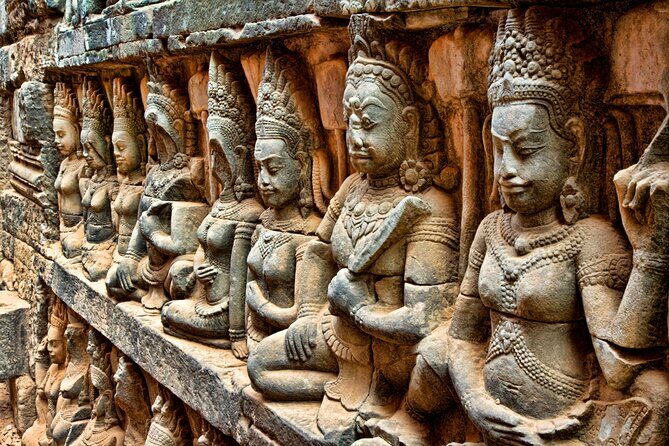
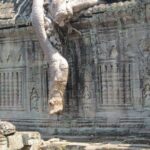
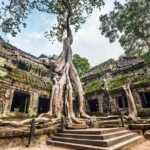
Then you continue to Ta Prohm, and this is the emotional pivot of the day. Ta Prohm was built in 1186 and dedicated to the mother of Jayavarman VII. It’s described with dark gray sandstone towers and courtyards that feel reverent and mysterious.
What makes Ta Prohm worth a planned visit is the mood shift. You’re no longer in the capital’s strict ceremonial geometry. Instead, Ta Prohm feels like it’s been holding its breath for centuries—stone surfaces, enclosed spaces, and that “time slowed down here” feeling that only happens when you let yourself stop walking for a moment.
You’ll likely appreciate Ta Prohm even more with a guide who pays attention to pacing. This stop is longer than the earlier temple stops (about 2 hours), and that makes a difference. It gives you room to look carefully rather than treat it like a quick checklist.
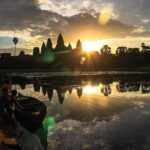
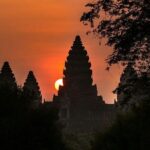
Angkor Wat at late afternoon: the sunset finish you’ll actually remember
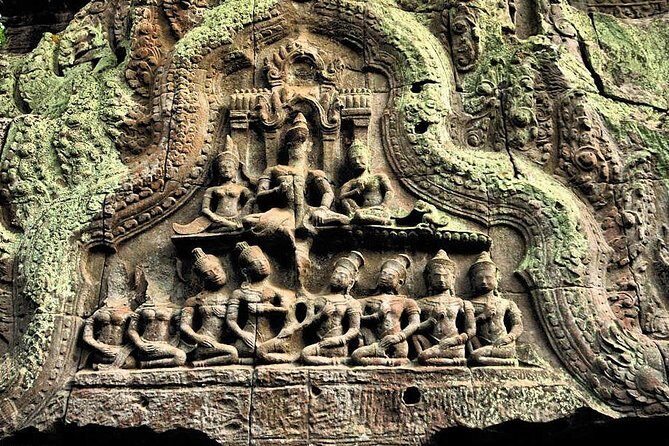
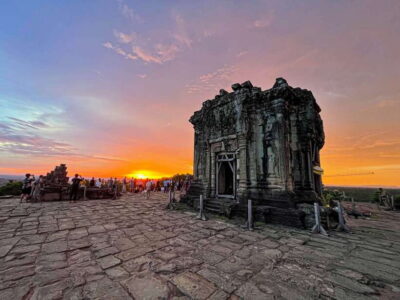
After a break for lunch (lunch is on your own), the tour moves to Angkor Wat in late afternoon and sunset hours.
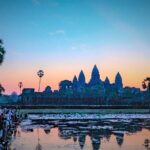
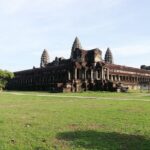
Angkor Wat is described as the largest and most breathtaking monument at Angkor, built as the funeral temple for King Suryavarman II. The key word here is funeral: it’s not “just” a temple you can breeze through. It’s monumental in a way that feels planned for reflection, processions, and time.
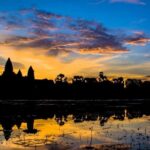
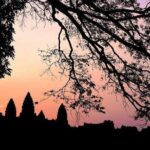
Finishing here is smart. Light changes everything at Angkor. Later-day brightness helps stone carvings look less harsh and more readable. And because the tour is private, you can usually adjust your exact viewing spots without feeling like you’re pushing against a wall of people.
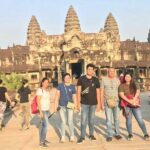
If you care about photography, this is where a strong guide becomes gold. One of the high praise themes from past guests is that guides can point you to the best places to photograph and the best times to reduce the worst crowd crush.
Price and value: is $146.67 worth it?
At $146.67 per person, this is positioned as a full-day private experience. What makes it feel more reasonable than a random “driver + tickets” setup is what’s included.
You get:
- Private air-conditioned transportation
- A professional licensed English-speaking guide
- Admission covered by an Angkor Archaeological Park single-day ticket (listed here as $37.00)
- Two bottles of mineral water per person
- VAT and taxes
If you compare this kind of itinerary to cobbling things together yourself, the guide and included admission usually do the heavy lifting. The temple ticket alone is a known cost, and the rest of the value is about interpretation and timing—especially in Angkor, where a few hours can feel wildly different depending on when you arrive.
Potential drawback in value: lunch is on your own account, and you’ll still need to handle your personal spending. But you’re also getting 9 hours of structured sight time, entrance fees included, and transport covered.
What to expect on the ground: heat, walking, and pacing
Even with private transport, you’ll spend the day standing, walking, and climbing temple steps. The itinerary structure makes it easier: you tackle Angkor Thom in the morning, then you shift to Ta Prohm, then finish with Angkor Wat in late-day light.
You should still plan like the day is hot. Bring:
- Comfortable, grippy shoes
- Sunscreen and a hat
- A small towel if you run warm
- Your own water plan beyond the included bottles if you’re a heavy sweater
The tour includes two bottles of mineral water per person while sightseeing and transfers, which helps early and mid-day, but it won’t replace all-day hydration for everyone.
Who this tour suits best (and who might want something else)
This one-day private guide is a great fit if:
- You want the big Angkor names without deciding between them
- You care about understanding what you’re seeing, not just snapping photos
- You like a plan that respects the heat with a morning-to-sunset structure
- You want a guide who can help with viewpoint and timing
It may be less ideal if:
- You hate walking on uneven stone and temple steps
- You want a totally unstructured day with no set stops
- You’re traveling with someone who needs very frequent, long rest breaks
Should you book this one-day private Angkor tour?
I’d book it if you want a high-impact day that feels organized, not frantic. The strongest reasons are the licensed English guide, the included Angkor Archaeological Park single-day ticket, and the fact that the itinerary is paced for Angkor’s realities—morning effort, then late-day payoff at Angkor Wat.
If you’re on the fence, ask yourself a simple question: do you want Angkor as a story you can follow? If yes, this tour format is built for that.
FAQ
What is the duration of the Angkor tour?
It’s listed as about 9 hours.
What time does the tour start?
The start time is 8:00am.
Is this a private tour?
Yes. It’s private, and only your group will participate.
Is pickup included?
Pickup is offered, and the tour includes private transportation by an air-conditioned vehicle.
Are entrance fees included for the temples?
Yes. Admission to the temples in the Angkor Archaeological Park single-day ticket is included (listed as $37.00).
What’s included during the tour?
You get a professional licensed English-speaking guide, private A/C transport, the sightseeing stops listed in the itinerary (including entrance fees), and two bottles of mineral water per person, plus VAT and taxes.
Is lunch included?
No. Lunch is not included, and it’s listed as on your own account.
Are drinks included with meals?
Drinks during meals are not included.
How will I receive the ticket?
The experience includes a mobile ticket.
How far in advance is this commonly booked?
It’s listed as being booked on average 52 days in advance.