REVIEW · SIEM REAP
Siem Reap: Angkor National Museum Admission Ticket
Book on GetYourGuide →Operated by SARUS CO., LTD · Bookable on GetYourGuide
Buddhas by the thousands, at your pace. This Angkor National Museum admission ticket is a great way to understand the Khmer Empire without rushing. I love that you can wander through the 1,000+ Buddha statues and inscriptions at your speed, and I also like the way the museum’s displays connect art, religion, and archaeology. One catch: there’s no guide included, so you’ll be reading wall text (or paying for an audio guide) to get the most out of it.
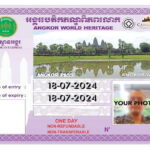
In practical terms, this ticket is built for an easy visit: it lets you skip the ticket line and it’s valid for one day. You’ll need to use a reachable WhatsApp number because the ticket arrives separately, and the operator confirms your booking. It’s also wheelchair accessible, and the experience is designed for individuals or small groups.
In This Review
- Key things I’d plan around
- Angkor National Museum in Siem Reap: Why this ticket is a smart move
- What the museum visit feels like once you’re inside
- Eight galleries of Khmer art and religion: How to move through them
- The Buddha statues and ancient inscriptions: The part you’ll remember
- Art-after-temples vs museum-before-temples: Choose your order
- Skip the line and start clean: Practical entry and timing
- Audio guide option: Worth it, if you want the story faster
- What to bring (and what to leave at home)
- Price and value: Is $15 a good deal?
- Who should buy this ticket (and who should think twice)
- Should you book the Angkor National Museum admission ticket?
- FAQ
- How much is the Angkor National Museum admission ticket?
- How long is the ticket valid?
- Is this entry ticket self-paced?
- Is a tour guide included?
- Is an audio guide included?
- Does the ticket help me avoid lines?
- Where do I meet the operator?
- Is the museum wheelchair accessible?
- What should I bring with me?
- What items are not allowed at the museum?
Key things I’d plan around
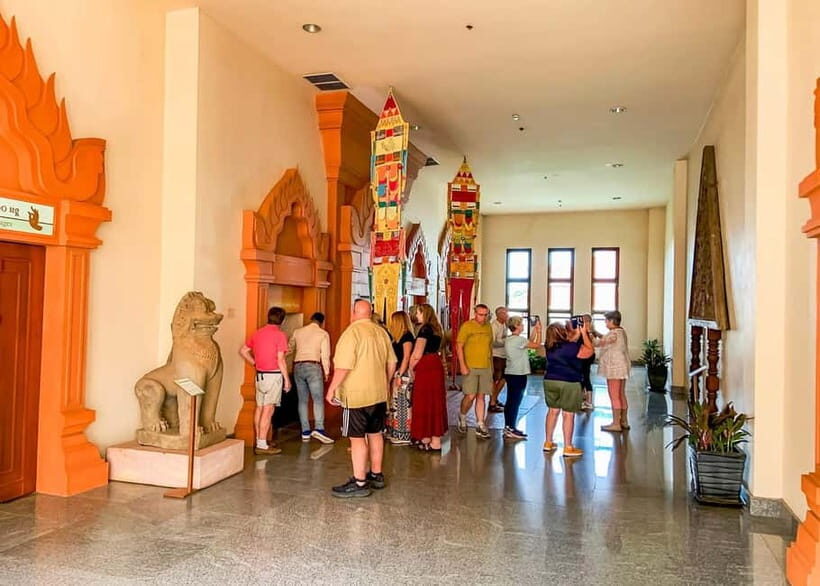
- Skip-the-line entry so you can start exploring faster
- Self-paced museum time across eight galleries focused on Khmer art and religion
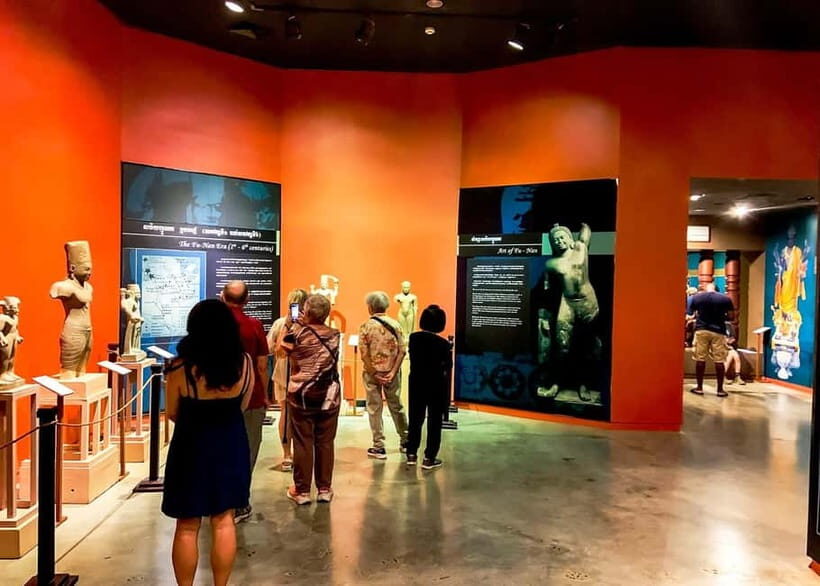
- The statue-and-inscription focus, with over a thousand Buddha figures plus ancient inscriptions
- Audio guide is optional and costs extra if you want more narration
- Your transport is on you, since you’re responsible for getting to the museum
Angkor National Museum in Siem Reap: Why this ticket is a smart move
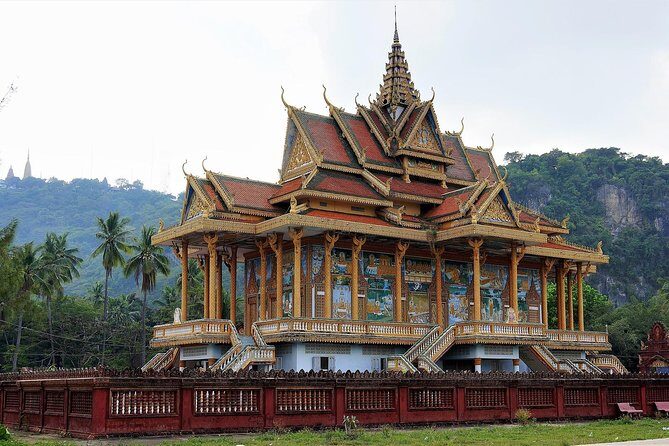
If you’re heading to Siem Reap and planning Angkor temples, this museum can act like your backstage pass. Temples are jaw-dropping, yes. But without context, you might miss what you’re actually looking at: the ideas, symbols, and artistic choices behind the stone.
This ticket works because it’s self-paced. You’re not stuck in a group schedule, and you’re not pushed to “move along” just when something grabs your attention. I like that you get to choose your pace, whether that means a quick pass through the main exhibits or a slower, second look.
You also get real substance for the money. For $15 per person, you’re buying entry to a museum set up in eight galleries that trace how Khmer culture and religion evolved over time. Add in the Buddha statues and ancient inscriptions, and you’ve got more than decoration on the walls. You’ve got interpretation material you can take with you to the temples.
Other Angkor Wat ticket and pass tours we've reviewed in Siem Reap

What the museum visit feels like once you’re inside
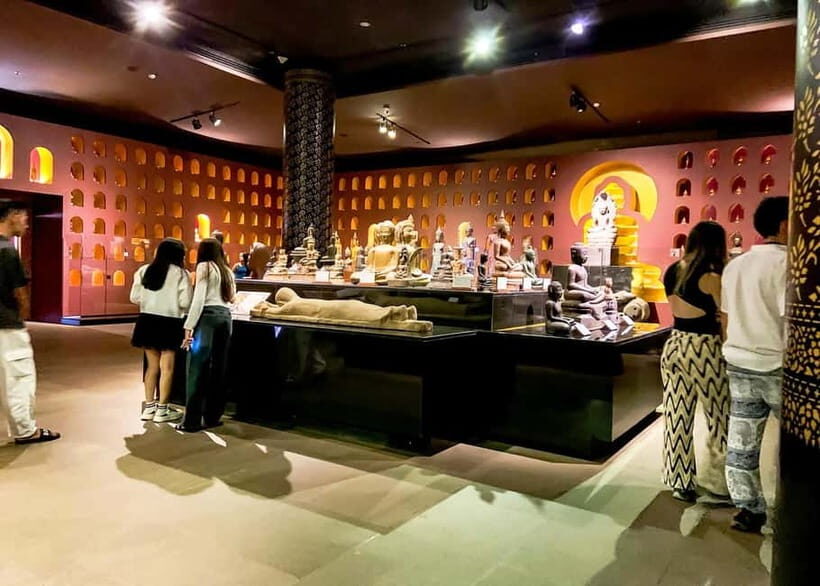
Think of the Angkor National Museum as a guided story—minus the live guide. The story is delivered through galleries, artifacts, and explanatory text. Your job is to slow down enough to read what you’re looking at, then decide how long each room deserves.
You’ll encounter art and artifacts connected to the Angkor archaeological sites, plus inscriptions that help anchor what the art was for. The museum highlights how Khmer art and religious life changed over time. That makes it especially useful if you want to understand why temple architecture and sculptures look the way they do, and why certain styles repeat.
The visit is designed to be flexible. One person may feel satisfied in around 1.5 to 2 hours, especially if they use an audio guide. Another style of visit can run longer—think 3+ hours—if you like reading boards, looking at details, and comparing statues across galleries.
Eight galleries of Khmer art and religion: How to move through them
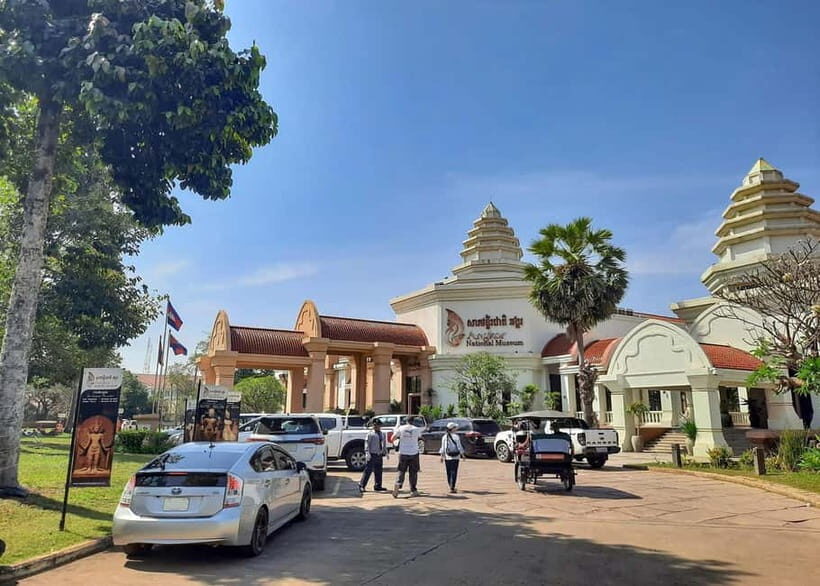
You’ll enter a museum organized into eight galleries. The galleries are meant to show the evolution of Khmer art, culture, and religion, room by room. Instead of one giant hall of objects, this setup encourages a “story path” as you travel from exhibit to exhibit.
Here’s how I’d approach the flow so it actually clicks:
- Start with the early context displays, then let the later rooms build on what you just learned.
- Pause at rooms with inscriptions, because text helps you connect symbols to people and places.
- When you hit clusters of statues, compare them rather than treating them like a single wall of sameness.
The big value of the eight-gallery structure is that it helps you avoid the common temple problem: seeing incredible stone but not knowing what it represents. When the museum gives you the visual and cultural groundwork, the temples start to look less random and more intentional.
One small reality check: the museum is best when you’re willing to do a bit of reading. The wall information boards are what stitch the objects together, so bring your “I’ll slow down and read” mindset, even if only for a few key stops.
The Buddha statues and ancient inscriptions: The part you’ll remember
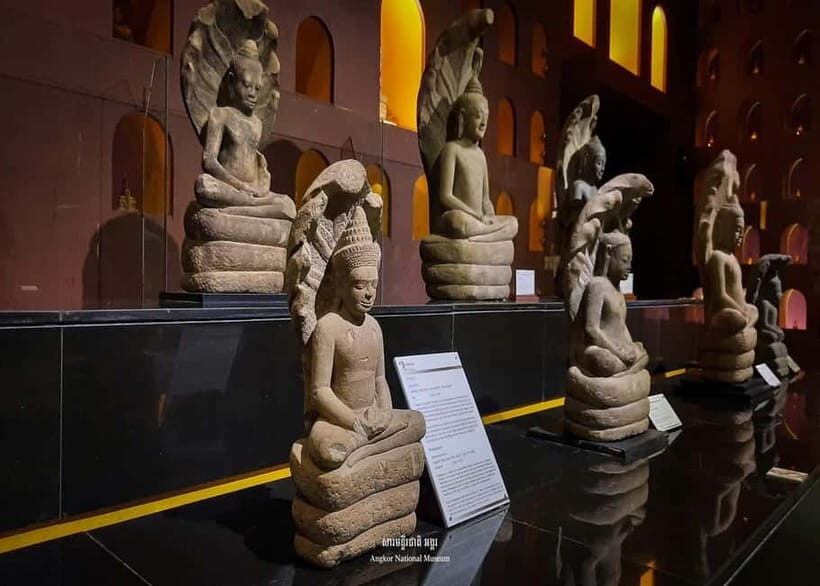
The headline attraction is the scale: the museum features over a thousand Buddha statues. That sounds like a lot—because it is. But the point isn’t just quantity. It’s variation: different depictions, different artistic choices, and the way religious imagery shows up across time.
What makes this portion really satisfying is that it’s not only about the statues as objects. It’s about why they were made and how they relate to Angkor-era life. When you add ancient inscriptions, the museum becomes more than “pretty sculpture viewing.” It starts to feel like you’re tracing beliefs and networks through evidence.
If you want your visit to land with impact, focus on two things:
- Look for recurring motifs and details on the statues.
- Use the inscriptions and explanatory boards to translate what you’re seeing into meaning.
I also like that the museum includes artifacts excavated from Angkor’s archaeological sites. That adds credibility. You’re not only seeing what was built. You’re seeing what was found, which helps explain how scholars and historians build the bigger picture.
Art-after-temples vs museum-before-temples: Choose your order
One of the best things about this ticket is the timing flexibility. You can use the museum as a warm-up before temple time, or as a reinforcement after you’ve already walked around Angkor.
If you visit before temples, you’ll likely recognize more symbols and stylistic choices once you’re out on the grounds. You’re basically giving yourself a framework, so your brain can label what it’s seeing.
If you visit after temples, the museum becomes a way to turn “wow” into “oh, that’s why.” You’ll spend less time just photographing and more time understanding. Either approach works, but your day’s energy matters. If your temple day already wiped you out, plan on a slower museum session with fewer rooms.
Practical tip: bring your questions with you. If you noticed something confusing at the temples—like repeated imagery or a particular style—see if the museum’s boards answer it. That makes the museum feel personal instead of like an extra ticket you rushed through.
A few more Angkor & Siem Reap tours and experiences worth a look


Skip the line and start clean: Practical entry and timing
This ticket is designed to be easy at the door. It includes skip-the-ticket-line entry, which is a big deal in a busy tourist area. The less time you spend queuing, the more time you spend actually looking.
However, don’t assume the ticket is always instant after booking. You’ll receive it separately, and the operator contacts you to reconfirm. The only real requirement you should treat seriously is the WhatsApp step: provide a number you can reach.
I’d also plan your arrival time with the “self-paced” nature in mind. If you only have one day in Siem Reap, this museum fits nicely because it doesn’t lock you into a rigid tour schedule. You choose how long you stay within the valid one-day window.
Audio guide option: Worth it, if you want the story faster
An audio guide is not included in the ticket price. You can rent it on-site for an extra $5.
Should you do it? If you’re the type who reads some but doesn’t want to read every sign, the audio guide can speed up your understanding. It can also help you keep momentum through rooms that are dense with objects and context.
If you prefer a slower experience with reading boards, you might skip the audio guide and still get a lot out of the galleries. In that case, plan a longer visit. People who go deep often take 3+ hours, because they stop often and compare multiple exhibits.
Either way, you’ll get the most benefit if you don’t just walk past the explanatory material. The museum is built so the information boards do a lot of the connecting work.
What to bring (and what to leave at home)
A smooth museum visit is mostly about comfort. Wear comfortable shoes, because you’ll likely be on your feet more than you expect. Bring a camera if you like to document sculpture details and inscription panels.
Dress for comfort. The ticket doesn’t list a strict dress code, but I’d plan for Cambodia’s heat by wearing breathable clothes you can stand in for a while.
Bring cash, since the instructions specifically call out cash as something to have. Also, if you’re considering the audio guide, that’s another small cost to keep in mind while you’re there.
Don’t bring:
- Pets
- Alcohol and drugs
Price and value: Is $15 a good deal?
For $15 per person, you’re paying for museum entry to eight galleries focused on Khmer art, culture, and religion, plus a major collection of statues and inscriptions. You’re also getting the practical benefit of skip-the-line access.
The main way this ticket can feel like a value (or not) comes down to your preferred learning style:
- If you like self-guided exploration, you get exactly that. You skip paying for a service guide because the museum is designed to work without one.
- If you want a story delivered to you quickly, the audio guide add-on ($5) is a small extra that can make the experience feel more connected.
Compared with paying for a full guided tour, this is still usually cheaper. Compared with skipping the museum entirely, it can save you from leaving temples with a lot of photos and not much meaning. For me, the museum earns its spot because it turns “I saw Angkor” into “I understood Angkor.”
Who should buy this ticket (and who should think twice)
This ticket fits best if you:
- Want a self-paced museum in Siem Reap
- Like history and culture through objects, not just lectures
- Plan to visit Angkor temples and want context before or after
- Prefer to control your time rather than follow a group schedule
Think twice if:
- You strongly need a live guide to translate everything for you
- You’re likely to skip reading wall boards entirely
- You only have a short window and don’t like museum environments
Even then, it can still be worth it if you rent the audio guide and commit to checking the main information panels.
Should you book the Angkor National Museum admission ticket?
Yes, I’d book it if you want the best odds of getting meaningful context for your Angkor temple day. The value is solid: $15, skip-the-line entry, and a self-paced visit through eight galleries built around Khmer art, religion, and archaeology.
The decision is simple: if you’re willing to spend time looking closely and reading a bit, this ticket pays off. If you prefer a fully narrated experience, add the $5 audio guide to smooth the learning curve. Either way, plan your visit so you’re not rushing. This is one of those places where slowing down is the whole point.
FAQ
How much is the Angkor National Museum admission ticket?
The price is $15 per person.
How long is the ticket valid?
The ticket is valid for 1 day.
Is this entry ticket self-paced?
Yes. You explore the museum at your own pace.
Is a tour guide included?
No. A service of tour guide is not included.
Is an audio guide included?
No. An audio guide is not included, and it costs $5 extra.
Does the ticket help me avoid lines?
Yes. It includes skip-the-ticket-line access.
Where do I meet the operator?
You are responsible for arranging your own transportation to the museum, and there’s no included pickup and drop-off service.
Is the museum wheelchair accessible?
Yes, it is wheelchair accessible.
What should I bring with me?
Bring comfortable shoes, a camera, comfortable clothes, and cash.
What items are not allowed at the museum?
Pets and alcohol and drugs are not allowed.