REVIEW · SIEM REAP
Siem Reap: Morning Cooking Class & Market Tour
Book on GetYourGuide →Operated by Villages Cooking Class · Bookable on GetYourGuide
Watching ingredients turn into lunch is oddly satisfying. This Siem Reap morning tour pairs a local market walk with a hands-on Khmer cooking class in a village-style home setting, so you see where the food starts before you touch a knife. I love that you shop with a guide, then cook your own meal with an instructor who works at your pace. I also like the small, practical side of it: you get a recipe brochure, so you can repeat the dishes later. A good consideration: the class happens rain or shine, and it’s described as not suitable for pregnant women.
In This Review
- What Makes It Worth Your Time (and How It Feels)
- Key Highlights at a Glance
- Morning Starts With a Tuk-Tuk Market Walk
- You’ll Meet the Kitchen Team Before You Cook
- Choosing Dishes: The Best Part for Freedom and Budget
- The Khmer Cooking Lesson: Step-by-Step and Hands-On
- What You’ll Cook (and How Many Courses)
- Why the Market Stop Feels More Authentic Than a Photo Op
- Route Add-Ons: Mushrooms and Vegetable Production Beyond Town
- Timing, Comfort, and the Realistic Logistics
- Price and Value: Is $35 Fair for What You Get?
- Rain or Shine Prep Tips That Keep the Day Pleasant
- Who Should Book This Cooking Class—and Who Should Skip It
- Should You Book This Siem Reap Morning Cooking Class?
- FAQ
- How long is the Siem Reap morning cooking class?
- What’s included in the price?
- Do I get to choose what I cook?
- Is the tour canceled for rain?
- Is it available in English?
- Is there a cancellation policy?
What Makes It Worth Your Time (and How It Feels)
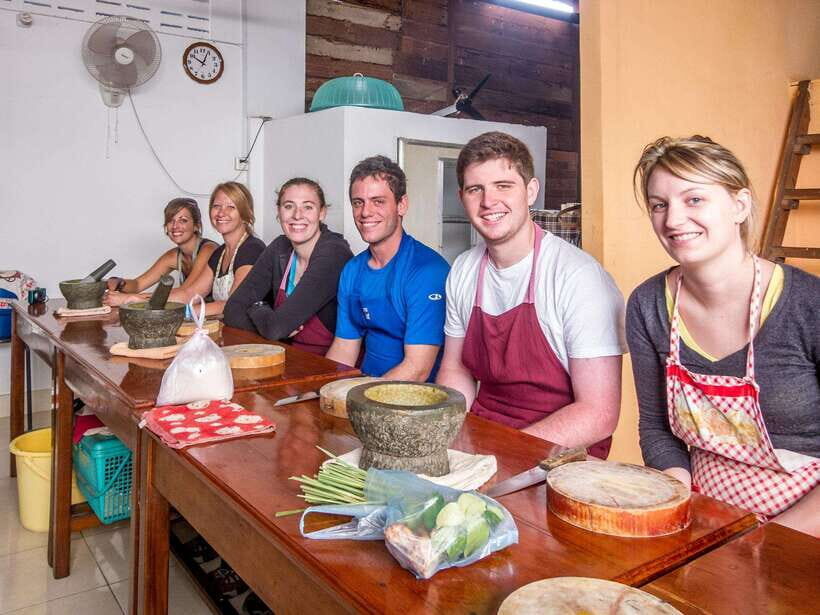
The vibe is calm and focused rather than performance-style. You’ll be picked up from your hotel, roll out by tuk-tuk, browse vendors for fresh produce and meat, then return to the cooking school for a demonstration and your own meal tasting in pleasant Khmer surroundings. One drawback to keep in mind is that the pace assumes you’re comfortable walking around market areas and working in a hands-on way for the full 5 hours.
Key Highlights at a Glance
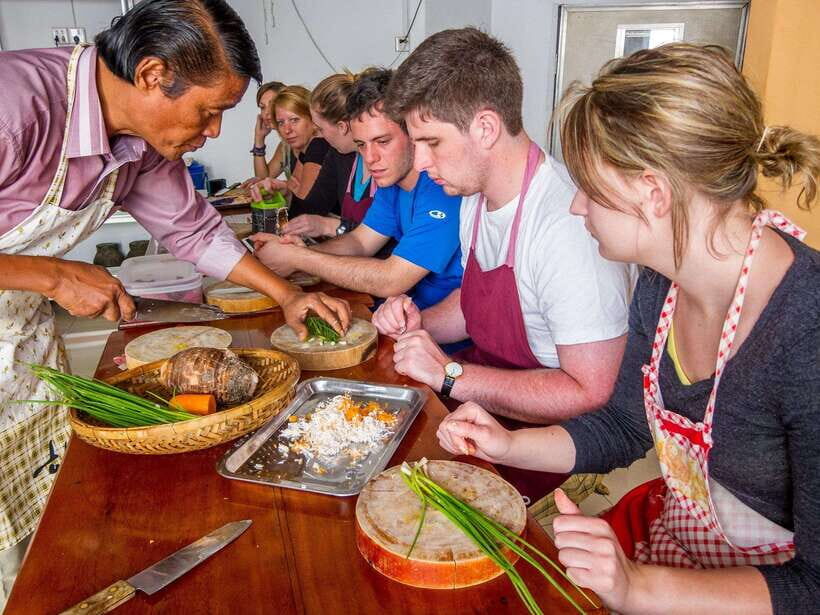
- Market first: walk through a local Siem Reap market to pick ingredients and meat plus fresh vegetables
- Cook in Khmer surroundings: the lesson happens in a local house/village cooking school setting
- Pick your dishes: you choose what you want to cook, then follow step-by-step guidance
- Hands-on tasting: you eat what you make, plus you get a dessert included
- Friendly English-speaking team: a live guide and local chef support you throughout
- Countryside adds context: many routes include stops like vegetable and mushroom production areas outside town
Other Khmer cooking class tours we've reviewed in Siem Reap
Morning Starts With a Tuk-Tuk Market Walk
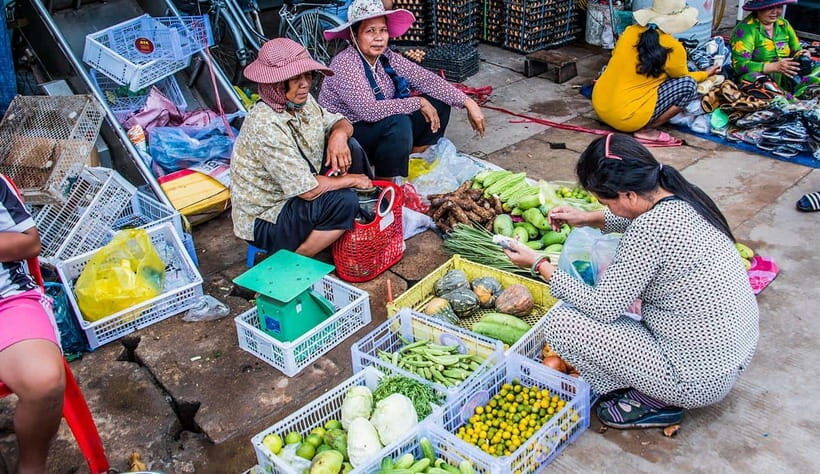
This tour begins with a straightforward plan: pickup from your hotel lobby, then hop into a tuk-tuk and head to the market. You’ll want to be ready—your pickup is scheduled, and you’re asked to wait about 15 minutes before the driver arrives. The first stop matters because it turns a cooking class into something more useful: you learn what ingredients look like in real life, not just as supermarket labels.
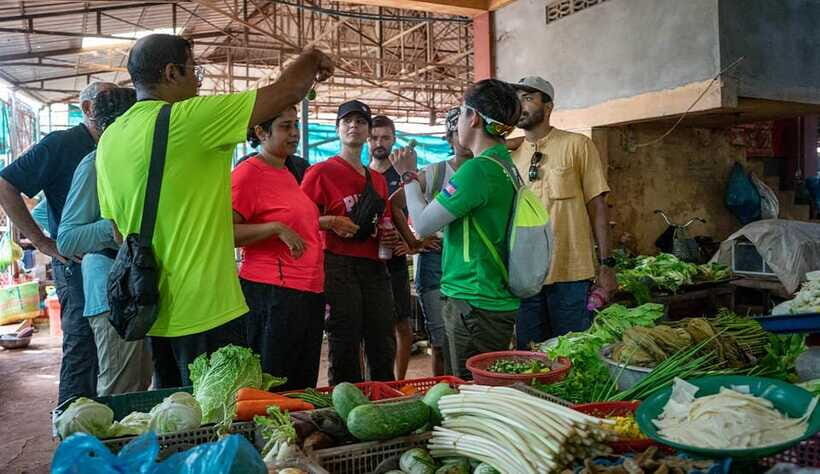
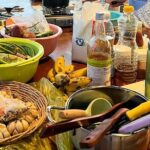
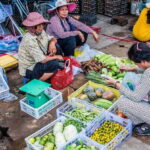
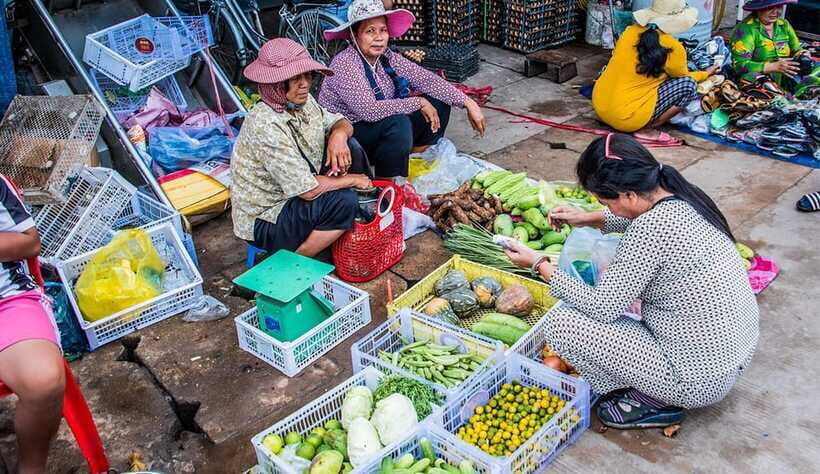
In the market, your chef and/or local guide explains what you’re seeing—types of produce, common Khmer cooking staples, and how vendors think about freshness. You’ll have time to walk and take photos, and you’ll likely get plenty of chances to pause and ask questions. That vendor interaction is part of the value: you’re not just buying things; you’re building a mental map for how Khmer meals assemble.
A detail I really appreciate is that you’re involved in ingredient selection. The tour includes you picking up ingredients needed for the dishes you’ll cook. When you arrive at the cooking step, you’re already familiar with the raw ingredients and how they were chosen—so the cooking instructions make more sense.
Practical note: markets can be warm and a bit uneven. Wear closed-toe shoes you can handle on the ground you’ll be walking on, and bring water since you’ll be out for about five hours total.
You’ll Meet the Kitchen Team Before You Cook
Back in the village cooking school, you get a small reset: refreshing iced tea and a cold towel. It’s the kind of touch that makes the class feel like it’s hosted by people, not run like a factory.
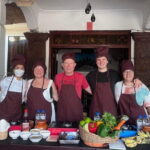
Then the chef and local staff guide the session. Based on named guides and chefs described in past experiences—like Bopha and Keo, plus hosts such as Mai—the teaching style is clearly meant to be easy to follow even if you’ve never cooked Khmer food before. You’ll choose your dishes ahead of time, and the chef demonstrates those dishes first, then you follow along step by step.
You also receive a brochure with the day’s recipes. The recipe format is for one serving unless otherwise stated, which is helpful if you’re thinking about cooking at home. You’re not just leaving with memories—you’re leaving with a realistic take-home version of what you cooked.
Choosing Dishes: The Best Part for Freedom and Budget
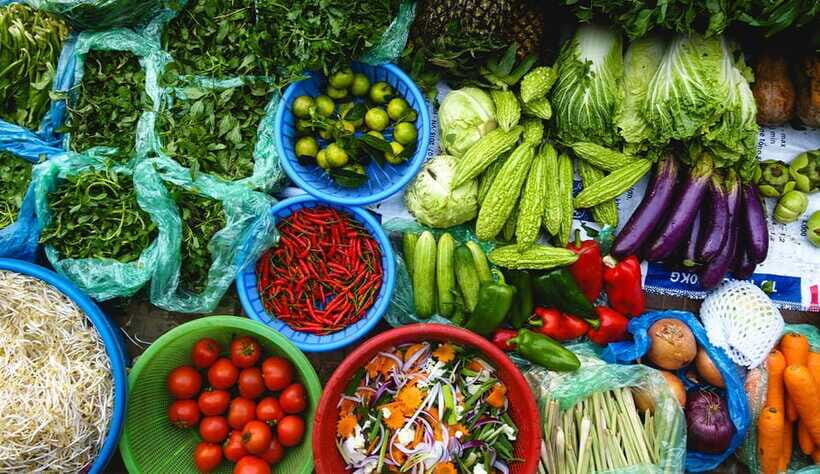
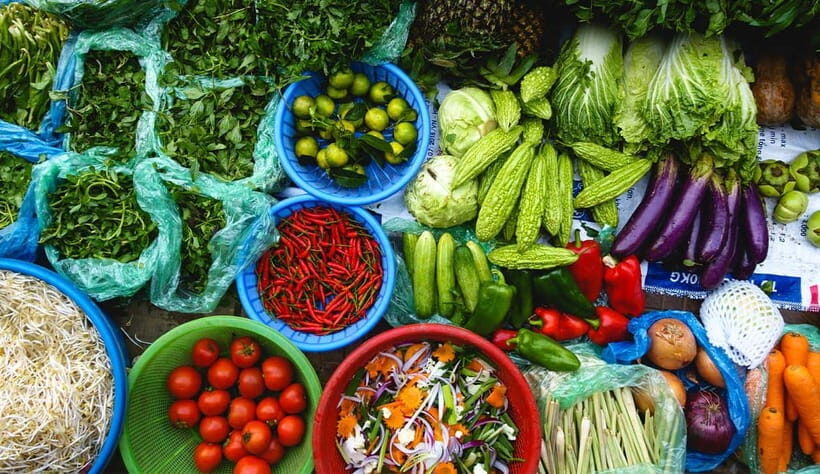
One of the smartest features here is that you can pick what you cook. That means your meal is more likely to match your tastes and spice comfort. If you’d rather focus on vegetables, you can. If you want something more meat-forward, that’s an option too. Past experiences mention dish choices like a curry soup, fried vegetables with pork, and a taro dessert—so your final menu is designed to feel like a full meal, not just cooking-for-cooking’s-sake.
The instructions follow the dishes you selected, so you’re not stuck learning a recipe you didn’t actually want to eat. For a $35 experience, this freedom is a big part of the value. It turns the class from generic into personal.
If you’re picky about heat level, this is where you should ask your chef early. The tour description doesn’t specify spice adjustments, so don’t assume you can change everything at the last minute. Ask in the market stage or right at the start of the cooking lesson.
The Khmer Cooking Lesson: Step-by-Step and Hands-On
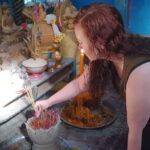
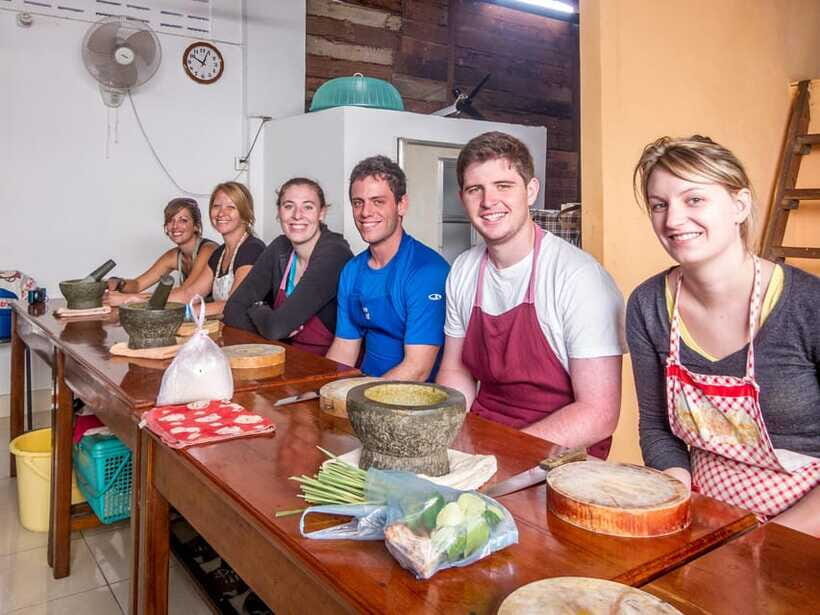
After the demonstration, you move into hands-on cooking. You’ll prepare your dishes and then taste what you make in the village surroundings. This is exactly the structure that helps beginners. You watch once, you understand what the dish should look and smell like, then you try yourself.
Why this matters: a lot of cooking experiences stop at watching. This one gives you the chance to control the outcome, which is the only way you’ll be able to repeat it at home. The step-by-step guidance helps you get the technique right, not just copy a flavor.
Also, because you shopped for ingredients at the start, the cooking process feels less abstract. When you pick fresh vegetables and meat in the market, you know what you’re working with when it’s time to slice, stir, and season.
Other shopping tours in Siem Reap



What You’ll Cook (and How Many Courses)
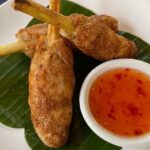
The tour includes 2 dishes of main course and 1 dessert, plus iced tea and cold towel refreshment during the session. That course structure makes it feel like a complete morning meal, not a snack-sized demo.
Dessert shows up as part of the teaching flow too, which I like. You get practice with something sweet at the end rather than just finishing on a savory note. In examples from past departures, desserts mentioned include taro-based options.
One more detail you’ll appreciate: the recipes are for one serving unless stated otherwise. That means the brochure is more useful than a big multi-portion document. You can cook the dishes again without doing a bunch of math.
Why the Market Stop Feels More Authentic Than a Photo Op
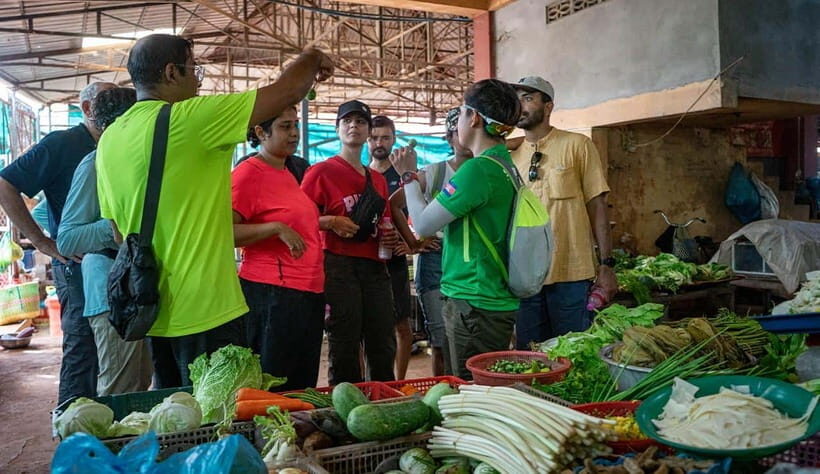
It’s easy for market tours to become a quick walk with lots of pointing and not much understanding. This one is different because you have time to walk, ask questions, and see products up close. The chef explains local products and food variety, which gives you context while you browse. And because you’re choosing ingredients for your later cooking, the market isn’t just scenic—it’s functional.
You’re also likely to get small extras like fruit or local snacks while at the market, depending on what you ask for and what’s available. That kind of flexible sampling helps you learn what people actually eat day to day, not only what appears in a cooking class brochure.
One more point: the tour describes visiting local sellers selling products, meat, and fresh vegetables. That’s useful if you’re learning how Khmer cooking depends on fresh ingredients and layered seasoning rather than relying on packaged mixes.
Route Add-Ons: Mushrooms and Vegetable Production Beyond Town
Several experiences include additional countryside stops like vegetable farms and mushroom production areas outside Siem Reap. This matters because it connects the meal to the supply chain. When you see how herbs and crops are grown, you cook with better instincts. You start understanding the flavors before they hit the pan.
If your departure includes these production visits, you’ll get more than a market shopping list—you’ll see how food is grown and processed locally. Past descriptions even mention an oyster mushroom farm, plus herb and vegetable villages. These stops can add walking time, so if you’re the type who gets sore easily, plan for that.
Timing, Comfort, and the Realistic Logistics
This experience is listed as 5 hours. That’s a manageable chunk of a day, especially if you’re also doing temple visits later. The pacing is designed so you’re not rushed in the market, and you’re not stuck for hours between steps.
You’ll ride by tuk-tuk from your hotel to the market area and onward to the village cooking school. Tuk-tuks are practical here: short transfers, easy stopping for photos, and that classic local feel. Expect the route to be a bit bumpy, so sit back and stay loose.
The tour explicitly says it happens rain or shine. So treat this like a tropical morning: pack a light rain layer even if the forecast looks okay.
Group size isn’t stated in the tour details you provided, but your experiences point to a setting that supports real interaction—especially with the guide assisting during market time and the chef guiding you through cooking.
Price and Value: Is $35 Fair for What You Get?
At $35 per person, you’re paying for more than a class. You’re getting:
- hotel pickup and drop-off
- a live English-speaking guide
- a local chef
- a market walking tour
- ingredient selection for what you’ll cook
- 2 main dishes + 1 dessert
- recipe brochure for the day
In plain terms, the value comes from the full loop: market context + hands-on cooking + a meal at the end. Many cooking classes elsewhere charge a similar price but leave you with a meal that’s either pre-plated or too small to feel satisfying. Here, the included courses suggest you’ll actually eat a complete portion of what you made.
Another value point: you get recipes sized for one serving. That’s practical for home cooking. If you’ve ever left a class with a binder of recipes you can’t realistically scale or repeat, you’ll appreciate this.
Rain or Shine Prep Tips That Keep the Day Pleasant
Because the tour runs regardless of weather, think about comfort more than “what if.” Bring:
- a light rain jacket or poncho
- closed-toe shoes you can tolerate in wet spots
- sun protection if it clears up
- a small towel or extra wipes if you’re sensitive to humidity
Cold towel and iced tea are included during the cooking-school portion, but you’ll still be outdoors during the market walk. Plan for a warm, humid environment, and you’ll enjoy the day more.
Who Should Book This Cooking Class—and Who Should Skip It
This is a great fit if you want a day that’s hands-on, local, and teachable. It’s especially appealing if you’re curious about Khmer cuisine and you like learning by doing—shopping for ingredients, then cooking them with guidance.
You’ll likely enjoy it if:
- you want a break from temples and want food culture instead
- you’d like a recipe brochure you can use at home
- you prefer interactive classes over purely observational tours
Skip it if:
- you’re pregnant. The tour states it is not suitable for pregnant women.
- you don’t like walking around markets or being hands-on with cooking.
If you’re traveling solo or as a couple, this class still works well because the chef and guide can keep the instructions clear for each participant. One-on-one attention may not be constant, but the structure described in experiences suggests you can follow along without feeling lost.
Should You Book This Siem Reap Morning Cooking Class?
Yes, if you want your morning to be useful—not just scenic. This tour earns its money by doing three things well: market learning, guided hands-on cooking, and eating what you make. The included 2 main courses and 1 dessert turns it into a full meal experience, and the recipe brochure gives you something to take home that’s actually cookable.
Book it if you’re comfortable with outdoor time, because it runs rain or shine and includes market walking. If that outdoor element is a concern, then you’ll need to weigh it against your comfort level.
If you’re planning a short Siem Reap stay, this is also a smart add-on. It’s only 5 hours, and it gives you a different angle on Khmer culture than temples—one you’ll remember every time you cook later.
FAQ
How long is the Siem Reap morning cooking class?
The tour runs for 5 hours, including pickup, the market visit, the cooking class, and the meal tasting.
What’s included in the price?
The package includes hotel pickup and drop-off, a local chef and guide, a local market walking tour, 2 main course dishes, and 1 dessert. Refreshments like iced tea and a cold towel are provided during the cooking-school part.
Do I get to choose what I cook?
Yes. The chef presents the dishes you have chosen, and you receive a brochure with the day’s recipes based on those dishes.
Is the tour canceled for rain?
No. The tour takes place rain or shine.
Is it available in English?
Yes. The live tour guide is English, and the cooking instruction is led by the local chef and team.
Is there a cancellation policy?
Yes. You can cancel up to 24 hours in advance for a full refund.