REVIEW · SIEM REAP
2-Day Eight Temple Tour with Optional Sunrise
Book on Viator →Operated by Angkor Pura Tours · Bookable on Viator
Want Angkor without the logistics headache? This private guide temple tour in Siem Reap strings together major sites and lesser-known stops, with no-crowd pacing so you can slow down where you want. I like that the plan builds in time for real looking, not just photo stops, and that hotel pickup means you’re not solving transport each day. One catch: the $98 price doesn’t include the 3-day temple pass ($62 per person), and some parts involve a lot of walking and climbing.
Day 1 hits a wild mix: Pre Rup for a steep viewpoint, then the pink sandstone artistry of Banteay Srei, followed by the jungle-grown atmosphere of Ta Prohm. This is the kind of route that helps you understand the Khmer temple world as a whole, because you see different styles back to back. If you’re hoping for a totally relaxed, flat stroll, this won’t match that vibe.
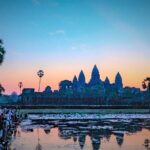
On Day 2, the itinerary starts with Angkor Wat and finishes at Bayon, with Preah Khan in between as a more “left to the elements” stop. I like that it’s structured like an efficient circuit through Angkor Archaeological Park, but you still have freedom to explore at your own pace. Also check whether the optional sunrise add-on changes the start time—this tour’s name mentions it, but you’ll want the schedule details when you book.
In This Review
- Key things you’ll notice right away
- Why a private eight-temple circuit is smart in Siem Reap
- Day 1: Pre Rup climb, Banteay Samre, and Banteay Srei’s pink sandstone
- Day 1 finale: Ta Prohm’s jungle and Banteay Kdei’s quieter Buddhist mood
- Day 2: Angkor Wat first, then Preah Khan, and Bayon’s inscriptions
- What the guide actually adds (including Sam’s storytelling style)
- Price and logistics: what $98 covers, and what you still need to pay
- Dress code and what to bring for a smooth temple day
- Should you book this two-day Angkor temple tour?
- FAQ
- How long is the 2-Day Eight Temple Tour with Optional Sunrise?
- What temples are included in the itinerary?
- What is included in the tour price?
- Do I need to buy a temple pass?
- What should I wear to enter the temples?
- Is this a private tour?
- What is the cancellation policy?
Key things you’ll notice right away
- Private transport with hotel pickup so you start with less hassle in Siem Reap
- A tight two-day loop across eight temple highlights without organizing drivers yourself
- Pre Rup + viewpoint time gives you perspective over the surrounding countryside
- Banteay Srei’s pink sandstone details and carving legends that you can actually see up close
- Ta Prohm’s jungle atmosphere (the Tomb Raider film connection with Angelina Jolie is part of the story)
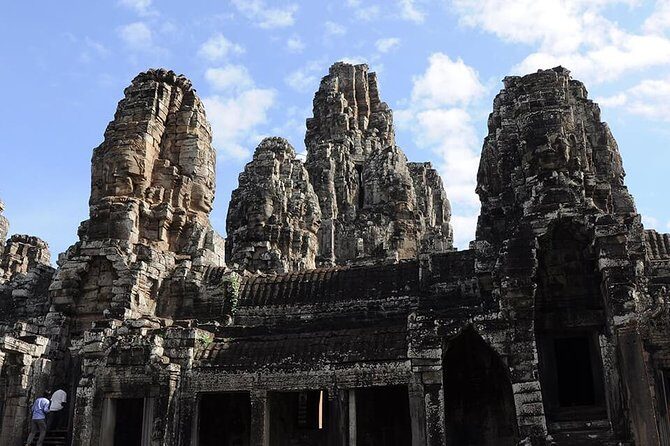
- Angkor Wat then Bayon keeps the big icons and face-tower energy in the right order
Why a private eight-temple circuit is smart in Siem Reap
Siem Reap is packed with ancient temple sites, but getting to them efficiently is the real challenge. This tour solves that for you with private transport and hotel pickup, so your day starts moving instead of negotiating. It also keeps the itinerary broad enough to feel like a real Angkor experience, even with limited time.
What makes it work for me is the balance between structure and freedom. You have a plan with set temples, but you’re also meant to explore at your own pace rather than getting yanked along every few minutes. That matters because temples reward slow looking—especially when you’re dealing with carved surfaces, doorways, and tight areas where details get missed if you rush.
Finally, there’s a human layer: you get a private guide to connect the dots. Khmer temple sites can look like a collection of stone blocks if you don’t know what you’re looking at. A good guide turns that stone into a story you can track, from early Khmer kings through later Buddhist eras.
Other Angkor Wat sunrise tours we've reviewed in Siem Reap
Day 1: Pre Rup climb, Banteay Samre, and Banteay Srei’s pink sandstone
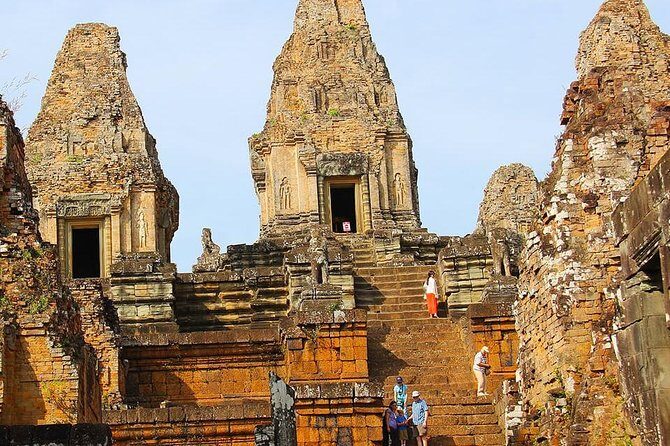
Day 1 is where you feel the Khmer temple range in a single day. It starts with Pre Rup, often called a mountain temple because of the steep climb to the towers at the top. The payoff is a view over the countryside below, and it’s a rare moment where the temple stops being only architecture and becomes a vantage point.
Pre Rup is also an earlier Khmer king temple, which means your guide can frame it as part of the temple evolution rather than just treating it as another stop. If you want to understand Angkor beyond the headline names, this first leg is the kind of foundation you’ll appreciate later.
Next comes Banteay Samre, built in a style similar to Angkor Wat. This is one of those temples where you can easily spend an hour just walking the towers and focusing on intricate carvings. I like this change of pace because it’s structured enough to stay interesting, but not as overwhelming as the largest sites.
Then you reach the highlight that many people remember most: Banteay Srei. This temple is built from pink sandstone quarried in the Kulen Mountain range, and it’s famous for carvings that are detailed enough to keep you staring for a while. There’s also a legend connected to the carvings—if you’re into the human stories behind art, this is where the tour can make the visit feel personal rather than purely architectural.
Practical note: Banteay Srei is a place where you benefit from good walking shoes and patience with steps and uneven surfaces, since the best carvings are often where you have to angle yourself and get close.
Day 1 finale: Ta Prohm’s jungle and Banteay Kdei’s quieter Buddhist mood
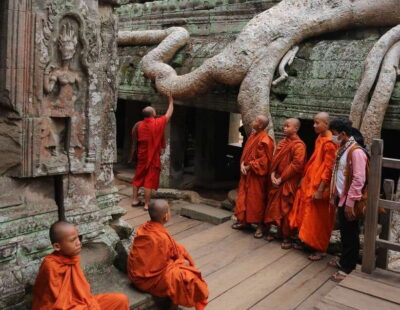
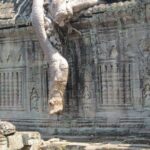
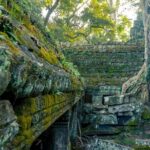
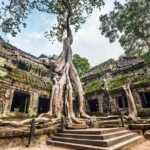
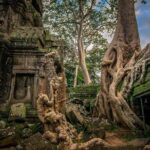
After the sand and carvings, Day 1 leans hard into atmosphere at Ta Prohm. This is the famous Tomb Raider temple tied to the movie starring Angelina Jolie. The key detail is how the structure was left to the elements—jungle growth has taken over areas of the building, creating a very specific look and feel.
If you’ve seen the movie connection online, this stop is where it turns into something physical. You’re not just looking at ruins; you’re seeing how nature and stone share space when restoration is limited. That changes how you photograph and how you notice framing—doorways become corridors, and the roots make accidental “walls” inside the scene.
Banteay Kdei comes next as a contrast. It’s known as the Citadel of Chambers or the Citadel of Monks’ Cells, and it’s a Buddhist temple located nearby Ta Prohm. Even though it’s another popular stop, the vibe tends to feel steadier—less movie-energy, more calm exploration, with its own layout and carving style to pick up.
This is the best part of the itinerary design: Day 1 doesn’t only repeat big-name temples. It moves from viewpoint temple energy (Pre Rup) to refined carving focus (Banteay Srei) to jungle-ruin drama (Ta Prohm), then into a Buddhist companion setting (Banteay Kdei). That makes the day feel complete, not just crowded with monuments.
Day 2: Angkor Wat first, then Preah Khan, and Bayon’s inscriptions
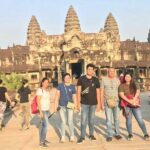
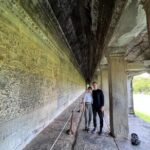
Day 2 starts with Angkor Wat, which is the reason most people come to Siem Reap. It’s the largest temple built during the Khmer empire, and it draws over 2 million visitors per year. So yes, there are crowds—but a private guide and your own pace approach helps you avoid the worst bottlenecks and spend longer where you care most.
Angkor Wat can feel like sensory overload because it’s huge. A guide helps you read it in chunks: key areas, major directions, and the parts that make the whole complex work. You’ll get more out of it when you’re not just walking through for the big outline shot.
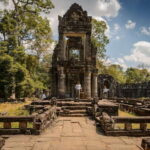
Then you head to Preah Khan, a 12th-century temple built by King Jayavarman VII. What makes Preah Khan different is that it’s been left to the elements. It’s been made safe for visitors, but there’s very little restoration work, so you can see the temple as it’s been weathered over time.
That “less restored” quality matters because it changes the texture and lighting of everything you see. The stone may not look perfectly smooth or uniform, and that’s often where the real character is. If you like authenticity over glossy presentation, this is one of the most interesting stops on the second day.
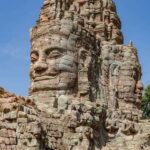
Finally, the tour ends at Bayon. Bayon is the temple with inscriptions that connect several traditions: remnants of Hindu inscriptions as well as both Mahayana and Theravada Buddhist inscriptions. It’s one of those sites where you can feel the history layered rather than stuck in one “version” of meaning. Bayon is also a favorite for many visitors, and the reason is simple: the visual details and the symbolic mix keep it engaging even when you’re tired.
If you’re wondering how to pace yourself on the last stop, plan on spending time in the nooks and crannies rather than only orbiting the main view points. That’s where the effort feels worth it.
What the guide actually adds (including Sam’s storytelling style)
The difference between a temple tour and a temple experience is your guide. In this kind of private setup, you’re not stuck with a loud group rushing the same checkpoints. You can ask questions, linger on carvings, and get the context for what you’re seeing.
The most consistent praise I’ve seen for this tour’s guiding is the storytelling part. For example, one guide named Sam has been described as a master storyteller with strong photography skills, and that combination is practical. When someone can narrate the meaning of a place and also show you how to frame what you see, you end up remembering more than the photos alone.
Even if your guide isn’t Sam, the core idea holds: you should expect explanations and history delivered in a way that makes the temples feel connected. That’s what turns “I visited Angkor” into “I understood something about Khmer temple design, and why these sites matter.”
And because the tour is built for private pacing, your guide can tailor the speed. If you want more quiet time at a carvings-focused temple, you can slow down. If you want to move faster through the bigger complexes, the schedule helps you keep momentum.
Other multi-temple archeological tours we've reviewed in Siem Reap


Price and logistics: what $98 covers, and what you still need to pay
The headline price is $98 for the tour, for approximately two days in Siem Reap. For that money, you’re getting a tour guide, cold water, and suitable transport for the group size. You also get convenient pick-up from your Siem Reap hotel.
Now the key cost detail: the 3-Day Temple Pass is not included, and it’s listed at $62 per person. That means your real temple budget is the tour fee plus that pass, plus food and drinks. Food and drinks aren’t included, and accommodation isn’t included either, so plan your day like a day trip with meals on your own.
Is it good value? Usually yes, if you want:
- a packed but manageable route across multiple temples
- a private guide to help you interpret what you’re looking at
- hotel pickup and transport so you don’t spend your limited time organizing
It may not feel like value if you’re trying to minimize extra spending and you don’t care about interpretation. If you’re already planning to hire your own driver and you’re comfortable navigating temple timing, you might do it cheaper on paper. But if your goal is to reduce friction and maximize meaningful time, the structure helps.
Also note: the tour mentions mobile ticket and group discounts. If you’re traveling with friends or family, it’s worth asking how the discount applies to your group size.
Dress code and what to bring for a smooth temple day
Cambodia’s temple dress rules are not optional, and this tour follows them. You’ll need to cover your shoulders and knees to enter the temples. That’s straightforward, but it can catch people off guard if they pack only hot-weather shorts and tank tops.
Since the itinerary includes steep climbs and a lot of walking between sites, you’ll want clothing that meets the rules and still lets you move comfortably. The tour supplies cold water, which is helpful, but food and drinks are on you—so plan for breaks.
Because this is a private tour/activity, you’re only traveling with your group, not being shuffled by strangers’ pace. That usually makes it easier to manage your own comfort needs, including resting briefly between major areas.
One more thing: the tour title mentions optional sunrise. Since the detailed schedule here doesn’t spell out sunrise timing, confirm what the sunrise add-on actually changes—start time, which temples it affects, and whether it alters the rest of the day. Sunrise is often worth it in Angkor, but only if it fits your energy level.
Should you book this two-day Angkor temple tour?
Book it if:
- you want an organized two-day plan that covers major Angkor names and other standout temples
- you like the idea of private transport and a guide to explain what you’re seeing
- you’re short on time in Siem Reap and don’t want to coordinate drivers across scattered temple sites
- you care about variety: viewpoint at Pre Rup, carved pink stone at Banteay Srei, jungle energy at Ta Prohm, then Angkor Wat and Bayon
Skip it (or at least ask sharper questions before booking) if:
- you’re trying to avoid extra costs on top of the $98 fee, since the $62 temple pass is separate
- you don’t want early mornings, or you’re unsure about the optional sunrise add-on timing
- you want zero walking and zero climbs, because Pre Rup’s steep climb is part of the experience
If you want a practical way to hit the highlights without losing your whole trip to transport planning, this is the kind of tour that keeps your time moving and your attention on the stones.
FAQ
How long is the 2-Day Eight Temple Tour with Optional Sunrise?
It runs for approximately 2 days.
What temples are included in the itinerary?
You’ll visit Pre Rup, Banteay Samre, Banteay Srei, Ta Prohm, Banteay Kdei, Angkor Wat, Preah Khan, and Bayon.
What is included in the tour price?
The tour includes a tour guide, cold water, and suitable transport for group size. Private transport includes convenient pick-up from your Siem Reap hotel.
Do I need to buy a temple pass?
Yes. The 3-Day Temple Pass is not included and is listed at $62 per person.
What should I wear to enter the temples?
You must cover your shoulders and knees to enter the temples.
Is this a private tour?
Yes. It’s private, and only your group will participate.
What is the cancellation policy?
You can cancel for free up to 24 hours in advance of the experience start time for a full refund, based on local time.