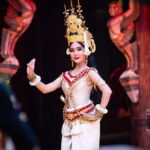
Sunrise at Angkor Wat changes how you see the whole complex. This small-group outing is built around the quiet before the crowds, plus a guided route through Angkor Wat, Bayon, Ta Prohm, and Banteay Kdei. You’ll also get context for what you’re looking at, including the religious story tied to Vishnu and the Khmer kings behind these monuments.
I especially love the early timing and how the day feels manageable: you start before 5 am, the air is cooler, and the temples have breathing room. I also like the way the tour supports photos and explanations, with an English guide who helps position you for shots at Angkor Wat (including inside the temple).
The main drawback is simple: the 4:30–4:45 am start is early, and temple admission tickets (like Angkor Wat) are not included—so you’ll want to plan for extra costs beyond the $39 price.
In This Review
- Key things that make this Angkor sunrise tour work
- Why Angkor Wat sunrise feels worth the early wake-up
- Price and what you’re really paying for at $39
- Small group size: the difference between seeing temples and racing them
- The 4:30 am start: how to make the “not fun” part easier
- Stop 1: Angkor Wat sunrise and getting inside for photos
- Stop 2: Bayon Temple at Angkor Thom’s South Gate
- Stop 3: Ta Prohm—fig trees, roots, and an atmosphere that feels still
- Stop 4: Banteay Kdei’s calmer monastery feeling
- Lunch recommendations that help you keep the day simple
- What the guides tend to do well (and why it matters)
- Practical tips for cameras, heat, and comfort on a temple circuit
- Who should book this Angkor Wat sunrise small group tour?
- Should you book this experience?
- FAQ
- What time does the tour start?
- How long is the Angkor Wat sunrise small group experience?
- Is hotel pickup included?
- How big is the group?
- Are temple admission tickets included?
- Are meals included?
Key things that make this Angkor sunrise tour work
- A small group capped at 10 people, which keeps the pace human and the photo stops less chaotic
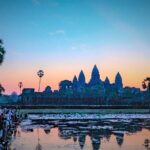
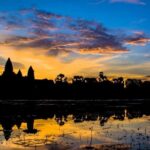
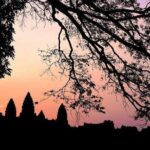
- Angkor Wat sunrise as the core moment, when the atmosphere is calm and the light is soft
- An English guide with photo help, including finding a good location for pictures inside Angkor Wat
- Four temples with different vibes, from Angkor Wat’s grandeur to Ta Prohm’s fig-tree embrace
- Cold water and a cold towel to make the early morning feel less uncomfortable
- Lunch recommendations from your guide, so you’re not guessing where to eat after the circuit
Why Angkor Wat sunrise feels worth the early wake-up
Angkor is famous for its scale, but it can also be overwhelming. Starting at sunrise flips the experience. You’re not fighting heat, glare, and shoulder-to-shoulder crowds in the first moments. Instead, you’re standing in a cooler, calmer window when you can actually notice details—carvings, gates, and how the light moves across stone.
The tour is set up to take advantage of that. You get picked up around 4:45 am (meeting is 4:30 am) and head straight for the sunrise moment at Angkor Wat. That matters because the main sights are still the main sights later in the day—but the mood is very different. If you’re the type who hates rushing photos, sunrise is your friend.
Also, the tour includes cold water and a cold towel, which is one of those small things that changes how you feel when you’re awake too early. You don’t want to start a long temple day dehydrated or grumpy.
Other Angkor Wat sunrise tours we've reviewed in Siem Reap
Price and what you’re really paying for at $39
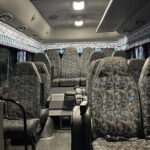
At $39, this tour is priced like a value-focused morning package. What you’re paying for is not the temple access itself—it’s the logistics: hotel pickup, an air-conditioned vehicle, an English guide, and basic comfort support (water and towels).
Here’s what’s not included:
- Temple admission tickets (Angkor Wat ticket is explicitly not included, and the tour duration per stop lists admission as not included)
- Meals (breakfast, lunch, dinner are not included)
So the real question isn’t just whether $39 is cheap. It’s whether you’re saving time and hassle compared with planning your own route and hiring a guide. With this format, you get a ready-made order of sights and someone to explain what you’re seeing—especially helpful in Angkor, where it’s easy to miss the significance behind each structure.
If you’re okay with paying temple tickets separately and you like a guided flow, $39 can feel like a bargain. If you want everything rolled into one price, you’ll likely feel the extra costs sooner.
Small group size: the difference between seeing temples and racing them
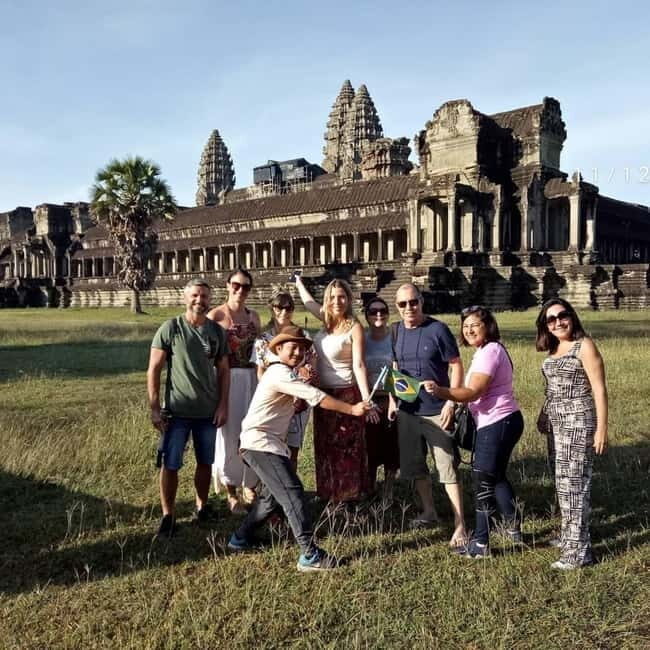
This tour limits the group to a maximum of 10 people. That number isn’t just a comfort detail; it affects how the whole day feels. With fewer people, the guide can find you a spot for photos and keep the pace steady instead of stopping for every question and traffic jam in a larger group.
You also get more attention at key moments. Angkor Wat is the big one for this: the guide is set to find a good photo location for pictures inside the temple. When you’re dealing with a crowded, high-demand site, being directed to a workable spot saves time and energy.
The smaller group also makes it easier to coordinate your own camera timing. You’re not constantly stepping around strangers who are trying to do the same shot at the same second.
The 4:30 am start: how to make the “not fun” part easier
No sugarcoating: this is an early-morning tour. Pickup happens around 4:45 am after a 4:30 am start time. If you’re naturally a late sleeper, you’ll feel it.
Here’s how to keep it from ruining your day:
- Plan to be ready the night before. Don’t wait for the last-minute packing scramble.
- Bring something warm. Even in Cambodia, early mornings can feel cooler than the afternoon.
- Wear comfortable shoes you can walk in for hours. Temple circuits add up quickly.
The upside is that the hardest part (waking up) is front-loaded, and you get the best lighting and calmer conditions first. By the time the sun climbs higher, you’ve already hit the emotional peak of the day.
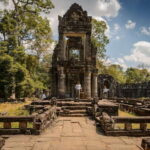
Stop 1: Angkor Wat sunrise and getting inside for photos
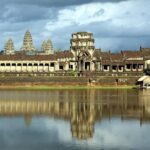
Angkor Wat is the headline, and the tour treats it that way. You arrive in the dark-to-dawn window, watch the sunrise, and then spend the rest of the morning/early day exploring with your local guide.
Two things make this stop especially valuable:
- You get religious context while you look. The tour focuses on the Hindu background linked to Vishnu, and on how Khmer kings shaped the site. You’ll also learn how Angkor Wat fits into Cambodia’s broader religious influences, not just architecture.
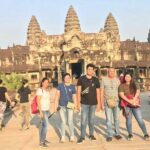
- You’re not left to guess photo spots. The guide helps you find a location for pictures inside Angkor Wat, which is a big deal because angles matter and the best spots can be temporary.
What to consider:
- Angkor Wat is huge. Even with a guide, you’ll still do a lot of walking.
- The ticket isn’t included, so you’ll want to handle that ticket plan before you go.
If you’re the kind of person who wants to understand what you’re seeing—not just take photos—this first stop sets the tone for the entire route.
Other Angkor Wat temple tours we've reviewed in Siem Reap
Stop 2: Bayon Temple at Angkor Thom’s South Gate
After Angkor Wat, you move to Angkor Thom and begin at the South Gate. This is a smart transition because it shifts you from one iconic temple style to another—gate architecture first, then the dramatic faces of Bayon.
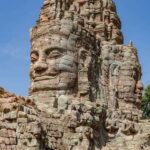
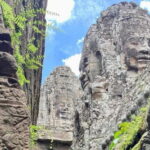
At Bayon, the focus is on scale and repetition. Bayon has 54 towers and 216 faces of Buddhisatva Avalokesvara, and your guide explains what you’re looking at. That number-based description isn’t just trivia. It helps you “read” the temple. Instead of staring at stone and thinking it’s all the same, you start noticing how the faces are arranged and how the towers create depth.
Typical trade-offs at Bayon:
- It’s a dense visual space, so it can feel busy even in the morning.
- You’ll want to slow down with the guide’s cues. Trying to rush this stop makes it easy to miss the pattern.
Still, Bayon is one of the most memorable stops because it feels like the temple is watching you back.
Stop 3: Ta Prohm—fig trees, roots, and an atmosphere that feels still
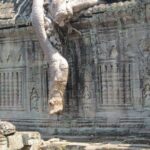
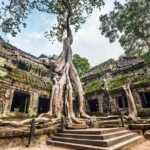
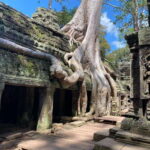
Ta Prohm is where Angkor becomes cinematic. The ruins are wrapped by enormous fig trees, and the experience leans heavily on the contrast between stone and nature.
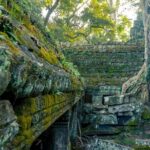
The tour gives you time at Ta Prohm and highlights something important: it’s been kept in a state that resembles the way it was found. That matters because it’s not a polished “new” ruin. It’s a more raw, tangled look—roots gripping stone and jungle surroundings shaping the mood.
What you’ll likely enjoy most here:
- The ability to take photos that look dramatic without needing perfect staging.
- The way the environment turns a regular walk into something atmospheric—especially when you’re still early enough to avoid the worst heat.
One practical consideration:
- Ta Prohm can create uneven walking surfaces. Stick to stable areas and watch your footing, particularly if it’s humid or damp.
If you want a break from the highly structured layouts and want something more wild and story-like, Ta Prohm is your payoff stop.
Stop 4: Banteay Kdei’s calmer monastery feeling
You finish at Banteay Kdei, described as a former monastery for Buddhist monks. This is not just another temple stop. It has a quieter rhythm and a different purpose.
The site was built by King Jayavarman VII around the late 12th to early 13th century. The tour frames it as a sprawling monastic complex that’s largely non-restored, in a style similar to Ta Prohm. In practical terms, that means you’re more likely to feel like you’re exploring a real place rather than only walking through a staged highlight.
Why it’s a good ending:
- You move from the dense attention-grabbing look of Bayon and Ta Prohm into something more relaxed.
- Ending with a monastery-style complex can feel grounding after all the monumental storytelling.
Time-wise, it’s about 1 hour on the schedule here, so you won’t feel stuck forever. You’ll likely wish you had more time—but that’s the nature of a four-stop morning.
Lunch recommendations that help you keep the day simple
Meals are not included, but your guide will provide recommendations for local lunch. That’s a small thing with outsized value. After a sunrise start and a temple circuit, you don’t want to spend energy deciding where to eat while you’re tired and hungry.
Instead, you get a plan. You can aim for a place that fits the schedule and doesn’t require extra backtracking. Even if you choose to deviate, having guidance reduces the stress.
What the guides tend to do well (and why it matters)
The tone of a tour can make the difference between photos that look fine and photos that feel meaningful.
From the way guides are described in connection with this experience, a few strengths show up repeatedly:
- Humor and ease: guides like Sen and Sam have been praised for making the day feel fun, not stiff.
- Good English explanations: Vuthy is noted for strong English and a friendly, energetic approach.
- Photo assistance: some groups highlight guides who take time to help with framing and keep the group organized for pictures.
- Driver support: the vehicle ride includes basic comfort items like cold towels, and the driver’s role in hydration is called out by name in at least one account.
The practical takeaway for you: you’ll likely get more out of the temples if you treat the guide as part storyteller, part logistics coordinator. Ask questions. Point out what you’re confused about. Angkor rewards curiosity.
Practical tips for cameras, heat, and comfort on a temple circuit
This is a long morning, so small practical choices matter.
Camera and photo timing
- Charge your phone/camera the night before. You’ll be out early and not in a position to recharge easily.
- Bring a camera strap you trust. Temple walks add tension if you’re constantly adjusting gear.
- Use the guide’s photo planning at Angkor Wat. The inside photo spot is a key moment on the schedule.
Clothing and comfort
- Wear breathable layers. Early morning might feel cooler, and later you’ll warm up.
- Comfortable walking shoes beat sandals for this route.
- If you’re sensitive to sun, bring a hat or light cap. Even early, you’ll be outside.
Hydration
- You’ll get cold water and a cold towel as part of the tour. Still, if you know you drink more than average, consider carrying your own extra water too.
Who should book this Angkor Wat sunrise small group tour?
This tour fits best if you:
- Want the sunrise mood at Angkor Wat and don’t want to scramble for timing on your own
- Like guided explanations tied to what you’re seeing (Vishnu, Khmer kings, and temple purpose)
- Prefer a small group over a busload experience
- Value photo opportunities and want someone to help you find workable angles, including inside Angkor Wat
It may not be the best fit if you:
- Hate waking up extremely early
- Want a fully all-in-one price (because tickets and meals are separate)
- Are hoping for a slow, leisurely pace with lots of downtime between stops
Should you book this experience?
If sunrise is on your must-do list, I think this is a smart way to do it. The $39 price pays for the heavy lifting: pickup, an air-conditioned ride, an English guide, and basic comfort support, while temple tickets and meals stay as add-ons you can manage.
Book it if you want an organized temple circuit with calmer early conditions and real guide support—especially for photo planning at Angkor Wat. If you’re okay handling admission tickets separately and you can handle a 4:30 am start without turning into a grumpy stone statue, you’ll likely find this morning format very good value.
FAQ
What time does the tour start?
The start time is listed as 4:30 am, with pickup from your hotel around 4:45 am.
How long is the Angkor Wat sunrise small group experience?
It runs for about 8 hours.
Is hotel pickup included?
Yes, pickup from your hotel is offered.
How big is the group?
This experience has a maximum of 10 travelers.
Are temple admission tickets included?
No. Admission tickets are not included (including the Angkor Wat ticket).
Are meals included?
No. Meals such as breakfast and lunch are not included, though your guide will offer local lunch recommendations.