REVIEW · SIEM REAP
Angkor Wat Sunrise Tour
Book on Viator →Operated by Journey Cambodia · Bookable on Viator
Pre-dawn Angkor changes everything. This pre-dawn sunrise tour gets you inside Angkor Wat before the big daytime crush, then rolls you through Bayon, Ta Prohm, and the Terrace of the Elephants in one efficient day. I also love the licensed English guide who connects the carvings to the Khmer Empire story instead of just pointing and saying look. The one catch: the $37 temple pass is not included in the $26 tour price.
You’ll start early with hotel pickup around 4:30am, riding in an air-conditioned vehicle with bottled water and a cool towel. The whole outing runs about eight hours, so it’s a full day even though it feels focused. If you hate waking up before daylight, plan on getting good sleep the night before.
In This Review
- Key things to know before you go
- Price and what you’re really paying for
- Sunrise timing: leaving at 4:30am and what it changes
- Entering Angkor Wat from the eastern side before the crowds
- Angkor Thom’s south gate: best-preserved scale and a 50-meter causeway
- Bayon’s faces and the Terrace of the Elephants
- Ta Prohm’s roots: why this temple feels different
- Guide and driver quality: the difference between seeing and understanding
- Comfort and logistics: what to pack and how to handle the day
- Is this tour the right fit for you?
- Should you book this Angkor Wat Sunrise Tour?
- FAQ
- FAQ
- What time is pickup for the Angkor Wat sunrise tour?
- How long does the tour run?
- Is the Angkor entrance fee included?
- Where do I pay the temple pass, and can I use a card?
- What is included in the $26 tour price?
- What is the dress code?
- Is breakfast included?
- What is the cancellation policy?
- Is this tour private?
Key things to know before you go
- Angkor Wat sunrise starts at 4.30–4.45am depending on the season, with pre-dawn entry into the temple area
- Temple pass is separate ($37 per person), but you can pay on the day and it accepts visa cards
- Air-conditioned pickup plus water and a cool towel help with the early start
- You hit the big names in one loop: Angkor Wat, Angkor Thom, Bayon, Terrace of the Elephants, Ta Prohm
- English-speaking licensed guide who explains context, not just facts on a list
- Private experience for your group, so you can move at your pace and ask questions
Price and what you’re really paying for
At $26 per person, the headline price is surprisingly reasonable for an early start day that includes a licensed English guide, air-conditioned transport, and hotel pickup/drop-off. The big add-on is the temple pass: $37 per person paid directly at the site, so your realistic budget is closer to $63 plus any food you buy.
I like that the tour price covers the parts that actually cost time: finding the right routes in the dark, timing for sunrise, and getting you through the main complexes without wasting half your day figuring things out. You’re not paying for an all-day buffet or extra stops that pad the schedule; you’re paying for a guided “greatest hits” day done early.
Also check your own priorities. If you’re mostly interested in Angkor Wat sunrise only, you may feel this tour is more than you need. If you want the whole Angkor core—Bayon’s faces, Ta Prohm’s roots, and the Terrace of the Elephants—this is a strong value because it bundles them into one day.
Other Angkor Wat sunrise tours we've reviewed in Siem Reap
Sunrise timing: leaving at 4:30am and what it changes
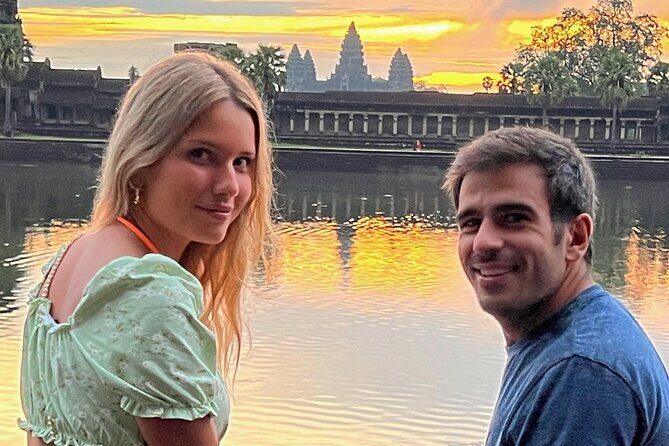
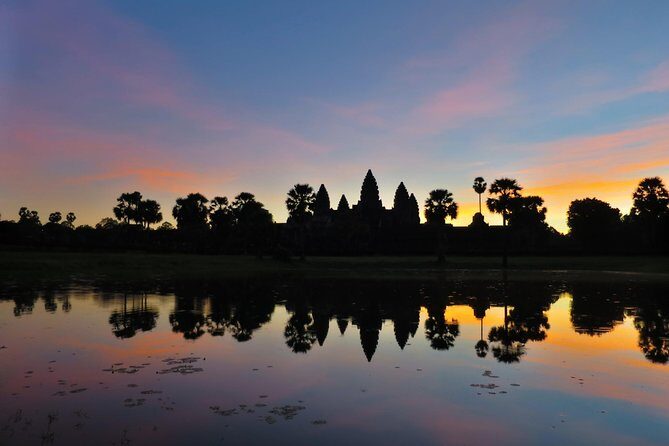
This tour starts at 4:30am pickup from your hotel, with the exact departure shifting between 4.30 and 4.45am depending on the time of year. That early departure is not for show. It’s how you reach Angkor Wat before it becomes a crowd stampede.
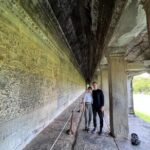
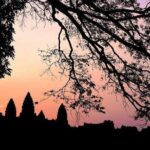
You’ll be heading to the temple area before sunrise, and then you’ll explore in low light. This is when Angkor Wat feels most cinematic: long corridors and stone surfaces look different when the sun has not yet burned off the mist.
One practical tip from the vibe of this tour: dress for movement in the dark and early morning. The dress code requires covering shoulders and knees, and the tour notes that a scarf can be used to cover your shoulders. Comfortable walking shoes matter here because you’ll be walking and standing at multiple stops over several hours.
Entering Angkor Wat from the eastern side before the crowds
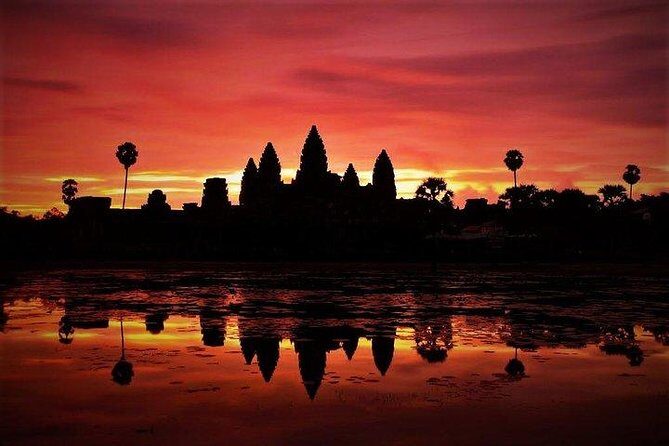
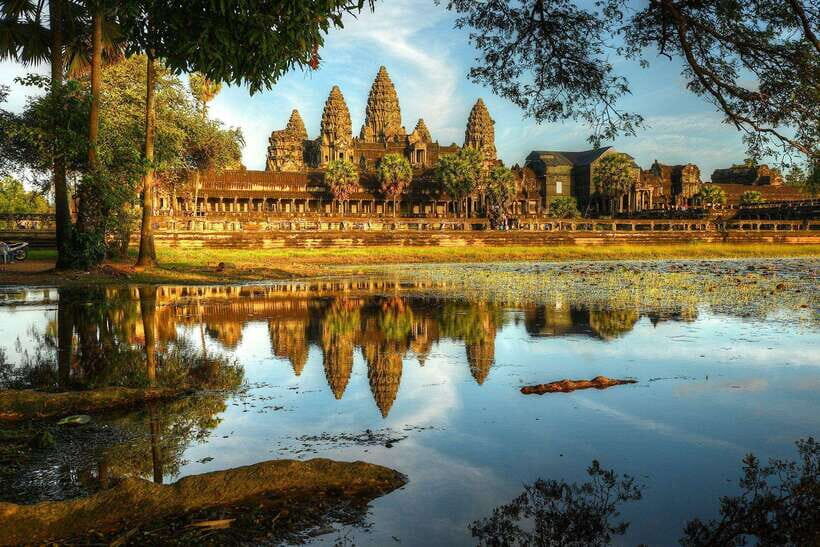
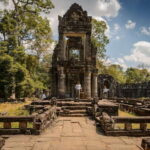
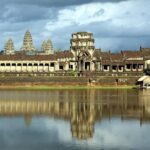
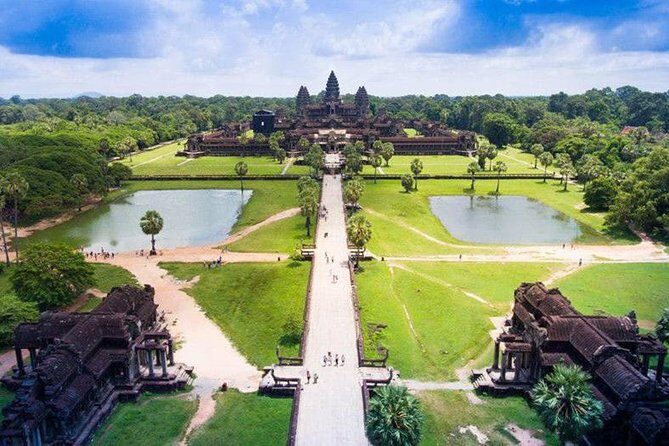
Angkor Wat is the core reason to do this day, and you start with it properly: pre-dawn entry, then time to watch the sunrise over the 11th-century temple. The tour route includes entering the temple in the dark from the eastern side, which helps you experience those first moments before the busiest daytime patterns fully form.
I love tours like this when they respect the building’s mood. In early light, the scale of Angkor Wat hits harder, and you get time to look at details instead of rushing past them while everyone swarms toward the same photo spot.
Expect about three hours at Angkor Wat. You’ll likely spend part of that time just getting your bearings inside the complex, then settle into slower viewing when sunrise actually breaks.
A downside to know in advance: the temple pass is separate, so even though the tour is timed for sunrise, you still need to handle entry payment directly at the site. It’s usually manageable, but it does add one more thing to do before you fully relax.
Angkor Thom’s south gate: best-preserved scale and a 50-meter causeway
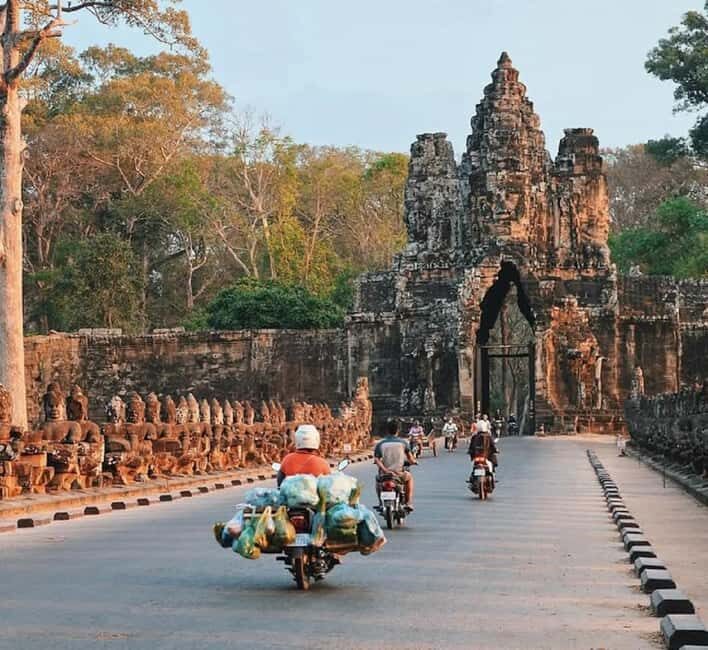
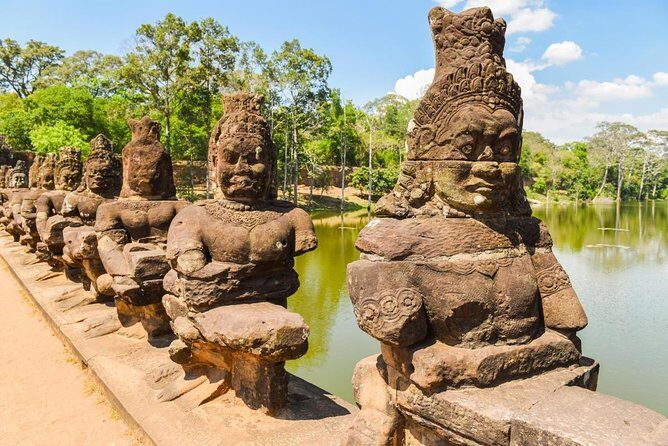
After Angkor Wat, you move into Angkor Thom, where the tour focuses on big visual anchors. One of the standouts is the south gate, described as the best preserved. You approach it via a causeway that runs about fifty meters across a moat, with carved stone railings along both sides.
This part is valuable because it sets expectations for Angkor Thom as a “city within temples.” You’re not only looking at stones; you’re walking the edges of how the Khmer capital was organized and defended.
The tour segment around this area is designed to keep you moving, so you get the feeling of stepping into a larger world instead of treating the complex like a few isolated photo stops. Still, if you’re someone who hates being time-managed, you may want to slow your pace at the gates and spend extra time with your guide before you get pulled toward the next viewpoint.
Bayon’s faces and the Terrace of the Elephants
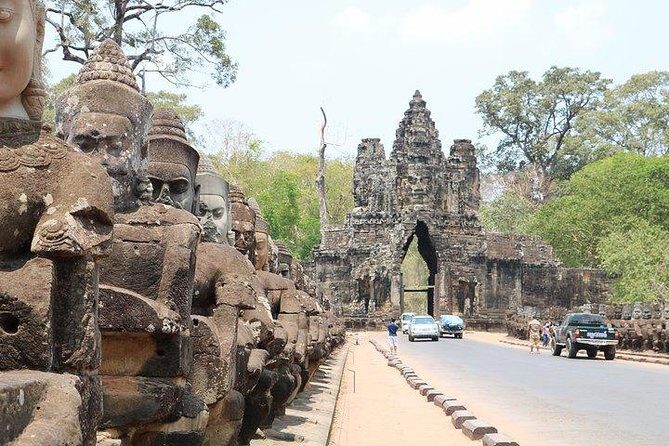
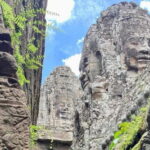
Next up is Bayon Temple, a major highlight of Angkor Thom, often recognized for its striking stone faces. You’ll have about two hours here, which is just enough time to understand why Bayon feels so intense: you keep seeing faces from different angles as you walk deeper into the structure.
This is also where a great guide makes a big difference. In the day’s theme, different guides bring out different layers—some focus on Khmer religion and the spiritual logic of the layout, while others connect the carvings to politics and daily life. Names that have stood out in this experience include guides like Sol, Setha, and Pi, who have shared context about Cambodia and the Khmer Empire along the way.
From Bayon, you’ll also cover the Terrace of the Elephants. The description for this terrace is specific: it’s about 350 meters long, and it was used as a giant reviewing stand for public ceremonies, serving as a base for the king’s grand audience hall. Even if you don’t memorize every architectural detail, the length and purpose help you “see” what the space was designed for.
The best way to enjoy this segment is to take a few slow minutes where the terrace lines open up. Then use the guide to point out what you’re looking at—because this terrace is meant to be read from certain positions.
Other Angkor Wat temple tours we've reviewed in Siem Reap

Ta Prohm’s roots: why this temple feels different
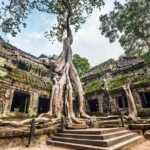
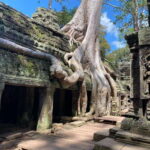
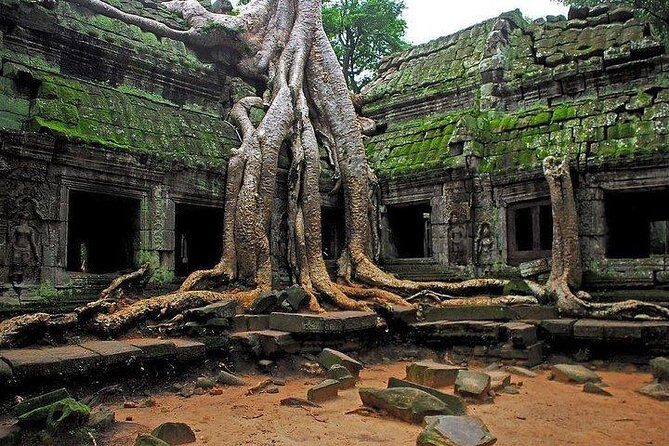
Ta Prohm is where the day shifts from built symmetry to dramatic chaos. The tour frames it as one of the most atmospheric temples in Angkor, and it’s easy to see why once you’re there. Ta Prohm was once home to 2,740 monks, and it still has the feel of an ancient site that got paused in time.
A detail I really like in the tour description is the backstory about French explorer Henri Mouhot, who is credited with rediscovering the crumbling site in the early 1850s. That adds a layer beyond the visuals. You’re not only seeing roots and stone—you’re seeing why this place became famous in the first place.
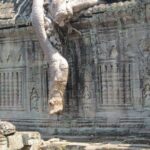
You’ll have about two hours at Ta Prohm. The highlight is how the roots weave around carved areas and bas reliefs, creating a “living” look that people often struggle to recreate in photos. The best moments here are usually the quiet ones—when you step slightly off the main flow and really look at the way the stonework meets the tree growth.
A practical note: this is also one of the places where respectful footwear and steady footing matter. There can be uneven ground and lots to look at while you walk.
Guide and driver quality: the difference between seeing and understanding
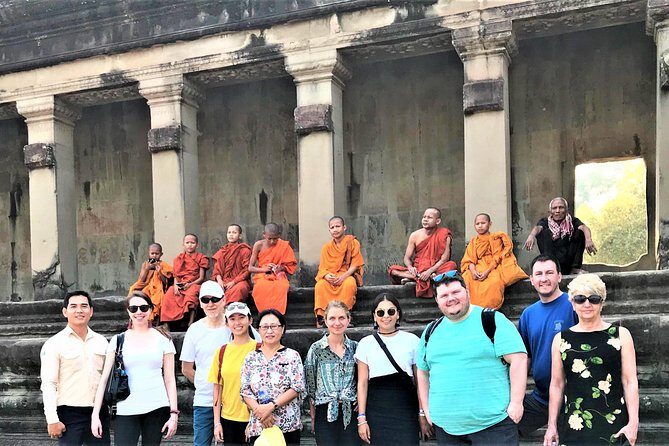
This tour’s strength is not just the temples. It’s the human layer that ties everything together. You’ll have an experienced and licensed English-speaking guide, and many guides in this experience are praised for making Cambodia feel real through stories, not just dates and architecture.
In the guide examples from this experience, you can see the range:
- Sok and Mao are praised for explaining social, economic, political, and spiritual history in a way that connects to what you’re standing in.
- Bun has been highlighted for sharing temple history plus personal stories about living in Cambodia.
- Minamol is noted for both guiding and helping with photos, which is handy when you want better angles without interrupting the flow.
- Sopeek has been mentioned as having previously lived as a monk, bringing a grounded perspective on religion.
- Pak uses an iPad to show differences between earlier views and modern conditions, which helps you “read” the ruins with more context.
- Nimol, Manath, Vantha, and Horn show up as frequent standouts for English clarity, smooth transport, and the ability to keep the day comfortable.
The value here is simple: when your guide can explain what you’re seeing, you stop treating Angkor like a checklist and start treating it like a story you’re walking through.
Comfort and logistics: what to pack and how to handle the day
Because this is a full-day temple route, comfort is your friend. The tour includes bottled water and a cool towel, which helps during early morning heat and long walks, but it doesn’t replace the need for a good base plan.
Here’s what you should plan around:
- Wear footwear meant for walking. This is not a sit-and-snap tour.
- Follow the dress code: shoulders and knees covered. A scarf can cover shoulders.
- If your hotel offers breakfast, the tour suggests requesting a breakfast pack so you can eat after sunrise at Angkor Wat rather than skipping food entirely.
You’ll also be using a mobile ticket, and hotel pickup/drop-off is included. That reduces stress, which is a big deal at 4:30am when your brain is still powering up.
For some added atmosphere, one review mentioned seeing wildlife like gibbons and water buffalo during the day. You can’t count on it, but it’s a nice reminder that the Angkor area isn’t only stone temples; it’s living countryside too.
Is this tour the right fit for you?
Choose this tour if you want:
- Sunrise at Angkor Wat with time to enjoy the temple in low light
- A single-day loop that covers Angkor Wat + Angkor Thom + Bayon + Terrace of the Elephants + Ta Prohm
- A guide who can explain the Khmer Empire story in practical, understandable ways
- A private setup where you’re not squeezed into a crowded group rhythm
Consider a different option if:
- You’re extremely sensitive to early mornings and long walking days
- You only care about one temple (like Angkor Wat sunrise) and don’t want the extra stops
- You’re not comfortable paying the $37 temple pass directly at the site
If you can handle an early wake-up, this tour is a strong way to cover the highlights without wasting daylight.
Should you book this Angkor Wat Sunrise Tour?
Yes, if your idea of a great day in Siem Reap is: early start, fewer crowds, and a guided run through the main Angkor landmarks. The pricing is fair for what’s included, and the day is structured to make sunrise and the big complexes happen in a smart order.
I’d book it especially if you want your visit to feel guided, not just filmed. When the guide is the kind who connects Khmer temple design to religion, politics, or daily life stories—like the people mentioned in this experience—you end up remembering the meaning, not just the photos.
FAQ
FAQ
What time is pickup for the Angkor Wat sunrise tour?
Pickup starts at 4:30am.
How long does the tour run?
The duration is about 8 hours.
Is the Angkor entrance fee included?
No. The temple pass is not included and is $37.00 per person. You pay directly at the site.
Where do I pay the temple pass, and can I use a card?
You can purchase the temple pass on the day of the tour just before sunrise, and visa cards are accepted.
What is included in the $26 tour price?
It includes a licensed English-speaking guide, an air-conditioned vehicle, bottled water, a cool towel, and hotel pickup and drop-off. It also uses a mobile ticket.
What is the dress code?
You need respectful dress that covers your shoulders and knees. The tour notes that shoulder coverage can be done using a scarf, and knees must be covered.
Is breakfast included?
Food and beverages are not included. If your hotel room includes breakfast, the tour recommends requesting a breakfast pack to eat after sunrise at Angkor Wat.
What is the cancellation policy?
You can cancel for a full refund if you cancel at least 24 hours before the experience start time.
Is this tour private?
Yes. It’s described as a private tour/activity, so only your group participates.