Waking up for Angkor Wat sounds wild, but it works. This 2-day tour strings together sunrise temples and the countryside around Phnom Kulen National Park, including a waterfall picnic. It’s the kind of plan that keeps your time tight while still getting you out of Siem Reap early enough to beat the worst crowds.
I love the big-ticket focus: the 4:30–5:00 am Angkor Wat sunrise and then a second day that moves beyond temple photos into river-and-waterfall scenery. I also like the practical comfort touches—A/C transport, cool water and towels, an English-speaking guide, plus breakfast and a picnic lunch.
One thing to consider: the schedule is early and active. You’ll be on your feet for multiple temple stops, including a jungle trek at Ta Prohm, so plan for long days and bring shoes that are already broken in.
In This Review
- Key highlights I’d prioritize
- A tight two-day plan that hits the big names without feeling rushed
- The 4:30–5:00 am Angkor Wat sunrise run
- Srah Srang, Pre Rup, and Ta Prohm: the perfect mix of calm, views, and jungle drama
- Angkor Thom highlights: Bayon and the terraces of elephants and the leper king
- Day 2 pickup at 8:00–8:30: trading temple crowds for Kulen countryside
- Poeng Ta Kho cliff views and the 1000 Lingas Sacred River area
- Preah Ang Thom reclining Buddha and the waterfall picnic that ends the day well
- Transportation, comfort, and why a small group changes your experience
- Price breakdown: what you pay, what you’ll still need, and why it can be good value
- Who should book this tour, and who should rethink it
- Should you book: my straight call
- FAQ
- What time is pickup for the Angkor Wat sunrise day?
- What is the pickup time for Day 2 at Phnom Kulen?
- Does the tour include tickets?
- What meals are included?
- Is an English-speaking guide provided?
- How big is the group?
- Can I cancel and get a full refund?
Key highlights I’d prioritize
- Sunrise at Angkor Wat with pre-dawn pickup timing to catch the sky show
- Small group size (max 14), which usually means less chaos at key photo spots
- English-speaking guiding with on-the-ground explanations at nearly every major temple
- Phnom Kulen National Park stops like Poeng Ta Kho and the Sacred River area
- Waterfall picnic lunch with local food, not just a quick snack
- Cool extras included: A/C van/minibus, bottled water, and towels
A tight two-day plan that hits the big names without feeling rushed
Siem Reap is famous for temples, and this tour commits to that. You’ll start with the most iconic sights around Angkor Wat and Angkor Thom, then shift to Phnom Kulen for cliff views, sacred sites, and a waterfall break.
What makes this combo feel smart is how it’s paced. Day 1 centers on temples grouped within the Angkor complex, while Day 2 is a different world—rural roads, forested viewpoints, and a meal at the end of it all.
This is also a good “decision-maker” tour. If you don’t want to spend your limited days figuring out which temples to prioritize, this plan does the sorting for you.
Other Angkor Wat temple tours we've reviewed in Siem Reap
The 4:30–5:00 am Angkor Wat sunrise run
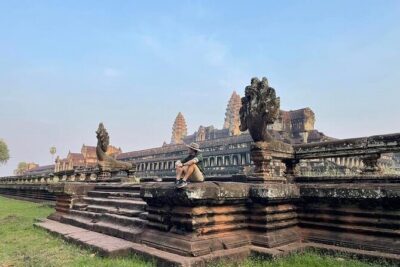
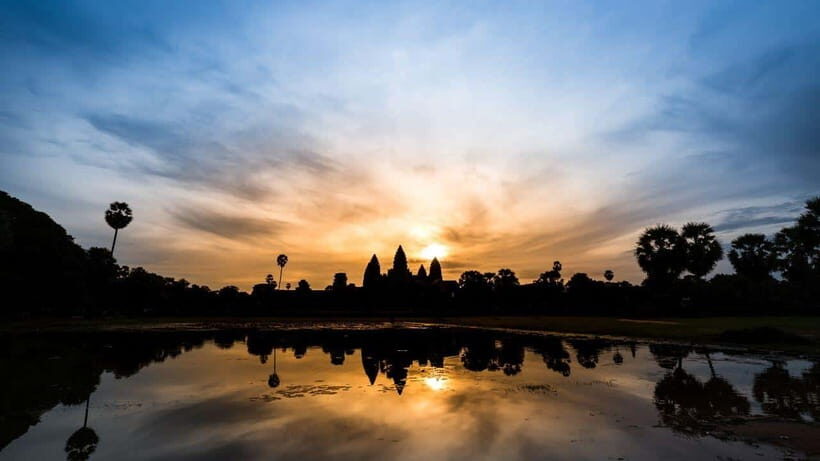
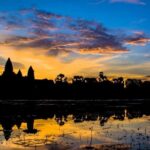
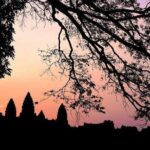
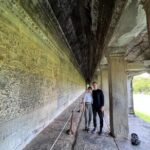
Your day starts before sunrise, with pickup from your hotel around 4:30 am to 5:00 am. The goal is simple: be at Angkor Wat early enough to watch the light change over the temple. That early arrival matters because you’ll see the structure differently than you do at midday—softer light, calmer pacing, and a better chance to take photos without fighting people.
Important detail: the Angkor Wat stop lists an admission ticket as not included, so you’ll want to be ready for the Angkor pass. The timing makes sense, though. You’re paying for the coordination—pickup, transport, and a guide to help you get oriented quickly once you arrive.
After sunrise, the day keeps moving to temple stops. So while sunrise is the headline, the tour doesn’t let the energy fade. You’ll stay in “temple mode” rather than switching into a slow sightseeing day.
Srah Srang, Pre Rup, and Ta Prohm: the perfect mix of calm, views, and jungle drama
Day 1 includes a thoughtful variety of temple experiences, not just the usual photo stops.
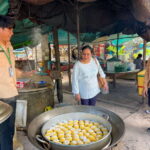
Srah Srang is the first refresh-and-refuel moment. You get a short break for breakfast with local food and dessert. The tour specifically calls out options like Khmer noodle soup, plus traditional desserts such as palm cake and steamed rice (listed as steam ric in the outline). This is a good moment to eat before the walking starts stacking up.
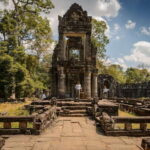
Next comes Pre Rup, described as the biggest brick temple in the Angkor area. This stop is typically appreciated for the feel of the structure and for the view potential from the temple terrain—one of those places where you can pause and take in the setting.
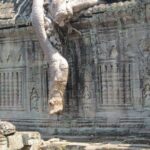
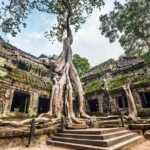
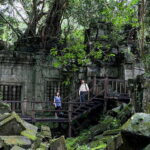
Then you hit Ta Prohm, known for the jungle-grown feel: huge tree roots and a temple left in its original state. The tour notes a trekking through the jungle temple vibe. The upside is atmosphere. The drawback is that it can be muddy or slippery depending on conditions, so good shoes aren’t optional if you want to enjoy this part instead of rushing through it.
Angkor Thom highlights: Bayon and the terraces of elephants and the leper king
After Ta Prohm, the plan shifts into the famous Angkor Thom area.
You’ll visit Bayon Temple, known for its smiling faces. This is one of those stops where your guide’s explanations help a lot, because the carvings and layout make more sense when someone points out what you’re looking at.
Then you get two terrace stops:
- Terrace of the Elephants, described as part of Angkor Thom’s walled city and used as a platform by King Jayavarman VII
- Terrace of the Leper King, in the northwest corner of the Royal Square area
These are short stops on the schedule, which is actually a good thing. They let you take in key details without turning Day 1 into a marathon of “yet another platform.” Still, if you’re into carving details, bring time mentally. The terraces reward slow looking.
Finally, you wrap Day 1 at the Angkor Thom South Gate. It’s a world-famous landmark built by Jayavarman VII, and the tour notes his link to Mahayana Buddhism. That’s the kind of context that turns a gate from just a photo background into something with meaning.
Day 2 pickup at 8:00–8:30: trading temple crowds for Kulen countryside
Day 2 starts later, with pickup around 8:00 am to 8:30 am. You’ll head to Phnom Kulen National Park and travel through rural areas, with time to observe local daily life along the way.
The best part of Day 2 is the shift in scenery. Instead of a single monumental complex, you get a mix of sacred places, viewpoints, and water. It’s more varied for your senses, which helps after the early-morning intensity of Day 1.
And yes, it’s still a guided day—so you’re not just riding in a van and hoping for the best. The plan includes specific stops where you’ll actually get out and look around.
Other Kulen Mountain and waterfall tours we've reviewed in Siem Reap
Poeng Ta Kho cliff views and the 1000 Lingas Sacred River area
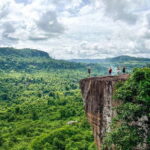
Inside Phnom Kulen, the itinerary includes Poeng Ta Kho (listed as an amazing cliff). The focus here is the commanding views—emerald jungles and mountain peaks below. Even if you’re not a “views person,” this stop works because it changes the angle from Angkor’s flat temple geometry to a more dramatic vertical perspective.
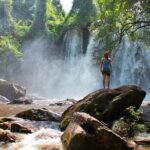
Next is 1000 Lingas, described as a Sacred River carved with ancient Hindu symbols from the 9th century, plus multi-level falls where you can cool off and swim (the outline says ideal for refreshing swims and riverside dining). Even if you don’t plan to swim, this is a strong stop because it’s about scale: carved sacred markings plus active water.
This is also where you’ll appreciate the tour’s structure. The day avoids the trap of only hitting one “big” place. Instead, you get a cliff, then a sacred water area, then more temple stops.
Preah Ang Thom reclining Buddha and the waterfall picnic that ends the day well
After 1000 Lingas, you visit Preah Ang Thom pagoda, noted for the largest 16th-century reclining Buddha statue in Cambodia. The guide’s job here is mostly interpretation—so you understand what you’re looking at rather than just snapping a pic and moving on.
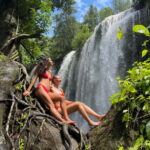
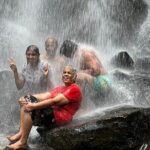
Then comes the payoff: Phnom Kulen Waterfall. You’ll enjoy a picnic with local food here, with the tour listing the picnic as included on Day 2. This meal timing matters. Eating at the waterfall shifts the day from sightseeing into a real break, and it’s one of the few “sit down and breathe” moments built into the schedule.
The waterfall stop also helps balance the earlier walking. If Day 1 is all temples and stone, Day 2 gives you more fluid, outdoor time—fresh air, sound of water, and a meal that feels connected to the place.
Transportation, comfort, and why a small group changes your experience
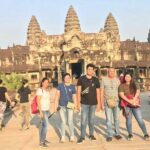
This tour runs with a maximum of 14 travelers, which I think is a big quality factor. At Angkor sites, crowds can turn even the best plan into a squeeze. A smaller group usually means less waiting and more chances to hear your guide without shouting.
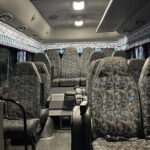
You also get A/C transport (minivan/minibus), plus a cool bottle of water and towels. Those small items matter when you start at dawn and then spend the day under heat. The tour also includes breakfast on Day 1 and the picnic lunch on Day 2, which keeps you from hunting down food with hungry timing stress.
On guiding: the tour is run with a professional English-speaking guide, and named guides like Seila, Sam Made, Mony/Moni, Sotin, David, and Ho show up in the guide descriptions people have shared. What stands out in those descriptions is patience—taking time to explain what you’re seeing as you move, not just racing to the next stop. If you like photos, you’ll also want to watch for guides who help with that aspect; a couple of experiences mention Mony/Moni as especially helpful for getting good pictures.
Price breakdown: what you pay, what you’ll still need, and why it can be good value
The tour price is $79 per person, for about 2 days of guiding, A/C transport, breakfast and picnic, and water/towels. It also includes a Kulen Mountain admission ticket.
What’s not included is important: the Angkor pass is $37 per person, and soft drinks are not included. The Angkor-related stops list admission tickets as not included (including Angkor Wat), which strongly signals that you should budget for the pass rather than expecting tickets handed to you.
So in practical terms, you’re looking at roughly $116 total per person for the core tour plus the Angkor pass, before any drinks and any extras you choose.
Is that good value? For me, it checks out if you want:
- sunrise timing without stress
- a full day of organized Angkor Thom + major temples
- a second day that covers Phnom Kulen and ends at a waterfall picnic
- an English-speaking guide plus included meals
If you already have the Angkor pass and you’re comfortable piecing together transport and timing on your own, you might save a bit. But if you want your days to feel planned rather than improvised, this package-style setup is the convenience you’re paying for.
Who should book this tour, and who should rethink it
I’d steer you toward this tour if you:
- want sunrise Angkor Wat as a priority
- like guided context as you walk (rather than just following signs)
- want a second day outside the temple circuit, in Phnom Kulen nature
- appreciate an organized meal moment, especially the waterfall picnic
I’d be a little cautious if:
- early mornings are a tough sell for you (Day 1 pickup is 4:30–5:00 am)
- you hate uneven ground and roots (Ta Prohm includes a jungle-style trekking feel)
- you want total free time to wander off-script (this tour is structured, and that’s the point)
The good news is the tour notes that most people can participate. Still, bring a realistic mindset: you’re doing a lot of sightseeing in two compact days.
Should you book: my straight call
Book it if you want a low-stress, high-coverage plan that hits the big Angkor sights early and then gives you Phnom Kulen’s water-and-view variety the next day. The included breakfast and picnic are the kind of details that make a difference when you’re moving all day, and the small-group cap helps keep things manageable at crowded spots.
Skip (or compare options) if you’re only chasing one temple and want lots of downtime, or if you know you’ll struggle with a very early start.
If you can handle sunrise and walking, this is a strong value way to see two of Cambodia’s most memorable experiences in one tight package.
FAQ
What time is pickup for the Angkor Wat sunrise day?
Pickup starts between 4:30 am and 5:00 am for the sunrise over Angkor Wat.
What is the pickup time for Day 2 at Phnom Kulen?
Pickup for Day 2 is between 8:00 am and 8:30 am.
Does the tour include tickets?
The tour includes a Kulen Mountain admission ticket. The Angkor pass is not included and is listed as $37 per person.
What meals are included?
Breakfast is included on Day 1, and a picnic lunch with local food is included on Day 2.
Is an English-speaking guide provided?
Yes. The tour includes a professional English-speaking tour guide.
How big is the group?
The maximum group size is listed as 14 travelers.
Can I cancel and get a full refund?
Yes, free cancellation is offered up to 24 hours in advance of the experience start time for a full refund.