REVIEW · SIEM REAP
Siem Reap: Angkor Wat Small-Group Day Tour and Sunset
Book on GetYourGuide →Operated by BREKSA TRAVEL · Bookable on GetYourGuide
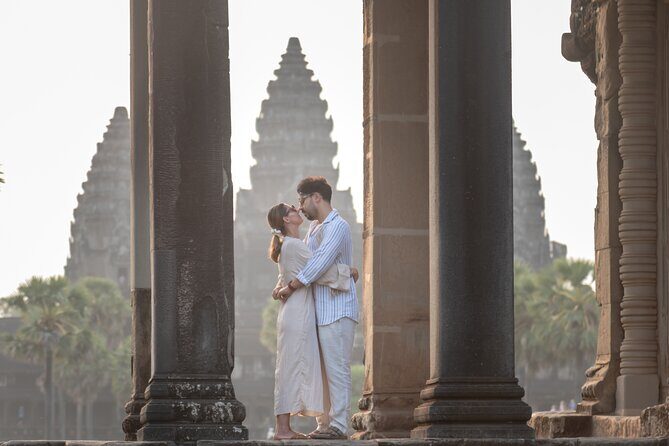
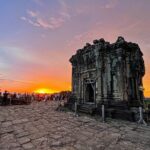
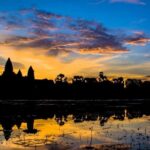
Angkor Wat at sunset stops time. This Siem Reap day tour strings together Angkor Thom, Ta Prohm, and Angkor Wat, then finishes with a climb for sunset at Phnom Bakheng.
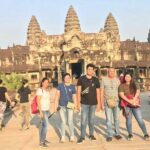
I love how the route keeps you moving through the big names without making you feel lost. I also like the small-group feel, capped at 14 people, which makes it easier to ask questions and get photo help.
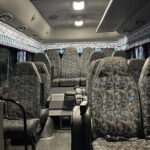
My other favorite part is the comfort: A/C transport, cool water, and towels through a long day. You’ll also get an English-speaking guide who points out what to look for at each temple, like the Bayon face towers and the Vishnu details at Angkor Wat. One drawback to plan for: it’s a long 10-hour outing in warm weather, with a dress code that requires knees and shoulders covered.
In This Review
- Key moments that make this tour worth your time
- A smart 10-hour plan that actually helps you see Angkor
- Morning pickup and the Angkor pass you need first
- Angkor Thom: South Gate, Bayon faces, and the terraces that tell stories
- Ta Prohm: jungle temple energy without the guesswork
- Lunch break plus Phum Preah Dak: palm cake and palm sugar
- Angkor Wat in the afternoon: Vishnu, carvings, and the moat
- Phnom Bakheng sunset: the climb, the timing, and what to expect
- Price and value: what $28 really buys, plus the pass
- Guides, drivers, and comfort in the Cambodian heat
- Dress code and practical tips so you don’t waste time
- Who this tour suits best (and who might want another option)
- Should you book this Angkor Wat small-group day tour?
- FAQ
- Is the Angkor temple pass included?
- What time does hotel pickup happen?
- How big is the small-group tour?
- Does the tour include lunch, and is there a vegetarian option?
- Which temples and sights are visited?
- Is the tour guide language English?
- What’s included in the tour price?
- What should I bring for the day?
- What clothing is allowed at the temples?
Key moments that make this tour worth your time
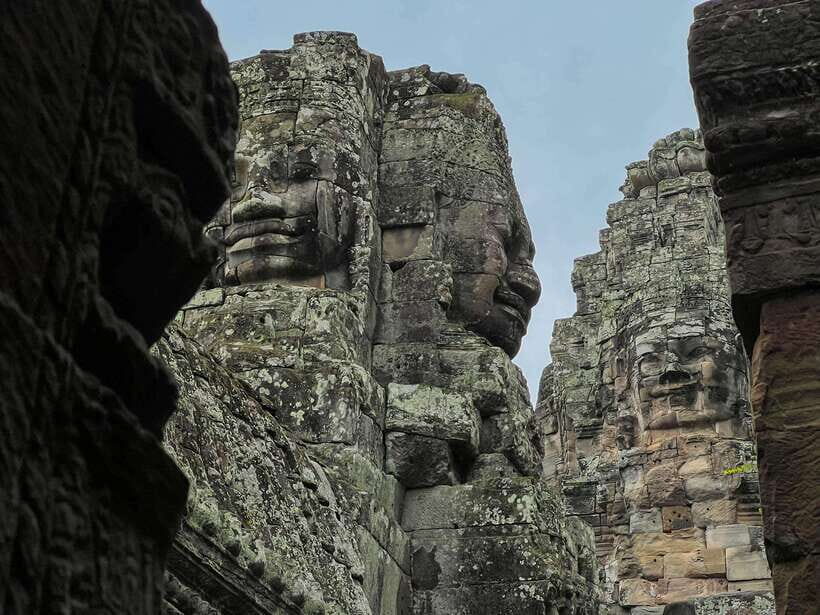
- All the essentials in one day: South Gate, Bayon faces, Elephant and Leper King terraces, Ta Prohm, Angkor Wat, and sunset at Phnom Bakheng
- Small group size (max 14): easier pace control and more attention from the guide
- Comfort included: A/C van or minibus plus cool bottle water and towels
- Ta Prohm in its original look: trees, roots, and a film-famous vibe
- Village time at Phum Preah Dak: palm cake and palm sugar making
- Sunset viewpoint at Phnom Bakheng: the climb is part of the payoff
A smart 10-hour plan that actually helps you see Angkor
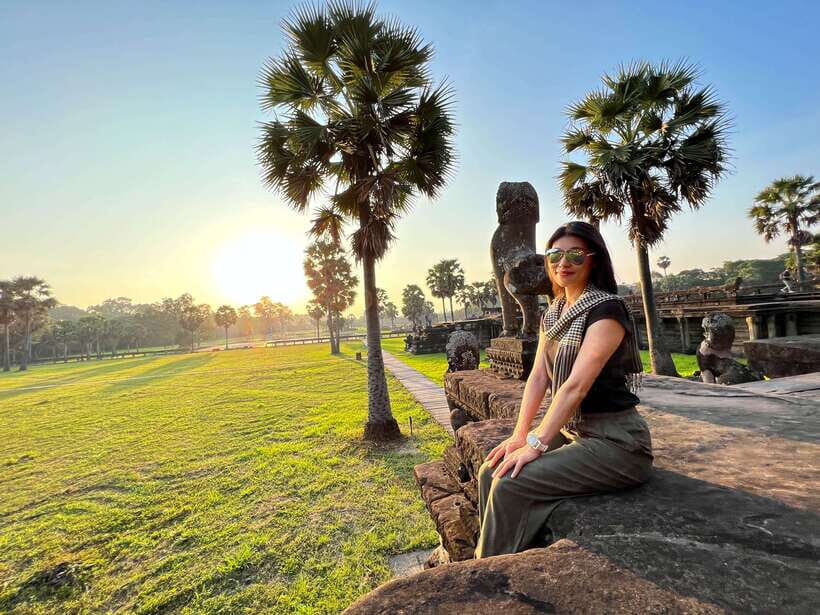
This is the kind of Angkor day that makes sense if you only have one full day in Siem Reap. You start early, hit Angkor Thom and Ta Prohm before lunch, then save the heaviest temple wow-factor for later with Angkor Wat. Then you end with the sunset climb, which keeps the day from feeling like nonstop walking without payoff.
The schedule also matters because Angkor sites can get crowded, hot, and overwhelming. With a guide taking the lead, you get the story of what you’re standing in front of, not just postcard views. It turns the day from a checklist into something you can follow.
Other Angkor Wat sunset tours we've reviewed in Siem Reap
Morning pickup and the Angkor pass you need first
Pickup runs from about 8:00 to 8:30 a.m. You’ll wait in the lobby about 10 minutes before the scheduled time. The tour goes straight to buy the Angkor temple pass first, so you’re not scrambling later when you’d rather be looking at stonework.
Two practical points here:
- The pass is not included. It costs US$37 per person.
- Everyone needs a pass before you start the temple circuit, so plan for that cost up front.
If you’re trying to budget, this changes the real price of the experience. The tour itself is listed at $28 per person, but your total temple spend also includes the pass. In return, you get a full day with guide-led visits and transport that covers multiple major sites.
Angkor Thom: South Gate, Bayon faces, and the terraces that tell stories
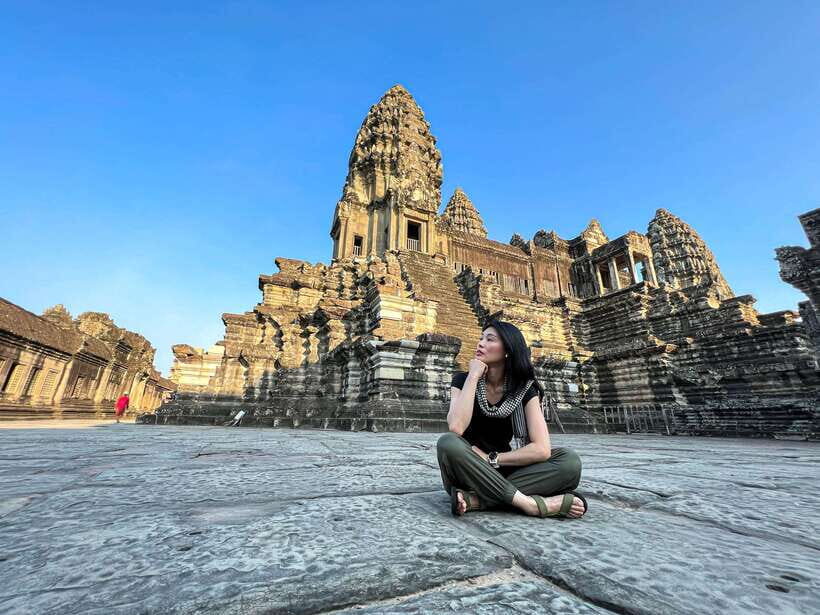
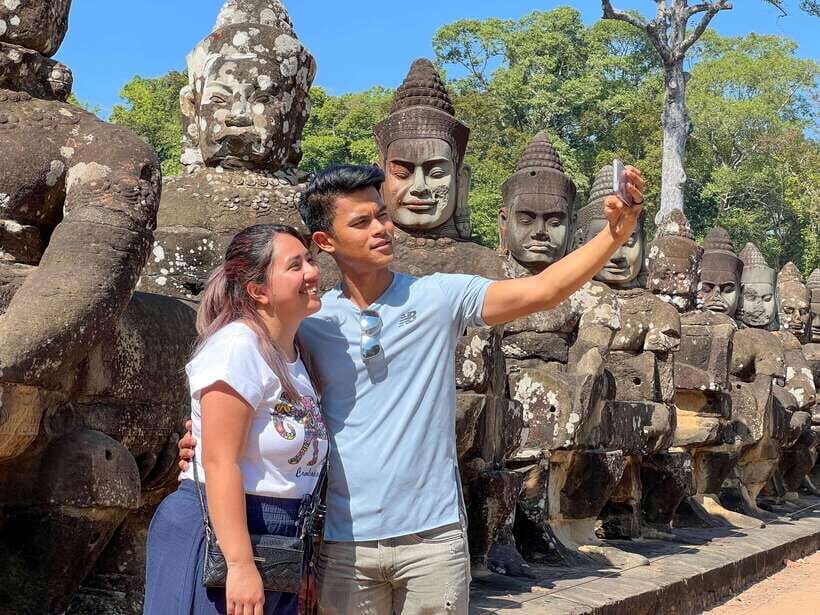
Angkor Thom is the fortified Great Royal City built in the 12th century, and it’s a big stage for Khmer power and belief. You’ll start at the South Gate, where you can see the imposing statue of Avalokiteshvara that shows up in the Tomb Raider movie. It’s one of those moments where film memory helps you orient in a real setting.
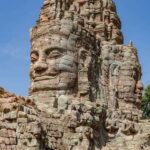
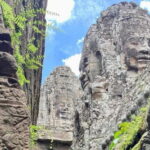
Next comes Bayon, the Buddhist-style temple famous for hundreds of stone faces. When you’re there in person, the scale hits you fast. A good guide makes this more than wow-you-stare stonework by explaining what the faces mean and how the layout works. This matters because Bayon is visually dense, and without context it can blur into one busy scene.
After Bayon, you’ll move through standout areas inside Angkor Thom, including:
- Terrace of Elephants, part of the former royal palace complex
- Phimeanakas
- Terrace of Leper King
- Baphoun, described as the largest Hindu temple in Angkor Thom
The terraces are where stone carving turns into a history lesson you can walk through. The best part is that this isn’t just architecture spotting. You’re learning how these spaces functioned as royal space, religious space, and ceremonial space.
Ta Prohm: jungle temple energy without the guesswork
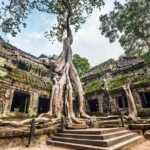
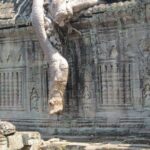
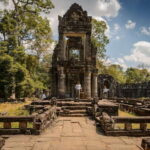
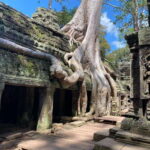
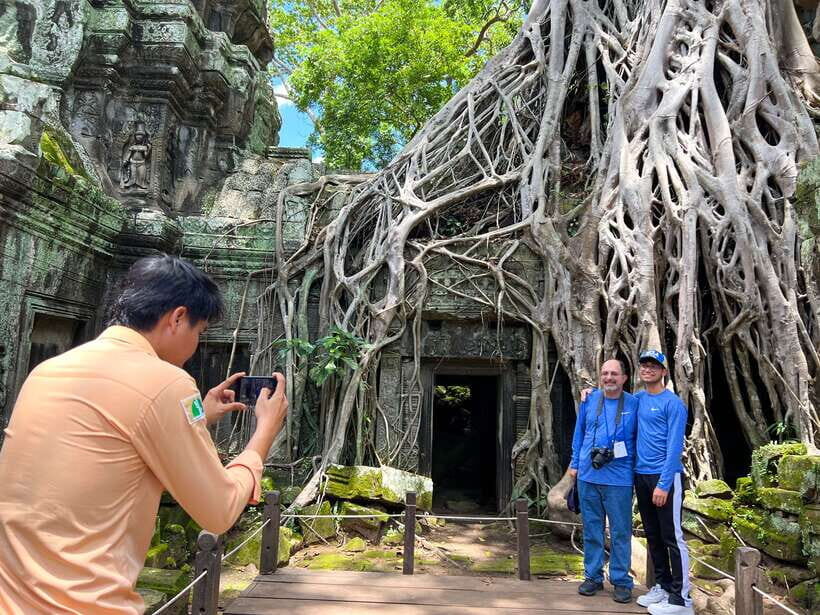
After Angkor Thom, the day shifts to Ta Prohm, the jungle temple left in its original state with trees and massive roots woven into the ruins. It has that film-set feeling for a reason: it was used as a backdrop for Tomb Raider starring Angelina Jolie.
What you’ll enjoy here is the contrast. Angkor Thom feels formal and built like a statement. Ta Prohm feels like time working its way back into the stones. The guide’s explanations help you understand why the site looks this way today, instead of just treating it like a dramatic ruin.
You’ll also notice that Ta Prohm tends to be more visually chaotic than the “clean lines” temples. That’s why an organized route helps. You won’t waste time wandering toward the most crowded angles if your guide knows which corners are most worth your time for photos and views.
Lunch break plus Phum Preah Dak: palm cake and palm sugar
By midday, you need more than sightseeing stamina. Lunch is included at a local restaurant, cooked by a local chef, and there is a vegetarian option if you tell the operator in advance.
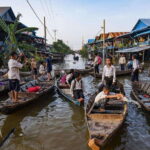
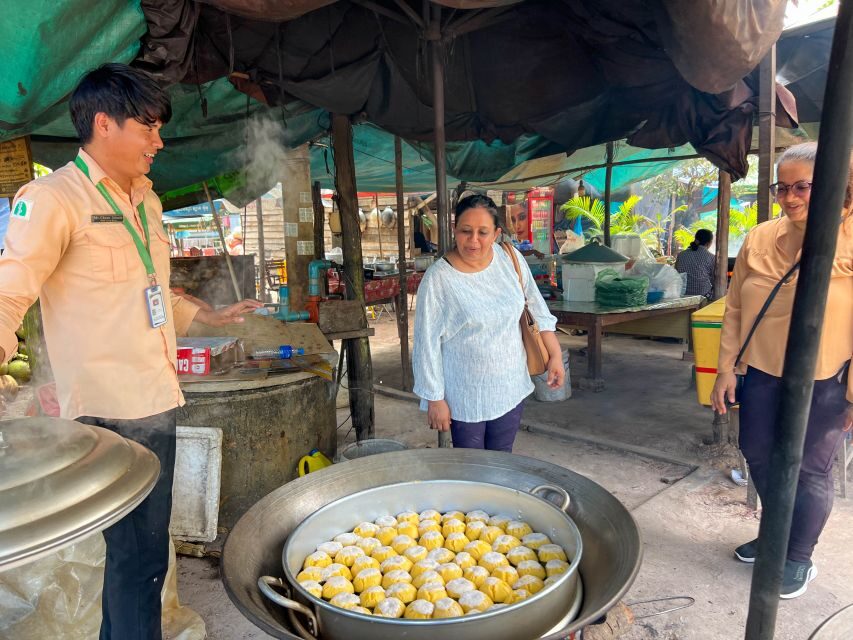
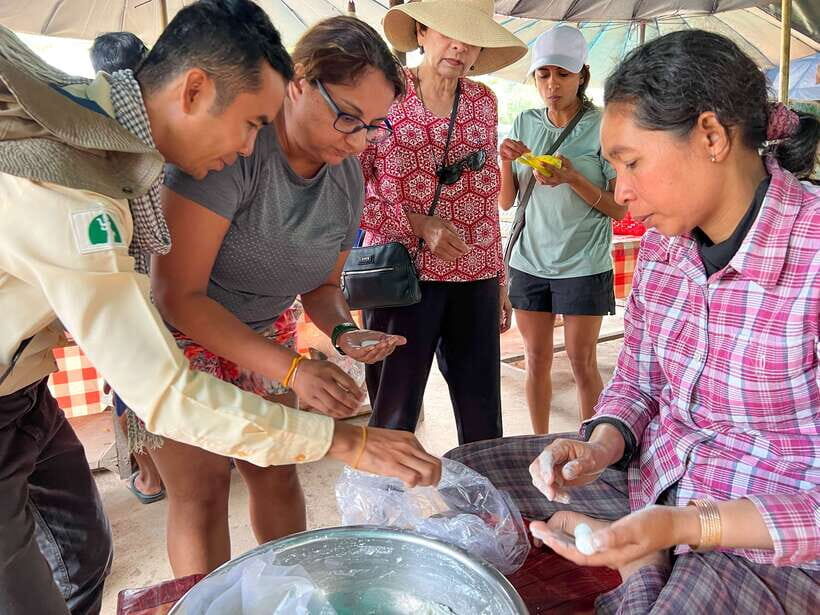
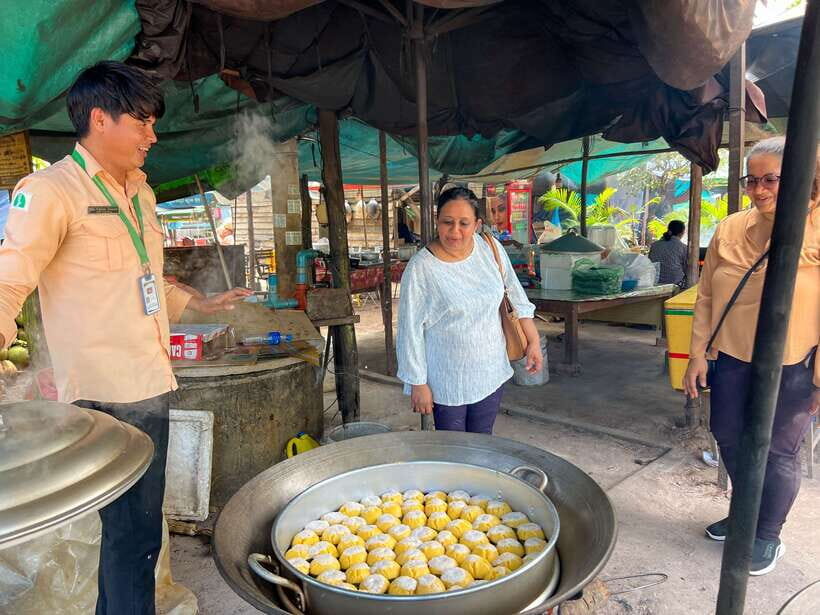
Then the tour adds something that’s genuinely useful beyond temple photos: Phum Preah Dak village time. This stop focuses on local making skills, including how people make palm cake and palm sugar. It’s a chance to see daily life tied to the same region that produced the Khmer temples.
I like this village portion because it changes the tempo of the day. Temples can run together when you only talk about stone and dates. Here you get hands-on context: food production, simple tools, and the real human scale behind everything you came to photograph.
The highlight list also mentions a local market stop. Even without deep detail, the purpose is clear: you get a taste of the everyday economy around Siem Reap, not only the ticketed monuments.
Other Angkor Wat temple tours we've reviewed in Siem Reap
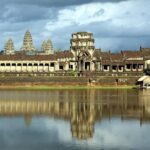
Angkor Wat in the afternoon: Vishnu, carvings, and the moat
Angkor Wat is where the day aims its biggest spotlight. The tour visits it in the afternoon after you’ve already built context at Angkor Thom and Ta Prohm.
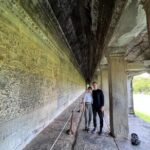
You’ll learn that Angkor Wat is dedicated to Vishnu and was built by King Suyavarman. It’s described as the largest sacred building on the planet and one of the Khmer civilization’s biggest icons. The details that matter on site include:
- the hundreds of decorations covering walls
- the longest bas-relief in the world
- the giant moat around the complex
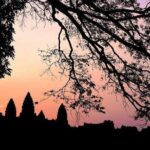
- the five towers that match parts of the Cambodian flag
A guide can also help you read the temple visually. Angkor Wat is huge, and you can miss the stories carved into its surfaces if you only scan for the prettiest angles. The value here is that someone points out what’s on your path and why it’s placed there.
You also get a jungle view from the towers. That’s the kind of moment where you feel the scale of the site beyond the stones themselves.
Phnom Bakheng sunset: the climb, the timing, and what to expect
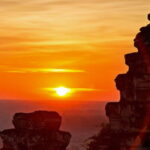
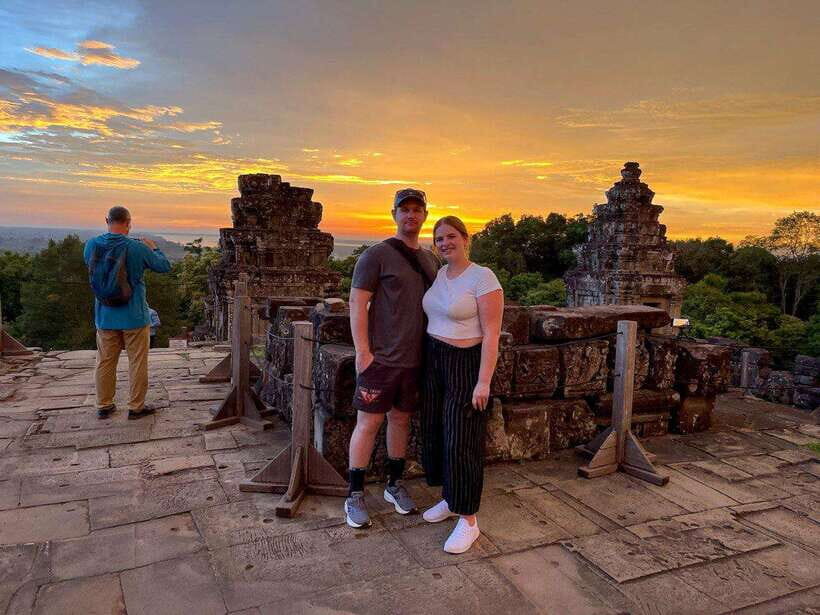
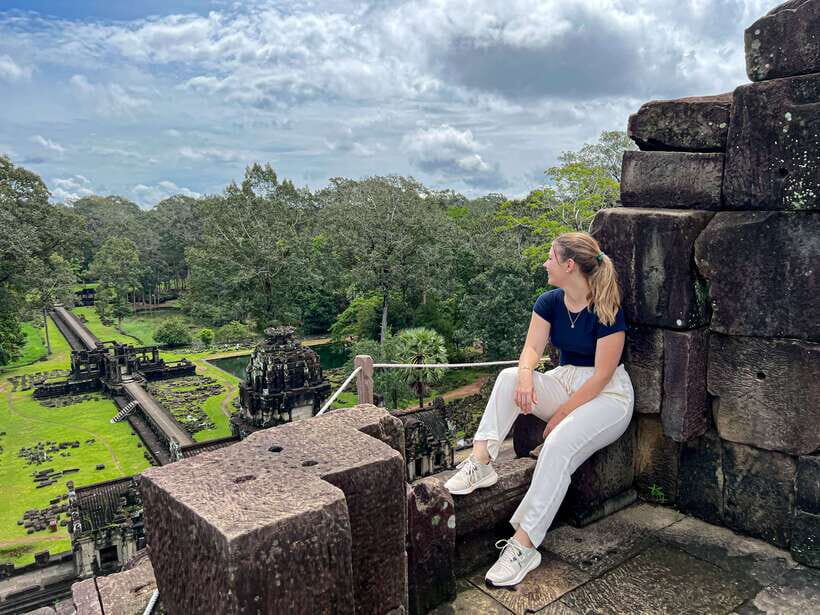
The day finishes with sunset at Phnom Bakheng. This is a climb, and it’s also a crowd magnet in peak season, so it helps to have a guide coordinating the pace and timing.
What I like about this ending is that it makes the temples feel connected. You’re not just moving from one ticketed stop to another. You’re building to a “big closing scene” that ties the day together with light, heat fading, and a wide view over the temple zone.
Plan your gear like a pro:
- Bring a hat and sunscreen
- Wear sunglasses
- Consider an umbrella if rain is in the forecast
- Bring insect repellent, especially for the village and garden areas
Also note the tour has a clear dress code: knee and shoulder coverage is required. Long day plus sun means you want breathable clothing that still fits the rules.
Price and value: what $28 really buys, plus the pass
The listed tour price is $28 per person. But to judge value, you have to include the biggest extra cost: the Angkor pass at $37 per person (not included).
What you get for the tour fee:
- A professional English-speaking tour guide and driver
- A/C transportation (minivan/minibus)
- Hotel pickup and drop-off
- Cool bottled water and towels
- Lunch with vegetarian option
So the value equation is basically this: you’re paying for guided time and transport across multiple major Angkor sites, plus included comfort items that matter in real heat.
If you’re doing Angkor in your own tuk-tuk and trying to arrange everything yourself, the cost can swing higher once you factor in passes, time spent negotiating, and the risk of missing the stories that a guide explains. If you’re here for one day and want the maximum payoff per hour, this price structure makes sense.
Guides, drivers, and comfort in the Cambodian heat
This tour has a clear pattern of service. You should expect a guide who explains what you see in plain English, and drivers who keep things safe and smooth across multiple temple stops.
In the experience you’re likely to get, guide names like Mony, Makara, Saroun, Jan, David, and Veasna show up often. Some guides are also known for helping with photos, which is a real quality-of-life perk when the sites are crowded and angles are tricky.
On comfort, drivers and guides do more than just drive. Many trips include cool towels and ice-cold water at key moments. One guide, Mony, is specifically credited with bringing Cambodian spring rolls as a cooling treat during rides. Even if the exact snack changes by day, the emphasis on cooling support is consistent.
And that’s not a minor detail. Walking Angkor temples all day can wipe you out. You’ll be happier when the tour keeps you hydrated and breaks the heat stress at regular points.
Dress code and practical tips so you don’t waste time
The rules here are straightforward:
- Shorts are not allowed, and knees must be covered.
- Shoulders must be covered.
- Short skirts are also not allowed.
Bring what the tour asks for:
- camera
- sunscreen
- sunglasses
- insect repellent
- comfortable shoes (this comes up as a must)
- sun hat, and an umbrella if you want weather cover
You’ll also want a lightweight layer. Angkor days can swing between bright sun and windy temple viewpoints. If you’re comfortable, you’ll move with less stress and notice more details.
Who this tour suits best (and who might want another option)
This is a great match if you:
- have one day to cover Angkor’s biggest hits
- want English guidance so the carvings and layout make sense
- care about comfort during a long day
- like the extra cultural stop at Phum Preah Dak
It’s not a great match if you:
- are traveling with children under 10 (not suitable for the small-group option)
- are over 70 (not suitable)
- need a fully relaxed pace with no long walking or climbing, since you do end with a sunset climb at Phnom Bakheng
Also, keep in mind the day’s length. If you’re sensitive to heat, you’ll still want to do it, but you should take the gear recommendations seriously.
Should you book this Angkor Wat small-group day tour?
I’d book it if you want the biggest Angkor day in the most organized way possible: Angkor Thom, Ta Prohm, Angkor Wat, plus a real sunset ending at Phnom Bakheng, with lunch and village time added in. The small-group cap of 14 people is a strong bonus because it helps the guide keep things human-sized rather than rushed.
I’d pause and compare if you’re looking for a very gentle day, or if the dress code sounds like it will force you into uncomfortable clothes. Also, make sure you’re ready for the extra cost of the US$37 Angkor pass on top of the tour price.
If you’re the type of traveler who wants stories, structure, and fewer guesswork moments, this tour style is a solid fit for Siem Reap.
FAQ
Is the Angkor temple pass included?
No. The Angkor temple pass is not included. It costs US$37 per person, and you need it before starting the temple portion of the tour.
What time does hotel pickup happen?
Pickup is included and typically happens between 8:00 a.m. and 8:30 a.m. Wait about 10 minutes in your hotel lobby before the pickup time.
How big is the small-group tour?
The small-group experience is limited to 14 participants to keep it more personal.
Does the tour include lunch, and is there a vegetarian option?
Yes. Lunch is included, and there is a vegetarian option if you let the operator know in advance.
Which temples and sights are visited?
You’ll visit Angkor Thom (including Bayon, Terrace of Elephants, Phimeanakas, Terrace of Leper King, and Baphoun), Ta Prohm, Angkor Wat, plus sunset on Phnom Bakheng. The day also includes the Phum Preah Dak village experience and a local market stop.
Is the tour guide language English?
Yes. The tour includes a live English-speaking guide.
What’s included in the tour price?
Included items are the English-speaking guide and driver, A/C transportation, hotel pickup and drop-off, cool bottle of water and towels, and lunch (with vegetarian option).
What should I bring for the day?
Bring sunglasses, sunscreen, a sun hat, an umbrella, and camera. Insect repellent is also recommended. Comfortable shoes are important for walking.
What clothing is allowed at the temples?
The dress code requires covered knees and shoulders. Shorts and short skirts are not allowed.