REVIEW · SIEM REAP
The Ultimate Angkor Wat Temple Private Day Trip
Book on Viator →Operated by Withlocals · Bookable on Viator
Angkor Wat feels different when it’s not crowded. This private day trip is built for a calmer visit, with a local tuk-tuk ride and a guide who explains what you’re actually seeing. I like the way the private setup keeps the day flexible and not jammed to the rhythm of big tour bus crowds.
What really makes this work is the focus on temples as living stories, not just photo stops. If you’re lucky enough to get a guide like Long, you’ll get a ton of temple context and clear explanations, and the same goes for guides like Leap, who was praised for friendly, smooth guiding.
One thing to keep an eye on: entrance costs and lunch are not included, and the fine print can be a little confusing because the temple stops are shown as admission ticket free while the tour summary says entrance isn’t included. Also, the day is about 7 hours and involves walking and stairs, so wear good shoes and bring a little patience.
In This Review
- Key highlights before you go
- Why this Angkor Wat day trip feels less like a factory tour
- Value and pricing: what you’re really paying for
- The logistics that actually matter: time, comfort, and what to bring
- Stop 1: Angkor Wat and the bas-relief story behind the carvings
- Stop 2: Bayon Temple’s south gate, causeway, and the face-first moment
- Stop 3: Ta Prohm’s jungle-temple feel, with time to look twice
- What the guides do that you’ll feel immediately
- Tickets, entry fees, and the lunch gap: plan around what’s missing
- Who this private Angkor Wat day trip is best for
- A possible drawback to weigh
- Should you book this private Angkor Wat day trip?
- FAQ
- How long is the private Angkor Wat day trip?
- What temples are included in the day?
- Is pickup and drop-off included?
- What transportation do I use during the tour?
- Are entrance tickets included?
- Is lunch provided?
Key highlights before you go
- Private guide, private group: you’re not sharing commentary with strangers.
- Tuk-tuk transportation: easy hopping between the main sights at a human pace.
- Angkor Wat carvings with meaning: you get the “what am I looking at” answers.
- Bayon’s south gate and stone figures: long enough here to see beyond the first famous faces.
- Ta Prohm’s tree-and-stone drama: a moody stop that rewards slow looking.
- Mobile ticket included: less hassle on the day, even if plans shift slightly.
Why this Angkor Wat day trip feels less like a factory tour
Angkor Wat is famous for a reason. But when you visit it the standard way, it can start to feel like a timed exercise: arrive, snap, move, repeat. This private format changes the pace. Instead of being pushed through by a bus schedule, you get to slow down when something catches your eye, and you can ask your guide for details without feeling like you’re holding up a line.
The tuk-tuk matters too. It’s not only fun. It’s practical. You can move efficiently between sites while keeping the day grounded in the real geography of the Angkor area, rather than playing “where’s the next bus stop.”
And because this is carbon-neutral and designed to avoid standard tourist routes, the overall feel is calmer. I’m not saying you’ll feel totally alone (it’s Angkor, after all). I am saying you’re more likely to experience the temples with breathing room.
Other Angkor Wat temple tours we've reviewed in Siem Reap


Value and pricing: what you’re really paying for

At $64.03 per person for a roughly 7-hour private temple circuit, the price is about what you’d expect for a day that includes a private guide plus local transport. The value isn’t just the vehicle and guide, though those are the big-ticket items. The best part is the “turning the key” effect: your guide helps you understand bas-reliefs, temple symbolism, and the way the temples are laid out.
That kind of context can be the difference between:
- I walked through a temple, versus
- I understood why this wall looks like that, and why this arrangement matters.
Also, you get pickup and drop-off, which saves you time and decision-making. In Siem Reap, that’s not a small comfort.
One more detail: group discounts are mentioned. If you have friends who want to share the day, that can make the price even easier to justify.
The logistics that actually matter: time, comfort, and what to bring
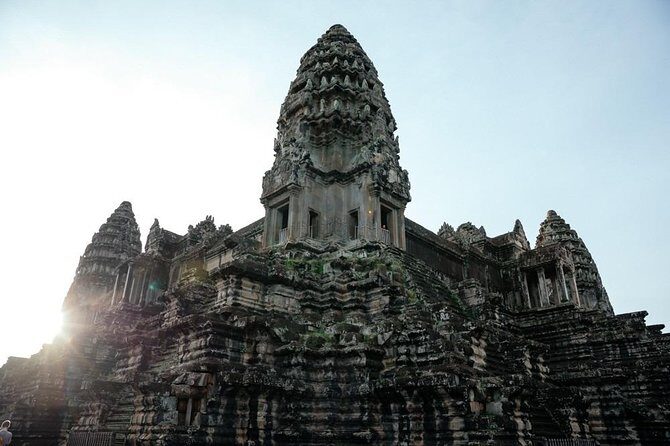
The day is designed to be doable, but it isn’t a sit-and-watch tour. You’ll spend hours walking through temple grounds, plus you may deal with uneven stone surfaces and steps. The info also notes moderate physical fitness is recommended. So I treat this as a comfortable-but-active day.
Bring the basics:
- Comfortable shoes with grip
- Water and a hat or cap
- Sun protection (Angkor can be bright)
- A small bag for essentials (you’ll be moving around a lot)
If you’re the type who hates waiting, this format helps. You’re not stuck in a slow-moving crowd waiting for the next group photo moment.
Stop 1: Angkor Wat and the bas-relief story behind the carvings
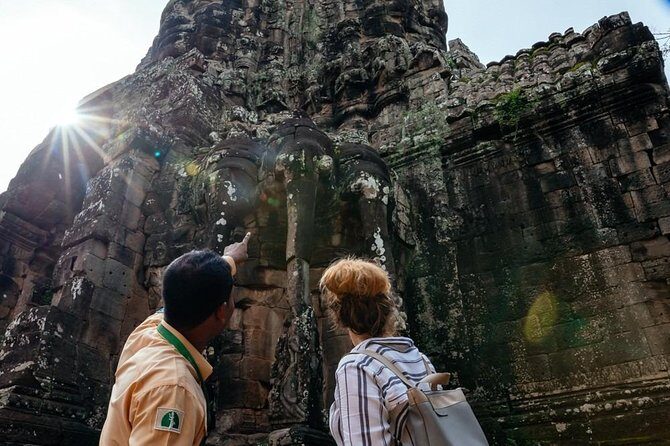
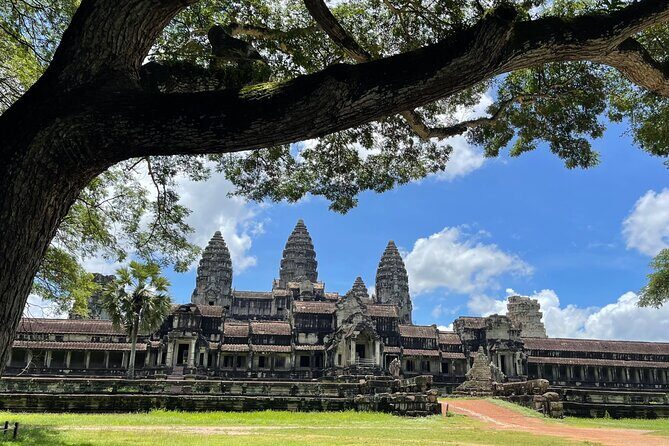
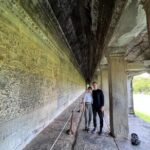
You’ll start at Angkor Wat, and the guide focus here is the carved galleries and the symbols built into the design. This is the part that pays off the most if you’re curious. Angkor Wat is visually impressive on its own, but it becomes much more satisfying when you know what the carvings are communicating.
Look closely at the bas-reliefs. With a good guide, you start seeing patterns: figures, scenes, and repeating themes rather than random decoration. Your guide will also point out how symbolism connects to how the temple is understood.
A helpful way to experience this stop is to switch between two modes:
- Walk and scan for overall layout
- Then stop and focus on a few specific carvings long enough to actually read them
You’ll have about 2 hours here, which is usually enough to do both, rather than sprinting through.
One consideration: Angkor Wat can be busy. A private guide doesn’t erase crowds, but they can help you navigate the visit so you spend less time stuck and more time looking with purpose.
Stop 2: Bayon Temple’s south gate, causeway, and the face-first moment

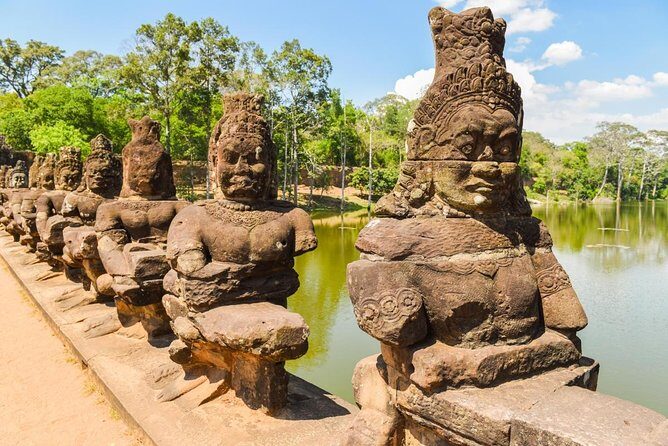
Next is Bayon Temple, specifically the south gate of Angkor Thom and the enormous stone presence that people remember. This is where Angkor shifts from “grand architecture” to “intense atmosphere.”
Bayon’s layout gives you a reason to slow down: there’s a long causeway leading into the entry towers, and it’s flanked by rows of stone figures. Those figures are easy to overlook if you’re rushing for photos. With a guide, you get a better sense of how the space is staged and what those elements are meant to do for the visitor.
This stop runs about 3 hours, which is noticeably longer than a typical quick pass. That extra time matters. It lets you:
- See the gate and central features
- Walk the angles people often miss
- Let the temple textures and details come into focus
If Angkor feels confusing at first, Bayon often clarifies the experience. It’s a temple that rewards attention to layout and repetition.
Other multi-temple archeological tours we've reviewed in Siem Reap





Stop 3: Ta Prohm’s jungle-temple feel, with time to look twice

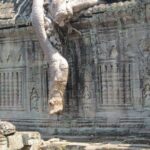
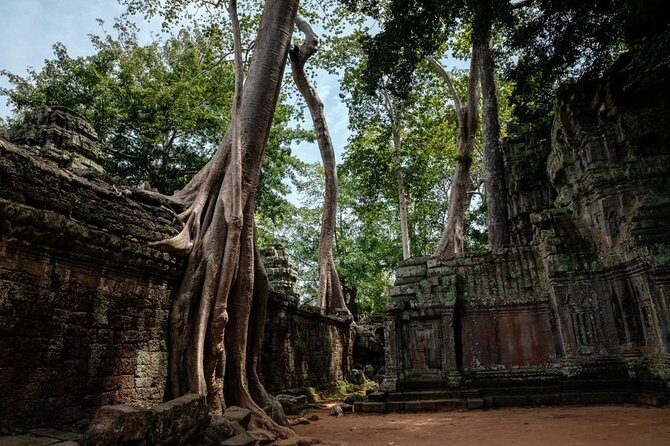
Then you go to Ta Prohm, widely known as the tree temple because of the lush trees growing around and through the stone structures. This temple has a film-set reputation, but the real impact comes from how the roots and architecture interact.
Ta Prohm is special because it feels less “perfectly composed” and more like a living structure, shaped by time. Even if you’ve seen photos, it’s the kind of place where you benefit from spending time just watching how the light and textures change as you move.
You’ll have about 2 hours here. That’s enough to do a slow circuit and also stop when something grabs your attention, like a section where the tree roots press into the stones.
Practical note: this is another spot where the ground can be uneven. Take your time on transitions and watch your footing, especially if it’s humid.
What the guides do that you’ll feel immediately
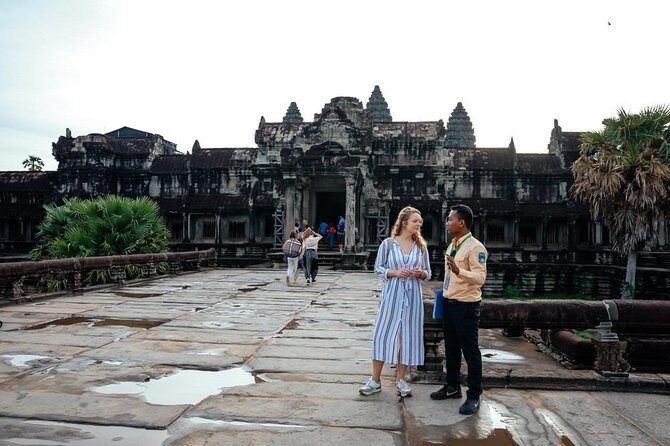
The guides are the big differentiator, and the names Long and Leap come up in the strongest feedback. Even without relying on specific personalities, the pattern is clear: the best guides don’t just point. They explain.
Here’s what that tends to look like in practice:
- You learn how to read the carvings at Angkor Wat, instead of treating them like decoration
- You get help understanding the design logic at Bayon, where layout matters as much as the faces
- You get a clear sense of why Ta Prohm feels the way it does, instead of just watching trees
- You get smoother pacing because your guide knows where time gets wasted
That means the day feels more like guided sightseeing and less like “follow the leader while holding your camera.”
And because it’s a private tour, you can ask questions on the spot. If you want to spend extra minutes at one detail, you can usually do it without negotiating with a group timeline.
Tickets, entry fees, and the lunch gap: plan around what’s missing
Two things to handle smartly before you go:
1) Entrance costs and the “ticket free” notes
The tour info says entrance to attractions is not included, but the stops show admission ticket free. That mismatch is worth clarifying with the operator before the day. Don’t assume. Ask a simple question: what is included on-site, and what do I need to pay in advance or at the gate?
2) Lunch is not included
This matters for comfort. Seven hours is long enough that hunger can mess with your mood and your attention. I recommend you plan your meal strategy in Siem Reap—either eat before you start or build in time afterward if you can.
If you’re the type who forgets food until it’s too late, bring a snack. Even one small bar or nuts can make the later part of the day easier.
Who this private Angkor Wat day trip is best for
This tour fits best if you want:
- A guided Angkor experience with context
- More flexibility than bus-based group touring
- The core trio of temples—Angkor Wat, Bayon, Ta Prohm—in one day
- A private setup so you can ask questions and move at your pace
It’s also a great pick for people who care about value beyond ticking off sights. If you’ll be spending most of your trip budget on entrance fees anyway, paying for a guide that helps you understand what you’re seeing can feel like a smart trade.
A possible drawback to weigh
The biggest drawback is simple: it’s still a full temple day, and it’s physical. If your pace is slow or you need frequent breaks, you might feel rushed by the overall flow. The trip is designed for moderate fitness, so be realistic.
Second, the entrance/ticket confusion plus the lack of lunch means you should do a little homework. Get clarity on what you’re paying for, and bring a plan for food.
Should you book this private Angkor Wat day trip?
I’d book it if you want Angkor Wat with meaning, not just photos. The private guide + tuk-tuk format gives you a calmer rhythm, and the chance to understand carvings and temple symbolism makes the time feel like it’s going somewhere.
Don’t book it blindly if you hate uncertainty around costs. Confirm entrance fees in advance (the info is slightly conflicting) and plan for lunch. Once you handle those two details, this is a strong way to experience Angkor without feeling stuck in a standard tourist script.
FAQ
How long is the private Angkor Wat day trip?
It’s listed as about 7 hours.
What temples are included in the day?
The plan includes Angkor Wat, Bayon Temple, and Ta Prohm.
Is pickup and drop-off included?
Yes. Pickup offered, with guest pick up and drop off included.
What transportation do I use during the tour?
The tour uses transportation by a local tuk tuk.
Are entrance tickets included?
The tour notes entrance to attractions as not included, but the stop details show admission ticket free. You should confirm what you need to pay for on the day.
Is lunch provided?
No. Lunch is not included.