REVIEW · SIEM REAP
3 Day Angkor Wat Kulen Mountain Beng Mealea and Floating village
Book on Viator →Operated by Asean Angkor Guide · Bookable on Viator
Angkor is huge. This tour strings together the highlights with smart timing. Sunrise over Angkor Wat and an expert English-speaking guide (from guides like Mr. Sean, Sotin Kim, Raman, and Mr. Ho) are the big wins here, because you’re not just looking, you’re learning what you’re seeing and why it matters. The schedule also mixes major temple landmarks with quieter countryside stops that make the whole trip feel more complete.
The main thing I like: you get that classic Angkor feeling without wasting the whole trip in crowds. Second thing I like: the day-by-day mix is varied, from early temples to cliff views to riverbed symbols to stilt houses. One possible drawback: it’s an early-morning, stair-heavy plan, so if you hate climbing or waking up before dawn, plan for that upfront. Early start times are part of the deal.
In This Review
- Quick hits (what makes this 3-day trip work)
- Sunrise Over Angkor Wat: Why the 4:40 AM Start Matters
- Day 1: Angkor Wat, Srah Srang Breakfast, Ta Prohm, and Angkor Thom
- Day 2: Kulen Mountain Viewpoints, Reclining Buddha, and the 1000 Lingas
- Beng Mealea and Kampong Phluk: Temples Reclaimed by Nature and Floating Village Life
- Day 3: More Temples, Palm Sugar Culture, and Phnom Bakheng Sunset
- Price and Logistics: What $195 Gets You in Real Terms
- Who This Tour Fits Best (and Who Should Think Twice)
- Should You Book This 3-Day Angkor + Kulen + Floating Village Tour?
- FAQ
- What time does pickup happen for Angkor Wat sunrise?
- Is Angkor Wat admission included?
- Is breakfast included?
- How much lunch is included across the 3 days?
- Do you visit Kampong Phluk on the floating village?
- Is there time for a swim at Phnom Kulen Waterfall?
- What temple sites are visited on Day 3 besides Phnom Bakheng?
- Are guide services and transportation included?
- What about tickets and other costs like drinks?
- Can I cancel and get a full refund?
Quick hits (what makes this 3-day trip work)
- 4:40 AM pickup for Angkor Wat sunrise so you see the temple before the day turns into a traffic jam
- Ta Prohm and Angkor Thom to balance movie-set drama with the famous faces and gates
- Phnom Kulen highlights including Poeng Ta Kho viewpoint, the reclining Buddha climb, and the 1000 Lingas riverbed
- A real water day at Phnom Kulen waterfalls, with picnic time and a swim in cold pools if you want
- Beng Mealea + Kampong Phluk for the wild-nature side of Angkor and life on Tonle Sap’s floating village
Sunrise Over Angkor Wat: Why the 4:40 AM Start Matters
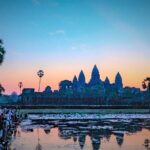
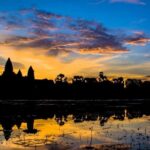
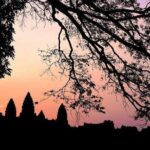
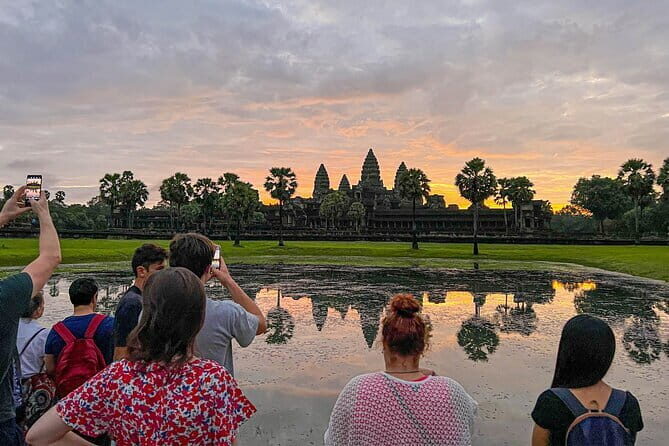
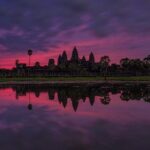
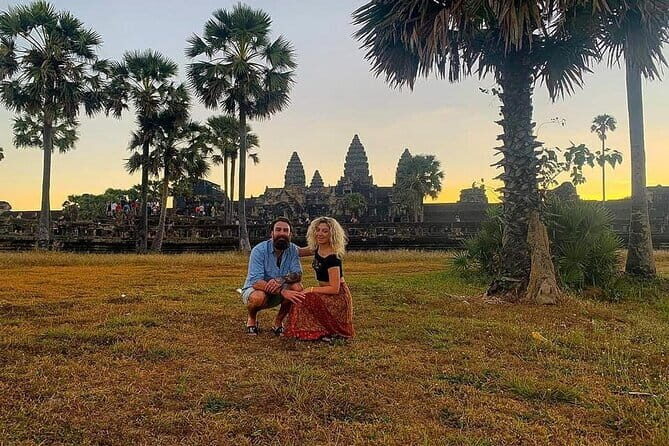
Waking up at 4:40 AM sounds extreme until you do it. Then you realize sunrise at Angkor Wat is not just a photo moment. It’s when the whole place feels most sacred and most manageable, before the crowds build and the light turns harsh.
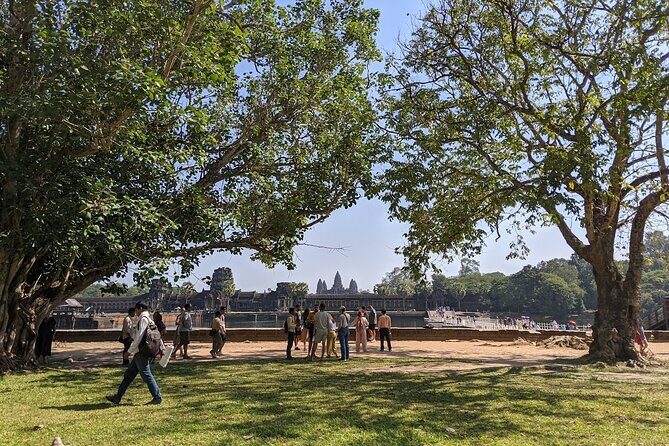
On this tour, you’re picked up from your hotel lobby before sunrise and taken straight to Angkor Wat. You’ll spend time at the temple in the early hours and have a chance to explore with a guide who helps you connect the dots between architecture and meaning. After sunrise, the tour keeps moving so you’re not stuck waiting around when your energy should be going into exploring.
There’s another practical benefit to the early start. It gives you momentum for the day. You’re not spending your morning trying to beat the line; you’re spending it seeing the temple in the best light and learning what to look for. If you’re the type who likes your photos with fewer distractions, this timing is a big deal.
Other Angkor Wat temple tours we've reviewed in Siem Reap
Day 1: Angkor Wat, Srah Srang Breakfast, Ta Prohm, and Angkor Thom
Day 1 is a classic Angkor combo, but it’s shaped to keep you from feeling like you’re only checking boxes.
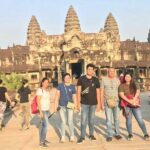
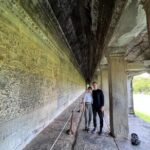
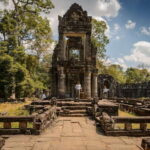
Angkor Wat (sunrise + guide-led exploring):
You start with sunrise, then you continue into the main temple visit with time to capture photos before peak crowd pressure. The value here is simple: you’re not wandering alone. A guide can point out what matters, not just where to stand.
Srah Srang (breakfast in the countryside):
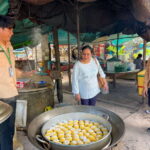
After the temple, you’ll have breakfast at a local family restaurant in Siem Reap’s countryside. This stop isn’t about temples. It’s about a more human pace: fuel up, see everyday life outside the busiest areas, and keep the day feeling grounded.
Ta Prohm (the jungle-roots temple):
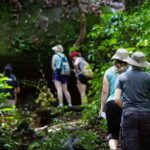
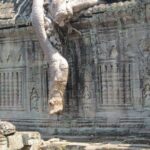
Next comes Ta Prohm, famous for being left in its original state with massive trees and roots. This is where the stones start to feel alive. You’ll trek through the jungle-enveloped atmosphere and see why the place became a cinematic symbol of nature taking back ruins.
Angkor Thom (South Gate, Bayon faces, and more):
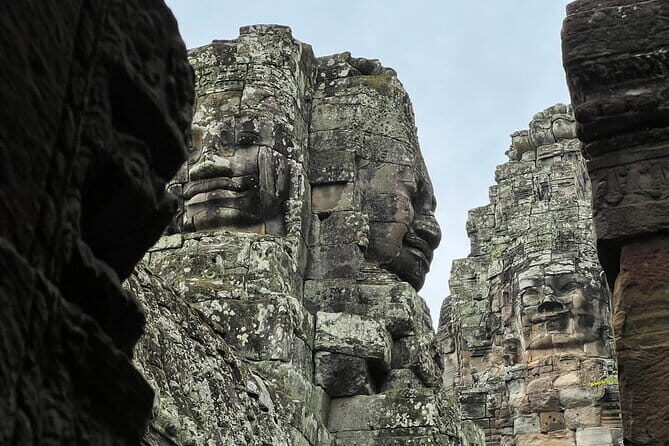
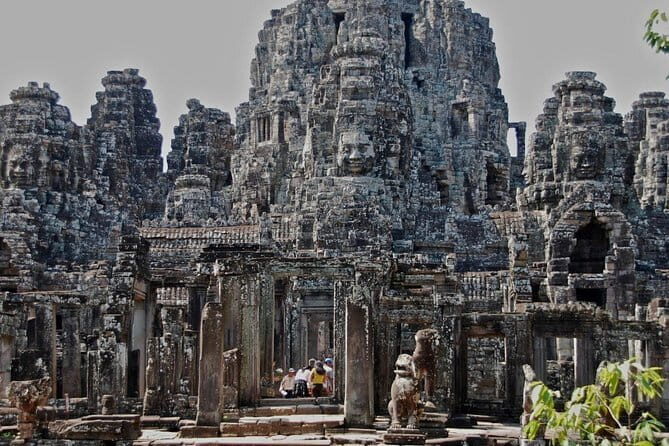
Your afternoon shifts toward the big set pieces of Angkor Thom. You visit the South Gate and then the Bayon and Baphoun temples, including the famed faces of Avalokesvara (as described on the tour). You’ll also have time at the Terrace of the Elephant and the surrounding areas mentioned in the route. Expect a mix of icon-heavy sights and stone-carving detail.
Practical reality check:
Day 1 runs until about 1:00 PM back to downtown, with possible drop-off at your hotel or the Old Market area. That’s a win if you like decompressing after sunrise adventures. But it’s also a reminder: after the early start, you’ll likely feel the stairs and uneven ground by late morning.
Day 2: Kulen Mountain Viewpoints, Reclining Buddha, and the 1000 Lingas
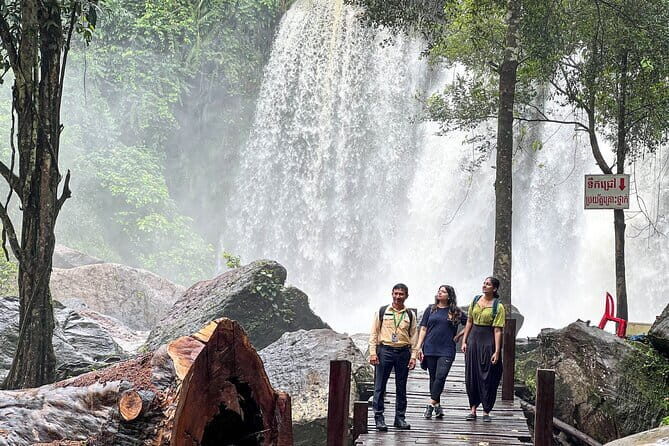
Day 2 is where the tour becomes more than temples in the city. It’s the mountain-and-water side of the region, with stops that feel tied to ritual and landscape.
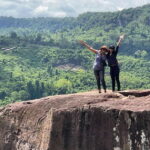
Poeng Ta Kho (the cliff viewpoint):
You stop at Poeng Ta Kho for panoramic views over canyons and forests. The description mentions it’s a short walk from the parking area, which is helpful because you get the payoff view without a huge hike. If you like switching from temple geometry to wide-open scenery, this is your breather.
Preah Ang Thom (reclining Buddha carved into the mountainside):
Then you climb to Preah Ang Thom, an 8-meter reclining Buddha carved into the mountainside. The tour notes there’s a long tradition of pilgrims making this climb and that local families light incense while monks offer quiet prayers. Even if you’re not religious, this kind of stop gives you context: these sites still matter to people today.
1000 Lingas (sacred fertility symbols in the riverbed):
The next stop is the 1000 Lingas, described as thousands of carved fertility symbols in the riverbed by 9th-century priests. The flowing water is turned into holy water for the kingdom, as the tour frames it. This is one of those places where you might be tempted to treat it as a photo background—don’t. Take a moment to look at how the carving integrates with the water itself.
Phnom Kulen Waterfall (picnic time and a cold swim option):
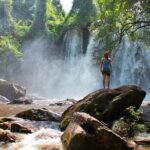
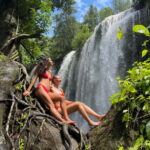
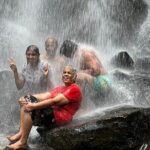
You reach Phnom Kulen Waterfall with crystal-clear pools fed by limestone-filtered mountain water. The plan includes picnic time on smooth rocks with waterfalls nearby. Then comes the swim: cold water, fast and wake-you-up cold, in pools fed by the falls. If you want to get refreshing but you’re not sure about cold water, you can still enjoy the rocks, the sound, and the views without forcing it.
Beng Mealea (nature-reclaimed temple after lunch):
After lunch, you go to Prasat Beng Mealea. It’s described as what Angkor Wat might look like if nature took over more fully. You’ll spend about an hour here, which is just long enough to roam and understand the scale without turning it into an all-day suffering contest.
Why this day feels valuable:
This is the day that expands your idea of Angkor from a single UNESCO complex to a wider spiritual region. The stops are connected by water, cliffs, and sacred carvings, so the theme stays consistent even when the scenery changes.
Beng Mealea and Kampong Phluk: Temples Reclaimed by Nature and Floating Village Life
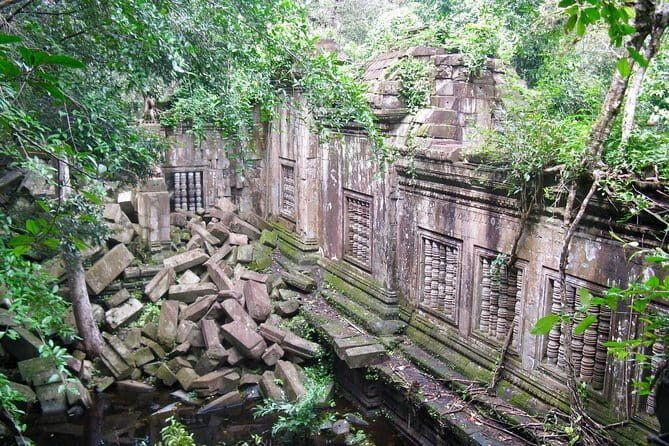
The end of Day 2 shifts from stone and jungle to water and homes.
Beng Mealea:
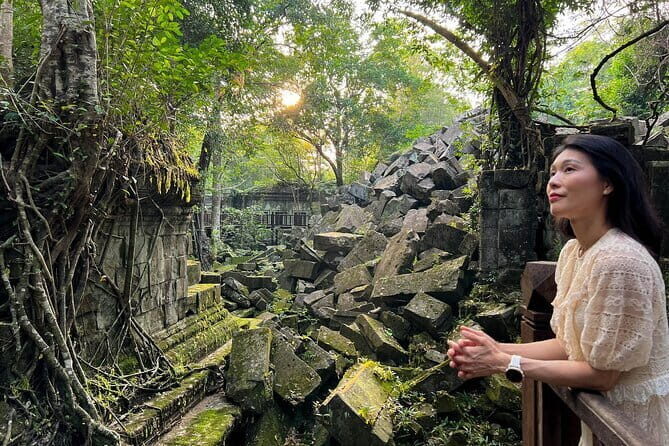
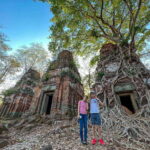
Beng Mealea is visually different from the polished symmetry of the most famous temples. Here, you see more irregularity, more broken stone, more wild plant growth, which changes how you read the architecture. You’re not studying a postcard perfect site. You’re seeing a ruin in the middle of a living environment.
Kompong Phluk (floating village boat cruise):
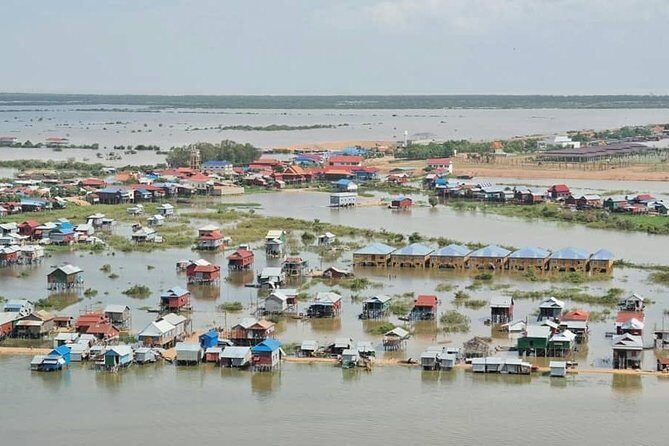
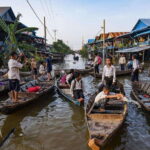
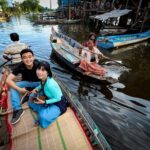
Then you head to Kompong Phluk, a floating village on Tonle Sap Lake. The tour describes families living their lives on the water in stilt houses surrounded by mangroves. You’ll visit a Buddhist site during your time there and take a boat cruise experience through the village area.
This part is special for two reasons. First, it’s not just a look-at-people stop. It’s a different way of seeing how geography shapes daily life. Second, boat time and stilt-house views give you a totally different kind of memory from the temple stones. It’s also a welcome shift away from constant walking.
One consideration:
Because this day blends multiple environments—cliff viewpoints, mountain climbs, waterfall pools, then Beng Mealea and a boat ride—you’ll want to bring comfortable shoes and a plan for sun and humidity. If you over-pack light clothing choices, the wet-and-dry rhythm can get annoying.
Day 3: More Temples, Palm Sugar Culture, and Phnom Bakheng Sunset
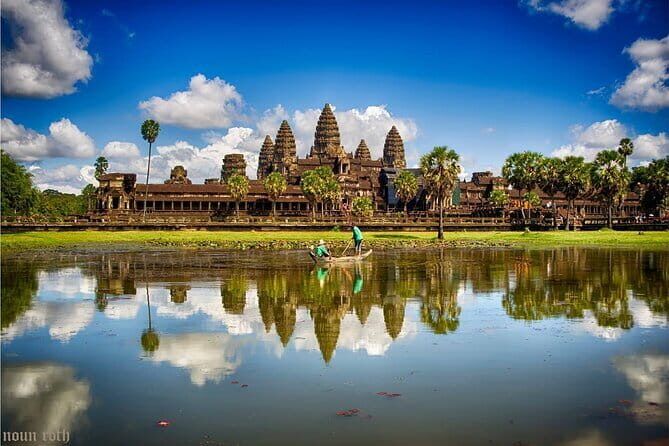
Day 3 is about balance: temples plus a more countryside cultural moment, then one last sunset climb.
Banteay Kdei:
You start with Banteay Kdei, about 45 minutes. It’s a solid way to ease into the day without throwing you straight into the tallest, toughest climb.
Pre Rup:
Next is Pre Rup for around an hour. This stop is often a crowd favorite because it helps you feel the temple complex from a slightly higher perspective. Even if you’re not chasing the biggest views, it’s a good temple-to-temple step that keeps your eyes moving and your legs warmed up.
Banteay Srei:
Then you visit Banteay Srei. The tour gives about an hour here, and it tends to be a stop people love for its detail and photogenic character. In a 3-day mix, having it on day 3 keeps the overall trip from feeling front-loaded.
East Mebon and Ta Som:
You’ll also go to East Mebon and Ta Som, each with shorter time windows (around 40 minutes for East Mebon and 30 minutes for Ta Som). This is smart scheduling. You get variety without turning every stop into a forced endurance test.
Srah Srang lunch + Phum Preah Dak palm cake and palm sugar:
A highlight for culture comes with lunch at a local restaurant cooked by a local chief, followed by a visit to the Phum Preah Dak community. You’ll see how local people make palm cake and palm sugar. This is one of the best moments for slowing down and understanding everyday craft traditions that don’t revolve around temple ticket lines.
Neak Pean and Preah Khan:
After the cultural stop, you continue to Neak Pean (about 40 minutes) and Preah Khan (about an hour). These are classic Angkor sites that help you connect the religious geography across the area.
Phnom Bakheng at sunset:
Finally, you climb Phnom Bakheng for sunset and then return to your hotel. This is the last emotional high point: you started with sunrise at Angkor Wat and you end with sunset from a mountain perspective.
Energy tip:
If you’re doing this tour, treat day 3 like a finale. Eat well at lunch, pace your climbing, and don’t plan extra late-night adventures right after you get back. Your legs will remember.
Other Beng Mealea tours we've reviewed in Siem Reap
Price and Logistics: What $195 Gets You in Real Terms
At $195 per person for 3 days, this tour is priced around a package that includes the expensive parts you’d otherwise piece together yourself: professional English-speaking guide time, transportation, temple admissions, and two lunches plus breakfast.
Here’s what makes the value feel real:
- You’re not paying separately for all the attraction admission fees mentioned. That reduces surprise costs.
- You get cool bottle water and towels during the tour, which matters in Cambodia’s heat.
- Transportation is handled with an experienced driver, which is important when you’re doing multiple sites spread across the region.
- You have scheduled meals included: breakfast (day 1 countryside stop and part of the included package) and lunch twice.
Also, the tour is private for your group. That usually means you can move at the pace your guide sets and you’re not stuck dealing with constant group shuffling.
One practical caution: the route involves a lot of walking on uneven ground and stairs. The tour is described as most travelers can participate, but you should still gauge your own mobility honestly. If you’re carrying knee issues or you hate climbs, you may find some parts tiring.
Who This Tour Fits Best (and Who Should Think Twice)
This 3-day plan is best for you if you want:
- A real Angkor sunrise and sunset experience, not just midday temple hopping
- A mix of famous sites (Angkor Wat, Ta Prohm, Angkor Thom) and less polished but more wild-feeling places (Beng Mealea)
- Nature-and-water days on Kulen Mountain and Tonle Sap Lake, including a waterfall swim option
- A guide-led experience where someone can explain what you’re seeing as you go
You might think twice if:
- You dislike early starts like a 4:40 AM pickup
- You don’t want stairs and climbing as part of the experience
- You prefer only flat, easy sightseeing routes
If you’re a photographer, this schedule is also helpful. Sunrise timing and golden-hour sunsets add structure. Plus you have time at key photo stops rather than being rushed through everything.
Should You Book This 3-Day Angkor + Kulen + Floating Village Tour?
Yes, I’d book it if your goal is a balanced, guided 3-day arc: sunrise at Angkor Wat, a full day of Kulen Mountain sacred stops and waterfall time, then Beng Mealea and Kampong Phluk before you wrap with more temples and a Phnom Bakheng sunset.
The deal is strongest for people who want more than a checklist. You’re getting both the headline monuments and the countryside texture: reclining Buddha climbs, the riverbed 1000 Lingas stop, palm cake and palm sugar making, and stilt-house life on Tonle Sap.
Before you click confirm, be honest about two things: the schedule is early, and the route includes climbing. If you’re okay with that trade-off, this is a very efficient way to see a lot of Cambodia’s most memorable sights with minimal guesswork.
FAQ
What time does pickup happen for Angkor Wat sunrise?
You’re picked up from your hotel lobby before sunrise at 4:40 AM.
Is Angkor Wat admission included?
Yes, admission tickets to the attractions are included, and Angkor Wat is listed as included on the sunrise day.
Is breakfast included?
Yes. Breakfast is included, including a breakfast stop at a local family restaurant in the countryside.
How much lunch is included across the 3 days?
Lunch is included twice during the tour.
Do you visit Kampong Phluk on the floating village?
Yes. You’ll visit Kompong Phluk and there’s a boat cruise experience as part of the floating village visit.
Is there time for a swim at Phnom Kulen Waterfall?
The plan includes pools at Phnom Kulen Waterfall with a swim option, described as cold water.
What temple sites are visited on Day 3 besides Phnom Bakheng?
Day 3 includes Banteay Kdei, Pre Rup, Banteay Srei, East Mebon, Ta Som, Neak Pean, and Preah Khan, plus Phnom Bakheng for sunset.
Are guide services and transportation included?
Yes. The tour includes a professional English-speaking tour guide and transportation with an experienced driver.
What about tickets and other costs like drinks?
Admission tickets are included, but soft drinks and meals not mentioned are not included. Tips are also not included.
Can I cancel and get a full refund?
Yes. There is free cancellation, and you can cancel up to 24 hours in advance of the experience start time for a full refund.